Andrew-Mountbatten-Windsor-arrested-on-suspicion-of-misconduct-in-public-office.jpeg

Andrew Mountbatten-Windsor arrested on suspicion of misconduct in public office, BBC reports

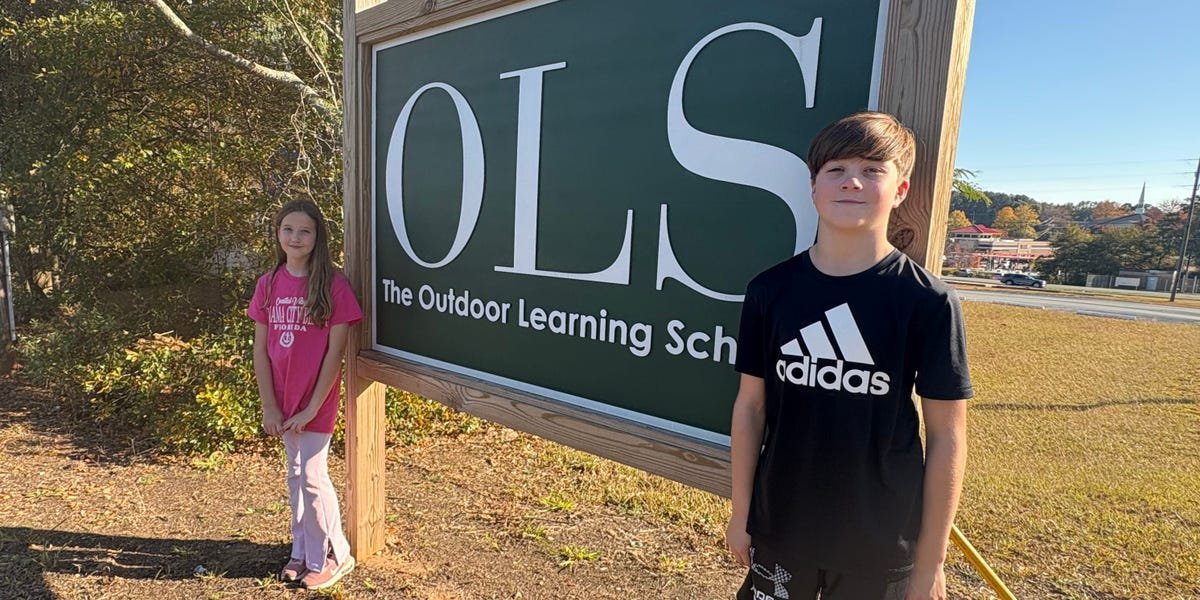
Andrew Mountbatten-Windsor, the former prince, was arrested on Thursday morning, his 66th birthday.

In a statement, the UK’s Thames Valley Police said it had arrested “a man in his 60s from Norfolk on suspicion of misconduct in public office.”

“We are unable to name the arrested man as part of national guidance,” it added.

The police also said it was carrying out searches at addresses in Berkshire and Norfolk.

Photos showed police at the Sandringham estate in Norfolk, where Mountbatten-Windsor is said to have been living. He previously lived in Windsor, Berkshire.


Men step out of an unmarked car at the home of Andrew Mountbatten-Windsor on February 19, 2026 in Sandringham, Norfolk

Men step out of an unmarked car at the home of Andrew Mountbatten-Windsor on February 19, 2026 in Sandringham, Norfolk.

Peter Nicholls/Getty Images


Mountbatten-Windsor, the brother of King Charles III, was stripped of his royal titles last year amid scrutiny of his relationship with Jeffrey Epstein.

The latest release of the Epstein files showed more of Mountbatten-Windsor’s communications with the convicted sex offender.

In 2010 and 2011, when the former prince was a UK trade envoy, he appeared to forward official reports on his work visits to Epstein.

A spokesperson for Mountbatten-Windsor did not immediately respond to a request for comment.

“Following a thorough assessment, we have now opened an investigation into this allegation of misconduct in public office,” said Oliver Wright, assistant chief constable with the Thames Valley Police.

“It is important that we protect the integrity and objectivity of our investigation as we work with our partners to investigate this alleged offence,” he added.

Before the arrest, UK Prime Minister Keir Starmer told the BBC, “Nobody is above the law.”

“[The police] will conduct their own investigations, but one of the core principles in our system is that everybody is equal under the law and nobody is above the law,” he said.


Source link

Public-breakups-are-still-a-thing-—-and-its-awkward.jpeg

Public breakups are still a thing — and it’s awkward for everyone

Inside the breakup economy

I know, I know, it’s Valentine’s Day, so who wants to read about breakups? Hear me out. Today isn’t just about love; it’s about every part of a relationship — the meet-cute, the intoxicating limerence, and even splitting up over soup. Meet the breakup economy.

Business Insider’s Juliana Kaplan writes about how breaking up in public is still a thing, and many are choosing restaurants, bars, and coffee shops to do the deed. It’s not only affecting the two people sitting at the table. Waitstaff are also taking notice and trying their best to navigate what happens when someone suddenly leaves the table.

Chef Gabrielle Macafee encountered this exact scenario when she worked at a Brooklyn restaurant serving a small tasting menu. After a couple walked in looking “morose,” the man stood up and left halfway through the $130 meal.

“My teammates and I were like, wait, how do we handle this? He’s gone. You can only hold the food for so long,” Macafee told BI’s Kaplan, who added that the woman still seated paid for both meals. “We offered to send her the rest, but obviously, she just wanted to get out of there as soon as possible.”

If you do find yourself giving the “it’s not you, it’s me” speech in public, dating coach Julie Nguyen advised picking a neutral spot, such as a park, and avoiding regular haunts you both frequent. “You don’t want either of you to feel dread going back, or tie bad memories to a spot they love. A neutral, quiet outdoor setting is the best play,” she added.

Lane Denbro, a former line cook, said that if you’re not in total shock at what’s happening, be thoughtful of the staff, the servers, and the bartenders. “If you’re going through a breakup, make sure to tip well, because the service staff in the back of house, we’re going to try to support you however we can,” Denbro said.


Source link

OpenAI-is-turning-to-the-court-of-public-opinion-in.jpeg

OpenAI is turning to the court of public opinion in its battle with Elon Musk

OpenAI is turning to the court of public opinion as it wages a legal battle with Elon Musk.

While Musk and OpenAI prepare to head to a high-stakes jury trial in April, the two are duking it out online over what exactly happened when Musk split ways with the AI startup he helped cofound.

Musk has been using recently unsealed court documents to attack his rival in posts on his social media platform, X. On Friday, OpenAI published a blog titled “The truth Elon left out.”

The blog, which provided commentary alongside excerpts from several court documents, alleges that Musk wanted “full control” of OpenAI, “since he’d been burned by not having it in the past,” and that OpenAI’s leadership was surprised when Musk suggested having his kids control AGI or artificial general intelligence during conversations about succession planning.

The statements are aimed at the heart of Musk’s lawsuit against OpenAI.

Musk is suing OpenAI’s key leaders, including CEO Sam Altman and President Greg Brockman, over allegations that the AI company misled him by shifting away from its core mission to remain a nonprofit. Musk said he donated $38 million to OpenAI when it was a nonprofit.

The startup, since its 2015 founding, operated as a nonprofit-controlled organization with a for-profit operating arm. It completed its transition to a for-profit public benefit corporation in October 2025.

Representatives for Musk and OpenAI did not immediately respond to requests for comment from Business Insider.

Last Tuesday, more than 100 documents related to the suit were unsealed, including diary entries from Brockman, which were obtained during the discovery process.

In one of the entries that was highlighted, Brockman appeared to write about his misgivings about pushing Musk out of OpenAI and committing to a nonprofit-only entity.

“Cannot say that we are committed to the non-profit,” the entry from the court documents said. “Don’t want to say that we’re committed. If three months later we’re doing b-corp then it was a lie.”

It was Brockman’s diary entries that US District Judge Yvonne Gonzalez Rogers cited in a recent ruling, in which she determined Musk had enough evidence that he’d been misled to take the case to trial.


Source link

Reddit-is-arguing-its-a-collection-of-public-fora-and.jpeg

Reddit is arguing it’s a ‘collection of public fora’ and not a social media company. Here’s why.

A new law barring children under 16 from opening or maintaining social media accounts took effect last week in Australia, forcing platforms to deactivate accounts for swaths of young users.

In the words of Taylor Swift, however, Reddit would very much like to be excluded from this narrative because, it says, it’s not a social media platform.

Reddit made the argument in a lawsuit it filed against the Commonwealth of Australia and its Minister of Communications on Friday. The Australian law is meant to protect young people from what it says are the harmful and addictive effects of social media use.

Reddit is seeking to overturn the country’s new law, which it says “infringes the implied freedom of political communication.”

As part of the legal filing, Reddit also pushed back at being labeled an “age-restricted social media platform” within the meaning of Australia’s law.

Instead, Reddit said it “operates as a collection of public fora arranged by subject.”

“That is because it is not the case that the sole purpose, or a significant purpose, of Reddit is to enable ‘online social interaction’ between two or more end-users,” the company said in its 12-page legal filing.

The company added that, in most cases, users don’t know each other’s real identities.

“Reddit does not import contact lists or address books. The ‘upvote/downvote’ functionality enables users to indicate how helpful they found the information that was posted by an end-user,” the company said in the lawsuit. “It is not intended to be used as a way for users to express any view about the poster themselves. In this way, Reddit is significantly different from other sites that allow for users to become ‘friends’ with one another, or to post photos about themselves, or to organise events.”

Reddit, founded in 2005, allows users to post and reply to those posts on “subreddits” dedicated to almost any topic imaginable. Users have the option to upvote or downvote posts and can send each other direct messages. While Reddit users can use their real names, most of them operate anonymously.

The company went public in 2024 with a valuation of $6.4 billion.

Reddit elaborated on its argument in a statement addressed to its users, which was shared on the platform last week.

“This law is applied to Reddit inaccurately, since we’re a forum primarily for adults and we don’t have the traditional social media features the government has taken issue with,” the company said in the statement.

Australia’s new law, which would place the onus on social media platforms to verify users’ ages, has drawn criticism from other companies it targets as well, such as TikTok’s parent company, ByteDance, and Meta, which owns Facebook and Instagram.

Reddit, which says it is complying with the law, told its users that doing so could have unintended consequences.

“This law has the unfortunate effect of forcing intrusive and potentially insecure verification processes on adults as well as minors, isolating teens from the ability to engage in age-appropriate community experiences (including political discussions), and creating an illogical patchwork of which platforms are included and which aren’t,” the company said.

Australia isn’t the only country considering restricting social media use among young people.

Malaysia plans to ban children under 16 from having social media accounts in 2026. In Norway and Denmark, lawmakers have proposed laws that would ban social media accounts for children under 15.

A handful of US senators earlier this year introduced the Kids Off Social Media Act, which would bar social media platforms from allowing children under 13 years old to create or maintain accounts. The act would also bar platforms from using algorithms to target children under 17.

“Australia is stepping up to protect kids from the addictive and harmful content being constantly fed to them on social media. It’s now time for Congress to do the same and pass the Kids Off Social Media Act,” Sen. Brian Schatz of Hawaii, a Democrat, said in a statement to Business Insider.


Source link

My-kids-went-to-an-outdoor-elementary-school-with-no.jpeg

My kids went to an outdoor elementary school with no art, music, or library. They loved it, but adjusting to public school was hard.

In 2019, my 5-year-old son and 4-year-old daughter were excited to start their first year of public school. But like millions of students in March of 2020, they never got to finish the school year.

The COVID pandemic closed the classrooms, forcing my husband and me to rethink how we wanted to handle our children’s education. An outdoor learning school at The Learning Tree, a local day care, became our solution.

The unique education exceeded our expectations in every way.

Why we chose an outdoor learning school

The pandemic made us nervous to send our kids back to school after summer break. We were told that if someone in their class contracted COVID, the entire class would shut down for two weeks. This wasn’t feasible for us as parents with full-time jobs, plus it would disrupt the learning experience for our kids.

That summer, the day care our kids attended prior to starting school announced a new opportunity: a K/1 program focused on interactive, accelerated education. It promised small class sizes (roughly 12 students per class), project-based and student-led learning, and academics balanced with outdoor activities and healthy habits.

Despite the $125 weekly tuition fee per child, we were sold on smaller classes, less exposure to others, and the included after-school care.

We enrolled our kids for the 2020-2021 school year: our daughter in kindergarten and our son in first grade. When the school added second grade the following year and then third grade the year after, we stayed.

We missed out on traditional opportunities, but gained so much more

We didn’t plan on sending our kids to a private program for most of their elementary school years. But after comparing what public school offered that The Learning Tree didn’t, and vice versa, the outdoor learning school was a no-brainer.


Alli hill's children at their outdoor learning school

The author’s kids loved their outdoor school.

Courtesy of Alli Hill


At The Learning Tree, there was no library, computer lab, or even a cafeteria. They didn’t have art, music, or gym classes. The playground was small, and there was no option for gifted testing.

However, they did have an in-ground swimming pool, and swimming was built into the curriculum during warm months. A mile-long nature trail and morning fitness exercises replaced the gym. Students helped to build gardens and grow food, which made its way into their lunches. Most notably, screen time was minimal — almost nonexistent.

There was also more parental involvement. We went kayaking on the river as part of a history lesson, and we always had special celebrations for Thanksgiving and Christmas.

Instead of reading math word problems, they acted them out in real time with things like farmers’ markets and food prep. Projects, not worksheets, were a focal point for each grade. And since students played a role in their own education and pacing, there was no need for a separate “gifted” curriculum.

Transitioning back to the ‘real world’ was a tough lesson

The original K/1 program added a new grade each year, up to fifth grade. However, we pulled our children out when they started fourth grade to give them time to transition back into public education before middle school. Where we live, fifth grade is at the middle school, and we felt like jumping from outdoor learning to a public middle school would be too stressful.

Both of our kids already had lots of friends in public school, so it wasn’t completely unfamiliar to them. Still, it was challenging.

They went from spending most of the day outside to getting only 20 minutes of recess. Classes were much larger, so they didn’t have the opportunity to learn at their own pace. They had more rules and a more rigid structure to follow. There was more sitting and busywork than they were used to.

They missed the kindness and genuine interest of their teachers at their old school. They also lacked the opportunities to guide their own education and pursue their own interests in the classroom.

While we loved our time at the outdoor learning school, all good things must end. Our kids gained a solid foundation of work ethic, self-discovery, and leadership that continues to help them in and out of the classroom, and we’d do it again in a heartbeat — pandemic or no pandemic.


Source link