Im-a-first-generation-Chinese-American-mom-living-in-LA-A.jpeg

I’m a first-generation Chinese American mom living in LA. A 2-month trip to China made me question where to raise my daughter.

My 3-year-old daughter cried on her first day of school in China. She clutched onto me in the classroom and didn’t want to let go. This came as a shock since she had spent the previous year happily attending preschool in Los Angeles.

What surprised me wasn’t her reaction — it was how unsettled I felt.

“Don’t worry,” one teacher said in Chinese. “Just leave quickly, and we’ll take care of her.” I followed her advice with a knot of worry in my stomach.

As a first-time mother, I felt anxious about putting her in a completely unfamiliar environment: a different language, a different culture, and new faces.

Minutes later, my phone rang. A teacher called to tell me that after I left, my daughter had stopped crying and started looking around the classroom.

Like many first-generation Chinese Americans chasing the “American dream,” I spent a decade checking off the big milestones: graduate school, a full-time job as a journalist, marrying young, and eventually becoming a parent.

My husband and I have lived in that American rhythm for the past 13 years. For a long time, raising our child in the US felt not only natural but rational.

Family time

This winter, I returned to Qingdao, China, to celebrate Lunar New Year with my family for the first time in 10 years. I missed the family reunions, the festive atmosphere, and the food from my hometown.

I was especially excited to bring my daughter, who had never experienced the holiday. To help her immerse herself in Chinese culture, I decided to enroll her in a local school during our two-month stay.

Right away, I noticed how different the classroom looked compared with her preschool in the US. The room was decorated with red lanterns and Lunar New Year crafts made by the children. In the US, the holiday often goes unnoticed in public spaces.

I didn’t expect how strongly I would feel the differences between the two education systems.


A preschooler receiving an award at a school in China.

The teachers shared photos of her daughter at school. 

Provided by Grace Cong Sui


Teachers constantly kept me updated

On the second day, my phone buzzed while I was working at a local coffee shop.

The teacher had sent a couple of messages. At first, I panicked — in LA, that usually meant something had gone wrong. Instead, the messages were surprisingly detailed.

“Hi, Oli’s mom, she’s doing great today. She started eating vegetables at lunch and had some milk in the afternoon,” the teacher wrote in Chinese. The message was followed by 10 close-up photos.

I saw my daughter smiling while eating, going down a slide, reading books, and playing with other kids. It was the first time I had such a clear picture of what her day at school looked like.

Over the following weeks, I received similar updates every day.

In LA, I rarely knew what my daughter’s school day looked like beyond a general schedule. Occasionally, a group photo would appear on the school’s Facebook page, mixed in with pictures from other classes.


A toddler eating school lunch fom silver bowls on a tray.

The school paid close attention to what her daughter ate. 

Provided by Grace Cong Sui


Mealtimes were closely monitored

Every day, the teacher also updated me about her eating, napping, and mood.

One day, they told me that since my daughter didn’t like the rice and vegetables, the kitchen had made a different meal just for her.

“We switched her meal to bread and a cookie. She likes it!” the teacher wrote.

I was surprised — not because of what she ate, but because of how closely the school monitored the children’s eating habits.

Back in LA, I usually guessed how much she ate by checking her lunchbox. Teachers rarely discussed it unless I asked.

The right decision

The school in Qingdao has a small farm on campus. The children feed rabbits and ducks when the weather allows.

On colder days, they play in an indoor gym.

Her preschool in LA had a large lawn where kids could run around and play outside. Seeing these different setups made me realize how much childhood is shaped by where you grow up.

In the classroom, the school in China also had strict rules about screens. TVs were used only for educational purposes. When I picked my daughter up, she was usually playing with toys or chatting with the teacher.

At her preschool in LA, the children often watched cartoons for about 30 minutes while waiting for their parents to pick them up.

Watching her sleep peacefully after a busy day, a question kept coming back to me: Which system is better for early education?

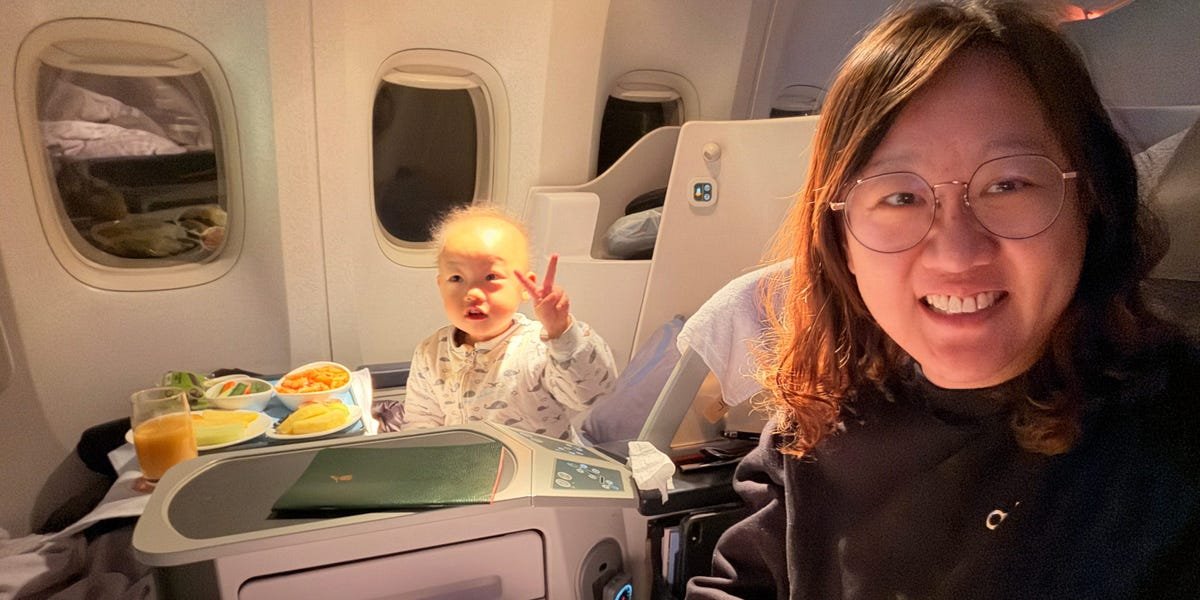
Toward the end of our two-month trip, I wondered whether we should move to China for her schooling. During the 13-hour flight back to the US, I kept thinking about it.

Now that we’re back in Los Angeles, I asked my daughter on the drive to preschool whether she misses China.

She said she loved the school in China — but she had also been missing the US.



Source link

Peter Kafka

Streaming big events like an NFL game used to be question mark. Amazon just got more than 31 million people to stream the Bears-Packers.

On Saturday, the Chicago Bears beat the Green Bay Packers in an NFL playoff game that had everything: a bitter rivalry, an old-school outdoors atmosphere, and a historic comeback (or choke-job, depending on your POV).

It also happened to be a (mostly) streaming-only game. Did you notice? Or care?

I didn’t. Except for about 30 seconds, when I was trying to find out what network was showing the game, and it took me a beat to realize it was on Amazon’s Prime Video. Then I booted up my app and watched the game without any issue. Just like any other NFL game.

In 2026, “Guy doesn’t have a problem watching the Bears/Packers” is a true dog-bites-man story. But that’s why I’m writing about it here: Not very long ago, the idea of streaming a super-high-profile NFL game — and requiring NFL fans to subscribe to a streaming service in order to watch it — would have been a very big deal.

Now it’s a yawner: I was one of 31.6 million people who watched the game, the vast majority of whom streamed it (fans in local markets could use broadcast TV). That’s a streaming record for an NFL game, and it’s more than some other games got last weekend on conventional TV.

And that tells you just how far sports and streaming have come.

Flash back to 2013, for instance, and the idea of whether the “internet” — a catch-all term that included everything needed to get streaming video onto your screen, from web servers to fiber-optic lines to the router in your house — could support a big NFL game watched by many millions of people was an open question. “Why Web TV Skeptic Mark Cuban Thinks Google Can Make the NFL Work on the Web,” was an ungainly headline I tapped out at the time.

Back then, the NFL and other sports giants were routinely streaming big events like the Super Bowl and World Cup — but only as a sort of secondary outlet for weirdos who didn’t have traditional TV. And anyone who did stream sports had to expect to run into problems, like ESPN did when it streamed a World Cup game in 2014.

A year later, the NFL put on a streaming-only game for the first time — but made sure it was a relatively niche one, and made sure that people knew it was an experiment.

Cut to today, and streaming is just a way we watch some football games now. Amazon pays a gazillion dollars a year to show one game a week during the regular season; Netflix has paid up to show a couple games on Christmas Day. A new deal the NFL struck with Disney last year will give the league the opportunity to sell even more games to digital players.

And two years ago, the league passed another new threshold by moving one of its most valuable assets — a playoff game — to Comcast’s Peacock streamer, where it was only available to paid subscribers. That one generated a ton of complaints from people who said they didn’t want to pay another service to watch an NFL game — along with millions of sign-ups for Peacock, which showed they would.

The NFL is not ditching TV for streaming anytime soon. For many people, watching NFL games is the main reason to watch TV, and that gives the league a ton of leverage to extract ever-increasing fees from the likes of NBC and CBS. So they will almost certainly keep the majority of their games on old-time TV for the foreseeable future. But they’re going to sell them to streaming platforms too — because they’ll pay up to get them, and you’ll pay, too.


Source link

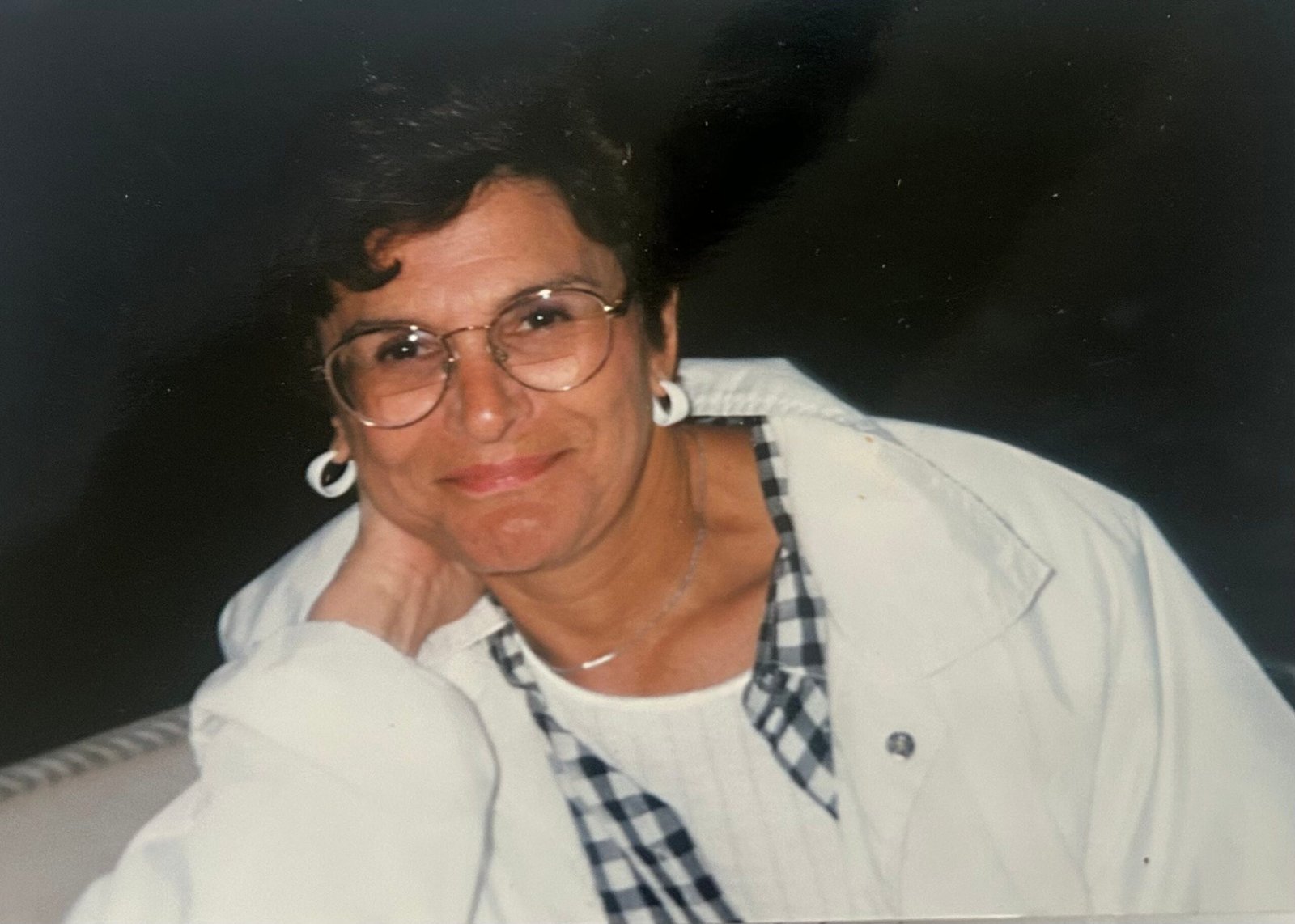
Woman posing for photo in the 80s

I wanted to be perfect like my grandmother. Then she asked me a question that changed my approach to life.

The author’s grandma was a perfectionist.

  • My grandmother’s terminal cancer diagnosis taught us both to let go of perfectionism.
  • Her lifelong pursuit of order and perfection shaped our family’s habits and expectations.
  • Facing illness, she embraced acceptance and inspired me to value effort over unattainable ideals.

My grandmother strove for perfection, convinced that it was an attainable goal if only you worked hard enough.

This meant eating less to lose weight. Food deprivation became a family bonding activity when my grandmother was on a diet. Diets lasted decades. We had marathon cleaning weekends while friends went to the mall. Play clothes were swapped out for school clothes for our rare trips to Burger King. Random dust checks were performed to ensure vacuuming of floors was done correctly. I’ll never forget her finger with a perfectly manicured nail grazing the cool Italian tile floor. Chore lists graced our refrigerator in the same way my friends’ quizzes and pictures graced theirs.

My grandmother wanted and demanded order, believing it led to perfection. My childhood was spent trying to please. She did not expect more from us than she did from herself, though. I hold many memories of Gram chastising herself for her too-big thighs or her less-than-stellar self-control around chocolate. It was a weakness that caused her significant guilt.

I followed her steps

Years later, as I began my own journey toward motherhood, I vowed that my children would not endure what I had. I would allow them to make messes. That dog I always wanted, but was never allowed to have because pets were dirty, would complete the large family I also always wanted. Perfection would become what it was meant to be, a foolish ideal — not a reality to strive for at all costs.

Family birthday
The author’s grandmother was diagnosed with terminal cancer.

Instead, I repeated exactly what I knew. My kids had to have matching outfits, picture-perfect Christmas cards, and all the things perfection required. I would clean and exercise until I reached the point of exhaustion. I worked out through all four pregnancies and directly after.

I recall throwing a birthday party for my son. He was turning 3 or 4. Someone commented on how great I looked. “Nicole makes sure everything is always perfect,” someone else said. I reveled in the praise. Gram heard the comment and smiled. We shared a common bond. When one of us inched closer to it, the other one felt proud.

Then my grandmother was diagnosed with cancer

The exhaustion of parenting four kids and attempting to create the perfect world for them and me was intense. I was stuck in a cycle. It would not break until one sunny fall day. I was running around attempting to clean and wrangle the kids for lunch. The plan was to work out after they took their naps. The phone rang, and my grandmother greeted me on the other end. All I heard was the word sick. I assumed it was regarding my grandfather, who had had heart problems for decades. I thought perhaps it was another heart attack.

“No, baby, it’s me. I’m sick.” It was shocking. Gram had lived a life of such order and perfection. She was in her 70s and active. She took only one pill for high blood pressure. Gram had Stage 4 ovarian cancer, which meant we discovered it late. We looked up the statistical odds of survival. My grandmother had a terminal illness.

The diagnosis changed her. For the first time, her constant need for perfection seemed foolish. Weight didn’t matter, nor did matching a purse to shoes to a blouse. When Gram lost her hair, one of her most beautiful features, and found herself struggling to keep the house clean, she understood things had to change. Maybe a wig wouldn’t be so bad. Maybe hiring someone to come in and help was OK. Her new favorite saying became, “Don’t sweat it.” What mattered was time and how she spent it.

She asked 1 simple question

When she saw me working myself to death to provide a perfect life for my family, Gram realized I had become just like her. She said, “Perfection isn’t worth it. It isn’t even real.” Then, she asked a question that changed everything for me.”Did you do your best?” When I answered that I had, she said, “Well, that’s all you can do then.”

It changed the way I lived my life and significantly reduced the pressure on me.

Watching her health diminish and understanding that she had limited time helped Gram realize what was important. Perfection and holding onto unrealistic expectations and ideals no longer fit into her life. Watching her learn this lesson allowed me to learn it alongside her. She taught me so that I didn’t have to wait until I was in my 70s battling a terminal illness. When I remember her now, I am forever grateful.

Read the original article on Business Insider

Source link