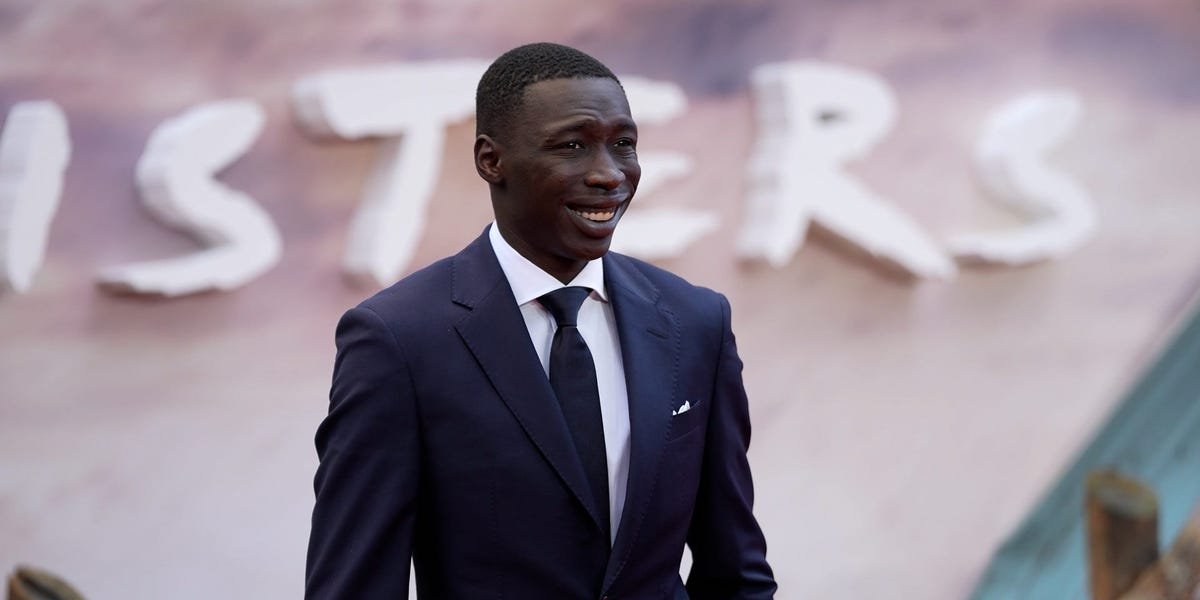
Khaby Lame’s $975 million deal is facing trouble as brokerages restrict trading in the stock tied to it. The TikTok star had planned to merge his company with Rich Sparkle Holdings so everyday investors could buy in, but uncertainty has sent the stock down over 90% since January.
Uber Eats might end up playing a key role in its parent company’s robotaxi business, Uber CEO Dara Khosrowshahi said.
The ride-hailing app is working with multiple companies, such as Alphabet-backed Waymo, to make self-driving cars available through its app. Waymo’s robotaxis have already proven more efficient than most human Uber drivers in cities such as Atlanta and Austin, Uber has said.
One big question hanging over robotaxis, though, is what happens to the vehicles during times of the day when demand for rides is low, Khosrowshahi said on Uber’s fourth-quarter earnings call on Wednesday.
He pointed to one solution: Have them drive orders to customers through Uber’s food delivery and freight businesses.
Some delivery services, such as DoorDash, are also experimenting with robotaxis for food deliveries. Uber offers both ride-hailing and delivery, meaning robotaxis on its network could shift between the two as demand for each changes, Khosrowshahi said on Wednesday.
Every time Alex publishes a story, you’ll get an alert straight to your inbox!
Stay connected to Alex and get more of their work as it publishes.
“Having delivery and freight as part of our logistics ecosystem gives us an opportunity to actually use these vehicles at a structurally higher utilization than anyone else,” Khosrowshahi said.
While ride-hailing accounted for over half of Uber’s revenue in the fourth quarter, its delivery business grew by 29%, a faster clip than the 18% growth rate its ride-hailing segment posted in the same period.
How efficiently companies use the autonomous vehicles that they put on the streets is one of the challenges hanging over the technology.
Safety is another. Last month, a Waymo car injured a child near a school in Santa Monica, California, the latest in a series of accidents involving self-driving cars. Waymo said it is cooperating with a federal probe into the accident.
While it doesn’t operate self-driving cars directly, Uber is experimenting with ways to train the AI behind robotaxis using data it collects from human drivers, Khosrowshahi said. Uber has a partnership with Nvidia to collect that data, for instance. Last month, Uber said it would launch AV Labs, an arm focused on similar training efforts.
Khosrowshahi said the goal is to make self-driving cars more reliable and avoid situations such as last year’s Waymo blackout in San Francisco, when a power outage prompted the company to suspend services. “The real world can create unexpected circumstances,” he said.
Robotaxis also require infrastructure to store, charge, and repair. Some companies, such as startup Voltera, are building depots for those purposes in anticipation of a robotaxi boom in the coming years.
Have a tip? Contact this reporter at abitter@businessinsider.com or via encrypted messaging app Signal at 808-854-4501. Use a personal email address, a nonwork WiFi network, and a nonwork device;here’s our guide to sharing information securely.
I grew up on the shores of Lake Erie, in a town just south of Buffalo, New York. Ice was something we chiseled off a car in winter, not something that’s dropped into a drink. For me, life on a tropical island was a pipe dream.
In high school, I was the geeky kid, always excited to read stories in Time and The New York Times about exotic, far-off places. I knew early on that I wanted a job that would allow me to experience global events firsthand.
A semester abroad in France cemented my ambition. I lived with a family who also rented to an American expat. He talked casually about his Swiss ski holidays, escapes to Greece and Turkey, and his favorite cafés in Paris.
I already knew then, at 21, that was the life I wanted. Why work in “boring” New York or Chicago when I could aim for Paris, Hong Kong, or London?
After working as an editor in New York City for several years, my then-wife got offered a job in Singapore. It was the golden opportunity we both wanted. What we thought would be a posting of just a few years turned into decades. We divorced in 2011, but both stayed in Singapore, building our careers and lives.
LeBoutillier, 25 years ago in Vietnam, posing with a group of locals near the Ho Chi Minh Mausoleum in Hanoi.
Provided by Kris LeBoutillier
Singapore was the jolt my career needed
I’d always wanted to be a photojournalist, so in 2000 I decided to pursue it full-time. My location made me a standout. Asia was entering a travel boom, and magazine editors needed photographers on the ground. To paraphrase the cliché: I was in the right place at the perfect moment.
I’ve shot for National Geographic Traveler across Australia, Vietnam, Cambodia, Thailand, and India — Singapore was the perfect base. I could be ready to go anywhere in Southeast Asia with just a few hours’ notice.
My photography career eventually gave way to something more permanent and corporate, although still rooted in Singapore. I became a content director, producing and directing videos across the region.
It was a natural evolution for a writer-photographer in a world rapidly shifting to digital content.
LeBoutillier traveled to Australia, Vietnam, Cambodia, Thailand, and India (pictured) on assignment.
Provided by Kris LeBoutillier
Living overseas for 28 years changed me
But it has come with a cost. My mother grew older, got sick, moved into a managed care facility, and then passed away suddenly.
I made every effort to visit twice a year, especially in the summer and around Christmas. But there was always a tinge of guilt and remorse that I wasn’t there more.
On one of my last trips back before she died, I remember her saying, “Haven’t you been in Singapore long enough?” She was always supportive of my choices, but as she approached 80, and her health declined, she wanted me closer to home.
She was getting the care she needed in the nursing home, but there was no substitute for a visit from me, my presence — complete with stories about my life overseas.
Was I selfish? Perhaps, but I also would never trade the life I have.
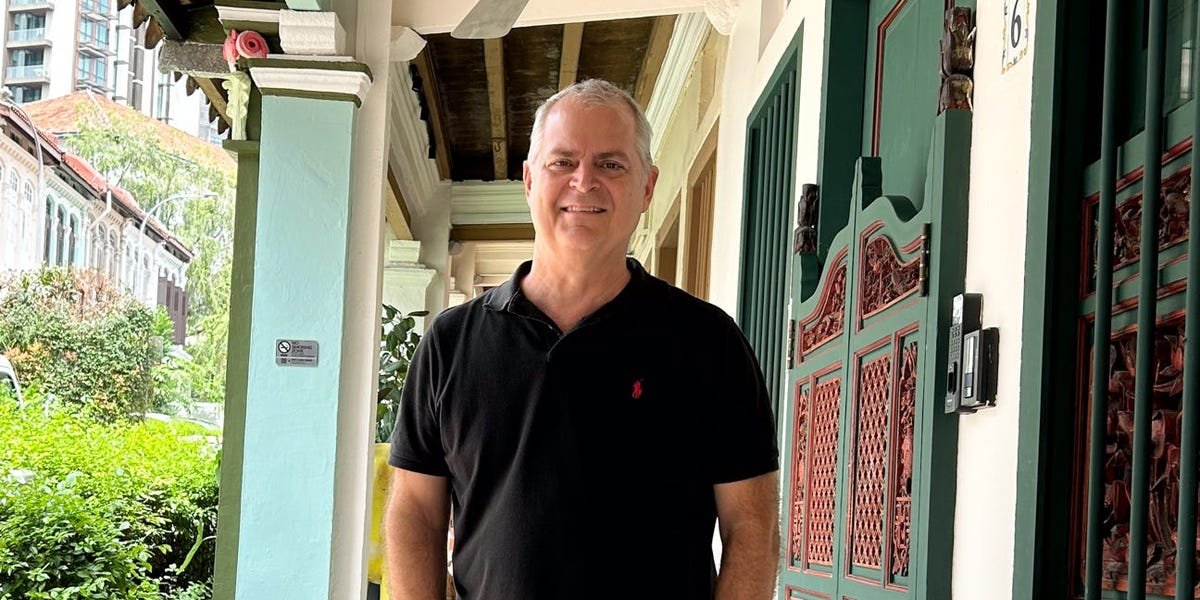
LeBoutillier and his wife, Jamie, are raising their family in Singapore.
Provided by Kris LeBoutillier
Will I return to the US?
Probably, although I’m not sure, because everything is different. I remarried three years ago. I have a 9-year-old daughter from a previous marriage and a toddler son with my wife, Jamie. Both kids have US passports and deserve an American identity and a place to put down roots. They’ve been to the US to meet their cousins and my oldest friends, but have never had the chance to live there or fully experience life as Americans.
Recently, I told my daughter that she’d visited Manhattan when she was a toddler. Her response: “Where is that?” It was a stark realization.
They should know the country that shaped who I am.
Would I recommend an expat life to someone? Absolutely. I got the life I dreamed of. And despite the challenges and distance, it gave me everything I hoped for when I was that kid, growing up near Buffalo, reading about the rest of the world.
Do you have a story to share about living abroad? Contact the editor at akarplus@businessinsider.com.