
Kelsey Baker, Military and Defense Reporting Fellow

Medal of Honor pilot was hit repeatedly by machine-gun fire during the Maduro raid, Trump says, revealing mission details

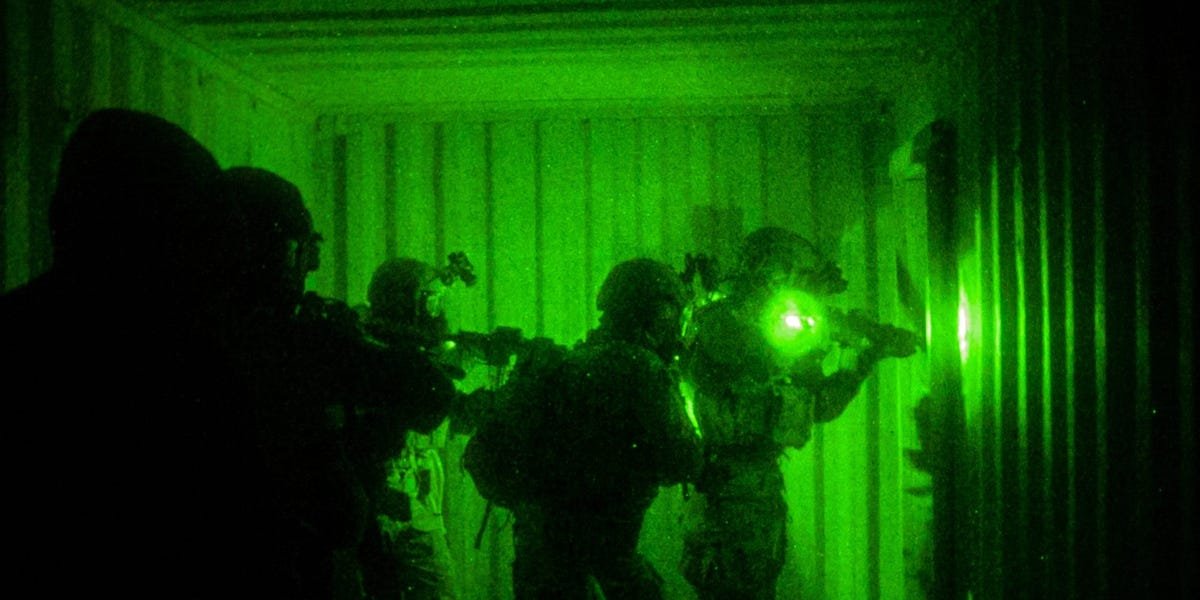
President Donald Trump shared vivid details Tuesday night of the firefight that erupted as an American helicopter reached Nicolás Maduro’s compound during the US raid into Venezuela last month.

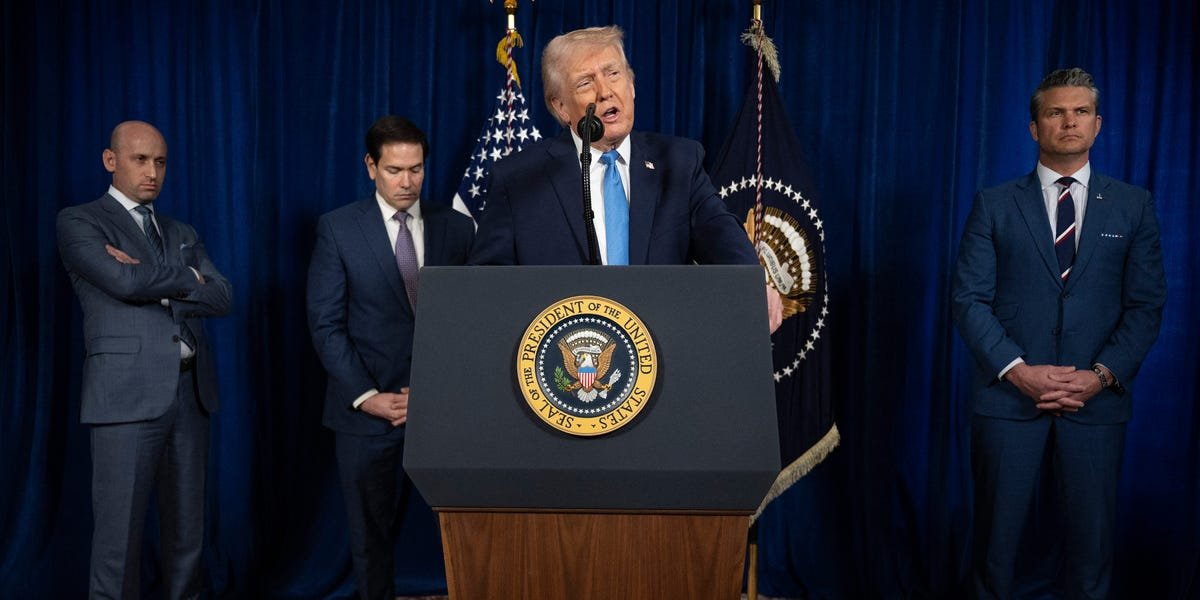
As the Chinook helicopter carrying elite US ground troops and piloted by Chief Warrant Officer 5 Eric Slover approached what the president had previously described as a fortress, “enemy machine guns fired from every angle,” Trump said during his State of the Union Address.

“Eric was hit very badly in the leg and hip,” the president said as he awarded the military’s top valor award, the Congressional Medal of Honor, to Slover.

Immediately following the January 3 raid to capture the then-president of Venezuela, Trump said that a helicopter got hit “pretty hard” and that “a couple of guys were hit.” Official details of the injuries were limited. His speech on Tuesday shed new light on what happened that night.


US Air Force crew chiefs watch as F-35A Lightning II's taxi following military actions in Venezuela in support of Operation Absolute Resolve, Jan. 3, 2026.

Stealth fighters and supersonic bombers were among the aircraft involved in the mission.

US Air Force Photo


After numerous American warplanes, including advanced stealth fighters, suppressed Venezuela’s air defense network, helicopters carrying ground troops moved in, approaching Maduro’s fortified compound.

Slover’s helicopter encountered “two machine gunners who escaped the wrath of the previous planes,” Trump said. As the bullets hit the aircraft, Slover “absorbed four agonizing shots, shredding his leg into numerous pieces,” he continued. “He was gushing blood.”

Helicopter pilots rely on both a control stick and floor pedals for maneuvering. Most helicopters have one main rotor and a small tail rotor to keep them from spinning, but a Chinook has two large rotors that balance each other.

Despite his serious wounds, Slover managed to maneuver his helicopter into position so that onboard gunners could “take care of business” and “eliminate the threat,” the president said, crediting Slover with “saving the lives of his fellow warriors from what could have been a catastrophic crash, deep in enemy territory.”

After landing, Slover told his co-pilot, who was also wounded but not as gravely, to “take over,” saying, “I’m about ready to pass out.” A total of seven US troops were injured during the raid.


US First Lady Melania Trump presents US veteran Captain E. Royce Williams with the Medal of Honor

US First Lady Melania Trump was involved in presenting US veteran Captain E. Royce Williams with the Medal of Honor.

ANDREW CABALLERO-REYNOLDS / AFP via Getty Images


During his State of the Union address, Trump also presented a second Medal of Honor to centenarian US Navy pilot E. Royce Williams, a veteran of World War II and the Korean and Vietnam Wars.

Three years ago, Williams was awarded the Navy Cross for “extraordinary heroism” in a Korean War air battle in which he was outgunned and outmatched in his F9F Panther by Soviet MiG-15 fighters but still managed to shoot down four of them.

The 1952 dogfight was classified for decades.

The Congressional Medal of Honor is usually awarded in solemn, less politically charged ceremonies at the White House. The award can take years, or even decades, as was the case for Williams, to be bestowed. It requires eyewitness accounts and has strict criteria. Other valor awards, such as the Navy Cross or Silver Star, can occasionally be upgraded to a Medal of Honor, a notoriously lengthy process.

The top award is bestowed upon troops engaged against an enemy of the US or an “opposing foreign force,” according to the military’s awards manual.

That the medal was awarded during the State of the Union elicited reactions from some veterans online who felt that the timing dampened the gravity of the award’s significance.

During the event, Trump reiterated his previously stated desire to receive the Medal of Honor.

“I’ve always wanted the Congressional Medal of Honor, but I was informed, I’m not allowed to give it to myself,” Trump told the crowd. “I wouldn’t know why I’d be taking it, but if they ever open up that law, I will be there with you someday.”


Source link

US-planning-for-the-Maduro-raid-eyed-a-time-when.jpeg

US planning for the Maduro raid eyed a time when much of the Venezuelan military was expected to be on holiday, memo reveals

US planning for the high-risk raid to apprehend Venezuela’s former president, Nicolás Maduro, centered on a time when much of the country’s military would be on holiday leave, a newly released memo reveals.

The December 23 memorandum from the Department of Justice’s Office of Legal Counsel offers fresh details about how the US planned to pull off the daring nighttime raid to capture Maduro in his fortified compound and transport him to New York to stand trial. The former leader has pleaded not guilty to the drug and weapons charges he faces.

The raid began late on January 2 and ran into the next day. President Donald Trump said on January 3 that the initial plan was for the operation to occur four days earlier, on December 30, but he decided to wait for better weather.

“The expected duration of the operation within Venezuelan territory is [redacted] hours,” wrote T. Elliot Gaiser, a US assistant attorney general, wrote in the late December DOJ memo, which looks into the legality of the raid and was made public this week. Much of the planning section is blacked out.

“In order to minimize casualties, the strike will take place at 0100 am (local time) on a date where a maximum number of Venezuelan military would be on leave for the holidays,” Gaiser wrote.


A squad of Venezuelan Air Force K8W aircraft overflies during the 2025 Venezuela industrial aviation expo at the Libertador Air Base in Maracay, Aragua State, Venezuela, on November 29, 2025.

The US attacked Venezuelan military targets as part of its raid earlier this month.

Federico PARRA/AFP via Getty Images


It’s unclear how many soldiers were away when the US actually executed the operation in January. Dozens of Venezuelan and Cuban security personnel were killed, the two countries said after Operation Absolute Resolve concluded.

The DOJ memo, which cited Pentagon planning information and details how the US could effectively present the action as a law enforcement operation rather than an act of war, said that the US expected to encounter “significant resistance” from Venezuela’s air defenses.

That anticipated resistance includes several dozen anti-aircraft systems on the approach to Fuerte Tiuna, a major military installation in Caracas where Maduro and his wife were believed to be and, indeed, were at the time of the operation.

The memo outlined how US aircraft would strike air defense systems to clear a path for assault forces to reach Tiuna. It said that the Pentagon aimed to target a local power switching station to keep the power off, which could explain Trump’s post-raid remarks that a “certain expertise” was used to turn off the lights in Caracas.

The US could have also carried out a cyberattack or employed electronic warfare capabilities. “Kinetic operations will be preceded by non-kinetic action,” the memo said.


A fuel tanker truck drives past US Air Force F-35 Lightning II and F-22 Raptor fighter jets on the tarmac at the former Roosevelt Roads naval base, after US President Donald Trump said the US has struck Venezuela and captured its President Nicolás Maduro, in Ceiba, Puerto Rico, January 3, 2026.

More than 150 US aircraft participated in the operation.

Eva Marie Uzcategui/REUTERS


The memo was published several days before the raid, so it’s unclear how US planning may have changed between the time it was written and the actual operation.

Dan Caine, the chairman of the Joint Chiefs of Staff, said on January 3 after the raid that more than 150 US aircraft participated in the operation, including stealth jets, electronic attack aircraft, surveillance and reconnaissance planes, airborne early warning aircraft, bombers, and drones.

Many of these aircraft targeted and engaged Venezuela’s air defenses to clear a path for low-flying helicopters carrying the forces that stormed Maduro’s compound and apprehended the former president and his wife, consistent with the planning memo.

The US didn’t lose any aircraft during the raid. A helicopter took a hit but still remained operational, and a defense official said seven American service members were wounded during the night.

“Risks to the mission are significant,” the memo said, adding that its “success will depend on surprise.” In the aftermath, Caine said the US achieved “totally the element of surprise.”


Source link

What-is-Delta-Force-The-elite-US-special-ops-unit.jpeg

What is Delta Force? The elite US special ops unit reported to be at the center of the raid to capture Venezuela’s Maduro

At the center of the US operation that captured Venezuelan President Nicolás Maduro and his wife was an elite and secretive special operations group, per multiple reports.

Citing officials, outlets like The New York Times and The Wall Street Journal reported that Delta Force, alongside law enforcement personnel, carried out the extraction of Maduro as part of Operation Absolute Resolve, a surprise nighttime raid of the Venezuelan leader’s compound in Caracas.

Business Insider wasn’t able to independently confirm the participation of the elite unit in the operation. The Pentagon directed BI’s queries to the White House.

In discussions of the complex operation, President Donald Trump said only that it was executed by “the most highly trained soldiers in the world,” adding that “there’s nobody that has their talent.”


Caracas at sunset

Caracas, the capital of Venezuela

Juan BARRETO / AFP via Getty Images


The president may have been speaking about all of the personnel involved. US officials said that the operation to grab Maduro included land, air, sea, space, cyber, and intelligence forces. But Trump’s language could easily apply to Delta Force, a top-tier special operations unit.

Here is what we know about this elite force.

An essential but highly secretive group

Delta Force, officially known as the 1st Special Forces Operational Detachment-Delta (SFOD-D), is tasked with capturing and eliminating high-value targets. Like other tier-one special mission units, such as SEAL Team 6, Delta Force tackles some of the US Army’s most covert and complex tasks.

The special operations unit, founded by Col. Charlie Beckwith in the 1970s for direct combat action, unconventional warfare, and counterterrorism, is headquartered at Fort Bragg in North Carolina, also home to other Army special operations forces.

Operators train for rapid infiltration and exfiltration, intense close-quarters combat, precision marksmanship, demolition, hostage rescue, and more. Unlike some other units, Delta pulls the best warfighters it can from across the US armed forces, though it mainly draws from Army special operations forces. Known as “quiet professionals,” Delta Force operators generally do not speak openly about their activities.

Much of the elite force’s work is highly classified, but some Delta missions are public knowledge.

Delta Force was involved in the US operation, Just Cause, that ultimately led to the capture of Panamanian dictator Manuel Noriega during the 1989 invasion of Panama. And the group distinguished itself during the 1993 Battle of Mogadishu, made famous by the book and film “Black Hawk Down.” Two snipers were posthumously awarded the Medal of Honor for their actions.

This century, this unit was among the US special operations forces that surged into Afghanistan immediately after the 9/11 attacks, played a role in the 2003 capture of former Iraqi President Saddam Hussein, and was involved in the death of the infamous Islamic State leader Abu Bakr al-Baghdadi in 2019.


Aircraft, explosions, and smoke were seen across Caracas, the capital of Venezuela, from about 2 a.m. The US carried out strikes and captured the nation's president, Nicolás Maduro.

Aircraft, explosions, and smoke were seen across Caracas, the capital of Venezuela, during the US operation.

Reuters


And now reporting indicates Delta Force, along with the 160th Special Operations Aviation Regiment, was instrumental in capturing Maduro.

The assault on Venezuela and raid on Maduro’s compound

The US president and other US officials shared details of the raid that captured Maduro on Saturday.

Dan Caine, chairman of the Joint Chiefs of Staff, said the apprehension team broke into a fortified compound to capture Maduro after months of planning. US intelligence agencies watched and studied his patterns of life, while other teams trained for the operation on a replica of Maduro’s home. The US used a similar tactic to ready for the 2011 raid on Osama bin Laden’s compound.

Reports indicate Delta Force was inserted into the target area by the 160th SOAR, the Night Stalkers famous for their ability to get special operators in and out of tough spots.

With fighters, bombers, electronic warfare planes, and more delivering strikes and providing air cover, Caine said the helicopters carrying the extraction team were able to reach their target with “totally the element of surprise.”

During the complex apprehension operation, American operators moved fast through the building to find Maduro and his wife, seizing them before they could get the door closed on a steel safe room.


Venezuelan President Nicolás Maduro arrives in New York.

Venezuelan President Nicolás Maduro arrives in New York.

Reuters


Trump said that Venezuela’s military was overwhelmed by US forces. Several American personnel were injured, the president said, and one of the helicopters was hit but remained flyable. No troops or equipment were lost in the operation.

The Trump administration is holding Maduro responsible for supporting narco-terrorism (drug trafficking) and other criminal activity. The recent operation is also about oil, with the administration accusing Venezuela of using oil revenue to fund malign activities. Maduro has denied the allegations.

Trump said on Saturday that the US would run Venezuela until a “safe, proper” election could occur. He also said that US oil companies would be entering the country, which has the world’s largest proven crude oil reserves.

To secure these operations, he said that he’s not ruling out putting US troops on the ground. He said the US military is ready to conduct more attacks if needed.

US Attorney General Pamela Bondi said Maduro and his wife were charged in New York with drug and weapons offenses. He is due to appear in court.


Source link

Heres-what-the-smartest-people-in-foreign-policy-business-and.jpeg

Here’s what the smartest people in foreign policy, business, and economics are saying about Trump’s raid on Venezuela

President Donald Trump on Saturday announced that the US had conducted a raid on Venezuela, resulting in the capture of Venezuelan President Nicolás Maduro and his wife, and big names in business and foreign policy have been reacting as the aftermath unfolds.

Here’s what they’ve been saying:

Charles Myers

Myers, chairman of political risk consulting firm Signum Global Advisors, told Business Insider that foreign investment in oil, tourism, and construction will be the “centerpiece” of Venezuela’s financial recovery going forward, adding that he expects the country’s economy will grow “faster over the next two years than people anticipate because of the extent or scale of foreign investment.”

Myers, also a former head of investment advisory firm Evercore, is planning a trip of 15-20 investors to visit Venezuela in March to identify investment opportunities. Signum Global Advisors has hosted similar trips for investor groups in Syria and Ukraine.

Ian Bremmer

Bremmer, founder of the political risk research and consulting firm, Eurasia Group, in a post on LinkedIn, wrote that the “US presumption is next Venezuelan leaders will now do what the Americans want because they’ve just seen the ‘or else.'”

Accompanying the post was a photo of a drawing of a horse. The hindquarters of the horse were drawn in intricate detail, and labeled “SOF operation to capture Maduro,” referencing the special operations forces mission that was executed early Saturday. The horse’s head was depicted as a rudimentary children’s drawing, captioned “plans for future of Venezuela.”

“I wouldn’t exactly call it a plan,” Bremmer added.

In a separate post, he wrote: “The law of the jungle is dangerous. What applies to your enemies one day can apply to you the next. Make no mistake where the world is heading here.”

Bill Ackman


Bill Ackman

Bill Ackman has expressed support for many of the Trump administration’s policies, foreign and domestic.

PATRICK T. FALLON/AFP via Getty Images


The billionaire hedge fund manager wrote in a post on X that “The removal of Maduro will lower oil prices, which is good for America and very bad for Russia. A weaker Russian economy will increase the probability that the war in Ukraine ends sooner and on more favorable terms for Ukraine. And Putin will be sleeping in his safe room from this point going forward.”

Henry Gao

Gao is a senior fellow at the Center for International Governance Innovation and a law professor at Singapore Management University. In a series of posts on X, he said the raid on Caracas ushered in “the brave new world of international law.”

“Maduro’s capture has triggered the biggest revival of international law since Grotius — and overnight turned everyone on X into an international law wonk, eager to compare Venezuela to Taiwan,” he wrote.

“But China has never treated the Taiwan issue as a matter of international law,” he continued. “It has always been framed as an internal affair, with Taiwan regarded as a renegade province. The reason China has not acted is not because it lacks legal justification, but because it lacks the capability. Thus, US ops in Venezuela provide China with no additional legal justification.”

Sen. Elizabeth Warren

The Democratic senator from Massachusetts is a former Harvard Law professor who holds deep expertise in bankruptcy and consumer finance. In a post on X, she wrote that Trump’s action to seize Maduro, “no matter how terrible a dictator he is — is unconstitutional and threatens to drag the US into further conflicts in the region.”

“What does it mean that the US will ‘run’ Venezuela, and what will Trump do next around the world?” Warren wrote. “The American people voted for lower costs, not for Trump’s dangerous military adventurism overseas that won’t make the American people safer.”

Elon Musk


President Trump and Elon Musk i nthe White House.

Elon Musk and Donald Trump in the Oval Office.

Kevin Dietsch/Getty Images


The Tesla and SpaceX CEO spent most of Saturday posting praise for the Trump administration and the military operations in Venezuela, posting that it was “heartwarming to see so many Venezuelans celebrating their country freed from a brutal tyrant.”

In another post, Musk retweeted a White House image of Maduro aboard the USS Iwo Jima after being apprehended, with the caption “Congratulations, President Trump! This is a win for the world and a clear message to evil dictators everywhere.”

Musk and Trump have had a tumultuous relationship over the years, alternating between appearing to be close allies and trading sharp criticisms in the media.


Source link

The-US-strikes-and-raid-that-captured-Venezuelas-leader-raise.jpeg

The US strikes and raid that captured Venezuela’s leader raise some big questions. Here’s what we know.

The US executed targeted, large-scale attacks in Venezuela’s capital city, Caracas, overnight.

President Donald Trump said Saturday American forces struck the country’s military, turned off the lights in the city, and captured Venezuelan President Nicolás Maduro and his wife, Cilia Flores, for prosecution in New York.

The assault news has raised big questions. Here’s what we know right now.

What did the US military just do in Venezuela?


Picture of fire at Fuerte Tiuna, Venezuela's largest military complex, after a series of explosions in Caracas on January 3, 2026.

The US carried out strikes in Venezuela early on Saturday.

Luis JAIMES / AFP


Early Saturday morning, Trump revealed on Truth Social that the US military carried out a “large-scale attack against Venezuela” and that the leader had been captured and taken out of the country.

The US president didn’t seek Congressional approval prior to the mission. Congress, however, was notified afterward.

Trump told Fox News he watched the capture of Maduro play out in real time from a room inside his Mar-a-Lago resort in Florida alongside military generals.

“I was told by real military people that there’s no other country on Earth that can do such a maneuver,” he shared during a phone interview with Fox News. “If you would have seen what happened, I mean, I watched it literally, like I was watching a television show.”

Trump said the raid was “extremely complex,” more so than the Midnight Hammer operation against Iran’s nuclear sites conducted last year. Maduro and his wife were taken to the Wasp-class amphibious assault ship USS Iwo Jima.

Trump said US assets involved included land, air, and sea, including a “massive number” of aircraft and troops. Chairman of the Joint Chiefs of Staff Gen. Dan Caine said the apprehension mission, called Absolute Resolve, was based on months of intelligence-gathering, including watching Maduro’s patterns of life, and involved all elements of the joint force, from space and cyber assets to traditional combat forces.

The assault involved 150 aircraft — fighter jets, bombers, electronic warfare planes, intelligence and surveillance aircraft, and helicopters and rotary aircraft — that provided “layered effects” to clear the way for the interdiction force to slip in with the “element of surprise” into downtown Caracas. Fighters and different drones covered the extraction.

There were no US personnel or equipment losses, Trump said; however, he did say that troops were hit, along with a helicopter that he said was hit “pretty hard.” Caine said the US responded to hostile fire with “overwhelming” force.

What has the Trump administration been saying about why this is necessary?


Groups of fighter jets sit on a tarmac.

The US military has built up a massive force presence in the Caribbean in recent months, including aircraft at an airport in Puerto Rico.

Miguel J. Rodriguez Carrillo / AFP


Tensions have been rising for months between Venezuela’s Maduro regime and the Trump administration, which has ramped up its rhetoric while increasing military action nearby.

The US has blamed Venezuela for pushing deadly drugs into the country, as well as using its oil industry, which the Trump administration says the US built and intends to take back, to fund narco-terrorism and other criminal activities.

The administration has labeled cartels and the Maduro regime terrorist organizations. Trump has also called Maduro an illegitimate leader.

What’s been happening in the lead-up to this assault?


A US Marine Corps UH-1Y Venom helicopter flies above José Aponte de la Torre Airport, formerly Roosevelt Roads Naval Station, on December 15, 2025 in Ceiba, Puerto Rico.

Trump said a US helicopter took fire during the operation in Venezuela.

Miguel J. Rodriguez Carrillo / AFP


The US has been launching attacks against alleged drug trafficking boats since September 2025, with over 100 people killed and others missing or captured.

A massive US force presence, including warships and combat aircraft, has been in the Caribbean to combat narcotics trafficking and pressure Venezuela for months.

More recently, US forces began executing a blockade of oil tankers out of Venezuela in an effort to enforce American oil sanctions, hurting a key Venezuelan export and straining its economy.

Maduro’s government said that the purpose of the US attack on Venezuela was to “seize Venezuela’s strategic resources, particularly its oil and minerals, in an attempt to forcibly break the nation’s political independence.”

How unusual is this?


A destroyed antiaircraft unit at La Carlota military air base, after US President Donald Trump said the US has struck Venezuela and captured its President Nicolás Maduro, in Caracas, Venezuela, January 3, 2026.

A destroyed air defense unit at a Venezuelan military base.

Leonardo Fernandez Viloria/REUTERS


The US has removed the leaders of sovereign states in the past. For instance, during the 2003 invasion of Iraq, or Operation Iraqi Freedom, it captured Saddam Hussein after the Bush administration asserted the Iraqi president had weapons of mass destruction. Hussein was later convicted for crimes against humanity by an Iraqi court and executed in December 2006.

A lack of evidence that Hussein’s regime had weapons of mass destruction led to criticisms against the Bush administration’s motives.

Much earlier, Panamanian military dictator Manual Noriega was also a target of American military forces during the US invasion of Panama from December 1989 to January 1990, partially prompted by his attempt to annul the results of the 1989 Panamanian general election. US courts had charged Noriega with drug smuggling and money laundering, and the Panamanian official was captured in January 1990 and taken to Miami, where he was convicted on most of the charges.

Both Noriega and Maduro were heads of state indicted by US federal courts, they were accused of using state power to facilitate drug trafficking, and the US could argue in both cases those actions taken against them were law enforcement.

The US has also conducted military action to kill prominent foreign figures. Exactly six years ago, US military personnel successfully assassinated Qasem Soleimani, a senior Iranian military officer, in a drone strike in Baghdad.

The US designated Soleimani a terrorist in 2005. In response to Soleimani’s assassination in January 2020, Iran launched missiles against US military bases in Iraq, injuring 110 US troops.

What’s happening now?


A woman wearing a hood and mask holds a sign that says,

Maduro and his wife have been indicted in New York, and Trump said the US will be involved in the next steps for the Venezuelan government.

Carlos Jasso/Reuters


Maduro and his wife are on their way to New York. Pamela Bondi, US attorney general, said that Maduro had been charged with narco-terrorism conspiracy, cocaine importation conspiracy, and possession of machine guns and destructive devices, as well as conspiracy against the US.

“They will soon face the full wrath of American justice on American soil in American courts,” Bondi said on X.

On Saturday morning, Trump posted a picture of Maduro in custody on Truth Social. The photo showed Maduro aboard USS Iwo Jima.


Venezuelan president Nicólas Maduro in custody.

Venezuelan president Maduro in custody on the USS Iwo Jima.

Truth Social


By law, Venezuelan vice president Delcy Rodríguez should assume power in Maduro’s absence. But Trump said the US would “run the country” until a “safe, proper” election can occur.

The president also added that US oil companies would be returning to Venezuela.


Source link