Ive-raised-my-teen-to-be-independent-since-kindergarten-Now.jpeg

I’ve raised my teen to be independent since kindergarten. Now she’s teaching me how to be self-reliant with tech.

This interview is based on a conversation with Laura Burgoyne, 47, of Wayne, New Jersey, who works in commercial real estate. It has been edited for length and clarity.

I believe the best thing you can do for your children is to raise them as independently as possible. That way, when they become adults, they’re more likely to think for themselves, not panic when things go wrong, and to problem-solve.

My daughter, Elizabeth, 17, will be attending college in the fall. I’m not worried in the slightest. I know she’ll be able to stand on her own two feet.

She’s had a lot of freedom and taken on responsibilities throughout her childhood, mostly because I’m a free-range parent who encourages autonomy.

I taught my daughter independence from a young age

I started with the smaller things in kindergarten, like encouraging her to choose products on the grocery store shelves or to help me at the checkout.

She felt good about the level of trust and about being treated like an individual with her own wants and needs.

Elizabeth became more self-reliant over time. At 8, there was a mix-up about when she’d be dropped off at the bus stop in our village after school.


A mom and her child at a swimming pool.

Burgoyne and Elizabeth enjoyed fun activities.

Courtesy of Laura Burgoyne.


I wasn’t there to meet her as usual, but she wasn’t freaked out. Instead, she walked to the customer service desk at a nearby supermarket. She asked if she could use their phone.

There was no fear or panic in her voice when she called me. She waited calmly until I arrived.

She understands finances

I’ve always seen the importance of teaching financial literacy to children from a young age.

So many people don’t carry cash these days and use credit cards; it’s hard for kids to understand the way that money works.

Every week, since she was about 4, I’d make a point of withdrawing cash from the ATM and showing Elizabeth the different bills.

I’d tell her how much we had to spend on groceries, how much we needed for our mortgage and utilities, and how much we put toward fun activities like gymnastics or art class.


A woman with her daughter.

Burgoyne taught Elizabeth the whys and wherefores of finance.

Courtesy of Laura Burgoyne.


From the age of 6, Elizabeth did little chores for neighbors and friends, like helping weed the garden or carrying their shopping from the car.

She didn’t know it at the time, but I gave them the dollar in advance that they paid her. It taught her the work ethic.

At 14, she started her first job scooping ice cream. These days, she works as a part-time hostess at a diner. She puts half of her salary into a personal savings account, keeps 40%, and donates the rest to charity.

I’ve taught my daughter the realities of stranger danger

I’m not a helicopter mom, but that doesn’t make me negligent. Elizabeth’s safety comes first, and I stress that she should always be aware of her surroundings.

I’ve told her there’s no such thing as “good strangers” and “bad strangers.” Kids are frightened by that language. It leads to a suspicious, cautious mindset that can make you wary of everybody.


A woman wearing a black and white top and her daughter

Burgoyne encouraged Elizabeth not to be frightened of strangers.

Courtesy of Laura Burgoyne.


Instead, I’ve said that you can talk to adults you don’t know, as long as you never go anywhere with them. She knows she can ask an adult for help if needed.

She also knows that, if an adult asks a child for help or to accompany them somewhere, it’s a huge red flag.

Meanwhile, she has learned to be sociable and friendly among older people. She can hold her own in conversation. People often think she’s older than she is.

We’re not co-dependent

Growing up in the late 80s and early 90s, I played a game with my uncle when he’d get me to navigate in the car. We made a lot of wrong turns, but he would never tell me where I’d gone wrong. Instead, I’d have to figure out how to get us home myself.

It taught me a valuable lesson: to think for yourself and trust your instincts.

I encouraged Elizabeth to try a similar exercise while driving me to an unfamiliar place. She purposely didn’t use GPS.

It took longer than usual — and we got lost a few times — but we got there. Now, Elizabeth is confident she’ll be OK if her GPS fails.


A mom and daughter standing in front of a board showing a Broadway show.

Burgoyne and Elizabeth are not codependent.

Courtesy of Laura Burgoyne


She set me a challenge in return. I’m a technophobe and rely on Elizabeth to do the electronics at home, such as resetting the router. I bought a new iPhone and asked Elizabeth to set it up for me. I was scared of losing my contacts, photos, and other data.

To my surprise, she said no. She said that I had to work it out for myself. I was shocked at first, then I just got on with it.

I got the phone working and felt quite proud. As she approaches adulthood, Elizabeth takes pride in her independence and abilities, too.



Source link

Ive-raised-my-3-kids-across-Switzerland-Australia-and-the.jpeg

I’ve raised my 3 kids across Switzerland, Australia, and the US — each culture has taught me valuable parenting lessons

  • Raising kids across 3 countries — the US, Australia, Switzerland — changed how I approach parenting.
  • It opened my eyes to how different cultures empower children to reach their full potential.
  • My kids learned early independence in Switzerland and the power of preparation in Australia.

Parenting my children across Australia, Switzerland, and the US showed me how deeply culture shapes the way we raise our children.

In Australia, I didn’t fully recognize how much my parenting was influenced by my suburban Sydney lifestyle until we moved abroad.

When my family moved to Switzerland, I noticed the way the Swiss promote child autonomy, empowering their kids from a young age — and when I adopted that mindset, my children thrived.

After moving to the United States, I learned a different parenting lesson about the true value of community and strong support networks, which strengthened my children’s sense of belonging.

Each country offered unique perspectives on parenting, but they taught me the same thing: Raising children isn’t about choosing one philosophy.

Instead, it’s about treating my experiences as a “cultural buffet,” trying new methods, keeping what works, and leaving the rest behind.

In Switzerland, independence is promoted from an early age.

In Switzerland, independence is a big deal for kids.

Naomi Tsvirko

When I first moved to Switzerland from Australia, I was stunned to see 5-year-olds in high-visibility vests walking to school alone, without adult supervision.

When I asked my Swiss neighbor about this, she shrugged and said, “Children can do amazing things when you let them.”

I started to give my children more responsibility and even let them walk to the local park and bakery without me. I realized they were ready, and they loved the freedom.

Living there also taught me the importance of letting children be a little uncomfortable.


Kids standing on stones next to woman near water

We no longer hesitate to play in the rain or a bit of snow.

Naomi Tsvirko

I remember dropping my kids off at a school playground early one rainy morning in Switzerland. The teacher stood outside, wearing her raincoat, calmly watching the children play in the rain.

In Australia, rainy days were usually spent indoors, but in Switzerland, life continues outdoors in almost any weather.

At first, my son looked up at me, unsure whether to join in. His teacher encouraged him to play, and before long, he was running around like everyone else.

That was when I really understood that common saying: “There’s no such thing as bad weather, only ill-prepared people.” Swiss parents approach tough situations not by avoiding discomfort, but by preparing children to handle it.

Australia showed me it’s important to prepare children for the road rather than trying to control it.


Kids smiling with woman in front of purple hydrangeas

My kids learned a lot in Australia.

Naomi Tsvirko

In Australia, helicopter parenting is widely frowned upon. When I worked as a teacher, I quickly learned that parents who hovered over their children didn’t just limit independence, they undermined confidence.

One of the hardest parts of parenting has been learning to step back and let my children take age-appropriate risks, trusting that they can handle them.

That parenting lesson was cemented when my 3-year-old daughter identified a venomous redback spider in our bathroom. She closed the door and informed me right away.

Her preschool had taught her how to recognize dangerous Australian spiders and what to do when they encountered them. It wasn’t fear-mongering, but survival training — a reminder that we can’t control the road ahead, but we can prepare our children to navigate it.

I also learned that being laid-back can help kids build confidence.


Kids smiling wearing leis

Australians can seem laid-back, but that’s not the same as apathy.

Naomi Tsvirko

Australians are laid-back by nature, but that doesn’t translate to apathy when it comes to parenting.

We care deeply for our children, but we’re also aware that even subtle parental anxiety can be picked up by them.

When my son was 2 years old, he started swimming lessons. His teacher gently asked me not to sit too close to the pool as she noticed that he kept looking at my face before trying anything new.

She was right. I seemed nervous, and he was even hesitant to put his head underwater.

I realized that I had to control my reactions when my children faced new challenges, otherwise my anxiety would become theirs, turning curiosity into fear instead of confidence.

Our time in the US has shown me how much competition builds confidence.


Family in NY rangers jerseys standing next to subway train

My kids have gotten more comfortable with competing in sports.

Naomi Tsvirko

For many years, I avoided entering my children in competitions because I didn’t want them to feel pressured to be the best at something.

However, after moving to the United States, my perspective shifted. Doing well in a competitive environment built my kids’ confidence, and losing helped build resilience.

My two older children first learned to play ice hockey in Switzerland, but it wasn’t until we moved to the US that they were exposed to higher-level competition. I’m grateful for their hockey coaches who mentored them and challenged my own assumptions about competition along the way.

Later, my daughter was able to represent our country at an international level. What surprised me the most wasn’t the achievement itself, but how much confidence she gained simply from being comfortable with competition.


Source link

How-Reco-raised-30-million-and-grew-an-additional-400.jpeg

How Reco raised $30 million and grew an additional 400% last year as companies sprint into AI

New York-based cybersecurity startup Reco has raised $30 million in Series B funding as companies rapidly expand their AI use.

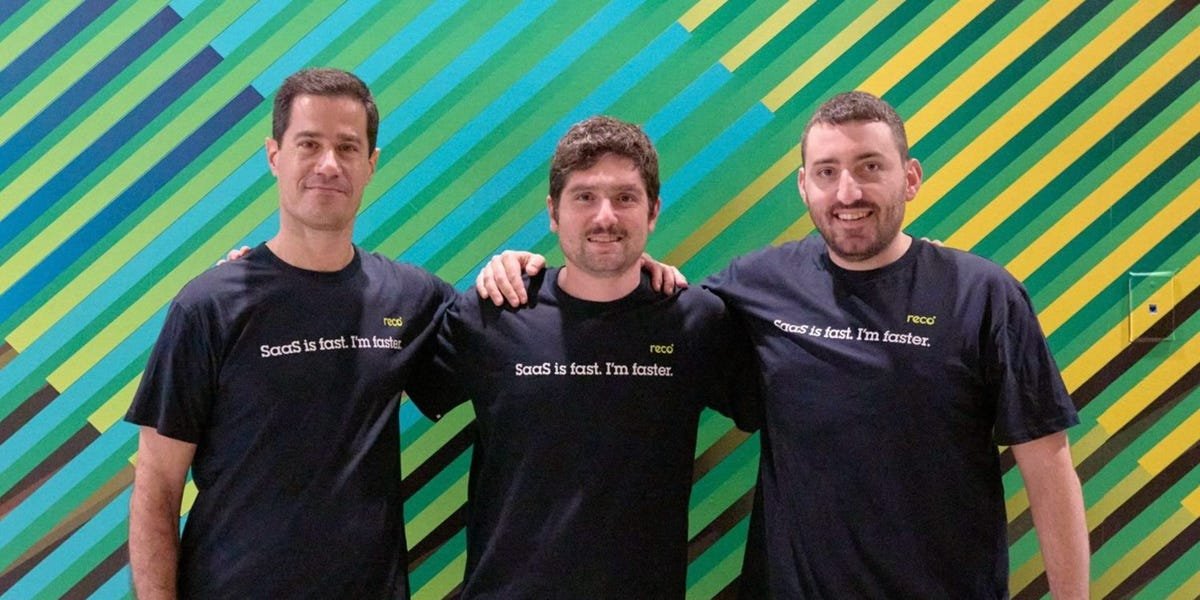
Ofer Klein, Gal Nakash, and Tal Shapira founded Reco in 2020 to fill the gap between a company’s existing cybersecurity protections and the other tech tools employees use, which is often AI.

“AI adoption has accelerated exponentially, and companies that blocked AI access a year ago cannot block it anymore,” Klein told Business Insider. “And I’m not talking about small mom-and-pop shops; I’m talking about the biggest banks, insurance, healthcare, pharma, and hospitals.”

Zeev Ventures led its latest round, with participation from all existing investors, which includes Insight Partners and Boldstart Ventures. New corporate investors for this round include Workday Ventures, TIAA Ventures, S Ventures, and Quadrille Capital.

“My investment strategy has always been to double down on what’s working,” Oren Zeev, the famed seed investor behind Zeev Ventures, said in a statement. “I’ve seen this pattern with successful companies like Navan and Tipalti, and I’m seeing it again with Reco. The signals we see show rapidly growing market demand for AI SaaS security, and we are experiencing exceptional growth.”

While software-as-a-service (SaaS) stocks have recently plunged amid concerns about AI disruption, Zeev sees a “massive” opportunity in AI for security.

After growing 500% year-over-year in 2024, Reco said it grew an additional 400% in 2025, driven by a sharp increase in business AI adoption.

Cybersecurity startups also raised nearly $14 billion in 2025, according to Pinpoint Search Group. That represented a 47% increase from 2024 and the most funding since 2021.

Klein said Reco began pulling in far larger companies than expected, repeatedly beating internal plans as AI went from blocked to mandatory.

“We built a plan, and we overachieved, and we updated the plan, and we overachieved again,” said Klein. “We said, ‘OK, enough is enough, let’s take more money and double down on AI SaaS.”‘

Klein said the biggest challenge for Reco now is keeping up with demand.

“The business is driving this huge traction into AI enablement,” he said. “Our biggest challenge right now: how we grow fast enough to meet this market need.”

Klein’s cofounders also bring in experience from working with the government. Nakash previously headed research at the Office of the Prime Minister of Israel, while Shapira holds a machine learning Ph.D. and also worked at Israel’s Office of the Prime Minister.

Reco faces competition from Torq, backed by Insight Partners and now valued at $1.2 billion, according to PitchBook. It also competes with Blackstone-backed Cyera, recently valued at $9 billion.


Source link

Im-parenting-my-kids-differently-from-how-I-was-raised.jpeg

I’m parenting my kids differently from how I was raised. I don’t want them to fear me, but instead trust me.

Growing up, the grandparents who raised me were a generation removed from me, and because of it, I never felt like I could go to them with real issues or problems.

I hid the deep and dark stuff because children were to be seen and not heard. We did not talk about the big things like sex or drugs. Instead, the warnings were direct and often frightening. They went something like this, “Do not do drugs or you’ll die.” The pregnancy mantra was similar: “Do not have sex or you’ll get pregnant.”

Alongside the lack of communication was a heavy dose of fear and threats. I suppose their own parents passed down less-than-stellar communication skills and used threats in an effort to protect.

I was terrified of my grandparents

I remember coming home after having a few drinks at a high school party. “You can do this one step at a time. Say hello and walk (in a straight line) to your room,” I whispered to myself as I climbed the steep front steps leading to our second-floor apartment. There was no getting caught, or I would die, or at least endure endless punishments preventing me from going to said parties until I was an adult capable of making my own decisions.

Not only did I not know how to talk to my grandparents, but I was also terrified of them.

Sometimes, this lack of communication led to unwise decisions. I didn’t feel like I had an adult I could call if I’d done something I wasn’t supposed to do. If I did something foolish, I was on my own. It wasn’t safe, and I’d watched more than one friend get seriously injured (either physically or mentally) when they made a typical teen choice and felt they didn’t have an adult they could trust to help them.

I wanted my kids to trust me

With my own kids, I wanted to keep the lines of communication open, which became especially important as my children navigated middle school and high school. These years of adolescence included poor decision-making and a desperate struggle between being a kid and trying to grow up.

I talked openly with them about drugs, sex, and drinking. No subject was off limits. They knew they could tell me anything. Keeping our communication open and honest showed them a level of trust that other parents found difficult to understand. I often had my kids’ friends telling me things they couldn’t say to their parents. I tried to listen without judgment. I knew it was a fine line between discipline and acceptance. I also knew no matter what, keeping my kids safe was my first and most important job as a parent.

As my second set of kids head into the muddy waters of middle school and high school, these discussions are again at the forefront. “If you drink, I’ll be more upset if you get in a car with someone who’s been drinking or if you decide to drive than I will because of the drinking,” I recently told my high school daughter. Realistically, while I don’t openly condone underage drinking, I know it is, more often than not, a part of the teen years. “Call me,” I said, “and I’ll come get you.

I try to stay open-minded

While there were many things I did not accept, I also did my best to remain open-minded. It was sometimes difficult to parent this way. My kids did and continue to do things I often don’t agree with. I looked at these as teaching opportunities, rather than seeing them as moments to punish. Viewing things this way has helped me foster and maintain very close relationships with my kids. It is something others have commented on, including a social worker I visited with my son. “No matter what is going on,” she said, “you two seem to have a really tight and open relationship.” It remains one of the best compliments I’ve received as a parent.

There was another side to those comments, though. Parenthood is often filled with judgment and criticism. When my son dropped out of school, and my teens struggled with typical teen things like drinking, drug use, and sex, I remember hearing a neighbor refer to me as a loosey goosey parent. The neighbor in question didn’t understand my relationship with my kids. They didn’t share my parenting philosophy. Really, they didn’t have to. While the comment initially bothered me, I knew I was parenting in the only way I could. I parented in a way that I wasn’t parented, but wished that I had been.

As my two oldest kids hit adulthood and my youngest two become teenagers, I’m not sorry for being loosey goosey. I would do it the same way all over again. In fact, I am. I have no regrets. I hope the neighbor who judged me feels the same way when their kids go through the tough teen years.


Source link

In-my-60s-I-sold-the-home-I-raised-my.jpeg

In my 60s, I sold the home I raised my son in and took a job on a cruise ship. It gave me the freedom I needed.

At almost 70, with my son grown and building his own creative life, I realized the home I had poured myself into for two decades no longer supported the future I wanted.

For almost 20 years, that house looked like the picture of stability. Teal doors, a tire swing, and a sunny studio beside the garage. It was where I raised my son as a single mother and built my photography career. Most people assumed I would stay there forever.


House exterior

The author decided to sell the house were she raised her son.

Courtesy of the author


But when my son graduated and moved to Orlando, something shifted. I had spent years encouraging him to live the life he wanted. Suddenly, I realized I needed to do the same.

The house was a money pit

Behind the postcard charm, a truth emerged. The house no longer supported my future. What once felt like a comfortable sanctuary had become a moneypit, its growing debt reminding me daily that I could not afford the life or the freedom I wanted. I had built a home to raise a confident and independent child, and I had done that, but holding on to the house was keeping me from evolving into the next chapter of my life, a chapter filled with creative possibilities that debt made impossible to pursue.


Baby items

The author purged her belongings before selling her house.

Courtesy of the author


Sorting through the rooms, I noticed how little the objects mattered. It was never the things, only the memories. And memories do not require storage space. I photographed what mattered, donated most of the rest, and watched the remnants of my old life line the curb. Letting go gave me breathing room for the first time in years. I could imagine what came next.

I sold the house and found confidence

Selling the house gave me the financial and emotional space to address something I had avoided for years. I needed extensive dental work, and with missing teeth, I no longer felt confident in my own smile. As a photographer, I had spent decades coaxing others to relax while I avoided the lens myself.


Rio de Janeiro

The author traveled to Brazil after selling her house.

Courtesy of the author


I trusted a cosmetic dentist in southern Brazil, the parent of an exchange student I once hosted, and the cost was far more realistic than in the United States. After surgery and the initial healing, I traveled to Rio. For the first time in years, I felt free to focus my lens and smile at the world around me without hesitation.

The physical and financial weight I had carried for years began to lift. Brazil restored my confidence and reminded me that reinvention was still possible.

I took a job on a cruise

Before selling my house, I had researched ways to travel while working. A friend hosted dinners as a sommelier on cruise ships, and my algorithm kept suggesting photography jobs at sea. I applied to a few with curiosity.


Cruise

The author took a job as a cruise photographer.

Courtesy of the author


While I was still in Rio, the call came. I was offered a contract as the master photographer on a premium luxury cruise line, a role that would take me across multiple continents. To qualify, I needed a Seafarer Certificate, which at my age required extensive medical tests and functional exams. It was humbling, but I passed.

I was notified with less than a week to prepare that my contract would start in Sydney. After a 31-hour flight, knowing I would board within 24 hours, I dropped my bags at the hotel and walked the waterfront from Darling Harbor to the Opera House. A mist hung in the air, turning the city into a soft shimmer through my lens.

Life at sea was a study in contrasts. I photographed in a studio on the 15th floor but slept far below in a windowless cabin. I climbed endless flights of stairs each day. The ancient programs, cameras, and equipment made my days long and tedious. But above deck, the ocean made everything worth it. An unobstructed sunset on open water can shift your entire mood. Each time we reached a new port, the world opened again. My creative mojo began to gel for the first time in a long while, and I realized I was able to absorb so much only because I had let go of so much.

A new home and a new beginning

In six months, I had visited three continents, become healthier than I had been in years, and for the first time in decades, my smile came without hesitation. My financial responsibilities felt lighter, and the spark I had been missing finally came back after years of accumulating belongings and obligations that had kept me anchored when I was ready to sail into another chapter filled with creativity.

While recovering in Miami from an injury, I received another unexpected call. An apartment had become available in the Asbury Park building where I had applied years earlier. It had an ocean view, a community of artists and musicians, and a rent I could actually afford. It felt like the universe was giving me the chance to finally act on my hopes and creativity.

I had let go of everything that once held me back. What I gained was freedom, the freedom to create, to travel, and to smile freely again, with my camera as my ticket forward.


Source link

19-states-just-raised-their-minimum-wage-See-which-states.jpeg

19 states just raised their minimum wage. See which states pay the most.

Minimum wage is up in 19 states starting January 1, affecting over 8 million workers.

Washington, D.C., has the highest minimum wage in the US at $17.95 per hour, while 20 states still either mandate $7.25 or default to the federal line.

Business Insider listed the minimum wage in each state, from highest to lowest. We bolded the states where wages increased starting January 1, 2026.

$17.00/hour or more

Washington, D.C.: $17.95

Washington: $17.13 (increased from $16.66)

New York: $17 (increased from $16.50)

*The minimum wage applies only in New York City, Nassau County, Suffolk County, and Westchester County.

$16/hour — $17/hour

Connecticut: $16.94 (increased from $16.35)

California: $16.90 (increased from $16.50)

Hawaii: $16.00 (increased from $14)

Oregon: $16.30 or $15.05 or $14.05

*The standard minimum wage in Oregon is $15.05 per hour. The minimum wage in the Portland metro area is $16.30 per hour, and the minimum wage in nonurban counties is $14.05 per hour.

New York: $16.00 (increased from $15.50)

*The minimum wage outside New York City, Nassau County, Suffolk County, and Westchester County.

Rhode Island: $16.00 (increased from $15)

$15/hour — $16/hour

New Jersey: $15.92 (increased from $15.49)

*The minimum wage for employers who employ fewer than six people and employees engaged in seasonal employment in New Jersey is $15.23 per hour.

Colorado: $15.16 (increased from $14.81)

Arizona: $15.15 (increased from $14.70)

Maine: $15.10 (increased from $14.65)

Delaware: $15.00

Illinois: $15.00

Massachusetts: $15.00

Maryland: $15.00

Missouri: $15.00 (increased from $13.75)

Nebraska: $15.00 (increased from $13.50)

$10/hour — $15/hour

Vermont: $14.42 (increased from $14.01)

Florida: $14.00

Michigan: $13.73 (increased from $12.48)

Alaska: $13.00

Virginia: $12.77 (increased from $12.41)

New Mexico: $12.00

Nevada: $12.00

South Dakota: $11.85 (increased from $11.50)

Minnesota: $11.41 (increased from $11.13)

Ohio: $11.00 (increased from $10.70)

*Ohio employers with annual gross receipts under $405,000 must pay no less than $7.25 per hour.

Arkansas: $11.00

Montana: $10.85 (increased from $10.55)

*A Montana business not covered by the federal Fair Labor Standards Act whose gross annual sales are $110,000 or less may pay $4.00 per hour.

$7.25/hour – $10/hour

West Virginia: $8.75

Iowa: $7.25

Idaho: $7.25

Indiana: $7.25

Kansas: $7.25

Kentucky: $7.25

North Carolina: $7.25

North Dakota: $7.25

New Hampshire: $7.25

Oklahoma: $7.25

Pennsylvania: $7.25

Texas: $7.25

Utah: $7.25

Wisconsin: $7.25

No minimum wage or under $7.25/hour

Alabama

Georgia

Louisiana

Mississippi

South Carolina

Tennessee

Wyoming


Source link

Sydney Bradley brown hair denim vest slightly smiles

Read the pitch decks of 14 startups looking to disrupt dating apps and social networking that have raised millions

A new generation of consumer social startups is emerging.

From platforms focused on getting people to meet IRL to dating apps taking on Tinder or Hinge, startups are disrupting the digital social scene.

Founders of these startups are tackling problems like loneliness, dating app fatigue, and general dissatisfaction with the current social media incumbents.

Some founders come from Big Tech backgrounds, like the Instagram-heavy team behind photo-sharing app Retro, or the ex-Google employees building the social-mapping app PamPam. Gen Z founders are also throwing their hats in the ring, like Isabella Epstein’s IRL-focused app Kndrd, or Tiffany “TZ” Zhong’s Noplace app.

Investors are taking notice.

For instance, the IRL-social app 222, which matches strangers over dinner or activities with a personality quiz, raised a $2.5 million seed round from venture capital firms like 1517 Fund, General Catalyst, and Best Nights VC in 2024.

“We’re entering this new wave of social where people are trying to revert back to what people really use these platforms for to begin with — which is connection,” Maitree Mervana Parekh, a principal at Acrew Capital, told Business Insider in 2024.

Meet 19 startups in social networking, dating, and AI that investors have their eyes on

Some venture capital funds — such as French firm Intuition VC or gaming-focused firm Patron — have made tackling loneliness and relationships part of their investment theses.

But it’s not just friendship and dating that are ripe for disruption.

Startups like Khosla Ventures-backed Gigi, Yale-student-founded Series, Boardy, Filament, and Goodword have raised capital for AI tools to help people network better or maintain professional relationships.

“When people think about loneliness, they think about friends and family,” Goodword CEO Caroline Dell recently told Business Insider. “But we spend most of our waking hours at work as professionals.”

Meet the founders of 11 startups competing with dating app giants like Tinder

Other startups, like Diem and Spill, have opened up investment rounds to include users themselves using the platform Wefunder.

It’s not yet clear how many of these investments will pan out. Some startups are pre-revenue, while others are experimenting with monetization methods (such as freemium models).

“Founders have to be honest with themselves,” said Marlon Nichols, a founding partner at Mac Venture Capital. “Some of them aren’t really venture-scale or venture-type investments. We’re looking for the next big thing, the next category leader.”

Meet 12 VCs and investors eyeing new social startups

Business Insider spoke with several social media and dating app founders about how they are raising capital, including the pitch decks they used to raise millions of dollars.

Read the pitch decks that helped 14 social-networking and dating startups raise millions of dollars:

Note: Pitch decks are sorted by investment stage and size of round.

Series A

Seed

Pre-Seed

Other

Read about more social networking and dating startups raising millions:

  • Airbuds, a social music app, told Business Insider in November that it has raised $10.2 million — including a recent check from Alexis Ohanian’s VC fund.
  • Sweatpals, a fitness and wellness social platform, raised $12 million in seed funding.
  • Sitch, an AI matchmaking dating app, announced in April that it had raised $2 million in pre-seed funding.
  • Amata, another AI matchmaking dating startup, recently launched in the US and disclosed that it raised $6 million in 2023.
  • Gigi, an AI social network for making professional connections, announced in September that it raised $3 million from Khosla Ventures.
  • Corner, a social mapping app for Gen Z, disclosed in September that it has raised $3.75 million.


Source link

I-invented-a-new-type-of-landline-for-kids-and.jpeg

I invented a new type of landline for kids, and my daughter’s friends tested it out. This year, we’ve raised $3.5 million in funding.

This as-told-to essay is based on a conversation with Chet Kittleson, founder of Tin Can. It has been edited for length and clarity.

About three years ago, I was picking my daughter up from school and started chatting with parents about how arduous it is to run the kids’ social lives. One mom said that she felt like an executive assistant for her daughter. There was a lot of frustration and angst toward the kids, and as a dad of three, I understood it.

But that day, I played devil’s advocate. What else are the kids supposed to do, I asked. My first social network was the landline, but my kids didn’t have that. Most of the parents I knew were delaying cellphones, but that left the kids reliant on us for coordinating meet-ups.

I got to thinking: wouldn’t it be cool if there was a landline my kids — who are now 10, 8, and 5 — could use to organize their own social dates?

The phone led to my daughter walking to school with friends

I had been working at the tech and real estate company Redfin, which I loved because the company environment allowed me to be a rising executive and an active dad. Still, I had this itch to build a company of my own. I left to start another real estate-related company, but ultimately, we didn’t have a product-market fit, and had to call it quits after about two years.


Kids on the phone

The cofounder’s daughter started walking to school with friends thanks to her landline.

Courtesy of Tin Can


The same week I wrapped up that venture, I brought my co-founders over to talk about making my landline idea a reality. We spent a week at my kitchen table, making prototypes. By the end of the week, we had five phones.

Two of the prototypes went to my daughter’s friends. Right away, we started noticing the kids organizing more playdates and sleepovers. My favorite moment came when the phone rang at about 8:15 in the morning. My daughter’s friend was inviting her to walk to school for the first time.

I want to use tech to build better in-person connections

Right away, I started getting texts from other local parents, asking if they could get a phone. I made about 50 prototypes and installed them myself. I asked customers what they liked about the phone and what they were worried about when it comes to kids and tech, which helped me refine the product.

We officially started selling Tin Cans in April of this year. For parents, the phone is a symbol of a simpler time. For kids who have often never experienced independent communication, it delivers a new superpower they didn’t know they wanted.


Tin Cans

The company has raised $3.5 million in funding.

Courtesy of Tin Can


Today, we have Tin Cans in every state and Canada. We’ve raised $3.5 million. I’m excited to build a different type of technology company: one that uses tech to build connections and healthy relationships.

We’re trying to foster independent kids

Personally, that’s extremely meaningful to me because I’ve always struggled with anxiety and had my own challenges with screen addiction. I stopped using social media a few years ago after noticing that it was distracting me from moments with my kids.

Today, my family has two Tin Cans: one in a shared area of the home and another in my oldest’s room. These days, my kids frequently get calls from friends asking them to walk to school. They have more sleepovers or just chat with their grandparents.

There are also more subtle changes. When we pick up takeout, my kids are often the ones to go in and claim the order. That confidence is a symbol of the strong, autonomous children my wife and I are trying to raise.

One mother told us that Tin Can helped her daughter find her voice — literally. The girl started off talking quietly and timidly, but within weeks, was louder. That confidence translates to the real world, and the Tin Can lifestyle we’re hoping to foster.


Source link

An-88-year-old-worked-5-days-a-week-at-a-supermarket.jpeg

An 88-year-old worked 5 days a week at a supermarket. Then strangers raised almost $2 million so he could finally retire.

Before December, Ed Bambas was among the sizable swath of older Americans still working with retirement nowhere in sight. Then, he met content creator Samuel Weidenhofer.

Weidenhofer, who has 12 million followers across social media, set up a GoFundMe fundraiser for Bambas on Monday to help him leave his job at a Detroit supermarket and retire.

“I’m opening a fundraiser to help Ed live the life he deserves to finally give him some relief, comfort and the peace of mind that comes from knowing he can enjoy his later years without constant struggle,” Weidenhofer wrote on GoFundMe.

The fundraiser had a $1 million goal. As of Sunday, over 65,000 people have donated, reaching a total of almost $2 million.

In a video shared to Weidenhofer’s social media accounts, Bambas said he’s an 88-year-old veteran who works at the supermarket five days a week, eight hours a day. Bambas said he retired from General Motors in 1999, but lost his pension after the company went bankrupt in 2009.

Bambas told Weidenhofer that his wife, who died seven years ago, had been sick around the time his pension stopped. Without his pension, Bambas had to re-enter the workforce.

Nearly 550,000 Americans 80 and older are still working, according to 2023 US Census data.

As part of Business Insider’s “80 over 80” series, reporters interviewed nearly 200 workers over 80 — in addition to conducting surveys and receiving emails — in an effort to understand why.

While some older Americans are driven by a personal desire to work, others take on jobs to combat financial insecurity. Some workers over 80 told Business Insider that they use their income to supplement their Social Security and other retirement payments. They fear that without the income, they can’t afford the cost of living.

Weidenhofer shared a video of Bambas receiving his GoFundMe check on Friday.

“It’s something dreams are made of,” Bambas said in the video.

Bambas also thanked everyone who donated to the fundraiser.

“I cannot express in any words how thankful I am to all the people,” he said.


Source link