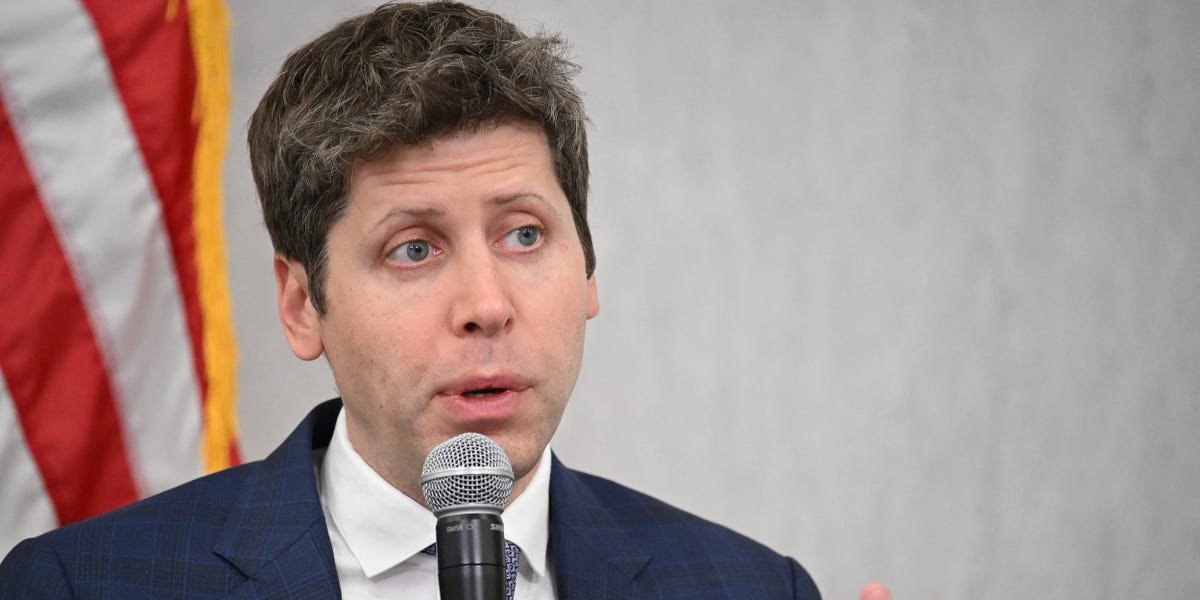
A-judge-just-offered-the-clearest-breakdown-yet-of-whats.jpeg

A judge just offered the clearest breakdown yet of what’s at stake in Anthropic vs. the Pentagon. Read her remarks in full.

On Tuesday, lawyers for Anthropic and the Department of Justice met in a San Francisco courtroom to argue over the AI company’s request to block the Pentagon from labeling it a national security risk.

Before the hearing began, Judge Rita Lin read prepared remarks that broke down the complex case — and what’s at stake — in unusually clear terms. In the process, she ripped into the Pentagon’s action, saying it looks like an effort to “cripple” a company that went public with a contract dispute.

We’re sharing her remarks in full because they get to the heart of a fight that could change the AI landscape. A ruling is expected any day now.

Read what she said in full here:

“Good afternoon to both of you. Yesterday, I disclosed a list of questions that I asked counsel to be prepared to answer today. Before we go down that list, I thought it might be helpful for the attorneys to hear kind of a general overview of my tentative thoughts on the case so far, and you’re welcome to sit down for that if you’d like. Then, I’ll invite you back up to address the questions.

I will say that I do think this case touches on an important debate. On the one hand, Anthropic is saying that its AI product, Claude, is not safe to use for autonomous lethal weapons and domestic mass surveillance. Anthropic’s position is that if the government wants to use its technology, the government has to agree not to use it for those purposes. On the other hand, the Department of War is saying that military commanders have to decide what is safe for its AI to do, not a private company.

It’s a fascinating public policy debate, and it’s not my role to decide who’s right in that debate — that is Secretary Hegseth’s call. The Department of War decides what AI product it wants to use and buy. And everyone, including Anthropic, agrees that the Department of War is free to stop using Claude and look for a more permissive AI vendor.

I don’t see that as being what this case is about. I see the question in this case as being a very different one, which is, whether the government violated the law when it went beyond that.

After Anthropic went public with this contracting dispute, defendants seemed to have a pretty big reaction to that. They took three actions that are the subject of this lawsuit. First, the president announced that every federal agency, not just the Department of War, would immediately ban Anthropic from ever having another government contract. So, that would include the National Endowment for the Arts using Claude to design its website — not allowed.

Second, Secretary Hegseth announced that anyone who wants to do business with the US military has to sever their commercial relationship with Anthropic. So, if a company uses Claude to have a customer service chatbot, now they can’t do any defense work.

Third, the Department of War designated Anthropic as a ‘supply chain risk.’ That label applies to adversaries of the US government who may sabotage its technology systems. It’s typically directed at foreign intelligence, terrorists, or other hostile actors.

What is troubling to me about these three actions is that they don’t really seem to be tailored to the stated national security concern. If the worry is about the integrity of the operational chain of command, DOW could just stop using Claude. It looks like defendants went further than that because they were trying to punish Anthropic.

One of the amicus briefs used the term ‘attempted corporate murder.’ I don’t know if it’s murder, but it looks like an attempt to cripple Anthropic. And specifically, my concern is whether Anthropic is being punished for criticizing the government’s contracting position in the press.

Defendants say they were doing this because Anthropic’s ‘sanctimonious rhetoric’ was an attempt to ‘strong-arm the government.’ DOW’s records say that it designated Anthropic as a supply chain risk because it was ‘hostile in the press.’ So it looks like DOW’s punishing Anthropic for trying to bring public scrutiny to this contracting dispute, which, of course, would be a violation of the First Amendment. So I have a lot of concern about that, and I would like to hear more from the government about that.

I also have a lot of questions about — one, whether Congress gave defendants the authority to do this in the first place, and two, whether defendants violated Anthropic’s due process rights by not giving them notice and an opportunity to respond.

The questions I put out yesterday really go more to those latter two topics. So, I want to start going through those questions, but I will just say that at the end of the questions, I’ll give both parties an opportunity to address the court. You can give me your reaction to the tentative thoughts that I gave you, and you can also just let me know anything else you think is important that I know about the case before I take it under submission.

So let me just invite counsel back up to the podiums, and we’ll just go through the questions.”


Source link

Startup-founders-25-years-old-and-younger-are-raising-millions.jpeg

Startup founders 25 years old and younger are raising millions. Read the pitch decks 12 of them used.

Tech is no stranger to young founders.

Steve Jobs was 21 when he cofounded Apple in 1976. Mark Zuckerberg was 19 when Facebook launched. Whitney Wolfe Herd was 25 when she unveiled Bumble.

Many of today’s startup founders are still young and scrappy. And in the age of AI, they’re even more empowered to barrel ahead.

Some are following the footsteps of tech titans before them and dropping out of college. Others are opting out of the undergraduate experience altogether, with a few ditching high school to pursue careers in tech.

Arlan Rakhmetzhanov, founder of AI coding startup Nozomio, told Business Insider that he dropped out of high school in Kazakhstan after getting accepted into the competitive startup accelerator program, Y Combinator (YC). At the age of 18, he raised $6.2 million for Nozomio.

Rakhmetzhanov isn’t the only teenager finding success in AI. There’s also Toby Brown, a UK teen who raised $1 million for his AI project. There’s also Zach Yadegari, the teenage cofounder of Cal AI, a nutrition app.

College-aged founders are also building companies and raising capital, such as the Yale students behind Series AI, a new social networking startup.


Alyx van der Vorm (25) and Faraz Siddiqi (23) both raised capital for their startups this year.

Alyx van der Vorm (25) and Faraz Siddiqi (23) both raised capital for their startups this year.

Kevin Farley; Muhammad Anjum


The median age for YC participants is now 24 years old, compared to 30 in 2022, YC’s Pete Koomen told The New York Times in August.

Business Insider has interviewed the founders of 12 startups who are 25 years old or younger and have raised millions in funding since 2024 about the pitch decks they used to impress investors.

Read 12 pitch decks founders who are 25 years old or younger used to raise millions:

Note: Founders were 25 or younger when Business Insider published the following articles.

Series A

Seed

  • Ditto, an AI dating startup founded by UC Berkeley dropouts, raised $9.2 million when the founders were 23 and 24. Read its 12-page pitch deck.
  • Lyra, an AI video call startup, raised a $6 million seed out of YC when its founder was 23. Read the 8-slide pitch deck it used.
  • Nexad, an AI adtech startup, raised a $6 million seed after wrapping up A16z’s Speedrun accelerator. Nexad’s CEO was 25. Read the 10-page pitch deck.
  • Orange Slice, a YC-backed sales tech platform, raised $5.3 million when its founders were 23. Read the 7-page pitch deck.
  • Golpo, a generative AI video startup, raised a $4.1 million seed out of YC when its founders — who are also brothers — were 19 and 20. Read its 7-page pitch deck.
  • Bluejay, an AI agent startup, raised a $4 million seed coming out of YC when its founders were 23. Read its 9-page pitch deck.
  • Novoflow, an agentic AI startup building tools for medical clinics, raised $3.1 million when its founders were 18 and 19. Read its pitch deck.
  • CodeFour, an AI police tech startup, was founded by two 19-year-old MIT dropouts and raised $2.7 million coming out of YC. Read the pitch deck.
  • Cerca, a dating app that connects people with mutual friends, raised a $1.6 million seed when its CEO was 23. Read the 10-slide deck.

Pre-seed

  • Series, an AI social networking startup, raised a $3.1 million pre-seed when its founders were 21.

This story has been updated with additional examples.


Source link

Bryan Metzger

Read the memo authorizing Senate offices to use ChatGPT, Gemini, and Copilot for official use

  • Senate staff have been approved to use three major AI chatbots for official work.
  • That includes OpenAI’s ChatGPT, Google Gemini, and Microsoft Copilot.
  • Lawmakers and staffers have already been experimenting more with using AI over the last year.

Staffers in the US Senate are now allowed to use three major AI chatbots for official business.

In a memo sent to Senate offices on Monday and obtained by Business Insider, the Senate Sergeant at Arms’ Chief Information Officer approved the use of three major AI chatbots using Senate data: OpenAI’s ChatGPT, Google Gemini, and Microsoft Copilot.

The existence of the memo was first reported by The New York Times.

The memo specifically highlighted Copilot, noting that it’s integrated into the Microsoft 365 tools that Senate staff already use.

The memo said that the tool may be used for “drafting and editing documents, summarizing information, preparing talking points and briefing material, and conducting research and analysis.”

It is not clear why the Senate did not authorize Claude, the AI chatbot developed by Anthropic. A message on an internal Senate IT website, viewed by Business Insider, said that Claude was among several AI tools that are still under evaluation.

The House has already approved the use of ChatGPT, Copilot, Gemini, and Claude for official use, according to the POPVOX Foundation, a nonprofit focused on modernizing Congress.

There’s some indication that Senate staff may have already been using AI tools on the job, but unofficially.

Several senators told Business Insider in late 2025 that they were fine with their staff using AI for tasks like research and drafting talking points, though some offices were still developing their own internal guidelines.

“We certainly don’t discourage it,” Democratic Sen. Chris Murphy of Connecticut said at the time.

Read the full memo sent to Senate staffers on Monday:

SAA CIO Notice
Artificial Intelligence Platforms Approved for Senate Use
The Sergeant at Arms (SAA) office of the Chief Information Officer (CIO) has approved the use of three Generative Artificial Intelligence (AI) platforms with Senate data. Microsoft Copilot Chat is available now for use by all Senate employees at no cost. Google Workspace with Gemini Chat and OpenAI ChatGPT Enterprise also have been approved for use with the assignment of a Senate license.
The SAA will provide each Senate employee one Generative AI license at no cost for either Google Workspace with Gemini Chat or OpenAI ChatGPT Enterprise. More information about licensing for those two platforms will be provided by the CIO in the next thirty days.
ABOUT COPILOT CHAT
Copilot Chat is an AI assistant that is integrated into the Senate’s Microsoft 365 environment. It can help with routine Senate work, including drafting and editing documents, summarizing information, preparing talking points and briefing material, and conducting research and analysis. You can access the Copilot Chat web app here or download the Copilot Chat app on your mobile device. You may also see Copilot offered as a sidebar tool within Microsoft applications like Word and Excel.
Important Note: Copilot Chat does not have access to any Senate data unless that information is explicitly shared within a prompt. Copilot does not search internal drives, shared folders, email, Teams chats, or any other Senate resources on its own. Copilot Chat operates in Microsoft’s secure government cloud and meets federal and Senate cybersecurity requirements. Data shared with Copilot Chat stays within the secure Microsoft 365 Government environment and is protected by the same controls that safeguard other Senate data.
To learn more about Copilot Chat, take the Copilot Chat Training.
Use of artificial intelligence tools is governed by the Senate AI Policy and applicable office-level policies. To learn more about Senate AI initiatives, visit the Artificial Intelligence Webster Page.
If you have questions or need assistance with AI platforms or policies, call 202-224-8377 or email the Technology Experience Partners.
NOTE: You must be logged onto the Senate network to view internal links. If viewing on a mobile phone, links may need to be copied and pasted into the Senate browser. If you have questions or need assistance, please contact CIO Technology Experience Partners (TEP).


Source link

Ashley Stewart Business Insider

Microsoft just named Asha Sharma as its new Xbox CEO. Read the memos.

Microsoft Gaming CEO Phil Spencer is retiring, according to an email to employees. Microsoft executive Asha Sharma will become the new executive vice president and CEO of Microsoft Gaming, reporting directly to Nadella.

“Over 38 years at Microsoft, including 12 years leading Gaming, Phil helped transform what we do and how we do it,” Microsoft CEO Satya Nadella wrote in the email.

“He expanded our reach across PC, mobile, and cloud; nearly tripled the size of the business; helped shape our strategy through the acquisitions of Activision Blizzard, ZeniMax, and Minecraft; and strengthened our culture across our studios and platforms,” Nadella wrote.

Spencer’s departure marks the end of an era for Xbox. Under Spencer, Microsoft transformed gaming into a subscription- and services-driven business and completed the largest acquisition in its history, paying $69 billion for Activision Blizzard.

Sharma joined Microsoft in 2024 and has worked in the CoreAI group under Jay Parikh. She was previously a chief operating Officer at Instacart and a vice president of product and engineering at Meta before that.

Xbox’s president and chief operations officer, Sarah Bond, is leaving the company, while longtime Microsoft gaming executive Matt Booty will become executive vice president and chief content officer, reporting to Sharma.

Read Nadella’s memo

Gaming has been part of Microsoft from the start. Flight Simulator shipped before Windows, and you can practically ray‑trace a line from DirectX in the ’90s to the accelerated‑compute era we’re in today.

As we celebrate Xbox’s 25th year, the opportunity and innovation agenda in front of us is expansive. Today we reach over 500 million monthly active users, are a top publisher across all platforms, and continue to innovate across gaming hardware, content and community, in service of creators and players everywhere.

I am long on gaming and its role at the center of our consumer ambition, and as we look ahead, I’m excited to share that Asha Sharma will become Executive Vice President and CEO, Microsoft Gaming, reporting to me. Over the last two years at Microsoft, and previously as Chief Operating Officer at Instacart and a Vice President at Meta, Asha has helped build and scale services that reach billions of people and support thriving consumer and developer ecosystems. She brings deep experience building and growing platforms, aligning business models to long-term value, and operating at global scale, which will be critical in leading our gaming business into its next era of growth.

Matt Booty will become Executive Vice President and Chief Content Officer, reporting to Asha. Matt’s career reflects a lifelong commitment to games and to the people who make them. Under his leadership, Microsoft Gaming has grown to span nearly 40 studios across Xbox, Bethesda, Activision Blizzard, and King, which are home to beloved franchises including Halo, The Elder Scrolls, Call of Duty, World of Warcraft, Diablo, Candy Crush, and Fallout.

Together, Asha and Matt have the right combination of consumer product leadership and gaming depth to push our platform innovation and content pipeline forward. Last year, Phil Spencer made the decision to retire from the company, and since then we’ve been talking about succession planning. I want to thank Phil for his extraordinary leadership and partnership. Over 38 years at Microsoft, including 12 years leading Gaming, Phil helped transform what we do and how we do it. He expanded our reach across PC, mobile, and cloud; nearly tripled the size of the business; helped shape our strategy through the acquisitions of Activision Blizzard, ZeniMax, and Minecraft; and strengthened our culture across our studios and platforms. I’ve long admired Phil’s unwavering commitment to players, creators, and his team, and I am personally grateful for his leadership and counsel. He will continue working closely with Asha to ensure a smooth transition.

We have extraordinary creative talent across our studios and a global platform that is second to none. I’m excited for how we will capture the opportunity ahead and define what comes next, while staying grounded in what players and creators value.

Please join me in congratulating Asha and Matt on their new roles, and in thanking Phil for everything he has done for Microsoft and for our industry.

Read Phil Spencer’s memo

When I walked through Microsoft’s doors as an intern in June of 1988, I could never have imagined the products I’d help build, the players and customers we’d serve, or the extraordinary teams I’d be lucky enough to join. It’s been an epic ride and truly the privilege of a lifetime.

Last fall, I shared with Satya that I was thinking about stepping back and starting the next chapter of my life. From that moment, we aligned on approaching this transition with intention, ensuring stability, and strengthening the foundation we’ve built. Xbox has always been more than a business. It’s a vibrant community of players, creators, and teams who care deeply about what we build and how we build it. And it deserves a thoughtful, deliberate plan for the road ahead.

Today marks an exciting new chapter for Microsoft Gaming as Asha Sharma steps into the role of CEO, and I want to be the first to welcome her to this incredible team. Working with her over the past several months has given me tremendous confidence. She brings genuine curiosity, clarity and a deep commitment to understanding players, creators, and the decisions that shape our future. We know this is an important moment for our fans, partners, and team, and we’re committed to getting it right. I’ll remain in an advisory role through the summer to support a smooth handoff.

I’m also grateful for the strength of our studios organization. Matt Booty and our studios teams continue to build an incredible portfolio, and I have full confidence in the leadership and creative momentum across our global studios. I want to congratulate Matt on his promotion to EVP and Chief Content Officer.

As part of this transition, Sarah Bond has decided to leave Microsoft to begin a new chapter. Sarah has been instrumental during a defining period for Xbox, shaping our platform strategy, expanding Game Pass and cloud gaming, supporting new hardware launches, and guiding some of the most significant moments in our history. I’m grateful for her partnership and the impact she’s had, and I wish her the very best in what comes next.

Most of all, to everyone in Microsoft Gaming, I want to say “thank you”. I’ve learned so much from this team and community, grown alongside you, and been continually inspired by the creativity, courage, and care you bring to players, creators, and to one another every day.

I’m incredibly proud of what we’ve built together over the last 25 years, and I have complete confidence in all of you and in the opportunities ahead. I’ll be cheering you on in this next chapter as Xbox’s proudest fan and player.

Phil

XBL: P3

Read Asha Sharma’s memo

Dear team,

Today I begin my role as CEO of Microsoft Gaming.

I feel two things at once: humility and urgency.

Humility because this team has built something extraordinary over decades. Urgency because gaming is in a period of rapid change, and we need to move with clarity and conviction.

I am stepping into work shaped by generations of artists, engineers, designers, writers, musicians, operators and more who create worlds that have brought joy and deep personal meaning to hundreds of millions of players. The level of craft here is exceptional, and it is amplified by Xbox, which was founded in the belief that the power of games connect people and push the industry forward.

Thank you to Phil for his leadership, and to every studio, platform, and operations team that built this foundation. We are stewards of some of the most loved stories and characters in entertainment and bring players and creators together around the fun and community of gaming in entirely new ways.

My first job is simple: understand what makes this work and protect it.

That starts with three commitments.

First, great games.

Everything begins here. We must have great games beloved by players before we do anything. Unforgettable characters, stories that make us feel, innovative game play, and creative excellence. We will empower our studios, invest in iconic franchises, and back bold new ideas. We will take risks. We will enter new categories and markets where we can add real value, grounded in what players care about most.

I promoted Matt Booty in honor of this commitment. He understands the craft and the challenges of building great games, has led teams that deliver award-winning work, and has earned the trust of game developers across the industry.

Second, the return of Xbox.

We will recommit to our core Xbox fans and players, those who have invested with us for the past 25 years, and to the developers who build the expansive universes and experiences that are embraced by players across the world.

We will celebrate our roots with a renewed commitment to Xbox starting with console which has shaped who we are. It connects us to the players and fans who invest in Xbox, and to the developers who build ambitious experiences for it.

Gaming now lives across devices, not within the limits of any single piece of hardware. As we expand across PC, mobile, and cloud, Xbox should feel seamless, instant, and worthy of the communities we serve. We will break down barriers so developers can build once and reach players everywhere without compromise.

Third, future of play.

We are witnessing the reinvention of play.

To meet the moment, we will invent new business models and new ways to play by leaning into what we already have: iconic teams, characters, and worlds that people love. But we will not treat those worlds as static IP to milk and monetize. We will build a shared platform and tools that empower developers and players to create and share their own stories.

As monetization and AI evolve and influence this future, we will not chase short-term efficiency or flood our ecosystem with soulless AI slop. Games are and always will be art, crafted by humans, and created with the most innovative technology provided by us.

The next 25 years belong to the teams who dare to build something surprising, something no one else is willing to try, and have the patience to see it through. We have done this before, and I am here to help us do it again. I want to return to the renegade spirit that built Xbox in the first place. It will require us to relentlessly question everything, revisit processes, protect what works, and be brave enough to change what does not.

Thank you for welcoming me into this journey.

Asha

Read Matt Booty’s memo

I read Phil’s note with much gratitude. He has been a steady champion for game creators and our studio teams, and I’ve learned so much from his leadership over the years. All our games have benefited from his foundational support. I’m also grateful to Satya for his ongoing commitment to gaming and holding a vision of how it can connect back to the larger company.

Looking forward, I’m excited to partner with Asha as our next CEO. Our first conversations centered on her commitment to making great games and the role that plays in our overall success. She asks questions, pushes for clarity, and wants our choices grounded in player and developer needs. That mindset matters as the industry around us is changing quickly: how players engage, how games are made, and how business models and platforms evolve.

We have good reasons to believe in what’s ahead. This organization and its franchises have navigated change for decades, and our strength comes from teams who know how to adapt and keep delivering. That confidence is grounded in a strong pipeline of established franchises, new bets we believe in, and clear player demand for what we are building.

My focus is on supporting the teams and leaders we have in place and creating the conditions for them to do their best work. To be clear, there are no organizational changes underway for our studios.

Thanks for everything you do for players and for each other.

-Matt

Have a tip? Contact this reporter via email at astewart@businessinsider.com or Signal at +1-425-344-8242. Use a personal email address and a nonwork device; here’s our guide to sharing information securely.



Source link

Lauren Edmonds Profile Photo

Read the memo: Talent agent Casey Wasserman tells staff he’s selling his company after Epstein files fallout

Casey Wasserman is selling his high-profile sports marketing and talent agency after his correspondence with Ghislaine Maxwell surfaced in the Epstein files.

The entertainment executive informed the Wasserman Group’s 4,000 staffers about the sale in a memo on Friday.

“At this moment, I believe that I have become a distraction to those efforts,” he wrote. “That is why I have begun the process of selling the company, an effort that is already underway.”

In January, the Justice Department began to release more than 3 million pages of documents related to convicted sex offender Jeffrey Epstein, who died in jail in 2019 while awaiting trial on sex-trafficking charges.

The names of numerous prominent people, such as Bill Gates and US Commerce Secretary Howard Lutnick, have shown up in the documents. While appearing in the files does not mean a person is associated with Epstein’s crimes, some have nonetheless faced a public fallout by association.

In Wasserman’s case, the documents revealed that the entertainment mogul flew on Epstein’s jet with several people, including former US President Bill Clinton. He also exchanged emails with Maxwell, who is serving a 20-year prison sentence for sex trafficking girls for Epstein. Wasserman’s emails with Maxwell were dated 2003, long before police began to investigate Epstein and over a decade before police arrested Maxwell.

Wasserman issued an apology following the revelations, but a backlash from his roster of top talent had already begun. Singer Chappell Roan, Olympian Abby Wambach, and others said they intended to leave his agency over his association with Epstein.

“It was years before their criminal conduct came to light, and, in its entirety, consisted of one humanitarian trip to Africa and a handful of emails that I deeply regret sending,” Wasserman wrote in the memo to staff on Friday. “And I’m heartbroken that my brief contact with them 23 years ago has caused you, this company, and its clients so much hardship over the past days and weeks.”

Read the full memo Wasserman sent to his employees:

Team:
I wanted to write to you all directly to share a few important updates. Over the past couple of weeks, I have spoken to many of you directly — and I wish I could have spoken with every one of you because you all have put your hearts and souls into this incredible organization.
First and foremost, I want to apologize to you. I’m deeply sorry that my past personal mistakes have caused you so much discomfort. It’s not fair to you, and it’s not fair to the clients and partners we represent so vigorously and care so deeply about.
The pain experienced by the victims of Jeffrey Epstein and Ghislaine Maxwell is unimaginable – and I’m glad, as I’m sure you all are, that those who helped them commit their crimes are rightly being held accountable.
Hopefully by now you know the facts about my limited interactions with those two individuals. It was years before their criminal conduct came to light, and, in its entirety, consisted of one humanitarian trip to Africa and a handful of emails that I deeply regret sending. And I’m heartbroken that my brief contact with them 23 years ago has caused you, this company, and its clients so much hardship over the past days and weeks.
Other than my children and my fiancée, there are two things that matter most to me in this world: this company that I founded 24 years ago, and the dream I’ve pursued for more than a decade of bringing the Olympic Games back to the city I love.
This organization, its leadership and the entire team mean the world to me. Our 4,000 employees are the absolute best in the business. I see you put it all on the line for your clients every day. Our clients expect — and deserve — world-class representation. And that’s exactly what they get because of all of you.
At this moment, I believe that I have become a distraction to those efforts. That is why I have begun the process of selling the company, an effort that is already underway. During this time, Mike Watts will assume day-to-day control of the business while I devote my full attention to delivering Los Angeles an Olympic Games in 2028 that is worthy of this outstanding city.
I so appreciate the passion and fight you bring to your jobs. It’s why you succeed.
I am beyond proud of what this company has accomplished to date and excited to watch its next chapter.
All my best,
Casey


Source link

Headshot of Peter Gelling

Read the memos sent to staff announcing Washington Post publisher Will Lewis’ resignation

Will Lewis’ two-year tenure as publisher of the Washington Post is over.

His time leading the nearly 150-year-old newspaper, which was bought by billionaire Jeff Bezos in 2013, was marked by buyouts and shrinking coverage. Most recently, on Wednesday, the Post laid off hundreds of journalists, many of them covering foreign affairs.

Employees and supporters gathered outside the Post’s offices on Saturday to protest the drastic cuts.

“Each and every day our readers give us a roadmap to success. The data tells us what is valuable and where to focus,” Bezos said in a statement on Saturday, his first public comments since the layoffs. “Jeff, along with Matt and Adam, are positioned to lead The Post into an exciting and thriving next chapter.”

Below are the text of memos emailed to Post staff announcing Lewis’ departure and the appointment of Chief Financial Officer Jeff D’Onofrio as acting publisher.

Will Lewis’ email to staff

“All – after two years of transformation at The Washington Post, now is the right time for me to step aside. I want to thank Jeff bezos for his support and leadership throughout my tenure as CEO and Publisher. The institution could not have a better owner.

During my tenure, difficult decisions have been taken in order to ensure the sustainable future of The post so it can for many years ahead publish high-quality nonpartisan news to millions of customers each day.

With gratitude, Will”

Post PR email announcing D’Onofrio’s appointment

“The Washington Post is announcing Jeff D’Onofrio as its acting Publisher and CEO, effective immediately.

D’Onofrio, a strategic business leader and proven architect of the new media landscape, joined The Post in June 2025 as Chief Financial Officer following leadership roles across global companies including Raptive, Tumblr, Yahoo and Google. He succeeds William Lewis, who has served as Publisher and CEO for the past two years.

“The Post’s resolute commitment to writing the first rough draft of history anchors and imprints its future,” said D’Onofrio. “I am honored to become part of charting that future and to take the lead in securing both the legacy and business of this fierce, storied American institution.”

“The Post has an essential journalistic mission and an extraordinary opportunity. Each and every day our readers give us a roadmap to success. The data tells us what is valuable and where to focus,” said Jeff Bezos, owner of The Washington Post. “Jeff, along with Matt and Adam, are positioned to lead The Post into an exciting and thriving next chapter.”

D’Onofrio served as Chief Financial Officer for Raptive, the largest digital ad management company serving over 6,000 creators and publishers. He oversaw the finance, human resources and data and analytics teams, while negotiating key partnerships and acquisitions that helped power Raptive to impressive revenue and profit growth.

Immediately prior to his role at Raptive, D’Onofrio was Chief Executive Officer at Tumblr and held other key leadership positions there including President, Chief Operating Officer, and CFO. His expert fluency in both today’s media business landscape also grew from his leadership and management roles at Google, Zagat, Yahoo!, and Major League Baseball (MLB Advanced Media).”


Source link

James Faris headshot

Read the memo Disney sent employees as it said Josh D’Amaro would be its next CEO

Disney just made it official: Josh D’Amaro is its next CEO.

D’Amaro, the experiences chairman who’s been at the Mouse House since 1998, will take over for longtime CEO Bob Iger on March 18, Disney announced on Tuesday morning.

“Josh possesses that rare combination of inspiring leadership and innovation with a keen eye for strategic growth opportunities and a deep passion for the Disney brand and its people — all of which make him the right person to take the reins as Disney’s next CEO,” wrote James Gorman, Disney’s board chairman, in a memo to employees, which was viewed by Business Insider.

Read the full memo from Gorman below:

Dear Disney Employees and Cast Members,

On behalf of the Board of Directors, I am pleased to announce that Josh D’Amaro, Chairman of Disney Experiences, will be the next Chief Executive Officer of The Walt Disney Company, effective at the Annual Meeting on March 18. Josh possesses that rare combination of inspiring leadership and innovation with a keen eye for strategic growth opportunities and a deep passion for the Disney brand and its people — all of which make him the right person to take the reins as Disney’s next CEO.

This is wonderful news for all of us at Disney and I know you will join me in congratulating Josh on this well-deserved appointment.

Over the past three years, the Disney Board has undertaken an exhaustive and disciplined process to identify and prepare the right leader for Disney’s next chapter. Josh demonstrated a strong vision for the company’s future and a deep understanding of what makes Disney unique in an ever-changing marketplace. He has collaborated with some of the biggest names in entertainment to bring their stories to life in our parks, advancing the power of immersive, human storytelling with cutting-edge technology. The Board believes he is exceptionally well prepared to guide this global company forward.

Bob Iger, who has led Disney to unprecedented success during his nearly two decades as CEO, has provided extensive mentorship to Josh throughout the succession process, and will continue to serve as Senior Advisor until his retirement from the company at the end of the year. Bob returned from retirement in 2022 at the Board’s request to stabilize the company and make it fit for purpose, and to prepare Disney for this moment with a strong leadership bench, including potential successors. He has achieved all of this and more, and the Board and I are deeply grateful to Bob for his longstanding dedication to Disney.

We also announced today that Dana Walden will assume the role of President and Chief Creative Officer of The Walt Disney Company, also effective at the Annual Meeting. Dana is one of the most accomplished creative leaders in entertainment, and has done an outstanding job as Co-Chairman of Disney Entertainment since its formation in 2023. In this new role, she will report to Josh and work with him in ensuring that storytelling and creative expression across every audience touchpoint consistently reflect the brand, engage audiences at scale, and advance core business objectives — while driving enterprise-wide initiatives and translating vision into action.

Over the past century since Walt and Roy founded this company, Disney has had a remarkable and storied history, built on creativity, imagination, and a unique ability to touch people’s lives around the world. As we look to the future, we are lucky to have someone like Josh ready to guide this global company forward as CEO. We are also fortunate to have a deeply experienced management team in place, including Disney Entertainment Co-Chairman Alan Bergman, ESPN Chairman Jimmy Pitaro, and Disney executive officers. Their experience, judgment, and continuity will be an important asset to Josh as he begins this next chapter in Disney’s history.

And finally, allow me to thank you, our Disney Board, I am also confident that this company’s greatest strength is its people — the employees and Cast Members whose creativity, talent, and dedication bring the magic of Disney to life every day. On behalf of the Board and myself, I want to thank you for all you do as we prepare for this company’s exciting next chapter. We are deeply honored to serve as your Directors.

Warmly,

James Gorman

Chairman of the Board

The Walt Disney Company


Source link

This-startup-uses-AI-to-get-you-on-a-date.jpeg

This startup uses AI to get you on a date — fast. Read the pitch deck it used to raise $9.2 million.

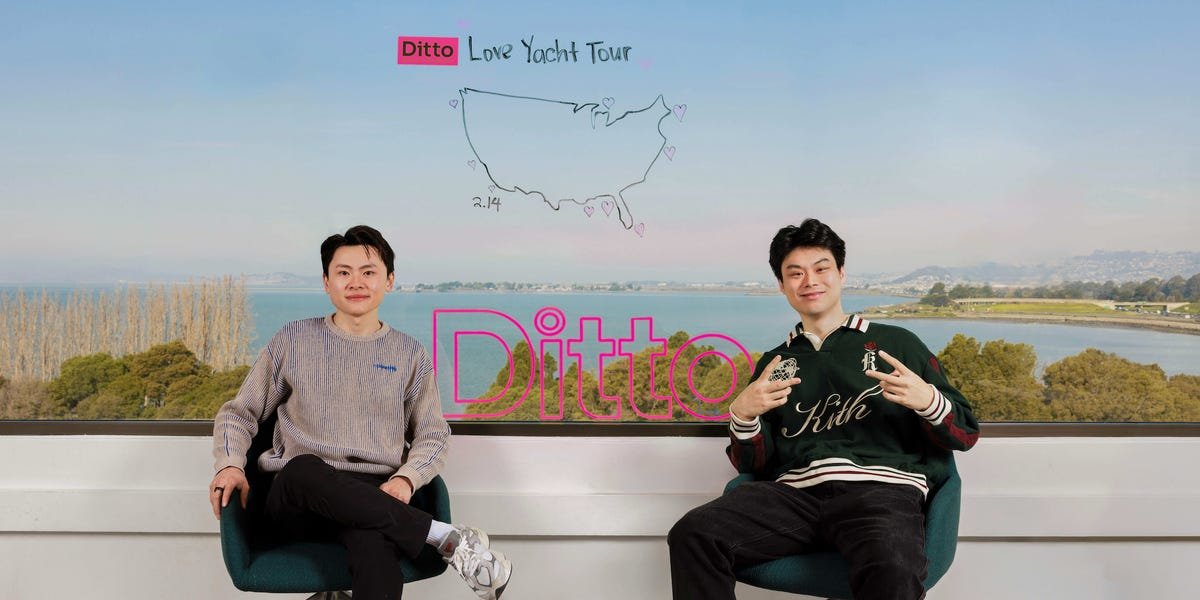
Allen Wang and Eric Liu, two UC Berkeley dropouts, think they can help college students find love using AI.

Their dating startup, Ditto, leverages AI to match people based on the data users input into the service. It then plans the date for them.

“We’re bringing people back to in-real-life interactions,” Wang, 23, told Business Insider.

After users make a profile, they directly message Ditto’s AI chatbot via text— no app required — about their type and dating preferences. On Wednesdays, users get a text about a potential match. After each date, Ditto follows up for feedback and uses that information as additional data for future matches.

“People are tired of being trapped behind the apps,” Wang said.

Ditto will announce on Tuesday that it has raised $9.2 million in seed funding, led by venture capital firm Peak XV, with participation from firms like Alumni Ventures, Gradient, and Scribble Ventures.

The seed funding will primarily be spent on hiring talent across AI and growth, Wang said, as well as toward Ditto’s marketing. The company has 10 staffers and has raised a total of $9.5 million to date. Ditto launched its product in early 2025.

Ditto isn’t the only AI dating app gaining momentum right now.

Other startups like Sitch, Known, and Amata have raised millions for similar products that pitch AI-powered matchmaking as the new alternative to swiping through profiles. Dating app mainstays like Tinder and Bumble, meanwhile, are also testing the AI waters to reignite user interest.

Ditto’s AI tries to determine whether two people would be a good match by using profile details, such as users’ hobbies or interests, to simulate a date, Wang said.

“Would you guys have a good conversation? Do you guys have matched humor level? Do you guys have similar vibes and values?” Wang said.

Finding love as a college student

The dating startup world has a history of targeting college students as early users. For instance, Tinder’s early success came in part from its marketing on college campuses.

“College kids are very adaptive to new technology,” Wang said.

The app now has about 42,000 people signed up across several college campuses in California. With its recent funding, Ditto plans to expand to more college campuses.

One tactic that helps get college-aged users on board: parties.

Ditto plans to host several yacht parties across the US, beginning with a Valentine’s Day party in Los Angeles (it hosted its first yacht party this summer). At the parties, 100 college students will sign up for Ditto and then get paired into 50 couples.

For now, Ditto is free.

“We are prioritizing growth over monetization,” Wang said, adding that the startup is interviewing users about what price they’d be willing to pay for dates from the service.

Read the 12-page pitch deck Ditto used to raise $9.2 million:

Note: Some details have been redacted.

Ditto introduces itself as an ‘AI social agent’


The first AI Social Agent
                                start with dating


Ditto

The deck kicks off with a little dating app history


Dating App's Paradigm Shifts Every Decade
                                DUE TO NEW TECH INNOVATION AND GENERATIONAL DEMOGRAPHIC


Ditto

Dating apps have a “paradigm shift every decade,” the slide says.

In the 1990s and 2000s, online dating websites emerged. Then in the 2010s, mobile dating apps took over. Ditto pitched investors that AI is the next frontier.

Ditto explains AI agents and what it says Gen Z wants


AI Social Agent Network
                                
                                TECH INNO
                                AI AGENTS TURNED STATIC PROFILES ALIVE


Ditto

The slide describes Ditto as an AI social agent network where “AI turns profiles into live agents that can interact on their own.”

“Gen Z is tired of swiping and chatting online,” the slide says. “They prefer ‘coffee chat vibe check’ style social: IRL, genuine, light.”

Ditto says dating apps like Tinder are ‘primitive’


AI Social Agent Network
                                
                                TECH INNO
                                AI AGENTS TURNED STATIC PROFILES ALIVE


Ditto

The slide also incorporates some old-school video game aesthetics, inspired by Super Mario Bros.

It says that AI agents setting up dates ‘is the future’


Ditto is the future
                                
                                An AI Agent that directly set up your dream dates


Ditto

Then, the deck explains how Ditto works


Tell Ditto Your type
                                
                                (On phone UI:)
                                Tell us about your type 1/2
                                When dating, what are red flags for you?
                                Type your answer here…


Ditto

On a website, users fill out a questionnaire and tell Ditto about their “type.” Then, Ditto will start texting users directly.

Ditto texts a date invite after finding a match


AI customized date invite


Ditto

The text includes a collage of the user’s photos.

Then, Ditto sets up a date and follows up for feedback


Direct to IRL Date


Ditto

Ditto pitches vibe-based matchmaking


Vibe is all you need
                                CONNECT BASED ON REASONING


Ditto

It includes a flow chart explaining how its agentic system works


How our agentic system works
                                
                                User Data


Ditto

Ditto takes user data and feeds it into an analysis agent, which performs image analysis, attractiveness analysis, and profile tagging.

Then, in the “pre-date reasoning” phase, a matchmaking agent does a “vibe check” and “hobby match” before running a “date simulation.” The date simulation agent then runs through things like “first impression” or “conversation flow” before presenting a user with a match.

Ditto’s deck concludes with a collage of testimonials from college students


People Love Us


Ditto


Source link

Read-Sam-Altmans-internal-Slack-message-to-employees-saying-ICE.jpeg

Read Sam Altman’s internal Slack message to employees saying ICE ‘is going too far’

Being patriotic means you also need to call out “overreach” when you see it, Sam Altman privately told OpenAI employees in a message that said Immigration and Customs Enforcement had gone “too far.”

“I love the US and its values of democracy and freedom and will be supportive of the country however I can; OpenAI will too,” the OpenAI CEO wrote in an internal Slack message. “But part of loving the country is the American duty to push back against overreach. What’s happening with ICE is going too far.”

OpenAI employees responded positively to Altman’s message on Slack, including heart and thank-you emojis.

Altman’s message, which was first reported by The New York Times’ Dealbook newsletter, comes as CEO and tech leaders face internal and external pressures in the wake of the deadly Border Patrol shooting of Alex Pretti on Saturday. Pretti is the second person to be fatally shot by federal law enforcement amid a surge in immigration enforcement in and around Minneapolis.

Altman also praised Trump’s leadership in his message and expressed hope that the president could cool tensions — the latest example of a CEO attempting to balance being critical of actions tied to the Trump administration’s policies while also staying on the president’s good side.

“President Trump is a very strong leader, and I hope he will rise to this moment and unite the country,” Altman wrote. “I am encouraged by the last few hours of response and hope to see trust rebuilt with transparent investigations.”

As a general principle, Altman wrote that OpenAI tries to “stick to our convictions and not get blown around by changing fashions too much.”

On Monday, the White House appeared to be recalibrating its response in the wake of significant criticism, including from some congressional Republicans.

White House press secretary Karoline Leavitt declined to associate Trump with Homeland Security Secretary Kristi Noem and White House advisor Stephen Miller’s initial statements that Pretti was trying to commit domestic terrorism.

Read Sam Altman’s message to employees

I love the US and its values of democracy and freedom and will be supportive of the country however I can; OpenAI will too. But part of loving the country is the American duty to push back against overreach. What’s happening with ICE is going too far. There is a big difference between deporting violent criminals and what’s happening now, and we need to get the distinction right.
President Trump is a very strong leader, and I hope he will rise to this moment and unite the country. I am encouraged by the last few hours of response and hope to see trust rebuilt with transparent investigations.
As a company, we aim to stick to our convictions and not get blown around by changing fashions too much. We didn’t become super woke when that was popular, we didn’t start talking about masculine corporate energy when that was popular, and we are not going to make a lot of performative statements now about safety or politics or anything else. But we are going to continue to try to figure out how to actually do the right thing as best as we can, engage with leaders and push for our values, and speak up clearly about it as needed.

Correction: January 27, 2026 — Alex Pretti was fatally shot by Border Patrol, not ICE.

Do you work at OpenAI? Contact the reporter from a non-work email and device at bgriffiths@businessinsider.com


Source link