Headshot of Jordan Pandy

As a real estate agent, making money off Airbnbs was a safe bet. I decided to franchise my favorite coffee shop instead.

This as-told-to essay is based on a conversation with Jordan Hooten, 34, a Florida real estate agent who franchised a coffee shop in St. Petersburg, Florida, to diversify his income. The following has been edited for length and clarity.

Real estate has been good to me. I got my real estate license about 11 years ago, when I was 23, but I’ve been practicing full-time for seven years.

Single-family residential has always been my bread and butter; helping people find their first house, helping somebody sell their first house, and helping them find their second house.

Over the last four years, I’ve started doing a lot of multifamily and commercial properties as well.

I’ve seen a couple of different cycles of the market — my parents were flipping houses back in the early 2000s, so I’ve been following real estate since I was a teenager.

When I first came in around 2018, it was a stable market, not too dissimilar to the market that we’re in right now, but inventory would sit for a little while.

Then and now, we went through the 2.5% interest rate market, which was a lot of fun. Back then, if you signed a listing agreement, you could already count the money. You could pretty much say, “I’m getting that money in the next 45 days.”


A garage door opening into a coffee shop.

Southern Grounds’ St. Petersburg, Florida, location. 

Southern Grounds


Now, it’s like you can have eight listings worth of a total of $5 million in volume and say, “I really don’t know how this is going to go. I think I’ll get most of this, but it’s not as much of a sure thing.”

The drastic change was very tough on a lot of people in my industry when it went from the 2022 rates to the 2023 rates overnight.

I used to work out of this coffee shop, so I decided to invest in it myself

When the market was going well, previously I’d diversify by buying Airbnbs.

I’ve had a part in four Airbnbs at one time or another. Sometimes you sell them because it’s just a good time, but that business, it’s like you put up $70,000 in your savings, and you’re happy to be getting a return of maybe $800 a month.

Every now and then, there’s a problem where you have to come up with $2,000 to $5,000 out of pocket. I thought this was a pretty good idea for investment if you’re 55 years old — just keep stacking these and say, “All right, well that one will pay for my health insurance, and that one will pay for my car insurance, and that’s great.”

But I was like, I’m 30 years old, why don’t I take a stab at investing in something that could make me the same amount as real estate does? And once it’s stabilized, it will not take up all my time?

I could invest $70,000 and make $800 a month, but what if I could invest double that and potentially make $12,000 or $13,000 a month?

It’s a good time in life for me to take that chance.


A colorful mural inside a coffee shop.

Hooten was able to make the investment due to his success as an agent. 

Southern Grounds


I was doing so well in real estate that I was confident enough to invest over six figures in a coffee business. But it wasn’t just coffee; it was specifically Southern Grounds.

When I didn’t have an office, I used to go up to Southern Grounds in Jacksonville all the time. It was a place where I could sit on my laptop and order coffee, and didn’t feel pressured to order food until I was ready to order food. If I wanted to stay and work on my laptop and make phone calls for four hours, I could.

I reached out to the founder on Facebook and said, “Man, I want to franchise your store. It’s my favorite place in the world to go,” and that’s how all this started.

I started this process in 2022. We’ve been working on building this store for three and a half years from when we signed the Franchise Disclosure Document to when we actually opened our store in August 2025.

There’s no way we could have afforded to buy our building — it actually wouldn’t even pencil if you look at it as a real estate deal. Our rent of $13,500 is probably half of what the mortgage would be if we bought it. Downtown St. Petersburg is very overpriced.


Downtown St. Petersburg, Florida.

St. Petersburg, Florida. 

RudyBalasko/Getty Images


I had to build the entire restaurant from looking like a garage into a restaurant. The construction alone was about $800,000. That’s just to build out the interior of the building that we are renting — I mean, silverware for a restaurant is $25,000.

I think that in the real estate industry, your first year is not usually a good indicator of how you’re going to do financially, just like the restaurant business. During my first year in real estate, I didn’t do that well. So I would say I’m happier with the year one restaurant success than year one real estate success, for sure.

I’m glad I took a risk and diversified my income

I bartended in college, so I’ve always been on the hospitality side of business, and I guess you could say real estate is hospitality: It’s being a people person, enjoying talking to people, enjoying hearing their stories and where different people are from and what they’re doing and what they’ve got going on the rest of the weekend — just caring.

My transaction volume is still the same since before I bought the coffee shop. My real estate business has taken a slight hit because it hasn’t continued to grow in the way that I think it may have grown had I not taken on any other endeavors. But ultimately, I’m not losing clients.

Buying the coffee shop really has not changed my day-to-day; it has just required more time management and multitasking. I wake up earlier and work later. I’m working my ass off.

I think it’s a good idea for real estate agents to diversify their income. It really just depends on each person’s financial situation.

Sometimes I wonder, “Did I make the right decision?”

I think I did because I enjoy this.


Source link

How-real-Pecorino-Romano-cheese-Is-made-In-Lazio-Italy.jpeg

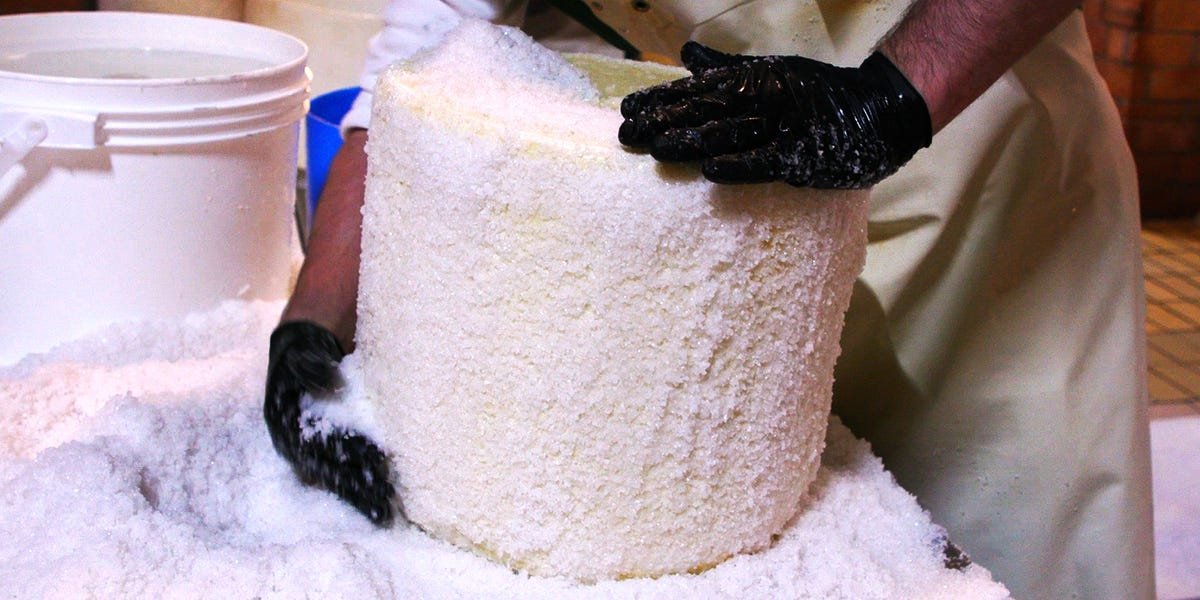
How real Pecorino Romano cheese Is made In Lazio, Italy

Pecorino Romano is one of the oldest cheeses in the world, with roots going back to Ancient Rome. But today, most of it is no longer made near Rome at all. In this episode, we visit I Buonatavola, one of the very last producers still making Pecorino Romano in Lazio, the cheese’s original territory, to understand how global demand, especially from the United States, reshaped where and how this cheese is made. We explore the differences between Pecorino Romano made in Rome and the versions produced elsewhere and how exports helped keep this historic producer alive.


Source link

Aditi Bharade

DeepMind’s CEO said there are still 3 areas where AGI systems can’t match real intelligence

True artificial general intelligence is on the way, but it still has some ways to go, said Google DeepMind’s CEO.

Speaking at an AI summit in New Delhi, Demis Hassabis was asked whether current AGI systems can match human intelligence. AGI is a hypothetical form of machine intelligence that can reason like people and solve problems using methods it was not trained in.

Hassabis’ short answer: “I don’t think we are there yet.”

He listed three areas where current AGI systems are falling short. The first was what he called “continual learning,” saying that the systems are frozen based on the training they received before implementation.

“What you’d like is for those systems to continually learn online from experience, to learn from the context they’re in, maybe personalize to the situation and the tasks that you have for them,” he said during the discussion.

Secondly, Hassabis said current systems struggle with long-term thinking.

“They can plan over the short term, but over the longer term, the way that we can plan over years, they don’t really have that capability at the moment,” he said.

And lastly, he said that the systems lack consistency. They’re adept in some areas and unskilled in others.

“So, for example, today’s systems can get gold medals in the international Math Olympiad, really hard problems, but sometimes can still make mistakes on elementary maths if you pose the question in a certain way,” he said. “A true general intelligence system shouldn’t have that kind of jaggedness.”

Humans, in comparison, would not make mistakes on an easy math problem if they were math experts, he added.

Hassabis said in a “60 Minutes” interview last year that true AGI would arrive in five to 10 years.

The executive cofounded DeepMind, an AI research lab, in 2010. The lab was acquired by Google in 2014 and is the brains behind Google’s Gemini. In 2024, Hassabis won a joint Nobel Prize in chemistry for his work on protein structure prediction.

AGI is a disputed topic in Silicon Valley. Databricks CEO Ali Ghodsi said at a September conference that current AI chatbots already meet the definition of AGI, but Silicon Valley leaders keep “moving the goalposts” and pushing toward superintelligence, or AI that can outthink humans.

The AI Summit in India, from Monday to Friday this week, has attracted big names from the tech and AI spheres. Notable speakers on the summit’s agenda include OpenAI CEO Sam Altman, Anthropic CEO Dario Amodei, Google CEO Sundar Pichai, and Meta’s chief AI officer, Alexandr Wang.


Source link

It-is-an-age-of-confusion-as-consultants-try-to.jpeg

It is an ‘age of confusion’ as consultants try to measure the real value of AI

Big questions are swirling around AI’s real impact — and consultants are racing to supply the answers.

Over the past year, consulting firms have begun deploying armies of AI agents as they work to transform their own operations and advise clients to do the same — automating research, building task-specific tools, and building proprietary AI models.

McKinsey & Company CEO Bob Sternfels said last month that his firm has launched tens of thousands of internal AI agents in recent years, and eventually plans to have one for all of the company’s 40,000 employees.

Amid the rapid rollout, consultants are now asking themselves a tough question: Is it worth it? They are working to measure if AI is truly improving performance, boosting revenue, and freeing consultants to focus on higher-value work.

“I think we are now in the age of confusion,” Mina Alaghband, a former McKinsey partner, now the chief customer officer at Writer, a full-stack enterprise AI platform built for agentic AI, told Business Insider.

Alaghband said that a year ago, most companies were focused on adoption, tracking metrics such as how often a tool was used.

Now, she says said the emphasis should be on measuring the value that’s created — like the amount of human labor reassigned to higher-value work, or improvements in revenue.

PwC’s chief AI officer, Dan Priest, recently told Business Insider that PwC is now less concerned with how many agents it deploys, and more with how many human users each agent has.

Priest said his firm starts by targeting an “impact zone,” such as improving the customer experience.

Within these impact zones, the firm looks to deploy “specialized AI agents” that have earned that designation because they’re good at what they do, Priest said. “When we deploy agents, we want to see a high rate of human adoption, which means more humans are using them,” he said.

EY also prioritizes quality over quantity, Steve Newman, EY’s global engineering chief, told Business Insider. The firm tracks the value created by its AI agents through key performance indicators for productivity, quality, and cost efficiency on a month-to-month basis.

If the defining promises of the AI boom are speed and efficiency, then the metric that may matter more isn’t usage, but time reclaimed.

Boston Consulting Group tracks its agents by that metric — and whether that time is then reinvested in higher-value work, Scott Wilder, a partner and managing director based in Dallas, told Business Insider.

Wilder said humans at the firm now spend about 15% less time on low-value activities, like making slideshows, and that those people are reinvesting about 70% of their saved time into higher-value activities, such as deeper analysis.

Time saved doesn’t always mean more work. At BCG, it can mean more free time. Wilder said BCG has found that employees keep about 30% of the time AI saves. “They get a little more sleep or get to go to a yoga class or whatever someone wants to do,” he said.

Nearly a century ago, economist John Keynes predicted that as productivity rose, the balance between work and leisure would inevitably change.

“I would predict that the standard of life in progressive countries one hundred years hence will be between four and eight times as high as it is,” he wrote in his 1930 essay “Economic Possibilities for our Grandchildren.”

It’s almost 2030, but in small ways, that vision may already be surfacing.

“It’s benefiting them — and this is a tough job, so every hour of free time matters,” Wilder said.

Something to share about how consultants are using AI? Business Insider would like to hear from you. Email Lakshmi Varanasi at lvaranasi@businessinsider.com or contact her on Signal at lvaranasi.70.


Source link

I-embedded-myself-in-a-vibe-coding-team-at-Geminis.jpeg

I embedded myself in a vibe coding team at Gemini’s AI hackathon in Singapore. Building an app in 7 hours takes real work.

  • I spent seven hours with a vibe coding team at Google’s Gemini 3 hackathon in Singapore.
  • Watching from the sidelines was intense.
  • From prompting and debugging to filming the demo — here’s how it all unfolded.

Just after sunrise, four vibe coding enthusiasts from Malaysia crossed into Singapore with a loose idea — and a bet that AI could build most of their app.

Hours later, they were racing to prototype it at Google’s Gemini 3 Hackathon in Singapore.

The four friends, all in their late 30s to 40s, came from different professional backgrounds. Chan Wei Khjan is an accountant. Chan Ler-Kuan lectures on AI at a private university. Loh Wah Kiang works in IT. Lee How Siem, who goes by Benny, is the chief technology officer of a Malaysian startup.

Their initial idea was a “feng shui” app to analyze properties in Singapore — a potentially lucrative use case in a market obsessed with housing and wealth accumulation. Feng shui is a traditional Chinese practice that evaluates how a person’s surroundings, along with birth factors, influence luck and well-being.

I embedded with the team at Google’s developer space in Singapore in January to observe how a vibe-coding project comes together — or nearly falls apart — in seven hours.

9:30 a.m.: The brief

Thorsten Schaeff from Google DeepMind welcomed the participants.

Lee Chong Ming/Business Insider

The assignment: Teams of up to four people had to build a working demo, publish a public repository with code, and submit a short video explaining their project by 5:30 p.m.

Each project had to fit into one of six tracks, including generative media, deep research, and enterprise orchestration.

Organized by Google DeepMind and 65labs, Singapore’s AI builder collective, the hackathon featured a 100,000-credit Gemini API prize pool, with first place getting 30,000 credits.

By the end of the day, 189 participants had built 76 projects.

10:30 a.m.: Getting started


Hackathon team getting started

The team discusses how to prototype their idea.

Lee Chong Ming/Business Insider

The team had pivoted to a new idea due to time constraints: a feng shui app that could analyse a user’s outfit and workspace through the phone camera in real time and assess how “lucky” they were.

Wei Khjan took the lead on prompting. He typed the first instructions into Claude, asking it to generate the workflow and code. Ler-Kuan focused on whether the AI’s output aligned with feng shui concepts. Wah Kiang and Benny hovered over the codebase, refining ideas and flagging issues.

“For people who don’t know how to read code, it’s helpful to have people who do,” Wei Khjan said.

While waiting for the code to be generated, Ler-Kuan opened Google’s AI Studio to design the app’s logo. They called their app “Feng Shui Banana.”

11:40 a.m.: The bugs arrive


computer screen with code

The implementation plan was generated by AI.

Lee Chong Ming/Business Insider

After about an hour, Claude generated the initial codebase for the app. It was designed to work with the Gemini Live API, enabling real-time image and text analysis. It ran but was riddled with bugs.

An error message flashed when they tested the camera feature, so Wei Khjan copied the error back into the AI and asked for it to be fixed. Minutes later, the feature worked.

It wasn’t right. The feng shui logic was off, especially where colour analysis intersected with the user’s birth timings. Ler-Kuan manually corrected the underlying dictionary and its mappings.

The team kept prompting to tighten the features: shorter explanations, clearer output, and more streamlined user interfaces.

By 12 p.m., the app was rough, but it existed.

12:20 p.m.: Lunch can wait


Testing the feng shui app

Ler-Kuan tests the camera feature on the app.

Lee Chong Ming/Business Insider

Lunch arrived. The team stayed glued to their screens.

The app didn’t respond instantly when a user changed their outfit, nor did it update its feng shui analysis in real time.

Wei Khjan explained how one prompt matters. Instead of issuing commands, he asked the AI to “discuss it with me.” The shift changed how the model reasoned, and it worked more like a collaborator.

After some prompting, the app updated with a real-time camera analysis. It was striking to watch a feature emerging from a short back-and-forth with AI.

1 p.m.: Putting the app to the test


Screenshot of me testing the app

A screenshot of the feng shui app on my phone as I test its camera feature.

Lee Chong Ming/Business Insider

I helped the team test the app.

The camera correctly identified what I was wearing: a dark green polo, a yellow participant tag, and a white name card hanging from my neck. According to the app, I was already wearing colours aligned with my luck for the day.

The app suggested small tweaks, such as additional accessories, that could enhance the feng shui of my outfit.

1:20 p.m.: Pizza break


Pizza break

The team munched down their pizzas in about 20 minutes.

Lee Chong Ming/Business Insider

They finally had lunch and joked around to ease the tension. Four hours remained before they had to submit their project.

1:40 p.m.: Back to work


Feng shui banana landing page

The landing page for their app.

Lee Chong Ming/Business Insider

Ler-Kuan shifted focus to workspace feng shui, feeding knowledge into the model and refining how the app would evaluate desks and work setups. Wah Kiang and Benny worked on the video demo.

By 2 p.m., they had a landing page that looked animated and 3D. When I asked Wei Khjan how he felt, he smiled.

The team also revisited the app’s tagline. After cycling through suggestions from multiple AI models, they settled on a line that didn’t come from an AI at all: “A wisdom, not a superstition.”

3 p.m.: Filming the demo


Filming the demo

Wah Kiang and Benny are filming Ler-Kuan as they reenact scenes for their demo video.

Lee Chong Ming/Business Insider

By late afternoon, the restlessness was showing. The team snacked and paced, then decided to film the video explaining their project.

They used Gemini to generate a storyboard for the demo video. The model laid out several scenes and drafted the script. The team followed along, filming clips and stitching everything together as they went.

Their workspace feature was also up and running.

4 p.m.: Final touches


Hackathon team scrambling

The team is hard at work as the deadline approaches.

Lee Chong Ming/Business Insider

The app had come together nicely. With some time to spare, they decided to add audio output for users who prefer listening to reading on a screen.

The first attempt to generate a voice using AI fell flat. It sounded robotic.

After debugging and several iterations, they landed on a voice they liked, similar to how a Chinese feng shui master might speak.

5:30 p.m.: Deadline


Finishing the hackathon

Taking a group photo as they submit the project.

Lee Chong Ming/Business Insider

As the deadline approached, the team was still stitching clips for their video and nitpicking the AI-generated presenter voice.

The organizers had urged teams to submit early. With about 15 minutes to spare, they made the call to lock the final cut and hit submit.

Then it was over. The hunger hit immediately, and everyone got in line for some well-deserved food.

Even as an observer, watching from the sidelines was tiring. Seven hours of vibe coding turned out to be anything but effortless.

The team didn’t win a prize, but agreed that the hackathon had been worth it.

“Sometimes, the best experiences come from saying ‘yes’ without overthinking,” said Ler Kuan. “Innovation starts with curiosity and a little bit of spontaneity.”

Do you have a story to share about vibe coding? Contact this reporter at cmlee@businessinsider.com.


Source link

SNL-spoofed-Uber-Eats-Wrapped-Then-Uber-actually-did-it.jpeg

‘SNL’ spoofed Uber Eats Wrapped. Then Uber actually did it for real.

Your Uber spending is coming back to haunt you — for real.

Just days after “Saturday Night Live” aired a satirical skit about an “Uber Eats wrapped” and the horrors of discovering how much you spent on it this year, Uber made the embarrassment real with a Spotify-style year-end recap.

On Monday, the company launched a new year-in-review feature called “YOUBER,” which compiles users’ activity across both Uber and Uber Eats.

It’s unclear if “SNL” knew about Uber’s plans before its spoof. It’s also unclear how long Uber had the recap in the works, or if it was influenced by the skit. Uber and NBCUniversal did not immediately respond to a request for comment.

The feature echoes the sketch that aired on Saturday night, which lays bare how quickly people who willingly participate in data tracking recoil when that data reflects something they don’t want to know.

The skit started with an innocuous character who was delighted to find that she was one of Sabrina Carpenter’s top global listeners in 2025. Then the skit took an ominous turn when an advertisement claimed to reveal who the characters “really are” this year, featuring an “Uber Eats wrapped.”

One character learned he had eaten more chicken nuggets than 99% of users worldwide. Another was assigned an “Uber Eats age” — a riff on Spotify’s “listening age” — only to be told his was “Dead.” The humiliation peaked when a character realized he had spent $24,000 on Uber Eats in a year, prompting him to scream into a pillow in response.

To access the actual feature, which is only available in the US at the moment, look for the “YOUBER” banner in your app, and it will show riders where they went, how often they opted for Uber Comfort, and which restaurants they returned to again and again.

The feature also assigns users one of 14 “Uber Personality Profiles,” including “Do-Gooder” for Uber Electric loyalists, “Rise & Shiner” for early-morning riders, and “Delivery Darling” for customers who “live for deliveries of all kinds.”

And if you don’t want to endure your guilt alone, you can always share it. Uber offers a “Share this Story” button directly within the app.


Source link

Prepare-to-pay-45-at-airport-security-if-you-dont.jpeg

Prepare to pay $45 at airport security if you don’t have a REAL ID

  • The TSA announced a $45 fee for travelers without acceptable ID at airport security checkpoints.
  • The alternative identity verification system, TSA Confirm.ID is set to be implemented on February 1.
  • It’s unclear how TSA Confirm.ID will work, but it’s intended as an option for flyers without a REAL ID.

The Transportation Security Administration has taken a page from the budget airline playbook.

The agency said Monday it is implementing a new alternative identity verification system, TSA Confirm.ID, that would charge travelers $45 at security checkpoints if they show up without a REAL ID or another acceptable government-issued ID, such as a passport or permanent resident card.

The new fee option is set to begin on February 1. The TSA said the fee would cover a 10-day travel period. Details about how the fee and identity verification would work were not yet available. The TSA did not immediately respond to a request for comment.

“TSA urges all travelers who do not have a REAL ID to pay the fee online before traveling,” according to a press release about TSA Confirm.ID and the new fee. “For passengers who arrive at the airport without paying the fee, information about how to pay for the TSA Confirm.ID option will be available at marked locations at or near the checkpoint in most airports. Travelers who undergo TSA Confirm.ID processing at an airport should expect delays.”

The TSA had previously proposed an $18 fee that would cover the costs for a biometric kiosk system designed to verify a traveler’s identity more quickly than the current manual process.

Under that proposal, the TSA said the new technology would be less time and resource-intensive than the current process when a flyer lacks these IDs, which involves providing personal information or answering detailed questions to match flyers to government databases.

“This notice serves as a next step in the process in REAL ID compliance, which was signed into law more than 20 years ago,” a TSA spokesperson previously told Business Insider about the $18 fee proposal.

Congress passed the REAL ID Act of 2005 in response to the 9/11 attacks, but it just rolled out in 2025.

In May, the TSA began requiring travelers to present a REAL ID or another government-approved identification to pass through airport security checkpoints.

The TSA says 94% of flyers already use REAL ID or another acceptable form of identification.

The agency is encouraging travelers who do not have a REAL ID to schedule an appointment with their local DMV to update their ID as soon as possible. A REAL ID card shows a star inside a circle in the upper right corner.


Source link