
I-used-to-think-living-at-home-as-an-adult.jpeg

I used to think living at home as an adult meant going backward. Losing my dad made me realize I was wrong.

Growing up, when I imagined my 20s, I pictured living in a huge city apartment on my own, with a partner or a quirky group of roommates. I’d decorate my home with chic art pieces, paint the walls a dusty rose, and host dinner parties for my friends.

I was desperate to begin my life. I thought adulthood started when you moved out; anything else felt like going backward.

Then, my dad died, and my entire reality shifted.

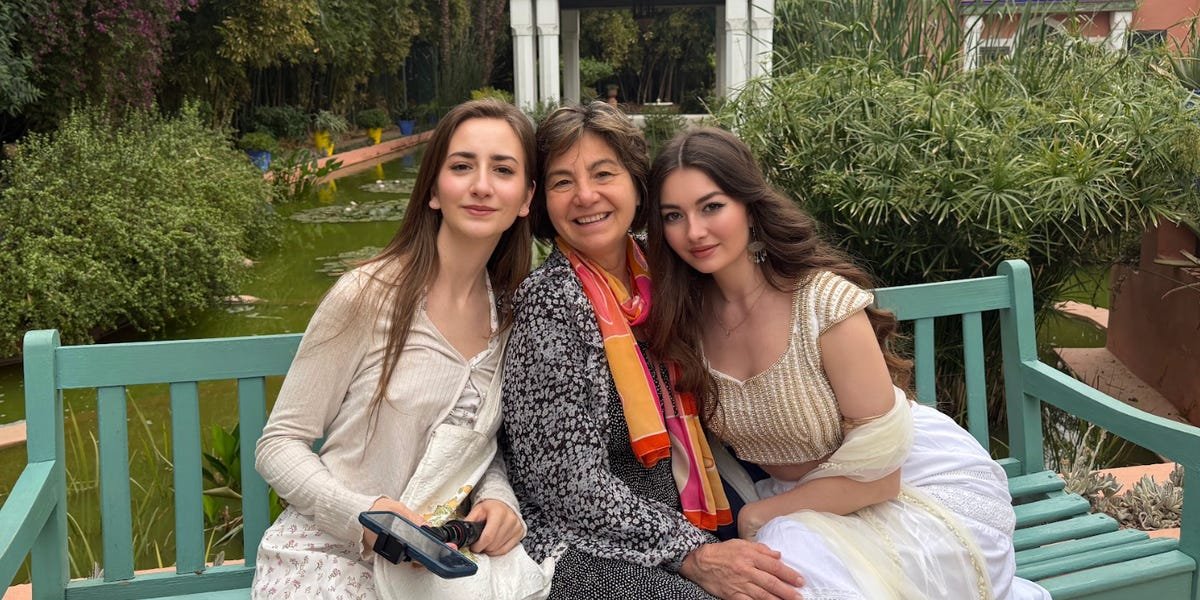
Living with family as an adult is often framed as a “failure to launch,” but navigating grief at home with my mom and younger sister helped me rethink growth.

Living at home in my 20s wasn’t easy at first


The writer posing while skiing with her dad and sister.

Initially, I was eager to move out of my parents’ house and live with my boyfriend.

Maya Kokerov


After I finished college at 22, I moved in with my parents while I figured out what my long-term plan would be.

I hoped this would be a very brief stint. Impatient to be more “independent” and worried I was falling behind my peers, I vowed to rent an apartment with my boyfriend as soon as we could afford one.

Before I had a chance to move out, though, the COVID-19 pandemic pushed us into a lockdown. I settled back into living with my family until further notice. There were practical benefits, such as saving money, but I still felt restless.

In ways, I reverted back to a teenager: whispering on FaceTime, sending messages on Snapchat, even sneaking out of my window to meet up with my partner after everyone had gone to sleep. At 22, I felt emotionally crowded and missed the freedom I’d experienced at college.

More than a loss of privacy, though, I was ashamed that I was still “waiting” to reach what I saw as the first big marker of adulthood.

After my dad died, living together became a lifeline


The writer posing on vacation with her parents and sister.

Losing my dad shifted my priorities.

Maya Kokerov


Four years after I moved back home, my dad suddenly passed away.

We couldn’t properly say goodbye. Instead, we sat in fear for months. His chair was empty, leaving a hole in our home.

As guilty as I felt for not always appreciating the years I’d spent with him, I realized how lucky I was to have gotten to spend his last few years at home with him.

Many fathers who get to grow old may never spend as much time with their children as I did with mine, precisely because I stayed home.

My dad had moved out of his house at a young age and lived in four countries. In one of our last one-on-one conversations, shortly before he was admitted into the hospital, he told me how everyone keeps moving to find their place, but everywhere is virtually the same. The main difference is the people that you’re leaving behind.

Looking back, those extra years at home were convenient, yes, but they were also the happiest I’ve ever been. Now, having my mom and sister by my side gives us space to grieve together and mutually support each other.

Memories and rituals reshaped how I define adulthood

As a very tight-knit family, we built our life around traditions, from holidays and vacations to sports and movie nights.

My dad’s favorite activity was spending time with us. He taught us skills like skiing, languages, and playing tennis.

Healing came from returning to the traditions he loved. Although it was challenging at first, we forced ourselves to engage with his hobbies and rituals, reliving our memories together. We cooked his favorite food, sang songs he loved, and played lots of tennis.

With time, the sadness became more tolerable as we created new rituals while preserving treasured old ones.

This wasn’t the “20-something” life I had envisioned, but this version of home became a symbol of my growth precisely because of how much I loved my past. I realized that living at home at 27 isn’t a lack of maturity or a so-called “failure to launch.”

If anything, grief sharpened my sense of responsibility. Adulthood can be communal, and I feel lucky to have familial support. Grief has made living with my family more meaningful, grounding, and empowering than ever.



Source link

shot of trisha sitting down on an indoor bench in front of a detailed wooden wall

I’m helping my mom move to a small place. It has made me realize that at 46, I already have too much stuff.

I’ve seen multiple articles lately about the boomer avalanche — all this stuff people have — and their kids not wanting it. I’m not a boomer, but at 46, I’m already aware that I have too much stuff.

Three recent events made me think about the burden our possessions would place on our kids if something happened to us. So I started decluttering so they don’t have to deal with my stuff.

I helped my mom downsize

The first event was helping my mom downsize.

She moved from a 2,000-square-foot townhome into a much smaller rental home. Doing a pre-move assessment, it was clear that all her stuff wouldn’t fit in the new place.


Small living room

The author’s mom downsized from a two-story, 2,000+ square-foot townhome to a 900-square-foot home.

Courtesy of the author


She saw it as an opportunity and spent two months purging, donating, and selling items.

When scoping out storage spots in her new home, my mom shared that she has a stack of boxes of stuff from her mom’s house. She doesn’t want it, but doesn’t feel like she can get rid of it, and has been holding onto it since her mom passed over 10 years ago.

My kids made sure grandma didn’t get rid of her little rocking chair. They both have memories of climbing on it at Grandma’s house. It’s now in our living room.

Sometimes, there are memories wrapped up in stuff

Decorating our house for the holidays was the second event that confirmed we have too much stuff.

Every year, my husband goes into our crawl space and hauls out a full 19 boxes of holiday decor — trees, lights, ceramic villages, wrapping paper. Our house ends up covered with holidays.


Box of donations

This holiday season, the author started a new tradition, donating decorations her family no longer uses.

Courtesy of the author


This year, when decorating, I decided to downsize and packed a giant box with ornaments, tablecloths, mugs, and random decorations we haven’t put up in years.

During this process, I was reminded how important it is to check before donating. My husband noticed a few decorations from his mom in the “donation box.” We’re keeping them. We may not display them, but there are memories in those figurines.

I asked my kids what they wanted us to keep for them. Stockings, our Advent calendar, and the holiday village — each of them had items they associated with their holiday memories. These things will never go into the donation box.

Our stuff can be so valuable to others

During our remodel last year — event three — my youngest and I learned how much the things we have sitting on a shelf can mean to someone else. My child’s donation of stuffed animals made a huge difference to volunteers and children at a local soup kitchen.


Holiday tablecloths.

The author says she has way too many tablecloths.

Courtesy of the author


We had a repeat experience this year, but this time with tablecloths. I have too many tablecloths. The last count was over 20. Even if I can’t get laundry done for weeks, that is many more than we need. I challenged myself to get rid of half of them.

A friend who volunteers at a shelter and soup kitchen happily took the donation. A few weeks later, we learned those tablecloths had a new life as blankets for a family of four who were living in their car at the time.

I have a process to downsize my wardrobe

Remodeling our house was the most eye-opening demonstration of how many things we have. Our storage space is still crammed with stuff that didn’t make it back into the house after the remodel.

Finding a place for everything during the renovation was a huge challenge. We quickly realized we couldn’t fit 50% of our belongings (three bedrooms and my office) in the other 50% of our house.


a car packed with clothes and suitcases

Hooking hangers on seat belts maximized space and kept the clothes in place when driving.

Trisha Daab


Taking up the most space — the items in my closet, which filled my entire soccer-mom-sized SUV.

So today, for every new thing I add, I donate at least two items. I’ve designated a section of my closet for things I haven’t worn, and when the seasons change, anything in that section goes. And — the most fun — I invite friends to come “shop” in my closet.

Some things are my memories, not my kids’

In my office are multiple items that remind me of my grandma.

One of my favorite memories is being at her house, spending hours poring over her high school and college yearbooks.


Old yearbooks

Yearbooks from my grandma’s high school and college years are items I won’t be getting rid of.

Courtesy of the author


When it was clear the end was near for her, she had me take those yearbooks from the nursing home. She barely remembered who she was, but she remembered how much those books meant to me.

Seeing those yearbooks evokes memories of her, keeping her alive in my mind. But they are my memories of her, not my kids’.

And that’s really the thing, isn’t it? Wrapped up in all this stuff are memories and maybe a bit of guilt about getting rid of it.

So, I will keep cleaning out that closet, clearing out the storage unit, and reducing our holiday decor, but one day, my kids may have to get rid of those yearbooks.


Source link

I-used-to-be-proud-of-only-sleeping-3-hours.jpeg

I used to be proud of only sleeping 3 hours because I worked so much. Now I realize health is freedom, not wealth.

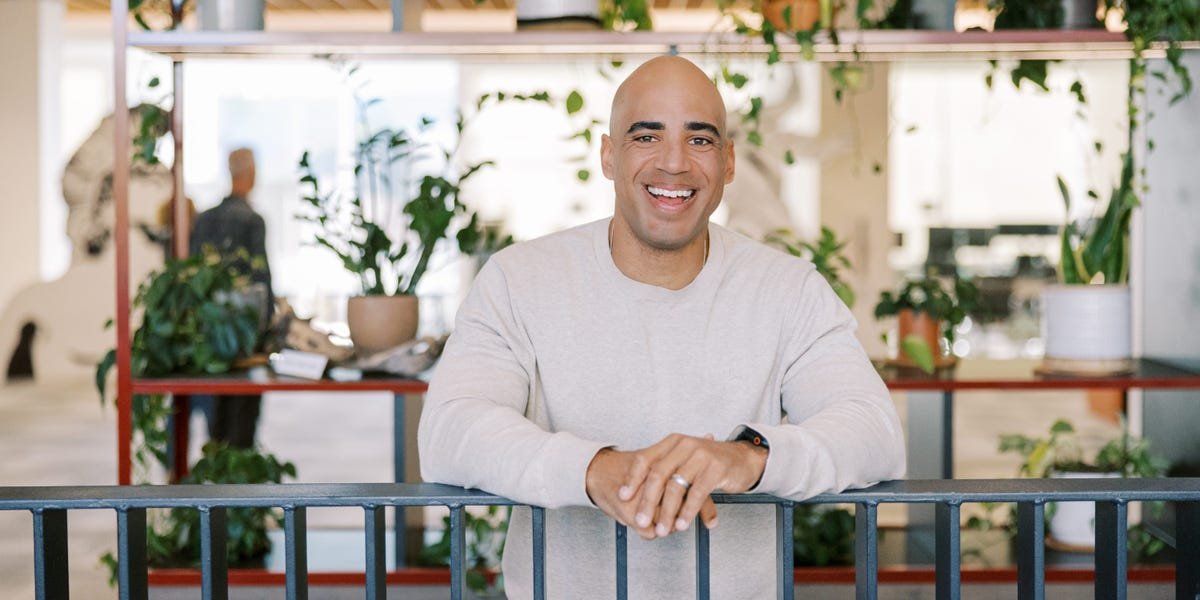
This as-told-to essay is based on a conversation with Tyler Smith, founder of Hundred Health. It has been edited for length and clarity.

I used to brag about how little sleep I got. It felt like a superpower: I could sleep just three or four hours a night, and still operate at a very high level.

That helped me get ahead early on. As a teen, I bused tables and sold firewood. By the time I was 19, I bought a house (which was possible because it was the subprime mortgage days). Having a mortgage gave me real responsibility at a young age.

It also got me thinking about a career. I couldn’t believe how much my real estate agent made on the sale. Her commission was about $13,000 — which seemed like $1 million to me at the time — and I thought she didn’t do a very good job. I realized that if I did good work in real estate, I could make even more.

I did well in real estate and developed software that took off

I dropped out of college to get into real estate. During the financial crisis, I found a niche helping banks sell foreclosures. In 2006 and 2007, I oversaw about 1,000 home sales a year and managed triple that number of properties.

I was working 14-hour days, seven days a week. It wasn’t a good life, but I was young enough that it didn’t matter. I fueled myself on energy drinks and embraced the fact that work was my life.

To help scale, I developed software to track my business’s transactions. Other brokerages inquired about what I was using, and soon I had clients paying $2,000 or $5,000 a month to use the software.

I was in the right place at the right time with the right product as real estate transactions went digital. By 2012, that software, SkySlope, was doing $12 million in annual revenue. In 2017, Fidelity bought a majority stake, valuing the company at more than $80 million.

I wanted to focus on my passion: health

That deal meant that I had enough money to never work again. I’m wired to build, though, so I planned to use my financial freedom to focus on something with purpose: a mission-driven business.

When I was 39, my wife and I were trying to have a child. I took a biological age test, which said my biological age was 47. That stopped me in my tracks, because my own father had died suddenly of a heart attack at 47.

The test showed me that what I was telling myself wasn’t true. I was working out and eating relatively healthy. I looked fit, but the data showed that what was happening inside my body didn’t match what was on the outside.

I spent over $1 million building a home wellness center

Once I saw that data, I couldn’t ignore it. I spent well over six figures hiring a top-notch healthcare team. My wife and I rented a 2,000 square-foot unit in Sacramento, which we transformed into our own personal wellness center. It had IV infusions, a hyperbaric chamber, a red light bed, cold plunges, massagers — basically anything you can name in the health and fitness world.

We were building a home in Napa and wanted to know which equipment we would actually use. We spent about $700,000 fitting out the Sacramento space, and eventually over $1 million building the wellness center in our home.

Today, I use the red light bed, oxygen therapy, and cold plunge almost daily. Other therapies — like massagers and bikes — didn’t make the final cut. I love the results of the hyperbaric chamber, but don’t like lying in it for an hour, so for now, that’s out of rotation.

I want to help others have more access to health information

I changed everything about my health and fitness, and because of that, everything in my life changed: my muscle mass and energy levels went through the roof, and my mood improved. I felt better than ever, and friends began to notice.

I know not everyone has the money and access I do. Most people have more data about their health than ever due to smart watches and wearable monitors, but they don’t have a team of doctors helping them use that information.

I started Hundred Health not only to provide data, but also to offer a personalized plan for what to do with it. I used to think that wealth was freedom, but now I know that health is — and I would like to help more people access that.


Source link

Lauren Crosby

I stopped being the first to reach out to friends. It made me realize I don’t need to be liked by everyone.

Ever since I was a little girl, I remember that friendships were a priority for me; I would constantly ask my mom to let me have friends over for playdates and sleepovers.

As a teenager, I had a Nokia brick phone and a driver’s license, and I could always be found planning to see friends or inviting them over to mine.

The craving for friendship has continued ever since, with my incessant desire for it fuelled by an innate need to feel accepted. I moved a number of times when I was a kid, and I fought against the outsider mentality by developing relationships that would help me become part of social circles.

I moved from the US to Wales

As an adult, I moved from the US to Wales, and once again, had to find a way to fit in — through friendship.

I invited myself to people’s houses for coffee and asked them to go for walks with me. I texted and rang to check in on friends I had made through church, work, my kids’ school, and my husband’s previous social circles.

These friends were incredibly important to me, and I had to hold on to them. I felt the only way to do this was to maintain frequent contact, more often than not initiated by me.

In recent years, I found myself thinking: What would happen if I didn’t text, call, or plan to meet up with friends? Would they get in touch with me?

It’s led to little monthlong experiments — going quiet to see who I’d hear from, if anyone.

The results have been both disappointing and frustrating, yet reaffirming. There were some friends who didn’t make any contact (and I felt rejected as a result), others who got in touch with me.

All of my childhood fears about exclusion and rejection were acutely felt once again.

I’m a loyal friend

I had lots to think through. Did I mind being the one who initiated the friendship — the one who kept it going? Was my concept of friendship too intense for other people? Were there some friendships I was willing to put in the work, even if I felt it wasn’t always reciprocated? Was I a needy friend?

This soul-searching led me to understand a few things about myself and the nature of friendship.

I’m a loyal friend who values deep, meaningful relationships that require time and effort. I make space for close friends, even though I work full-time, am married, and have three children, and I crave friendships with people who share the same values. A twice-a-year check-in just doesn’t do it for me. I want sisterhood.

However, this is not necessarily a value that everyone else has, and that’s OK. I suppose some people don’t need such intense friendships. Or perhaps they already have them with family or other friends. I can’t get frustrated with or feel rejected by friends who don’t have the same idea of friendship as I do.

To avoid frustration and feelings of rejection, over the last year, I’ve decided to mentally note which friends want the depth of friendship I offer and those who are happy with a surface-level relationship.

I stopped chasing friends

I leaned into those deep friendships (three of them) — people who valued relationships as much as I did. They feel like my village, those who depend on me, and those who I can depend on. They’re the ones who check in with me, just as I check in on them. It’s not me who initiates everything — they’re texting and calling too. They’re fiercely loyal.

But I stopped chasing friends who didn’t seem to place the same value on friendship as I do. I didn’t cut them out (and would happily still see them for a coffee), but I didn’t prioritize contact as I had before. I didn’t feel any resentment, but rather an understanding that we had different ideas of what friendship entailed. And that’s totally OK — I can accept this without feeling rejected or unwanted. When we do see each other, at school gates, on the streets, or for an infrequent meet-up, I enjoy their company, expecting no more than they are able to give.

And then, there were a couple of friends whom I knew I would have to initiate contact with if I wanted to maintain our friendship — I’d have to accept that for it to continue. I appreciated their friendships too much to only see or hear from them occasionally.

Over the past year, with these changes in place, I feel completely content in my friendships, as I have never before. I know where I stand with friends, and as a result, don’t feel rejected — no longer that child with an insatiable desire to be accepted by everyone. I know I’m wanted and loved, not by everyone, but by a few, and that’s enough now.


Source link