My-son-and-I-built-a-successful-bow-tie-business.jpeg

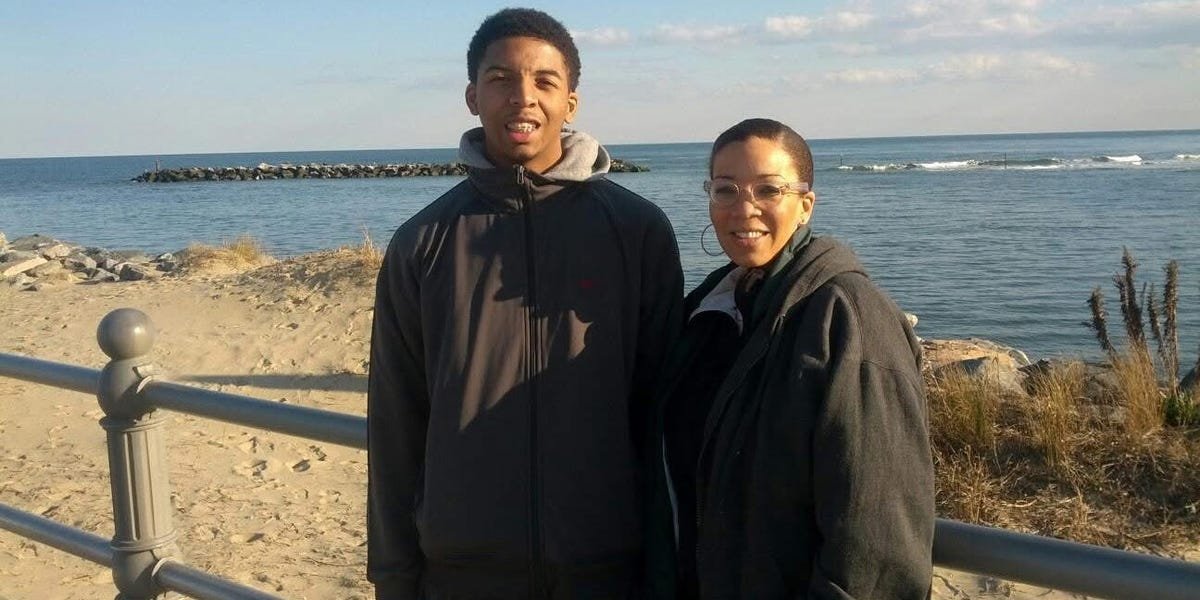
My son and I built a successful bow tie business on Amazon together. We had to shut it down to save our relationship.

It started after a trip to Maine during my son’s first year of college. We attended his high school basketball coach’s wedding and noticed that most of his teammates were wearing bow ties. We thought it was a trend, but we discovered something much bigger.

My son and I started playing around with the idea of starting an online bow tie business. Roland liked the idea of being his own boss, of being an entrepreneur. I liked the idea of building something for the family. I loved the idea of naming it after my father and my son, who share a name. I also liked the idea of having something to keep us connected while he was away at school.

Roland was the creative force. I was responsible for operations and logistics. He was away at college, but we made it work. We were excited to build a legacy together.

We figured out the formula fast

After studying the Amazon private-label business and learning about online traffic and keywords, we quickly mastered the process. It came at a great time. Roland had transferred from a junior college to a private four-year HBCU. It was an exciting move, but also very expensive, with tuition, fees, and room and board.

At first, we thought we would be selling to young, swaggy college students and professors. Then someone asked if we could make one for her pig. Another person asked for a smaller size for a woman. We began looking at our data to learn who was actually buying. Our customer base was broad and far from what we expected.

The business was doing well, and the money was going toward college expenses and being reinvested in growth. We explored different designs and complementary accessories, such as socks and pins. But the bestseller remained our bow ties. The winning formula was volume.

Then the cracks started to show

Roland began looking into fashion week and selling in retail. He toyed with the idea of writing a book and creating a style guide. Social media was growing, and opportunities seemed plentiful.

The breaking point came when Walmart approached us to sell on Walmart.com. Roland wanted to build a couture brand and sell on the runways of Fashion Week. I believed in the volume of a mass audience. We could not close that gap.

I wanted him to be the face of the brand. He wanted to stay behind the scenes. I wanted to highlight one celebrity. He wanted to highlight another. Our differences were slowing us down. My son and I got on conference calls and disagreed in front of other people. It was awkward and uncomfortable.

He wanted more control of the money, but I wanted to prioritize tuition and business growth. Soon he was saying left, and I was saying right. The arguments got tedious, and we reached an impasse. The conversations were tense. Holidays were not fun. Everything became a potential powder keg for us and anyone nearby.

It was never really about the business

On the surface, it seemed like we disagreed about money and strategy, but below the surface was a mother who needed additional income to provide the college experience I wanted for him, and a son who was learning to flex his business skills and his adult independence. It was not just money for either of us. It was identity.

I had to check myself, especially after watching “Succession” on HBO. Was I becoming Logan Roy, the controlling parent who made his children feel unworthy? I also thought about “Soul Food,” which had aired years earlier. That show is about family bonds under strain and the terrifying realization that money, pride, and seemingly reasonable solutions can still tear apart what matters most.

Roland was trying to build an independent life while being shaped by family dynamics and expectations. The thing we had built to bring us closer was starting to tear us apart. So, while the business was profitable, I had to ask whether it was actually successful.

Walking away was the right call

Some people asked why one of us could not simply run the business without the other. We contemplated that. But the deeper reality was about what the business had come to mean between us. Neither of us had the appetite to untangle it. It was easier to walk away.

We can have fun now: at family dinners, on holidays, and on vacations. We now have priceless memories as mother and son, not co-founders.


Source link

Rosamund-Pike-says-it-was-important-to-cement-her-relationship.jpeg

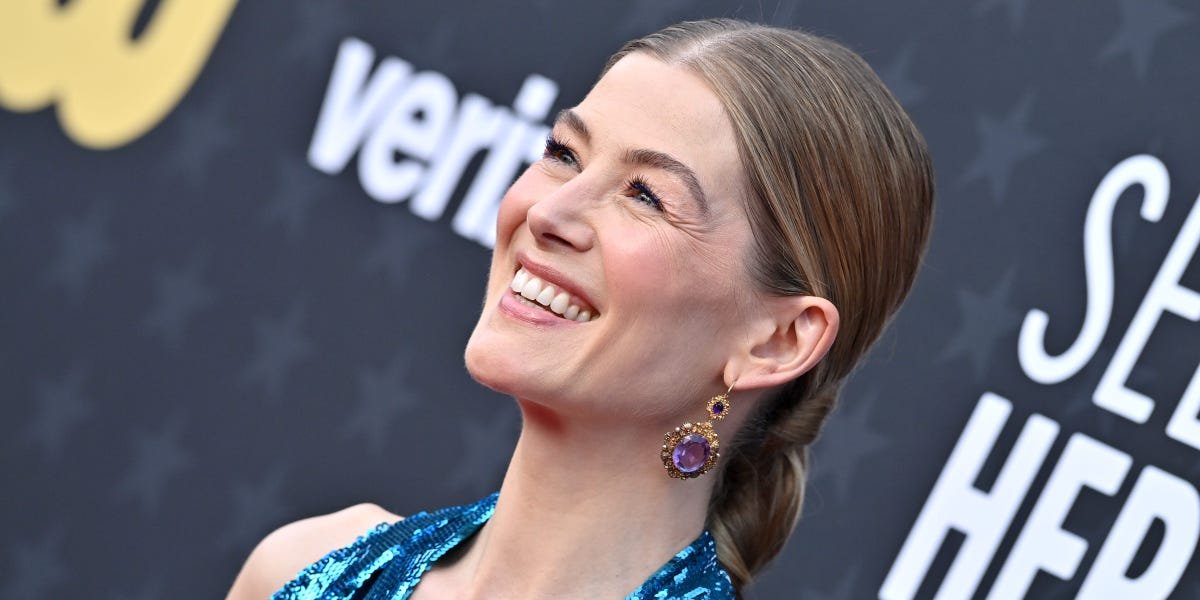
Rosamund Pike says it was ‘important to cement’ her relationship by starting a family — not having a wedding

Rosamund Pike, 47, says she stepped away from the traditional expectation of marriage and built a family her own way.

On Wednesday’s episode of “How to Fail with Elizabeth Day,” the actor reflected on a broken engagement in her late 20s that reshaped her view of relationships.

Pike was engaged to filmmaker Joe Wright in the late 2000s, though the couple ultimately called off the wedding. Looking back, she said the experience made her question the conventional milestones many women feel pressured to reach.

“My failure to get married. Well, it’s a big deal for a 28-year-old, isn’t it? Your, sort of, template for womanhood — you’re doing the right thing. Got a lovely boyfriend, he’s asked you to marry him, you’re getting engaged, and there’s going to be a wedding, and you know, it’s the right age,” Pike told podcast host Elizabeth Day.

The actor also recalled her then-fiancé asking if she was “pleased” to be marrying before 30. She added that she thought it felt “right” and “romantic” at the time, until their relationship fell apart.

The breakup was “utterly devastating,” and public scrutiny made it worse, she said.

However, Pike eventually began to see the experience in a new light.

“The freedom from that afterward is that you sort of think, OK, so you haven’t achieved the thing, I suppose, the template,” Pike said. “He was a man who was eight years older than me. He was successful, he was good-looking, he was funny — he was great. And then it doesn’t happen, and you think, ‘Oh, no.'”

“But then you realize that actually you’re free in a way, because you think there are so many other templates of what life can look like for a woman,” she continued.

The breakup also helped her see that there are “so many other ways that love can look like.”

Pike has since been in a long-term relationship with businessman Robie Uniacke, and they share two sons together. Their first child, Solo, was born in 2012, and their second, Atom, in 2014.

“Here I am. I’m not married, but I have a family, and I’ve been with someone for 14, 15 years, happily not married,” Pike said.

She added that she was intentional about marking commitment in a “different way” in this relationship.

“It was more important to cement that or, sort of, mark that with starting a family than having a wedding, because also, I thought I’m the center of attention so often. I don’t need a wedding,” she said.

Pike isn’t the only celebrity to question traditional expectations around marriage and motherhood.

Charlize Theron has called single motherhood “one of the healthiest decisions” she ever made, despite the stigma around it.

“With women, it’s always like, something must be wrong with her. She can’t keep a man. And it’s never part of the discussion of like, ‘Wow, she’s really living her truth. She’s living in her happiness. This is actually a choice that she made,'” Theron said during a July episode of “Call Her Daddy.”

Michelle Obama has similarly pushed back on the idea that women must hit certain milestones by a certain age, saying turning 35 shouldn’t be viewed as a deadline for marriage or success.

“I would just say there are no ‘shoulds’. There are so many ways to live a happy, fulfilling life,” she said on a November episode of her podcast.


Source link

My-partner-and-I-live-in-less-than-70-square.jpeg

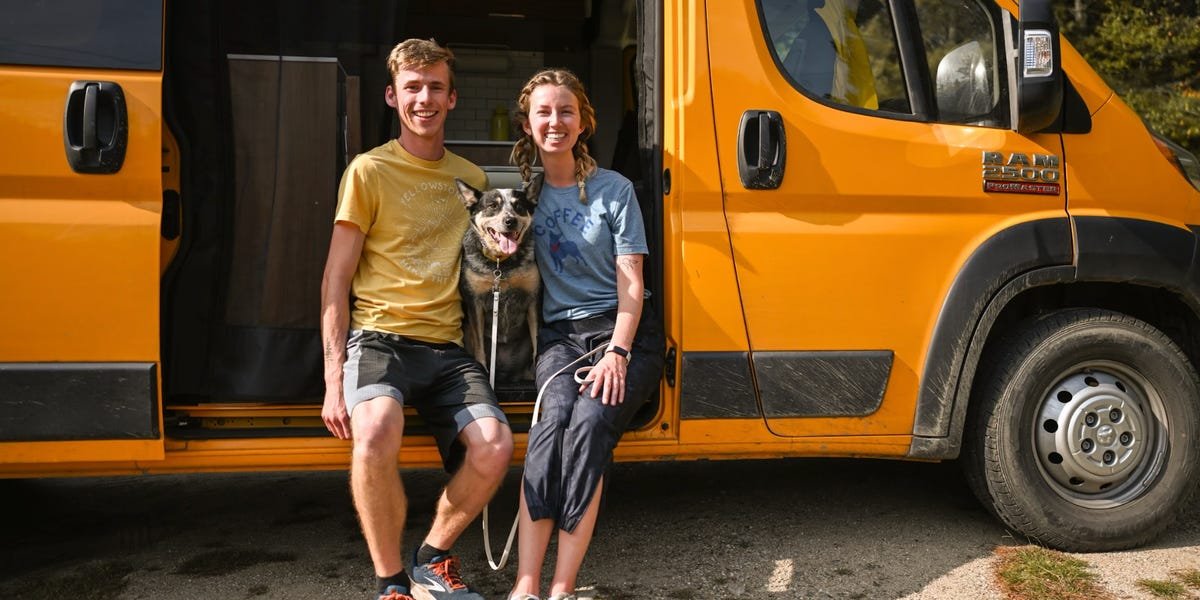
My partner and I live in less than 70 square feet. Despite what some people assume, it’s great for our relationship.

“And you still like each other?” is one of the most common questions my partner, Sean, and I get when we tell someone we’re entering our fourth year calling a small camper van home.

People usually ask it in a joking tone. We all chuckle, but there’s true curiosity underneath. Can a couple really spend all this time together — crammed in a tiny space with no privacy, plenty of unusual road-life challenges, and a dog in our van— without gasping for air?

Turns out, we can. Although people often guess that too much proximity wears romance down, the opposite feels true for us.

Sharing so many new experiences deepens our connection


A shot of the writer and her boyfriend's legs and feet as they overlook a canyon at sunset.

We get to share new experiences almost every day.

Haley Young


You know how on reality dating shows, producers put couples in intense situations to heighten their emotions? Skydiving, maybe, or some outlandishly beautiful hike on an island the contestants know they’ll never see again.

Because these once-in-a-lifetime experiences are so exciting, they foster almost instant intimacy. Living in a van provides deep bonding opportunities like these on most days of the week.

As Sean and I travel, we connect over our shared adventures — from watching North America’s earliest sunrise in Newfoundland to cold-dipping in Glacier National Park to simply laughing in disbelief at the highway’s strangest billboards.

My partner and I have to face challenges as a team


The writer's partner working on an electrical issue with their van at nighttime.

As a couple living on the road, we have to work together on some unusual problems.

Haley Young


Unlike contestants on reality dating shows, we’re in charge of all these “date” logistics ourselves. That’s a good thing!

Whether we’re getting our house unstuck from a ditch on a middle-of-nowhere mountain road, finding an appropriate place to empty our composting toilet, or debating where to park overnight after an exhausting day hike, uniting around obstacles big and small gives us a satisfying relationship rush. We remind each other that we’re in this together.

We’re also unable to hide from conflict. Because there’s no room — and I mean this literally — to let problems pile up, we deal with disagreements more quickly and thoroughly than when we lived in a larger stationary house.

Van life demands that we approach interpersonal challenges the same way we face external issues on the road: right away, as a team.

Plus, all this time in the same space means that when we grow, we grow together. We’re often all we have on the road, so I appreciate how naturally we stay central in each other’s lives.

The biggest cons of couple van life are mostly annoyances


The interior of the couple's van with fall foliage in the background.

One of the biggest challenges we face is a lack of privacy.

Haley Young


We’ve had no choice but to get used to an utter lack of privacy. Some days, Sean and I are only apart for a few minutes in total.

Although the not-so-glamorous reality of such extreme proximity has deepened our trust and confidence in each other overall, I’d be lying if I said we never get on each other’s nerves.

Let me tell you: You do not want your headphones to break while living with someone else in less than 70 square feet.

We also have to juggle mundane but necessary planning for things like video-call acoustics when we both have work meetings at the same time. Sometimes I dream about a separate, always-quiet home office.

Finally, because we’re usually pretty attached at the hip, it can feel more difficult to do things without each other. This struggle is both emotional and practical.

Take one time last spring, for example, when Sean met a coworker for lunch. I stayed home … except “home,” in this case, was inside our van in the restaurant’s parking lot. Yeah, it felt a little weird.

We’re closer than before, literally and figuratively


The writer and her boyfriend standing in front of a glacier on a boat.

Despite some challenges, I feel lucky to explore the world with my favorite person.

Haley Young


For us, the greatest risk of living in a small space isn’t finding ourselves at each other’s throats, but becoming codependent.

Because constant travel means we don’t see family and friends as regularly as we’d like, we can sometimes go weeks acting as load-bearing support in each other’s social lives.

That doesn’t usually feel like a problem, though. Most of all, I feel lucky to spend all day, every day with my favorite person.


Source link

Im-anxious-about-my-daughters-college-applications-so-Im-often.jpeg

I’m anxious about my daughter’s college applications, so I’m often nagging her. I’m now trying to save our relationship.

At a recent workshop for parents of high school juniors, I felt my eyes glaze over as the facilitator shared some discouraging trends about the college landscape.

More students than ever are applying to college, he explained, but schools haven’t kept up with demand. With acceptance rates falling, the colleges we once considered safety schools have become a lot more selective. “No wonder these kids are so stressed out,” I thought as I scribbled in my notebook.

I’ve now started absorbing my teen’s stress as we navigate this complicated process.

The high schoolers I know are feeling a lot of pressure

Unlike when I was a teenager, factors such as the Common App and the widespread adoption of test-optional policies have made it easier for students to apply to multiple schools at once.

One college consultant told me that the high schoolers he works with apply to between 10 and 12 schools on average. With more applicants for a limited number of spots, kids are feeling increased pressure to distinguish themselves — and at earlier ages.

While I didn’t take any AP classes until my senior year of high school, my daughter will have completed several by the time she graduates.

For my daughter and her peers, junior year has been exciting but fraught with anxiety, as every test, grade, and decision feels critical. I want to reassure them, but I know they’re facing an uphill battle. My daughter regularly hears from older classmates who were rejected from their dream colleges despite near-perfect grade point averages and deep involvement in extracurricular activities.

I’m helping my daughter much more than my parents helped me

Looking back on my own college search process, I vaguely recall meeting with a guidance counselor who told me to apply to a mix of safety, target, and reach schools. Sometime during the fall of my senior year, I picked several colleges, filled in the applications, and mailed them off one by one. Aside from paying the application fees and proofreading my essays, my parents didn’t get involved.

By contrast, I’ve helped my daughter research schools and brainstorm ideas for personal statements. I’ve suggested service projects and summer programs to boost her résumé.

Sometimes I’ve crossed that delicate line between helping and pestering. When my daughter doesn’t jump on a task with the urgency I think is warranted, for instance, I launch into lectures about time management.

The truth? I overstep because, like many parents, I’m anxious about my daughter’s college options.

The Princeton Review’s 2025 College Hopes & Worries Survey indicates 71% of parents feel “high” or “very high” stress about college applications. Over the past year, that stress has seeped into day-to-day interactions with my daughter. This winter, I was texting with another mom about how the college process has impacted our relationships with our kids.

“It’s so hard for them!” she said. “All we do is nag!”

Building in time to connect 1:1 has helped

I want my daughter to have every option she desires when it comes to college. But I’ve realized our relationship is far more important than getting her into a particular school. In less than two years, she could be living far away, on her own for the first time. I don’t want to spend her last months at home squabbling about applications and task lists.

With deadlines looming this fall, I’m trying to prioritize our relationship over her résumé. I avoid discussing anything college-related right before bedtime or if my daughter is having a tough day. We make time for relaxed excursions that have nothing to do with school, from dog walks in the neighborhood to shopping for fun snacks. Sometimes we meet up virtually, diving into a session of an online game my daughter loved when she was younger and recently rediscovered.

While it’s still a struggle, I’m trying to manage my own anxiety by finding support from peers. Talking with other parents whose kids are a year or two ahead of us in the process has helped. As one friend whose son is a college freshman told me, “It will all work out.”

Somehow, I know it will.


Source link

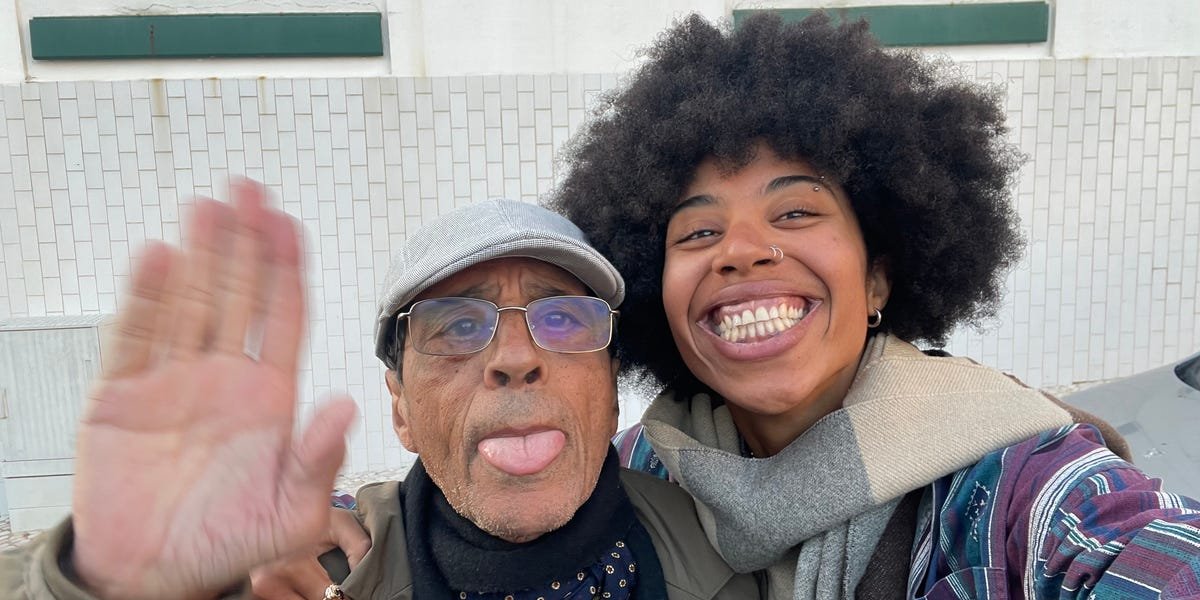
My-78-year-old-grandfather-visits-me-regularly-since-I-moved-to.jpeg

My 78-year-old grandfather visits me regularly since I moved to Portugal. I cherish our relationship.

I cannot recall my first memory of my grandfather, Geraldo. Maybe because he was always there.

When I was born, he split his time between Paris, where I lived, so he could watch me grow, and Rio de Janeiro, where he now lives full-time. Picking me up from school, dealing with my tantrums, and taking me to the movies. After I moved to New York when I was 6, he came to visit frequently, and I spent a month in Rio with him every summer.

When I moved to Portugal at 23, I hoped my grandfather would visit me, but I couldn’t have dreamt of what our relationship would become. It’s only been two and a half years, and he’s already visited five times. I should get him a frequent visitor card.

I love caring for him

There is something truly marvelous about caring for those who cared for you. Driving him around, making him tartar and banana pancakes, even just pouring him coffee; these simple things fill me with joy.


Man sitting for lunch

The author’s 78-year-old grandfather visits her in Portugal often.

Courtesy of the author


He is one of my favorite family members. He makes me laugh an exorbitant amount with his funny facial expressions, ridiculous reactions, and cynical jokes. One time he visited, I made iced coffee, and he eyed me like I was insane.

I cherish our time together

He finds joy in everything. He’s said things to me like “This coffee is terrific,” or “The octopus salad is even better than the one yesterday,” and “It’s so beautiful to see you like this.”

Not only does his attitude make him the best guest — so easy to please — but it also fills me with hope that I, too, will age like him, able to see the beauty in all that lies around.


Grandfather at airport

Courtesy of the author


That’s not to say that he doesn’t love to complain about just about everything; he is an old man who spent decades living in France, after all, but it’s always with a cheeky tinge. The weather was particularly gruesome on his last visit. When in Rio, he complains because it’s dangerous, loud, and unbearably hot. He jokes that he’s going to move here, or we could swap houses, and honestly, I’m considering it.

He was diagnosed with early-stage Alzheimer’s

My grandfather was 62 when I was born, which means I got to know him as an adult. I get to take him to lunch, introduce him to my friends — they all love him — and hear his stories. I realize it isn’t something everyone gets. For that, I am eternally grateful. It’s easy to think that intergenerational relationships are most valuable in childhood, but they can flourish most in adulthood.


Woman and grandfather at the beach

Courtesy of the author


Since his first visit to Portugal, my grandfather has been diagnosed with early-stage Alzheimer’s. I witnessed him constantly searching for his wallet and phone, how he accidentally left my apartment door open, sending me into a “where’s-my-cat-frenzy,” and how he asked over and over which day we were flying to France. At first, I was unable to comprehend how memory can fail my PhD professor’s grandfather. Then I thought of all the people who would dream of having this much time with theirs.

We probably only have a few good years left. Sometimes I catch myself crying about what’s to come. I know grief well, so I know the devastation I will feel, but instead of letting it consume me, I choose to turn it into a “yes” to every opportunity to see him, host him, show him more of my life, and learn all I can from his.

So I take many photos, hug him as much as I can, hope for more visits, and share this advice: if your grandparents can still travel, have them come visit. In the future, you will thank yourself.


Source link

My-company-announced-a-return-to-office-policy-a-few-weeks-ago.jpeg

My company announced a return-to-office policy a few weeks ago. It’s already affecting my relationship with my partner.

I hadn’t always been a believer in working from home. When remote work first became part of my life, I resisted it. I missed the structure of an office, the separation between work and everything else. Home felt like the wrong setting for serious work.

Then, slowly, it didn’t. I found a rhythm I hadn’t expected. Mornings became mine. I cooked real lunches. I thought more clearly.

More importantly, my girlfriend and I have been living together in London for a year, and we have built a life around being home together that feels chosen rather than forced. I’ve stopped seeing remote work as a compromise and started seeing it as the better version of my day.

So when the email came from work that said I’d have to return to office, it wasn’t just a scheduling change. It was a disruption to something we had spent months building, a routine that had come to feel like the foundation of everything else.

It has only been a few weeks since the announcement, and already, almost nothing looks the same — especially my relationship.

My partner and I both worked from home, so we had to rethink everything

The first thing we’ve had to confront was practical. Two people who both work from home occupy a shared space in a very specific way. That balance had taken time to calibrate. We had never sat down and designed it. It had just formed, organically, around our needs. The return-to-office policy exposed how deliberate that accidental life actually was.

My girlfriend still works remotely, so the shift hasn’t been symmetrical. I now leave each morning to head into a version of London we rarely engaged with during the week — the commuter version, the structured version — while she stays inside the life we’d built together. That asymmetry requires more honest conversation than either of us expected.

We’ve had to redesign things we never explicitly designed in the first place. What do mornings look like now? Who handles what, and when? The small, invisible agreements that hold a shared life together suddenly need to be spoken out loud. That process, still ongoing after just a few weeks, has been more revealing than disruptive. But it has required real effort.

Commuting in London comes with a price, and it goes beyond the cost of a train ticket

The financial reality surfaced quickly. Commuting to London isn’t cheap, and the daily arithmetic of transport, lunches, and the small expenses that accumulate when you’re out of the house adds up faster than expected. We had saved money by being home — on food, on travel, on the general inefficiency of city life when you’re moving through it daily. That buffer has started to shrink almost immediately.

But the more significant cost has been time. The commute is carving hours out of the day that had previously been ours. Mornings that once felt spacious have become logistical, and evenings are now shortened. The long, unhurried romantic dinners that had been a quiet anchor in our week are starting to require more effort to protect. Time, it turns out, had been our most abundant resource when we were both at home. We hadn’t noticed until it started running out.

There is also an energy cost that is harder to quantify. Offices are stimulating in ways that are both useful and exhausting. I now come home differently — more depleted, less present. After just a few weeks, my girlfriend has already noticed the shift before I fully named it myself. The version of me that walks through the door at the end of the day is not quite the same one that used to simply close the laptop and call it done.

Going back to the office has asked something new of our relationship

What surprised me most wasn’t the logistics. It was how much our new relationship had quietly depended on proximity: a shared lunch, a passing conversation in the kitchen, the low-level awareness of each other that comes with being in the same space. Those things weren’t dramatic, but their absence has been.

We are now trying to be more intentional. Dinners that used to happen naturally now need to be protected. Check-ins that once occurred organically require more deliberate effort. It isn’t a strain exactly; it’s a recalibration.

The return-to-office policy hasn’t damaged anything between us. But it is revealing how much of our relationship had been built on the life we’d created around being home. Losing some of that structure forced us to be more conscious about what we actually wanted, and more honest about what we weren’t willing to give up.

We have only been doing this for a few weeks. Something tells me the real adjustments are still ahead.


Source link

Amanda Goh

Sarah McLachlan, 58, says she had to ‘eat a lot of humble pie’ to repair her relationship with her older daughter

Sarah McLachlan, 58, says she had to rethink how she was parenting her daughter to rebuild their bond.

“I would have been softer on her in a different way. I was a hard ass,” McLachlan told Amy Poehler on Tuesday’s episode of “Good Hang with Amy Poehler.”

McLachlan shares two daughters with ex-husband Ashwin Sood: India Ann, born in 2002, and Taja Summer, born in 2007.

“It’s funny because I thought so clearly in my own mind that I was being the antithesis of my mother. And I looked at the way she parented, and I thought, ‘I’m going to do everything completely different,'” McLachlan said. “Then her words come spewing out of your mouth in a moment of anger and frustration, and you’re like, ‘Oh my God, I can’t believe I did that.'”

She said her older daughter would sometimes shut down or lash out when things got hard, and at the time, McLachlan didn’t fully understand what was behind it.

“I looked at that and went, ‘How do I help you with this? How do we move past this, because the world out there is scary and big, and you have to have some grit, and you have to do hard things so that you know you can,'” McLachlan said, describing the tough approach she took with her daughter.

It was only after they went to family counseling that she realized her daughter was experiencing a lot of anxiety.

“The way I was communicating to her was just making her feel shitty about herself instead of building her up, which was completely the opposite of what I thought I was doing,” McLachlan said.

“I had to eat a lot of humble pie and take stock and go, ‘OK, look, I want a relationship with my kid. So, I need to learn how to communicate differently with her,'” she said.

Through the process, she said her daughter also learned how to take responsibility for her own reactions.

“It was a long process, but it was beautiful and powerful. And we have such an open, loving relationship now because of that,” McLachlan said.

This isn’t the first time McLachlan has spoken about her relationship with her firstborn. In August, she told Variety that the chapter of their relationship inspired the second single, “Gravity,” on her latest album, released last year.

“It feels really sweet to be able to sing this song and know that we’re in such a better place, having come through this really challenging time together,” she said.

In September, McLachlan told People that therapy gave her a “safe environment” to connect with her daughter.

“What I realized is the way I was communicating my love to her, she was not hearing it, not feeling it,” McLachlan said. “I was not reaching her. And for me as a parent, that’s devastating because you just want to take your kid in your arms and hold them and keep them in.”

India Sood did not respond to a request for comment from Business Insider.


Source link

kelly burch

I’ve been running a business with my childhood best friend. We set commandments to make sure our relationship always comes first.

This as-told-to essay is based on a conversation with Ashley Morris, CEO of Capriotti’s. It has been edited for length and clarity.

My whole career is based on a love affair with food — and a lifelong friendship. I grew up on the West Coast, but had tried cheesesteaks on trips east, and adored them. In college, I was living with Jason, who has been my best friend since we were 10. One day, he came home talking about the best sandwich he’d ever eaten. He told me I had to go to Capriotti’s.

I was busy, studying finance and working at a bank. By that Friday, when I still hadn’t gone, Jason dragged me to the sandwich shop. I was just as blown away as he was. I’d eaten a lot of cheesesteaks, but this was the best of the best. It was true love.


Men at train station

Ashley Morris went into business with his best friend Jason.

Courtesy of Ashley Morris


Jason and I went to Capriotti’s so much that when we needed a new apartment, we chose one further from school, but closer to the restaurant. That was the first sign of the role Capriotti’s would play in our lives.

My banking success helped us go into business together

I started working as a bank teller at Wells Fargo when I was 18 because it was the only finance job they’d let me do at that age. After I graduated from college, I moved to the financial services team, and by the time I was 25, I was earning more than any young kid should: about half a million a year.


Friends at restaurant

Ashley Morris and his best friend Jason went into business together.

Courtesy of Ashley Morris


Jason and I had always wanted to get into business together, and now I had the financial resources to make that a reality. We decided to spend a week thinking about business ideas, then decide what to do. When the meeting came, we each brought one idea: open a Capriotti’s franchise.

We quickly opened 3 restaurants, but wanted more

We planned to be 50/50 business partners while both maintaining our day jobs. I would put in more capital, and Jason would do more of the hands-on work, while keeping his government job.

However, we quickly learned that running a passive business just isn’t a reality. The restaurant wasn’t going to be a side hustle, especially because we were so cocky that we opened two franchises at the same time. Before long, we had a third. My girlfriend at the time (now wife) handled a lot of the operations, while Jason and I supported her as much as we could.

We wanted to own 10 restaurants, but we started butting heads with Capriotti’s CEO. I thought she had an old-fashioned mindset, and each time we asked to open another location, she said no.

After a year of that, I’d had enough. I realized if I waited for her to say yes, I’d be 40 and not living my dream. After speaking with Jason, I told the CEO we wanted to buy the whole company. It took everything Jason and I had, but we purchased Capriotti’s in 2008, when I was 27.

We established rules to protect our relationship

We’ve been running the company together since — Jason’s the CEO and I’m the president. We have a lot of the same values, probably because we forged them growing up together. We know each other inside and out, like brothers. That allows us to give really honest feedback. Jason has no problem walking into my office and saying, “You’re missing the boat on this one,” and instead of getting defensive, I immediately open my mind to what he has to say.

When we decided to buy the business, we established commandments to make sure our business partnership wouldn’t ruin our friendship. First, there’s a hierarchy: if we reach an impasse on a decision, I have the final say. That’s only happened twice, and Jason has graciously accepted my decision.

Our second commandment is that if either of us wants out, the other must be fully committed to helping him exit. Luckily, we’ve never had to use that, but we know that we could part ways amicably, fairly, and with integrity if we wanted to.

Today, Jason’s four boys are close with my sons and daughter. We all went on vacation together for New Year’s. Life is busy, and it’s not always easy to find time together outside work, but we try. It’s wonderful to see our friendship recreated with our kids.


Source link

Jacob-Elordi-28-says-he-has-no-relationship-with-social.jpeg

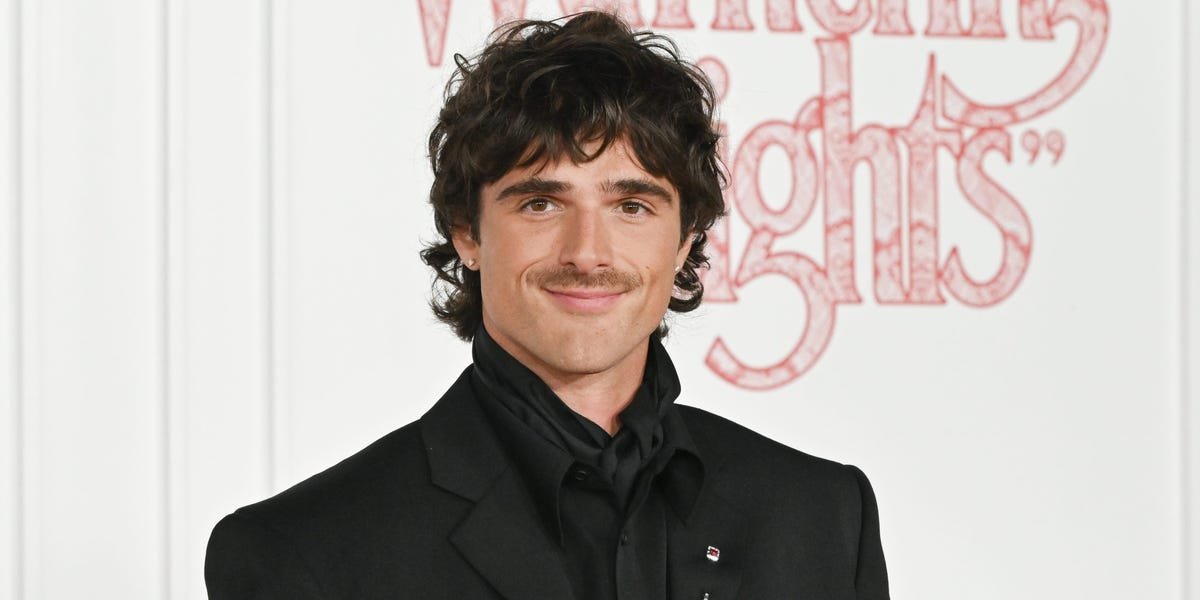
Jacob Elordi, 28, says he has ‘no relationship’ with social media

Jacob Elordi, 28, is everywhere right now — he’s just not on social media.

From “Euphoria” to “Saltburn” and “Priscilla,” to Guillermo del Toro’s “Frankenstein” last year and “Wuthering Heights,” released last week, Elordi has cemented his place as one of Hollywood’s most in-demand young actors.

But in an interview with CBS Sunday Morning, he made it clear that he has no interest in putting his private life online.

“I have no relationship with social media,” Elordi told CBS correspondent Tracy Smith.

“My dream was to be an actor. My dream was to play in the movies and, you know, I’m far too nervous to ask for more than that. I’ve been given exactly what I wanted, and I see it exactly how I dreamed it, and I live it how I dreamed it. So for me, that’s about all I can handle,” Elordi said.

Though the Australian actor has had an Instagram account in the past, he’s known to deactivate it often. His account has been deactivated since late 2024.

For Elordi, staying offline is a way to keep Hollywood from taking over his entire identity. Despite his rising profile — he’s TK he says that the boundary allows him to move through his private life mostly unbothered.

“I have a pretty strong refusal to lose my life to an industry, you know. I consider myself an actor and just an actor. And so for me, life kind of goes on outside the set, and outside of these lights and cameras and things,” he said. “I don’t have too much trouble in the world.”

Even with cameras around, Elordi says being a Hollywood star barely registers in his daily life.

“It doesn’t really factor into my reality, you know,” Elordi said. “I have so much love in my life, and the relationships I have in my life are so present and real. I was raised in such a sort of authentic and true way.”

“I feel so deeply here that, I don’t know, the idea of this industry and stuff — it doesn’t really factor into my day-to-day,” he said.

This isn’t the first time Elordi has spoken about social media and fame. In 2022, he said he woke up to 4 million new Instagram followers after his breakout role in Netflix’s “The Kissing Booth,” and the sudden public attention made him consider quitting acting.

“I hated being a character to the public. I felt so far from myself,” Elordi told GQ.

Elordi isn’t the only Gen Z actor to have spoken about staying offline.

In 2025, Mia Threapleton said her mother, Kate Winslet, encouraged her to make a list of pros and cons for joining Instagram when she was 14.

“The cons completely outweighed the pros for me. That was quite a clarifying moment. Since then, the more time I spend in this world, the more I’m really happy that I don’t have it,” Threapleton said.

It’s not just a Hollywood thing, either. Plenty of Gen Zers are deciding they’re better off offline.

They’re trading smartphones for dumb phones, turning cellphones into makeshift landlines, and throwing anti-social media parties where no one’s allowed to scroll.


Source link