
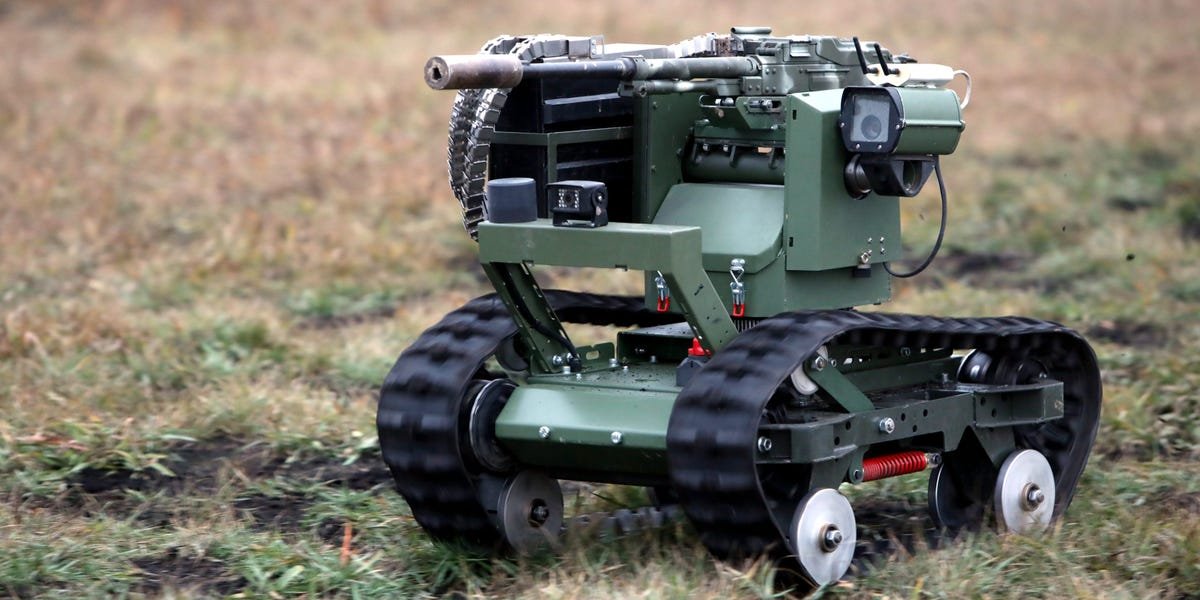
Ukraine-says-it-replaced-human-soldiers-with-ground-robots-in.jpeg

Ukraine says it replaced human soldiers with ‘ground robots’ in over 21,000 missions for Q1

Ukraine’s defense ministry said on Tuesday that the number of uncrewed ground vehicle missions carried out by its forces had tripled in the last five months.

These ground-based systems executed over 9,000 combat and logistics missions on the front lines in March alone, up from over 2,900 in November, the ministry said in a statement.

March’s numbers contributed to the more than 21,500 Ukrainian ground drone missions in the first quarter, the ministry added.

Uncrewed ground vehicles, or UGVs, are remotely piloted ground systems generally intended to replace human soldiers in dangerous tasks such as frontline supply drops, mine-clearing, and holding fortified positions.

They’re usually tracked or wheeled systems built to traverse difficult terrain and can serve as platforms to carry supplies, ammunition, wounded troops, or, in some cases, remotely controlled weapons.

The defense ministry said on Tuesday that the number of Ukrainian units deploying UGVs had nearly tripled since November.

“167 units of the Defense Forces used ground robots in March. For comparison, in November 2025, there were 67 such units,” the statement said.

According to the ministry, four of the top five UGV units registered in its DELTA battle management system were combat brigades known to be fighting in the eastern and northeastern fronts.

The other listed unit was the 1st Separate Medical Battalion, a unit under Ukraine’s International Legion known for pioneering the use of UGVs to evacuate wounded troops.

UGVs have become increasingly relevant as the war drags into its fifth year. Ukraine is struggling to fill its ranks with fresh troops, and small drones make frontline areas especially perilous to navigate. Russia, also hard-pressed to sustain the pace of its infantry attacks, has been deploying UGVs as well.

Ukraine signaled as early as 2024 that it expected to use more UGVs. But it was only in the last year that these systems have received more widespread recognition, with some brigades launching their own UGV-dedicated units.

Despite its rapid growth, UGV use in the war pales in comparison to that of flying drones.

In December, Ukraine’s commander in chief, Oleksandr Syrskyi, said that his troops had carried out over 304,000 uncrewed aerial vehicle missions in November alone.



Source link

Image of Lakshmi Varanasi

The ‘Godfather of SaaS’ says he replaced most of his sales team with AI agents: ‘We’re done with hiring humans’

Jason Lemkin, known to some as the Godfather of SaaS, says the time has come to push the limits of AI in the workplace.

In practice, Lemkin, the founder of SaaStr, the world’s largest community of business-to-business founders, said on Lenny’s Podcast recently that this means he will stop hiring humans in his sales department.

Instead, SaaStr is going all in on agents, which are commonly defined as virtual assistants that can complete tasks autonomously. They break down problems, outline plans, and take action without being prompted by a user.

He said the company now has 20 AI agents automating tasks once handled by a team of 10 sales development representatives and account executives.

That move from an entirely human workforce to an agent-based workforce was rapid.

In May, SaaStr had just one AI agent in production that it used for various digital tasks, Lemkin said. That month, though, during the SaaStr Annual — its yearly gathering of over 10,000 founders, executives, and VCs — two of its high-paid sales representatives abruptly quit.

Lemkin said he turned to his chief AI officer and said, “We’re done with hiring humans in sales. We’re going to push the limits with agents.”

Lemkin’s calculus was that it just wasn’t worth the cost of hiring another junior sales representative for a $150,000 a year position who would eventually quit, when he could use a loyal AI agent instead.

Amelia Lerutte, SaaStr’s chief AI officer, told Business Insider by email that by June, the company began ramping up the number of agents it had in production.

“We had only 1 non-core agent at the time with Delphi, but didn’t go deep on 2 to 20+ until the beginning of June,” she said. “It was a conscious choice after their departure to reallocate some (but not all) head count spend to agents.”

At the SaaStr office, the 10 desks that once belonged to humans on the go-to-market team are now labeled with the names of agents, like “Quali for qualified,” “Arty for artisan,” and “Repli for Replit,” Lemkin said.

Lemkin said SaaStr is training its agents on its best humans.

“Train an agent with your best person, and best script, then that agent can start to become a version of your best salesperson,” he said.

SaaStr’s process is similar to how Vercel, the cloud-based platform for developers, trained a sales agent off its top performer for six weeks by documenting every step of their work, and then building an agent to mimic their process.

Many companies are experimenting with AI agents, but risks remain. One of the big ones is the threat of data leaks and cybercrime.

“AI agents, in order to have their full functionality, in order to be able to access applications, often need to access the operating system or the OS level of the device on which you’re running them,” Harry Farmer, a senior researcher at the Ada Lovelace Institute, recently told Wired.

All of that access creates more potential attack points for cybercriminals.

Security threats aside, Lemkin said that the net productivity of agents is about the same as humans. However, he said, agents are more efficient and can scale — just like software.


Source link

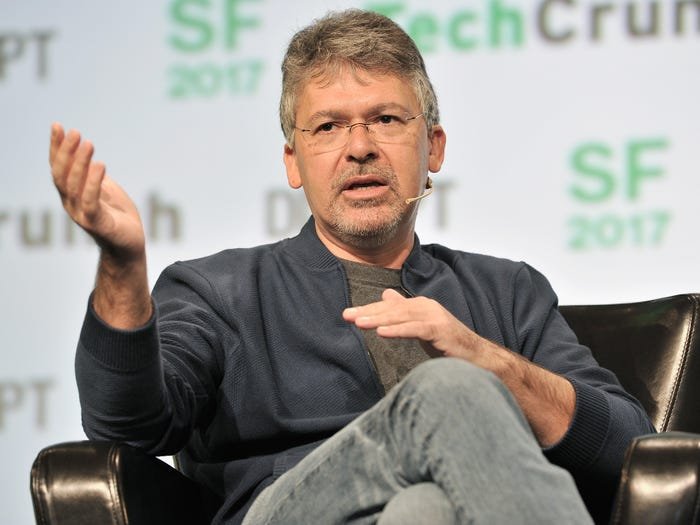
John Giannandrea

Apple’s AI chief is leaving and being replaced by a former Microsoft exec


Steve Jennings/Getty Images for TechCrunch

John Giannandrea, senior vice president for Machine Learning and AI Strategy at Apple, is stepping down from his role, the company announced Monday.

Amar Subramanya, an AI researcher who most recently served as a corporate vice president of AI at Microsoft, is now Apple’s vice president of AI, the company said. Prior to his time at Microsoft, Subramanya was at Google.

Giannandrea will serve as an advisor before retiring in the spring.

This story is breaking. Check back for updates.


Source link