
Pentagon-responds-to-Anthropic-suit-arguing-the-company-is-a.jpeg

Pentagon responds to Anthropic suit arguing the company is a ‘substantial risk’ to national security

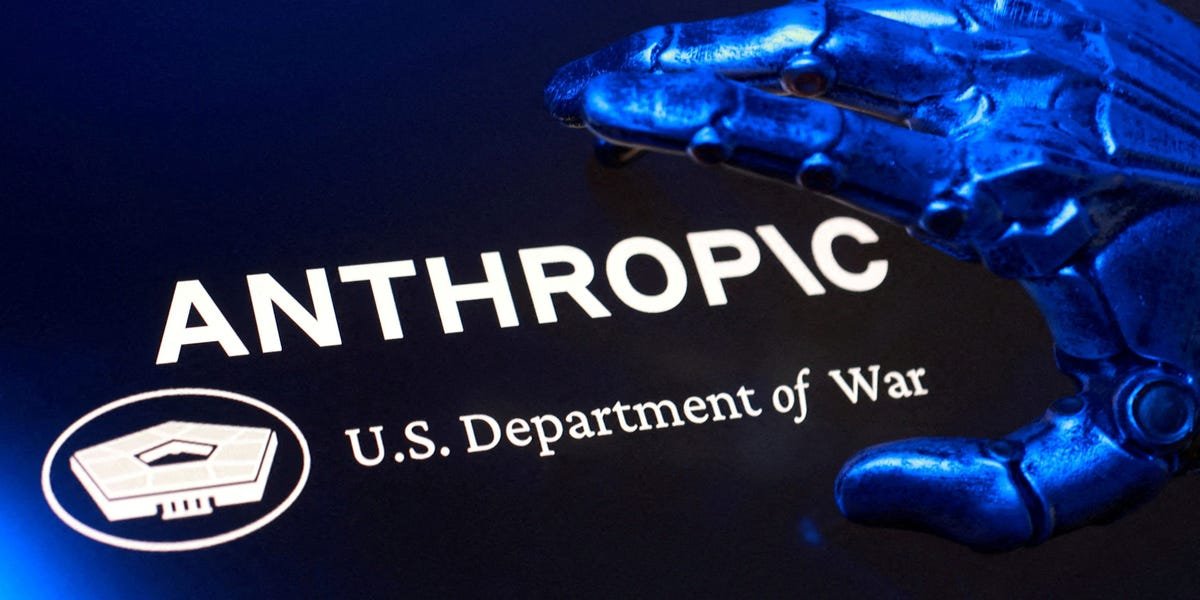
The US government is urging a federal judge to reject Anthropic’s bid to reverse its status as a supply chain risk.

In a court filing Tuesday, lawyers for the Department of Defense said federal agencies acted lawfully when they moved to phase out Anthropic’s technology after the company refused to agree to contract terms allowing “any lawful use” of its AI by the military. The Pentagon said that the company poses a national security risk.

The dispute centers on a broader clash between the military’s use of AI and the contractual safety limits it sets with the tech providers.

Anthropic, which builds the Claude AI model, sued the government after President Donald Trump ordered government agencies to stop using Anthropic’s technology, and the Department of Defense labeled the company a “supply chain risk,” effectively barring it from holding federal contracts. The company argued the move was unlawful retaliation tied to its safety policies.

The government, in turn, said it is simply exercising its authority to choose vendors — and that Anthropic’s restrictions and behavior made it an unacceptable partner for national security work.

Representatives for the Department of Defense did not immediately respond to requests for comment from Business Insider.

According to the filing, the conflict escalated after Anthropic declined to modify its usage policies, which restrict certain applications like weapons development and surveillance. Officials said those limits could give a private company undue influence over military operations and decision-making.

The government also argued that Anthropic’s role as the developer and maintainer of its AI systems creates inherent risks. Because such systems require ongoing updates and tuning, officials warned the company could “subvert the design and/or functionality” of its tools or alter performance during critical operations.

“We are reviewing the government’s filing and look forward to presenting our response to the court,” the company said in a statement. “As we shared last week, seeking judicial review does not change our longstanding commitment to harnessing AI to protect our national security, but this is a necessary step to protect our business, our customers, and our partners.”

Anthropic has argued that the actions violate its First Amendment rights and due process protections. However, the government pushed back, arguing the dispute is about commercial conduct — not protected speech — and that agencies are free to decide “those with whom [they] will deal” in procurement.

The filing also dismisses Anthropic’s claims of irreparable harm, describing potential business losses as “speculative” and arguing that any damages could be addressed through contract remedies.

A hearing on Anthropic’s request for a preliminary injunction is scheduled for March 24 in federal court in San Francisco.


Source link

FCC-Chair-Brendan-Carr-responds-to-Stephen-Colbert-calling-incident.jpeg

FCC Chair Brendan Carr responds to Stephen Colbert, calling incident ‘Democrat on Democrat violence’

Federal Communications Commission Chair Brendan Carr said it’s “fake news” to suggest that the government pressured CBS to pull a Democratic lawmaker’s interview from Stephen Colbert’s “The Late Show” earlier this week.

Carr addressed the latest flash point moment between broadcasters and the FCC in his Wednesday remarks during the commission’s February open meeting, saying there was “no censorship by the government here.”

Speaking to Fox News’ Laura Ingraham on Wednesday evening, Carr doubled down, describing the incident as “Democrat on Democrat violence,” rather than evidence that the commission had pressured CBS not to air the interview.

Instead, Carr said, CBS’s advice to “The Late Show” not to air an interview with James Talarico, a Democratic Texas state representative running for a hotly contested US Senate seat, was an appropriate response to prevent the commission from enforcing its equal time rule.

The equal time rule requires TV and radio broadcast stations to provide equivalent airtime opportunities to legally qualified political candidates, or risk fines or, potentially, the revocation of their broadcast license. The rule does not apply to bona fide newscasts, interviews, or on-the-spot news.

The rule has rarely been applied in recent decades. Broadcasters had generally understood a 2006 FCC ruling to mean that interviews on daytime and late-night talk shows were exempt from the rule. However, the FCC said in revised guidance sent to stations last month that “This is not the case.”

“Perhaps Colbert and other establishment Democrats want to put the thumb on the scale in this Democrat primary for one candidate over the other,” Carr told Ingraham. “I don’t know, you’ll have to ask them, but we’re going to enforce the law and hold broadcasters accountable.”

Carr told reporters during the FCC’s open meeting that the commission was pursuing “enforcement actions” against the talk show “The View” over its broadcast of an interview with Talarico.

“What we’re doing now is simply applying the law on the books in an even-handed manner, and for people that benefited from a two-tier system of justice during the Biden years, they may feel like that’s weaponization, but that doesn’t make it so,” Carr told Ingraham.

Representatives for Fox News, CBS, The Late Show, and the campaigns of Talarico and primary opponent Jasmine Crockett did not immediately respond to requests for comment from Business Insider. The FCC pointed to Carr’s remarks during the open meeting when reached for comment.

CBS previously said in a statement that it did not specifically prohibit “The Late Show” from broadcasting the interview, but that it did provide the show with legal guidance.

Colbert, who has hosted “The Late Show” since 2015, told his viewers on Monday that CBS lawyers said “in no uncertain terms” that his late-night talk show could not air the interview with Talarico. He also said he was told not to acknowledge the decision on air, which prompted his decision to post the interview on YouTube.

By the time of Carr’s appearance on The Ingraham Angle, Colbert’s interview with Talarico had received more than 3.8 million views — significantly more than other recent interviews, which average between about 75,000 and 510,000 views.

Rep. Crockett, a Democrat running against Talarico, said during a Tuesday appearance on “The Briefing with Jen Psaki” likely gave her primary rival a “boost.”

In a Wednesday social media post, Talarico’s campaign confirmed that the fervor around the incident had a positive effect, saying it had raised $2.5 million in 24 hours after the Colbert interview was scrapped.


Source link