At Jersey Mike’s, the Original Italian consists of ham, cappacuolo, prosciuttini (similar to prosciutto but coated in black pepper), pepperoni, salami, and provolone.
Here, I ordered my sandwich “Mike’s Way,” as suggested, since it adds onions, tomatoes, lettuce, olive oil, red-wine vinegar, and oregano — basically the exact toppings for a classic Italian sub.
I paid $14 for this 7-inch-long sub, which comes to about $2 per inch.
Jersey Mike’s is famous for having staff slice its meats and cheeses right in front of customers, and I was immediately impressed as I watched the man preparing my sandwich doing just that.
The portions looked very generous. In the end, my sandwich featured almost a full inch of the various meats and several slices of provolone.
When I took my first bite 30 minutes later, my first thought was there’s actually too much meat on here for my liking.
The lettuce and onion tasted crisp and fresh, and the bread had a pleasant texture without being doughy or dry, but the stacked meat dominated the sandwich’s flavor profile in a salty way.
I’d certainly rather have a surplus of meats than a dearth, though, and I’d absolutely order this flavorful sandwich again.
Although this was the most expensive sandwich I got, the price seemed pretty fair to me.
The Marine Corps has again done what the rest of the US military has repeatedly failed to do with its finances — account for its money.
The Corps, the only US military service to pass a clean financial audit, announced its third successful audit on Monday.
The Department of Defense, which was recently authorized to receive a new annual budget of nearly $840 billion a year and could see a substantial increaseto $1.5 trillion under the current Trump administration, has consistently failed to pass an audit since audits became legally required for the military in 2018.
Pentagon officials hope the military can get its books in order across the services and pass one by 2028.
“The Marine Corps’ audit process enabled accurate global tracking and reporting of financial transactions, inventory of facilities, equipment and assets, and accounting for taxpayer dollars spent during the last fiscal year,” read a Marine Corps release, “The auditors also tested the Marine Corps’ network, key business systems, and internal controls.”
The result reflects years of effort to modernize financial and logistics systems that have long been siloed across units, making audits agonizingly challenging, said Lt. Gen. James Adams III, the deputy commandant for programs and resources, during a media roundtable. Such bottlenecks have been a long-standing problem across the Defense Department and are a major focus of Pentagon reforms.
“We want to modernize our systems so they’re digitally connected, so that we can do audits in the future that are controls-based,” said Adams, who is set to depart his position soon to lead the Defense Intelligence Agency.
Historically, fragmented military networks have made everything from force-wide equipment tracking to financial oversight difficult, requiring tedious manual reconciliations. While the Corps still relies heavily on human review, officials say automation and artificial intelligence are already reducing the burden.
“Right now, we still take a lot of data and move it onto a macro spreadsheet that our accountants are reviewing, and that’s just a lot of work,” said Edward Gardiner, the assistant deputy commandant for programs and resources. AI tools can help flag discrepancies and pinpoint errors, he said. Officials pointed to one automation system that saved 20,000 hours of painful reconciliation work.
Auditors still found seven “areas of weakness” in the audit, a common feature even among organizations with clean audits, though Adams told reporters the Corps has prioritized fixes to those areas that pose the greatest risk to financial accuracy after its audits, rather than trying to eliminate all concerns at once.
“Passing our third consecutive audit is a direct reflection of who we are as Marines,” the Corps’ commandant, Gen. Eric Smith, said in a statement. “Discipline, accountability, and stewardship are not administrative tasks; they are part of our warfighting culture.”
Elon Musk says China is on track to outpace every other country in the computing power needed to run AI.
The Tesla and SpaceX CEO said in an episode of the “Moonshots with Peter Diamandis” podcast published Tuesday that “China’s going to have more power than anyone else and probably will have more chips.”
“Based on current trends, China will far exceed the rest of the world in AI compute,” he added.
Musk said China’s decisive advantage in the AI race lies in its ability to scale electricity generation. He estimated that China could reach about three times the electricity output of the US by 2026, giving it the capacity to support energy-hungry AI data centers.
Electricity generation is the limiting factor to scaling AI systems, Musk said.
Every time Lee Chong Ming publishes a story, you’ll get an alert straight to your inbox!
Stay connected to Lee Chong Ming and get more of their work as it publishes.
“People are underestimating the difficulty of bringing electricity online,” he added.
While the US has focused on restricting China’s access to advanced semiconductors, Musk suggested those constraints may matter less over time. China will “figure out the chips,” he said.
Musk added that diminishing returns at the cutting edge of chip performance might make it easier for China to catch up, even without access to the most advanced designs.
Musk has previously pointed to China as a model in areas beyond AI infrastructure.
In an episode of the “People by WTF” podcast published in November, Musk said he wants to turn his social media platform X into “WeChat++,” referencing China’s dominant super app.
“I also like the idea of sort of having a unified app or website or whatever, where you can do anything you want there,” he said. “China has this with WeChat.”
AI’s next bottleneck is power — and China is leading
Musk’s comments come as energy supply and data infrastructure emerge as key constraints in scaling AI, rather than chips or algorithms.
Companies worldwide have rushed to build AI data centers, many of which require as much electrical power as small cities.
A report from Goldman Sachs in November said that an electricity shortage could slow US progress in the AI race.
“As AI demands massive power, a reliable and ample power supply is likely to be a key factor shaping this race, especially because power infrastructure bottlenecks can be slow to solve,” wrote Goldman’s analysts.
The report added that while pressure on the US power grid is increasing, China has been steadily expanding its energy capacity.
By 2030, China could have about 400 gigawatts of spare power capacity, according to Goldman. That’s more than three times the total electricity demand data centers worldwide need.
“We expect China’s spare capacity to remain sufficient to accommodate data center power demand growth while supporting demand in other industries,” the analysts wrote.
In his annual New Year’s address last week, Chinese leader Xi Jinping praised his country’s progress in AI in 2025, saying China had “integrated science and technology deeply with industries, and made a stream of new innovations.”
“Many large AI models have been competing in a race to the top, and breakthroughs have been achieved in the research and development of our own chips,” he said in his speech in Beijing.
“All this has turned China into one of the economies with the fastest-growing innovation capabilities,” he added.
A short rest may help you break that plateau, according to a doctor who set state and national records in powerlifting.
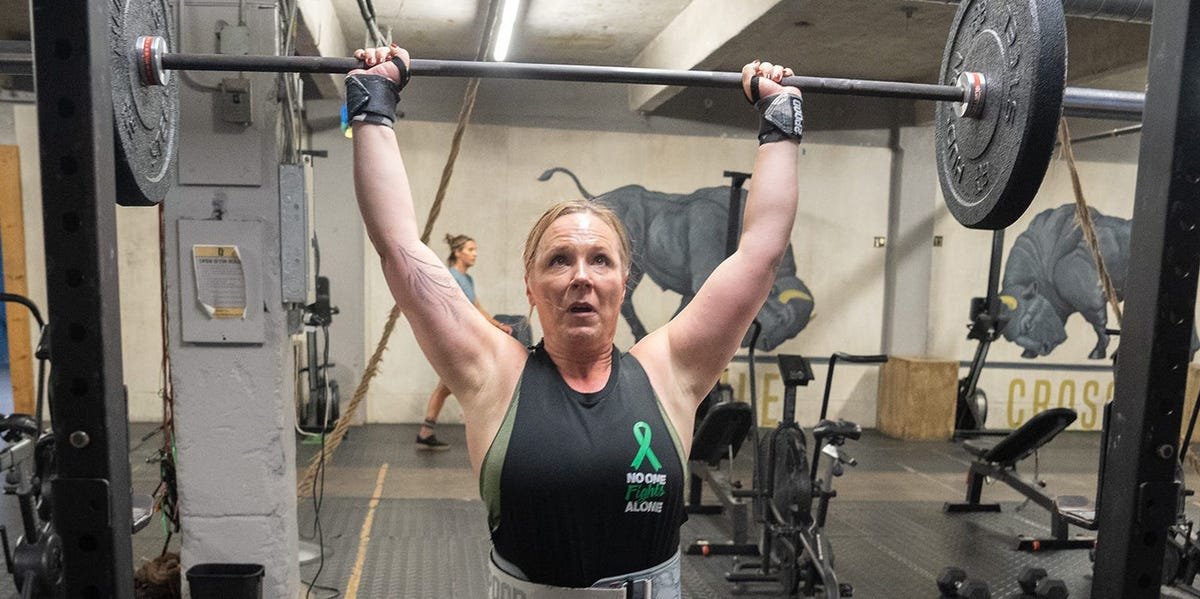
Dr. Shernan Holtan, a hematologist and busy mom of two, has been lifting weights for over a decade. She hits the gym at 5:30 a.m. for an hour of training before heading to her day job as chief of blood and marrow transplant at Roswell Park Comprehensive Cancer Center.
Her key to avoiding physical burnout and keeping up gains: Every four to six weeks, she eases up on her training to let her body recover and build back stronger.
“You give yourself a break. Come back, lower the weight drastically for a week, and really just let your body soak up all of the stress that you just put it through to let it repair and heal,” she told Business Insider.
The strategic break is commonly referred to in the fitness world as a “de-load week.” It’s an evidence-backed way to smash through plateaus, reduce the risk of injury, and boost muscle and strength gains for everyone from elite powerlifters and bodybuilders to everyday athletes.
Building weights is about challenging your muscles, then resting and recovering.
Roswell Park Comprehensive Cancer Center
For Holtan, deloads have enabled her to maintain steady progress for years, gradually building up the strength to squat 225 pounds (or more) for reps. In that time, she’s also started running and CrossFit, in addition to hiking, biking, and going to the gym (sometimes with her teenage daughter).
“I exercise every day, but I’m not doing crazy stuff every day,” she said.
Here’s how to know if you should take a deload, and the right way to rest for better fitness.
Why resting helps you build more muscle
Unless you’re a pro athlete, less can be more when it comes to exercise.
That’s because muscle and strength gains only happen during the rest periods between gym sessions. A good gym session can break down muscle fibers, prompting them to grow back stronger, but only if you provide them with the time and resources (energy in the form of sufficient calories and protein) to recover.
Holtan said to think of it as a slow and steady effort over time, rather than going all-out at the gym (and being too sore to come back).
“It’s little micro adjustments, tiny increases in weight, a few extra reps,” she said.
Then, over the weeks and months of training, a de-load can help your body to reset and keep making progress.
A de-load can also be a full rest from exercise, and can be a good idea during a vacation or holiday, so you can fully enjoy the time off.
When to take a de-load
The right time to take a rest can vary depending on your training and goals. Trainers typically recommend taking a break every four to 12 weeks.
The length of the rest can vary too.
If you’re consistently in the gym three times a week, you may only need a day or two to deload, and can go two or three months between breaks. Competitive athletes who train five or more days a week might benefit from longer breaks every month or two.
Holtan focuses on a specific goal for four to six weeks, then rests and repeats with a slightly different goal.
Dr. Holtan said her training schedule prioritizes a specific rep range for four to six weeks, then she takes a break to recover.
Roswell Park Comprehensive Cancer Center
For instance, she might spend a month or so building up to a heavy one-rep max deadlift, bench press, and squat. After her deload week, she might focus on lifting moderate weight for more reps.
This is a type of training cycle known as periodization, which can help prevent athletes from overtraining or getting stuck in a rut.
Listening to your body can also signal that a rest might be beneficial.
If you’re just not enjoying the gym, struggle to finish a workout ,or need to foam roll the pain away, an extra rest day might be just what you need.