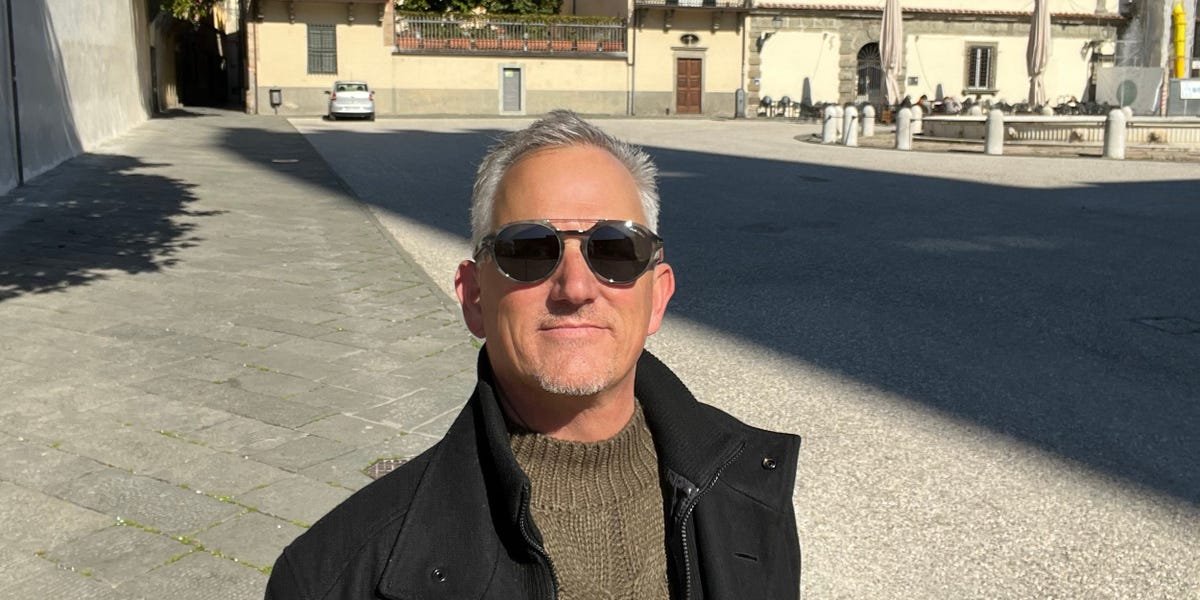
I-moved-from-Texas-to-Italy-to-retire-Im-saving.jpeg

I moved from Texas to Italy to retire. I’m saving over $20,000 a year on healthcare, and life is cheaper and calmer overall.

This as-told-to essay is based on a conversation with Brad Allan, an American who relocated from Austin with his wife, Olivia, to Montepulciano, Italy, to retire. Allan, 60, now gives advice to other expats in Italy through his YouTube channel, BradsWorld. The following has been edited for length and clarity.

In the US, I owned a chain of furniture stores and dabbled in investing in multifamily real estate.

For me, retiring in Europe was about being able to keep up the lifestyle that I had when I was running my stores and owning multifamily and actively working in the US. Without being cliché, we wanted to be able to lead a Champagne life on a beer budget; to be able to stretch our dollars.

When you look online, it’s so inexpensive to buy nice properties in Europe. I can remember at least 10 years ago looking at real estate listings and daydreaming about retiring in Italy, Southern France, or Spain.

We’re big travelers — my wife and I were lucky enough to be able to take three or four international trips a year. We went everywhere, but we always gravitated back to Southern Europe.

So Italy was always on the radar. We got serious about it just before COVID. We took a six-week trip in the fall of 2019, and drove around all of Italy from the very northern part all the way down into the heel of the boot.


View over the Tuscan countryside and the town of Montepulciano at sunset, Italy

Montepulciano, Italy. 

jenifoto/Getty Images


We ended up choosing to buy property in Southern Tuscany, specifically right on the Umbria border. The other areas are nice, but we felt most comfortable here — we had been here a lot and knew a lot of people.

We moved here full-time in 2023 and love it. We just felt at home.

The natural beauty here is otherworldly. We’ve found the people to be very friendly, and people always talk about la dolce vita, the slower pace of life. Plus, we really like wine, and the quality here is second to none.

Italy’s healthcare is inexpensive compared to the US

The No. 1 thing to know is that in general, healthcare in Italy is very inexpensive. Even if you’re not on the national healthcare plan, you can come here.

When you’re retired, you’re not having anybody paying into the system for you. So we paid 2,800 euros [about $3,228] for our buy-in to the national healthcare system for the year. What was our payment for one month in the US pays our healthcare for the year, and we don’t really have to pay for anything unless we wanted one expedited service.

For example, my wife needed an MRI, with and without contrast, and we went to the local MRI private clinic not through the healthcare system. I believe it was 200 euros for two different MRIs. I had to get an X-ray, and it was $30. A doctor’s visit is 50 euros, and a specialist visit is 120 euros. So it’s very inexpensive.


A man and woman taking a selfie.

Allan and his wife, Olivia. 

Courtesy of Brad Allan


At 60 years old, I’m still five years away from being able to get Medicare — my wife’s 15 years away from that. So that’s a long time when you’re unemployed — as you are when you’re retired — to be paying $3,000 a month in healthcare costs in the US. So that’s a huge deal.

People say, “Well, the taxes are so high in Italy. It’s six points higher than the top line in the US.” And yes, the scale maxes out much lower than the US, but taxes aren’t just federal income tax; it’s also property tax, and I consider healthcare costs to be a tax, especially when you’re retired.

So all those things together, Italy is much more affordable, because when you’re retired, you’re not making as much income. And yeah, maybe we paid an extra $5,000 in federal tax here, but we saved $20,000 in property tax, which is what we had to pay in Texas. And we saved over $20,000 in healthcare costs. That’s huge savings.

Living in Europe is calmer, and traveling is a lot easier

Nobody here asks you what you do.

“How much do you make? What do you do for a living?” You don’t get personal questions like that, which I find to be refreshing.

It is a slower pace of life. You eat dinner so much later, and it’s not just about chowing down on the food.


A terrace overlooking the landscape in Italy.

Allan’s terrace in Montepulciano, Italy. 

Courtesy of Brad Allan


And the prices are different. If you go out to dinner here, you’ll be amazed. You go out to town here with a good bottle of wine — and this is a tourist town — and your total bill is probably going to be $60 out the door.

We’re also able to take trips to really interesting places with Italy as our home base. Two weeks ago, we decided to go to Tenerife for a week because it was $29 each way to fly — of course, by the time they hit you with bags, it’s not $29 each way.

But you can just hop on a plane and go to so many really unique places, and you don’t have issues with five-hour waits from TSA. There’s an ease of getting around.

We never take trains in the US. But when my brother-in-law’s visiting, we’re going to pop down to Naples; it’s only two and a half hours by train — that’s like 180 miles away.


A woman posing during a sunset in Italy.

Allan’s wife, Olivia, in Italy. 

Courtesy of Brad Allan


Last year we went to Scotland and London on two different trips. We went twice to the French Alps in the summertime, because it gets pretty warm here. We have two big dogs, and we took them French Alps so they could swim in the river. It’s beautiful.

We drove to go do that, and it was a six-hour drive. And that’s all within the last 12 months.

It’s really nice that we’re now able to do those kinds of things.


Source link

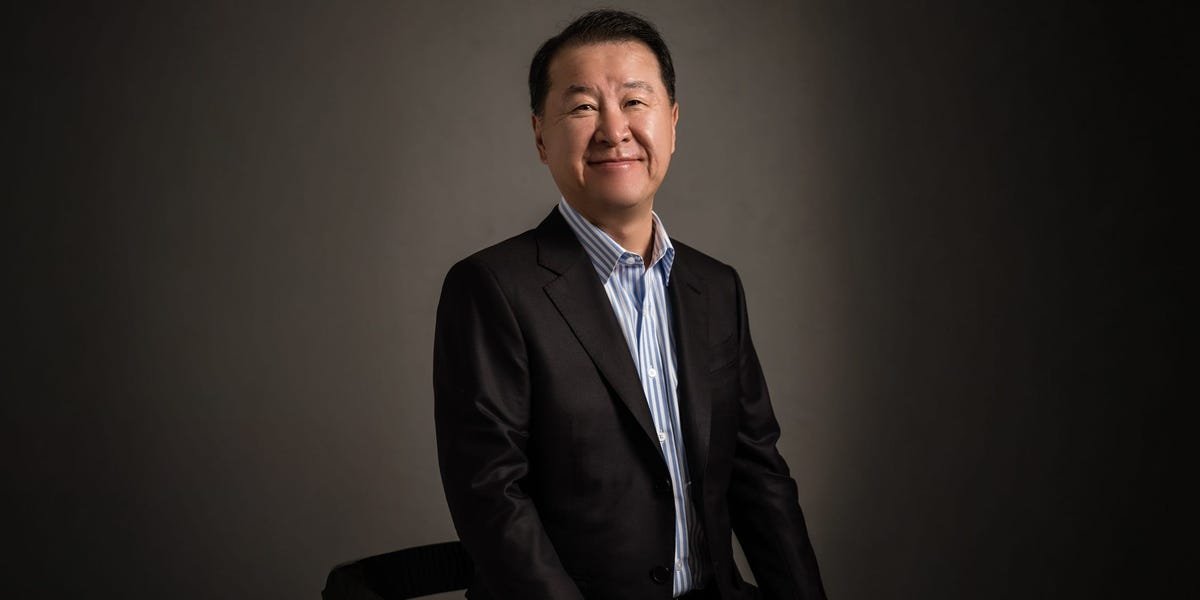
I-sold-my-company-for-hundreds-of-millions-and-have.jpeg

I sold my company for hundreds of millions and have more money than I’d ever need. Yet at 66, I have no plans to retire.

This as-told-to essay is based on a conversation with David Chung, owner and chairman of Amare Global. It has been edited for length and clarity.

I couldn’t believe there was a banana just sitting on the kitchen table. In Korea, having a banana was a big deal, but when I immigrated to New York City at 12, we had fruit and even M&Ms. Everything was so luxurious.


David Chung and mom

David Chung and his mom moved to New York.

Courtesy of David Chung


My mother immigrated to the US in 1963 with less than $100. When she arrived in New York, she started a small, mom-and-pop gift shop. She grew the business through and eventually got her green card. I joined her about eight years later, in the middle of a New York winter. I didn’t speak the language, but I felt lucky to be in the US.

I decided to get into cosmetics after watching my mom’s business

My mother continued to grow her store, expanding into a drugstore and pharmacy. By the early 2000s, she had a business worth tens of millions.

She was very, very entrepreneurial. Watching her journey inspired me and has carried over even today. I have a lot of her DNA when it comes to business. Now that I’m 66, I’ll think, “I’m just like my mother!” It’s scary.

My mom’s business set the stage for mine. Working in her shop, I saw that beauty products provided a great business opportunity. The products are small, which reduces warehousing and shipping costs. They’re consumable, so customers return again and again. And even if the economy is bad, people don’t give up on their skin.

I started my first business at 23

I went to college, but I found it difficult to concentrate because I was always thinking about starting my business. Even today, I don’t drive much because I get so distracted thinking about running my companies (instead, I use a driver). Eventually, I graduated with a degree in engineering.

Right next to my school, there was a small video rental store. These were the days before Blockbuster. I bought that store when I was 23, and expanded it slowly to sell gifts and cosmetics.


David Chung in his first business

David Chung started his business at the age of 23.

Courtesy of David Chung


That was my start in business. Other than my mom, I’ve never worked for anyone else. That meant I had to learn hard lessons about business structure, processes, and systems on my own.

I have more money than I could ever spend, but still love building businesses

Over time, I pivoted from retail to research, design, and manufacturing. In 2018, I sold my shares in one company for $53.7 million. In 2021, I sold my company, Farmacy Beauty, for hundreds of millions (I’m not allowed to share the specific amount). I remember being at my computer on December 31st, watching the funds being deposited into my account. I didn’t feel anything. I didn’t think “I’m rich now.” I didn’t even go out to dinner to celebrate.

Entrepreneurship has never been about money for me. It’s more about the accomplishment and excitement of building something. I remember the first time I was in a room with people who had more credentials than me. I came up with an idea they hadn’t considered. That’s the first time I realized that I had a different way of thinking about things.

I have a huge amount of money now — I could never spend it all. And yet, when those funds hit my account, I didn’t buy a Rolex or a fancy car. I went out and bought another company to run.

I want to build wealth in order to give back

Recently, I told an employee that I’m going to retire in three years. She laughed and said I told her the same thing 15 years ago.

I don’t think I will ever retire fully. God has given me a talent for being business-minded and good at what I’m doing. I want to utilize that as long as I’m able to.

My mother was very passionate about giving back, particularly to the Korean American community. I figure the more money I make, the more I can give back. So, why not use this skill?


Source link

An-88-year-old-worked-5-days-a-week-at-a-supermarket.jpeg

An 88-year-old worked 5 days a week at a supermarket. Then strangers raised almost $2 million so he could finally retire.

Before December, Ed Bambas was among the sizable swath of older Americans still working with retirement nowhere in sight. Then, he met content creator Samuel Weidenhofer.

Weidenhofer, who has 12 million followers across social media, set up a GoFundMe fundraiser for Bambas on Monday to help him leave his job at a Detroit supermarket and retire.

“I’m opening a fundraiser to help Ed live the life he deserves to finally give him some relief, comfort and the peace of mind that comes from knowing he can enjoy his later years without constant struggle,” Weidenhofer wrote on GoFundMe.

The fundraiser had a $1 million goal. As of Sunday, over 65,000 people have donated, reaching a total of almost $2 million.

In a video shared to Weidenhofer’s social media accounts, Bambas said he’s an 88-year-old veteran who works at the supermarket five days a week, eight hours a day. Bambas said he retired from General Motors in 1999, but lost his pension after the company went bankrupt in 2009.

Bambas told Weidenhofer that his wife, who died seven years ago, had been sick around the time his pension stopped. Without his pension, Bambas had to re-enter the workforce.

Nearly 550,000 Americans 80 and older are still working, according to 2023 US Census data.

As part of Business Insider’s “80 over 80” series, reporters interviewed nearly 200 workers over 80 — in addition to conducting surveys and receiving emails — in an effort to understand why.

While some older Americans are driven by a personal desire to work, others take on jobs to combat financial insecurity. Some workers over 80 told Business Insider that they use their income to supplement their Social Security and other retirement payments. They fear that without the income, they can’t afford the cost of living.

Weidenhofer shared a video of Bambas receiving his GoFundMe check on Friday.

“It’s something dreams are made of,” Bambas said in the video.

Bambas also thanked everyone who donated to the fundraiser.

“I cannot express in any words how thankful I am to all the people,” he said.


Source link