While the chain has yet to release any numbers confirming its turnaround, anecdotally, I can say Red Lobster seems to be doing a lot of things right when it comes to bringing customers back through the doors.
I thought the food is of better quality than it was two years ago, prices are pretty reasonable — especially given the increased cost of seafood — and the chain appears to be experimenting with new and exciting menu innovation and value-focused initiatives, two facets that are proving successful for other casual-dining chains like Chili’s.
The restaurant design and atmosphere have largely stayed the same, but Red Lobster plans to remodel its 545 locations. The renovation is expected to cost upward of $500,000 per restaurant and could take four to five years to complete, The Los Angeles Times reported.
I was also impressed by the serving sizes of all the items I ordered — they were more than enough to split between two people or take home half for leftovers, which I did.
I was thankful for that, especially as the final cost of my meal, including a soft drink, came to $71.27, before tax and tip.
Going out to eat at Red Lobster can cost more than at another casual-dining chain like Chili’s or Applebee’s, simply because seafood tends to be more expensive. However, I’ll still be coming back for more.
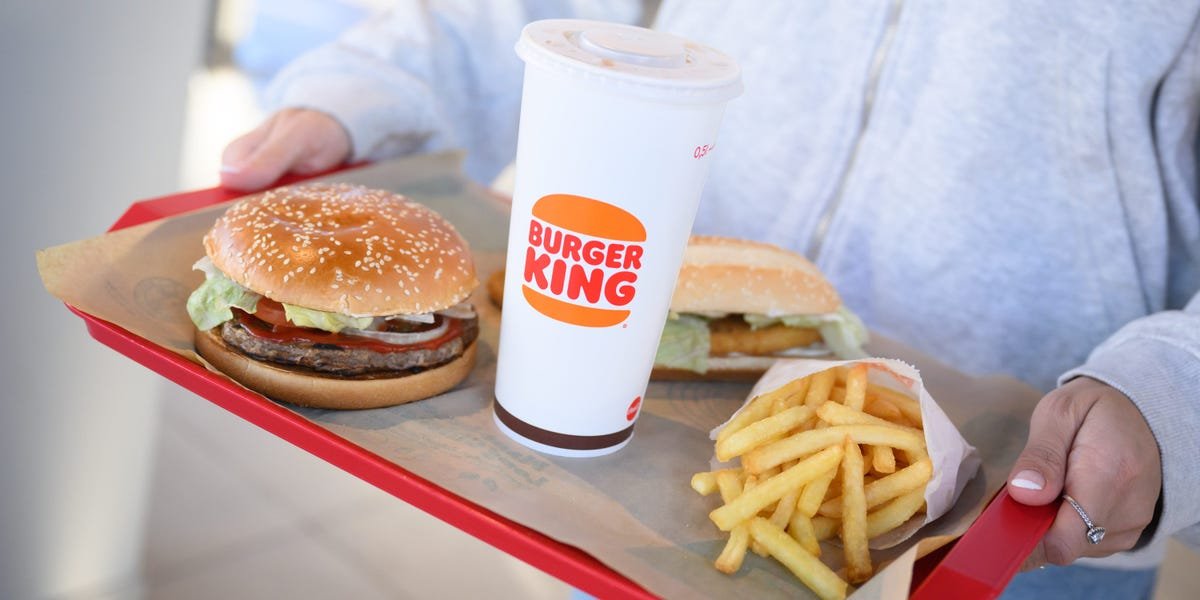
Burger King is tweaking its Whopper — and the changes don’t just freshen a decades-old recipe; they also reposition its flagship product as part of the fast-food industry’s broader premiumization push amid years of value wars.
The chain is betting that highly visible upgrades — including what a press release described as “a more premium, better tasting bun,” and packaging designed to prevent the dreaded squish — can compete against its fellow quick-service restaurants as diners increasingly demand both quality and value.
The changes mark the first meaningful refresh of the Whopper in nearly a decade and came as a response to a campaign that allowed customers to call or text Burger King US and Canada president Tom Curtis directly.
Curtis heard those calls and told Business Insider the company received nearly 20,000 voicemails and texts, with the Whopper “consistently one of the top topics,” underscoring how central it remains to the brand’s identity.
A battle between value and quality
The fast-food industry has been locked in an intense value war that has intensified since the summer of 2024 as inflation and economic pressures pushed consumers to seek the lowest-priced options. However, as chains lean into discounts, they also face a ceiling: consistently cutting prices can erode margins and dull brand appeal.
In response, competitors have begun pushing premium upgrades to core menu items.
McDonald’s has tweaked its burgers — with changes like cooking patties in smaller batches, glaze-like sauces, and richer buns — as part of its broader menu refresh and McValue strategy. Taco Bell’s Luxe Cravings boxes and premium limited-time offerings signal a similar attempt to mix higher-end cues with value structures. Wendy’s has spiced up its lineup with elevated sandwiches, such as the Mushroom Bacon Burger, and premium nugget varieties amid its ongoing value promotions.
Burger King’s Whopper upgrades fall right in line with the trend. Curtis framed the move as refinement, not reinvention.
“Guests today expect higher-quality execution without losing the familiarity of their favorites,” Curtis told Business Insider. “These changes are about elevating the experience and maintaining the core attributes that make the Whopper a category leader. It’s a reflection of rising consumer expectations across the industry.”
Reinventing a classic is risky
“Anytime a brand changes its most iconic product, there is risk,” Kelly O’Keefe, founding partner at Brand Federation, told Business Insider, pointing to New Coke as a cautionary tale: “consumers were furious, and the new product was killed faster than a new Cracker Barrel logo.”
Still, he said, ignoring evolving expectations can be just as dangerous.
“In the burger category, premium players like Five Guys and Shake Shack are thriving, and Burger King is playing catch-up,” O’Keefe said. “If they don’t stray too far from what their customers love about a Whopper, I think this could be very successful.”
Asit Sharma, an analyst at The Motley Fool, said his immediate reaction to the Whopper changes was: “What took you so long?!”
He pointed to McDonald’s 2023 efforts to refresh the Big Mac — including steps to improve texture, sauce quality, and buns — as evidence that even the biggest chains see premiumization as table stakes.
Sharma also suggested that Burger King’s narrative about listening to fans likely intersects with franchisee pressure, noting that, by parent Restaurant Brand International’s admission, the development process took years. Curtis didn’t dispute franchisee involvement, saying franchisees “were an important part of this process,” and adding that their operational input helped ensure the changes could be executed consistently.
Analysts say that premiumization, when done right, can help brands protect traffic and pricing power even as consumers remain value-focused. Sharma described the dynamic as a potential “glass half-empty” defensive move — one that prevents customers from moving to higher-end competitors — or a “glass half-full” opportunity to draw in diners who are trading down but still demand quality.
“Substituting a few ingredients for the trappings of a more premium burger (including cardboard packaging) is a way to entice more affluent customers who may be trading down in a tough economy,” Sharma said.
Mike Perry, founder of the creative agency Tavern, which has worked on rebranding efforts with companies including Burger King, described the clamshell-style box as “the most innovative thing they’ve done” because it signals care and structure that customers remember from earlier eras of fast food.
For Burger King, Curtis said the company is “more excited than ever” to act on what it heard through its feedback initiative, adding that the Whopper is the first of what the brand anticipates will be many “thoughtful updates” to the menu over time.
If the bet works, Burger King could demonstrate a path forward for legacy fast-food brands trying to thread a needle: keep the value-minded core, win back lapsed customers who’ve traded up, and do it all without breaking the emotional contract customers have with an icon.
Ex-Microsoft exec Craig Mundie has heard this question again and again — parents asking him a version of the same worry: Their kids are heading toward college, artificial intelligence is advancing fast, and jobs feel uncertain. What, exactly, should their kids be studying?
That question — what education will matter most in five years — reflects a deeper uncertainty about the future.
Mundie, who spent 22 years at Microsoft helping steer the company’s vision toward AI and retired as the company’s chief research and strategy officer in 2014, says that parents are simply asking the wrong question.
It’s not only the students who have to change to fit the new AI era — it’s the education system itself, said Mundie, who now advises other executives on AI and public policy.
Rather than chasing down the right job, Mundie urges families to prepare kids for a world where learning itself becomes continuous, personalized, and done in partnership with intelligent machines.
AI is altering the human experience
During an interview with Business Insider’s Reem Makhoul in June, Mundie said artificial intelligence and robotics are poised to reshape work more deeply than past technologies. See the edited cut of his interview below:
That shift, Mundie said, forces a bigger question than which job skills will survive. It challenges how societies define human value. This is something Mundie’s been pondering for over a decade.
In his 2015 book “Genesis,” Mundie, with co-authors Eric Schmidt and Henry Kissinger, examined how AI could alter the human experience. “What we say is we have to think differently about how we value ourselves and what we do.”
For much of history, he said, dignity has been tied to work because people had to work to survive. AI could loosen that link by automating more tasks across both physical and intellectual labor.
Meanwhile, humans will need to learn how to work alongside intelligent machines, and the traditional higher-education system doesn’t offer a clear path toward that, right now.
He described today’s education system as sharply divided between STEM and the humanities. The liberal arts emphasize reasoning, but at the expense of special technical skills you learn in STEM fields, Mundie said.
Students will need both skills moving forward. “If I could create a new curriculum in college, it would be a liberal education in technology,” and STEM, he said.
The classroom model itself is reaching its limits
Mundie says the future of education will be driven by individuals’ motivation to learn and not standardized curricula.
Hispanolistic/Getty Images
Mundie went further, questioning whether the classroom model that dominates education today still makes sense.
He traced that structure back to the printing press, which created a surge in written information and a need for mass literacy. Schools, he said, became an efficient “machine for teaching” because societies lacked enough individual tutors.
AI changes that constraint.
We can have scalable, polymathic teachers, Mundie said. “We can have as many teachers as we want now because the AI will be the teacher.”
He said this opens the door to a more personalized, Socratic model of learning, where students can interact continuously with an intelligent system that adapts to their curiosity, pace, and interests. Progress would be limited less by standardized curricula and more by a student’s motivation and capacity.
Schools and universities have been slow to embrace this shift. Early reactions often involved banning AI tools outright. “They’ve now given up on that,” Mundie said.
That resistance, he added, is typical of incumbent systems. “The natural tendency of the incumbent is to preserve the incumbent system,” or make only incremental changes, he added. But “when you get something as powerful as these AIs, most incumbent systems are not going to be preserved.”
He also pointed to early experiments on the right track, like versions of Khan Academy, an online non-profit educational platform founded in 2008 and headquartered in California. It uses an AI tutor, named Khanmigo, designed to guide students rather than simply give answers. In those systems, he said, the AI nudges students toward better questions and deeper understanding.
“So that’s the difference between sort of a broad chat about anything interface and an AI application that was specifically oriented around teaching,” he said, adding, “That’s just one tiny example of how people will build more and more apps on these common artificial intelligence platforms.”
“We will move beyond the specific generic interface to a world of millions of applications that are really customized in some clever way to guide people to solutions in the areas they care about,” he said. These agents may, in fact, do much of the work autonomously by interacting with others, he added.
Mundie said parents and older generations may have difficulty imagining this model, while children are likely to adapt quickly. The harder question, in his view, is whether educational institutions are willing to change.