Millions-of-student-loan-borrowers-risk-being-driven-into-a-shadow.jpeg

Millions of student-loan borrowers risk being driven into a ‘shadow’ market of costly private lenders, a new report says

Risky lending products could expand as federal student-loan repayment changes begin to roll out, a new report says.

On Tuesday, advocacy group Protect Borrowers and left-leaning think-tank The Century Foundation released a report on how the private student-loan industry will shift once President Donald Trump’s federal repayment overhaul is implemented.

The report found that 40% of Americans would be denied private student loans from traditional, prime lenders due to low credit. It could drive them to consider the “shadow” student debt market, which is made up of subprime lenders, including personal loans, debt owed directly to schools, and “Buy Now, Pay Later” products, all of which can come with high interest rates and aggressive debt collection.

Those products could get a boost from Trump’s “big beautiful” spending legislation, which included new caps on borrowing for advanced degrees. Previously, students could borrow up to the full cost of attendance through federal student loans. Under the new caps, programs with higher tuition could push borrowers to seek private financing or forgo those programs altogether.

Jennifer Zhang, Protect Borrowers’ policy, research, and data analyst, told Business Insider that traditional private lending limits will “hurt the people who arguably would stand to gain the most from the federal student loan program” because students from low-income backgrounds and students of color often have limited access to credit.

“The pivot toward private lending is going to deprive students of access to college and to make their choice,” Zhang said. “Either you can give up on the dream of higher education, or try to look for lenders that are increasingly predatory and offer highly predatory and expensive loans to people who are the most desperate.”

During negotiations on Trump’s spending legislation, the Department of Education said that borrowing caps for advanced degrees would prevent borrowers from taking on unaffordable debt, and could push colleges to lower tuition. Major private lenders have said they’re prepared for an influx of federal borrowers; Jonathan Witter, CEO of Sallie Mae, said during a January earnings call that he’s “excited about the opportunity created by the recent federal student lending reforms.”

Some of those lenders also told Democratic lawmakers in February that, in anticipation of the influx, they’re committed to offering borrower protections. Sallie Mae said that its customers face “the highest periods of repayment stress” in their first 12-24 months of repayment, and it offers grace periods for those borrowers. SoFi, another major private lender, said it has “many options,” like grace periods and deferments, to help its borrowers avoid delinquency.

In a time when oversight over private student loans is diminished — including staff cuts at the Consumer Financial Protection Bureau, which brought enforcement actions against the industry — Zhang said the repayment changes are even more “dangerous.”

“The transition toward increased private lending is going to happen in a context where lenders know that the CFPB and the Department of Education are really not doing their jobs and looking for the lenders who are breaking the law,” Zhang said.

A shifting student-loan repayment landscape

With oversight lacking, the report had recommendations to protect borrowers from risky lending products. One is to require private student-loan companies to register with their state financial regulator, which would allow the state access to information on the lender’s performance and portfolio. Only eight states have passed legislation requiring private lenders to register with states, the report said.

The report also called for more federal and state funding toward higher education to prevent borrowers from relying on debt-based systems.

For now, the private student-loan industry could see increased demand. The Department of Education will begin implementing the repayment changes on July 1, including new income-driven repayment plans, and borrowers previously told Business Insider that they’re bracing for higher monthly payments.

At the same time, the department will transition more than 7 million borrowers off of the SAVE student-loan repayment plan this summer, after a recent settlement to end the program early. SAVE would have been phased out in 2028 — now, millions of federal borrowers will be navigating a new repayment system, and some might turn to the private market.

A group of Democratic lawmakers led by Sen. Elizabeth Warren released an analysis in January calling for increased oversight over the industry due to the looming repayment changes.

They wrote that private lenders preparing for an influx of federal borrowers “underscore an urgent need for oversight of the private lending market as these companies prepare to cash in on the Administration’s agenda.”





Source link

Microsoft-says-Anthropics-products-can-stay-on-its-platforms-after.jpeg

Microsoft says Anthropic’s products can stay on its platforms after lawyers ‘studied’ the Pentagon supply chain risk designation

Microsoft said Anthropic’s AI tools aren’t going anywhere on its platforms despite the Pentagon blacklisting the startup.

The Pentagon on Thursday formally told Anthropic that “the company and its products are deemed a supply chain risk, effective immediately.” Defense Secretary Pete Hegseth has said the designation effectively bars companies with defense contracts from doing business with Anthropic.

Anthropic has said it plans to challenge the decision in court.

The designation follows a dispute between the AI startup and the Pentagon over how its Claude models could be used. Anthropic has said it will not allow its technology to be deployed for mass domestic surveillance or fully autonomous weapons.

A Microsoft spokesperson told Business Insider on Thursday that the company’s “lawyers have studied the designation and have concluded that Anthropic products, including Claude, can remain available to our customers.”

Claude will still be available to customers through platforms such as M365, GitHub, and Microsoft’s AI Foundry, except for the Department of War, the spokesperson said in a statement.

“We can continue to work with Anthropic on non-defense related projects,” it added.

Microsoft has deepened its ties with Anthropic in recent months. In November, the companies said that Anthropic would spend $30 billion on Microsoft’s Azure cloud services, while Microsoft agreed to invest up to $5 billion in the startup.

Microsoft also said in September that it was integrating Anthropic’s models into Microsoft 365 Copilot alongside systems from OpenAI.

The Anthropic-Pentagon saga

In a statement published on Thursday evening, Anthropic CEO Dario Amodei said the company is in talks with the Defense Department even as it is preparing for court.

“I would like to reiterate that we had been having productive conversations with the Department of War over the last several days, both about ways we could serve the Department that adhere to our two narrow exceptions, and ways for us to ensure a smooth transition if that is not possible,” Amodei wrote.

However, Emil Michael, a Department of War official, said in a post on X following Amodei’s statement that negotiations are off the table.

“I want to end all speculation: there is no active @DeptofWar negotiation with @AnthropicAI,” Michael wrote.

Amodei also offered an apology in his statement after The Information reported that he had privately blasted the White House in a memo to staff after talks with the Pentagon fell apart.

In the memo, Amodei wrote that the administration disliked his company because he had not offered “dictator-style praise to Trump.”

“Anthropic has much more in common with the Department of War than we have differences,” Amodei said on Thursday.


Source link

Theron Mohamed — Profile Picture

Bill Gurley: people who don’t love their jobs are most at risk of losing them to AI

Passion could be the best defense against AI taking your job, Bill Gurley says.

“The people that are most at risk are the ones that are sitting idly in the job and don’t really have a why or a purpose for it,” the legendary venture capitalist said during the latest episode of the “On with Kara Swisher” podcast.

“I think a lot of the people that go through that college conveyor belt, that are chasing a safe job, that end up working as a widget or a cog in an industry they may not love — I think they are ripe for disruption,” he added.

Advances in AI have spurred numerous high-profile companies to slow hiring or make layoffs in anticipation of cheaper, more productive digital workers replacing human ones.

Technology giants such as Meta, Microsoft, Amazon, and Alphabet are also spending hundreds of billions of dollars to build AI infrastructure, fueling widespread concerns of future job losses.

Gurley is a general partner at Benchmark who’s known for placing early bets on businesses such as Uber, Nextdoor, OpenTable, and Zillow.

He recently published a book titled “Runnin’ Down a Dream: How to Thrive in a Career You Actually Love.”

The veteran investor said on the podcast that young people should choose careers they enjoy and care about. Warren Buffett, who famously “tap dances to work” at Berkshire Hathaway, has long offered similar advice.

“For people that are in a job they love, the honing’s free,” Gurley said. He explained that when someone is passionate about what they do, they don’t need to set aside time or convince themselves to polish their skills and knowledge; they naturally prioritize improvemen and feel energized by the process.

“It really becomes an unfair advantage in almost any industry if you’re that person because you’re learning constantly,” Gurley said.

One key thing they should learn is how to harness AI to bolster their efforts, he said.

“Be the most AI aware person in your job,” Gurley said. “And you’re going to then be the last person that they want to get rid of.”

Gurley compared AI to “jet fuel” that can expand a worker’s capabilities. Employees can now learn more quickly and thoroughly than ever before, he said, so if they’re focusing their learning on AI, they’re “going to have even better chance of winning,” he added.


Source link

5-biggest-takeaways-from-Nvidias-Q4-earnings-—-from-the.jpeg

5 biggest takeaways from Nvidia’s Q4 earnings — from the new Vera Rubin chips to an emerging risk

Nvidia moved quickly to calm investor nerves during its earnings call on Wednesday.

The chipmaker delivered another blowout earnings report that underscored how little momentum the AI boom has lost. As the world’s most valuable company by market capitalization, Nvidia topped Wall Street expectations across the board in its fiscal fourth quarter and issued a forecast that sailed past analyst estimates.

The upbeat results arrive at a delicate moment for AI-linked stocks, which have recently shown signs of fatigue.

From incorporating Groq into Nvidia systems to an update on the new Vera Rubin chips, here are the biggest takeaways from Nvidia’s fourth-quarter earnings call.

1. Nvidia is becoming the backbone of Big AI

Over the course of the call, CEO Jensen Huang repeatedly positioned Nvidia at the center of the AI industry’s biggest players.

OpenAI’s latest Codex model is trained and runs on Nvidia’s Blackwell systems, and the companies are close to reaching a multibillion-dollar partnership, he said.

Meta is deploying Nvidia GPUs in its push toward superintelligence, and Nvidia also announced an up to $10 billion investment in Anthropic.

Huang said his goal is to ensure that every form of AI — from large language models to robotics — is built on its platform.

“We want to take the great opportunity that we have as we’re in the beginning of this new computing era, this new computing platform shift, to put everybody on Nvidia,” he said.

2. Huang teases Groq integration as AI shifts to inference

When asked about Nvidia’s future road map and whether it plans to build customized chips for specific workloads, Huang said the company prefers to keep as much as possible within a single design.

That said, he teased a potentially significant move involving Groq, saying more details would come at Nvidia’s GTC conference in March.

Late last year, Nvidia struck a non-exclusive licensing agreement with Groq for its low-latency AI inference technology — a deal that also brought Groq’s founder and other top engineers on board.

“What we’ll do is we’ll extend our architecture with Groq as an accelerator in very much the ways that we extended Nvidia’s architecture with Mellanox,” Huang said, referring to the networking company Nvidia acquired in 2020.

As AI workloads shift from training large models to running them, the move suggests Nvidia isn’t going to abandon its core platform but rather fold specialized inference capabilities in.

3. Samples of the Vera Rubin chips have been shipped

Nvidia has begun shipping early samples of its next-generation Vera Rubin chips to customers.

Chief Financial Officer Colette Kress said during the earnings call that the company delivered “our first Vera Rubin samples” earlier this week and expects broader shipments of the new chips to begin in the second half of 2026.

“We expect every cloud model builder to deploy Vera Rubin,” Kress said.

Huang previously said at the Consumer Electronics Show in January that compared to the Blackwell model, Rubin has more than triple the speed, could run inference five times faster, and can deliver significantly more inference compute per watt of energy.

4. Addressing future risks

Nvidia appears concerned about whether there will be enough resources to sustain the demand for data centers.

In its latest 10-K report filed with the Securities and Exchange Commission, Nvidia listed the availability of data centers, energy, and capital to support the data center buildout as a risk factor, writing that “any shortage of these and other necessary resources could impact our future revenue and financial performance.”

“Expanding energy capacity to meet demand is a complex, multi-year process involving significant regulatory, technical, and construction challenges,” wrote Nvidia.

“In addition, access to capital can be particularly constrained for less-capitalized companies, which may face difficulties securing financing for large-scale infrastructure projects,” Nvidia added.

5. An OpenAI deal may finally be ‘close’

Huang addressed the company’s growing slate of strategic investments, including a deal with OpenAI, as questions mount over whether Nvidia’s strategy creates circular relationships with its own customers.

Speaking about Nvidia’s investments in AI companies such as Anthropic and OpenAI, Huang said the strategy is centered on strengthening the broader AI ecosystem and ensuring the next generation of software and hardware is built on Nvidia’s platform, from large language models to robotics.

“We want to take the great opportunity that we have, as we’re in the beginning of this new computing era,” Huang said.

Huang confirmed that Nvidia is “close” to finalizing a deal with OpenAI. The partnership was first outlined in 2025 as part of a massive AI infrastructure initiative that could reach $100 billion.


Source link

A-doctor-shares-3-ways-women-can-lower-their-cancer.jpeg

A doctor shares 3 ways women can lower their cancer risk, starting in their teens and 20s

Over the past five to 10 years, OB-GYN Dr. Thaïs Aliabadi noticed an uptick in younger cancer patients in her practice.

Suddenly, more in their 30s and 40s were getting diagnosed with breast, uterine, and colon cancer, the latter of which is now the leading cause of cancer death in people under 50.

As to the causes, Aliabadi has her own theories.

“I think our lifestyles, our metabolic changes, the rates of obesity, the increase in insulin resistance, our poor diet, lack of exercise, chronic inflammation — these have all played a huge role,” she told Business Insider. She also mentioned environmental pollutants that can disrupt the endocrine system and the fact that women are getting pregnant later or not at all, which can change hormone exposure and increase the risk of breast cancer.

In better news, she also said higher rates of diagnoses also mean “we’ve gotten better and better at cancer detection and risk assessment,” as awareness around early symptoms have also improved.

While so many factors can feel out of our control, “I wish every woman knew that cancer is not always completely random,” Aliabadi said. In some cases, “we can actually see risk long, long before the disease appears.”

Aliabadi shared her three tips for preventing cancers in women (such as breast and ovarian cancer), from analyzing your risk to focusing on your metabolic health.

Improve your metabolic health with diet, sleep, and exercise


People on treadmills

Regular exercise can lower the risk of multiple cancers.

skynesher/Getty Images


In terms of overall prevention, Aliabadi said starting a few healthy habits as early as possible is key.

“If you want to lower your risk of cancer, number one on the list is to maintain a healthy metabolic profile,” she said. It means lowering cholesterol, inflammation, and visceral fat — the fat surrounding your internal organs.

She said exercise, such as strength training and cardio, improves insulin sensitivity, reduces inflammation, and balances hormones, lowering the risk of multiple cancers.

Eating a diet “rich in whole foods” and cutting back on ultra-processed foods can also make a huge difference by boosting gut health and cutting down cholesterol.

Other good habits for metabolic health include stress reduction and getting adequate sleep. “Sleep deprivation is poison to our longevity, and persistent stress can affect our hormones and our immune pathways,” she said.

These habits don’t just decrease cancer risk — they also reduce the risk of cardiovascular disease, diabetes, and other chronic illnesses.

Cut down on carcinogens where you can


Pouring wine

Even moderate drinking increases cancer risk.

Elena Noviello/Getty Images


Aliabadi said environmental toxins, like chemicals in food packaging, can be “a little tougher” to be aware of because of how ubiquitous they are.

However, there are still ways to reduce exposure to carcinogens (cancer-causing agents) and endocrine disruptors. A commonly spoken about one is tobacco, so abstaining from smoking cigarettes or vaping “can significantly lower many cancer risks,” she said.

The one she really emphasized cutting back on is alcohol, as even moderate drinking can increase cancer risks.

“In my office, I have zero tolerance for alcohol,” she said. “Not even a couple of glasses a week.”

Collect data on your body


Young woman mammogram

Depending on risk factors, you might need to start screening earlier.

German Adrasti/Getty Images


While cancer screenings have recommended starting ages — some of which have been recently lowered to reflect an uptick in younger patients — Aliabadi says you shouldn’t rely on them.

“We need to stop thinking that prevention starts at 40, that mammograms start at 40,” she said. “Prevention starts in our teens and in our 20s, believe it or not.”

She urges women to take a two-minute online test and learn their lifetime risk assessment score for breast cancer, which uses information like family history, genetic mutations, and breast density to more accurately estimate when you should get screened. Olivia Munn, a patient of Aliabadi’s, famously took the test and was diagnosed with early-stage breast cancer despite having no symptoms.

Aliabadi said that testing for seemingly unrelated conditions, like PCOS, endometriosis, fertility, genetic conditions, and insulin resistance, can all play a role in evaluating your cancer risk and give you a better idea of how vigilant you should be.

Aliabadi, who herself had a high lifetime risk assessment score for breast cancer and was initially dismissed by doctors, said a patient knowing their body helps them better advocate for themselves and seek out second opinions if needed.

“If someone at the front desk tries to scare her away, she will be her own health advocate,” Aliabadi said. “She will know exactly why she’s there and why she needs that mammogram.”


Source link

Shuby headshot

Snowflake’s CEO says software giants risk becoming a ‘dumb data pipe’ to AI models

The biggest software companies might be reduced to mere data sources, says Snowflake’s CEO.

“The big model makers want to create a world in which all of the data for all of the enterprises is easily available to them,” Sridhar Ramaswamy said on an episode of Alex Kantrowitz’s “Big Technology Podcast” published last week. “Everything else, the world, is just a dumb data pipe that feeds into that big brain.”

Prior to becoming Snowflake’s CEO in 2024, Ramaswamy was a partner at Greylock Ventures and cofounded AI search startup Neeva, which was acquired by Snowflake.

Ramaswamy added that Snowflake needs to operate with a “fear” that people would stop using AI agents developed by software companies and instead want an all-inclusive agent that has data from Snowflake, for example, and everywhere else

He said his solution was to let customers take the lead and decide how they want to access their data — directly through their own agents, or through a product like ChatGPT.

In the last few months, AI labs have evolved from being sources of AI infrastructure to becoming software providers themselves. OpenAI has entered the sales, support, and document analysis market, threatening incumbents such as Salesforce and Oracle.

On a podcast released last week, Andreessen Horowitz general partner Anish Acharya said software firms were being unnecessarily punished by Wall Street over fears that AI could take over their industry. The VC said that legacy software could not be replaced so easily, because it would not be worth it to use AI for every business function.

He said that software accounts for 8% to 12% of a company’s expenses, so vibe coding to build the company’s resource planning or payroll tools would only save about 10%. Instead, companies should focus on big-ticket items, like developing their core businesses or optimizing other costs.

Ramaswamy and Acharya’s comments follow a brutal start of the month for software stocks, which dragged down tech and broader markets. The sell-off started when already-wary investors panicked about Anthropic’s new AI tool, which can perform a range of clerical tasks for people working in the legal industry.


Source link

I-took-a-risk-moving-to-Phuket-as-a-single.jpeg

I took a risk moving to Phuket as a single mom. It paid off.

This as-told-to essay is based on a conversation with Cheska Hull, 40, a British reality TV star and PR professional who relocated to Phuket. Her words have been edited for length and clarity.

My move to Phuket was about choosing a fabulous place to live while continuing my freelance career.

I feel like I’ve been part of the island’s community for years. I’d visit annually for a couple of weeks at a time, maintain friendships, and get to know local business owners.

Every trip had me dreaming about potential jobs and interesting opportunities. I’m a PR specialist who has always worked in the luxury sector, across food, beverage, and hospitality. In London, I specialized in private members’ clubs.

That work also led me into radio and television, where I starred in the reality show “Made in Chelsea” for nearly four years. It helped me understand the evolving world of influencers and celebrities. Having lived on both sides of the PR and fame spectrum, I gained a deep understanding of that industry.


Cheska Hull posing at the Children with Cancer UK Fundraising Gala

In May 2011, Hull was a member of the original cast of the reality show “Made in Chelsea.”

Provided by Cheska Hull


I happened to be born in Thailand

My parents lived in Phuket in the 1980s, when my dad was head of Standard Chartered Bank for Phuket, which is why I was born here. We moved back to England when I was young.

Being born in Thailand didn’t simplify moving back as an expat. I still had to go through all the same steps as everyone else.

Initially, I came on a DTV digital nomad visa while freelancing for my UK clients. I told all of them, “I want to live in Thailand. That’s my dream.”

I wanted the best of both worlds.

There were a few reasons for the move

I’ve always been drawn to the famous Thai “sabai sabai” — take-it-easy — lifestyle. But when it comes to business, I’m driven. I could never just move to Phuket and not work.

Even between projects, I was constantly networking, talking to people, and pushing for collaborations with brands I’d worked with before. Now, I get to do what I’ve always loved in a place I love.

My son was also at the right age for a big change. As a single mom, the stress came from knowing how significant the move was and wondering, “Have I made the right decision?” My main priority in life is his happiness.

If he hadn’t been happy, I don’t think we would have stayed. But he’s 8, and he was able to fit in quickly — learning some Thai at school and thriving.

There was another catalyst, too. At the time, I was engaged to be married and realized that wasn’t the path for me anymore. Once I called off the wedding, the door felt wide open.

Nothing was holding me back.


Cheska Hull and her son in Phuket, Thailand.

She says her 8-year-old son is learning Thai at school and has fit in quickly.

Provided by Cheska Hull


Finding my career groove in Thailand

Browsing jobs in Phuket started as a guilty pleasure. Through meeting people and networking, someone told me about a new opening at Anantara, a hotel I already knew well. It seemed perfect. And so now, as cluster director of public relations, I have a work permit.

I’ve had to quickly learn Thai workplace customs, like addressing colleagues respectfully using “khun” before names or navigating the widespread use of nicknames. It’s about understanding a different culture and being respectful within it.

One of my favorite rituals happens every Friday during my team’s morning meeting. We go outside to a huge tree in front of the hotel with two spirit houses. We all take incense, make a prayer, and privately speak to the spirits. It’s so different and unique, I find it special.

It’s a meaningful part of their culture that I’ve come to love. I can’t imagine trying to get everyone in London to do that, they’d laugh.


Cheska Hull stroking a horse on a beach in Phuket, Thailand.

She plans to stay in Phuket.

Provided by Cheska Hull


Thailand is my long-term plan

There haven’t been many hard parts to settling in. The main challenge of living on a small, seasonal island like Phuket is traffic. You get used to a calm pace, and then suddenly there’s a massive influx of people. But that comes with the territory in hospitality and tourism, which is ultimately what we want here.

My move to Thailand is long-term. Looking back, there was an element of risk. I came with a bit of an “Eat, Pray, Love” vision. I knew I loved it here and wanted it to work, but I also told myself, “If it doesn’t, you can just go back.”

For me, the quality of life, the people, the food, the weather — just about everything about Phuket — makes it a place I want to call home forever. Island life simply couldn’t be better right now.

Do you have a story to share about living abroad? Contact the editor at akarplus@businessinsider.com.


Source link

We-sold-our-house-in-Utah-to-rent-in-Denver.jpeg

We sold our house in Utah to rent in Denver. The move was a big financial risk, but it was worth it.

Sometimes, a decision doesn’t make sense on paper, but it just feels right to your soul. That’s what my family’s big move was like.

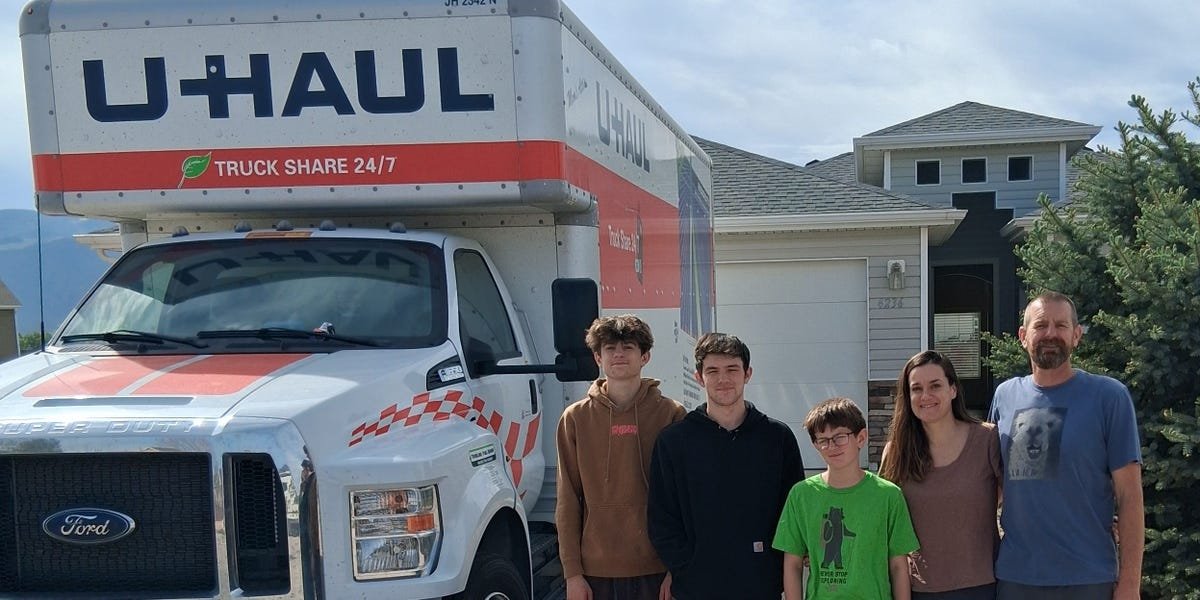
Last year, our family of five sold our affordable home in rural southern Utah to move into a more expensive rental in a Denver suburb.

We had wanted a change for a long time, and the timing finally felt right. We could’ve stayed where we were “safe” financially, but all our family members were struggling in different ways.

I couldn’t shake the feeling that nothing would really get better until we were brave enough to make a big change — so we did.

Moving from Utah to Denver was a difficult financial decision

One of the hardest parts to accept about moving was leaving our extended family and a house that we had lived in for 13 years.

Even more difficult was that our house in Utah was affordable. We were privileged to buy a house when prices were reasonable, and mortgage rates were low. We would have moved a long time ago, but we felt stuck in a home we had outgrown because it was cheap.

We knew that if we sold our house, we would be paying a lot more elsewhere. But the decision still felt right for our family.

We figured Denver was worth the price increase

We chose a Denver suburb because we love the outdoors and also miss the opportunities that a city provides. We have friends in the area, so we knew we would have a community once we arrived.


Katy Anderson's kids in nature in denver

The author’s kids enjoy Denver’s nature.

Courtesy of Katy Anderson


We chose an area known for its “small town feel.” As soon as we moved in, I immediately fell in love with the neighborhood. We are surrounded by an abundance of mature trees, and are within walking distance of wonderful trails for walking and biking.

I’ve been amazed at the wildlife around us, especially considering we live in a Metro area.

Just walking the trails in our neighborhood, we’ve seen rabbits, coyotes, elk, raccoons, turkeys, and many different species of birds. We feel closer to nature here than we did in rural Utah.

After living here for a few weeks, we decided to purchase e-bikes so we could ride much farther along the trails, including to coffee shops, restaurants, city gardens, and parks.

This area also provides us with access to shopping, museums, concerts, and sporting venues. After living in a secluded town for so many years, having these amenities feels like a luxury.

We’re saving money in other ways

Our rent is high in Denver, and that has been the biggest adjustment.

Before we made the move, I was also worried about the cost of living, but I have been pleasantly surprised. Our kids even get free school lunch thanks to a statewide Healthy School Meals for All program. My kids have all commented that the food is of better quality. They actually want to eat the school lunches here.

We are paying much less for gas in Colorado, as we are driving substantially less. In Utah, we lived on the outskirts of town and had to drive 15 to 20 minutes to get to work or to the nearest grocery store.

When we moved to Colorado, we also immediately ended most of our subscriptions and streaming services. We’ve cut down on our discretionary spending and are eating more family meals at home.

We also chose jobs that would help us adjust to our new housing costs

We knew we would be paying more for housing no matter where we moved, so we chose a location with ample work opportunities. My husband is a psychiatric nurse practitioner, and I have picked up a part time job in addition to my freelance writing business.

We are all making more money in Colorado than we could in Utah, where the minimum wage is still $7.25 per hour. Two of my teenage sons were amazed when they realized how much more they could earn in their new city.

Right now, we are enjoying the freedom of renting. Buying a home in this economy feels daunting, and we want to take our time exploring Colorado to see where we may want to buy if it feels right.

For now, I am grateful that my kids have a chance to experience living in a bigger city with more diversity and opportunities. Overall, I feel like we fit in here in a way that we never did in our old town, and that is priceless.


Source link