

A-sign-of-the-AI-era-Workday-exec-trades-CTO.jpeg

A sign of the AI era? Workday exec trades CTO title for ‘member of technical staff’ role at Anthropic

The AI era is elevating a flatter, broader “member of technical staff” role into one of the more prestigious jobs in tech.

In March, Anthropic hired Peter Bailis as a member of technical staff less than a year after he joined Workday as its chief technology officer. Workday’s president of product and technology, Gerrit Kazmaier, said at the time of hiring that Bailis would be part of the HR company’s initiative to go “all in” on AI.

Prior to the Workday post, Bailis was a VP at Google for about a year and a half, according to his LinkedIn.

“We’re grateful for Peter’s contributions and wish him the best in his next chapter,” a Workday spokesperson said in a statement. “We’re thrilled that Gabe Monroy has taken on the role of Chief Technology Officer at Workday, leading our next chapter of AI innovation.”

An Anthropic spokesperson confirmed Bailis’s move from Workday. Bailis did not immediately return a request for comment.

The Anthropic spokesperson said Bailis will be working on reinforcement learning engineering at the startup.

The MTS title is common at frontier labs — like Anthropic and OpenAI — and larger companies for technical hires across research and engineering. The title highlights a cross-functional and non-hierarchical structure. While the label doesn’t specify an executive-level position, it carries prestige and often comes with the promise of building new products.

Anthropic on its careers page says “engineers here do lots of research, and researchers do lots of engineering,” adding that engineers will “have as much input into Anthropic’s direction as anyone else.”

OpenAI president Greg Brockman similarly explained in 2023 that the AI startup did not want to “bucket people into researchers and engineers,” opting for the MTS title.

Mike Krieger was the cofounder and CTO of Instagram before he started a news aggregator app and then joined Anthropic as its chief product officer. Earlier this year, Krieger announced on X that he was shifting roles to a technical staff member of Anthropic’s Labs, which works on Claude Code.

A MTS role can also bring high pay.

In 2025, Business Insider reported, citing H-1B visa filings to the Department of Labor, that a member of technical staff at Anthropic can pay $300,000 to $405,000. At OpenAI, a member of technical staff could be paid between $210,000 to $530,000, according to the report.

The skyrocketing valuation of Anthropic also brings the prospect of minting multimillionaires through equity as the startup eyes a $380 billion post-money valuation.

The potential allure of the MTS role at a frontier AI lab comes as AI-native startups disrupt larger software companies.

In February, Anthropic’s rollout of Claude Cowork and industry-specific plugin tools triggered a stock sell-off in the software sector. The reaction was dubbed the SaaSpocalypse, reflecting fears that AI labs like Anthropic are making tools advanced enough to make companies dedicated to software services redundant.


Source link

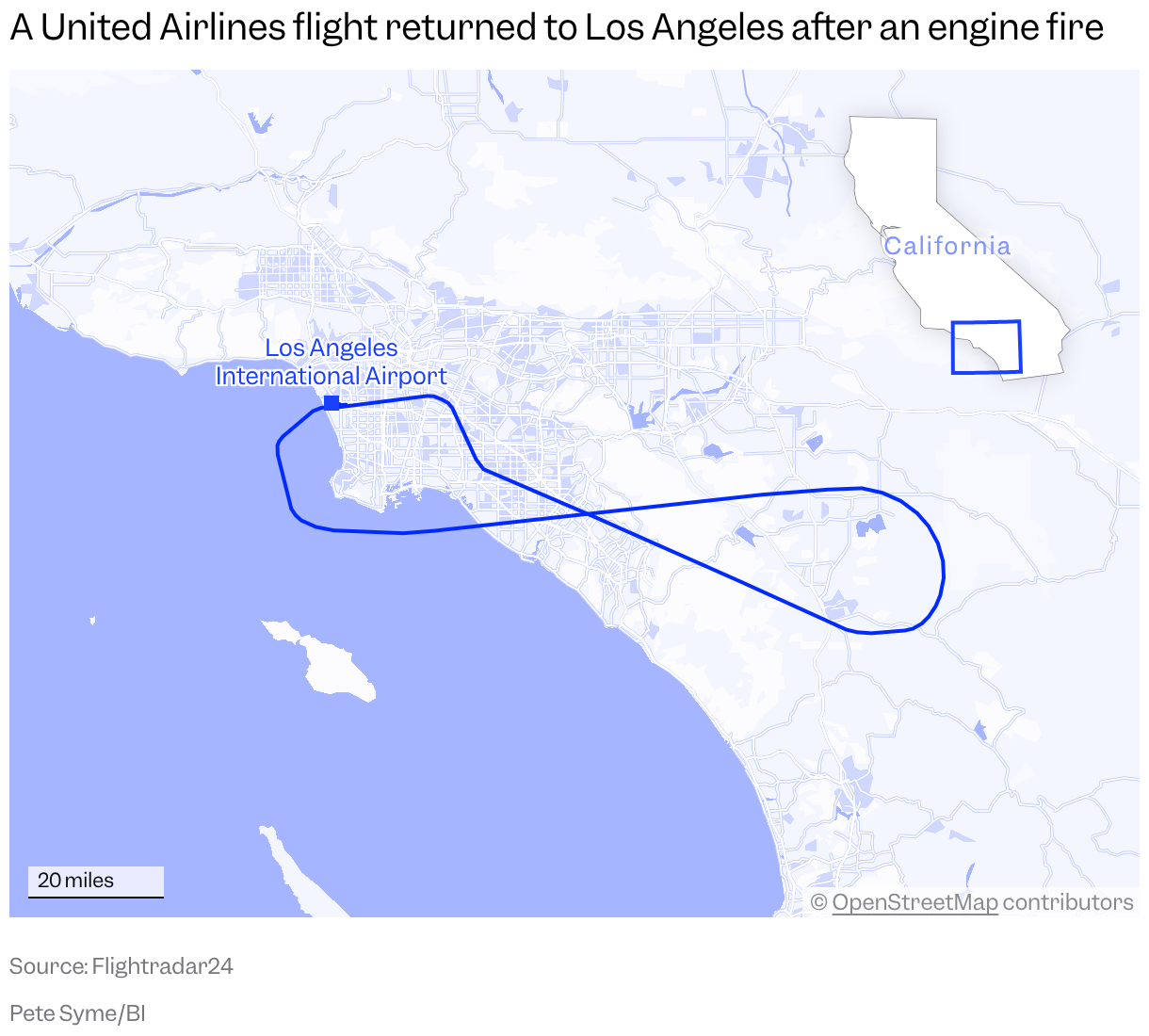
A map of southern California shows the flight path of United Airlines Flight 2127 on March 2, 2026, which circled around for an emergency landing at Los Angeles International Airport

United 787 engine fire underscores the role of pilot actions and the dangers on the ground

A United Airlines Boeing 787 turned around 15 minutes after takeoff from Los Angeles on Monday after smoke and alarms suggested a fire in one of its two jet engines.

United told Business Insider in a statement that there was a “possible engine fire.” It added that none of the 268 passengers and crew on board the plane were seriously injured, and that passengers were bused to the terminal and flown out on a different aircraft.

The plane was back on the ground at LAX within about 40 minutes; a replacement flight to New Jersey took off around 6:30 p.m. local time — eight hours after the originally scheduled departure, per Flightradar24.

“We are grateful to our pilots and flight attendants for their quick actions to keep our customers safe,” United said. The Federal Aviation Administration said it is investigating the incident.

It’s unclear what caused the engine issue, but previous incidents at United and other carriers involved bird strikes and metal fatigue.

Pilots are trained to handle engine failures and fires and to remain calm in emergency situations. Airliners like the Boeing 787 are designed to fly safely on one engine.

Recordings from the website LiveATC.net reveal the crew initially thought the fire was out but received additional “fire indications” for the left engine despite using the extinguishers, prompting the decision to evacuate passengers.

“People will be coming out the right side, the side toward the runway; we prefer to stay right here and just get people off,” one of the pilots can be heard telling firefighters after landing.

Videos circulating on social media show the scene from inside the jet, including smoke coming from the aircraft’s left engine and people evacuating via slides and airstairs onto a taxiway.

Some commentators have pointed out that individuals leaving with their bags is dangerous during an emergency. Aviation safety leaders have long instructed passengers to abandon their carry-on items during evacuations to avoid wasting time or clogging the aisles.

“The FAA’s message to passengers is simple: If you have to evacuate, leave your bags behind and follow crew instructions,” the agency said in a statement to Business Insider. “Airlines have policies requiring passengers to leave luggage behind to ensure they can evacuate as quickly as possible. Federal aviation regulations require passengers to obey crewmembers’ safety instructions.”


Everyone survived the fiery Japan Airlines crash in January.

Everyone survived the fiery Japan Airlines crash in January 2024.

STR/JIJI PRESS/AFP via Getty Images


The warning has precedent: an Aeroflot plane caught fire during landing in 2019, and industry experts said people fleeing the blaze with their luggage partially contributed to the deaths of more than half of the passengers.

In 2024, a Japan Airlines Airbus A350 collided with a Coast Guard jet on the runway in Tokyo and caught fire. All 379 people on board survived; experts partially attributed this to passengers leaving their bags behind.


Source link

Longevity-doctor-Peter-Attia-steps-down-from-his-CBS-News.jpeg

Longevity doctor Peter Attia steps down from his CBS News contributor role after appearing in the Epstein files

  • Longevity influencer Peter Attia has stepped down from his role as a CBS News contributor.
  • Attia’s name appears in the Epstein files over 1,700 times.
  • Attia also stepped down from his role at David Protein and is no longer listed as an Eight Sleep advisor.

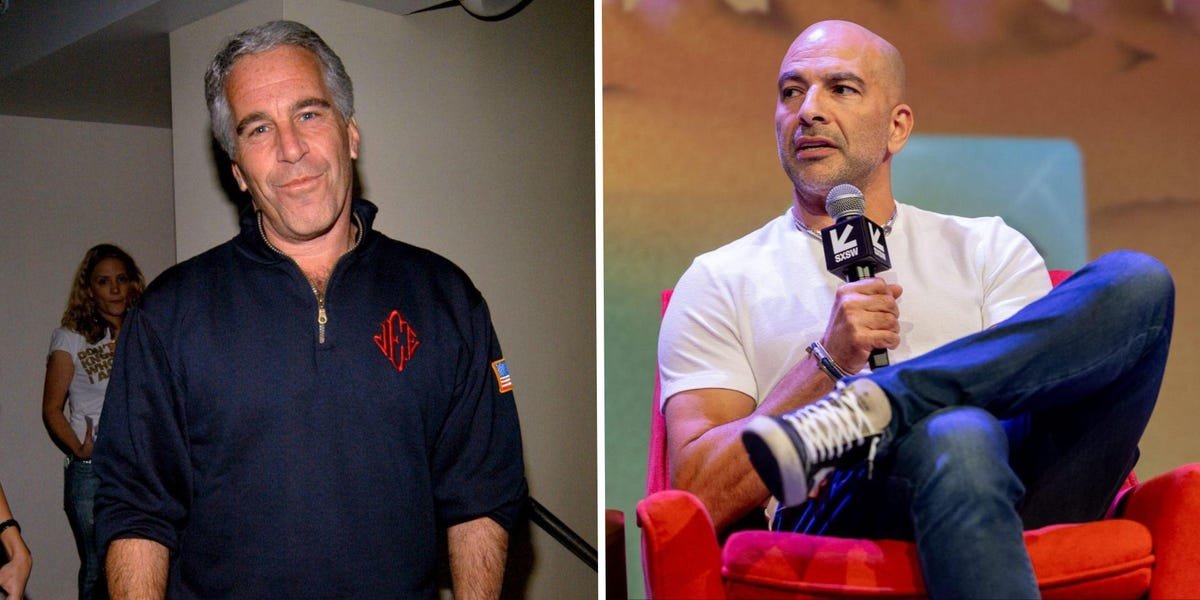
Peter Attia, a popular longevity doctor with ties to Jeffrey Epstein, has stepped aside from his new role as a CBS News contributor, a person familiar with his decision confirmed to Business Insider.

The Hollywood Reporter first reported the news.

The 52-year-old influencer, known for his podcasts and videos about living longer and his book “Outlive: The Science and Art of Longevity,” was brought on by CBS News’ top editor, Bari Weiss, in late January, along with more than a dozen other new contributors.

Days later, the latest round of the Epstein files was released. Attia appears over 1,700 times in the files, which include crude emails he sent about women’s genitalia that he later called “embarrassing, tasteless, and indefensible.”

“The man I am today, roughly ten years later, would not write them and would not associate with Epstein at all,” Attia said of his emails with the disgraced financier and convicted sex criminal.

Attia has also stepped down from his role as chief science officer at the protein bar brand David Protein and is no longer listed as an advisor at Eight Sleep.

Other famous and powerful people, including former Prince Andrew, have also faced consequences after appearing in the Epstein files.


Source link

OpenAI-wants-a-new-head-of-preparedness-but-heres-why.jpeg

OpenAI wants a new head of preparedness, but here’s why the $555,000 role could be hard to fill

Recruiting a new head of preparedness may be trickier for OpenAI than you might think.

The ChatGPT maker recently generated buzz online when it said the position — which pays $555,000 a year plus equity — is up for grabs. Yet some tech-industry observers say finding someone who’s qualified and willing to take it on poses a challenge.

Whoever lands it will be tasked with balancing safety concerns and the demands of CEO Sam Altman, who has shown a penchant for releasing products at an exceptionally fast clip. This year, OpenAI rolled out its Sora 2 video app, Instant Checkout for ChatGPT, new AI models, developer tools, and more advanced agent capabilities.

The head of preparedness role is “close to an impossible job,” because at times the person in it will likely need to tell Altman to slow down or that certain goals shouldn’t be met, said Maura Grossman, a research professor at the University of Waterloo’s School of Computer Science. They’ll be “rolling a rock up a steep hill,” she said.

Altman himself has even described the position as intense.

“This will be a stressful job, and you’ll jump into the deep end pretty much immediately,” he recently wrote on X.

Still, it could be a dream come true for the right individual. OpenAI has had a major impact on people’s lives, and the more than half a million dollars in base pay is in line with what AI talent can expect to earn these days.

Who might be qualified for the job

The posting for the position doesn’t list common requirements such as a college degree or a minimum number of years of work experience.

OpenAI said a person “might thrive” in the role if they have led technical teams; are comfortable making clear, high-stakes technical judgments under uncertainty; can align diverse stakeholders around safety decisions; and have deep technical expertise in machine learning, AI safety, evaluation, security, or adjacent risk domains.

OpenAI’s former head of preparedness, Aleksander Madry, moved into a new role in July 2024. He left a vacancy within the company’s Safety Systems team, which builds evaluations, safety frameworks, and safeguards for its AI models.

Madry has a background in academia, but a seasoned tech-industry executive would be a better fit going forward, said Richard Lachman, a professor of digital media at Toronto Metropolitan University. Academic types, he said, tend to be more cautious and risk-averse.

Lachman expects OpenAI to seek out someone who can protect the company’s public image regarding safety, while allowing it to continue innovating quickly and driving growth. “This is not quite a ‘yes person,’ but somebody who’s going to be on brand,” he said.

OpenAI’s approach to safety has raised concerns internally, prompting some prominent early employees, including a former head of its safety team, to resign. The company has also been sued by some people who allege it reinforces delusions and drives other harmful behavior.

In October, OpenAI acknowledged that some ChatGPT users have exhibited possible signs of mental health problems. The company said it was working with mental health experts to improve how the chatbot responds to those who show signs of psychosis or mania, self-harm or suicide, or emotional attachment.


Source link

Google-engineer-said-landing-an-AI-role-took-a-year.jpeg

Google engineer said landing an AI role took a year and daily studying

This as-told-to essay is based on a conversation with Maitri Mangal, a 26-year-old software engineer at Google, based in New York. Her identity and employment have been verified by Business Insider. The following has been edited for length and clarity.

When I started off as a software engineer, my dad, who also works in tech, kept telling me to get into AI.

I brushed it off because I was just starting off my engineering career, and no one was really talking about AI in 2019, unless they were getting a PhD.

Then in 2023, the tech industry changed and everyone started going into AI. That led me to want to start pursuing AI as a job, and also creating content about it. When trying to join an AI team, I think having a strong presence and personal brand is crucial for others to take you seriously.

In my three years at Google, I’ve changed roles three times, most recently switching to the Workspace AI team.

It’s important to make a distinction between an AI machine learning engineer and an AI software engineer. An AI ML engineer creates the model, trains it, and evaluates it. An AI software engineer integrates AI capabilities into software applications, and builds APIs and infrastructure to serve the model to the end user.

My transition to an AI team didn’t happen overnight. It required spending about a year upskilling through courses and creating content about the material, which forced me to learn the concepts.

Here’s how I made the switch:

Creating content about AI

In the spring of 2024, I started creating tech content on Instagram and LinkedIn, outside my job. That became a major factor in my transition to an AI team.

Making content motivated me to keep learning and also made me confident about sharing what I knew. Once I started seeing how much it helped people, I wanted to learn more. So that’s where the upskilling started, and I started taking courses to understand the fundamentals of AI.

Eventually, I started applying to AI teams at Google. I felt like if I was going to spend so much time upskilling and making content about AI, I should make the most of what I had. I started searching for new roles in January, about seven months after I started upskilling. In March, I landed the new job.

I still spend an hour a day upskilling

I typically take Google’s internal courses to upskill. Coursera also has amazing courses.

The easiest way to start is by taking the basics of AI, like Google’s Introduction to Generative AI and Google Prompting Essentials. Since I have a computer science background, I was able to get more in-depth with concepts like linear regression and vector analysis.

I took courses for about two hours a day, but in order to absorb the material, I had to talk about it, not just read. When I verbalized the concepts through making content, it helped me understand the material.

I also get feedback from my followers, and when they ask follow-up questions in the comments, it makes me go even deeper into understanding a topic. Talking to friends or teammates who are excited about AI also helps me better understand the material.

In this field, it’s very hard not to learn. I’m not necessarily still dedicating two hours daily to courses, but I still spend about an hour a day upskilling, whether that’s in the form of internal trainings for my job, or watching YouTube courses for the content I create.

Not everyone wants to create content, so that’s not always the best way to go about transitioning to an AI team. If you’re just starting out in tech, my biggest piece of advice would be to take on projects. You should definitely take courses about AI, but keeping up-to-date with the news and doing AI projects also really helps. Many AI courses have users do mini projects, so you get to know how to work with it.

Since I applied internally, I didn’t have to go through the same interview process. However, I still had to submit my résumé, which included all of my side projects, and I think that really helps.


Source link