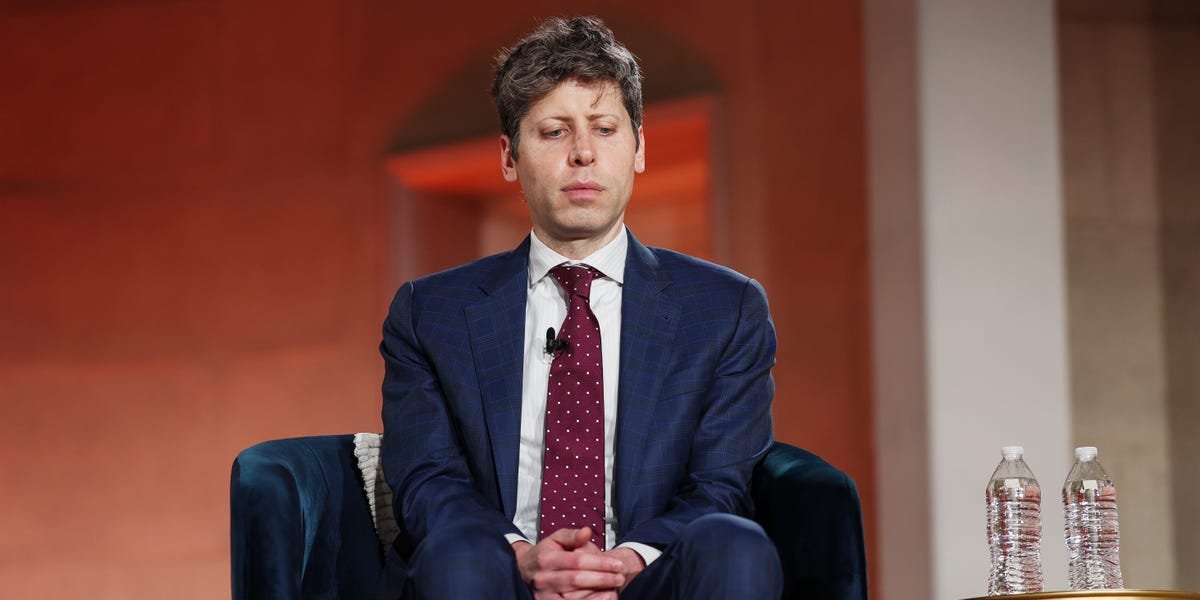
On Friday, OpenAI confirmed to Business Insider that the company’s longtime chief operating officer, Brad Lightcap, is moving into a new role focused on special projects.
According to an internal memo first posted by Bloomberg and separately confirmed by OpenAI, Lightcap will report directly to CEO Sam Altman and help expand OpenAI’s enterprise software sales through partnerships with private equity firms. Denise Dresser, the company’s recently named chief revenue officer, will be taking on some of Lightcap’s responsibilities as COO.
OpenAI also confirmed that two senior executives are stepping back for health reasons. According to the internal memo, Fidji Simo, who is the CEO of Applications, is taking a temporary medical leave to pursue treatment for a neuroimmune condition and is expected to return in several weeks.
Chief marketing officer Kate Rouch posted on X on Friday that she will be stepping down to focus on cancer recovery, and would “return in a different role” if her health allows.
“Courage isn’t always pushing harder,” Rouch wrote. “Sometimes it’s choosing your health, your family, and being around for the long run.”
Executive turnover is not new for OpenAI. Altman was briefly removed in late 2023, and the company experienced a wave of high-profile departures, mainly consisting of original board members who had ousted Altman. In 2025, a half dozen AI researchers from OpenAI went to Meta’s Superintelligence Labs.
“We have a strong leadership team focused on our biggest priorities: advancing frontier research, growing our global user base of nearly 1 billion users, and powering enterprise use cases,” an OpenAI spokesperson told Business Insider. “We’re well-positioned to keep executing with continuity and momentum.”
OpenAI is navigating a pivotal period. The company is preparing for a potential IPO and recently raised $122 billion at a valuation of $852 billion. It is also exploring new revenue streams, including testing advertising within ChatGPT, and facing intensifying competition from rivals like Anthropic.
Critical Role’s chief creative officer, Matthew Mercer, had been spearheading his eight-member crew’s relentless push into the big leagues of nerdworld for 10 years.
That was until this July, when he announced that he’d be giving up control of one of the crew’s biggest priorities, their long-running “Dungeons & Dragons” Twitch livestream.
In an August appearance on the podcast “Crispy’s Tavern: Tales and Tea,” Mercer said he’d felt the threat of burnout and thought he needed a break. He said he’d started to feel a “continuous need to produce creatively,” which was “a very draining and very scary thing.”
To be sure, Mercer and his seven cofounders still have a full slate of projects to work on. That includes an ongoing sold-out arena tour, as well as two Amazon-backed animated series on Prime Video. Mercer also has a key role in the team’s game publishing arm, Darrington Press, home to “Daggerheart,” their flagship game and their answer to “D&D.”
Still, Mercer says, it’s important to be able to admit when you’re done, and to give yourself permission to step away from the work for as long as you need to.
Every time Cheryl publishes a story, you’ll get an alert straight to your inbox!
Stay connected to Cheryl and get more of their work as it publishes.
“My biggest advice for burnout is to acknowledge when you’re at the edge and take every opportunity you can to step away and replenish your cup,” Mercer told Business Insider.
Brennan Lee Mulligan of “Dimension 20” fame, Mercer’s longtime friend and collaborator, is the game master for Campaign Four, the team’s ongoing “D&D” stream. Mulligan taking over the main stream means Mercer is no longer solely in charge of captaining the team’s regular episodes, which often run to the four-hour mark.
“There’s this concept, the idea that just pushing through and sometimes necessity requires you to do that to a certain point,” Mercer said.
“But I find walking away and taking some time to enrich your creative input means that whatever time you lost beating your head against the wall will be more than made up for when you can return from a place of genuine inspiration and renewal,” Mercer added.
Campaign Four airs on Beacon, Critical Role’s in-house streaming platform, as well as on Twitch and YouTube.
Finding a job on LinkedIn can feel overwhelming as some roles draw hundreds — or even thousands — of applicants within hours or days. The challenge for job seekers using the platform is standing out among the crowd.
Some LinkedIn users, however, have successfully done so. Whether by using overlooked job filters, crafting a targeted cold outreach, or intentionally sharing their work, people have found ways to secure new jobs on the platform.
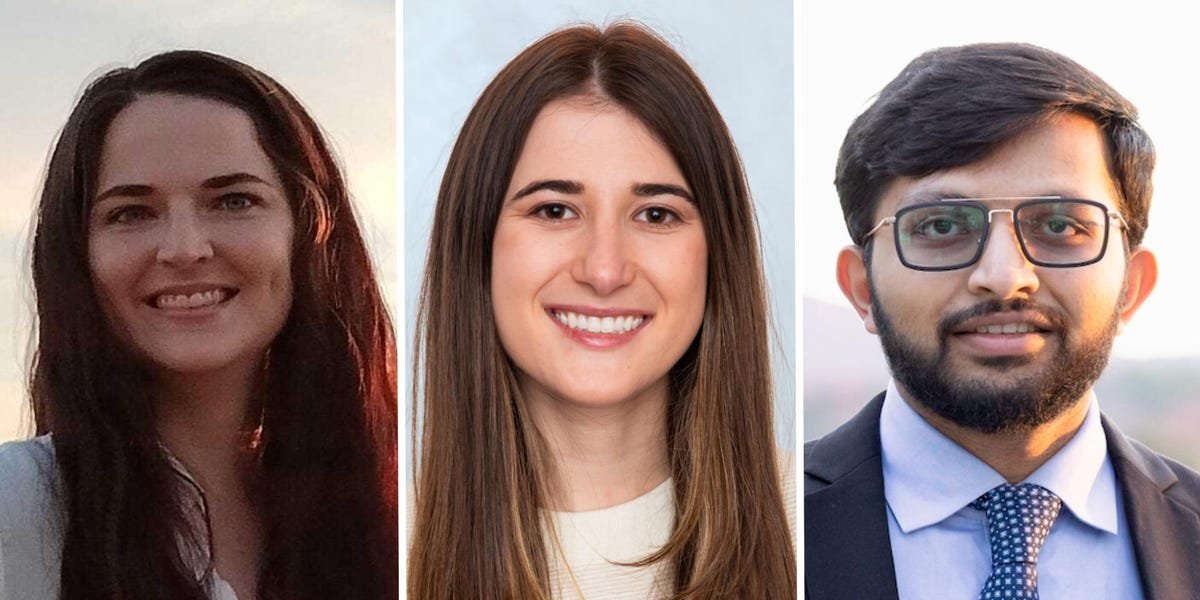
Below are three people who strategically landed their roles through LinkedIn. They shared with Business Insider how they did it. Quotes have been edited for length and clarity.
Using a strategic filter on LinkedIn helped me find a new role
Lauren Young used the “under 10 applicants” filter to enhance her chances of securing a new job on LinkedIn.
Photo courtesy of Lauren Young
Lauren Young is a 28-year-old continuing education specialist in Indiana.
Last spring, I was becoming increasingly unhappy and stressed out at work, so I started applying to multiple jobs a day. Even within the short time that I was back in the job market, from March to June, it was getting worse, and I started to panic. I was having no luck landing a new role.
I live outside Chicago, and some of the jobs that would come up would be at huge Fortune 500 corporations. Even if the role was posted within the last day or the last hour, hundreds of applicants still applied immediately. I started experimenting with LinkedIn filters, trying to be more strategic about how I spent my time searching for work.
That’s when I found the “under 10 applicants” filter. It’s one of the last options under the function that says “all filters,” pretty close to the bottom. Once I started using it, I saw roles at small businesses that didn’t have a huge following on LinkedIn.
My role now is to help medical professionals who are seeking different educational opportunities or want to pursue further licensing. I didn’t think I would be a top applicant since I’d never worked in the medical industry, but the posting had just been posted and had very few applicants. I landed my first interview at the end of May and received my offer letter in mid-June.
My new role has been completely life-changing. I work primarily remotely and visit the office about once a month. The company offers excellent benefits, a generous PTO policy, and a great work-life balance.
A well-crafted cold outreach helped me land my job at OpenAI
Sophie Rose’s cold outreach on LinkedIn led to a job offer within five weeks of sending her message.
Photo courtesy of Sophie Rose
Sophie Rose is an OpenAI employee in her late 20s based in San Francisco.
In 2023, I joined OpenAI to build out what was then the associate team. I noticed that a leader on the go-to-market team had posted on LinkedIn that she was hiring a founding account associate, so I directly messaged her about the opportunity. Within five weeks of sending that message, I had an offer in hand.
I constructed my note by congratulating the lead on her role and said I saw she was hiring for this founding account associate job. I added that I’d love to learn more, plan to apply, and would be willing to relocate for the opportunity. I also asked if she could hop on a call.
In her response, she said she couldn’t jump on a call but would push my résumé through the initial screening. I applied the next day and immediately followed up with her, thanking her and saying I looked forward to exploring the opportunity with OpenAI.
There are two things I would warn people against doing: asking for time right away and rushing the follow-up.
I asked for time in my note, which I wouldn’t have done in hindsight. If you do ask for time, be very clear about why you need it. Also, try not to send that generic follow-up. Wait — maybe three weeks later — or look for something new that the person you’re reaching out to is posting or talking about.
For many of my peers, their OpenAI job started with a cold outreach to someone they might have heard of or had a mutual connection with. I think that’s how you can ultimately get ahead or pivot in your career.
Posting on LinkedIn brought the recruiters straight to my inbox
Dhyey Mavani strategically posted online to attract recruiters and mentors and grow his professional network.
Photo courtesy of Dhyey Mavani
Dhyey Mavani is a 21-year-old software engineer at LinkedIn, based in Sunnyvale, CA.
I moved to the US from India in 2021 to attend Amherst College, where I triple-majored in computer science, mathematics, and statistics.
I started posting because people on campus were reaching out and asking to chat through ideas and career advice. I wanted to share my resources, so I decided to document my learnings and my progress and share them online for everyone. Since I started posting, I’ve significantly expanded my network to over 500 connections and more than 6,000 followers.
I posted about a research paper I wrote, and in the post walked through a short summary about my research, how I got there, what the key accomplishments were, and what things I’m still looking into for future work. That gained some traction with over 45,000 post impressions on LinkedIn. I had people working in research labs at Princeton and other universities reach out to me.
It’s helpful to phrase the posts you share in a value-first manner, where you provide some of your own perspective and explain why you stand by it. When I share my work online, I like to walk readers through why I pursued this project, what it entails, and who it impacts.
I also try to engage with content I see to increase visibility and expand my network. I recently commented on a post about Google, sharing my thoughts on the company’s strategy, and my comment had over 100,000 impressions.
After seeing my work online in 2023, a recruiter at LinkedIn contacted me directly on the platform to discuss an internship opportunity, which ultimately led to my current full-time position as a software engineer at the company.
I realized that there are opportunities that arise from organic posting and genuinely engaging with other people’s content. I wouldn’t have the job options, the reach, the network for mentorship, and other opportunities if I hadn’t started sharing my journey online strategically.
Do you have a story to share about LinkedIn strategies? Contact this editor, Agnes Applegate, at aapplegate@insider.com.
Uber is hiring people as it tries to become a “super app.” So how much is it paying them?
You’re probably familiar with the millions of gig workers who drive you to the airport or deliver your food. Now,Uber is looking to expand those services — with self-driving cars, for example — as well as offer customers targeted offers.
“We’re slowly moving towards a super app of sorts,” CEO Dara Khosrowshahi said.
Some of the people whom Uber has hired as it tries to make that vision a reality have come from outside the US via H-1B visas.
Companies are required to submit this work visa data, which includes salary information, to the US Department of Labor for all foreign hires. However, the compensation figures don’t include equity or other benefits that employees can receive in addition to their base pay. The filings also include industry average pay rates for US workers.
The process for obtaining an H-1B visa, however, is changing.
In September, President Donald Trump instituted a $100,000 fee for the visa. And proposed changes to H-1B visa rules would tilt the already competitive visa lottery in favor of the highest-paid applicants, lawyers told Business Insider.
Uber filed to hire 945 workers through the H-1B visa program during the 2025 federal fiscalyear, according to filings with the US Department of Labor. That’s more than the 778 filings that Uber made during 2024.
Here’s a look at the jobs that Uber disclosed salaries for:
Computer and Information Systems Managers can make up to $410,000
Staff Software Engineer: $225,200 to $258,800
Manager, Engineering: $231,700 to $287,000
Manager, Applications Development: $195,600 to $210,500
Senior Manager: $234,100to $299,700
Staff Software Engineer, TLM: $242,000 to $249,300
Senior Director, Engineering:$360,000 to $410,000
Data Scientists can earn up to $207,200
Scientist, Tech: $111,966 to $176,400
Senior Scientist, Tech: $151,700 to $207,200
Senior Applied Scientist:$186,307 to $208,062
Staff Scientist, Tech: $219,100to $250,000
Applied Scientist: $133,100 to $179,100
Data Scientist: $125,950 to $153,700
Data Scientist, Tech:$129,750 to $160,700
Data Scientist III: $150,000 to $175,019
Data Analyst: $156,600 to $161,000
Data Analyst, Tech: $116,750 to $162,200
Senior Data Scientist: $150,400 to $164,300
Information Technology Project Managers can earn up to $215,900
Product Manager: $158,700 to $197,000
Senior Technical Program Manager: $202,500 to $231,400
Senior Program Manager: $144,500 to $170,100
Operations Research Analysts can make up to $185,300
Business Analyst – Operations II: $110,075 to $117,554
Scientist, Tech: $149,650 to $174,900
Senior Scientist, Tech: $169,800 to $185,300
Senior Operations and Logistics Manager: $135,600 to $142,850
Regional Operations Manager: $101,300 to $140,950
Manager, Sales Operations: $157,400 to $166,900
Manager, Central Operations: $157,100 to $161,900
Senior Program Manager: $143,000 to $178,800
Strategic Operations Manager: $111,900 to $166,600
Software Developers can make up to $312,700
Machine Learning Engineer: $178,900 to $198,500
Senior Machine Learning Engineer: $219,900 to $235,500
Software Engineer: $98,516 to $198,500
Software Engineer II: $113,308 to $135,005
Software Engineer III: $131,003 to $188,084
Staff Software Engineer: $207,800 to $273,000
Staff Software Engineer, TLM: $246,400 to $263,000
Senior Staff Engineer: $260,400 to $312,700
Senior Software Engineer: $151,819 to $242,000
Staff Applications Developer: $225,100 to $251,100
Senior Applications Developer: $179,500 to $209,700
Other positions can make up to $206,000
Manager, Technical Accounting: $164,600 to $166,900
Manager, Strategy and Planning: $155,000 to $173,600
Senior Manager, Strategic Finance: $192,300 to $206,000
Manager, Central Operations: $140,900 to $160,200
Product Designer: $157,100 to $174,600
Business Insider has been collecting pay data for tech companies. Find more here.
Do you have a story to share about Uber? Contact this reporter at abitter@businessinsider.com or 808-854-4501.
Tasha Huo and I don’t make it a minute into our conversation before we start gushing about wizards — and that’s how I know I’m talking to a true Critical Role fan.
Huo is the showrunner of “The Mighty Nein,” Critical Role’s second animated series with Prime Video. “The Mighty Nein” follows the success of “The Legend of Vox Machina,” the series for which Critical Role raised over $11.3 million in Kickstarter seed funding in 2019. Now, Huo, a longtime viewer of the show, is the series’ creative writing powerhouse.
Nerding out over ‘D&D’
Huo, who’s based in Los Angeles, said she first started playing “Dungeons & Dragons” as a kid, but hadn’t touched the game for years. In her adult life, a friend wanted her to join his “D&D” campaign and recommended a Twitch stream that he said would help her understand how the game worked.
That turned out to be Critical Role. At the time, the company’s eight cofounders were in the midst of their second long-running campaign. And the stream that Huo watched, so many years ago now, has taken on an animated series form in “The Mighty Nein.”
“I was absolutely hooked. I was like, this is all I can watch now, and it’s all I can listen to in the car. And I binged it, which took years,” Huo said of the 141-episode campaign.
Every time Cheryl publishes a story, you’ll get an alert straight to your inbox!
Stay connected to Cheryl and get more of their work as it publishes.
Several industry contacts recommended Huo to Critical Role in 2021 when they were looking for a showrunner.
Huo started work on the show in November 2022 as part of the Prime Video team and oversaw its writing until its release this fall, working 9-to-5 daily with three other writers and a writer’s assistant. She has an MFA in screenwriting from Boston University and has written for other shows, including “The Witcher: Blood Origin,” released in 2022, and “Tomb Raider: The Legend of Lara Croft,” released in 2024.
“It started with me having a lot of conversations with Critical Role. I met with Sam Riegel first, and then Travis Willingham and Matt Mercer, and we all just nerded out,” Huo said. Riegel, a cofounder, oversees much of Critical Role’s animation business alongside the team’s CEO, Willingham. Mercer is the crew’s chief creative officer.
“It was kind of like coming home. It was just all these pieces coming together that started over a love of ‘D&D,'” Huo added
Inside the writer’s room
Huo and the eight cofounders of Critical Role.
Anna Webber/Getty Images for Prime Video
Huo said conversations in the Critical Role writer’s room involved many talks with the eight cofounders about their campaign characters. She wanted to find the best way to condense the hundreds of hours of campaign stream time into eight, 44-minute episodes.
“The conversations always started with all of us in a room talking about the characters, talking about why they felt the way they did or why they did the thing they did,” Huo said.
Huo says these character conversations helped her figure out what the first season’s arc would be.
“Every day we would come into the Critical Role offices. And we had a giant whiteboard up with magnets, and we’d come up with ideas of like, ‘Okay, if we know what the season arc is, now let’s start thinking about some turning points within the episode,'” Huo said.
Making tough choices
Having so many hours of source material also meant that Huo and the writing team had to make tough decisions about what to focus on in the first season. Huo said it quickly became clear to them that the plotline for cofounder Liam O’Brien’s character, the wizard Caleb Widogast, needed to be covered first for the rest of the show to make sense.
“A lot of his backstory is really linked to a larger story that we were telling,” Huo said.
The season’s final cut also included several tidbits of information that were not in the original Twitch stream.
Huo also got to live the Critical Role fan dream and suss out all the juicy details from Mercer that had never aired on stream — including the ins and outs of how the season’s key antagonists, the Volstrucker wizards, worked.
The cast of Critical Role in their studio in Los Angeles.
Critical Role
“We get to tell a side spy show within ‘The Mighty Nein,’ and that’s really gratifying because you sit Matt down and he has all the answers already, so you just mine from all of the great stuff that he has and fill the story up with all of those things,” Huo said.
How to get your dream writing gig
I asked Huo how one might go about landing a dream writing job, and she had two tips.
“I would say the first thing is to dedicate yourself to the craft. Always be writing, even when there’s negativity and there’s rejection, just keep going. I think the number one reason people don’t make it is because they give up before someone else,” Huo said.
As for her second piece of advice for writers: “Don’t be afraid of what you love.”
“I remember when I met with Sam Riegel, I was so embarrassed. I thought, ‘Oh no, I fangirled too much when I talked to him,'” Huo said. “And it turns out that’s exactly what they wanted to hear, from someone who really, really loved the show.”
Do you work on the Critical Role franchise and have a story to share? Get in touch with this reporter at cteh@businessinsider.com.