This-startup-raised-27-million-to-help-solopreneurs-run-their.jpeg

This startup raised $27 million to help ‘solopreneurs’ run their businesses with AI. Read the pitch deck.

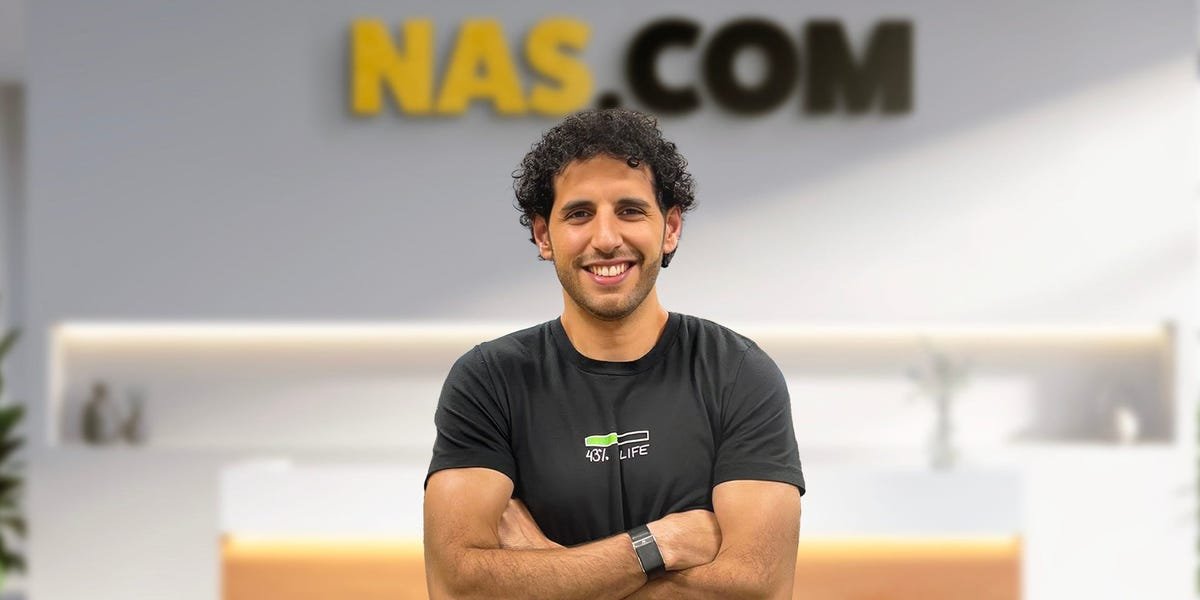
Nuseir Yassin, the content creator known as Nas Daily, has raised $27 million for his newest venture: an AI platform for solo entrepreneurs to launch and run an online business.

After quitting his job in 2016 to become a content creator sharing short, high-energy videos, Yassin amassed around 70 million followers across social media platforms. He says that era is behind him.

“My next 10-year bet is completely different, and it’s about entrepreneurship on the internet,” Yassin told Business Insider.

Yassin’s focus is now on Nas.com, which the Israeli-Palestinian founded to provide “solopreneurs” with the tools to launch a business — even if they lack the technical skills to build a storefront or create marketing campaigns.

Entrepreneurs take a picture of a product that they want to sell, such as a printed T-shirt, and add it to the Nas.com platform. The startup’s AI tools analyze that picture and then build a storefront — including logos, product descriptions, and branding — around the product to match it thematically.

Users can manually tweak the design and text of the AI-generated storefront. They can also generate ads and marketing content with AI by entering plain-English prompts and then run them as ad campaigns on Facebook.

Yassin says Nas.com can help the “mom in Wisconsin” who “would never start marketing” due to the complexity of tools like Meta Business Suite, and that his platform can help entrepreneurs without large followings find customers.

The startup aims to tap into the growing trend of businesses that are operating with smaller teams thanks to AI tools.

“You needed to be good at coding, you needed to be good at marketing, creating content, and you needed to be good at creating your product,” Yassin said of the previous barriers to entry for entrepreneurs. “And how many people in the world are good at everything? Very few.”

The startup says 3.5 million people have purchased products from businesses listed in Nas.com, and its annual recurring revenue grew from $1 million to $8 million in 2025. It has more than 350,000 businesses using its platform, according to its website.

It makes its money by charging a subscription fee, with the lowest tier starting at $6 a month, and taking a 5% cut of marketing spend made through its platform.

Nas.com operates in a competitive space, with companies like Shopify and Etsy offering online storefronts and e-commerce tools to businesses. Yassin told Business Insider that he believes Nas.com’s simplicity can help it compete with larger incumbents.

While Shopify could “theoretically” build a platform like Nas.com, Yassin added, it would be too risky to shake up its features because so many big brands are accustomed to them.

Nas.com’s $27 million Series A funding round was led by Khosla Ventures, with participation from other VCs, including 500 Global, and angel investments from Shuo Wang, cofounder of Deel; Stanley Tang, cofounder of DoorDash; Scott Adelson, CEO of Houlihan Lokey; and entrepreneur Tim Ferriss.

Vinod Khosla, the founder of Khosla Ventures, told Business Insider that his firm backed Nas.com because he likes to “invest in companies that could not have existed five years ago and will be inevitable five years from now.”

“Coding, customer service, marketing, and design are no longer blockers. This means millions of new entrepreneurs will be born. What I see is massive wealth creation opportunities,” he added.

Nas.com plans to use the capital injection to hire more people for its 30-strong team, as well as for product development and expansion.

Read the 24-slide deck that Nas.com used to secure the funding.


Source link

I-run-alcohol-free-nightlife-events-in-NYC-Most-of-my.jpeg

I run alcohol-free nightlife events in NYC. Most of my guests aren’t sober — they just don’t want to drink.

This as-told-to essay is based on a conversation with Sam Bail, a data engineer and the founder of the alcohol-free pop-up event company, Bright Nights Social. It has been edited for length and clarity.

Three years ago, I had the idea to open an alcohol-free bar in New York City.

I don’t drink, but I still wanted nightlife — dancing, music, meeting new people, getting out of the house on a Friday or Saturday night. What I didn’t want was another alcohol-free space that was centered on wellness, meditation, or yoga. I wanted something that still felt like real nightlife, just without booze being the main event.

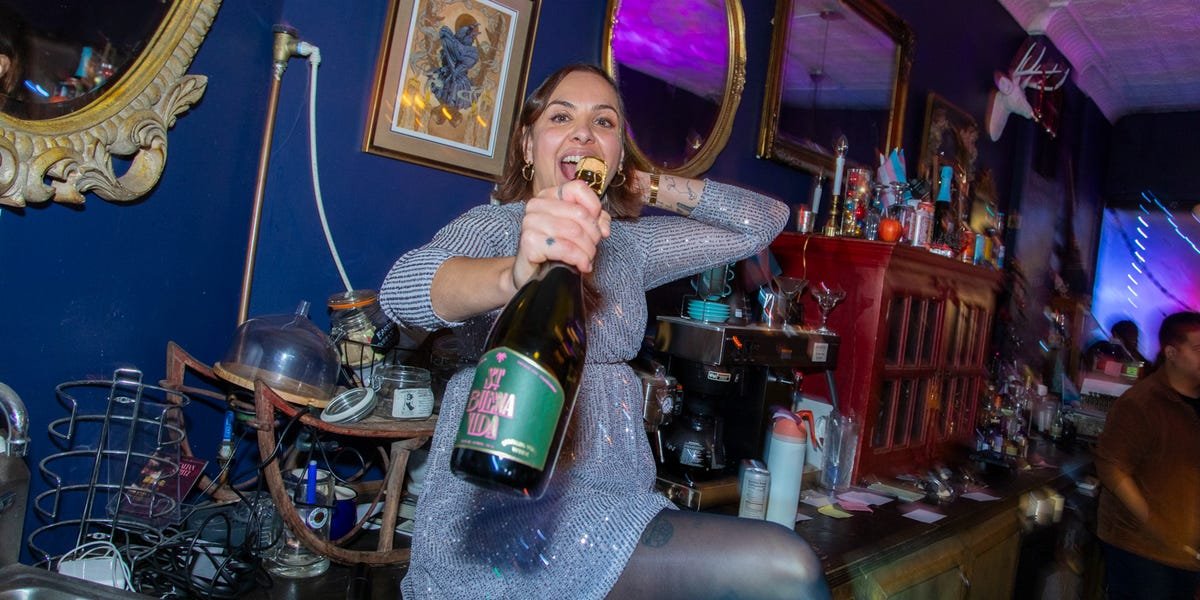
Instead of signing a lease, I started testing the idea by hosting pop-up events. I’d take over coffee shops or other venues at night and turn them into alcohol-free bars for the evening.

What started as an experiment quickly took on a life of its own.

Over the past three years, I’ve collaborated with tons of venues, experimented with a variety of new formats, and thousands of people have come through our doors. That’s been the most surprising part of all of this: the demand.

What’s even more interesting? Most of the people who attend my events aren’t even sober.

Who actually comes to alcohol-free nightlife

When people hear “alcohol-free event,” they often assume the crowd is made up entirely of sober or sober-curious people. That hasn’t been my experience at all. Based on conversations with guests, I estimate that at least 75% of the people who attend my events don’t identify as sober or even sober-curious.

They’re mostly in their mid-20s to early 30s — older Gen Z and very young millennials. Gender splits depend on the event, but many of my parties are close to 50-50 men and women. What they have in common is that they want to go out, socialize, and have fun without making drinking the center of their entire social life.

I’m 40, so I’m an elder millennial who’s already done the heavy partying phase and is over it. But many of the people who come to Bright Nights Social are younger than me and feel the same way. They’ll tell me things like, “I still drink sometimes, I just don’t want to do it every time I go out,” or “Alcohol makes me feel terrible the next day.”

They’re not abstaining out of moral opposition to alcohol or because of addiction. They’re opting out because they don’t like the cost, the hangovers, or the way drinking dominates social life in cities like New York.

Experiences > drinking

What I see aligns with a broader shift happening right now, especially among younger people. There’s a growing focus on experiences rather than just going to a bar and spending money on drinks. In New York City, you can see it everywhere: pottery classes, cooking classes, rug tufting, late-night library events, group reading clubs.

Some of my favorites have been hosting cooking classes and our crafting events, like rug-making. Coming up this month, we have a tea bar, a bagel-making (and eating!) class, and a full-on dance party, complete with DJs and a full non-alcoholic bar, to close out Dry January.

People want to do something. They want to make memories. They just don’t want to wake up feeling awful the next day.

Cost is also a big factor. When cocktails are $15 or $20 each, it doesn’t take long for a casual night out to become extremely expensive. A lot of people tell me they’d rather spend their money on an experience than on alcohol that doesn’t even make them feel good.

That doesn’t mean Gen Z isn’t drinking at all. In fact, some recent data suggests younger people are actually drinking more now than they were a year or two ago. I think part of that is a post-pandemic catch-up effect — many Gen Zers reached legal drinking age during lockdowns and simply didn’t have the chance to go out.

What I see on the ground is moderation. People might have one drink at dinner and then switch to a nonalcoholic beer. Or they’ll alternate between alcoholic and nonalcoholic drinks throughout the night — what some people call “zebra striping.” They’re being much more intentional about how and when they drink.

THC, nonalcoholic drinks, and what’s next

Another huge shift I’m seeing is the role of legal THC. I don’t serve THC products at my events, but I don’t stop anyone from having one before they come, and I hear about them constantly from guests and friends who work at nonalcoholic bottle shops. THC drinks are some of the best-selling products in those stores.

People understand what THC does. They say it helps with social anxiety, takes the edge off, and feels more manageable than alcohol when used in moderation. Compared to that, there’s still skepticism around functional or adaptogenic drinks — things with nootropics, ashwagandha, or functional mushrooms. Many people aren’t convinced that those drinks actually do anything beyond being a placebo.

That said, I think we’re still early. As people learn what works for their own bodies — whether that’s L-theanine, lion’s mane, or something else — those functional beverages may gain more traction.

At the same time, I’m also seeing conversations online about people pulling back from THC after overdoing it, so I think we’ll see a similar trend as people try to find nightlife events that best suit their needs.

I don’t think most people want to be completely sober forever, but they are actively experimenting with what moderation looks like.

Alcohol-free doesn’t mean anti-fun

The biggest misconception about alcohol-free nightlife is that it’s boring or restrictive. What I’ve learned is that people don’t want to be told what not to do — they just want more options.

Bright Nights Social isn’t about sobriety as an identity. It’s about creating a space where alcohol isn’t the default. You can still dance, flirt, meet strangers, and stay out late. The only difference is that you’re not expected to drink to participate.

The fact that so many non-sober people show up tells me this isn’t a niche idea anymore. Alcohol-free nightlife isn’t just for people who’ve quit drinking entirely. It’s for anyone who wants to go out — and wake up the next day feeling like themselves.

Do you host or attend alternative nightlife events? Contact this reporter at ktl@businessinsider.com.


Source link

Meta-hires-longtime-Apple-design-leader-Alan-Dye-to-run.jpeg

Meta hires longtime Apple design leader Alan Dye to run a new Reality Labs creative studio

Meta has hired longtime Apple design leader Alan Dye to run a new creative studio inside its Reality Labs division, CEO Mark Zuckerberg announced in a series of posts on Threads on Tuesday.

“Today we’re establishing a new creative studio in Reality Labs led by Alan Dye, who has spent nearly 20 years leading design at Apple,” Zuckerberg wrote on Threads, saying the group will help define “the next generation of our products and experiences.”

Zuckerberg said the studio will bring together “design, fashion, and technology” and that Meta wants to “treat intelligence as a new design material and imagine what becomes possible when it is abundant, capable, and human-centered.”

The goal, he added, is to “elevate design within Meta” by assembling a team with “craft, creative vision, systems thinking, and deep experience building iconic products that bridge hardware and software.”

Dye will work alongside several high-profile design leaders. He will report to Meta’s chief technology officer and Reality Labs head Andrew Bosworth.

Dye is one of the most prominent figures in Apple’s modern design history. He has led Apple’s design studio since 2015 and has played a key role in shaping the company’s software and the look and feel of many of its devices, including the interfaces for products such as the Apple Watch, iPhone X, and Vision Pro headset.

Most recently, Dye was responsible for Liquid Glass, Apple’s new design across its devices that makes elements of the user interface look transparent.

His team has also worked on a slate of new smart home hardware, according to Bloomberg, which first reported his move to Meta.

Zuckerberg said that Dye will be joined by “another acclaimed design lead from Apple,” Billy Sorrentino, as well as Joshua To, who leads interface design across Reality Labs; industrial design lead Pete Bristol; and metaverse design and art teams led by Jason Rubin.

The CEO framed the move as part of Meta’s push into AI-powered devices such as smart glasses.

“We’re entering a new era where AI glasses and other devices will change how we connect with technology and each other,” Zuckerberg wrote.

While the potential is “enormous,” he said the new studio will focus on making every interaction “thoughtful, intuitive, and built to serve people.”

Earlier this year, Meta hired another Apple engineer, Ruoming Pang, to its new Superintelligence Labs organization. Pang led Apple’s AI models team.

Apple did not respond to a request for comment from Business Insider. A Meta spokesperson pointed to Zuckerberg’s posts on Threads.

Have a tip? Contact Pranav Dixit via email at pranavdixit@protonmail.com or Signal at 1-408-905-9124. Use a personal email address, a nonwork WiFi network, and a nonwork device; here’s our guide to sharing information securely.


Source link