
Meta-is-running-intensive-AI-training-weeks-to-get-employees.jpeg

Meta is running intensive AI training weeks to get employees testing agents and coding with Claude

At Meta, there’s no escaping AI.

The company has begun running intensive AI training weeks to encourage staff to experiment more with AI tools, according to Meta employees who spoke with Business Insider and public LinkedIn posts.

The weeks have involved a series of hackathons, demos, and other projects where Meta staff show off what they can build with AI, regardless of their job title or seniority. Some of the projects are built with Anthropic’s Claude Code, which the company has adopted widely internally.

This is part of Meta’s latest initiative to embrace AI across its workforce, which has included setting org targets for AI adoption and reorganizing some teams around AI-native “pods.” Similar pushes are taking place across corporate America as companies aim to become more efficient with AI. Google has told some employees their AI use will be considered in performance reviews, and JPMorgan has told software engineers it expects them to be harnessing AI to save time.

“It’s well-known that this is a priority and we’re focused on using AI to help employees with their day-to-day work,” a Meta spokesperson told Business Insider.

Internally, these sessions have been given names such as “AI Transformation Week.” During the sessions, some employees were given demos on how agents and other tools could work across their laptops and phones, an employee who attended some sessions told Business Insider.

Some of these AI weeks took place in March. One Meta employee told Business Insider that some teams held their own AI weeks at the end of last year, during which staff used vibe coding to create something valuable with no strict output requirements.

At one hackathon during Meta’s AI Transformation Week, attendees sat through demos of its own internal AI tools, Claude Code, and others, according to a LinkedIn post from an employee. AI agents are a big focus, with the aim of having employees guide autonomous systems that can handle everything from coding to compiling reports.

Design is also part of the effort. One Meta product manager touted building an interactive vibe-coding guide for designing products at Meta using Claude Code, according to her website.

Pods and goals

While some employees were brushing up on AI this week, Meta laid off several hundred employees across Reality Labs, the division overseeing its virtual reality projects, and other orgs. The company has spent billions on hiring top AI talent and building out infrastructure. However, it has yet to launch its long-awaited frontier model, internally codenamed Avocado.

While that has given Meta the perception of being behind in the AI race, a top Wall Street analyst said earlier this month that the company’s aggressive internal AI transformation could, in fact, give it “insurmountable” cost and performance advantages.

Meta has been making other changes in an effort to be what CEO Mark Zuckerberg has described as “AI native.” In a division of Reality Labs, the organization overseeing Meta’s virtual reality projects, employees were rebranded with titles like “AI builder” and were organized into AI-native “pods,” Business Insider previously reported.

The company has also set specific goals for adopting AI tools that vary across teams, according to an internal document reviewed by Business Insider.

On Tuesday, Meta’s CTO Andrew Bosworth said he would take leadership over the company’s efforts to adopt AI for internal use, an initiative known internally as “AI for Work,” according to a copy of the post seen by Business Insider and first reported by The Wall Street Journal.

“These tools hold the promise of giving each employee so much more power to accomplish their work,” Bosworth said in a post on X.



Source link

The-Safer-Bowl-With-tensions-running-high-Super-Bowl-advertisers.jpeg

The Safer Bowl: With tensions running high, Super Bowl advertisers avoid politics and play for laughs

In a charged political climate where even small missteps can spark a brand backlash, many of this year’s Super Bowl advertisers are sticking with the safest bet in the playbook: comedy and celebrities.

Much like last year’s Super Bowl, the vast majority of the big game ads released so far are playing it safe. Advertisers hope that A-list stars will be a shortcut to attention in the crowded field of commercials, and that humor will leave audiences feeling uplifted and warm toward their brand.

“In general, advertisers want to play it safe,” said Peter Daboll, head of North America at the creative testing platform DAIVID. “There’s a high anxiety level here in the US, and people are probably very afraid of triggering anything.”

Viewers aren’t in the mood to be preached to, he added, and even heartwarming ads that might have performed well in Super Bowls past could come across as too “syrupy” and fall flat.

Of the Super Bowl LX trailers and teasers the TV measurement platform iSpot has tested with its consumer panel so far, 63% triggered “funny” reactions from viewers. The highest “funny” score right now goes to Bud Light for its “Keg” ad, which features Shane Gillis, Post Malone, and Peyton Manning flailing down a hill in an attempt to catch up with a runaway beer keg.

Other ads hoping to raise a chuckle:

  • Andy Samberg stars as “Meal Diamond” for Hellmann’s, performing a “Sweet Caroline” parody in a deli to customers, including Elle Fanning.
  • Fanatics Sportsbook tapped a self-deprecating Kendall Jenner to mock the “Kardashian Curse,” the internet conspiracy that dating members of the family ruins an athlete’s game.
  • Instacart’s vintage-style ad features actor Ben Stiller and singer Benson Boone in a high-energy— and ultimately calamitous — musical performance about choosing the perfect banana.
  • Novartis is making itself the butt of Super Bowl joke ads, with NFL players telling viewers to “relax your tight end” and get a blood test for prostate cancer.
  • Comcast’s Xfinity reunites some of the original “Jurassic Park” cast to suggest that many of the famous dinosaur park’s problems could have been avoided with better WiFi.
  • Anthropic is taking a swipe at OpenAI over its decision to bring ads to ChatGPT.
  • Even the heartwarming story of a Budweiser Clydesdale horse helping a bald eagle learn how to fly ends with a joke about getting misty-eyed.

The cast of celebrities in the commercial breaks will range from Sabrina Carpenter for Pringles to Emma Stone for Squarespace and Guy Fieri for Bosch.

Mark Gross, cofounder of the ad agency Highdive, which has produced several Super Bowl campaigns over the years, said the Hollywood landscape had changed and that celebrities are now more open to appearing in commercials than in previous years.

“It’s the job of us at ad agencies and marketers to tell great, original stories that stand out without just hiring the celebrity first and expecting that to do the work for you,” he added.

Highdive worked on a Super Bowl commercial for Lay’s this year.

Money talks

There’s a lot at stake.

The Super Bowl remains one of the last mass-reach media advertising destinations. Last year’s Super Bowl averaged a record-high US audience of 127.7 million viewers, per Nielsen, the TV ratings company.

The average price for 30 seconds of airtime during Super Bowl LX was $8 million, with some spots selling for more than $10 million, according to this year’s big game broadcaster, NBCUniversal. Then there are the millions of dollars spent on talent fees, production, and media buys to amplify the ad after the game ends.

“CMOs are under so much pressure,” said Kerry Benson, SVP of creative strategy at the data and analytics company Kantar.

“They have to prove ROI in these ads,” she said, referring to return on investment.

The rewards can be handsome if brands play their Super Bowl strategies right.

In 2024, Kantar found that Super Bowl ads delivered an average return on investment of $8.60 for every $1 spent, making them 20 times more effective than regular TV ads. Benson said this reflects the size of the audience during the game and all the supporting activity and discussion around a Super Bowl campaign.

A different approach

Not every brand is adopting the comedy-and-celebrity playbook.

Rocket and Redfin’s ad amplifies the emotion with a stirring Lady Gaga cover of Mr. Rogers’ “Won’t You Be My Neighbor?” The spot leans into a moment of heightened division in many US communities, highlighting the importance of small acts of kindness and human connection.

Elsewhere, Hims & Hers’ “Rich People Live Longer” spot strikes a provocative tone about US healthcare inequality, featuring a couple of characters that resemble Jeff Bezos and the biohacker Bryan Johnson.

“When you are challenging a system that has been broken for generations, the work cannot feel familiar or safe,” said Hims & Hers chief design officer, Dan Kenger. “The creative has to feel disruptive because that’s what is needed to change the status quo of healthcare.”

Anselmo Ramos, creative chairman at the advertising agency GUT, is nostalgic for ads that didn’t lean on celebrity as a shortcut to success — Apple’s “1984,” Budweiser’s frogs, the Geico caveman, and the E-Trade baby. He’s also hoping to see more bold, anthemic spots in the sea of comedic commercials.

“I’m missing executions with a brand purpose, with a clear point of view,” Ramos said. “We need them more than ever.”

This story has been updated with additional information.


Source link

Solopreneurs-explain-what-AI-is-and-isnt-good-for-when.jpeg

Solopreneurs explain what AI is and isn’t good for when you’re running a business

Over eight years of writing for travel publications, Kim Magaraci developed a passion for domestic travel. She learned that travel tips online couldn’t compete with those destinations you could only discover by word-of-mouth.

So, when she founded her travel business, KGM Travel Design, in 2024, she hoped to emphasize personal relationships with vendors and customers and avoid using AI, despite her experience with it.

“I don’t think you can get good advice asking ChatGPT for an itinerary,” she says. “It’s antithetical to everything I stand for.”

And yet, Magaraci realized that using AI for administrative tasks like analytics, compiling reports, and generating condensed client briefs allowed her to spend more time on the personalized relationships that set her business apart.

She’s one of many solopreneurs who told Business Insider that outsourcing administrative tasks to AI platforms such as ChatGPT, Gemini, and Nano Banana — Gemini’s photo-editing AI — has allowed them to scale their business by spending more time on strategic and creative work, including growth decisions and building personal connections with customers.

“It’s getting harder and harder to deny the time-saving aspects,” Magaraci says, adding that she has embraced AI “in order to run a successful business and grow this business into what I want it to be.”

AI supports growth by creating more free time, solopreneurs say

Seneca Connor, founder of The Bag Icon, an accessories brand, uses Nano Bana and other AI products to edit photos and videos. That not only saves her money — up to $2,000 per monthly photo shoot, she says — but also time.


Seneca Connor

Seneca Connor is the founder of The Bag Icon.

Ian Tuttle for BI


With the hours saved, Connor has been able to design more original bags and launch a greater number of bags curated from other designers, all while reducing her marketing costs.

As a result, The Bag Icon saw more than a 20% year-over-year increase in profits last year, despite the impact of tariffs.

Accountant and solopreneur Gloria Hebert uses ChatGPT for her business, Aybear Services, to instantly create educational client worksheets that previously took an hour or two to set up.

This frees up time that she then uses to prioritize analyzing financial data from her bookkeeping clients — data she doesn’t feed into AI because of privacy concerns. Managing finances is the core of her business, so having more time to spend on that has allowed her to streamline her workdays.


Gloria Herbert

Gloria Hebert is an accountant and the founder of Aybear Services.

Stephe Ross Goldstein for BI


The time saved also allows her to organize networking events and community education classes for local business owners, which has led to an uptick in business. “Several of those entrepreneurs hired me to do their books,” Hebert says.

AI allows more time for personalized communications, which build brand following

Lisa York is the owner of Sell More Stuff, an email marketing business. Although she has a small audience, she saw a 33% conversion rate for sales last year, she says. She credits that growth to her personalized, voicey emails, which always open with a personal anecdote and are never written with AI.

“I use a lot of story-led emails,” York says. “People enjoy them, and they open the email because they can see my name.”

That’s something AI just can’t replicate, she says. But York is able to spend time drafting engaging copy because she outsources other tasks — including tech support for her website, research, and brainstorming marketing strategy — to ChatGPT.


Lisa York

Lisa York is the founder of Sell More Stuff.

David Oates for BI


Like York, Connor uses the time that AI saves to build robust communication and rapport with her customers, which she says builds loyalty to her business. Less time spent on photos and video gives her more time to respond to emails and direct messages from clients seeking advice about their purchases.

“It’s building community that’s missing in the big brands,” Connor says.

AI frees up time so solopreneurs can focus on their business’s core

While AI has allowed these solopreneurs to grow their businesses without hiring a team, the technology shouldn’t take over the core aspects of a business, Hebert says. Rather, it can be a tool that allows owners to focus on those critical areas.

“Use it as a resource,” she says.

York — whose target clientele are other solopreneurs — says she’s seeing more people recognize that. “People aren’t scared of it anymore,” she says.


Seneca Connor

Seneca Connor emphasizes that while she uses AI, all thoughts, ideas, and suggestions she shares with her clients are her own.

Ian Tuttle for BI


Connor plans to expand her use of AI this year. She’s experimenting with a digital clone — a video avatar that can deliver a script explaining new products. That approach will save her time on filming videos, but she says she’ll always be the one dishing out the original advice that her clients have come to trust.

Even if a video is created using AI, Connor says, “all thoughts, ideas, and suggestions — those are my own.”


Source link

Kevin-Reilly-had-a-great-time-running-TV-during-the.jpeg

Kevin Reilly had a great time running TV during the Peak TV era. Now he’s in AI.

TV is an endangered species. People aren’t watching it, and don’t want to pay for it. And the companies that own TV networks are trying to find someone — anyone — to buy them.

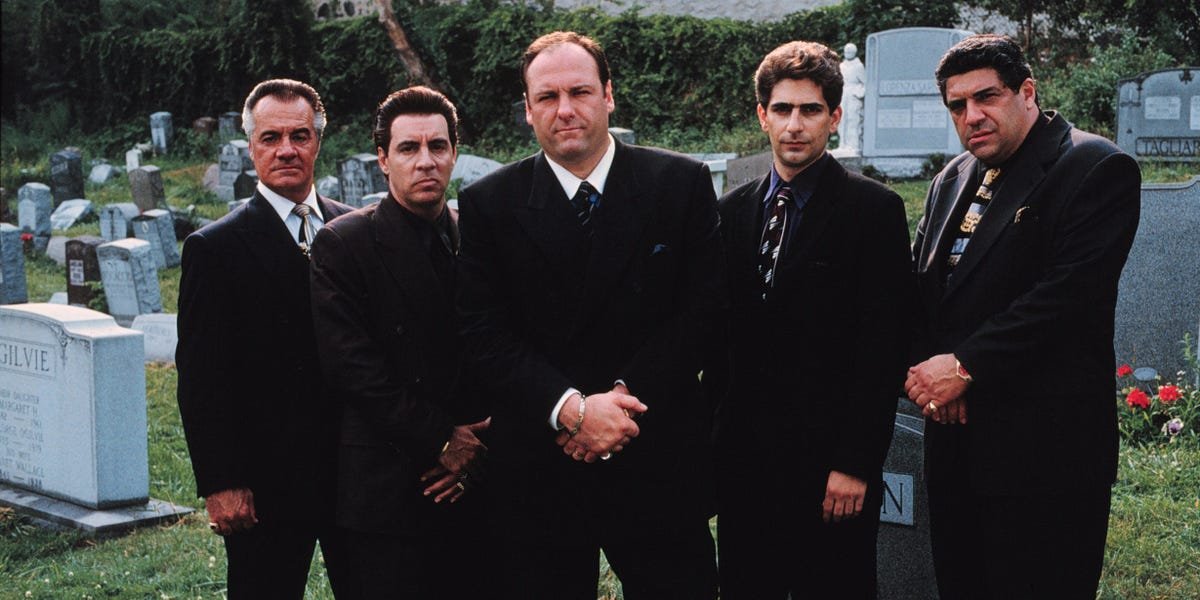
But not that long ago, lots of us were reveling in the “Peak TV” era — a time when inventive TV programming was plentiful and, crucially, popular. A time when you could watch “The Sopranos” on HBO, “Friday Night Lights” on NBC, and “The Shield” on FX.

This was also a time when Kevin Reilly had great jobs in TV, where he steered programming at networks including NBC, FX, Fox, and Turner — and had his hands on all the shows I just mentioned. That run ended in 2000, when Reilly was re-orged out of what was then called WarnerMedia.

Today, Reilly is in AI, of course: He recently became CEO of Kartel, a startup that’s supposed to help big brands use the tech.

But in a recent episode of my Channels podcast, I talked to him about life during TV’s latest (and possibly last) golden age — and whether he thinks it will ever come back. (Spoiler: There’s a reason he’s in AI now.)

You can read an edited excerpt from our conversation below, and listen to the whole thing here.

Peter Kafka: You got to be a TV executive in what we now call the Peak TV era. What was that like?

Kevin Reilly: When I got to network television, there were still these rules, like “the good guy always wins” and “people don’t want to watch depressing things on television.”

And then cable, when I went to FX, that was really one of the most fun chapters of my career because it was the very early days of basic cable. All of a sudden, we started doing “The Shield” and “Nip/Tuck” and doing these things that the press had labeled “HBO for basic cable.”

Prior to this, basic cable was mostly infomercials and reruns.

Kevin Reilly: I was sitting there talking to great creators, and I was telling them we were HBO for basic cable. And on the monitor above my head was “Cops” running 24 hours a day, keeping the lights on.

I was like, “Don’t look at the monitor.”

But all of a sudden, we were able to do stuff that really wasn’t fit for broadcast by being very particular and being a little bit more forward.

Around the same time, streaming popped up, and Netflix debuted “House of Cards” in 2013 as an explicitly HBO-style show. There was a lot of fascination with streaming but also dismissiveness: Jeff Bewkes, who was running Time Warner at the time, famously dissed Netflix as “the Albanian army.” Did you believe that back then?

I think Jeff is an extraordinary leader, and I loved working for him. At the time, though, I think he had to do what he needed to do.

You don’t think he was really dismissive of Netflix? It was just something he had to say?

I think at that point, throughout the entire business, everyone was dismissive of Netflix. “We’re picking these guys’ pockets. They’re gonna go out of business. We’re selling them all the stuff that we can’t sell. They’re idiots.”

But at the same time, Netflix was all anybody was talking about, all day long. I remember flying to Detroit to talk to a big [advertising] client for one of our series. It was going to be a $50 million, $60 million transaction. And all they were talking about was Netflix.

They were buying advertising, and then telling me how all their kids are only watching things on their phones all day long. And I was like, “Isn’t this ironic that you, an advertiser, are talking about a non-advertising-based service and how your kids don’t watch TV anymore?”

What did you think?

I thought they would experiment and do stuff, but maybe not at scale. I mean, they don’t have the system for that, and it’s really hard. Well, first of all, they did what we did (at FX) — they took a page out of the HBO handbook: Fire the money cannon and say, “Hey, we’ll just dream. Bring us in your dreams. Do what you wanna do.”

Your last job in TV was at what was then called WarnerMedia, which had been purchased by AT&T, and there were a bunch of different justifications for that deal, but the real one turned out to be “maybe Wall Street will give us a Netflix stock multiple,” which never happened. Did you think that combination was going to work?

I mean, the product itself works and has been a success. But to take the entirety of Time Warner, and then it was going to be a one-product system that we would single-handedly launch and build an ad play around it, and all of a sudden compete with Google and Netflix …

I don’t know that even Wall Street ever bought that narrative, no matter how hard we sold it.

Comcast and Paramount are bidding for WBD. Netflix is bidding, too. There’s going to be some kind of consolidation no matter what. Do you think that when all of this gets done that there’s a future for traditional television, or do you think it becomes, in the end, a subset of a bigger tech platform?

I’d love to be able to just give you the knee-jerk answer, “Of course, there’ll always be traditional television.” I think unfortunately, everybody waited too long to figure out how we were going to prop it up.

So will it have a very long tail on it, like radio? The heyday of radio went away and we still have radio. I believe it will be around in some fashion. And as some of these assets get shed or reinvented — yeah, they might end up having a little bit more life in some ways than we thought they did.

And radio became podcasts…

Exactly. So there’s always new expressions of it.

But retooling traditional businesses, especially while you’ve got to pull the profit out from underneath, is really difficult.

Correction: December 1, 2025 — An earlier version of this story misstated one of the companies bidding for WBD: They are Paramount and Comcast, along with Netflix.


Source link