
Russias-air-force-is-much-more-dangerous-now-than-it.jpeg

Russia’s air force is much more dangerous now than it was before it invaded Ukraine, airpower experts warn

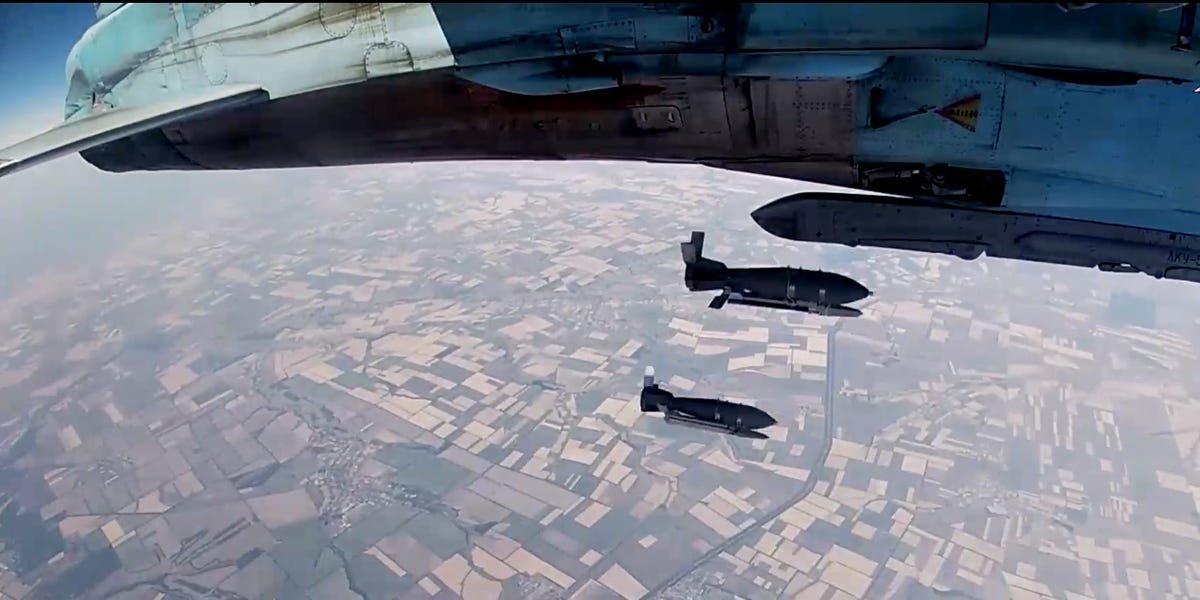
Russian airpower has become far more dangerous and poses a greater threat to the NATO alliance than it did before the invasion of Ukraine in February 2022, air combat experts warn.

Russia’s war in Ukraine has provided its pilots with combat experience and lessons in modern warfare. Russia has also upgraded systems and weaponry and has been producing more aircraft than it has lost, boosting its overall end strength.

Justin Bronk, an airpower expert at the UK’s Royal United Services Institute think tank, asserted in a recent report that Russian airpower “represents a greater threat to Western air power capabilities in Europe than it did prior to the invasion of Ukraine.”

NATO needs to ensure it has upgraded its view of Russia’s air force, retired US Army Maj. Gen. Gordon “Skip” Davis, who served as NATO’s deputy assistant secretary-general for its defense-investment division, told Business Insider. “NATO can’t be complacent with what it thought Russia once was as an air power versus what it is now.”

He said “Russia is more dangerous now to NATO than it was before the war because of lessons learned.”

Bronk said Russia’s performance in Ukraine — including its early failure to achieve air superiority and its significant aircraft losses — has led many NATO policymakers and military observers to downgrade the threat posed by its air force, the VKS.

But that’s a mistake, he said, because, “in many respects, the VKS of 2025 is a significantly more capable potential threat for Western air forces than it was in 2022.”

Russia’s fleet has grown

Russia has lost many aircraft to the ongoing war in Ukraine. Around 130 Russian fixed-wing aircraft have been shot down or badly damaged in the fighting, Bronk said, noting that his estimates are based on interviews with Western air forces and ministries, data from Ukraine’s armed forces, and open-source information.

But he said the impact of those losses isn’t as strong as the figures might suggest.


Destroyed remnants of a blue-colored jet on grassy tarmac with rusted vehicles behind

Ukraine has destroyed dozens of Russian jets as it fights Russia’s invasion. 

Ukrinform/NurPhoto via Getty Images


The types of Russian aircraft that have seen the highest losses — planes like the Su-25SM(3) and Su-34(M), at around 40 each — are not of much use to Russia in a conflict with NATO. And new production has resulted in the expansion of Russia’s overall fleet.

Russia has been able to produce more of its Su-35S, Su-34s, and Su-30SM(2) aircraft than have been lost in the war, Bronk said, and deliveries for other aircraft types have also continued.

Russia has largely kept some of its best aircraft out of the fight, as well as some of its better weapons.

Bronk told Business Insider that the point “is not to downplay the attrition that the Russian forces have suffered in Ukraine.” However, he said, “a lot of the areas that the Russian forces have been really worn down aren’t particularly relevant for us in that fight.”

Russia’s pilots have improved

Russia’s aircrew cadre, including its pilots, “has also grown significantly more capable during the war,” Bronk said. While Russia has lost experienced crew members, it has lost far fewer pilots than it has jets. Skilled pilots are harder to replace in any air force.

And any losses in capable crews have been “more than offset” by the additional flying time and combat experience provided by warfighting in Ukraine, Broke added.

For a long time, Russian pilots generally flew far less than their NATO counterparts, but Ukraine has delivered years of valuable combat experience.


A dark and shiny looking aircraft sihouetted in an orange sky with spilling propellers on tarmac

Russia’s pilots have gained far more experience in the air. 

Russian Defense Ministry/Anadolu via Getty Images


“In most cases, they have vastly improved both pilot and air crew experience in combat and high-intensity warfare,” Davis said. Bronk noted they’ve also become better at air-to-air engagements against both drones and aircraft.

Russia has more attacking power

Russia has also upgraded its weaponry in ways that would make it more of a threat. In early 2022, Bronk said, Russia “would have struggled to employ effective battlefield firepower on a large scale due to inadequate weapon options, a lack of targeting pods, and poor close air support training. This is no longer the case.”

Tim Robinson, a military aviation specialist at the UK’S Royal Aeronautical Society, told Business Insider that “they’re doing things smarter: better tactics, new weapons.”

Russia’s air force, for instance, is arming its Su-35 jets with longer-range R-37M missiles, which Bronk said “have significantly contributed to increasing the threat that they can theoretically pose to NATO air operations.

Russia has also developed stand-off airborne strike capabilities, from missiles to glide bombs, that not only complicate air defense but also allow it to strike from positions of relative safety. It’s been a problem in Ukraine.

Robinson said that being able to fire precision weapons without entering Ukrainian airspace is “an example of their tactics and their munitions and technology improving.”

In a potential future war, Bronk said, “NATO forces on the front lines could be intensively bombarded with glide bombs,” without Russian aircraft needing to risk flying beyond the protection of ground-based air defenses.

Russia’s defenses are more formidable

Russia’s already formidable air defense arsenal, on which its airpower partly depends, may also now pose a greater threat to NATO forces than it did before the war.

Ukraine has been able to damage and destroy a vast number of them, but Bronk warned that “several hundred batteries of assorted Russian surface-to-air missile (SAM) systems remain in service, and the primary threat systems are also still all in production in their latest variants.”


Two large green camouflage vehicles on tracks, with weaponry on top

Russia is now better at using its surface-to-air missile systems. 

Mikhail Galustov/Bloomberg via Getty Images


Russia’s experience has also made it more effective at using its systems to shoot down Ukrainian aircraft and drones, and it has upgraded its systems with new hardware and software.

“Russian SAM systems not only remain numerous but are also likely to perform better against NATO aircraft and munitions in a hypothetical direct conflict than they would have before 2022,” Bronk said.

Russian forces have also shown improvement at coordinating the use of their aircraft and ground-based missile systems, Bronk said. That means a more coordinated threat to NATO aircraft if there were to be a direct conflict.

In a fight, though, as the Pentagon is fond of saying, the enemy gets a vote. While Russia may be more threatening than it was, NATO militaries are heavily armed with combat-proven equipment handled by skilled operators.

Russia doesn’t outmatch NATO, Bronk said, but “they are more of a credible threat.”

He predicted that Russia would still “struggle significantly in a direct air-to-air clash with Western forces. I think they would come off pretty badly.” But the problem is that the fight wouldn’t just be in the air; it would also have the power and effect of ground-based air defenses.

US and Western officials have said that Russia’s fighting style and formidable defenses show that the West may not be able to get control of the air in a future large-scale war, which would make the fight harder and riskier for aircraft and potentially drag Western forces into an attritional slog — Russia’s way of war.

Russia still has many problems, including a rigid command structure that limits flexibility and adaptation and limits on the Western technology it can access to build higher-end systems.

And NATO has learned a lot from the war, from Ukraine, for example, gaining more accurate data about Russia’s surface-to-air missile systems, including their strengths and weaknesses, than it had before 2022, Bronk said. NATO, he added, has the right weaponry to counter them, “albeit not in sufficient numbers in Europe yet.”




Source link

Matthew Loh Headshot

Ukraine’s drone guru says the future of Russia’s Shahed warfare will be focused on speed

Ukraine has enough interceptor drone manufacturers, and now needs to prepare for the next phase of defending against Russia’s Shaheds, a prominent drone analyst said on Tuesday.

The new tech battle is going to be all about speed, said Serhii “Flash” Beskrestnov, an influential Ukrainian drone expert, in a Telegram post.

“There is no need to become the ‘one hundred and first’ manufacturer of drones against the current Shaheds,” he wrote. “We need to work for the future.”

Beskrestnov, who was recently appointed an advisor to Ukraine’s defense ministry, said the race would emerge as Ukraine gradually improves the effectiveness of its interceptor drones.

Interceptor drones are small uncrewed aerial systems primarily designed by Ukrainians to fly into the Kremlin’s Gerans, Russia’s mass-produced versions of the Iranian Shahed drone.

The interceptors have become a core pillar of Ukraine’s air defense network, offering a more cost-effective way to counter hundreds-strong waves of Gerans. Popular types of interceptor drones can cost around $2,500 to $6,000 each.

Beskrestnov predicted that Russia would soon adapt in three ways: installing evasion systems on its Gerans, building reliable flight corridors for the loitering munitions, and manually piloting them at extremely low altitudes to evade air defenses.

“We will cope with this and all the enemy’s bets will be on speed,” Beskrestnov wrote.

Russia’s most commonly used Geran is the Geran-2, based on the Shahed-136 and capable of about 115 mph. However, Moscow is. increasingly deploying jet-powered versions of the drone, dubbed Geran-3s, that can fly at speeds of up to 200 mph.

Now, Beskrestnov says it’s likely Russia will try to push those Geran-3s to 250 mph. The newer Geran-5, which is similar to Iran’s Karrar drone, is also feared to be capable of reaching 370 mph.

“At one point, all our interceptor drones may turn out to be useless,” the analyst warned.

Ukraine’s interceptor drones are typically first-person-view propeller-driven systems. Local engineers incrementally improved their designs to fly reliably at around 220 mph, but will likely be limited in how far they can push these aircraft, which are often built with inexpensive off-the-shelf parts.

“If you are a manufacturer, I ask you to begin developing interception systems for strike UAVs at such speeds right now, while we still have time,” Beskrestnov wrote.

His call echoes Ukraine’s initial research into interceptor drones in early 2024, when the tech was primarily used to destroy Russian reconnaissance drones.

As drone engineers realized at the time that Ukraine needed an answer to Russia ramping up Geran production, they spent months preparing their designs in anticipation of the growing threat.

By 2025, their present form began to emerge on Ukrainian drone markets, until Kyiv eventually set a production goal of at least 1,000 a day. As 2026 rolls on, it remains to be seen whether that could drastically change.


Source link

Videos-show-how-Ukrainian-helicopter-crews-use-machine-guns-to.jpeg

Videos show how Ukrainian helicopter crews use machine guns to hunt Russia’s exploding Shahed drones

Ukraine just gave us an extended look at one of its emerging tactics against Russia’s Shaheds: using helicopters to shoot the drones from above.

The Ukrainian navy published a two-minute montage of such operations on Thursday, saying that a helicopter crew had destroyed eight Shahed exploding drones and Gerbera decoy drones in a single day.

Cockpit and gun camera footage showed the Ukrainians engaging at least five delta-wing drones in flight, with another clip showing unidentified wreckage smoking on the ground.

Some clips indicate that at least one aerial engagement happened in the early morning or at night. Thermal footage from a gun camera showed the operator firing at a delta-wing drone, tracking its flight above open terrain before a screen flash indicates the drone was destroyed.

Other standard optical footage, filmed from a gun camera or the cockpit, appears to show several drones being destroyed high above the clouds or over water near a coastal settlement.

Additionally, an M134 minigun can be seen mounted from a helicopter’s side door, though the videos didn’t show the weapon itself in action.

The clips indicate some of the ideal conditions for downing a Shahed.

For one, the helicopter has to match the drone’s speed and trajectory and gain enough altitude to allow the minigun to fire downward at the Shahed. The chopper crew also needs to come within visual range of the drone to engage.

The footage comes several months after Ukraine said it would officially begin incorporating helicopter crews into its air defense network against Russia’s one-way attack drones, which Moscow uses in mass waves to pressure Ukrainian cities.

Because Russia mass-produces the Shahed and Gerbera, Kyiv has sought more inexpensive means, such as machine guns, instead of traditional antiaircraft missiles to counter them.

Ukraine’s commander in chief, Gen. Oleksandr Syrskyi, said in October that helicopters could sometimes destroy up to 40% of Russian Shaheds and Gerberas in one area.

Thermal and infrared cameras, such as the one seen in the latest footage, were among the systems that Syrskyi said would be equipped on such helicopters to improve their effectiveness.

Ukraine also uses ground crews with interceptor drones or truck-mounted machine guns to destroy Shaheds, but a helicopter crew can reposition much faster to engage multiple threats or hunt down a Russian drone that changes its flight trajectory.

The latter scenario became increasingly common as Russia was found to be outfitting Shaheds with more advanced communications and guidance systems, and, in rare cases, artificial intelligence.

Helicopters also allow for engagements at higher altitudes. Russia often directs its Shaheds to approach their targets at above 6,500 feet before swooping down to attack, making it more difficult for ground-based crews to hit the drones.

Aside from helicopters, Ukrainian troops have also been seen using M134 miniguns on turboprop planes to shoot down Shaheds.

Meanwhile, Russia has since been reported to be attempting to counter the Ukrainian helicopters by equipping its Shaheds with R-60 air-to-air missiles.

In November, Ukraine’s deputy minister of defense for innovation told Business Insider’s Jake Epstein that Moscow was also directly targeting patrolling helicopters and aircraft with Shaheds.


Source link

Matthew Loh Headshot

Russia’s new jet-powered Geran-5 drone found with over a dozen US, Chinese parts: GUR

Ukraine’s defense intelligence agency, GUR, has identified over a dozen American and Chinese electronics parts that it says were found in a new Russian jet-powered attack drone.

GUR published its new analysis of the drone, dubbed the Geran-5, on Monday, as part of its ongoing directory of key foreign components used in Russia’s weapons or defense industry.

The intelligence directorate published images of what it said was the drone’s wreckage last week, saying that the Geran-5 was newly discovered after being used in an attack in early January.

Shaped like a traditional fixed-wing aircraft, the Geran-5 differs from past Gerans, which are delta-wing aircraft modeled after the Iranian Shahed drone.

GUR said last week that the Geran-5 closely resembles Iran’s Karrar uncrewed aerial vehicle, which in turn is believed to be modeled after the much older American MQM-107 Streaker attack drone.

At least nine of the Geran-5’s parts were produced by American companies, including digital signal processors, clock generators, and a transceiver, GUR said.

GUR said the drone also features a more powerful Chinese turbojet engine, allowing the Geran-5 to fly at up to 373 mph — much faster than the jet-powered Geran-3’s estimated 230 mph.

Three other parts, including a mesh network radio modem that retails for $8,100, were also sourced from China, GUR added.

One part on the list — the Geran-5’s transistor — is German.


Parts of a Geran-5 are displayed on snowy terrain, arranged to resemble the aircraft's original airliner-like structure.

GUR published an image of what appears to be gathered debris from a downed Geran-5.

Ukrainian Defense Intelligence Directorate (GUR)


Ukraine often warns that Russia’s military production base has been successfully evading international sanctions at a scale that allows it to manufacture a deep arsenal with foreign parts. Kyiv has long sought to compel international firms to introduce stringent due diligence programs to prevent their products from entering the black market.

GUR said in its initial report that the Geran-5 likely has a range of 600 miles and can carry a 200-pound warhead. The agency also said it had information indicating that Russia may seek to deploy the Geran-5 from Sukhoi Su-25 fighter jets, rather than from typical ground-based launchers, to extend its reach.

“Separately, the possibility of equipping the aircraft with R-73 air-to-air missiles to counter Ukrainian aviation is being considered,” the agency said.

The Geran drone family has come to describe loitering munitions that were based on Iranian designs but tweaked to be manufactured within Russia. Previous Gerans have taken inspiration from Tehran’s Shahed, and they’re so similar that they are often colloquially seen as synonymous.

The earlier Gerans are now one of Russia’s staple weapons against Ukraine, with the Kremlin manufacturing so many that it can afford to launch thousands of attack drones a month at Ukrainian cities.

Jet-powered versions of the Geran have been used more sparsely, though Ukrainian reports of the Geran-3’s use have grown increasingly common over the last year.


Source link

Under-threat-Ukraines-drone-schools-are-going-to-great-lengths.jpeg

Under threat, Ukraine’s drone schools are going to great lengths to stay off Russia’s radar

The leaders of several drone schools training Ukraine’s operators for the fight against Russia say they’re targets and they have to act accordingly — tightly protecting information and even moving around.

Throughout its invasion of Ukraine, Russia has launched huge drone and missile barrages at factories, training sites, and civilian infrastructure across the country, often far from the fighting in the east, straining Ukrainian defenses and serving as a constant reminder that nowhere in the country is completely safe.

Drones are prolific on the battlefield in Ukraine. Operators are priority targets. It stands to reason the schools training them for war would be too. Officials from three drone schools told Business Insider that they take steps to avoid getting hit.

Tetyana, a Ukrainian veteran who goes by the call sign “Ruda” and is now the head of R&D for Dronarium, a drone training school with sites in Kyiv and Lviv, said that it must follow strict safety rules because “the entirety of Ukraine is not safe, missile-wise, drone-wise.”

Dmytro Slediuk, head of the education department at Dronarium, told BI the safety measures, including not disclosing publicly exactly where its training centers are located and also changing their location “from time to time,” are necessary to prevent Russia from interfering with its training

To keep certain location data from getting out, the school doesn’t allow photos and videos that might reveal where its facilities are based.

The school has been mentioned by Russia’s military bloggers, influential pro-war accounts that often circulate operational details and commentary to large audiences. Though they are typically in favor of the war, they are also sometimes critical of Russia’s performance and dispute some of its defense ministry’s claims.


Two figures stand in an open field beside a launcher with a grey winged drone in the air

Drone schools say they’re targets for Russia.

Ivan Antypenko/Suspilne Ukraine/JSC “UA:PBC”/Global Images Ukraine via Getty Images


Rybar, a media outlet with 1.5 million Telegram subscribers, listed Dronarium as an example of Ukraine’s drone training efforts. The UK has sanctioned Rybar, initially presented as a milblogger but actually a partially Russian government-sponsored information warfare operation, and the US has offered up to $10 million for information.

Tetyana said Russian outlets have been writing about the school since 2022, the year Russia started its full-scale invasion. “As long as they write and talk about us, it means that they are afraid of us,” she said. But it also means that they’re on Russia’s radar.

She said the school and its attendees strictly adhere to a set of critical cybersecurity rules, and said there are also general safety rules in place. “When the air raid siren is on, all training activities, all the work, everything gets suspended, and we deconcentrate and get into safe shelters.” She said no one is complacent.

Vitalii Pervak, CEO of another training school, Karlsson, Karas & Associates, said that safety steps are crucial because “the Russians are constantly hunting for places where military personnel gather.”

Ukrainian officials have confirmed that Russia has hit some Ukrainian military training sites, killing personnel. It’s the kind of thing air defenses can try to prevent, but Ukraine has suffered shortages throughout the war. Ukraine has also successfully hit Russian bases and gatherings of Russian personnel.

The key is to prevent Russia from gaining sufficient knowledge of the school to target it. Its steps include “everyone who works at KK&A, including the cleaners,” having to do a polygraph security interview.

He said they don’t share any information about the location of the training center or about the appearance of the instructors or cadets.

“Some of our employees may have relatives or acquaintances in occupied territories who could be tortured by Russians for indirect contact with someone who opposes Russia,” Pervak said. “This secrecy also protects the instructors and cadets themselves, as well as their relatives, from attacks by Russian agents.”

He said that while the added security “hinders publicity to some extent — good things should be spoken about loudly — war dictates its own conditions. We are well aware that failing to observe the principles of secrecy may result in the death of staff or cadets.”

Viktor Taran, the CEO of the Kruk Drones UAV training center, said that “Russia is interested in destroying us.”

“Thanks to God and air defence, we’re still operating.”


Source link

Russias-latest-naval-mission-is-a-flex-to-cover-for.jpeg

Russia’s latest naval mission is a flex to cover for its embarrassing losses in the Black Sea, US official says

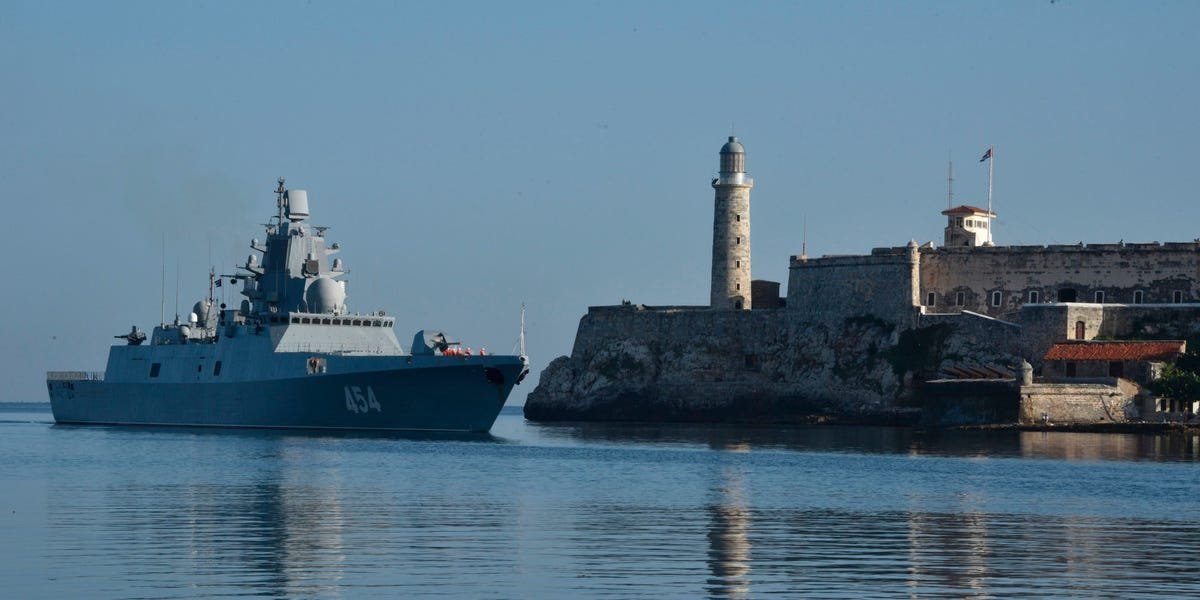
Russia sending warships to Cuba next week is an attempt to show its navy is still a global power after losses in the Black Sea, an unnamed US official told reporters, according to the Associated Press.

On Thursday, Cuba’s Ministry of Foreign Affairs said Russia was deploying four warships to Cuba, including a nuclear-powered submarine, with the vessels expected to be in Havana between June 12 and 17.

“Russia has sailed the Black Sea since 1783 but is now forced to constrain its fleet to port,” UK Defence Minister Grant Shapps wrote. “And even there Putin’s ships are sinking!”

This week, it was reported that Ukraine was using its exploding naval drones to go after smaller Russian vessels after Moscow pulled back its larger warships to reduce their vulnerability to attacks.

Not everyone agreed on Russia’s motive.

The visit of the ships, none of which will carry nuclear missiles, does not represent a threat to the region, the Cuban statement read, but was instead part of the historically cordial relations between the two countries.

But according to the US official, the deployment is an effort by Russia’s navy to flex its muscles on the world stage, after suffering losses in the Black Sea.

“This is about Russia showing that it’s still capable of some level of global power projection,” they said, per Reuters.

Russia’s navy has suffered a series of embarrassing setbacks in the Black Sea, where Ukraine claims to have destroyed a third of its fleet.

Ukraine has used drones, missiles, and other weaponry to take out many Russian warships, and has forced its fleet to seek safer ports further away from Crimea.

In March, the UK’s defense ministry declared Russia’s Black Sea Fleet “functionally inactive” after Ukraine claimed to have struck another two of its vessels.

Russia also shuffled its naval leadership earlier this year.

According to the unnamed US official, while the US expects “heightened” Russian naval and air activity this summer, and more going forward, deployments like those to Cuba incur costs for the Russian navy, which is “struggling to maintain readiness and conduct deployments with an aged fleet.”

In a military assessment on Thursday, the Washington DC-based think tank the Institute for the Study of War said it was likely part of an effort to bring back memories of the Cuban Missile Crisis, and dissuade the US from offering further support to Ukraine.

The deployment also comes after Putin threatened to send long-range weapons to “regions around the world” that want to strike Western targets.

Meanwhile, Russia’s Ministry of Defence said its goal was to keep a Russian naval presence in operationally important areas of the “far ocean zone,” RBC-Russia reported.


Source link