
Even-blue-collar-work-isnt-safe-from-AI-a-CEO-who.jpeg

Even blue-collar work isn’t safe from AI, a CEO who makes tech for electricians and plumbers says

Artificial intelligence may be disrupting office jobs first, but blue-collar workers shouldn’t assume they’re immune.

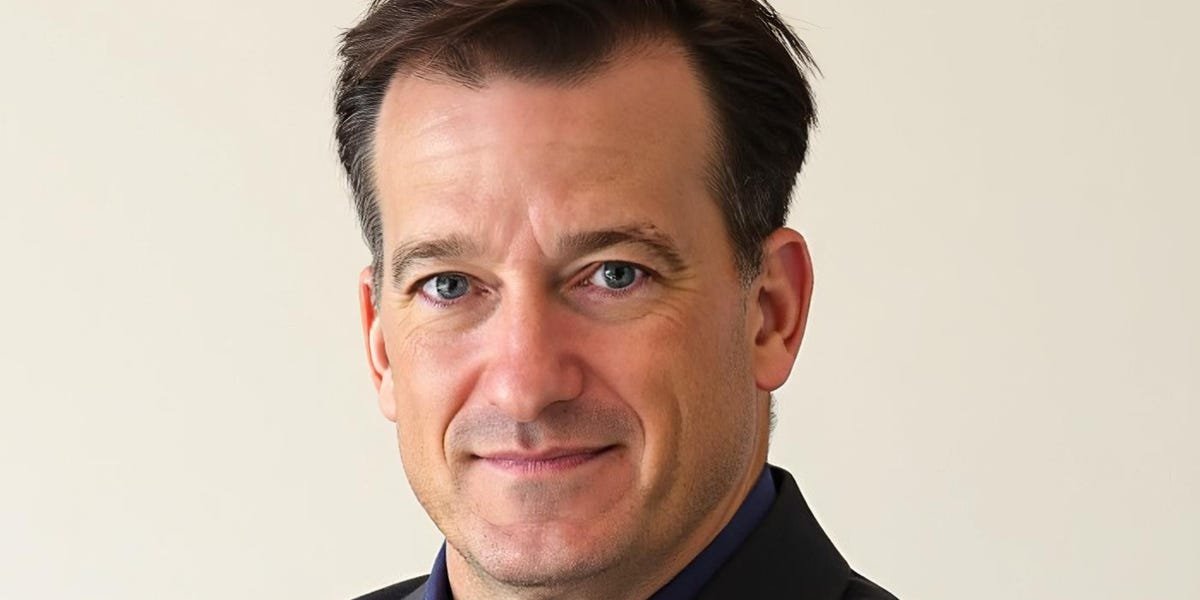
Fred Voccola, CEO of Simpro Group — which builds software for use by tradespeople — said that early AI adoption has largely focused on white-collar roles, but he believes the same forces will increasingly reshape physical work, from electricians to construction crews.

“The hammer will strike first and hardest in the white-collar world,” he said in an interview with Business Insider in London this week. “White collar work is already being disrupted.”

He pointed to one of his own companies, whose content marketing team head count was cut from 17 to 2 people in one year, while still producing more content due to AI.

For now, he said, skilled trades remain relatively insulated because their work is hands-on and harder to automate, but that advantage won’t last.

“I think the trades, if I am an electrician or a plumber or an HVAC person, I’m among the most protected, but that protection lasts only for a limited amount of time,” he said.

“I think that there will be fewer jobs in the blue collar industry as well, every industry in the world, over time, if we’re talking 10 years, 100%, it’s gonna impact everyone,” he added.

‘Quicker, faster, cheaper, and safer’

The next phase of disruption, Voccola said, will come from a mix of AI-powered software and robotics, including tools his own company is developing.

“We have robotic technology,” Voccola said, pointing to use cases such as cabling, inspections, and rescue efforts, where robots could increasingly support human workers.

“This is something that’s coming out of our lab, probably end of this calendar year,” he added.

That shift is already reshaping parts of the labor market, with companies like Instawork using gig workers to generate the real-world data needed to train robots.

Some manufacturers like Aquant and Gecko Robotics are deploying AI-powered robotics and sensors to detect equipment failures before they happen, helping avoid costly breakdowns and improve efficiency.

Voccola pointed to more use cases where he believes machines could outperform humans, including wiring data centers, inspecting infrastructure, and navigating tight or hazardous environments.

“Cabling, going through — instead of digging up all the infrastructure plumbing — sending little nanobots and robotics to see where the problems are, a lot of discovery of things, a lot of electrical testing. These are things that robots can do quicker, faster, cheaper, and safer,” he said.

A Simpro spokesperson told Business Insider the company is “actively working on the technologies discussed,” but declined to share further details.

“This isn’t about replacing experienced technicians, but about helping them get more done, more efficiently,” the spokesperson added.

Still, Voccola said he expects robotics to move into the mainstream within 2 to 3 years and to take over at least 50% of trades tasks within 10 years.

Even so, he acknowledged the uncertainty ahead. The speed and scale of AI-driven change, he said, is unlike anything seen before — and raises difficult questions about the future of work.

“I think it’s scary,” he said.

Blue-collar isn’t immune

Voccola’s outlook contrasts with a growing view among tech leaders and researchers that blue-collar work may be more resilient and more valuable in the age of AI.

A recent Harris Poll released in February found that 76% of Americans believe jobs that rely on hands-on experience are less likely to be replaced by AI.

Some of the most prominent voices in tech have echoed that sentiment.

Elon Musk has said jobs involving physical labor will “exist for a much longer time” than digital roles, while Nvidia CEO Jensen Huang has said that the AI boom could increase demand for skilled tradespeople building the infrastructure behind it.

That demand is already emerging. Meta president Dina Powell McCormick recently said the US will need hundreds of thousands of electricians in the coming years to build out AI infrastructure.

Voccola didn’t dispute that demand may rise in the short term, but he said, over time, the same forces reshaping office work will extend to the physical world — and no job category will be fully insulated.


Source link

A-British-citizen-in-Dubai-says-he-still-feels-safe.jpeg

A British citizen in Dubai says he still feels safe despite the Iran strikes

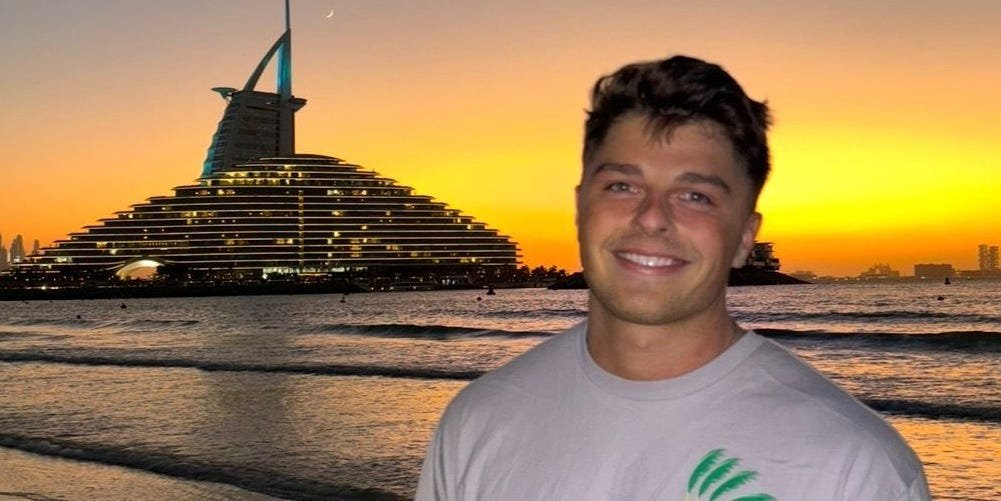
This is an as-told-to essay based on a conversation with Charlie Lovett, a British citizen in Dubai who runs a used-car marketplace. Iran has launched retaliatory strikes at sites in the United Arab Emirates after being attacked by the US and Israel. This story has been edited for length and clarity.

I have British parents and am a British citizen, but a large chunk of my life has been spent here in Dubai.

My dad’s job brought us here, so I did all my schooling here from age 3 to 18. I moved back to London for university and worked there for a few years. In the last couple years, I set up a business in the UAE, so I am back here quite a lot.

It was very surreal when everything started on Saturday.

I had some friends around, and we knew what was happening in Iran, but I didn’t think much about canceling or changing plans, which is a testament to how safe I felt here. I live in a high-rise on the Palm Jumeirah and was sitting on my balcony when I could hear a few bangs in the area.

Initially, it was quite scary and very unsettling, but very quickly, I turned to government sources about what was going on. If you live here or have lived here for a long time, you understand that it is a safe place to live and that measures are in place to protect you. There’s been a big difference in reactions between people who live here and people who are visiting.

Growing up in Dubai instilled a strong sense of safety

Before the other day, I had never heard a missile here.

Still, having grown up here, I have a deep-rooted, subconscious sense of safety that has built over time.

There is a lot of trust here within the community and in the government. Half the time, we don’t even lock our doors. The other day, I went for a run and didn’t want to carry my car keys, so I just left them in the car. You don’t have to worry about these things here. It’s the small things you notice growing up here, as a kid, being able to play outside for hours without a parent.

You also get an understanding of how the government operates. It’s very structured and organized. You feel like you’re in safe hands. For instance, during COVID, everything was handled very well.

There are protocols in place, and people here are really good at following them. If you’re told not to go into the office, for example, people don’t really kick up a fuss about that. They just crack on.

On all the official government channels, you can see almost a live breakdown of everything that’s happening and an explanation as to what’s going on — like that the sounds aren’t necessarily missiles landing, they’re just being intercepted. The government also sent out iPhone notifications, all translated into both English and Arabic.

Right now, for people who live here, I think the consensus is it’s just business as usual. Everyone’s quite calm.

It already feels normal again. There’s the occasional loud sound, but that’s mostly subsided in the last few days. There’s a mall right next to me where I work and shop, and it’s been packed. There are people out and doing things and just going about their day. I was just out for dinner with my dad.

There’s a lot of conflicting information going around

If you’re not from here or if you’re here on holiday, I get that it would be very different. You’re in an unfamiliar environment, you don’t know how things work, and you don’t necessarily have family or friends around.

I also think some people may be scrolling online or seeing rumors, rather than following the official channels. I think there’s been a lot of mixed reporting, which can also confuse things.

I’ve got family and friends in the UK, and my girlfriend’s there at the moment, so they’re seeing what’s being reported in British media and what’s surfacing online. So there’s this huge discrepancy in what’s actually happening and what’s being shared in certain places.

I got here just over two weeks ago. I’m trying to leave, not because I’m evacuating, but because I’m trying to make it to the Barcelona marathon. It’s just a matter of finding a flight that’ll get me there in time. Afterward, I’ll return here when I can.

For people who live here — about 90% of whom are expats — the thought of this happening wasn’t even in our minds until last week. But even then, it has not shifted our perspective. A lot of people feel more comfortable staying here than they would going back to their home countries.


Source link

Ive-lived-in-the-UAE-for-17-years-I-ran.jpeg

I’ve lived in the UAE for 17 years. I ran to the basement as missiles flew overhead — and I still feel safe.

On Saturday, I was standing on the beach below my home on Dubai’s Palm Crescent when I noticed thick plumes of black smoke rising from the Fairmont Hotel across the water on the trunk of the Palm Jumeirah.

I watched the dark fumes with dread as they rapidly grew thicker at sunset. The sight recalled the same images I saw from explosions in Beirut and Gaza during my own reporting in the region over the past few years.

I live in a beachfront apartment on the East Crescent, the outer arc that curves around Palm Jumeirah and shields it from the open sea.


Smoke from a building in Dubai, United Arab Emirates.

She saw smoke when standing outside her home on Dubai’s Palm Crescent.

Provided by Rebecca Anne Proctor


I had just gotten back from visiting a friend from graduate school and her family at a beach club at the base of The Palm Jumeirah. An afternoon meant to be spent enjoying the beach and the cool waters during one of the Gulf’s best times of year, quickly turned into one of spotting numerous missiles in the sky as they were being intercepted by the United Arab Emirates’ defense system.

The US strikes on Iran, which we had anticipated for weeks, had begun, and as many in the Gulf had feared, they have led to hundreds of missile and drone attacks on Gulf soil.

After an intense few hours filled with worry, I had gone down to the beach at my home to watch the sunset and try to find a moment of calm. Others had done the same. A fisherman stood with his line in the water. Couples walked by the water’s edge as the evening light shimmered on the waves. Others lounged by the pool.

For a moment, it looked like any other Saturday.


The sky near The Palm in Dubai, United Arab Emirates.

Looking up at the sky in Dubai.

Provided by Rebecca Anne Proctor


But the smoke still spiraled into the sky, an eerie reminder that it wasn’t. People stood quietly, watching.

Then, without warning, a fast-moving ball of fire flew over our heads and our building. Instinct took over. We ran for the basement, breathless, confused, scared, and frustrated. A woman rushed in after us, crying. She said she’d just driven past The Fairmont and seen it in flames.

I’ve lived in the United Arab Emirates since 2009. I never would have imagined that the sights of bombings I have reported on in other Arab nations would be seen and experienced here, a Gulf nation considered to be one of the safest in the world.

This is a place where my friends from Lebanon, Palestine, Syria, and even Iran and parts of Africa have come to for a safer life and better work opportunities.

They did not escape war to come to experience another war.

We knew it was coming

Since mid-January, there had been growing talk of a possible military strike on Iran. For weeks, people across the Gulf — residents and visitors alike — had been bracing for it. At conferences, art fairs, dinners with friends, and even casual work meetings, the subject would come up.

People would whisper about it, sometimes even joke.

“Let’s see if it happens next week or next weekend,” someone would say.

“Let’s have lunch while we still can,” a friend in Downtown Dubai told me recently. “We may all be living in the basement soon,” they added with a laugh.

But the moment never came.

We’re now in the second week of Ramadan — a time meant for reflection, charity, community, and peace. Dubai had been full of festive iftars and suhoors, the celebratory meals where Muslims break their fast after sunset.

Until this week, the city felt joyful, as it always does during this month.


Screenshot of emergency alert from United Arab Emirates.

She has received texts warning her to stay away from windows and falling debris.

Provided by Rebecca Anne Proctor


Life is carrying on

The last few days have brought real fear and confusion. At times I’ve felt completely on edge. But I also feel safe. I feel grateful.

As I write this on the evening of March 3, flights across the Gulf are still suspended. The UAE says it has intercepted 186 ballistic missiles and more than 800 drones. I can hear the fighter jets roaring overhead. And yet, outside, children are playing again. Birds are chirping.

Businesses are open, even if many people are working from home. Life is going on, and I do feel safe. I’ve gone through several nights of fitful sleep, waking up to emergency texts from the government on my phone warning us to stay away from windows and falling debris.

The noise and uncertainty have been scary. But seeing how the UAE has been handling the situation — confidently and with resilience — has given me strength.

Don’t get me wrong, this isn’t easy. I have also seen commentary and reports online that have used this moment to criticize the nation, dismissing it as “glitzy,” as if it isn’t a real place where real people live. But for those of us who call it home, it’s very real.

Over the 17 years I’ve been here, I have lived through two recessions, the COVID pandemic, and several floods. During each catastrophe, the UAE has surprised its skeptics and bounced back.

I don’t know how or when this will end. I am still undecided as to when or if I will leave. I’m still nervous going to sleep at night. It’s only been a few days, and I’m still jumping at loud noises. But each hour and day that passes, I do feel calmer. We will get through this. The UAE will get through this.


Source link

Katherine Li, West Coast breaking news reporter at the Business Insider.

The author of a viral AI report warns that blue-collar jobs won’t be safe from an AI-driven recession

The coauthor of an AI research paper is speaking out after his work triggered a global stock sell-off.

Citrini, a firm focused on thematic equity investing, alongside Alap Shah, CEO of Littlebird.ai, theorized a future where, instead of transforming the economy in a positive way, the AI boom erases white-collar jobs and severely reduces the spending power of those workers, and eventually stunts economic growth.

On Monday, Shah told “TBPN” podcast hosts John Coogan and Jordi Hays that despite how well it seems to be going for blue-collar jobs at the moment in terms of growth and the lack of mass layoffs, these jobs won’t be safe if white collar jobs go away because ultimately, there is only “one labor market.”

“Let’s say in our scenario, we talk about 5% of folks might get fired in a couple of years,” said Shah. “Those 5%, if there aren’t white collar jobs for them to relocate into, then they’re going to have to move into the gig economy and the blue collar labor force.”

“And so that puts pressure on the entire labor market, not just the white collar one,” Shah added.

Shah and Citrini published a report on Sunday, written from a futuristic point of view set in 2028, that predicts a negative domino scenario triggered by the AI boom. The research theorizes that AI will kick off a mass white-collar layoff too quickly, which will then deal a blow to the metro housing and mortgage market, and eventually lead to a global stock sell-off and a widespread recession in all sectors. In this scenario, the paper said, AI growth could also lose momentum due to a lack of funding.

“The system turned out to be one long daisy chain of correlated bets on white-collar productivity growth,” the paper theorizes. “The November 2027 crash only served to accelerate all of the negative feedback loops already in place.”

Shah elaborated on these concerns on “TBPN.” When asked what he thinks of the current growth in the health and education sectors, Shah said most of it could be spurred by government spending, which would go away if personal income declines.

“Those sectors continue to grow because government spending grows,” said Shah. “But again, gets very circular if government spending is coming primarily from taxes and primarily payroll taxes because the average worker pays a lot more in taxes per dollar than the average corporate does.”


Source link