
Some-ships-are-sailing-through-the-Strait-of-Hormuz-Others.jpeg

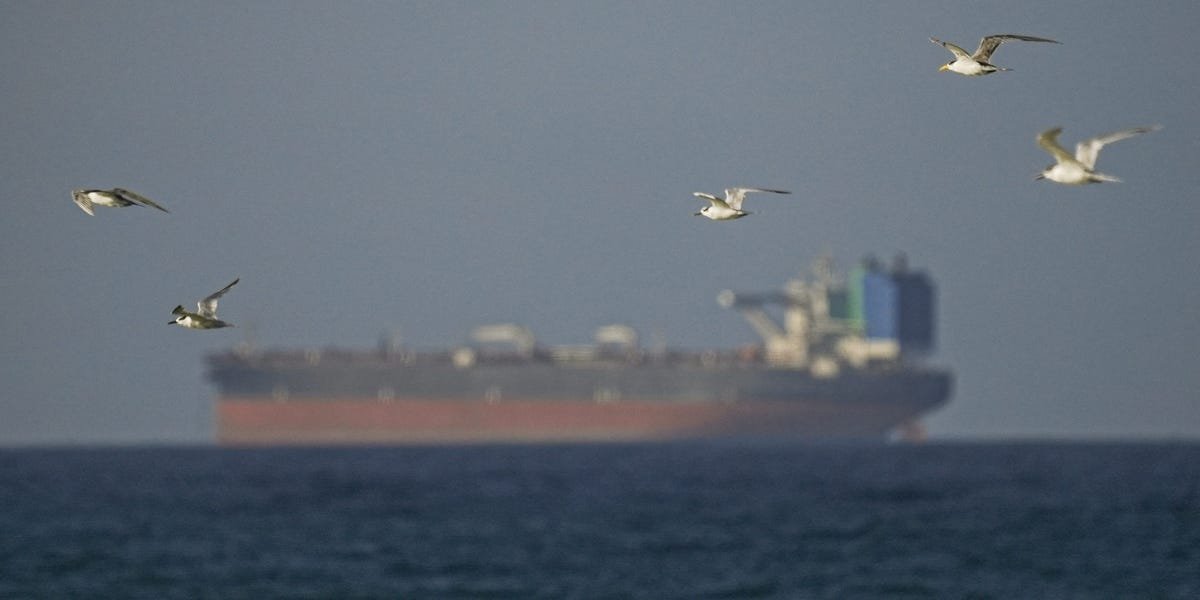
Some ships are sailing through the Strait of Hormuz. Others are turning around. Here’s what ‘completely open’ looks like for now.

Iran announced Friday morning that the Strait of Hormuz is open for maritime traffic, and mid-afternoon data showed that commercial vessels were passing through the strategic waterway, though only a small number.

Friday evening, a large group of vessels sailed toward the strait but inexplicably turned away, ship-tracking data shows, raising questions about the status of this critical chokepoint.

Opening the strait has been a central demand since the start of a fragile ceasefire earlier this month and amid the ongoing negotiations between Washington and Tehran.

Seyed Abbas Araghchi, Iran’s foreign minister, said in a statement on social media Friday that “the passage for all commercial vessels through Strait of Hormuz is declared completely open for the remaining period of ceasefire, on the coordinated route as already announced by Ports and Maritime Organization of the Islamic Rep. of Iran.” The announcement follows a ceasefire between Israel and Lebanon.

Iran’s coordinated route appears to refer to previously released guidance that takes ships through the northern part of the waterway closest to Iran, which has said that the route was determined by security needs. Separate from Iranian considerations, US forces have been working to establish safe passage in the strait, where mines continue to represent a potential threat.

Shipping organizations have had mixed reactions. Some welcomed the news as a positive signal, while others urged caution. It is unclear how much has changed with Friday’s announcement from Iran.

President Donald Trump acknowledged Iran’s Friday statement in a Truth Social post, writing that “Iran has just announced that the Strait of Iran is fully open and ready for passage.” The market reaction to the announcement saw stocks climb higher and oil fall.

The strategic Strait of Hormuz is a narrow chokepoint linking the Persian Gulf to the Gulf of Oman and a major artery for global shipments of oil and natural gas.

MarineTraffic data from Friday afternoon showed that just over half a dozen commercial vessels had transited the strait since the announcement.

Data from KPler, a real-time trade intelligence platform, showed that eight commercial vessels had crossed as of 2 pm EST Friday compared to five on Thursday. The data refers to commercial fleets of crude tankers, LPG, LNG, and dry bulk vessels. Containerships are not included in the count. But by the evening, new data showed ships were turning back.

The limited number of ships that have gone through is a fraction of the pre-war normal. Before the war, the strait saw an average of over 120 transits daily.

Earlier in the week, days before the announcement on the strait, US Navy warships set up a blockade of Iranian ships and ports. Trump said the blockade will remain in effect until Washington and Tehran reach a deal to end the war.

US Air Force Gen. Dan Caine, chairman of the Joint Chiefs of Staff, has highlighted the role of the Navy’s Arleigh Burke-class destroyers in the blockade during a briefing Thursday but didn’t specify numbers involved.

Dozens of surveillance aircraft, refueling planes, and drones are also involved in the blockade. US Central Command, which oversees operations in the Middle East, said Friday that 19 vessels have turned around to comply with blockade restrictions since it began on Monday.

The US set up the blockade amid a tenuous ceasefire between the US and Iran, which was reached after more than a month of war. US military leaders have asserted that American forces remain poised to resume combat operations should the negotiations fail.


Source link

jill robbins smiles in front of a tree

I’m a seasoned cruiser, but I still booked the wrong room for my family of 4 on a recent sailing

As our family’s primary vacation planner, I’ve found we get the most mileage out of cruises. The “most things included” pricing is easy on our budget, and we like the wide range of activities and dining options.

My kids are in high school, and we’ve been cruising together since they were in first grade. Still, I managed to make a rookie mistake with our most recent seven-night Western Caribbean Princess cruise.

I had booked it while on a Princess Alaskan cruise with my husband and got a great rate. However, I had a moment of panic when we boarded the Regal Princess weeks later and got a first look at our stateroom.

Although I’d selected a “cabin that sleeps four,” I only saw two twin beds.

Everyone ended up having a bed, but the setup was far from ideal


Two twin beds in Princess cruise cabin

When I got our first look at our stateroom on the Regal Princess, I had a moment of panic when I saw two twin beds.

Jill Ribbons


Despite the initial shock, we quickly realized our 222-square-foot cabin could indeed sleep four people. Our steward told us there were two additional beds stored in the ceiling that he would pull out every evening.

We asked if the two twin beds on the ground could be converted into a queen for my husband and me, and were told they could, but there would be no place to put the ladder for the upper bunks.

So, we left the arrangement as it was.


Beds from ceiling with ladders leading up to them

We ended up putting the ladders against the wall to give us some more room to walk.

Jill Ribbons


On the bright side, we had sufficient sleeping space, and my kids didn’t have to share a bed. Our steward set up the beds each evening while we were at dinner and put them up again after breakfast.

Despite being small, the beds were comfortable, and we all got decent sleep.

The biggest issue was that there was no room to sit up and read or watch TV in bed — the upper bunk was that close to the ceiling. The ladders also made moving around the cabin a game of Tetris, especially at night.


Beds from ceiling with ladders leading up to them

With the beds and ladders out, our path to the bathroom was incredibly narrow.

Jill Ribbons


Casualties included one head bump (me, the first night) and one kid stepping on my legs when he skipped the ladder. After that, we adjusted.

On the bright side, having a small balcony (albeit one with an obstructed view of the ocean) meant we had easy access to natural light, fresh air, and a bit of extra space, which made a difference.

Despite the drawbacks, we still had a great time


Author Jill Robbins and husband smiling with drinks on balcony on Princess Cruise

My husband and I spent some time on our obstructed balcony.

Jill Robbins


In the end, we got a good enough discount on the room that I didn’t mind a little extra inconvenience.

Though I would’ve liked a bigger bed and more room, our small stateroom didn’t stop us from enjoying the cruise. We were only in the room to sleep and shower, and after a day or two, the bunks didn’t feel like a big deal.

This was the first time my kids had sailed on Princess, and our postcard-sized digs didn’t affect how we felt about the cruise overall.

We’d 1000% do this cruise with teenagers again — just not in this stateroom.

Admittedly, I made a rookie mistake — and I know just how I’ll avoid it next time


View off of balcony on Princess cruise with lifeboat blocking part of the view

We booked a cabin with an obstructed-view balcony.

Jill Ribbons


Looking back, I can see what led me to choose the wrong cabin for our family.

While booking with a sales rep on a previous cruise, I got caught up in the moment and the good deal. I didn’t think to ask detailed questions, like the specifics of the bed arrangements.

My biggest mistake was assuming. On cruises I’ve been on with Disney and Carnival, cabins that sleep four are configured differently, with a queen bed and a couch that converts into bunks across the room.

I should’ve asked more questions and watched fellow cruisers’ cabin tour videos online before booking anything. Had I done that, I likely would’ve chosen a different cabin or adjusted my reservation before our departure.

By the time we’d boarded, our cruise was full, and even if a larger cabin had been available, it would’ve cost more.

Next time, I’d be more prepared, or just book my cruise at home, where it’d be easier to review the details on my own.

A travel advisor familiar with cruising could also have steered us toward a better option for a family of four with teens. Though I recommend them to first-timers, I don’t usually use one for cruises.

At the end of the day, even though I should have known better, I couldn’t help but laugh at myself.


Source link