My-boyfriend-and-I-founded-a-company-while-traveling-the.jpeg

My boyfriend and I founded a company while traveling the world. A year later, it did $33 million in sales.

This as-told-to essay is based on a conversation with Tricia Redulla, cofounder of Sky and Sol. It has been edited for length and clarity.

In 2023, my boyfriend Max hiked Mount Kilimanjaro. We had both been focused on improving our health, and the hike was a major accomplishment for him. On it, however, Max couldn’t find a sunscreen that protected him without irritating his skin.

When he came back to our Austin apartment, we started brainstorming ideas for a tallow-based sunscreen. At the same time, we were considering traveling when our lease ended. Somewhat surprisingly, the two ideas went hand in hand: we could build our business remotely while traveling the world.

We established our working-travel routine in Hawaii

We had always wanted to see Hawaii, so that was our first stop. We were there for a month, staying in a few different Airbnbs. That’s when we decided to maintain a typical work schedule, even though we were in a vacation location.


Couple in Hawaii

Tricia Redulla and her boyfriend first went to Hawaii. 

Courtesy of Tricia Redulla


We would wake up, sightsee a bit, then work for an extended time. Although we were on our computers, it was interesting to be in new cafés and spaces. We lived on our savings, but we also started selling our products quickly.

We also began selling sunscreen to the US market before we left, and Sky and Sol immediately started generating sales — about $7 million during 2024 while we were traveling. A third-party logistics company shipped products for customers, and when needed, we had product samples shipped to our family homes. We couldn’t see those samples, but we could ask our family about them and get pictures.

We booked a transatlantic cruise because it was cheap

After coming home for the holidays, we booked a transatlantic cruise from Miami to England. At the time, cruise prices were really low. The cruise taught us to be flexible: we were working together in a tiny room, though we often went to the on-ship Starbucks for a change of scenery.

At the time, I was focused on building our affiliate programs, which meant contacting influencers, onboarding them, and handling affiliate pay. Max was working on our paid advertising strategy and working with business mentors to help us scale quickly.

The cruise wasn’t the best experience, especially since I didn’t feel well for most of it. By the time we landed in England in January, we were glad that part of the trip was over.

We were able to compare sunscreens in different markets

After exploring England, we flew to Tokyo, where we stayed for about two weeks.


Couple posing for photo in Tokyo

Traveling the world allowed the couple to test sunscreens not available in the US. 

Courtesy of Tricia Redulla


Traveling in Europe and Asia gave us the opportunity to test sunscreens that we didn’t have access to in the US. We often bought all the sunscreens we could in a store, studying their aesthetics and feel. Many Japanese and Korean sunscreens aren’t sold in the US, so having access to them helped us develop a better product.

We found an entrepreneurship community in Singapore

In Japan, we decided to extend our travels since they were going so well. We booked a three-month stay in Singapore. Instead of staying in an Airbnb, we chose a co-living space to connect with the city’s entrepreneurship community. We were able to discuss strategy and growth with expats from all over the world and learned a lot about the e-commerce space. Our personal and work lives often blend together.

In Singapore, we had some visa challenges. As Americans, we think we can go anywhere, but this was a good reminder that we still have to follow the law. At that point, we’d been traveling for six months, and I was feeling a bit homesick. I went home to visit family, while Max visited Malaysia. We lost money because we weren’t able to stay in the Singapore co-living space for the whole duration that we’d booked.

I wouldn’t want to travel for a full year again

Next, we met in France and traveled throughout Europe, including to Iceland, Switzerland, and Portugal. This was another chance to learn about skin products in different countries: for example, in Iceland, people wrap their soap in wool to get extra exfoliation. We also learned about work-life balance and what we wanted that to look like.


Couple in Iceland.

Tricia Redulla wouldn’t travel for a full year again. 

Courtesy of Tricia Redulla


We ended our travels with a year in Puerto Rico, where we stayed for all of 2025. We chose the island because of its tax advantages.

Now, we’re back in the US. It’s nice to have a home base and a place to recharge. I wouldn’t travel for an entire year again, because it was very tiring. Still, I’m glad we had the experience and can now focus on our long-term plans.


Source link

The-playbook-fueling-a-bookstores-4-year-sales-streak.jpeg

The playbook fueling a bookstore’s 4-year sales streak

Kandi West has always been a huge reader.

With a background in information technology project management, West began working part-time at WordsWorth Books in 2020, while being a stay-at-home mom and caring for her parents.

When an owner decided to step back, West bought in.

Now, as co-owner and general manager of the Little Rock, Arkansas, independent bookstore, West strives to “preserve the store for the next generation.”

WordsWorth has been around for at least 30 years. In 2022, West became the managing owner and began handling the shop’s day-to-day. Two other co-owners, Lynne Phillips and Lia Lent, oversee other aspects of the business.

Since taking over, West has been dedicated to increasing revenue and putting the bookstore on a path to sustainable growth.

Independent bookstores are “resilient and a great example of the innovation, flexibility, and passion that is evident in many small businesses,” said Allison Hill, CEO of the American Booksellers Association.

“The future is indie.”

‘We needed to be profitable to grow.’

The demand for independent bookstores is growing nationwide, Hill said. About 1,500 new indie bookstores have opened over the past five years, more than 400 in 2025 alone, she added.

In a recent ABA survey, 73% of its members said their sales increased in 2025.

To grow, the WordsWorth team has revved up its online shop, added more in-store events, and created new community partnerships. But West told Business Insider the mission goes further: “The decisions aren’t just about growth, they’re about long-term sustainability. Every day, there’s something we’re deciding based on those things.”


Owners and staff at WordsWorth Books in Little Rock, Arkansas.

West said the store is becoming more selective and developing a process for choosing the events most likely to succeed.

Katie Adkins for BI


This started with focusing on inventory management to better understand what was and wasn’t selling, said West, who took a course on the subject. “I was excited to see what I could do with making it more profitable,” she added. “It needed to be a little more profitable before I felt like I could push it to grow.”

This helped her realize that the books are “literally like money on the shelf,” West said. She began closely examining how often books needed to be restocked and which needed to be returned to the publishers. “I’m still learning every day,” she said.

Adopting a growth strategy

West said hosting and monetizing events, including author readings, story times, wine tastings (in partnership with a local liquor store), book clubs, and puzzle contests, has created an additional revenue stream.

She said the store receives many event requests, and they’re becoming more selective and developing a process for choosing the events most likely to succeed. In November, the bookstore hosted the launch of the latest book by best-selling author Ayana Gray, who lives in Arkansas, which West said was a ticketed event that sold out quickly.

The bookstore has also expanded its e-commerce footprint. WordsWorth uses the ABA’s IndieCommerce platform for online orders. The store also gets a percentage of sales from Bookshop.org — when shoppers select it as the bookshop they want to support — and Libro.fm, the audiobook platform.


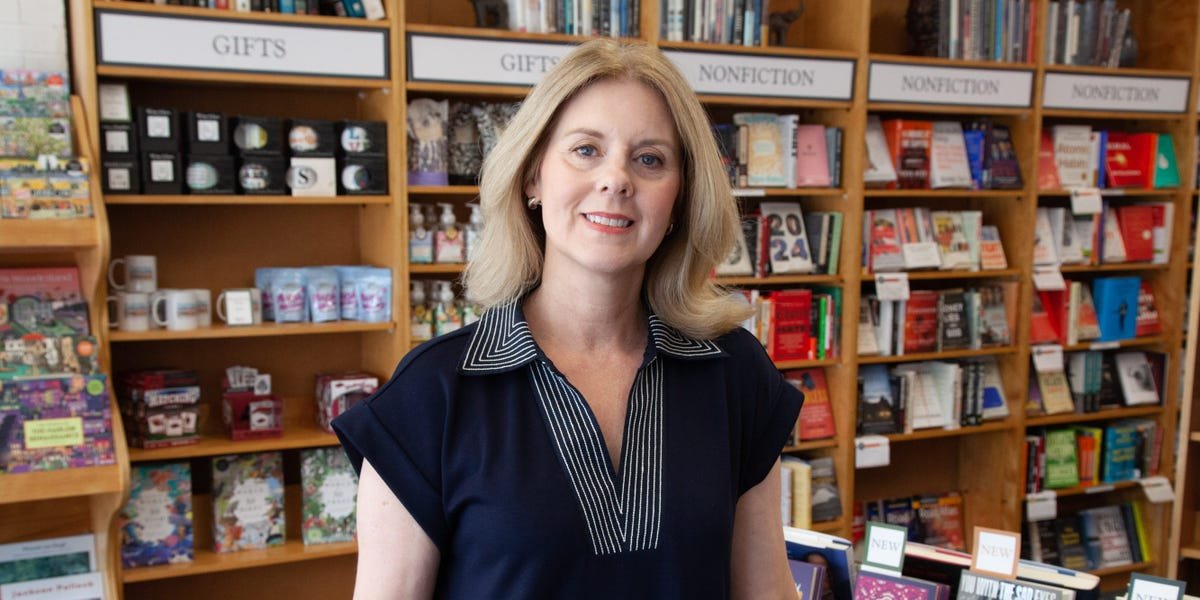
In addition to books, WordsWorth Books located in Little Rock, Arkansas, sells gifts, cards, and puzzles to diversify their income.

Hill said offering more products can diversify an indie bookstore’s revenue.

Katie Adkins for BI


They’ve also started offering more non-book items in the store, such as cards and reading glasses, which West said comprise about 10% of sales. Hill added that carrying more products, such as art, games, and toys, is a trend that more indie bookstores are embracing to diversify their revenue streams.

“That has helped our profitability,” West said, but added, “We don’t want to be a gift shop; we want to be a bookstore.”

Marketing efforts, such as a partnership with the Central Arkansas Library System and a local TV segment, have also boosted awareness of the bookstore, West said.

WordsWorth’s sales have grown about 7% a year since 2022, which “for an indie, is good, but we’d love to get that higher.”

Hill told Business Insider that independent bookstores have faced a number of challenges recently, including “an uncertain economy, federal layoffs, the labor shortage, tariffs, free speech harassment, communities impacted by ICE raids, book bans, and Amazon’s chokehold on the book industry.”


The exterior of WordsWorth Books, an independent bookstore located in the Heights neighborhood of Little Rock, Arkansas.

WordsWorth recently expanded its e-commerce footprint.

Katie Adkins for BI


WordsWorth has experienced some of this firsthand. West said some of its main challenges include rising book prices and credit card fees.

In 2023, WordsWorth joined a lawsuit challenging a state law on how libraries handle contentious materials. The court ruled that certain provisions of the law were unconstitutional, but the state is appealing the decision.

West said she tries “never to get comfortable” and stays focused on building a community.

“We want to enhance the reading community in central Arkansas and connect readers to authors, connect readers with each other, connect readers with literature-adjacent things.”


Source link

Target-finished-out-a-difficult-year-with-declining-sales-but.jpeg

Target finished out a difficult year with declining sales, but says growth is ahead

Target likely can’t wait to close the book on last year as it looks to turn the page and return to growth.

The bullseye retailer on Tuesday reported a 1.7% decline in total sales for the last fiscal year, which ended January 31, with a 1.5% drop for the quarter. That’s including the addition of a batch of new stores and growth in its digital business.

“I’m incredibly proud of how our team navigated through a challenging year in 2025,” CEO Michael Fiddelke said in a statement. “Our team is firmly focused on writing Target’s next chapter of growth.”

Adjusted fourth quarter earnings per share of $2.44 exceeded the Bloomberg analyst consensus of $2.13, but the outlook of less than a percentage point increase in comparable sales and first quarter EPS of $1.30 were less than Wall Street estimates.

While the fourth quarter’s results extend a three-year streak of flat or declining comparable sales, the company said traffic and transactions started to pick back up in December and January, and are on track to deliver net sales growth in every quarter of 2026.

“Target saw a healthy, positive sales increase in February, serving as an important milestone on our path back to growth this year, and reinforcing my confidence in the momentum we’re building and the future we’re creating together,” Fiddelke said.

Analysts said ahead of the earnings release that Fiddelke and his team have their work cut out for them.

“Time is Target’s greatest adversary,” Mizuho analyst David Bellinger said in a weekend note ahead of the release.

“While senior management is taking the necessary steps to re-position the business, others are not standing still,” he added, referring in particular to Walmart, which has been gaining momentum as Target struggles.

“Ultimately, the company needs to show how it can better compete and define its place in the market,” UBS analyst Michael Lasser said in a note leading up to the results.

Fiddelke is set to unveil his larger turnaround strategy Tuesday morning at Target’s headquarters in Minneapolis. One month into his new role, the CEO has said he’s focused on four key priorities: improving the merchandising, elevating the shopping experience, investing in tech, and supporting workers and communities.

The company also said it was seeing strong recent performance in non-merchandise sales, including its Roundel ads business, Target Plus membership, and same-day delivery services.


Source link

Sales-reps-at-11-billion-AI-startup-ElevenLabs-have-to.jpeg

Sales reps at $11 billion AI startup ElevenLabs have to bring in 20 times their base salary, or they’re out — VP says

At $11 billion AI startup ElevenLabs, the message to sales reps is simple: Hit 20x your base salary, or you’re out.

Speaking on the 20VC podcast on Friday, Carles Reina, VP of sales at the voice-cloning startup, talked through its “ruthless” quotas.

“So if I pay you $100,000 a year, your quota is $2 million. That’s it. If you don’t achieve your quota, then you’re going to be out, right?” Reina said. “And we’re ruthless on that end.”

ElevenLabs — which was recently valued at $11 billion after closing a $500 million funding round — operates in micro-teams of five to ten people each, according to CEO and cofounder Mati Staniszewski, who spoke on a separate 20VC podcast episode in September.

Reina said he prefers to operate in smaller teams that hit their quotas, and pay them more.

Small teams have become a growing trend in tech, with AI startups touting their ability to scale with far fewer employees by working alongside AI agents.

LinkedIn cofounder Reid Hoffman wrote in January that a team of 15 people using AI can rival a team of 150 who aren’t.

Meanwhile, Mark Zuckerberg said on a Meta earnings call in July that he has “gotten a little bit more convinced around the ability for small, talent-dense teams to be the optimal configuration for driving frontier research.”

Reina said the “ruthless” quota has been successful at ElevenLabs, saying on the 20VC podcast that more than 80% of reps hit their sales quota.

ElevenLabs did not respond to a request for a comment.

He added that the firm compensates both the account executive and customer success manager if they upsell a company within the first 12 months.

“I’m paying double, but I don’t care,” Reina said. “It makes perfect sense because then I have these two people busting their ass to make sure that they actually can make more money, which is fantastic for me as a company.”

The push for higher performance isn’t limited to AI startups.

In April, Google said it was restructuring its compensation structure to increase rewards for top performers. “High performance is more important than ever,” Google’s head of compensation told staff at the time.


Source link

Polly Thompson

Dell is rolling out a new sales pay structure. Some employees worry it’ll slash their income.

Dell has kicked off its new financial year with a shakeup to how sales staff get paid.

Under the new structure, Dell is increasing rewards for high performers but scaling back earnings for sellers who fall short of their full quota, according to an internal presentation viewed by Business Insider. The tech giant is also tightening the periods over which it measures sales progress to a quarterly basis, rather than twice a year.

The presentation was shared with sales employees in a town hall meeting on February 3, led by Kyle Leciejewski, Dell’s senior vice president of North America sales.

The changes affect sales staff across both of Dell’s key divisions: the Infrastructure Solutions Group (ISG), which sells data center hardware and other AI-related solutions, and the Client Solutions Group (CSG), which sells PC hardware.

The change at Dell mirrors a shift happening across much of Big Tech, where companies have been leaning into a hardcore culture that elevates high performers, penalizes those who miss the mark, and disregards long-held views of workplace loyalty.

The move is “designed to reward you for driving profitable growth, expanding our footprint, and winning market share for Dell,” the company told staff in the presentation.

“We are always assessing our business to remain competitive and ensure we are set up to deliver the best innovation, value, and service to our customers and partners,” Dell told Business Insider.

No commission under 60% of sales targets

Dell sales employees are paid through a mix of guaranteed base salary and a commission-based payment, known as their “target incentive.” The presentation used an example of an employee paid on a 60/40 mix, meaning 60% of their compensation was the salary, and the rest was the target incentive.

Under the previous salary structure, sellers who achieved between 0 and 100% of their sales target received the corresponding portion of their target incentive, according to the presentation. If they hit 80% of their goal, they got 80% of the payout; if they hit 50% of the goal, they got 50% of the payout.

The target incentive doubled for those who hit 100% to 200% of their targets.

Under the new changes, sellers who come in below 60% of their target get no commission.

For those who achieve between 60% and 100% of target, here’s the new pay structure:

  • At 70% of goal, employee gets 25% of target incentive
  • At 80% of goal, employee gets 50% of target incentive
  • At 90% of goal, employee gets 75% of target incentive
  • At 100% of goal, employee gets 100% target incentive

For top performers, the incentives just got better.

Sales workers who hit between 100% and 150% of their targets will now receive commissions worth three times the agreed target incentive portion of their salary, the presentation shows. That marks a 50% increase on what they’d previously received.

Quarterly targets

Dell is also moving sales teams to quarterly targets, according to the presentation.

Small and medium business teams already worked to quarterly targets, but now enterprise, large enterprise, DTS, AI Select, and Dell’s telecom business will move from a twice-yearly compensation plan to quarterly quotas.

According to the presentation, the decision to move to quarterly targets is linked to the company’s upcoming modernization push. As Business Insider first reported, Dell is overhauling its internal systems on May 3 to help streamline internal operations for the AI future — an initiative it is calling One Dell Way.

Dell could adjust the quota cadence in the second half of the financial year, the presentation said: “We will revisit the quota cadence and take the learnings from Q1 and Q2 to inform the decision about 2H.”

Some employees fear pay cuts

Five Dell sales employees who spoke to Business Insider about the pay structure changes said the adjustments were causing frustration and fear among some employees that their take-home pay could drop.

A data center sales rep told Business Insider that for the last three years, they had consistently hit 70% to 80% of their quota, so they were looking at a 20% reduction in their take-home pay unless they could sell more.

All five employees said that hitting 100% of a target would become harder in the new quarterly timeframe. Their reasons included that quotas had risen over the last two years, industry supply chain shortages were slowing sales cycles, and, in certain divisions, such as federal accounts, lead times were long.

Low morale

Employee dissatisfaction at Dell has been growing companywide in recent years amid layoffs and RTO mandates. The company’s employee satisfaction score — known as the employee net promoter score, or eNPS, has declined by almost 50% in two years.

In 2024, Dell’s sales teams received a 5-day RTO mandate months before the rest of the company, and last December, Business Insider reported that leaders were cracking down on attendance.

Sales staff are also dealing with tougher selling conditions amid an industry-wide shortage of memory chips. Along with most competitors, Dell raised prices on many of its products in December.

“Global memory and storage supply are tightening fast,” Dell warned its go-to-market team members in an email viewed by Business Insider. The company told its sellers to “move decisively” ahead of the price increases to “protect value for our customers and for Dell.”

On the back of the AI boom, ISG sales have been strong — revenue was up 29% in Dell’s last full financial year — but annual revenue has fallen for three consecutive years in the CSG division. In July 2025, Dell’s COO and vice chair Jeff Clarke stepped in to handle day-to-day leadership of CSG.

In a memo about One Dell Way last month, Clarke told Dell staffers to get ready for big changes.

“This is the biggest transformation in company history,” Clarke said. “I know there will be challenges, and that’s OK—we’re here to support you and work through this together.”

Have a tip? Contact this reporter via email at pthompson@businessinsider.com or Signal at Polly_Thompson.89. Use a personal email address, a nonwork WiFi network, and a nonwork device; here’s our guide to sharing information securely.


Source link

Tesla-loses-another-sales-executive.jpeg

Tesla loses another sales executive

Raj Jegannathan, who was once tasked with managing Tesla’s sales and service team in North America, announced his departure from the company on Monday.

Jegannathan, Tesla’s vice president of IT, took over the sales organization shortly after Troy Jones, the former vice president of North America sales and service, left the company in July. During his time on the team, Jegannathan worked to incorporate more AI tools in sales and service team workflows, five people with knowledge of the issue told Business Insider.

“A comprehensive end-to-end understanding of the business has been essential—enabling the team to harness AI effectively to achieve meaningful outcomes across products and customer support,” Jegannathan wrote on LinkedIn on Monday.

The executive, who reported directly to Tesla CEO Elon Musk, left the company over the weekend, a person with knowledge of the issue told Business Insider. Jegannathan has not been active on internal company systems since late January, and he has not worked closely with the sales team for a few months, people with knowledge of the issue said.

Prior to taking over leadership of the sales team, Jegannathan worked in engineering and IT, rather than sales. He has worked at Tesla for over 13 years. Shortly after he took the reins, he became known for responding to sales and service requests on X.

Jegannathan has led the company through a tumultuous sales period. Tesla reported in January that its delivery numbers fell for the second year in a row. The carmaker reported a 16% year-over-year decline in deliveries during the quarter. Jegannathan led the sales efforts while Musk worked with the federal government as a part of the Department of Government Efficiency, before the organization was dismantled.

Several of Musk’s direct reports have left the company over the past year. One of Musk’s top lieutenants, Omead Afshar, parted ways with the carmaker in June, and Milan Kovac, the head of Tesla’s robotics division, left the company that same month.

Tesla and Jegannathan did not immediately respond to a request for comment from Business Insider

Do you work for Tesla or have a tip? Contact this reporter via email at gkay@businessinsider.com or Signal at 248-894-6012. Use a personal email address, a nonwork device, and nonwork WiFi; here’s our guide to sharing information securely.


Source link

Image of Lakshmi Varanasi

The ‘Godfather of SaaS’ says he replaced most of his sales team with AI agents: ‘We’re done with hiring humans’

Jason Lemkin, known to some as the Godfather of SaaS, says the time has come to push the limits of AI in the workplace.

In practice, Lemkin, the founder of SaaStr, the world’s largest community of business-to-business founders, said on Lenny’s Podcast recently that this means he will stop hiring humans in his sales department.

Instead, SaaStr is going all in on agents, which are commonly defined as virtual assistants that can complete tasks autonomously. They break down problems, outline plans, and take action without being prompted by a user.

He said the company now has 20 AI agents automating tasks once handled by a team of 10 sales development representatives and account executives.

That move from an entirely human workforce to an agent-based workforce was rapid.

In May, SaaStr had just one AI agent in production that it used for various digital tasks, Lemkin said. That month, though, during the SaaStr Annual — its yearly gathering of over 10,000 founders, executives, and VCs — two of its high-paid sales representatives abruptly quit.

Lemkin said he turned to his chief AI officer and said, “We’re done with hiring humans in sales. We’re going to push the limits with agents.”

Lemkin’s calculus was that it just wasn’t worth the cost of hiring another junior sales representative for a $150,000 a year position who would eventually quit, when he could use a loyal AI agent instead.

Amelia Lerutte, SaaStr’s chief AI officer, told Business Insider by email that by June, the company began ramping up the number of agents it had in production.

“We had only 1 non-core agent at the time with Delphi, but didn’t go deep on 2 to 20+ until the beginning of June,” she said. “It was a conscious choice after their departure to reallocate some (but not all) head count spend to agents.”

At the SaaStr office, the 10 desks that once belonged to humans on the go-to-market team are now labeled with the names of agents, like “Quali for qualified,” “Arty for artisan,” and “Repli for Replit,” Lemkin said.

Lemkin said SaaStr is training its agents on its best humans.

“Train an agent with your best person, and best script, then that agent can start to become a version of your best salesperson,” he said.

SaaStr’s process is similar to how Vercel, the cloud-based platform for developers, trained a sales agent off its top performer for six weeks by documenting every step of their work, and then building an agent to mimic their process.

Many companies are experimenting with AI agents, but risks remain. One of the big ones is the threat of data leaks and cybercrime.

“AI agents, in order to have their full functionality, in order to be able to access applications, often need to access the operating system or the OS level of the device on which you’re running them,” Harry Farmer, a senior researcher at the Ada Lovelace Institute, recently told Wired.

All of that access creates more potential attack points for cybercriminals.

Security threats aside, Lemkin said that the net productivity of agents is about the same as humans. However, he said, agents are more efficient and can scale — just like software.


Source link

China-is-going-after-US-defense-firms-and-execs-over.jpeg

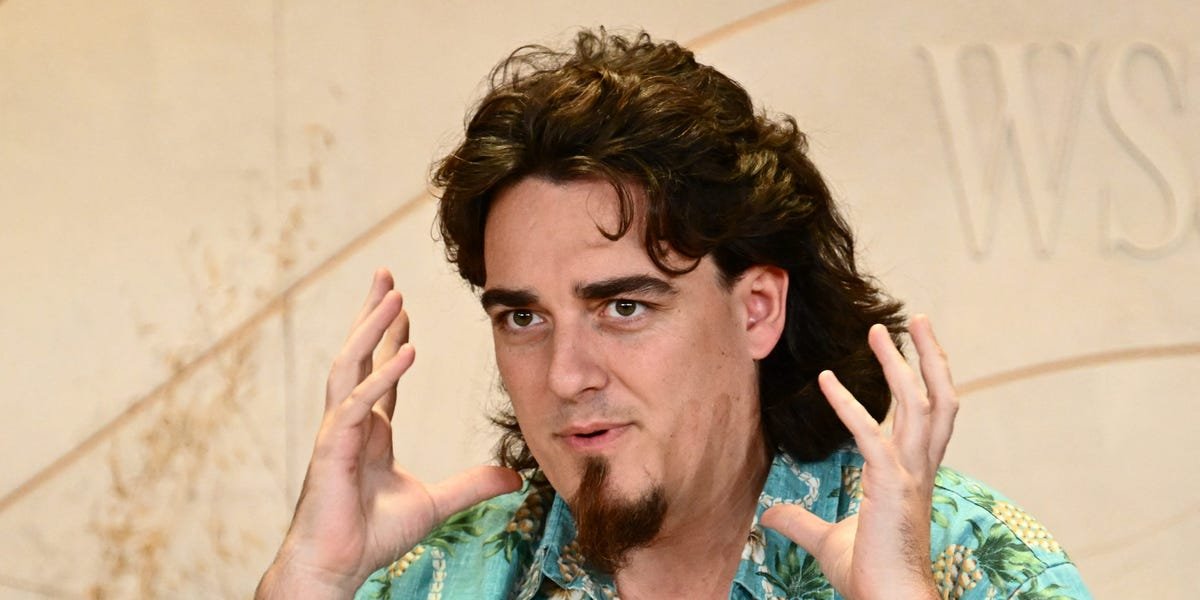
China is going after US defense firms and execs over weapons sales to Taiwan — and Palmer Luckey’s on the list

China announced sanctions against 20 US defense companies and 10 senior executives on Friday, citing US arms sales to Taiwan as its motive.

In a statement, China’s foreign ministry said its assets within China, including movable and immovable properties, would be frozen and that domestic organizations and individuals would be prohibited from doing business with them.

Individuals named on the list would also be denied visas and entry to the country, the ministry added.

The sanctions list includes Northrop Grumman Systems Corporation, Boeing’s St. Louis branch, Epirus, and Anduril Industries founder Palmer Luckey.

In a statement, a spokesperson for the foreign ministry said: “We stress once again that the Taiwan question is at the very core of China’s core interests and the first red line that must not be crossed in China.”

“Any company or individual who engages in arms sales to Taiwan will pay the price for the wrongdoing,” they added.

When reached for comment, Anduril pointed Business Insider to an X post from Luckey in which the CEO joked that he was honored.

“I want to thank my family, my team, and my Lord Jesus Christ for this award,” Luckey wrote on X. “Anduril has been sanctioned for a while now, as have many of my peers, but it means so much to finally have my non-existent Chinese assets seized and repurposed.”

China’s sanctions follow the US announcement of a $11 billion military package for Taiwan last week.

The deal, which includes self-propelled Howitzers and HIMARS rocket launchers, still needs to be approved by Congress — but it drew a swift response from Beijing.

Lin Jian, a spokesperson for the foreign ministry, said in a statement at the time that China “strongly deplores and firmly opposes” the sales.

China regards Taiwan as a breakaway province that will one day come under Beijing’s control, and Chinese President Xi Jinping has refused to rule out an invasion of the island. Taiwan’s ruling Democratic Progressive Party views Taiwan as separate from China.

Under the Taiwan Relations Act, the US is obligated to assist Taiwan in defending itself.

Beijing has ramped up pressure around the island in recent years, holding frequent military exercises in the surrounding skies and waters.

A 2024 report by the Washington, D.C.-based think tank the Center for Strategic and International Studies suggested that China may be able to exert power over Taiwan without launching an invasion.

The report said China could impose a quarantine of the island using its coast guard.

“The purpose of a quarantine is not to completely seal Taiwan off from the world but to assert China’s control over Taiwan by setting the terms for traffic in and out of the island,” it argued.

“A key goal is to compel countries and companies to comply with China’s terms.”


Source link