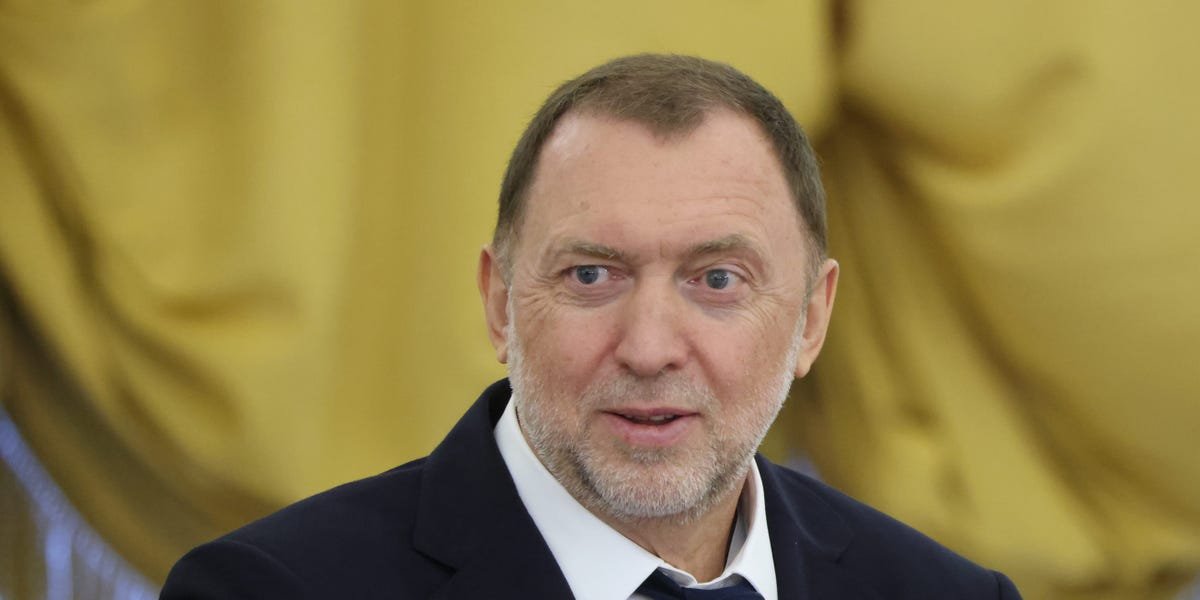
Russians should consider working 12-hour days, six days a week, as the country grapples with a deeper economic shift, Russian billionaire Oleg Deripaska said on Monday.
Referring to what he described as a changed global reality, Deripaska framed the country’s slowing economy as more than a typical downturn driven by interest rates or monetary policy.
“This crisis is deeper. It is caused by a difficult transformation: from the global opportunities we once had to regional ones, with all sorts of restrictions,” Deripaska wrote in a Telegram post.
He argued that Russia should tap into what he described as its only real resource — a “national characteristic.”
“In difficult moments, we know how to pull ourselves together and work more,” wrote Deripaska, the founder of Rusal, a major aluminum producer.
Longer working hours, he suggested, could help the economy adjust more quickly to changing global conditions.
“The sooner we switch to this new schedule — from 8 a.m. to 8 p.m., including Saturdays — the faster we will complete this transformation,” the industrial magnate wrote.
His comments come as Russia’s economy navigates a shifting landscape shaped by geopolitical tensions and changing trade flows.
Russia, a major energy exporter, has been benefiting from a surge in prices, with crude markets jolted by escalating tensions in the Middle East and disruptions to key supply routes.
Oil and gas revenues have historically accounted for more than a third of Russia’s federal budget, which has been under pressure from sweeping sanctions in recent years. Official estimates showed Russia’s economy grew 1% in 2025 — down sharply from 4.3% growth in 2024.
Disruptions to tanker traffic through the Strait of Hormuz — a critical global oil chokepoint — alongside a limited US sanctions waiver on some Russian shipments, have reshaped trade flows as countries scramble for supplies.
However, Deripaska had warned earlier this month that the conflict in the Middle East could weigh on global — and Russian — growth despite higher oil prices.
Benchmark crude oil futures are over 70% higher this year and trading above $100 per barrel.
Repayment for millions of student-loan borrowers could soon look very different.
In recent days, a series of court decisions sealed the fate of the SAVE student-loan repayment plan, which has been up in the air for years.
The 8th Circuit ordered a district court to approve President Donald Trump’s proposed settlement with the state of Missouri to eliminate the plan ahead of its 2028 phaseout.
This means that once the settlement is formally approved in court, the Department of Education can proceed with eliminating the SAVE plan and transitioning borrowers to new plans that are likely to result in higher monthly payments.
“In the coming weeks, the Department will issue clear guidance on next steps for borrowers enrolled in the illegal SAVE Plan, including details regarding how borrowers can move into a legal repayment plan,” Undersecretary of Education Nicholas Kent told Business Insider in a statement. “The Trump Administration will continue to realign the federal student loan portfolio to better serve students and taxpayers.”
The SAVE plan was created by former President Joe Biden in 2023, intended to give borrowers cheaper monthly payments with a shorter timeline to debt relief. The plan has been blocked since the summer of 2024 due to litigation filed by GOP-led states, including Missouri. Prior to the settlement, Trump’s “big beautiful” spending legislation called for eliminating the plan by the summer of 2028.
What’s next for SAVE student-loan borrowers
Before the proposed settlement was announced in December, the Department of Education resumed charging interest on SAVE borrowers’ accounts on August 1, 2025, and encouraged borrowers to switch to new plans — such as the income-based repayment plan — due to ongoing litigation.
While it’s unclear how soon the department will require SAVE borrowers to switch to a new plan in light of the latest ruling, the terms of the proposed settlement offer some detail on what could come next. According to the department, once the settlement is approved, it will not enroll any new borrowers in SAVE, it will deny pending SAVE applications, and it will move all SAVE borrowers to existing repayment plans.
The department advised borrowers to use Federal Student Aid’s Loan Simulator to estimate what their monthly payments would look like on a new plan. Borrowers have previously told Business Insider that their projected payments are hundreds of dollars higher than what they owed on the SAVE plan, and they’re concerned about their ability to afford the new payments in addition to their other monthly expenses.
David Chatman, a 51-year-old borrower on SAVE, said that his $86 payment is projected to jump to $689.
“When I saw that my payment was going to be this much more, I just sat there and looked at it,” Chatman said. “There’s no way. There’s no way.”
For now, enrolled borrowers await further guidance from the Department of Education once the settlement is implemented. Advocates criticized the decision and its impact on millions of borrowers.
“The millions of borrowers who had a right to lower monthly student loan payments and relief through SAVE will now face thousands of dollars in higher bills every year, thanks to the right-wing campaign against borrowers,” Winston Berkman-Breen, legal director at advocacy group Protect Borrowers, said. “Nearly 8 million people will see their costs climb, even as voters across party lines beg Trump to do something about America’s affordability crisis.”
Have a story to share? Contact this reporter at asheffey@businessinsider.com.
Seven years ago, I started making my own sourdough bread.
In addition to being a relaxing hobby that’s taught me the importance of patience, making bread also keeps me from spending ridiculous amounts of money on loaves from the grocery store.
However, baking sourdough is pretty different from other types of bread. This is partially because sourdough requires a starter — a fermented mixture of flour and water that creates its own yeast and bacteria.
The process of creating a starter, and eventually bread, isn’t foolproof and can take beginners a little while to grasp.
Here are five things I wish I’d known before making sourdough bread for the first time.
A sourdough starter needs to be fed like a pet
A sourdough starter should be fed often.
leonori/Getty Images
To keep a sourdough starter active, it has to be fed regularly using flour and water. However, I didn’t realize this until I inherited my first one.
How often it’s fed depends on where it’s stored. For example, if I leave the starter on the counter, I feed it once every 12 to 24 hours.
When I keep it in the refrigerator, however, I can feed it less, typically about once a week. This schedule also varies depending on how often I bake.
The starter can be preserved in a few different ways
When I first started making sourdough, I didn’t know I could store my starter for a while without feeding it.
Turns out, it can be left in the freezer for up to a year. Another more reliable, long-term storage option is to dehydrate the sourdough starter.
This would’ve been good to know when I let mine go bad because I went on a work trip and couldn’t find a friend to feed it for me.
A starter can be brought back to life
Luckily, even if the starter looks grim, it’s still possible to bring it back to life.
To do this, I feed mine filtered water and flour and wait a few days to see if bubbles start to form. It may take a while to get the cultures moving again, especially if the starter has been freeze-dried or dehydrated.
When it bubbles up and doubles in size, I know I have a pillowy, healthy starter to resume baking with.
Discard doesn’t actually need to be discarded
Sourdough discard can be used to make muffins.
AshtonLNelson/Shutterstock
I didn’t realize until far into the process that sourdough discard can be used for other recipes. I figured the term indicated the runoff’s value.
However, it can either be composted or used in other recipes like flatbreads, pastries, rolls, waffles, muffins, and more.
When making sourdough, patience is key
Throughout the process, it’s important to remember that fermentation takes time. Living cultures need the ideal environment to engage, grow, and develop a strong and active formula.
My sourdough hobby definitely hasn’t satisfied any need for instant gratification. But it has tested my patience, indulged my mad-scientist alter ego, and encouraged a certain level of imagination in the kitchen.
This story was originally published on March 13, 2025, and most recently updated on March 9, 2026.
I used to save my favorite clothes for a version of my life that never showed up.
The blazer stayed in my closet because it felt “too professional” for a normal day. The heels were waiting for a dinner I’d yet to be invited to. The earrings were longing for an occasion that felt important enough to justify wearing them. Meanwhile, I wore the same outfits on repeat — to work, to run errands, to all the places where my actual life was happening.
I wasn’t saving them for a rainy day. I was saving them for the perfect one. The problem was that “special occasion” never came.
It wasn’t just about clothes
This habit wasn’t limited to clothes. I treated everything the same way. A Sephora gift card sat untouched in my drawer, waiting for something “really worth it.” I rationed my favorite lip gloss as if it were a limited resource. I refused to light my favorite candle unless the night felt special enough to deserve it. I even held onto the last spritz of my discontinued One Direction perfume for years, as if saving it could somehow make more.
The author started to feel like she was saving her life for later.
Courtesy of the author
The special occasion is always vague — an imaginary fancy dinner, a future milestone, a celebration that exists only in theory. So I wait. Years pass. The things I loved enough to save start to feel untouchable. By the time I consider using it, we’ve waited so long that it feels wrong to start now.
Every time Mia publishes a story, you’ll get an alert straight to your inbox!
Stay connected to Mia and get more of their work as it publishes.
Looking back, it sounds dramatic, but at the time, it felt practical. Why waste something nice on an ordinary day?
Then one day, the thought hit me: why am I living my life like a waiting room?
It felt like I was saving my life for later
That mindset didn’t stop at my closet. Saving a jacket for the right moment slowly turned into saving fun for the weekends, saving joy for later, saving happiness for a version of life that felt more legitimate than the one I was already living.
I realized I was treating weekdays like something to get through instead of something to participate in. When I did the math on how many days I was mentally skipping, it felt less like discipline and more like quietly wasting my life away.
So I stopped waiting.
I started wearing my favorite pieces on regular days
The shift was small at first. I wore blazers to the bars. I strutted in my nice heels to run errands. I put on the earrings just to go to the grocery store. Not for compliments, not for Instagram, not to prove anything to anyone, but because I liked how it made me feel.
The clothes didn’t lose their value because I wore them. They gained it. Each piece started collecting moments and memories instead of dust. Now, when I reach for something I love, it reminds me of a workday that felt a little lighter or a Trader Joe’s run where I found my new favorite snack.
The author says clothes are meant to be worn more than once.
Courtesy of the author
That’s the part people tend to dismiss as “romanticizing your life,” a phrase that’s been flattened into internet fluff. But this wasn’t about pretending my errands were glamorous or turning my Mondays into Fridays. It was about presence. About intention. About letting regular days count instead of treating them like placeholders.
If I’m being honest, it changed more than my outfits. Work felt less like something I had to endure. Errands felt less like chores. I stopped waiting for permission to enjoy my life. I started dressing for myself instead of an imaginary audience or a hypothetical future. I even started liking Mondays.
I realized the dinner counts. The errand counts. The workday counts. And if the opportunity does truly come? I’ll wear those pieces again. Clothes are meant to be worn more than once.
The special occasion didn’t disappear. I just stopped waiting for it to arrive.
I grew up spending weekends, school breaks, and holidays in my grandparents’ home, but moving into it years later with a husband wasn’t something I ever pictured.
We moved into my grandparents’ basement not long after we got married in spring 2025. We both traveled as kids and have gone on a few short adventures as a couple, but we’d never done any long-term.
With our lease ending in the fall, it felt like the perfect time to make a big change, and we started looking at flights to Japan.
I eventually came across a deal on December plane tickets that we couldn’t pass up, but the opportunity left us with a two-month gap to fill before moving away.
Short-term rentals and Airbnbs were too expensive to commit to, especially with a big move ahead. So, when my grandparents suggested we stay in their basement, only 40 minutes away from where we’d been living, it was easily the most practical option.
Being back in my grandparents’ home reminded me how much of my childhood still lives here
Moving in with my grandparents as an adult brought me right back to my childhood.
Alessa Hickman
Even before we started unpacking, the house instantly brought me back to my childhood. My grandparents have moved a few times over the years, but no matter the location, their home always feels the same.
The dishes and teacups I grew up using are still in the cupboards. The same family photos and decorations are on the fridge and walls, with new additions that have been layered in over the years.
Then there’s Crash, my grandparents’ herb-loving budgie bird, who has a habit of landing on people (and plates) without warning. They’ve only had him for a few years, but their home has alwaysincluded animals, so even a new bird felt completely natural.
Being surrounded by the memories, familiar faces, and sense of home that shaped my childhood felt grounding during this period of change.
Moving here as an adult meant learning how to fit our lives together differently
We had to adjust to new routines, boundaries … and my grandparents’ budgie bird, Crash.
Alessa Hickman
Living with my grandparents came with a series of practical adjustments.
As my husband and I prepared to move abroad, we packed up or sold almost everything we owned, and now found ourselves living outside the city, setting up temporary workstations, and cooking for four instead of two.
Before long, the basement had boxes tucked into corners, the kitchen cabinets were full of our spices and small appliances, and my plant collection had completely taken over the front entrance table.
Moving in also meant navigating new boundaries and having conversations about topics that didn’t come up when I was younger — like finances, household responsibilities, and how much space to give each other.
One of the first conversations we had was about food. Cooking is one of my love languages, so even before we moved in, I told my grandparents that I wanted to take on the family meals.
After so many years of being cared for in their home, it felt important to give something back in a way that came naturally to me.
Because I work remotely, we also had to have conversations about my work-from-home schedule. I had work deadlines to meet and calls to take, which meant setting expectations around when I would be working and when I would be free.
That adjustment took some time on all sides, but those early conversations ultimately helped us find common ground.
This time with my grandparents gave me a chance to appreciate family in a new way
The experience turned into a meaningful chapter of my life.
Alessa Hickman
As I’ve grown older and gotten busier, my time with family has naturally become shorter and much more spread out.
Between work, different homes, relationships, and planning a move abroad, so many visits have been quick moments squeezed in on birthdays, holidays, or weekend check-ins.
Having a stretch of time with family like this isn’t something that comes up often, and it made the simple moments with my grandparents feel more meaningful — sitting down for dinner together, cooking a meal we used to eat when I was little, or laughing at the stories we’ve all heard a thousand times.
This in-between season has been filled with memories, lessons, and changes that taught me how much growth can happen in familiar spaces.
As we start this new chapter abroad, I’m grateful that this time with my grandparents was part of our journey. It reminded me to embrace the unexpected moments, make the most of every experience, and start our next adventure with an open mind.
They are brutal for the paper’s readers, who lose crucial coverage like sports and international reporting. And they are brutal for hundreds of Post employees, including lots of people whose work I pay to read with my Post subscription.
The Post’s cuts have also led lots of people to point out the obvious — that Post owner Jeff Bezos, who is currently the world’s fourth-richest man, worth an estimated $261 billion, could easily fund the paper’s losses … forever, without ever noticing the tab.
Jeff Bezos wealth in 2024: $194 billion
Jeff Bezos wealth in 2025: $215 billion
Jeff Bezos wealth today: $249.4 billion
Net increase in Bezos wealth since 2024: $55.4 billion
For the record: I also wish that Bezos would take his loose change and spend it on journalism.
Note that I didn’t say “journalism instead of” because when you are talking about Bezos-level wealth, you don’t have to choose: You can pay for journalism androcketsandsuperyachtsand Venetian weddings and parties in St. Barts. (And yes, I realize that Bezos’ Amazon expenditures on things like the “Melania” doc are different from Bezos’ personal spending. The point is, he can afford it. In the same way that I can afford to buy a fancy coffee now and then.)
Every time Peter publishes a story, you’ll get an alert straight to your inbox!
Stay connected to Peter and get more of their work as it publishes.
I’m also not weighing in on how much of the Post’s problems are the same problems facing every news organization, versus ones Bezos exacerbated by pivoting toward Trump. Or whether the new Post plan — focus on a handful of topics it thinks will resonate with a national audience, like politics and wellness — makes sense or is simply a too-late move already made by many Post competitors.
But the focus on Bezos underscores the problem the Post has been facing for years: It was a money-losing operation that relied on a billionaire’s goodwill. First, to buy it from its previous owners, who let it go for the price of a Joe Rogan podcast deal, and then to fund its losses for years.
Maybe Bezos really is sick of paying for the Post’s losses. Maybe funding the Post no longer syncs with a turns out, Donald Trump is actually good now,worldview. The point is that the Post has been in the can’t-win position of hoping Jeff Bezos would continue to fund those losses for years. Now he doesn’t want to. (Bezos has yet to comment publicly on the cuts; Matt Murray, the Post’s top editor, told his staff that the cuts are meant to help “reinvent The Washington Post for this new era. This work is difficult, but is essential.”)
Which, again, points out how precarious a position just about every news organization in the US is in right now.
There are a handful of really excellent publications, which are controlled by billionaires or very wealthy families — The New York Times, The Wall Street Journal, and Bloomberg News — that are aimed at an upscale, national audience, and they are doing well. There are some thriving startups and niche publications that tend to focus on topics that rich people — or their employers — will pay to learn more about. (Several of them, it turns out, are focused on power and Washington, DC — a sector the Post should have owned.) And there are various forms of aggregators that make a living by repackaging news other people generate, like newsletter publisher 1440.
Faced with this grim reality, it’s natural to look at Bezos and think: Just pay for it. And again — I wish he would. But relying on billionaire goodwill is a hope, not a plan.
Journalism — no matter how much we right-size, automate, and innovate — is expensive. And up until the internet, journalism usually existed in the US in spite of those costs because it was bundled with other things people (subscribers, advertisers) were willing to pay for.
Now that bundle has been torn apart, so we need both new models that support what we have today — and ownership structures that will be satisfied with self-sustaining businesses, not ones with huge profit expectations. If I knew how to do that, I’d be doing it. I just know that hoping a billionaire will fix it isn’t the answer.
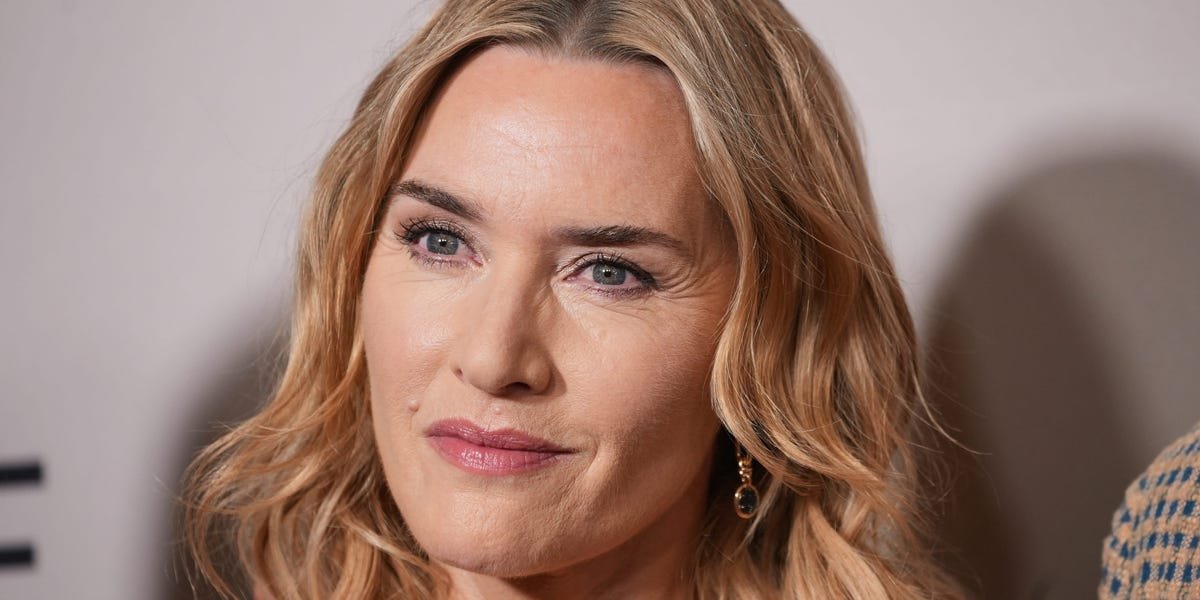
Kate Winslet has a secret to staying sane among the madness of celebrity: motherhood.
“I was very fortunate because I became a mother when I was really young,” Winslet said during an appearance on the podcast “Talk Easy with Sam Fragoso,” which aired Sunday, December 21. “I was, you know, blessed to be taking care of this gorgeous little baby,” she said.
Winslet, 50, had her first child, actor Mia Threapleton, in 2000 when she was 25 years old. She welcomed her eldest son, Joe Anders, 21, in 2003, and her youngest, Bear Blaze Winslet, 12, in 2013.
Caring for her children, two of whom have followed her into the entertainment industry, helped her drown out the outside noise and public scrutiny she has endured over the years, she explained.
When the Hollywood star first became “very famous very quickly,” after starring alongside Leonard DiCaprio in the blockbuster “Titanic” in 1997, her mental health suffered, she said. Winslet, who is English, said she was bodyshamed and “actively bullied” by the British media and that she couldn’t “function like a normal person,” explaining that she would be followed into everyday places like the grocery store.
“I found it quite distressing,” she said.
The actor and director said it made her “really self-critical,” and that there were days when she felt like she “couldn’t face the day,” but being a mother “saved” her.
Winslet is not the only celebrity to cite her kids as a positive force on their mental health. In June, “Mad Max: Fury Road” star Charlize Theron, 49, told the “Call Her Daddy” podcast that adopting her two daughters in 2012 and 2015 was “one of the healthiest decisions” she has ever made. And “Empire State of Mind” singer Alicia Keys has said that motherhood has helped her become more introspective and identify unresolved issues.
Winslet has been on a press tour promoting her directorial debut, “Goodbye June,” which was released in select US and UK theaters on December 12 and will be on Netflix on December 24. The screenplay was written by her son, Anders.
In the interview with podcast host Fragoso, Winslet said that “protecting” herself creatively has also helped her maintain her mental health while living in the public eye.
Since rising to fame in 1997, she said she has only pursued roles that would make her happy.
“I had the good sense to know that I loved acting and that somehow the most important thing in terms of opportunity was only to pursue things that I really want to do,” she said.