Labubus-wide-toothy-grin-is-coming-to-the-silver-screen.jpeg

Labubu’s wide, toothy grin is coming to the silver screen

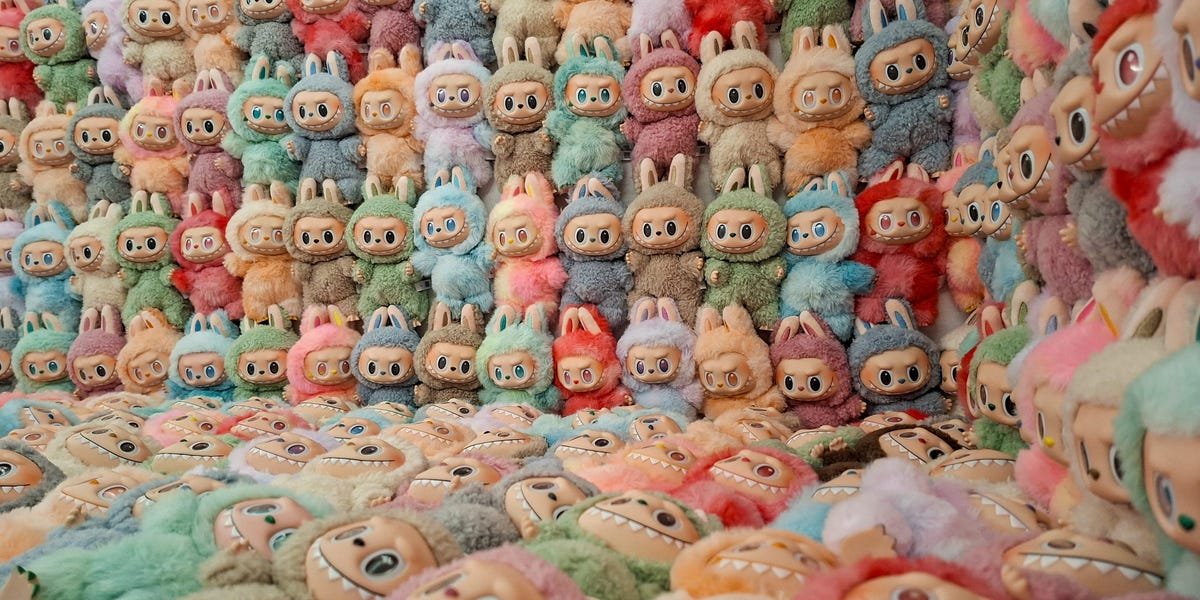
Labubu’s toothy grin will soon be magnified for all to see on the big screens.

Chinese toymaker Pop Mart, the company behind the viral “The Monsters” IP, announced on Thursday that it was creating a Labubu movie with Sony Pictures Entertainment.

“The film, still in early development, will be a live‑action and CGI hybrid bringing LABUBU’s whimsical world to the big screen,” the companies said in a joint press release.

The film brings together big names in Hollywood. It will be produced and directed by Paul King, the filmmaker behind “Wonka” and “Paddington,” per the release.

The screenplay will be done by Kasing Lung, the creator of the Labubu character, and Steven Levenson, known for his work in “Dear Evan Hansen,” and “Tick, Tick… Boom!”

The movie was announced during the Paris stop of “The Monsters'” exhibition tour, celebrating the IP’s 10th anniversary.

The release did not specify when the movie would be released.

Labubu has enjoyed more than a year of viral success, with its toys highly sought after. Per a Pop Mart earnings report in September, “The Monsters” IP generated $700 million in half-year revenue, accounting for nearly half of the company’s IP sales.

The movie announcement comes as Pop Mart works hard to maintain Labubu’s staying power and extend its lifespan. Last week, the company launched a collection with Sanrio, the brand behind Hello Kitty, My Melody, and Cinnamoroll.

In September, Pop Mart’s operations chief, Si De, said to Reuters that Pop Mart had “learned from Disney for a long time,” and said Disney’s value was in its ability to keep its IP relevant over a long period of time.

He said that learning from Disney, Pop Mart is thinking about how to invest in “better products, finding better collaborations, developing content, theme parks, store displays” first for Labubu, followed by its other popular IP characters.

Pop Mart has a theme park in Beijing called Popland.


Source link

As-a-father-of-2-young-kids-I-dont-worry.jpeg

As a father of 2 young kids, I don’t worry much about screen time. I’m more concerned about what’s actually on the screen.

I didn’t know what chocolate ganache was before watching reruns of an old Food Network pre-teen baking championship with my kids. But I did spot an opportunity to talk with them about how one contestant kept building her cake after it crumbled. We talked about the word perseverance.

That’s the thing about “screen time” as a modern parenting panic: the same rectangle can either be a sedative or a springboard.

But my wife and I are still fairly new at this — our kids are under 5 — so we talk with other parents about evolving opinions on the use of phones, tablets, computers, and TVs.

From those conversations and our own parenting experience, we’re slowly realizing that it’s not about screen time, but more about what type of content we’re letting our kids watch.

We try to keep screen time to a minimum in our house

My wife, kids, and I live in a Philadelphia rowhome. We’ve kept TV out of our bedrooms and devices out of our daily routine. On trips in the car, bus, and subway, we rely on music and games (I’ve come to loathe “I spy”).

In good weather, we enjoy long walks and frequent visits to our neighborhood rec center. Forced into boredom at home, our kids have developed their own imagined worlds: singing karaoke on the couch, lava-ringed obstacle courses, and preparing elaborate meals in a play kitchen.

But especially on freezing days, when you’re stuck indoors, and everyone’s energy is somehow both too high and already spent, screens help. What’s become clear to me is that a screen’s value depends on what we watch.

Governments are cracking down on youth screen time

In recent years, the global discourse has turned aggressively anti-screen.

Governments are now intervening not just in social media but in screens more broadly. France, for example, has prohibited screen exposure for kids under 3 in childcare settings, and Virginia has moved to make schools “cell phone-free.”

Meanwhile, the American Academy of Pediatrics has long advocated against the simplistic yardstick of screen time, noting there isn’t enough evidence for a single universal time limit, emphasizing family context and habits instead.

It’s more important to me to monitor what my kids are watching than how much

It seems to me that no one can agree on what the maximum screen time should be for children, so that’s why I’m focusing less on time and more on the content.

Watching a kids’ baking show as a family, especially when we can connect the events to our own lives, can be healthy. I’ve seen the positive effects of a great show on my own kids.

For parents of young kids, the difference between cartoons like “Bluey” and “Cocomelon” is obvious: In one, characters develop over seven to 10 minutes, and in the other, brightly colored, computer-animated characters sing hypnotically rhythmic songs in short bursts.

This holds true for older kids, too. With the right guardrails, I think that screens can be genuinely social and developmental, like collaborating with friends in a shared Minecraft world, building a Roblox obstacle course over a week, or editing a goofy video together that takes planning and patience.

I see “good” screen time often involves characters, cause-and-effect, enough plot for us to talk about it together, and a bonus for when it’s social. I don’t see why there should be a time limit on any of that.


Source link

Amanda Goh

The newest villain in ‘Toy Story’ isn’t a toy — it’s screen time

When “Toy Story” premiered in 1995, the enemy was plastic. In its latest chapter, it’s pixels.

More than 30 years after Woody worried about being replaced by Buzz Lightyear, the franchise is ready to take on a bigger threat: the screen.

The official trailer for “Toy Story 5” was released on Thursday and shows the toys vying for Bonnie’s attention against a frog-themed tablet named Lilypad. Bonnie is the young girl to whom Andy gave his toys when he left for college at the end of “Toy Story 3.”

In the clip, Bonnie receives the device in a package and is almost instantly absorbed, scrolling and tapping with a glazed look as her analog toys watch from the sidelines.

It all builds to a face-off between Jessie the cowgirl doll and Lilypad. Jessie says, “You’re not even listening to me,” only for the tablet to coolly reply, “I’m always listening.”

Jessie, voiced by Joan Cusack, has been in charge since Woody left at the end of “Toy Story 4.” Now, as Bonnie’s attention drifts elsewhere, the gang brings their old — and now balding — leader back.

“I don’t know, Jessie,” Woody says in the trailer. “Toys are for play, but tech is for everything.”

The film is set to be released on June 19, with Tom Hanks and Tim Allen returning to voice Woody and Buzz, respectively.

The storyline taps into a broader debate playing out in real life, as parents and experts wrestle with how screens are reshaping childhood.

Too much screentime has been linked to delays in social skills development, as well as problems with attention and behavior. Those concerns have prompted some governments to move toward banning social media use for children under 16.

The last installment in the Pixar franchise, “Toy Story 4,” was released in 2019. It surpassed $1 billion at the global box office and won an Oscar for best animated feature.


Source link