
Fighting-with-Iran-has-spread-to-tankers-at-sea-Ships.jpeg

Fighting with Iran has spread to tankers at sea. Ships are coming under fire around the busy Strait of Hormuz.

Deadly fighting in the Middle East has spread to tankers around the strategic Strait of Hormuz, with multiple ships coming under fire on Sunday, opening up a new front in the conflict.

The Palau-flagged oil tanker Skylight (IMO 9330020) was “targeted” a few miles north of the Khasab port in Oman, the country’s Maritime Security Center said, adding that the 20-person crew was evacuated. At least four people were injured.

An official with Operation Aspides, the European Union’s counter-Houthi mission, told Business Insider that Omani authorities carried out the rescue operations.

The US Treasury Department sanctioned Skylight and more than two dozen other “shadow fleet vessels” in December for illegally moving Iranian oil.

No one claimed responsibility for the attack, but the Gulf Cooperation Council said it condemned the “brutal Iranian attacks” targeting the Duqm port in Oman and “an oil tanker off its coast.”

The incident marked the first time that a ship had come under fire since the US and Israel began a strike campaign against Iran on Saturday morning. Tehran has retaliated by launching missiles and drones across the Middle East.

The United Kingdom Maritime Trade Operations, an element of the Royal Navy, has reported at least two additional attacks off the coast of Oman. Two vessels were struck by an “unknown projectile,” it said.


A cargo ship is pictured off the coast of the city of Fujairah, in the Strait of Hormuz in the northern Emirate on February 25, 2026.

Multiple ships came under attack near the Strait of Hormuz on Sunday.

Photo by Giuseppe CACACE/AFP via Getty Images


Iran has a history of carrying out attacks against ships near the Strait of Hormuz, including with its Shahed one-way attack drones, which have gained notoriety as Russia uses them extensively in Ukraine. Its proxies have also attacked commercial vessels.

The incidents underscore the new risk to shipping near the Strait of Hormuz. The narrow body of water between Iran and Oman is one of the world’s most important global trade routes, with about 20% of the world’s daily oil supply passing through it.

On Saturday, an Operation Aspides official said that ships had received radio transmissions from the Iranian Islamic Revolutionary Guard Corps (IRGC) stating that vessels were barred from entering the Strait of Hormuz.

However, the UKMTO said on Sunday that “no official closure of the Strait of Hormuz has been formally communicated to the maritime industry through recognized maritime safety channels.”

It said that the maritime safety situation in the region remained “highly volatile,” with the ongoing fighting creating an “elevated threat to commercial shipping.” Britain warned that vessels could face military miscalculation and electronic interference.

Some vessels are avoiding the Straight of Hormuz, with international shipping companies suspending transits until further notice. Marine traffic trackers showed a significant drop in traffic through the strait after the US and Israeli strikes began on Saturday.

Iran previously threatened to shut the Strait of Hormuz in retaliation for any attacks or moves it deemed hostile by the US. A full blockade, or even a sufficiently dangerous environment to deter enough ships from traveling through, could send oil prices soaring.

Israel and Iran continued to trade strikes into Sunday. Retaliatory fire from Tehran has targeted more than half a dozen other Middle East countries, including bases hosting US troops across the region.


Source link

Kelsey Baker, Military and Defense Reporting Fellow

The US Navy sacked a destroyer captain after a ship collision. The incident spotlighted the risks of resupplies at sea.

The US Navy abruptly fired the commander of guided-missile destroyer USS Truxtun after his ship collided with a logistics vessel during a resupply operation at sea earlier this month.

Rear Adm. Carlos Sardiello, who leads US Naval Forces Southern Command and 4th Fleet, relieved Cmdr. James Koffi on Sunday.

The ship collision that resulted in a “loss of confidence” and cost Koffi his command occurred during a replenishment-at-sea operation involving USNS Supply, a fast combat support ship, the Navy said in a statement on the relief.

The cause of the ship collision remains under investigation but highlights the risks of at-sea logistics and the challenges of keeping naval forces on the move.

Replenishments-at-sea are resupplies in which one ship sails closely alongside another to transfer supplies such as fuel or ammunition. These missions are routine operations that support global naval activity by allowing vessels to remain at sea, rather than forcing them to return to port.

At-sea replenishments carry risks, though, that can be exacerbated by a range of factors beyond proximity, such as sea state, crew fatigue, communication breakdowns, and equipment failures.

Two personnel sustained minor injuries during the February 11 collision between the Truxton and Supply.

Koffi, who took over the Truxtun just over a year ago, has been reassigned to Commander, Naval Surface Group Middle Atlantic. The Truxton, which had been deployed for under a month when the ship collision happened, is in port in Ponce, Puerto Rico. The Navy said the ship is undergoing repairs.

Cmdr. Taylor Auclair, who most recently served at US Fleet Forces Command, has been assigned to command the Truxtun.

“The Navy maintains the highest standards for leaders and holds them accountable when those standards are not met,” the Navy said in a press release.

A near-miss during a resupply in 2024 resulted in the relief of the commander of USS John S. McCain, another destroyer. And last year, the Navy relieved the captain of an aircraft carrier after it collided with a civilian merchant vessel during a deployment that experienced a string of major accidents, including the loss of three fighter jets, including one to a friendly-fire incident.

The Truxton deployed to Caribbean waters as part of President Donald Trump’s pressure campaign against Venezuela and narcotics trafficking. The administration sent nearly a dozen warships, among other combat assets, to the region late last year. The military launched strikes on suspected drug-smuggling boats, seized oil tankers, and carried out a January raid inside Venezuela that resulted in the capture of its former president, Nicolás Maduro.

More recently, roughly a dozen Navy warships have been directed to the Middle East as the administration has shifted focus to a ballooning buildup in the region. As of last week, the Truxton is now one of just five ships remaining in the Caribbean


Source link

A-US-aircraft-carriers-hard-turn-to-avoid-enemy-fire.jpeg

A US aircraft carrier’s hard turn to avoid enemy fire surprised sailors and sent a jet with bad brakes into the sea

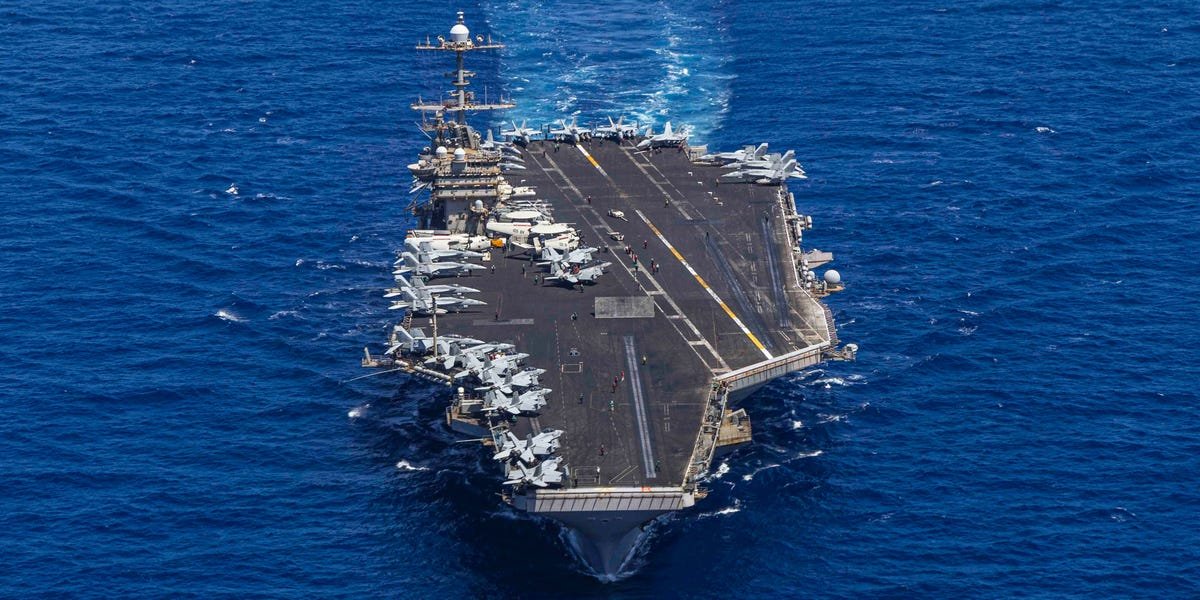
A US Navy aircraft carrier’s hard evasive turn to avoid enemy missile fire caught crewmembers off guard and sent a $60 million F/A-18 Super Hornet rolling off the deck and into the Red Sea, an investigation into the fighter jet loss revealed.

The fighter’s brakes weren’t functioning properly, investigators found, allowing the jet to slide across the deck when the carrier USS Harry S. Truman abruptly changed course during the late April action.

Poor communication, bad brakes, and a slippery surface all contributed to the loss.

A tow tractor also fell into the water alongside the expensive F/A-18 fighter jet, the second of three that the Truman lost during a monthslong Middle East combat deployment. When it went over, it nearly took sailors overboard as well.

Evading enemy fire

During their deployment, the Truman and its strike group led Navy combat operations against the Houthis, the heavily armed Iran-backed rebel group in Yemen that spent more than a year attacking key Middle East shipping lanes.


Three F/A-18 Super Hornets prepare to launch from the flight deck of the Nimitz-class aircraft carrier USS Harry S. Truman, December 21, 2021.

An F/A-18 fell overboard the Truman while the carrier took a hard turn.

US Navy Photo by Mass Communication Specialist 3rd Class Abbigail Beardsley


On April 28, the move crew lost control of an F/A-18 under tow in the Truman’s hangar bay, a maintenance area below the flight deck, the Navy reported at the time, and both the jet and its tow tractor tumbled into the Red Sea.

Right before it fell in, a sailor jumped from the cockpit, suffering minor injuries. The Navy didn’t share information or insight into the warship’s situation at the time of the plane loss.

According to the command investigation, the fighter jet and the tractor fell overboard while the Truman was conducting evasive maneuvers to avoid an incoming medium-range ballistic missile fired by the Houthis, a detail that had been reported but not confirmed at the time.

The move crew, which was preparing the F/A-18 from Strike Fighter Squadron 136 (VFA-136), the “Knighthawks,” for planned flight operations, didn’t hear the announcement that the ship was making a hard turn and was caught unaware when the ship began to tilt.

Sailors had removed the chocks and chains to pull the F/A-18 into the hangar bay. With the brakes engaged but not actually working, there was nothing to hold the aircraft in place when the carrier heeled in an evasive turn.


Two US Navy Aviation Ordnancemen transport ordnance across the hangar bay aboard the Nimitz-class aircraft carrier USS Harry S. Truman in the US Central Command area of responsibility.

The hangar bay is an area underneath the flight deck where aircraft receive maintenance.

US Navy photo


It slid backward toward the deck edge, dragging the tow tractor behind it. The crew moving the Super Hornet abandoned their posts just before the fighter jet fell into the sea.

Bad brakes

The command investigation put the blame for the incident primarily on the fighter jet’s inadequate brake engagement and the lack of communication from the Truman’s bridge to flight deck control and the hangar bay.

Leadership also said that the non-skid, a rough, high-friction coating applied to the decks of Navy ships to keep people, vehicles, and aircraft from slipping on smooth steel surfaces, was ineffective, having not been replaced since 2018.

These problems, the investigation said, cost the Navy an F/A-18, a multirole fighter made by the US aerospace giant Boeing that has been in service with the Navy for decades.

The April incident was one of four major mishaps that the Truman and its strike group suffered during their deployment.

In December, the cruiser USS Gettysburg accidentally shot down one of the Truman’s F/A-18s in what the military described as a friendly fire incident. In February, the carrier collided with a cargo ship. And in May, the ship lost its third fighter jet after a landing failure caused it to slide off the flight deck and plunge into the sea.


Source link

Russias-latest-naval-mission-is-a-flex-to-cover-for.jpeg

Russia’s latest naval mission is a flex to cover for its embarrassing losses in the Black Sea, US official says

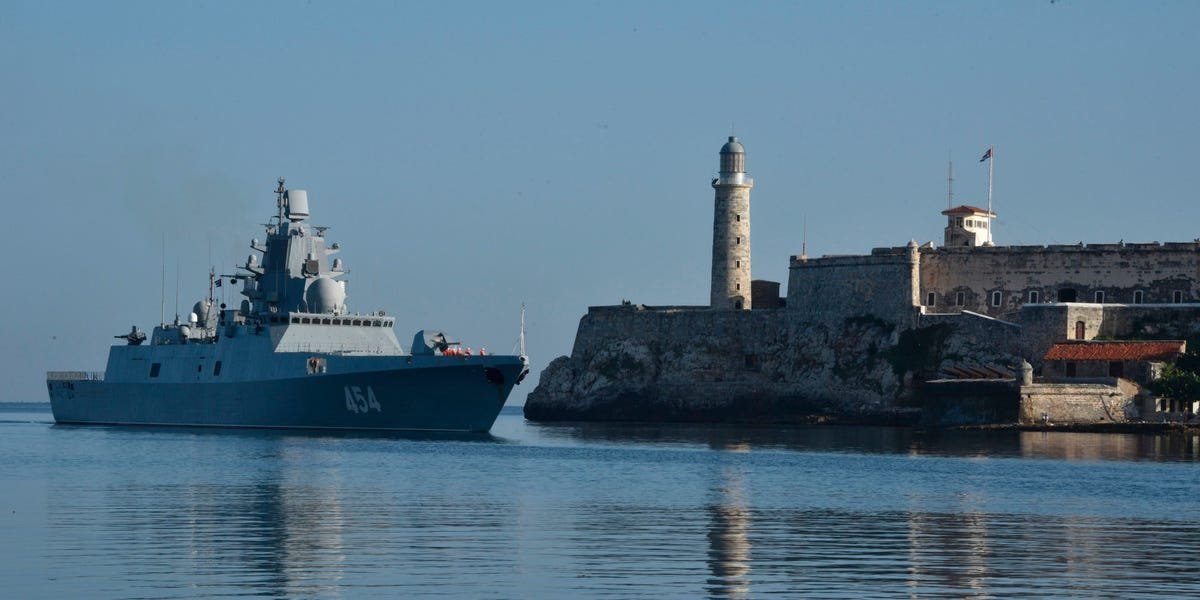
Russia sending warships to Cuba next week is an attempt to show its navy is still a global power after losses in the Black Sea, an unnamed US official told reporters, according to the Associated Press.

On Thursday, Cuba’s Ministry of Foreign Affairs said Russia was deploying four warships to Cuba, including a nuclear-powered submarine, with the vessels expected to be in Havana between June 12 and 17.

“Russia has sailed the Black Sea since 1783 but is now forced to constrain its fleet to port,” UK Defence Minister Grant Shapps wrote. “And even there Putin’s ships are sinking!”

This week, it was reported that Ukraine was using its exploding naval drones to go after smaller Russian vessels after Moscow pulled back its larger warships to reduce their vulnerability to attacks.

Not everyone agreed on Russia’s motive.

The visit of the ships, none of which will carry nuclear missiles, does not represent a threat to the region, the Cuban statement read, but was instead part of the historically cordial relations between the two countries.

But according to the US official, the deployment is an effort by Russia’s navy to flex its muscles on the world stage, after suffering losses in the Black Sea.

“This is about Russia showing that it’s still capable of some level of global power projection,” they said, per Reuters.

Russia’s navy has suffered a series of embarrassing setbacks in the Black Sea, where Ukraine claims to have destroyed a third of its fleet.

Ukraine has used drones, missiles, and other weaponry to take out many Russian warships, and has forced its fleet to seek safer ports further away from Crimea.

In March, the UK’s defense ministry declared Russia’s Black Sea Fleet “functionally inactive” after Ukraine claimed to have struck another two of its vessels.

Russia also shuffled its naval leadership earlier this year.

According to the unnamed US official, while the US expects “heightened” Russian naval and air activity this summer, and more going forward, deployments like those to Cuba incur costs for the Russian navy, which is “struggling to maintain readiness and conduct deployments with an aged fleet.”

In a military assessment on Thursday, the Washington DC-based think tank the Institute for the Study of War said it was likely part of an effort to bring back memories of the Cuban Missile Crisis, and dissuade the US from offering further support to Ukraine.

The deployment also comes after Putin threatened to send long-range weapons to “regions around the world” that want to strike Western targets.

Meanwhile, Russia’s Ministry of Defence said its goal was to keep a Russian naval presence in operationally important areas of the “far ocean zone,” RBC-Russia reported.


Source link