
A-Chinese-robotics-startup-with-a-Tesla-Optimus-rival-is.jpeg

A Chinese robotics startup with a Tesla Optimus rival is seeking a new chief scientist with an $18 million salary

The AI talent war is spreading to robotics.

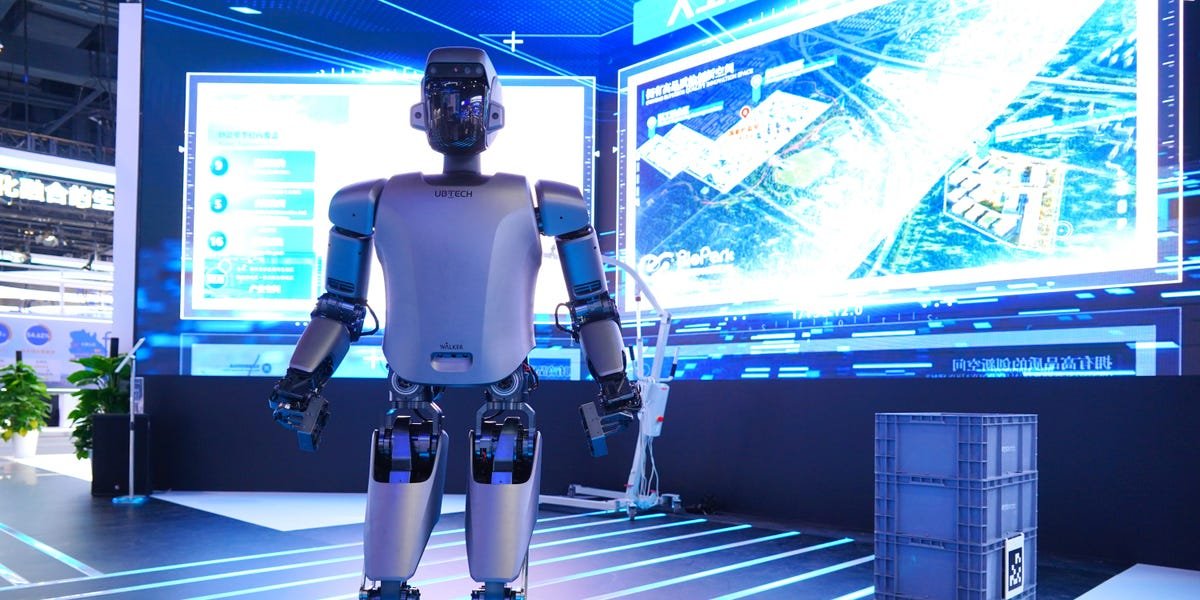
Chinese humanoid robotics startup UBTech announced this month that it was seeking a new Chief Scientist with a maximum salary of 124 million yuan ($18 million), per a translated job listing.

The top-end pay sits some way below the most eye-watering earnings offered during the scramble for AI talent, with Meta and OpenAI previously accusing each other of trying to poach star talent with paydays of up to $100 million.

But it marks a departure for China’s fast-growing AI and robotics industries, which have until now appeared to avoid the vast payouts that have shaken up Silicon Valley — signaling that China is becoming more aggressive in attracting top-end talent.

UBTech was founded in 2012 and has grown into one of China’s most prominent humanoid robot companies.

The Shenzhen-based startup’s main product is the 5-foot-9 Walker S2 humanoid robot, which, like Tesla’s Optimus robot, is designed to operate autonomously and work in factories. UBTech said earlier this year it struck a deal with Airbus to test its Walker S2 humanoids on factory production lines.

In a job listing posted this month, UBTech said the salary range for the position of “Chief Scientist of Embodied Intelligence” would span from 15 million to 124 million yuan ($2.2 million to $18 million).

The executive will be responsible for accelerating UBTech’s humanoid robotics push into manufacturing, services, and “family companionship,” per the translated job listing.

Chinese firms appear to be ahead in deploying humanoid robots, with nearly 90% of global shipments last year coming from Chinese companies, according to data from research firm Omdia.

Locally built robots also played a major role in China’s Spring Festival, a major public showcase of the country’s most cutting-edge tech, with humanoids from Unitree performing kung-fu and acrobatics.

Elon Musk said in a January earnings call that the biggest competition for Tesla’s Optimus robot will come from China — although he said he expects Optimus, which begins mass production this year, to outperform any robot under development in China.



Source link

Lucia Moses

Disney-backed DramaBox is seeking new funding as it tries to win the micro drama race in the US

The battle to become the top micro-drama app in the US is heating up.

DramaBox, one of the leading producers of the short-video format filled with soapy tropes, has been seeking fresh funding from US backers, according to two people with direct knowledge of its efforts.

One said DramaBox’s fundraising goal was $100 million with a $500 million valuation.

DramaBox is part of Singapore-based StoryMatrix, and is behind titles like “A Deal with the Hockey Captain” and “The Lost Heir: A Christmas Reckoning” that it monetizes through one-off payments, subscriptions (usually $20 a week), and ads.

DramaBox did not respond to multiple requests for comment.

Executives at DramaBox told Business Insider in September that the company was profitable and that their ambition was to become the most popular micro-drama platform for Americans. They aimed to do so by working with Hollywood filmmakers and diversifying into new storytelling styles and genres, such as series for families and choose-your-own-adventure-style dramas.

Industry reports regularly list DramaBox as one of the top two micro-drama apps, alongside fellow Asian import ReelShort. Analytics firm Sensor Tower estimated that DramaBox generated $120 million in global in-app revenue in the first quarter of 2025, just behind ReelShort’s $130 million. DramaBox countered in the September interview that its numbers were higher, without sharing specifics.

The streaming consulting firm Owl & Co. estimated that the format had generated $1.3 billion in the US in 2025, mostly from direct payments from viewers.

DramaBox already has a connection to Hollywood’s most blue-chip company, Disney, which has invested in DramaBox through its selective accelerator program. Disney said in late 2025 that it was in talks with DramaBox to adapt young adult fantasy novels into original micro dramas and was exploring adapting music albums into vertical short videos.

Investors have been placing bets elsewhere in the space as well:

  • This past fall, Bill Block, the former CEO of Miramax, raised $14 million from investors including Alexis Ohanian, Kris Jenner, and Kim Kardashian, among others, to launch GammaTime. He called it the first “premium micro drama streaming platform.”
  • Fox invested in Holywater, a Ukrainian company behind the micro drama app My Drama.
  • LA-based Bitz Films, which says it’s focused on creating elevated micro dramas in genres like comedy and horror, has raised $1.2 million in pre-seed funding.

Big Tech has also dived in.

Meta’s Instagram is testing the micro drama format in India with a series. TikTok, which is already widely used by short dramas for marketing, added a section called TikTok Minis where you can binge on bite-sized series without leaving the app.

Despite the format’s burgeoning popularity, there are those who question its long-term viability. Some investors told Business Insider they had held back from the space because of concerns that the format wouldn’t succeed in areas beyond its core of female-targeted romances.


Source link