
I-inherited-a-storage-unit-from-a-family-friend-It.jpeg

I inherited a storage unit from a family friend. It was full of vintage clothes, which I now sell online.

This as-told-to essay is based on a conversation with Scottlynn Krause, the co-owner of CS80 Vintage. It has been edited for length and clarity.

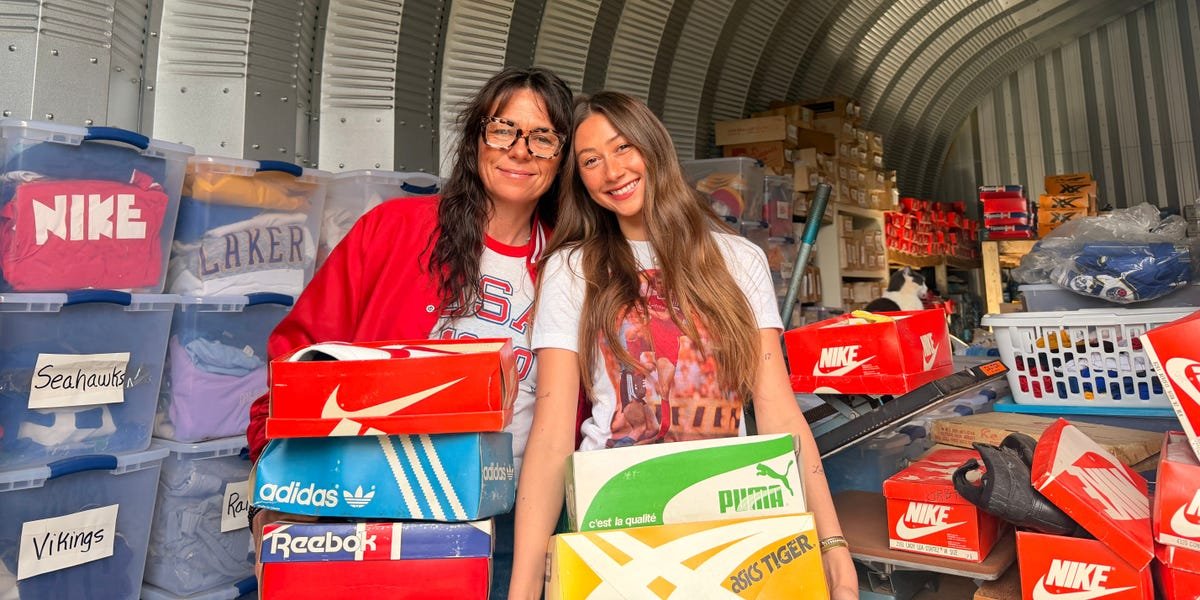
My best friend is Hannah, and her grandpa, Franz, owned a sporting goods store in the ’60s, ’70s, and ’80s. When he went out of business, he boxed up his stock, and the unused items sat in a storage unit from 1990 until 2021.

In the summer of 2021, Hannah’s mom called my mom, who is an organizer for hoarders, asking for help with the storage unit. She didn’t know what to do with the stuff, and knew my mom had experience in that realm.

We did not expect to inherit his pristine ’80s sportswear inventory

Hannah and her family said to do what we needed to do to get rid of it and take it off the property. We had 16 days to figure out what to do, because they wanted to list the house. We did not buy the inventory. It was a trade for removing it.

Originally, my mom wanted to turn everything in three months and be done with it. We were not a vintage-loving family back then, but we decided to try to sell it online. At first, it was my mom doing it all, but it was overwhelming. So I jumped in. I had (and still have) a full-time job in retail, so I feel like I see what happens with trends. Vintage had picked up, so it felt right.

The storage unit had thousands of items from well-known brands

It’s really hard to put a number on how many items were in the storage unit. It was 10,000 pairs of shoes, 25,000 hats, 2,500 pairs of baseball pants, all in 1,000 square feet, all from a single store.

The brands Franz had were Nike, Adidas, Puma, Converse, Playboy, Pony, Champion, Wilson, and more. Teams were covered in the NFL, NBA, NHL, and collegiate sports.

It was such a large inventory; we weren’t sure how to tackle it. It’s all been very word-of-mouth. We had our first sale at a flea market in early 2022. We currently sell privately on social media and on our website, which went live in December 2025.

On the website, we do 25 items per drop, and do two drops a week, on Wednesdays and Sundays. It’s first-come, first-served. Not all merchandise is on the website; it’s about a tenth of what we have. So we’re really selective with the drops because everything is so rare and special.

We store our inventory in an off-site warehouse. My mom and I go regularly to pull pieces, and it feels like a discovery every time. We never know what we are going to find. We then bring it to our studio, and I measure, photograph, and upload it to our website. My mom and I print the shipping labels, carefully pack each order, and ship everything ourselves, mostly early in the morning or late at night, squeezed in around our day jobs.

We’ve seen some really amazing items

Most of our items are one-of-a-kind, making them special. We might have one item in multiple sizes, but we don’t have four large sizes of that item, for example. Starter jackets are our most sought-after item. And our sports fans are die-hard, so people are freaking out about certain items. I didn’t grow up during this time period. It’s been so special to see the DMs we get, like “I had this shirt when I was a kid, do you have it?”

We’ve sold unique pieces, like a Run-DMC collection still in its original packaging and a rare pair of 1980s Adidas boxing shoes reminiscent of the Rocky Balboa/Freddie Mercury era. A van load of clothing from our collection was used on set for a “Stranger Things” x Target commercial.

We’ve been having a blast doing it

My mom and dad met in a sporting goods store. He’s a professional volleyball referee. My mom works as an organizer and is a photographer. I work in retail. All the pieces came together for us, giving us this gift. It was like winning the lotto.

Hannah’s family loves watching it happen. I will send her pictures of stuff all the time. They are excited to see that his stuff is moving, going places, and getting a second life.

Our goal is to continue Franz’s legacy by slowly placing these pieces with people who genuinely appreciate the memories, craftsmanship, and spirit of the 1980s. We’re exploring ways to carry that energy forward, too. We eventually want to create our own products using our deadstock blanks to keep the 80s aesthetic and story alive for the new generation.



Source link

A person holds a protest sign which reads

Washington Post union calls for Jeff Bezos to sell the paper after CEO resigns


Tom Williams/CQ-Roll Call, Inc via Getty Images

  • The Washington Post’s CEO, Will Lewis, departed the paper on Saturday following sweeping layoffs.
  • The Post’s union, in a statement, called Lewis’ exit “overdue.”
  • The union also called for Jeff Bezos, who owns The Post, to sell the publication.

Unionized staffers from The Washington Post issued a statement supporting the abrupt Saturday departure of the publication’s CEO, Will Lewis, and called for Jeff Bezos to sell the paper.

“Will Lewis’s exit is long overdue,” the Washington Post Guild’s statement, which was published on X, read. “His legacy will be the attempted destruction of a great American journalism institution. But it’s not too late to save The Post. Jeff Bezos must immediately rescind these layoffs or sell the paper to someone willing to invest in its future.”

Representatives for the Post union did not immediately respond to a request for comment from Business Insider.

On social media, laid-off reporters celebrated the news of Lewis’ departure. Jada Yuan, a former culture writer at the Post, wrote that she had “never been more thrilled with a news alert.”

“Will Lewis, the absent, ineffective publisher of @washingtonpost has resigned. Or been fired,” she added. “It sucks that it happened after he couldn’t even show up on zoom to lay off 1/3 of the company. But the important thing is he’s gone.”

Lewis’ exit was announced Saturday afternoon, just days after sweeping layoffs hit the legacy publication, leaving hundreds of reporters out of work.

The publication’s unionized employees held a “Save the Post” rally earlier this week, focused on Bezos and Lewis, and said there were risks to press freedom and independent news if legacy publications like the Post are unable to continue operating.


Source link

kelly burch

My rare plants sell for five figures. The business helps me support my extended family, but I work about 100 hours a week.

This as-told-to essay is based on a conversation with Harry Luu, owner of PlantZaddyTherapy. It has been edited for length and clarity.

I’ve always been a gardener and enjoyed being around plants. While I was in graduate school studying math, my collection of houseplants grew. There’s an attention to detail and a hyperfocus that I found in both mathematics and plants, so my hobby complemented my academic career.

During the pandemic, my interest in rare plants blew up. I started getting a bigger collection and trading up for more valuable plants.

Eventually, my hobby transformed into a business. I finished my graduate degree and started teaching math in California, but three years ago, I left academia to sell plants full-time.

My academic career was a safety net for my family of 8

I grew up in Vietnam, and I’m the embodiment of the American dream for my family. They put all their eggs in my basket, which allowed me to come to America and study. Now, I feel it’s fair to return their investment. I support not only myself and my husband, but also my parents, my brother, my sister-in-law, my niece, and my nephew.

Leaving my job while supporting a family of eight in California might seem risky, but it was calculated. I had reached the point where I saw the potential for financial freedom from investments I had made during grad school that had very good returns. I had years of data on plant sales, and also knew I could return to academia if needed, so I had a safety net.

I price based on rarity and desirability, without going too high

I was already connected to the rare plant community, so selling increasingly expensive plants felt like a natural progression. I grew my platform on Palmstreet, an online marketplace.

This year, I had two record-breaking sales in one day. I sold a $16,000 plant (an Anthurium Variegated Forgetii x Heinz, one of only two in the world), then a $26,000 plant (the only specimen of the True Variegated Lux Albo Mother Plant).


Man holding rare plant

A $16,000 plant sold on Palmstreet by Harry Luu

Courtesy of Palmstreet


I’m a math person, so I use a formula to price. I calculate rarity and desirability and compare them with price data from the previous three years. These plants were both very rare and highly desirable, which drove prices up. However, I didn’t want to price them too high, because I’m thinking about the long-term viability for my brand: people have to be able to purchase what I’m selling. Given how rare the plants were, their five-figure prices weren’t too big a splash.

I want to be able to connect with the community more

Despite those big numbers, the business’s income fluctuates dramatically. My best single week was over $200,000 in sales, but other weeks I might have no sales. The market is seasonal, and winter is slow. I’ve had to adapt to not having a steady, reliable income.

The money comes and goes, but the work never stops. Right now, I spend about 100 hours a week on the business. We have plants in our home, and also a large greenhouse on our property. My brother does some of the maintenance care for the plants, but all the breeding decisions are made by me.

I’m on the cusp of the company being able to sustain itself without me working so much. I look forward to that — when I can step back from the business side and focus more on the joy of growing. I would like to share my knowledge about rare plants and take the plants on the road to connect with my community more, since that’s what got me hooked on growing in the first place.


Source link

Bessent-Private-equity-firms-wont-have-to-sell-single-family-home.jpeg

Bessent: Private equity firms won’t have to sell single-family home rentals

Treasury Secretary Scott Bessent said that President Donald Trump’s proposal to keep Wall Street players from buying single-family homes would not force them to sell their current holdings.

“These big institutions buy housing, then rent them out, and they’re able to depreciate it. They hide their earnings, pay lower taxes,” he said on Thursday at the Economic Club of Minnesota.

“The idea here is bygones are bygones,” Bessent added. “We’re not going to have a forced sale here.”

On Wednesday, Trump said he would ban institutional investors from purchasing single-family homes in an effort to make housing more affordable for Americans. Single-family homes refer to standalone residential buildings with their own entrance designed for one household.

“For a very long time, buying and owning a home was considered the pinnacle of the American Dream,” Trump wrote on a Truth Social post. “That American dream is increasingly out of reach for far too many people, especially younger Americans.”

Shares of asset manager Blackstone fell 5.6% on Wednesday after Trump’s post. Blackstone, which manages $1 trillion in assets, oversees one of the largest rental housing portfolios in the US, with several hundred thousand single-family homes and apartments. Other stocks similarly fell.

Critics say firms like New York-based Blackstone put pressure on the housing market, reducing the availability of homes and driving prices up. Blackstone closed 1.1% higher at the end of the trading day on Thursday.

The institutional players, meanwhile, say lack of housing supply — not big-business ownership — is pushing prices up.

In Minnesota on Thursday, Bessent said that the administration has not decided on the “exact contours” of this new proposal.

“We want to keep the traditional mom and pop owners in. We want to keep families who rent out to their other family members,” he said.

Bessent said that this practice of large firms buying up single-family homes started during the 2008 financial crisis, when private equity companies were among the few parties with the money to buy these homes.

“They hoovered up the single-family housing stock,” he said.

The US Government Accountability Office found that in 2022, the five largest institutional investors owned nearly 2% of single-family rental homes.


Source link

Trump-gives-Nvidia-the-green-light-to-sell-its-H200.jpeg

Trump gives Nvidia the green light to sell its H200 chips in China

Nvidia just scored a win from President Donald Trump.

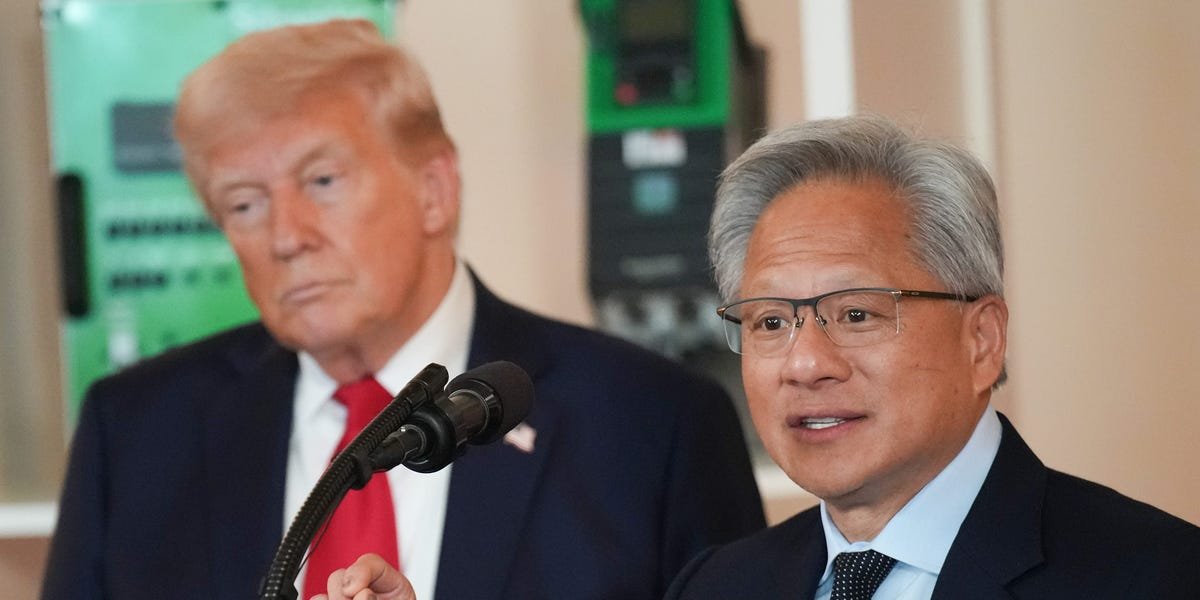
In a post on Truth Social on Monday, Trump said he told Chinese leader Xi Jinping that the US would allow Nvidia to sell its H200 chips to “approved customers” in China.

“This policy will support American Jobs, strengthen US Manufacturing, and benefit American Taxpayers,” Trump said in the post.

Trump said, “$25% will be paid to the United States of America.” He has previously proposed having the US take a cut of chip sales to China.

Nvidia’s stock was up in after-hours trading following Trump’s announcement.

“We applaud President Trump’s decision to allow America’s chip industry to compete to support high paying jobs and manufacturing in America,” a spokesperson for Nvidia said in a statement to Business Insider. “Offering H200 to approved commercial customers, vetted by the Department of Commerce, strikes a thoughtful balance that is great for America.”

Nvidia’s powerful H200 chips have been in high demand as AI models become more powerful.

While Nvidia was already able to sell some of its other chips to China, the US government has limited its ability to sell some powerful chips due to national security concerns. Sales of its H20 chips to China during Q3 were “insignificant,” CFO Colette Kress said on its latest earnings call.

“While we were disappointed in the current state that prevents us from shipping more competitive data center compute products to China, we are committed to continued engagement with the US and China governments and will continue to advocate for America’s ability to compete around the world,” Kress said during the Q3 earnings call.

Nvidia CEO Jensen Huang met with Trump last week to discuss export controls on chips.

“I’ve said repeatedly that we support export control, that we should ensure that American companies have the best and the most and first,” Huang told reporters last week.

Nvidia stock was up roughly 2% after hours.


Source link