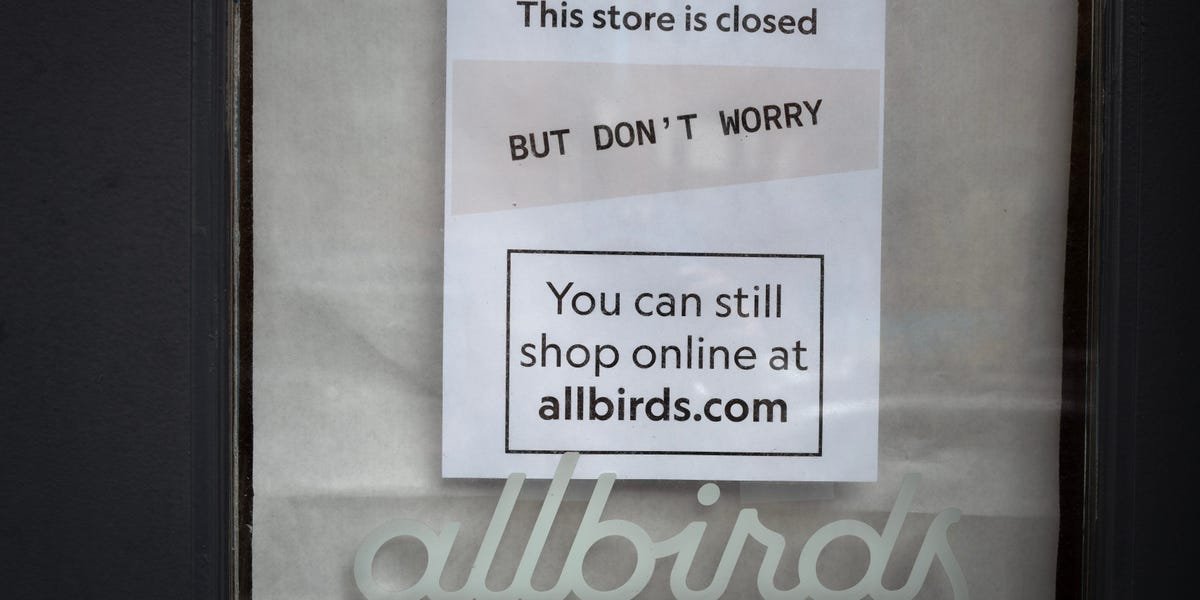
Supermarket chain Grocery Outlet is set to close 36 underperforming stores, representing about 6% of its fleet in 2026. CEO Jason Potter told analysts on March 4 that the company had identified stores that no longer had a “viable path to sustained profitability.”
The closures come as the grocery chain has been expanding rapidly, particularly in Eastern states. The chain said in November that it planned to end 2025 with 37 new store openings. It plans to open another 30 to 33 net new stores in 2026, Potter said in the March call.
Of the 36 stores closing this year, 24 are located in the Eastern US. The closures make up about 30% of that region’s stores, Potter said. He said Grocery Outlet won’t be exiting any state completely.
“However, it’s clear now that we expanded too quickly and these closures are a direct correction,” Potter said.
Grocery Outlet saw a nearly $235 million operating loss and a more than $218 million net loss in its fourth-quarter earnings results.
This story is available exclusively to Business Insider
subscribers. Become an Insider
and start reading now. Have an account? .
Diane Warren has set a record for the longest losing streak in Academy Awards history.
At the 2026 Oscars, Warren lost her 17th bid for best original song.
Her nominations include songs performed by Celine Dion, Aerosmith, Lady Gaga, Becky G, and Kesha.
Diane Warren went home empty-handed from the 2026 Oscars on Sunday, marking her 17th straight loss for best original song.
“Well at least I’m consistent! And I set a new record tonite!!” Warren wrote on social media after “Golden,” the hit song from Netflix’s “KPop Demon Hunters,” secured the award.
Indeed, Warren is now the most-nominated person in history to have never won a competitive Oscar.
“I’m consistent as fuck,” Warren told Variety in 2025 on the after-party red carpet. “I’m the Terminator of the Oscars — I’ll be back. That’s in my Arnold Schwarzenegger voice. I’m coming back. You can’t get rid of me.”
Warren, who has also written pop hits with stars like Taylor Swift, Mariah Carey, and Cher, is also the most-nominated woman in the category’s history. She trails just two others for the all-time record: Johnny Mercer (18) and Sammy Cahn (26). However, of those three legendary songwriters, only Warren has never won the award.
All 17 of her nominated songs are listed below in chronological order.
“Nothing’s Gonna Stop Us Now” from “Mannequin” (1987)
Kim Cattrall and Andrew McCarthy starred in “Mannequin.”
Starship/YouTube
Performed by: Starship
What beat it: “(I’ve Had) The Time of My Life” from “Dirty Dancing”
“Because You Loved Me” from “Up Close & Personal” (1996)
Celine Dion performs in 1996. Pete Still/Redferns
Performed by: Celine Dion
What beat it: “You Must Love Me” from “Evita”
“How Do I Live” from “Con Air” (1997)
Trisha Yearwood won a Grammy Award for “How Do I Live.” Timothy A. Clary/AFP via Getty Images
Performed by: Trisha Yearwood
What beat it: “My Heart Will Go On” from “Titanic”
“I Don’t Want to Miss a Thing” from “Armageddon” (1998)
Steven Tyler of Aerosmith performs “I Don’t Want to Miss a Thing” at the Oscars. Timothy A. Clary/AFP via Getty Images
Performed by: Aerosmith
What beat it: “When You Believe” from “The Prince of Egypt”
“Music of My Heart” from “Music of the Heart” (1999)
Gloria Estefan performs with *NSYNC in 1999. KMazur/WireImage
Performed by: Gloria Estefan and *NSYNC
What beat it: “You’ll Be in My Heart” from “Tarzan”
“There You’ll Be” from “Pearl Harbor” (2001)
Faith Hill performs at the “Pearl Harbor” premiere. Steve Granitz/WireImage
Performed by: Faith Hill
What beat it: “If I Didn’t Have You” from “Monsters, Inc.”
“Grateful” from “Beyond the Lights” (2014)
Rita Ora performs “Grateful” at the Oscars. Kevin Winter/Getty Images
Performed by: Rita Ora
What beat it: “Glory” from “Selma”
“Til It Happens to You” from “The Hunting Ground” (2015)
Lady Gaga performs “Til It Happens to You” at the Oscars. Kevin Winter/Getty Images
Performed by: Lady Gaga
What beat it: “Writing’s on the Wall” from “Spectre”
“Stand Up for Something” from “Marshall” (2017)
Common and Andra Day perform “Stand Up for Something” at the Oscars. Kevin Winter/Getty Images
Performed by: Andra Day and Common
What beat it: “Remember Me” from “Coco”
“I’ll Fight” from “RBG” (2018)
Jennifer Hudson performs “I’ll Fight” at the Oscars. Kevin Winter/Getty Images
Performed by: Jennifer Hudson
What beat it: “Shallow” from “A Star Is Born”
“I’m Standing With You” from “Breakthrough” (2019)
Chrissy Metz performs “I’m Standing With You” at the Oscars. Craig Sjodin/ABC via Getty Images
Performed by: Chrissy Metz
What beat it: “(I’m Gonna) Love Me Again” from “Rocketman”
I’ve done something quite rare: I’m an American who attended college in both the US and China.
I completed my undergraduate degree in political science at a state university in New York and studied abroad in Wuhan, China, during the summer of 2015. Ten years later, in 2025, I returned to Shijiazhuang, China, while completing my second graduate degree in global health, interning at a medical university.
Experiencing Chinese universities at two distinct points in my life, a decade apart, gave me a rare view of how the system operates and how it has evolved.
I didn’t meet any Americans studying in China most recently
During my first trip, I was in a group of about 30 American college students. The second time, I was the only person from my cohort to go.
Since the pandemic, the number of US students in China has dropped, according to NPR. In fact, I didn’t meet a single American in the three months I was in the country most recently.
Both times, I met lots of African students, though. They were heavily invested in and integrated into the Chinese learning and working systems.
I’ve noticed China sets the international students I met up for success
Many of the international students I talked to in the US told me how hard it was to integrate and find a pathway to work after school in New York.
In China, I noticed there’s a pathway for international students who want to stay, particularly those who have developed strong Mandarin skills.
The Chinese government and universities are actively trying to entice international students to come to the country, while also investing in ways to retain graduates.
Campus life looks very different from what I experienced in the US
The internet firewall in China can make research difficult, and I’ve seen doctors smoking in classrooms between lectures.
Student life also reflects a different set of norms. There is low tolerance for drugs and alcohol on many Chinese campuses. After class, I saw friends playing badminton rather than drinking beer.
Technology and security are also visible on campus. Students on the campuses I studied entered by scanning their faces and were tracked by cameras.
The author worked with many Chinese students.
Courtesy of Catherine Work
Politics also felt more openly present in academic life. Most of the professors and physicians I worked with were active members of the Communist Party and often wore pins on their lapels to signify it.
As one local friend put it, “having one state party means policies don’t change every four years,” which, in their view, can create a certain level of stability for universities.
Chinese universities are far cheaper and more specialized
The two universities I studied at in China didn’t have the fancy sports facilities most American colleges do, but many students I met weren’t going into debt to study either.
Tuition in China is subsidized by the government, especially at public universities. That means it’s relatively affordable compared with many Western countries.
Housing and food costs are also inexpensive in my experience. I was eating a healthy lunch on campus for $1 a day. My American campus used to sell a single banana for $1.05 in 2015.
I also spent a year taking general courses in America. While I loved taking a class on Bollywood as a political science major, the specialization offered by many Chinese universities helped better prepare me for the real world. I also saved money by not taking general courses while in China.
Studying in both systems changed how I think about education
I didn’t just earn my degrees in multiple countries; I learned about the culture of education. I learned how the government impacts who can study what and if they will be successful.
I’ll always be partial to the American scholastic mentality of questioning everything and forming opinions, rather than the rote memorization I saw in China, but I’d prefer not to be launched into the working world with so much student loan debt.
I hope more Americans can form their own opinions of China’s educational system, which has rapidly evolved and will only continue to grow in its unique way.
This as-told-to essay is based on a conversation withAshley Morris, CEO ofCapriotti’s. It has been edited for length and clarity.
My whole career is based on a love affair with food — and a lifelong friendship. I grew up on the West Coast, but had tried cheesesteaks on trips east, and adored them. In college, I was living with Jason, who has been my best friend since we were 10. One day, he came home talking about the best sandwich he’d ever eaten. He told me I had to go to Capriotti’s.
I was busy, studying finance and working at a bank. By that Friday, when I still hadn’t gone, Jason dragged me to the sandwich shop. I was just as blown away as he was. I’d eaten a lot of cheesesteaks, but this was the best of the best. It was true love.
Ashley Morris went into business with his best friend Jason.
Courtesy of Ashley Morris
Jason and I went to Capriotti’s so much that when we needed a new apartment, we chose one further from school, but closer to the restaurant. That was the first sign of the role Capriotti’s would play in our lives.
My banking success helped us go into business together
I started working as a bank teller at Wells Fargo when I was 18 because it was the only finance job they’d let me do at that age. After I graduated from college, I moved to the financial services team, and by the time I was 25, I was earning more than any young kid should: about half a million a year.
Every time Kelly publishes a story, you’ll get an alert straight to your inbox!
Stay connected to Kelly and get more of their work as it publishes.
Ashley Morris and his best friend Jason went into business together.
Courtesy of Ashley Morris
Jason and I had always wanted to get into business together, and now I had the financial resources to make that a reality. We decided to spend a week thinking about business ideas, then decide what to do. When the meeting came, we each brought one idea: open a Capriotti’s franchise.
We quickly opened 3 restaurants, but wanted more
We planned to be 50/50 business partners while both maintaining our day jobs. I would put in more capital, and Jason would do more of the hands-on work, while keeping his government job.
However, we quickly learned that running a passive business just isn’t a reality. The restaurant wasn’t going to be a side hustle, especially because we were so cocky that we opened two franchises at the same time. Before long, we had a third. My girlfriend at the time (now wife) handled a lot of the operations, while Jason and I supported her as much as we could.
We wanted to own 10 restaurants, but we started butting heads with Capriotti’s CEO. I thought she had an old-fashioned mindset, and each time we asked to open another location, she said no.
After a year of that, I’d had enough. I realized if I waited for her to say yes, I’d be 40 and not living my dream. After speaking with Jason, I told the CEO we wanted to buy the whole company. It took everything Jason and I had, but we purchased Capriotti’s in 2008, when I was 27.
We established rules to protect our relationship
We’ve been running the company together since — Jason’s the CEO and I’m the president. We have a lot of the same values, probably because we forged them growing up together. We know each other inside and out, like brothers. That allows us to give really honest feedback. Jason has no problem walking into my office and saying, “You’re missing the boat on this one,” and instead of getting defensive, I immediately open my mind to what he has to say.
When we decided to buy the business, we established commandments to make sure our business partnership wouldn’t ruin our friendship. First, there’s a hierarchy: if we reach an impasse on a decision, I have the final say. That’s only happened twice, and Jason has graciously accepted my decision.
Our second commandment is that if either of us wants out, the other must be fully committed to helping him exit. Luckily, we’ve never had to use that, but we know that we could part ways amicably, fairly, and with integrity if we wanted to.
Today, Jason’s four boys are close with my sons and daughter. We all went on vacation together for New Year’s. Life is busy, and it’s not always easy to find time together outside work, but we try. It’s wonderful to see our friendship recreated with our kids.
Actor James Van Der Beek’s wife, Kimberly, appears to have backed a GoFundMe in the wake of the “Dawson’s Creek” actor’s death on Wednesday from colorectal cancer.
The campaign — shared on both James and Kimberly’s Instagram stories — states the mother of the star’s six kids as the organizer.
The initiative, which had raised over $598,000 toward the 1 million target by 7:30 p.m., primarily called for donations to help cover 48-year-old Van Der Beek’s medical bills.
“In the wake of this loss, Kimberly and the children are facing an uncertain future,” the text of the GoFundMe said. “The costs of James’s medical care and the extended fight against cancer have left the family out of funds.”
It said the bereaved family is “working hard to stay in their home and to ensure the children can continue their education and maintain some stability during this incredibly difficult time.”
Every time Jane publishes a story, you’ll get an alert straight to your inbox!
Stay connected to Jane and get more of their work as it publishes.
Van Der Beek’s wife announced his death on Instagram
The appeal went on to say that financial support from others would make a “world of difference” as Van Der Beek’s loved ones “navigate the road ahead.”
The money raised was said to help fund the family’s living expenses, pay bills, and support the kids’ education.
“Every donation, no matter the size, will help Kimberly and her family find hope and security as they rebuild their lives,” the GoFundMe said.
In her Instagram story, Kimberly wrote, “My friends created this link to support me and our children during this time. With gratitude and a broken heart.”
Kimberly and James Van Der Beek on the red carpet.
Phillip Faraone/Getty Images
A spokesperson for GoFundMe told Business Insider, “We are working with the organizer to ensure funds safely reach the intended beneficiary.”
They added, “Funds are being held safely by our payment processor in the meantime.”
Kimberly announced her husband’s death on Instagram, saying, “Our beloved James David Van Der Beek passed peacefully this morning.
“He met his final days with courage, faith, and grace. There is much to share regarding his wishes, love for humanity, and the sacredness of time. Those days will come.
“For now we ask for peaceful privacy as we grieve our loving husband, father, son, brother, and friend.”
2 months ago, the star said he felt ‘strong’
Van Der Beek received his cancer diagnosis three years ago. He made his final public appearance on NBC in December when he seemed optimistic about his health.
“I feel much, much better than I did a couple months ago,” Van Der Beek told interviewer Craig Melvin.
He added, “It’s been a longer journey than I ever thought it would be. It’s required more of me — more patience, more discipline, more strength than I knew I had. I knew I was strong — I didn’t know I was this strong.”
The same month, the 90s heartthrob auctioned off personal memorabilia from the filming of “Dawson’s Creek” to help his family and meet bills for his cancer treatment.
This as-told-to essay is based on a conversation with Katarina Polonska, a relationship scientist and coach who will be inheriting her childhood home in Slovakia. Vancouver-based Polonska, 36, said the home needs a lot of work, and it may not be worth managing renovations from abroad. The conversation has been edited for length and clarity.
I’m going to be inheriting my childhood home where I was born. I love it, and it’s very precious to me. But I don’t have any right to it yet.
It’s mostly used as a family holiday home, but ultimately when my mother passes, it’s going to be given to me.
My mother owns it, and there’s no plan to sell it — the value of the home isn’t very high, in fairness. It’s a two-bedroom, one-bathroom. It’s not worth much at all; maybe $80,000 CAD. I don’t think the money would go very far in Canada.
Also, selling it would require a lot of renovations. It’s very old school and needs a lot of TLC, and my mother doesn’t live in Slovakia, she lives in England. So from her perspective, she’s thinking, “Why would I invest 30,000 or 50,000 euros (about $35,245 or $58,742) in a property that I go to a few times a year max? What’s the point?”
She also knows it would to be really complicated to sell it from abroad, having to navigate viewings and trusting realtors and all of this stuff.
The reality is, I’m going to own this foreign property when she passes.
My husband is in a similar situation with a Barbados property
My husband is also waiting to inherit. His mother inherited a property in Barbados from her parents, though she never lived in Barbados.
His mother had to wait to take over the Barbados property, and by the time she took it over, it had declined a little bit and there are always complications with it.
Polonska and her husband.
Courtesy of Katarina Polonska
I’ve actually never seen it myself, but I know that there’s a lot of work to be done with the house. But his mother has been holding onto it saying, “You can inherit it and you and Kat can enjoy it.”
But he’s like, “We don’t go to Barbados enough.” It’s just more hassle having to manage and protect a property when you’re not physically in the country.
I think from my perspective, because I’m naive about it, I’m like, keep it, it’d be really nice to have it. But his argument is that the place isn’t in the area of Barbados that I would necessarily want to go to.
He’s really wary. He doesn’t want to be managing the property and he would rather sell it and then distribute the money within his family.
So we both know that there’s going to be this new responsibility on our heads and, candidly, I think life is difficult enough as it is.
The home in Slovakia needs so much work that I probably can’t rent it out as-is
I’m not going to rent the Slovakia home out because it’s from, like, the 1980s. It’s not been renovated. It’s ancient; the wallpaper’s faded.
While Slovakia is kind of an up-and-coming country from a tourism perspective, I don’t think anyone would want to stay in this place as an Airbnb unless it was literally advertised as a historical relic: “Come stay in this ancient old-school apartment!”
Polonska’s property in Slovakia.
Courtesy of Katarina Polonska
My husband and I have talked about how we’re probably going to have to renovate it. We know that at some point, we’re probably going to have to take a couple of months to be there physically to renovate it. But when is that going to happen? We both work, and getting to Slovakia is like a 20-hour journey from here.
I think, more realistically, we could just keep the place and treat it as a little getaway to escape to. There is really lovely nature nearby and I don’t have any other properties, so there is merit psychologically to knowing that there is a place that’s home, even if it is halfway across the world.
There needs to be more dialogue between parents and children about inheritances
When it comes to inheriting property, I think there needs to be more dialogue between the parent and the child of, “What do you actually want to do?”
I think a lot of parents have this assumption that leaving a kid the property is the ultimate goal; we’ve made it, we’ve paid off the mortgage, we have this home, and now the kid gets it. Those days are kind of gone.
We don’t live in a world where everyone grows up and lives in the same town or city as their parents. We live in a really global economy. People are moving, people are more transient, and the world has become smaller. It’s also become a lot more expensive, and home ownership isn’t what it used to be.
Parents need to recognize that the world we’re in is very different, and Millennials are not an anxious generation for no reason. We have a lot of stresses. It makes more sense to have a dialogue with your kid around what they want.
I wish parents would ask, “What do you want? Where are you at with your life, and what kind of inheritance makes sense?”
Is it, in fact, a lump sum of cash, because maybe you’re a busy entrepreneur and you don’t have time to sell? Maybe you actually would prefer the parent to sell, which is annoying for the parents, but maybe the kid would prefer that.
Thank you for the inheritance — that’s very generous. But I think quite a lot of kids would probably say it’s not worth it. Either enjoy the money, mom and dad, or cash out, downsize, and just give us a down payment or something.
Not all American energy companies stand to benefit from a potential revival of Venezuela’s oil industry following the US’s capture of Venezuelan leader Nicolás Maduro.
Energy stocks rose on Monday as investors priced in potential gains from renewed US access to Venezuela’s massive oil reserves. But analysts say smaller companies could struggle to benefit from a recovery in the country’s energy sector.
Additional Venezuelan oil supply over the coming years could be “negative for shale producers” that don’t have a footprint in Venezuela, Daan Struyven, the head of oil research at Goldman Sachs, said on the firm’s “Exchanges” podcast, published on Tuesday.
That’s because prices and volumes could come under pressure if supply growth over the next five to 10 years comes from Venezuela rather than from US shale, he added.
The potential strain on shale reflects a key difference in oil quality. Venezuelan crude is heavy and sulfur-rich, while US shale production is dominated by lighter oil. Many US Gulf Coast refineries were originally designed to process heavier crude, making Venezuelan barrels a better fit.
Greater access to Venezuelan crude could therefore benefit refiners while undermining demand for lighter shale barrels.
While light shale oil and heavy crude like Venezuela’s are not directly interchangeable, increased supplies of heavy oil can still reshape refinery demand and pricing across the broader market. That kind of change would indirectly pressure US shale producers, who have long been the engine of America’s shale revolution.
“In the US, the first casualties would likely be some oil producers, particularly smaller shale firms with high debt and thin margins,” Philippe Le Billon, a professor at the University of British Columbia who studies the political economy of natural resources, wrote in The Conversation on Sunday.
Furthermore, oil prices have already been under pressure in recent years due to ample supply and sluggish demand growth.
US benchmark West Texas Intermediate crude futures are trading around $56 a barrel, while Brent futures are around $60 a barrel. Both are down around 2% so far this year after falling 20% last year.
Even an increase in Venezuela’s oil production in the medium term could put downward pressure on oil prices, making it harder for higher-cost US shale producers to justify new drilling, researchers at Columbia University’s Center on Global Energy Policy said in a Sunday post.
That dynamic could intensify the pressure on US shale producers.
“This complicates the notion that the US would unambiguously ‘win’ from a Venezuelan oil revival. Energy geopolitics creates winners and losers on all sides,” wrote Le Billon.
This story is available exclusively to Business Insider
subscribers. Become an Insider
and start reading now. Have an account? .
2025 has been a big year for retail CEO transition announcements.
Roughly 45 retailers said they are changing leadership, up from about 32 the year before.
Here are some of the more notable retail chains that are getting a new CEO.
2025 may go down as the end of an era in retail.
This was the year that the longtime CEOs at two of the largest chains decided to hand the reins over to their corporate proteges.
The retirements of Walmart’s Doug McMillon and Target’s Brian Cornell come as the industry is facing an array of new (and long-term) challenges in the form of a global trade rebalancing, accelerated adoption of AI, and increasingly stretched US household budgets.
Fresh legs might be a welcome addition in this race.
Dozens of smaller retailers have taken the opportunity to shake up the C-suite as well.
Analysis from leadership consultancy Challenger, Gray & Christmas found that 43 retail companies announced CEO exits in the first 10 months of this year, up from 32 in the same period last year. A few more announcements have come through since.
Here are some of the major retail chains that are getting a new CEO in the new year.
Walmart — John Furner
Walmart’s incoming CEO, John Furner. Walmart
Walmart said in November that the company’s US division CEO, John Furner, would become president and CEO on February 1.
Like outgoing CEO Doug McMillon, Furner has been with Walmart for decades, starting as an hourly associate and working his way up through the ranks.
Target — Michael Fiddelke
Target has tapped Michael Fiddelke as its new CEO. Target
Target said in August that chief operating officer Michael Fiddelke would succeed Brian Cornell on February 1, with Cornell remaining on the board as Executive Chair.
Fiddelke has been with the company for 20 years, starting as a finance intern and moving through roles in merchandising, finance, operations, and human resources.
Camping World — Matthew Wagner
A Camping World RV dealership in Florida. John Greim/LightRocket via Getty Images
RV dealer Camping World said in December that founder Marcus Lemonis would step down as CEO on January 1, with company president Matthew Wagner taking over.
Wagner has been with Camping World since 2007, serving in numerous leadership roles before being appointed chief operating officer in 2023 and president in 2024.
Kraft Heinz — Steve Cahillane
Kraft Heinz has tapped Steve Cahillane as its new CEO. Kraft Heinz
Kraft Heinz said in December that it has snagged Kellanova CEO Steve Cahillane to take over from Carlos Abrams-Rivera on January 1.
The company will later split into two publicly traded companies, North American Grocery Co. and Global Taste Elevation Co., with Cahillane remaining in charge of the latter.
Cahillane has a long career leading consumer products companies like The Nature’s Bounty Co. and Coca-Cola’s Americas division. He also spent eight years with AB InBev.
Kohl’s — Michael Bender
Kohl’s has made Michael Bender its permanent CEO. Kohl’s
In fairness, Michael Bender’s transition effectively happened back in May, but Kohl’s made it official in late November when the retailer said Bender would go from interim CEO to a permanent appointment.
That means Kohl’s will start the new year with one less distraction under the leadership of a highly experienced retail executive who has already had a positive impact on the company.
Lululemon — Meghan Frank and André Maestrini (for now)
Lululemon has appointed Meghan Frank and André Maestrini as interim co-CEOs. Lululemon
Athleisure brand Lululemon said in December that it was parting ways with CEO Calvin McDonald on January 31, but hasn’t yet identified a permanent successor.
In the meantime, the company said board chair Marti Morfitt would expand her role to become executive chair, and that CFO Meghan Frank, chief commercial officer André Maestrini would serve as interim co-CEOs following McDonald’s departure.
7-Eleven — Stan Reynolds and Doug Rosencrans
A 7-Eleven store in Florida. Jeffrey Greenberg/Universal Images Group via Getty Images
Parent company Seven & i Holdings said in December that CEO Joe DePinto would retire at the end of the year. The company’s current president, Stan Reynolds, and chief operating officer, Doug Rosencrans, are set to serve as co-CEOs until a permanent successor is hired.