
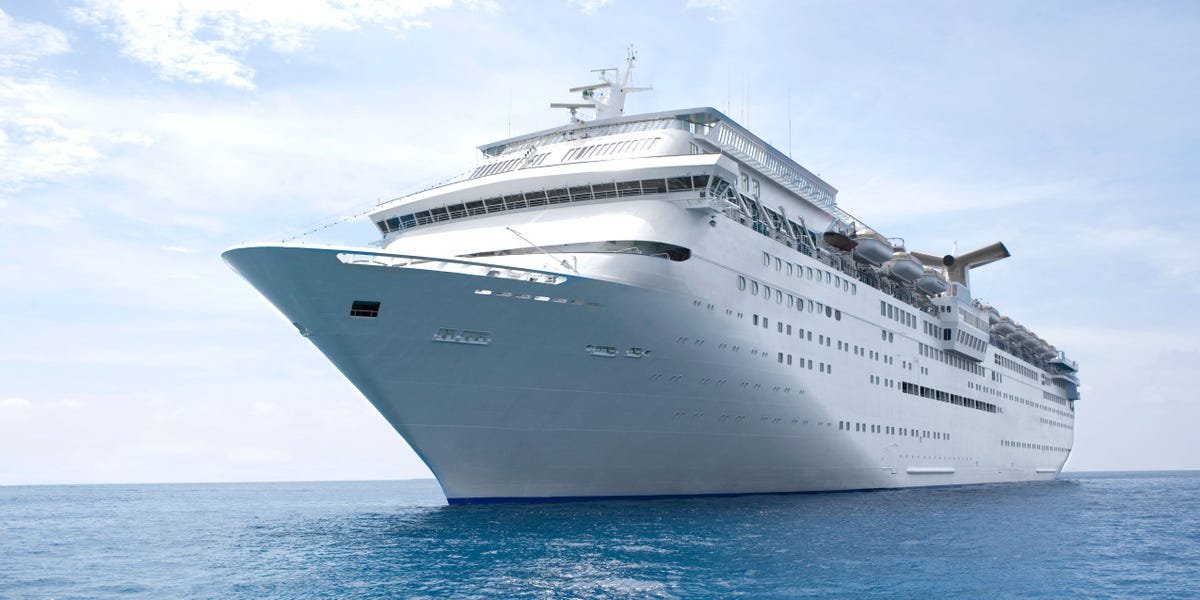
My-family-of-5-went-on-our-first-cruise-We.jpeg

My family of 5 went on our first cruise. We had fun, but there are 4 things I wish we’d known before getting on the ship.

2024 was a big year in our household. All three kids were graduating — our oldest from high school and our twins from junior high.

When it came time to celebrate these achievements, we gave them an option. We could throw a party or use the money for an awesome family vacation instead.

So, before our oldest left for college, we came together one last time for a seven-day trip to Alaska on our first-ever cruise.

We were all excited about the idea, and honestly, everyone had a fantastic time. However, I don’t think any of us were completely prepared our first cruising experience.

Here are four things I wish we had known before boarding the Celebrity cruise ship.

Turning our phones on airplane mode would’ve saved us a lot of money

Our phones are such an important part of our lives that it’s almost unheard of to go without them for minutes, let alone days. However, we purposely didn’t purchase the ship’s WiFi package because we wanted a chance to disconnect and enjoy Alaska’s beauty.

What we were unaware of, however, is that once we got away from land, we should’ve put our phones on airplane mode. Since we didn’t, they switched to a service called Cellular at Sea, which uses satellites to keep the phones connected. However, this can be expensive.

Luckily, after racking up $100 in charges within hours of setting sail, AT&T cut my device off until I contacted them. However, this was a costly lesson.

Next time, we’ll be sure to turn on airplane mode and call our cellular provider to talk about cruise packages.

I wish we would’ve known about the formal night


Chris, his wife, and three sons pose in sweatshirts in front of formal photographs.

We didn’t come dressed for formal night.

Chris Thomas


We’re typically a jeans and T-shirt family. It’s not that we don’t clean up well; it’s just that we don’t do it often. So, a formal night wasn’t even on our radar.

We knew we needed nicer clothing for our dinner reservations on the ship, but we didn’t know that one night, everyone would go all out.

We skipped dinner that night and hit the buffet instead (which, honestly, we did more often than not anyway), and we certainly weren’t the only ones not dressed up.

However, I wish we had known about this in advance, as it would have been exciting to join in on the fun.

Excursions through the cruise line can be expensive


Sled dogs run on a path around a lake, with tall trees and mountains in the background.

Luckily, we found a cheaper excursion to visit a dog-sled team.

Chris Thomas


It’s no secret that cruising can be expensive. So, when it came time to book excursions, we knew they would be pricey. However, we still weren’t prepared for just how pricey they would be.

Luckily, almost every port we stopped at had third-party companies who would pick passengers up at the dock and take them to do fun and exciting things.

For example, being in Alaska, we wanted to learn about and visit a dog-sled team. Although the cruise line offered this experience, we saved more than 50% by booking with an outside party.

However, it’s important to know your schedule and check to make sure the third party will guarantee you’ll be back on time — because if you’re not, the ship won’t wait for you.

Getting a good space on the deck on cruising days can be hard

On the days the ship doesn’t stop at a port, the tables at breakfast, couches by the windows, and lounge chairs by the pool all become valuable real estate.

Instead of waking up early to claim a space near the pool, we chose to sleep in instead. However, because of this, we should’ve been prepared to settle for a less-than-prime space to sit and relax.

Instead of a view of the ocean and the mountains, we got stuck in the middle of the ship near the bathrooms.

Even with these small missteps, none of it was enough to put even the slightest damper on what was a fabulous time aboard our first cruise. The next time we take to the seas, though, we’ll be better prepared for what’s to come.

This story was originally published on January 31, 2025, and most recently updated on February 25, 2026.



Source link

Kelsey Baker, Military and Defense Reporting Fellow

The US Navy sacked a destroyer captain after a ship collision. The incident spotlighted the risks of resupplies at sea.

The US Navy abruptly fired the commander of guided-missile destroyer USS Truxtun after his ship collided with a logistics vessel during a resupply operation at sea earlier this month.

Rear Adm. Carlos Sardiello, who leads US Naval Forces Southern Command and 4th Fleet, relieved Cmdr. James Koffi on Sunday.

The ship collision that resulted in a “loss of confidence” and cost Koffi his command occurred during a replenishment-at-sea operation involving USNS Supply, a fast combat support ship, the Navy said in a statement on the relief.

The cause of the ship collision remains under investigation but highlights the risks of at-sea logistics and the challenges of keeping naval forces on the move.

Replenishments-at-sea are resupplies in which one ship sails closely alongside another to transfer supplies such as fuel or ammunition. These missions are routine operations that support global naval activity by allowing vessels to remain at sea, rather than forcing them to return to port.

At-sea replenishments carry risks, though, that can be exacerbated by a range of factors beyond proximity, such as sea state, crew fatigue, communication breakdowns, and equipment failures.

Two personnel sustained minor injuries during the February 11 collision between the Truxton and Supply.

Koffi, who took over the Truxtun just over a year ago, has been reassigned to Commander, Naval Surface Group Middle Atlantic. The Truxton, which had been deployed for under a month when the ship collision happened, is in port in Ponce, Puerto Rico. The Navy said the ship is undergoing repairs.

Cmdr. Taylor Auclair, who most recently served at US Fleet Forces Command, has been assigned to command the Truxtun.

“The Navy maintains the highest standards for leaders and holds them accountable when those standards are not met,” the Navy said in a press release.

A near-miss during a resupply in 2024 resulted in the relief of the commander of USS John S. McCain, another destroyer. And last year, the Navy relieved the captain of an aircraft carrier after it collided with a civilian merchant vessel during a deployment that experienced a string of major accidents, including the loss of three fighter jets, including one to a friendly-fire incident.

The Truxton deployed to Caribbean waters as part of President Donald Trump’s pressure campaign against Venezuela and narcotics trafficking. The administration sent nearly a dozen warships, among other combat assets, to the region late last year. The military launched strikes on suspected drug-smuggling boats, seized oil tankers, and carried out a January raid inside Venezuela that resulted in the capture of its former president, Nicolás Maduro.

More recently, roughly a dozen Navy warships have been directed to the Middle East as the administration has shifted focus to a ballooning buildup in the region. As of last week, the Truxton is now one of just five ships remaining in the Caribbean


Source link

We-paid-9000-for-the-cheapest-room-on-an-ultra-luxury.jpeg

We paid $9,000 for the cheapest room on an ultra-luxury Caribbean cruise. See inside our ship and 302-square-foot suite.

  • We booked the least expensive suite on a Seabourn ultra-luxury cruise for about $9,000.
  • After crunching numbers and seeing high-end resort prices, this felt reasonable for a family trip.
  • We loved getting to see lots of new places and not worry about having to plan our meals.

I paid $9,000 for what was technically the cheapest room on an ultra-luxury cruise — a price that initially felt steep until I compared it with alternatives.

My family had been planning a multigenerational trip to the Caribbean during the busy period between Christmas and New Year’s Eve, which is also one of the most expensive travel weeks of the year.

We wanted something that felt indulgent without becoming logistically exhausting or financially disproportionate once all the extras were added up.

At first, we looked at high-end beach resorts, but they were commanding eye-watering rates. I saw a few in Barbados and St. Barts charging over $4,000 a night for a room, and that price doesn’t even include food, drinks, and gratuities.

The costs seemed like they could really add up. As we ran the numbers, an all-inclusive cruise began to make more sense.

Plus, we liked the idea of exploring Caribbean destinations we hadn’t visited before without having to deal with multiple hotel check-ins, flights, and transfers. A port-heavy itinerary could allow us to sample several places while unpacking just once.

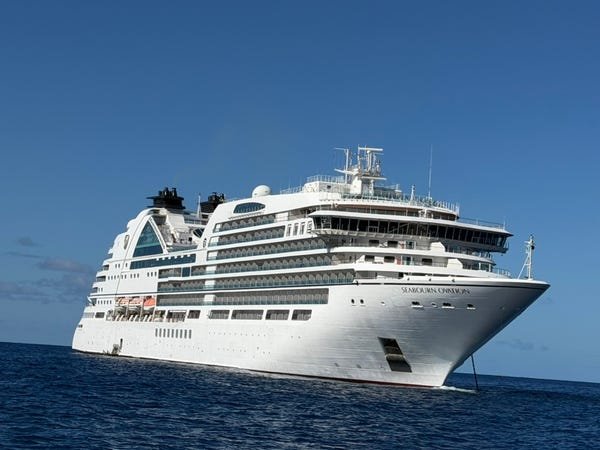
So, our group settled on a 12-night Caribbean cruise aboard the Seabourn Ovation.

Our family booked two rooms and spent about $20,000 on the cruise.

Our group of five set sail on the Seabourn Ovation.

David Morris

We traveled as a group of five: my mother, my brother and sister-in-law, their 7-year-old son, and me.

In total, we booked two entry-level suites — one for my mother and me, and another for my brother, sister-in-law, and their son — bringing the combined cruise fare to just over $20,000 for five people across 12 nights.

This figure includes accommodations, all meals, a selection of soft drinks and alcoholic beverages, and gratuities. We saved some money on my 7-year-old nephew’s fare thanks to the cruise line’s third-guest-at-half-price policy.

By booking through a preferred travel advisor, I also received $400 in onboard credit, plus an additional $250 referral credit (which my brother’s family also received).

Our cabin felt like part of a boutique hotel.


Two beds in cabin on cruise ship

A wide shot of our suite’s interior on the Seabourn Ovation.

David Morris

Our suite measured 302 square feet, plus a 68-square-foot balcony.

Its decor was pretty minimal, but it felt a bit elevated with accents of marble, dark wood, and glass.

Despite being the cheapest option on the ship, this room felt more like it was part of a boutique hotel than just a standard cruise cabin.

The walk-in closet was a pleasant surprise.


Closet with draw chest, hooks on walls

We could fit a lot of clothes in here.

David Morris

The base-category suite felt thoughtfully laid out, with a seating area, a couch, a table, two beds, and a generously sized walk-in closet. Our clothes and bags easily fit inside with space to spare.

In the other suite, a sofa bed was set up as a dedicated sleeping space for my nephew.

The bathroom had dual sinks, a tub, and a compact but functional shower.


White bathroom with large mirror, counter

The bathroom felt spacious enough.

David Morris

The bright-white bathroom featured dual vanities, a soaking tub, and a glass-enclosed shower. My only critique was the shower size, which felt slightly tight compared to ones in some newer ships we’ve sailed on.

Our room’s minibar was stocked exactly to our preferences.


Top of mini fridge with canned drinks, bottle of water

Before sailing, we submitted drink preferences to the Seabourn crew.

David Morris

We were delighted to find our room’s minibar stocked with complimentary ginger beer, juices, and the spirits we requested prior to our sailing.

Twice-daily housekeeping kept everything meticulously refreshed.

Room aside, we were pretty happy with the ship.


Sushi on plates

We had sushi on the ship.

David Morris

Since all of our meals, standard beverages, and gratuities were included in the cost of the cruise fare, we didn’t have to budget or crunch numbers during our trip.

We had most of our dinners in the ship’s main dining room, which was so easy. It felt quite formal, and the rotating menus kept things interesting across the 12-night itinerary.

Passengers also had access to The Patio, a poolside eatery with laid-back fare, and The Colonnade, a more casual spot serving buffet breakfasts and lunches, plus seated themed dinners.

We also enjoyed our opportunities for specialty dining.


Charred seafood and steak in plates

The food at Solis really impressed me.

David Morris

Options for specialty dining included a sushi restaurant and a Mediterranean eatery called Solis, which was a standout for me.

The menu featured steak, lobster, and whole grilled fish deboned tableside. I particularly loved its post-dinner affogatos

Pools, hot tubs, and quieter outdoor spaces were easy to find.


Author David Morris smiling on top deck of cruise

The main deck was lit up at night.

David Morris

The ship has a large main pool surrounded by lots of loungers, though we preferred the smaller hot tubs in other areas.

Quieter spots, like the hot tub at the bow with incredible views of the ocean, quickly became our favorites.

My favorite area on board was The Retreat.


Partially covered deck area with lounge chairs

The Retreat was one of the best places to get work done.

David Morris

Located on the top sundeck, The Retreat was my favorite area on the ship.

The space offered shaded cabanas, a noticeably calmer atmosphere than the main pool deck, and attentive, unhurried service.

To access it, passengers had to pay an additional $150 per day on port days or $250 on sea days.

Booking it on sea days felt especially worthwhile. The quiet setting made it easy to relax or catch up on a bit of remote work on my laptop without feeling out of place.

Excursions cost extra, but they felt well-organized and fairly priced.


Selfie of author and family on cruise ship

We embarked on some excursions at the ports.

David Morris

We mostly booked excursions through the cruise line for peace of mind.

Our favorite was in Saint Lucia, where a packed day included a catamaran ride, volcano hike, mud bath, and snorkeling.

The excursion ran late, but the ship waited for us as it had been booked through them.

Holiday surprises added to the experience.


People in sand on beach with cooler of drinks

We spent the holiday on a beach.

David Morris

On Saint Kitts, the crew arranged a private Christmas Day beach party with grilled lobster and drinks. Later, Santa Claus arrived by Jet Ski to serve caviar and Champagne in the surf.

The cruise’s overall cost felt reasonable considering everything it included.


Group of people dressed up, posing by stairs on cruise ship

The cruise meant we could visit new places without planning out flights and hotels.

David Morris

Ultimately, our cruise averaged out to about $333 per person, per night. That felt surprisingly fair considering how much was included in our 12-night trip.

We also really enjoyed the ship’s intimate size. Compared to other mega-ships carrying thousands of people, this 600-passenger vessel felt calm, navigable, and personal. We never felt overwhelmed by crowds, even on sea days.

Although children aren’t typically the target audience for ultra-luxury cruises, my nephew genuinely had a great time alongside the mostly older guests. His sailing also felt like a great value, considering he was charged half price as a third guest and still had his own proper bed.

For a multigenerational holiday trip that combined ease, variety, and consistent service, the value ultimately justified the price.

All in all, we enjoyed the trip enough to book another Seabourn voyage (at a discounted price) before disembarking.


Source link

I-spent-50-days-on-the-same-Celebrity-cruise-ship.jpeg

I spent 50 days on the same Celebrity cruise ship in 5 different rooms. Here’s how they compare, and which is the best value.

  • I sailed on Celebrity Constellation in interior, ocean-view, veranda, and concierge-class cabins.
  • Some lower-tier rooms felt similar to me, mostly just differing in configuration and floorspace.
  • Concierge class was great, but if I were paying full price I’d go for a standard veranda room.

Last fall, my husband and I sailed on the Celebrity Constellation for 51 nights in a row on six back-to-back cruises.

We did so using offers for discounted sailings that we received while playing in the onboard casino on a Celebrity cruise we’d taken earlier that year.

Our almost two-month journey began in Rome and ended in Tampa, and we spent each sailing in a different cabin trying the various room classes Celebrity offers.

Ultimately, we were able to sail in interior, ocean-view (standard and deluxe), and concierge-class cabins. Here’s how they compared, and which I’d book next time if I were paying full price.

We started in a cozy interior cabin without windows.

Though it would’ve been nice to see the seas from our room, the lack of morning sunshine streaming in can be a blessing after a late night.

Tammy Barr

On every cruise ship, interior staterooms tend to be cheaper and smaller than the other cabin types.

Prices vary widely depending on demand, itinerary, and dates, but I’ve generally seen these rooms listed on the Constellation for about $550 to $700 per person.

It was a well-appointed and basic room of 171 square feet that included a small desk area, refrigerator, television, closet, bed, and bathroom.

The king-sized bed was comfortable and the bathroom felt spacious. I especially liked the generous counter space and large rectangular shower.

After a late night, our interior room’s the lack of morning sunshine was a blessing. It was always easy to sleep in without windows, but I did miss seeing the stellar sunsets at sea from my bed.

I spent two voyages in ocean-view staterooms.


Bed under window in ocean-view stateroom on Celebrity Constellation

I liked that the ocean-view rooms tended to be lower on the ship.

Tammy Barr

In my experience, upgrading from interior to ocean-view can add around $50 to $100 per person to the cost of the cruise.

This room was the same size as the interior one and elements of the space, from the bed to the nightstands, looked nearly identical.

However, the various ocean-view rooms can have different layouts. In one, the window was above the head of the bed, and in the other, we were able to use our window well as a bench or storage area.

These were appointed similarly to the inside cabin, but are located on the outside part of the lower decks, featuring windows of various sizes.

Lower floors tend to experience less movement, so these sailings felt especially quiet and smooth — this is one perk interior and ocean-view rooms tend to have over ones with balconies.

The deluxe ocean-view room offered more space and a larger window.


Large window in deluxe ocean view cabin next to bed on Celebrity Constellation

Our deluxe ocean-view cabin had a fairly large window.

Tammy Barr

A cut above the regular ocean-view cabins, the deluxe room size took us from 171 to 242 square feet.

In comparison, this room felt massive, and the (slightly bigger) window provided outstanding views of the sea. The bathroom was similar-sized to the other classes, and the bed and vanity appeared to be the same.

It was nice to have space for in-room yoga and additional chairs that I used to host friends in the room.

These typically cost about $100 per person more than standard ocean-view cabins. Though it was a pleasant week, I am not convinced the larger room and window are worth the extra cost.

The veranda room featured an outdoor balcony.


Sunset view off of balcony cabin on on Celebrity Constellation

I loved watching the sunset from our balcony.

Tammy Barr

On one voyage we stayed in a standard veranda room, which is also commonly referred to as a balcony cabin. It was slightly longer than the previous staterooms, but at 175 square feet, it was not as large as the deluxe ocean-view.

The setups were quite similar, though I liked that the outdoor balcony added another 40 square feet for relaxing.

The best part of a balcony room is the access to fresh, salty air. I loved leaving the door open to hear the waves lap against the side of the ship.

Again, prices can vary, but I’ve seen balcony rooms on this ship cost about $300 more per person than a typical ocean-view cabin.

The cabin we most enjoyed was the concierge class.


Concierge class room with full-sized couch for entertaining on Celebrity Constellation

The concierge-class room came with a full-sized couch for entertaining.

Tammy Barr

The room itself is a balcony cabin, but is slightly larger than the basic veranda level at 191 square feet plus a 42-square-foot balcony.

Some of that extra space was used for additional shelving, and an even longer couch that could fold out to a queen-size bed.

Most notably, though, this class comes with access to a dedicated concierge to assist us with anything we need around the ship, such as booking excursions.

Our bathroom looked the same as it did in the other rooms.


Bathroom in Concierge Class room on Celebrity Constellation

The bathroom in our concierge-class room wasn’t anything special.

Tammy Barr

The bathroom and closet we had in concierge class resembled the ones in the other rooms. All of them were simple and functional with a good amount of counter space and a decent-sized shower.

However, our bathrobes in here seemed to feel more plush than the ones in the regular cabins — but maybe we just imagined it.

Concierge class comes with many perks.


View of balcony and desk area Concierge Class cabin on Celebrity Constellation

Our concierge-class cabin felt quite spacious.

Tammy Barr

This room class comes with an abundance of perks like complimentary binoculars to use and a bottle of sparkling wine, plus a menu of pillow options to choose from for the bed.

Throughout our week sailing in concierge class, we were able to attend exclusive events, like a lecture on our upcoming ports and a party on the ship’s helipad, where we enjoyed complimentary drinks with the officers as we sailed out of port.

As much as I enjoyed the in-room benefits of concierge class (especially the plush pillows), I do think these exclusive events would get old on a repeat cruise.

This luxe-feeling class can get pricey — and it’s not even Celebrity’s top offering.


Bed in concierge class room on Celebrity Constellation

We stayed in a concierge-class room on the Celebrity Constellation.

Tammy Barr

Oftentimes, concierge class costs nearly twice as much as an interior cabin. I’ve seen rooms on this ship for about $928 a week per person to over $1,000.

Although the service we received felt like what we’d find at a fine hotel, this isn’t even the top class that Celebrity offers.

Next up is AquaClass, which offers similar balcony rooms, but with additional spa-related perks and better locations on the ship (like aft-facing balconies). I’ve seen these for a few hundred more than concierge.

Then, Celebrity has its highest-end suites in The Retreat, a ship-within-a-ship concept with a private restaurant, lounge, and team of dedicated employees. These can be double the price of a concierge room.

Ultimately, the sweet spot for me is the veranda room.


Woman's legs crossed in front of balcony on cruise ship at unset

If I’m factoring in cost and value, my top pick would be the standard veranda room.

Tammy Barr

Celebrity offers cabins for all budgets and I relished the opportunity to try several of them.

It’s no surprise that concierge class — the most expensive offering with the most luxurious perks — was my favorite. However, if I were paying full price for a sailing I’d book a standard veranda room.

In my opinion, it feels like a great value at a more reasonable cost, and paying a few hundred dollars to upgrade from ocean-view or interior room seems worth it.

And, at the end of the day, when the ship is sailing out of port, I just want to be able to watch from my private balcony — not looking through a window or crowding on a shared deck.


Source link

In-my-60s-I-sold-the-home-I-raised-my.jpeg

In my 60s, I sold the home I raised my son in and took a job on a cruise ship. It gave me the freedom I needed.

At almost 70, with my son grown and building his own creative life, I realized the home I had poured myself into for two decades no longer supported the future I wanted.

For almost 20 years, that house looked like the picture of stability. Teal doors, a tire swing, and a sunny studio beside the garage. It was where I raised my son as a single mother and built my photography career. Most people assumed I would stay there forever.


House exterior

The author decided to sell the house were she raised her son.

Courtesy of the author


But when my son graduated and moved to Orlando, something shifted. I had spent years encouraging him to live the life he wanted. Suddenly, I realized I needed to do the same.

The house was a money pit

Behind the postcard charm, a truth emerged. The house no longer supported my future. What once felt like a comfortable sanctuary had become a moneypit, its growing debt reminding me daily that I could not afford the life or the freedom I wanted. I had built a home to raise a confident and independent child, and I had done that, but holding on to the house was keeping me from evolving into the next chapter of my life, a chapter filled with creative possibilities that debt made impossible to pursue.


Baby items

The author purged her belongings before selling her house.

Courtesy of the author


Sorting through the rooms, I noticed how little the objects mattered. It was never the things, only the memories. And memories do not require storage space. I photographed what mattered, donated most of the rest, and watched the remnants of my old life line the curb. Letting go gave me breathing room for the first time in years. I could imagine what came next.

I sold the house and found confidence

Selling the house gave me the financial and emotional space to address something I had avoided for years. I needed extensive dental work, and with missing teeth, I no longer felt confident in my own smile. As a photographer, I had spent decades coaxing others to relax while I avoided the lens myself.


Rio de Janeiro

The author traveled to Brazil after selling her house.

Courtesy of the author


I trusted a cosmetic dentist in southern Brazil, the parent of an exchange student I once hosted, and the cost was far more realistic than in the United States. After surgery and the initial healing, I traveled to Rio. For the first time in years, I felt free to focus my lens and smile at the world around me without hesitation.

The physical and financial weight I had carried for years began to lift. Brazil restored my confidence and reminded me that reinvention was still possible.

I took a job on a cruise

Before selling my house, I had researched ways to travel while working. A friend hosted dinners as a sommelier on cruise ships, and my algorithm kept suggesting photography jobs at sea. I applied to a few with curiosity.


Cruise

The author took a job as a cruise photographer.

Courtesy of the author


While I was still in Rio, the call came. I was offered a contract as the master photographer on a premium luxury cruise line, a role that would take me across multiple continents. To qualify, I needed a Seafarer Certificate, which at my age required extensive medical tests and functional exams. It was humbling, but I passed.

I was notified with less than a week to prepare that my contract would start in Sydney. After a 31-hour flight, knowing I would board within 24 hours, I dropped my bags at the hotel and walked the waterfront from Darling Harbor to the Opera House. A mist hung in the air, turning the city into a soft shimmer through my lens.

Life at sea was a study in contrasts. I photographed in a studio on the 15th floor but slept far below in a windowless cabin. I climbed endless flights of stairs each day. The ancient programs, cameras, and equipment made my days long and tedious. But above deck, the ocean made everything worth it. An unobstructed sunset on open water can shift your entire mood. Each time we reached a new port, the world opened again. My creative mojo began to gel for the first time in a long while, and I realized I was able to absorb so much only because I had let go of so much.

A new home and a new beginning

In six months, I had visited three continents, become healthier than I had been in years, and for the first time in decades, my smile came without hesitation. My financial responsibilities felt lighter, and the spark I had been missing finally came back after years of accumulating belongings and obligations that had kept me anchored when I was ready to sail into another chapter filled with creativity.

While recovering in Miami from an injury, I received another unexpected call. An apartment had become available in the Asbury Park building where I had applied years earlier. It had an ocean view, a community of artists and musicians, and a rent I could actually afford. It felt like the universe was giving me the chance to finally act on my hopes and creativity.

I had let go of everything that once held me back. What I gained was freedom, the freedom to create, to travel, and to smile freely again, with my camera as my ticket forward.


Source link