On Monday, ahead of the Consumer Electronics Show, Huang officially introduced the Vera Rubin architecture, which is now in production and expected to ramp up in volume in the second half of the year. This move follows a blockbuster year for its Blackwell chip, as demand for AI infrastructure continued to surge.
In a press briefing ahead of Huang’s keynote, Dion Harris, Nvidia’s senior director of HPC and AI infrastructure solutions, described Vera Rubin as “six chips that make one AI supercomputer.”
“Vera Rubin is designed to address this fundamental challenge that we have: The amount of computation necessary for AI is skyrocketing,” Huang told the audience during a presentation at the CES.
Huang added that compared to the Blackwell model, Rubin marks a leap in performance, with more than triple the speed, could run inference five times faster, and can deliver significantly more inference compute per watt of energy.
Rubin was first announced in 2024 and has been slated to replace Blackwell ever since. The early debut comes months ahead of the late-2026 timeline Nvidia had previously projected.
Named after astronomer Vera Rubin, who discovered the existence of dark matter, Nvidia said in a press release that the architecture is designed to support more complex, agent-style AI workloads, as well as more networking and data movement.
The Rubin systems are already lined up for deployment across much of the cloud industry. Nvidia said partners, including Amazon Web Services, OpenAI, Anthropic, alongside the upcoming Doudna system at Lawrence Berkeley National Laboratory, all plan to use the new platform.
The accelerated launch comes shortly after Nvidia reported record data center revenue, up 66% from a year earlier, driven largely by demand for Blackwell and Blackwell Ultra GPUs. Those chips have become a benchmark for the current AI boom are widely seen as a test of whether spending on AI infrastructure is sustainable.
Huang has previously estimated that between $3 trillion and $4 trillion could be spent globally on AI infrastructure over the next five years. Nvidia said products and services built on the Rubin platform will begin rolling out from partners in the second half of 2026.
This story is available exclusively to Business Insider
subscribers. Become an Insider
and start reading now. Have an account? .
Every US state has a capitol that houses its state legislature.
Many state capitols are domed buildings similar to the US Capitol, but others are more unique.
Maryland’s State House is the oldest capitol in continuous legislative use in the US.
A state’s capitol can tell you a lot about its history and government.
Many state capitols feature references to their locations, like Kansas’ statue of a Kansa warrior atop its dome, or the New Hampshire State House, which was built with locally sourced granite.
Every capitol has a unique look and distinct origin, and you can learn more about them here.
Montgomery, Alabama
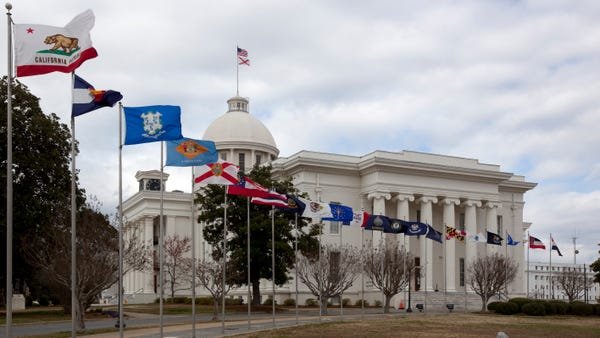
Alabama’s capitol in Montgomery. Carol M. Highsmith/Buyenlarge/Getty Images
Alabama’s capitol is where the Confederacy began, and there’s a brass star on one of the porticos marking the spot where Jefferson Davis was sworn in as its president, according to the Alabama Historical Commission.
The building that stands today was constructed in 1851, after a fire burned down the original building in 1849, according to the Alabama Historical Commission.
One of the more famous parts of the capitol grounds is the Avenue of Flags. It has the flag of every state plus a native rock from each state at each flag’s base. It was dedicated in 1968, according to Exploring Montgomery.
Juneau, Alaska
Alaska’s capitol in Juneau. Leamus/iStock/Getty Images Plus
The Alaska State Capitol, completed in 1931, doesn’t look much different from any other office building in Juneau, save the marble columns. According to Alaska’s official website, it is one of few state capitols to not feature a dome.
As The New York Times reported in 1981, neither the building nor the location were popular with locals — both were chosen because the residents of Alaska had to fund construction themselves — but efforts to move the capitol have failed, even though a vote passed to move the location in the ’70s.
As recently as 2022, Alaskan senators sponsored a bill to move the capital, this time to Willow, reported Alaska Public Media, but for now, Juneau remains the Last Frontier’s capital city.
Phoenix, Arizona
The Arizona Capitol Museum in Phoenix. Visions of America/Universal Images Group/Getty Images
Arizona’s capitol was dedicated in 1901. It stopped being the home of the legislative branches of government in 1960 — and by 1978, all government officials had been moved to other buildings nearby in an area called the Capitol Complex.
The original building was then officially converted into a museum that anyone can visit.
Little Rock, Arkansas
Arkansas’ capitol in Little Rock. Don & Melinda Crawford/Education Images/Universal Images Group/Getty Images
Arkansas’ capitol took 16 years to complete. Construction lasted from 1899 to 1915, and the building was designed by architects George R. Mann and Cass Gilbert, according to the Encyclopedia of Arkansas.
This building replaced the State House, which is now the Old State House Museum, according to Arkansas Heritage.
Sacramento, California
California’s capitol in Sacramento. David Paul Morris/Getty Images
The building was constructed between 1860 and 1874, and designed by Reuben S. Clark. It has been listed as a California Historical Landmark since 1974, according to the Historic State Capitol Commission.
Its design was based on the US Capitol in Washington, DC, among other well-known American buildings, according to the State of California Capitol Museum.
The California State Capitol is located inside the 40-acre Capitol Park, which contains trees from around the world, a World Peace Rose Garden, and the Civil War Memorial Grove.
Denver, Colorado
Colorado’s capitol in Denver. John Moore/Getty Images
The Colorado Capitol, which was completed in 1901, was also designed to look like the US Capitol, but with a Colorado twist: The dome is covered in real gold leaf donated by gold miners to reference the Colorado Gold Rush from 1858 to 1861, according to the Colorado General Assembly.
Hartford, Connecticut
Connecticut’s capitol in Hartford. Rolf Schulten/ullstein bild/Getty Images
The current Connecticut State Capitol is actually the third capitol the state has had since the American Revolution. This one, designed by Richard M. Upjohn, opened in 1879, according to Connecticut’s official state website.
The golden dome is surrounded by six pairs of statues representing agriculture, commerce, education and law, force and war, science and justice, and music, according to the State Capitol Preservation & Restoration Commission.
Dover, Delaware
Delaware’s Legislative Hall in Dover. Harvey Meston/Archive Photos/Getty Images
The Delaware Legislative Hall was dedicated in 1933 and replaced the Old State House, which is opposite the Hall on the capitol mall. It was designed in the Colonial Revival style by E. William Martin, according to Delaware’s official state website.
Washington, DC
The US Capitol. Stefan Zaklin/Getty Images
The United States Capitol is located on Capitol Hill in DC. It was in construction for decades, partially destroyed in 1814, and then finally finished in 1829, according to Architect of the Capitol. The famous, gigantic dome was later added during an expansive addition in 1855, designed by Thomas U. Walter.
Atop the dome sits the “Statue of Freedom,” a 19-foot statue of a woman wearing a battle helmet, holding a sheathed sword in one hand, and a laurel wreath and shield in the other. She’s been there since 1863, according to Architect of the Capitol.
Tallahassee, Florida
Florida’s capitol in Tallahassee. Mark Wallheiser/Getty Images
The current capitol, also called the New Capitol, is located directly in front of the original — together, they form the Capitol Complex. The New Capitol was built in 1977 by architect Edward Durell Stone and the firm of Reynolds, Smith, and Hills, according to the Florida Capitol website.
The website reports the building was designed in an “international style to reflect a modern Florida,” and includes a 22-story central tower.
The Old Capitol still stands, and it was restored to its original 1902 glory in the ’80s. Currently, the building is the Florida Historic Capitol Museum.
Atlanta, Georgia
Georgia’s capitol in Atlanta. Kevin Fleming/Corbis/VCG/Getty Images
Georgia’s capitol was finished in 1889 and designed by Willoughby J. Edbrooke and Franklin P. Burnham, according to the city of Atlanta’s website. It sits on the site of the former Atlanta City Hall/Fulton County Courthouse, which was there from 1854 to 1994.
According to the city, it’s one of 43 National Historic Landmarks in the state.
Honolulu, Hawaii
Hawaii’s capitol in Honolulu. Rolf Schulten/ullstein bild/Getty Images
At the dedication of the Hawaiian capitol in 1969, then-Governor John A. Burns explained the design of the building, the Honolulu Star Advertiser reported.
“In this great State Capitol there are no doors at the grand entrances which open toward the mountains and toward the sea,” he said. “There is no roof or dome to separate its vast inner court from the heavens and from the same eternal stars which guided the first voyagers to the primeval beauty of these shores.”
The building is also surrounded by a reflecting pool meant to symbolize the Pacific Ocean, which surrounds the chain of 137 recognized islands that make up Hawaii, according to the State of Hawaii.
Boise, Idaho
Idaho’s capitol in Boise. Education Images/Universal Images Group/Getty Images
Idaho’s capitol was designed by architects J.E. Tourtellotte and Charles Hummel, and was constructed between 1905 and 1920. According to Idaho’s Capitol Commission, it’s the only capitol in the US that is heated by geothermal water. It comes from a spring 3,000 feet underground.
Springfield, Illinois
Illinois’ capitol in Springfield. Daniel Acker for The Washington Post/Getty Images
According to a pamphlet by the Illinois Secretary of State’s office, the current capitol (the state’s sixth) was completed in 1888, 20 years after crews broke ground. At the time of its construction, the limestone dome was illuminated by 144 gas jets. However, the carbon emitted by those jets eventually turned the dome black.
It took 100 years, but it was finally cleaned in 1986.
Indianapolis, Indiana
Indiana’s capitol in Indianapolis. Education Images/Universal Images Group/Getty Images
According to the Indiana Department of Administration, Indiana’s capitol was completed in 1888, and is home to all executive offices, the Indiana State Senate, the Indiana House of Representatives, and the Indiana State Supreme Court, among others. It was constructed with Indiana limestone.
Des Moines, Iowa
Iowa’s capitol in Des Moines. Carol M. Highsmith/Buyenlarge/Getty Images
The large golden dome is 23 carats, and the entire building is 275 feet tall, according to a visitor’s guide. It’s been re-gilded four times since its construction in 1886.
Overall, Iowa’s capitol has a total of five domes, making it the only capitol in the US with five.
Topeka, Kansas
State capitol in Topeka. Joe Sohm/Visions of America/Universal Images Group/Getty Images
Kansas’ capitol dome is topped with a statue called “Ad astra” (Latin for “to the stars”), which is part of the state’s motto, “ad astra per aspera” (“to the stars through difficulties”), according to the Kansas Historical Society.
The statue itself is a bronze depiction of a warrior from the Kansa tribe (also known as the Kaw Nation or Kanza), who call Kansas home and gave the state its name.
The entire building took 37 years to construct, also according to the Kansas Historical Society, from 1866 to 1903.
Frankfort, Kentucky
Kentucky’s capitol in Frankfort. Bill Pugliano/Getty Images
Kentucky’s capitol was designed by Frank Mills Andrews, according to Kentucky’s official state website. There are also statues lining the front portico that represent Kentucky, the central figure, with Progress, History, Plenty, Law, Art, and Labor as her “attendants,” according to the state website.
The current building is the fourth capitol in the state, and it was completed in 1910.
Baton Rouge, Louisiana
Louisiana’s capitol in Baton Rouge. David LEFRANC/Gamma-Rapho/Getty Images
The Louisiana Capitol is just one of nine capitols in the US that doesn’t feature a dome — and at 450 feet tall (or 34 floors), it’s also the tallest capitol in the country, according to Louisiana’s House of Representatives.
It was dedicated in 1932, without the person who had spearheaded the effort to build it, Senator Huey P. Long, a controversial figure in Louisiana’s history, as reported by Encyclopedia Britannica.
Augusta, Maine
The Maine State House in Augusta. Joe Phelan/Portland Press Herald/Getty Images
The capital of Maine was originally Portland when the state broke away from Massachusetts in 1820. But when Mainers asked for a more centrally located capital city, Augusta was chosen in 1827, according to the Maine State Legislature. The building was completed by 1832.
The State House’s dome is topped with a female figure of Wisdom, which was designed by sculptor W. Clark Noble of Gardiner, a town 6 miles from Augusta.
Annapolis, Maryland
Maryland’s state capitol in Annapolis. Education Images/Universal Images Group/Getty Images
Maryland’s State House is the oldest capitol in continuous legislative use in the US, built in 1779, according to its official website. It’s also the only state capitol to have once served as the US capitol when the Continental Congress met there from 1783 to 1784, according to the website.
Boston, Massachusetts
The Old State House for the Commonwealth of Massachusetts in Boston. Joe Sohm/Visions of America/Universal Images Group/Getty Images
The Massachusetts State House, built in 1789, originally had a wooden dome, but Paul Revere’s own company was responsible for covering it in copper in 1802, CBS News reported.
And the land it was built on? It used to be owned by none other than John Hancock, who was Massachusetts’ first elected governor.
Lansing, Michigan
Michigan’s capitol in Lansing. Bettman/Getty Images
The floors of Michigan’s capitol, which was dedicated in 1879, are made of limestone and have visible fossils in them, as you can see on the capitol’s official website.
St. Paul, Minnesota
Minnesota’s capitol in St. Paul. Raymond Boyd/Getty Images
According to Explore Minnesota, the state’s capitol is the second-largest self-supporting marble dome in the world, only behind St. Peter’s Basilica in Rome.
Architect Cass Gilbert insisted on using Georgia marble for the dome, according to the Minnesota Historical Society. Some were critical of using out-of-state materials, so as a compromise, the contractor leased the quarry in Georgia and imported the rough marble so Minnesotans could do the work in-state.
It took nine years, but was completed in 1905.
Jackson, Mississippi
Mississippi’s state capitol in Jackson. RORY DOYLE/AFP/Getty Images
Designed by architect Theodore Link and constructed between 1901 and 1903, Mississippi’s state capitol was built on the site of an old state penitentiary, according to the state capitol’s official website. The building spans 171,000 square feet and features 4,750 original electric light fixtures, as well as an 8-foot statue of an eagle on the top of its dome.
Jefferson City, Missouri
Missouri’s capitol in Jefferson City. Bettman/Getty Images
Missouri’s state capitol was completed in 1917, according to its official website. Ceres, the goddess of grain, sits at the top of its dome.
In addition to Missouri’s state legislature, the 500,000-square-foot building houses the Missouri State Museum with exhibits about the state’s history and natural resources.
Helena, Montana
Montana’s state capitol in Helena. Education Images/Universal Images Group/Getty Images
The main building of Montana’s state capitol was completed in 1902, and its two wings were added in 1911 and 1912, according to the Montana Historical Society. Inside, the building features works of art such as the mural “Lewis and Clark Meeting Indians at Ross’ Hole,” painted by Charles M. Russell in 1912.
Lincoln, Nebraska
Nebraska’s state capitol in Lincoln. Education Images/Universal Images Group/Getty Images
Nebraska’s state capitol was designed by architect Bertram Grosvenor Goodhue and completed in 1932, according to its official website. The 400-foot tower is topped with a 19-foot bronze statue called “The Sower.”
It is the only state legislature to be unicameral, meaning it only has one chamber.
Carson City, Nevada
Nevada’s state capitol in Carson City. Joe Sohm/Visions of America/Universal Images Group/Getty Images
Nevada’s state capitol was built from 1870 to 1871 out of sandstone sourced from a quarry belonging to Abe Curry, the founder of Carson City, according to Travel Nevada. It features a silver-colored dome, a nod to Nevada’s nickname as “the silver state.”
Concord, New Hampshire
New Hampshire’s state capitol in Concord. Joe Sohm/Visions of America/Universal Images Group/Getty Images
The New Hampshire State House was constructed between 1816 and 1819 with locally sourced granite from Rattlesnake Hill in Concord, according to the New Hampshire Division of Historical Resources.
In 1818, a wooden sculpture of an eagle painted with gold was installed on top of the capitol dome. It was replaced with a copper replica in 1957, but the original sculpture can be viewed on display inside the capitol, according to EverGreene, the architecture firm that restored the State House’s gold-plated dome.
Trenton, New Jersey
New Jersey’s state capitol in Trenton. Bobby Bank/WireImage/Getty Images
After Maryland, New Jersey State House is the second-oldest capitol still in use, completed in 1792, according to the state of New Jersey’s official website. Much of the original building, designed by architect Jonathan Doane, was destroyed in a fire in 1885.
Architect Lewis Broome restored the capitol and added a cast-iron dome plated with copper and gold and featuring the Latin phrase “Fiat Justitia Ruat Coelum,” meaning “There must be justice even though the heavens fall.”
Santa Fe, New Mexico
New Mexico’s state capitol in Santa Fe. Robert Alexander/Archive Photos/Getty Images
New Mexico’s capitol, known as the Roundhouse, is the only round capitol in the US, according to Santa Fe’s official tourist website. Architect Willard C. Kruger modeled the design after the Zia sun symbol, which he also incorporated into the capitol rotunda skylight. The symbol is also part of New Mexico’s state flag.
Albany, New York
New York’s state capitol in Albany. John Greim/LightRocket/Getty Images
When New York’s state capitol in Albany was finally finished after 32 years in 1899, it was at a cost of $25 million, making it one of the most expensive government projects in the US. In 2013, The New York Times reported the figure was equivalent to more than half a billion dollars today.
Inside the granite building, visitors can find 25 murals by William deLeftwich Dodge in the Governor’s Reception Room.
Raleigh, North Carolina
North Carolina’s capitol in Raleigh. LOGAN CYRUS/AFP via Getty Images
Completed in 1840, North Carolina’s 3-story capitol includes a copper dome, according to the National Park Service.
Bismarck, North Dakota
North Dakota’s capitol in Bismarck. KAREN BLEIER/AFP/Getty Images
North Dakota’s state capitol is the tallest building in the state at 241 feet and 8 inches tall, according to the official government website. The Art-Deco structure is nicknamed the “Skyscraper on the Prairie,” according to the Society of Architecture Historians.
Columbus, Ohio
Ohio’s capitol in Columbus. Jumping Rocks/Universal Images Group/Getty Images
Construction of the Ohio Statehouse took over 20 years, from 1839 to 1861, according to its official website. Much of the work was done by prisoners at Ohio Penitentiary, some of whom left graffiti on the walls that was uncovered during restoration work, the website says. Built in the Greek-Revival architecture style out of Columbus limestone, the Statehouse is a designated National Historic Landmark.
Oklahoma City, Oklahoma
Oklahoma’s state capitol in Oklahoma City. Jordan McAlister/Getty Images
Built in 1917, the dome on Oklahoma’s capitol was added more recently, in 2002, according to the Oklahoma Historical Society — it was left out of the original construction due to costs. The grounds of Oklahoma’s capitol also had active oil rigs until 1986. The building was added to the National Register of Historic Places in 1976.
Salem, Oregon
Oregon’s state capitol in Salem. Education Images/Universal Images Group via Getty Images
Oregon’s Art Deco capitol is made of white Vermont marble with a gold statue of an “Oregon Pioneer” atop the dome, according to the capitol’s official website. In-person guided tours are paused due to construction.
Harrisburg, Pennsylvania
Pennsylvania’s state capitol in Harrisburg. John Greim/LightRocket/Getty Images
Pennsylvania’s capitol, designed by architect Joseph Huston, cost $13 million to build when it was completed in 1906, which would be over $403 million today, according to the Bureau of Labor Statistics.
The building’s 272-foot dome is decorated with green glazed terra cotta tile, according to the capitol’s official website.
Providence, Rhode Island
Rhode Island’s state capitol in Providence. Education Images/Universal Images Group/Getty Images
The Rhode Island State House, built between 1895 and 1904, features the fourth-largest freestanding marble dome in the world, according to the Rhode Island Restoration Committee‘s official website. It has been listed on the National Register of Historic Places since 1970.
Columbia, South Carolina
South Carolina’s state capitol in Columbia. Epics/Getty Images
The construction of the South Carolina State House began in 1854, but halted due to the Civil War. The building still features cannonball marks from when the Union army captured Columbia in 1865, according to Discover South Carolina. The State House was finally completed in 1903, and it was designated as a National Historic Landmark in 1976, according to the South Carolina Department of Archives and History.
A portrait of state senator Clementa Pinckney, who was killed in the 2015 shooting at Charleston’s Mother Emanuel AME Church, hangs in the Senate Gallery.
Pierre, South Dakota
South Dakota’s state capitol in Pierre. Education Images/Universal Images Group/Getty Images
South Dakota’s state capitol was constructed between 1905 and 1910, not long after South Dakota became a US state in 1889, according to the South Dakota Bureau of Administration. An annex was added in 1932. The Neoclassical building features scagliola plaster columns, war memorials, and stained-glass windows, according to Travel South Dakota.
Nashville, Tennessee
Tennessee’s state capitol in Nashville. Raymond Boyd/Getty Images
The Tennessee State Capitol opened in 1859. The architect, William Strickland, died during its construction in 1854 and was buried on the capitol grounds along with President James K. Polk and first lady Sarah Childress Polk, according to the Tennessee State Museum.
Austin, Texas
Texas’ state capitol in Austin. James Leynse/Corbis/Getty Images
Completed in 1888, the Texas State Capitol dome is topped with a statue of Libertas, the goddess of liberty, according to the official website for the Texas House of Representatives. It stands 14 feet taller than the US Capitol.
Salt Lake City, Utah
Utah’s capitol in Salt Lake City. Universal Images Group/Getty Images
Utah’s State Capitol was designed by architect Richard K.A. Kletting and was completed in 1916, according to its official website. The rotunda features bronze and marble statues of Native American leaders, LDS pioneers, and US presidents such as Abraham Lincoln, according to its website.
Montpelier, Vermont
Vermont’s capitol in Montpelier. MyLoupe/Universal Images Group/Getty Images
The Vermont State House, designed in the Greek Revival architecture style, dates back to 1857, according to the National Park Service. A statue of Ceres, the goddess of agriculture, adorns the top of the dome.
Richmond, Virginia
Virginia’s capitol in Richmond. Chip Somodevilla/Getty Images
Thomas Jefferson designed Virginia’s state capitol to look like the ancient Roman temple of Maison Carée, according to the Virginia General Assembly‘s official website. The building also features a bronze statue of Jefferson, who is depicted holding the capitol’s architectural blueprints.
Olympia, Washington
Washington’s state capitol in Olympia. Greg Vaughn /VW PICS/Universal Images Group via Getty Images
The Washington State Legislative Building features the tallest freestanding masonry dome in North America at 287 feet, according to the Washington State Department of Enterprise Services. Designed by Walter Wilder and Harry White, it was completed in 1928.
Charleston, West Virginia
West Virginia’s capitol in Charleston. Michael S. Williamson/The Washington Post/Getty Images
West Virginia’s capitol, designed by Cass Gilbert, took eight years and almost $10 million to construct before its completion in 1932, according to its official website. The dome stands at 293 feet tall — 5 feet higher than the US Capitol in Washington, DC.
Madison, Wisconsin
Wisconsin’s capitol in Madison. Scott Olson/Getty Images
Wisconsin’s state capitol features the only granite dome in the US, according to Travel Wisconsin. On top of the dome, a gilded bronze statue by Daniel Chester French is aptly named “Wisconsin.”
Cheyenne, Wyoming
Wyoming’s capitol in Cheyenne. Michael Smith/Newsmakers/Getty Images
Wyoming’s state capitol, constructed between 1886 and 1890, was built in the Renaissance Revival architecture style, according to the Wyoming Department of Administration and Information. It is one of 20 state capitols designated as a National Historic Landmark, according to the National Park Service.
Almost 1,000 flights to and from the Caribbean were canceled on Saturday after the US raid on Venezuela.
The Federal Aviation Administration banned commercial aircraft from flying over Venezuelan airspace before expanding restrictions to much of the Caribbean.
Puerto Rico was the most affected, with 400 flights canceled to or from the main airport in San Juan.
There were also over 140 cancellations in the US Virgin Islands, and 91 in Aruba, which is only about 20 miles off the Venezuelan coast.
Using data from FlightAware, Business Insider put together this map to show the scale of the disruption. You can hover over an icon to see the number of cancellations at the airport.
After airspace restrictions ended early Sunday, airlines added dozens of extra flights to help passengers get where they needed to go.
The region is a particularly popular destination for vacationers seeking some winter sun over the New Year holiday.
American Airlines added 43 extra flights on Sunday and Monday, with room for 7,000 passengers.
For the first time in over a decade, it operated interisland flights in the eastern Caribbean on Monday. Namely, to Puerto Rico from Anguilla and the British Virgin Islands.
American’s expanded schedule included deploying a Boeing 777-300, the largest model in its fleet, to ferry passengers between Miami and Puerto Rico.
United Airlines listed 17 additional flights scheduled for Sunday and Monday, to and from its hubs in Houston, Newark, and Washington, DC.
Delta Air Lines said that it has added space for 2,600 people on Monday. It didn’t immediately provide details of the extra flights it has scheduled.
Airlines have waived change fees and fare differences for passengers flying to or from the Caribbean, to rebook for flights later in the month.
Have you been affected by the travel disruption in the Caribbean? Reach out to this reporter at psyme@businessinsider.com or via Signal at syme.99
China’s missile arsenal is expanding rapidly, and new maps and data from the Pentagon show its size and reach.
China’s missile branch, known as the People’s Liberation Army Rocket Force, has seen substantial growth in recent years as Beijing builds new platforms for conventional and nuclear strike. Its capabilities threaten US, allied, and partner forces.
The latest Pentagon report on China’s military offers estimates for the number of launchers and missiles in the Chinese arsenal, including the country’s intercontinental ballistic missiles, key parts of its nuclear deterrent.
Chinese ICBMs include missiles likethe DF-5 and DF-41. The Pentagon estimates China has 550 ICBM launchers and 400 missiles with estimated ranges beyond 5,500 km, the threshold for classification as an ICBM.
Estimated numbers of missiles and launchers for Chinese missiles, specifically ground-launched cruise missiles (GLCMs), short-range ballistic missiles (SRBMs), medium-range ballistic missiles (MRBMs), intermediate-range ballistic missiles (IRBMs), and ICBMs.
US Department of Defense
For China’s medium-range ballistic missiles, such as China’s DF-21s or hypersonic DF-17, the Pentagon assesses that China has 300 launchers for 1,300 missiles with ranges between 1,000 and 3,000 km. The report also documented increases in the number of launchers and missiles for some notable systems. China’s intermediate-range ballistic missiles, like the DF-26 missile, jumped from 250 launchers in last year’s report to 300 this year, and the number of IRBMs total went from 500 to 550.
These figures illustrate how heavily Beijing has invested in a powerful, diverse missile arsenal. The Pentagon highlighted in its reportthat the Rocket Force could play an important role in a Chinese invasion of Taiwan or other regional conflict.
According to the latest report, China’s rocket force “is prepared to conduct missile attacks against high-value targets, including Taiwan’s C2 [command and control] facilities, air bases, and radar sites” as well as deter or delay the US or its allies and partners from coming to Taiwan’s aid.
The Pentagon said that the Rocket Force has continued to rehearse strikesin recent military exercises, including 2024 drills simulating an invasion or blockade of Taiwan.
The estimated ranges of Chinese missiles relevant to a Taiwan fight.
US Department of Defense
One map in the report shows the estimated reach of Chinese missiles that could be particularly relevant in a fight over Taiwan, weapons such as ship- and shore-launched surface-to-air missiles for knocking out hostile aircraft, as well as anti-ship cruise missiles fired from naval platforms like Chinese destroyers and land-based close- and short-range ballistic missiles.
Another Pentagon map shows the estimated reach of China’s conventional strike missiles, including the DF-17 and DF-21 MRBMs, the DF-26 IRBM, and the newly fielded DF-27 ICBM, which, like the DF-26 and some DF-21s, has an anti-ship role in addition to land attack.
Many of these systems can reach across the first island chain, which includes Japan, Taiwan, and the Philippines, while longer-range missiles extend toward the second island chain and beyond.
The DF-26 is concerning for US planners. The weapon, nicknamed the “Guam Express,” can be armed with either conventional or nuclear warheads and reach US installations on Guam. It can target US aircraft carriers and other surface ships as well.
Bombers, like China’s H-6, carrying CJ-20 cruise missiles could threaten parts of Alaska. And then the ICBMs can range significantly further. The DF-27can, for instance, range parts of the continental United States.
The estimated ranges of Chinese missiles with regional reach.
US Department of Defense
The Department of Defense report also looks at China’s nuclear strike options, such as land-based ICBMs and submarine-launched ballistic missiles.
China test-launched an ICBM, specifically a DF-31B missile, in September 2024, firing it from a position on Hainan Island into the Pacific. The test was the first beyond the country’s borders since the 1980s and allowed China to verify ICBM performance. The Department of Defense suspects weapons tests like these may become more regular.
This year, at a military parade in Beijing, China unveiled new, previously unseen ICBMs, shocking China watchers. Those weapons, including the new DF-61 and DF-31BJ, are not included in the Pentagon’s assessments.
China also continues to bolster its nuclear warhead count, estimated at over 600 warheads. Although 2024 saw a slower rate of production than previous years, the Pentagon still assesses that the Chinese military is on its way to 1,000 warheads by 2030, only a fraction of the US and Russian stockpiles.
The estimated ranges of Chinese nuclear missiles.
US Department of Defense
A Pentagon map estimating the ranges of Chinese missiles available for nuclear strike indicates that three — the DF-5, DF-41, and DF-31 — all have the continental US well within range, while the submarine-launched JL-3 missile can hit most of it from waters near China. On a submarine positioned farther out, more targets could be within striking distance.
Despite these continued advancements, questions remain on the differences in quality and capabilities of Chinese weapons and training compared to the US. The Pentagon also believes China is still navigating the impacts of a vast anti-corruption campaign in the military that has particularly targeted PLARF officials.
The campaign could be detrimental if driven by political agendas, or it could deliverlong-term improvements if it addresses actual problems within the force. At this point, it’s unclear how the changes will affect it.
This story is available exclusively to Business Insider
subscribers. Become an Insider
and start reading now. Have an account? .
US presidents have redecorated the Oval Office in different ways since it was first built in 1909.
Most presidents have sat at the Resolute Desk, but others brought in their own personal furniture.
President Donald Trump has added numerous gold embellishments to the Oval Office.
It’s been nearly 100 years since the Oval Office was first built under President William Howard Taft. Throughout that time, US presidents have each made different design choices to redecorate the formal workspace.
Some presidents, like President George H.W. Bush, have brought in their own furniture to replace the Resolute Desk. Others, like President Donald Trump, have reinstated vintage Oval Office pieces while adding their own personal flair.
Take a look at how the Oval Office has changed through the years.
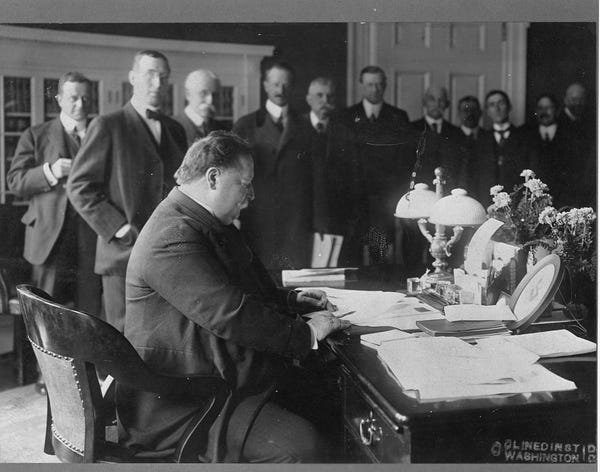
The first iteration of the Oval Office was built under President William Howard Taft in 1909 as part of an expansion of the West Wing.
President William Howard Taft in the Oval Office. B.M. Clinedinst/Library of Congress/Corbis/VCG via Getty Images
Inspired by the White House’s oval-shaped Blue Room, the president’s formal workspace was designed by architect Nathan C. Wyeth.
Taft’s Oval Office featured an olive-green color scheme.
President Franklin D. Roosevelt redesigned and moved the Oval Office as part of another West Wing expansion in 1934.
President Franklin D. Roosevelt in the Oval Office. History Archive/Universal Images Group via Getty Images
The Oval Office was moved to the southeast corner of the White House.
Roosevelt kept a variety of items on his desk, including photos of his sons, ceramic animal figurines, and an appointments easel with his daily schedule, according to the Franklin D. Roosevelt Presidential Library and Museum.
President Harry Truman’s Oval Office was the first to feature a rug with the presidential seal.
President Harry Truman with staff in the Oval Office. FPG/Archive Photos/Getty Images
Truman decorated the Oval Office with the turquoise rug and matching curtains. The walls were painted a lighter seafoam green.
President John F. Kennedy was the first president to use the Resolute Desk in the Oval Office.
The Resolute Desk in the Oval Office. Cecil W. Stoughton/White House Photo
The Resolute Desk, made of wood from the British ship H.M.S. Resolute, was gifted to President Rutherford B. Hayes by Queen Victoria in 1880. Previous presidents kept the desk in the second-floor office of the White House Residence and the Broadcast Room, according to the White House Historical Association.
President Lyndon Johnson replaced the Resolute Desk with his own desk, which he’d used as a US senator and vice president.
President Lyndon Johnson in the Oval Office. Corbis via Getty Images
He also redecorated the Oval Office with white drapes with red trim, evoking the American flag.
President Richard Nixon chose bold hues of blue and yellow to decorate the Oval Office.
President Richard Nixon’s Oval Office. Bettmann Archive/Getty Images
Nixon’s Oval Office rug, in the same blue color as the American flag, was designed by first lady Pat Nixon.
President Gerald Ford changed the color scheme of the upholstery to burnt orange and khaki.
President Gerald Ford in the Oval Office. Historical/Corbis via Getty Images
Ford’s decor included the wheel from the SS Mayaguez, an American container ship that was seized by Cambodian forces in 1975 and rescued at Ford’s direction.
Ford also added a mahogany Seymour tall case clock in 1975.
The Oval Office in 1975. Bettmann Archive/Getty Images
The clock, built between 1795 and 1805, has remained in the Oval Office under every subsequent president since 1975.
President Jimmy Carter brought the Resolute Desk back to the Oval Office.
President Jimmy Carter in the White House’s Oval Office. Corbis via Getty Images
Otherwise, he left most of Ford’s decor.
President Ronald Reagan redecorated the Oval Office during his second term with a rug designed by first lady Nancy Reagan.
Ronald Reagan in the Oval Office. HUM Images/HUM Images/Universal Images Group via Getty Images
The rug featured the presidential seal in the center with sunbeams emerging from the middle, surrounded by a border of olive branches.
President George H.W. Bush redid the Oval Office in shades of blue and gold and brought in the C&O desk that he used as vice president.
President George H.W. Bush’s Oval Office. Susan Biddle/White House via CNP/Getty Images
The Resolute Desk was moved to the Residence Office.
President Bill Clinton chose Arkansas-based interior designer Kaki Hockersmith to give the Oval Office a new look.
President Bill Clinton’s Oval Office. BILL O’LEARY/The Washington Post via Getty Images
Hockersmith designed the yellow curtains and the blue rug with the presidential seal. Clinton also chose to bring the Resolute Desk back to the Oval Office.
First lady Laura Bush designed a new rug for President George W. Bush’s Oval Office.
President George W. Bush in the Oval Office. Greg Mathieson/Mai/Getty Images
The rug featured a sunbeam design with the presidential seal at its center, reminiscent of Reagan’s rug, and a lone star in a nod to Bush’s home state of Texas.
President Barack Obama added striped wallpaper and a new rug with a quote from Martin Luther King Jr.
President Barack Obama in the Oval Office. HUM Images/Universal Images Group via Getty Images
The quote on the border of the rug read, “The arc of the moral universe is long, but it bends toward justice.”
During his first term, President Donald Trump reinstalled Reagan’s rug and added a portrait of President Andrew Jackson.
President Donald Trump in the Oval Office during his first term. Official White House Photo by Joyce N. Boghosian
He also brought back Clinton’s gold curtains and chose a new off-white wallpaper.
President Joe Biden brought back Clinton’s Oval Office rug and added new portraits.
President Joe Biden’s Oval Office. Bill O’Leary/The Washington Post via Getty Images
Biden hung portraits of Franklin D. Roosevelt, Thomas Jefferson, and Alexander Hamilton.
In his second non-consecutive term, Trump has made significant changes to the Oval Office, adding numerous gold embellishments.
President Donald Trump in the Oval Office. Demetrius Freeman/The Washington Post via Getty Images
Many of the gold decor pieces in Trump’s Oval Office came from the White House collection, but Trump also imported some statuettes from his Mar-a-Lago estate in Palm Beach, Florida.
Trump also added flags representing different branches of the US military and additional presidential portraits, with President George Washington in the prominent center spot above the fireplace mantle.
This story is available exclusively to Business Insider
subscribers. Become an Insider
and start reading now. Have an account? .
Donald Trump has brought his love of maximalism and gold furnishings to the White House
He added gold embellishments to the walls and ceiling of the Oval Office and Cabinet Room.
He has also renovated the Rose Garden and demolished the East Wing to build a ballroom.
The Oval Office is looking a little bit different lately.
Every US president makes new interior design choices upon entering the White House, often reflecting their personal tastes or political views.
In his second nonconsecutive term, President Donald Trump has incorporated his love of maximalism and gold furnishings into the Oval Office.
More White House renovations are in the works. The East Wing was demolished in October to make way for the construction of a $200 million, 90,000-square-foot state ballroom.
Take a look inside Trump’s redecorated White House to see the changes he’s made since former President Joe Biden left office.
The White House did not respond to a request for comment.
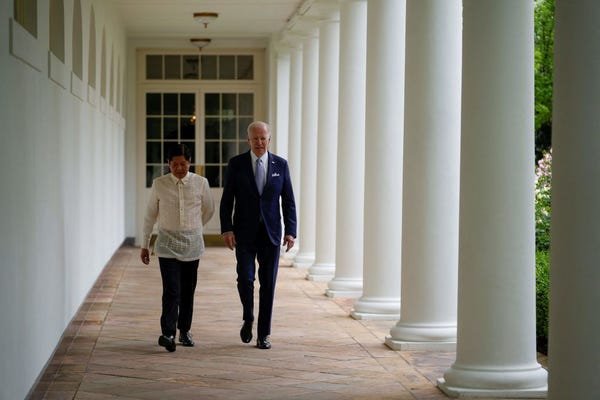
The West Wing Colonnade was unadorned during the Biden years.
Philippine President Ferdinand Marcos Jr. and Joe Biden in the West Wing colonnade. CAROLYN KASTER/POOL/AFP via Getty Images
President Joe Biden walked through the West Colonnade alongside Philippine President Ferdinand Marcos Jr. in May 2023.
Trump added a “Presidential Walk of Fame” where Biden was depicted with a photo of an autopen producing his signature.
The “Presidential Walk of Fame” along the West Wing Colonnade. Demetrius Freeman/The Washington Post via Getty Images
Trump has criticized Biden’s use of an autopen and sought to invalidate Biden’s pardons and commutations that were signed with the device.
The Palm Room, which connects the White House Residence to the West Colonnade, was previously furnished with plants, green benches, and a tile floor.
The Palm Room of the White House in 2023. BRENDAN SMIALOWSKI/AFP via Getty Images
The Palm Room leads out into the Rose Garden.
In September, Trump refinished the room with a new chandelier and a white marble floor.
The restyled Palm Room of the White House. Andrew Harnik/Getty Images
“New lobby leading to Oval Office — Magnificent marble floor, compliments of President Donald J. Trump!” Trump wrote on Truth Social.
During Biden’s time in the White House, the door to the Oval Office was not decorated in any way.
Joe Biden leaving the Oval Office. Tom Williams/CQ-Roll Call, Inc via Getty Images
Aside from a presidential seal above the door to the West Wing, the walls were empty.
President Donald Trump added new gold signage outside the Oval Office.
A new sign outside the West Wing of the White House marks the entrance to the Oval Office. Brendan Smialowski/AFP via Getty Images
The gold lettering spelling out “The Oval Office” was set in the Shelley Script font. Trump also added a gold decal to the top of the door.
Biden’s dark-blue Oval Office rug was originally designed for Bill Clinton.
Joe Biden’s Oval Office rug. Official White House Photo by Adam Schultz
The rug, which featured the presidential seal in the center, was designed by Kaki Hockersmith, an interior designer based in Little Rock, Arkansas.
Upon returning to the White House, Trump replaced it with a lighter rug used by Ronald Reagan.
Donald Trump’s Oval Office rug during his first term. Official White House Photo by Joyce N. Boghosian
The rug’s design includes the presidential seal, a sunbeam pattern, and olive branches along the border as a symbol of peace.
Trump also used the rug during his first term.
Biden only had two flags in the Oval Office.
Joe Biden in the Oval Office. Alex Wong/Getty Images
Biden displayed an American flag and a flag with the presidential seal.
Trump added the flags of different branches of the US military.
Donald Trump at the Resolute Desk. JIM WATSON/POOL/AFP via Getty Images
Trump’s Oval Office features the flags of the Army, the Marine Corps, and the Navy.
During Biden’s presidency, the Oval Office’s ceiling didn’t feature any additional embellishments.
Joe Biden on a video call in the Oval Office. Official White House Photo by Erin Scott
The crown molding on the ceiling matched the cream wallpaper.
Trump added gold trim to the crown molding on the ceiling.
Donald Trump’s Oval Office. Avi Ohayon /Handout/Anadolu via Getty Images
The gold embellishments matched the gold curtains, which remained in place from Biden’s presidency.
Biden’s Oval Office featured a prominent portrait of President Franklin D. Roosevelt.
Donald Trump and Joe Biden in the Oval Office. Alex Wong/Getty Images
Biden also hung portraits of Thomas Jefferson and Alexander Hamilton together to symbolize the benefits of different opinions, as well as portraits of George Washington and Abraham Lincoln.
Trump added additional portraits and numerous gold embellishments to the space.
Donald Trump in the Oval Office. Demetrius Freeman/The Washington Post via Getty Images
Trump added more portraits with decorative frames to create an Oval Office gallery wall. He also replaced Biden’s portrait of FDR with one of George Washington and displayed historic gold urns and baskets from the White House collection on the mantle.
Trump also incorporated smaller gold details, such as coasters, branded with his name.
A gold coaster in Donald Trump’s Oval Office. MANDEL NGAN/AFP via Getty Images
Trump’s love of gold decor is well-known. His Trump Tower penthouse in New York City features numerous gilded ceilings, furniture pieces, and artwork. Trump’s Mar-a-Lago club in Palm Beach, Florida, also includes a ballroom covered in gold from floor to ceiling.
Before Trump took office for the second time, the presidential seal on the ceiling of the Oval Office was a subtle adornment.
The ceiling of the Oval Office before President Donald Trump took office. PAUL J. RICHARDS/AFP via Getty Images
President Franklin D. Roosevelt added the plaster relief of the presidential seal to the Oval Office during a 1934 White House renovation.
Trump added gilded gold detailing to the design, making it more visible.
The new ceiling of the Oval Office. ALLISON ROBBERT/AFP via Getty Images
Both the seal and the stars surrounding it were covered in gold paint.
Biden chose to display President Barack Obama’s official White House portrait in the Entrance Hall.
The Bidens in the White House Entrance Hall next to a portrait of Barack Obama. BRENDAN SMIALOWSKI/AFP via Getty Images
The hyperrealistic portrait, painted by Robert McCurdy, was unveiled at the White House in 2023.
Trump replaced Obama’s portrait with a painting of himself.
A new painting of Donald Trump in the White House Entrance Hall. Win McNamee/Getty Images
Artist Marc Lipp painted a rendering of an Associated Press photo that captured Trump raising his fist in the air following an assassination attempt at a rally in Butler, Pennsylvania.
The White House Rose Garden previously featured a grass lawn.
Joe Biden in the Rose Garden. SAUL LOEB/AFP via Getty Images
Before it was used for press conferences and events, first lady Ellen Wilson originally designed the outdoor space as a formal flower garden in 1913.
First lady Melania Trump added a limestone border around the lawn in 2020.
Trump decided to pave over the grass in the Rose Garden, turning it into an outdoor terrace rebranded as “The Rose Garden Club.”
The new Rose Garden. ANDREW CABALLERO-REYNOLDS / AFP
Trump told Fox News that the grass in the Rose Garden was impractical for large events because it stayed wet when it rained and was too soft for attendees who wore high heels.
“The grass just doesn’t work,” Trump told Fox News host Laura Ingraham in March.
Workers began transforming the lawn into a patio in June, replacing the grass with concrete and stone tiles. “The Rose Garden Club” was completed in August.
Biden and previous presidents occasionally held large events, such as state dinners, in decorative tents on the White House lawn.
Joe Biden hosted a state dinner for Australian Prime Minister Anthony Albanese in a tent on the White House lawn. Astrid Riecken For The Washington Post via Getty Images
The East Room, the largest state room in the White House, has a seating capacity of 200 people. When Biden hosted Australian Prime Minister Anthony Albanese in 2023, he held the state dinner in a tent outside the White House to accommodate the larger crowd of over 300.
Trump announced plans to build a state ballroom with a capacity of 650 in July and demolished the East Wing for its construction in October.
The rubble of the East Wing of the White House. Eric Lee/Getty Images
The 90,000-square-foot ballroom, which the White House called a “much-needed and exquisite addition,” will cost approximately $300 million to construct. Trump and other “patriot donors” will foot the bill for the project, the White House said.
During the Biden administration, the Cabinet Room featured minimal artwork and decor.
The Cabinet Room during the Biden administration. ANDREW CABALLERO-REYNOLDS/AFP via Getty Images
Located in the West Wing near the Oval Office, the Cabinet Room overlooks the Rose Garden and features a large, oval-shaped mahogany table purchased by President Richard Nixon in 1970, according to Obama’s archived White House website.
Seating at the table is assigned in order of when each department was established, with the oldest departments sitting nearest to the president.
Trump added additional paintings to the walls and gold furnishings along the ceiling.
Donald Trump in a Cabinet meeting. Anna Moneymaker/Getty Images
Trump chose portraits of past presidents, including George Washington, John Adams, Andrew Jackson, James Polk, Abraham Lincoln, Franklin D. Roosevelt, and Dwight Eisenhower, to decorate the Cabinet Room.
“The vaults are where we have a lot of great pictures and artwork,” Trump told reporters in July. “And I picked it all myself, I’m very proud of it.”
The Cabinet Room featured eagle-shaped wall sconces during Biden’s presidency.
Joe Biden in the Cabinet Room. Demetrius Freeman/The Washington Post via Getty Images
The eagle sconces were installed as part of a 2004 refurbishment of the Cabinet Room that also included a new rug, curtains, and paint color.
Trump added 24-karat gold decals to the walls and installed matching gold curtains.
Donald Trump in a Cabinet meeting in the Cabinet Room. MANDEL NGAN/AFP via Getty Images
“Some of the highest quality 24 Karat Gold used in the Oval Office and Cabinet Room of the White House,” Trump wrote in a Truth Social post in September. “Foreign Leaders, and everyone else, ‘freak out’ when they see the quality and beauty.”
Director Carl Eric Rinsch made so many failed, seven-figure option bets after Netflix wired him $11 million that his broker at Wells Fargo tried — and failed — to stop him, a New York fraud jury heard on Tuesday.
“I can afford to lose the money,” Rinsch said, according to testimony by his former Wells Fargo advisor, Ronald See.
And when the brokerage hit the brakes — limiting him to $250,000 per transaction — the show developer was undaunted.
On March 30, 2019, just three weeks after receiving the $11 million, Rinsch instructed See, of Wells Fargo Advisors, to wire his remaining $8.5 million to Citibank so he could establish a new brokerage account with Charles Schwab.
“They won’t put restrictions on me there,” Rinsch wrote See in a letter shown to jurors.
Rinsch, 48, is on trial in federal court in Manhattan, fighting charges that he had no right to use the $11 million Netflix sent him on anything other than “White Horse,” the 120-minute TV series he’d already spent $44 million of Netflix’s money on. (Rinsch ultimately never finished a single episode of the clones-versus-humans sci-fi thriller.)
Defense lawyers counter that the $11 million was actually Rinsch’s contractually-promised payment for having completed principal photography, and was his money to spend as he pleased.
Either way, testimony on Tuesday by two of Rinsch’s former financial advisors showed that he was eager to spend the cash prosecutors say the director had quickly moved into his Wells Fargo account.
The streamer wired Rinsch the $11 million on March 6, 2020, as the COVID-19 pandemic halted film production worldwide.
Over the next three weeks, he then lost some $5.8 million, almost all of it on highly risky options trades involving Gilead Sciences, which was developing COVID-19 treatment drugs. (See would earn a $22,000 fee on these losses, the defense pointed out on cross-examination.)
The director was off to the races again as soon as he switched to Charles Schwab, according to testimony.
“I could send $3 mm personal to get started,” he wrote to his new financial advisor, Adam Checchi, who also testified on Tuesday.
“I understood that to mean three million from his personal funds,” Checchi said under questioning by a federal prosecutor.
Checchi told jurors that Rinsch would soon lose almost $6 million more, mostly on failed, highly risky bets that Gilead’s stock would rise and that the S&P 500 would decline.
“I’m not a broad, diversify kind of guy,” Rinsch explained in a late March 2020 email, adding that he pursues “aggressive” option trading “fully expecting to lose it all.”
Earlier in the day, former Netflix executive Peter Friedlander, who on Monday called Rinch’s project “visionary,” completed a second day of testimony.
On overhead screens, defense attorney Benjamin Zeman showed Friedlander — and the jury — emails from August 2019, in which Rinsch begged for “immediate support” with casting in Brazil.
“Show is set to collapse,” Rinsch wrote.
The defense is blaming the implosion of White Horse on Netflix’s decision to pull support for the project in September 2020.
In the email chain projected throughout the courtroom on Tuesday, Zeman attempted to show jurors that a year earlier, Friedlander was already cold toward the show developer’s requests for help.
“His own delays in decisions have caused this,” Friedlander wrote in forwarding Rinsch’s email to Mike Posey, an original series vice president, and others, including production executive Shelley Stevens and Rahul Bansal, an original series director.
Rinsch would continue asking for support — and money — for another six months before Netflix forwarded the $11 million payment at the center of the trial. The project was ultimately written off by Netflix as a tax loss eight months later, in November 2020.
Rinsch’s trial is expected to continue through next week. He faces up to 90 years in prison if convicted of wire fraud, money laundering, and engaging in unlawful monetary transactions.