Netflix is fully aboard the stream-flation bandwagon.
The streaming giant just raised prices for its three plans, a little over a year after it last asked subscribers to pay more.
Netflix’s standard ad-free plan now costs $19.99 a month, up from $17.99, while the premium 4K plan also got a $2 increase to $26.99 a month. The ad-supported Netflix subscription rose by a dollar to $8.99 a month.
While Netflix customers may complain about higher prices, most other major streamers have also steadily gotten more expensive.
Disney+, HBO Max, Peacock, and Apple TV+ all raised prices last year following Netflix’s January 2025 hike. Disney has raised the price of its flagship streaming service in each of the past four years.
Hollywood is trying to squeeze more money out of each streaming subscriber to improve or achieve profitability.
However, there are signs that consumers are sick of stream-flation.
Free streamers like YouTube have become increasingly popular in recent years, growing in viewership share on US TVs, as measured by Nielsen. Increased costs could be driving some consumers toward free streaming services ranging from the Roku Channel to Fox’s Tubi.
The good news for Netflix is that it still looks like a solid deal for consumers after its latest round of price hikes.
Netflix’s ad plan is cheaper than comparable plans for Disney+, Hulu, HBO Max, and Peacock (it’s the same price as Paramount+ and the stand-alone version of Amazon’s Prime Video).
Netflix also offers a far larger library than most of its rivals and is watched more frequently than its peers. That made Netflix the best value by hours watched, UBS analysts wrote last year.
Still, the new price hike won’t quiet the critics who said Netflix’s failed pursuit of WBD was a sign the streamer was running short on avenues for organic user growth.
This story is available exclusively to Business Insider
subscribers. Become an Insider
and start reading now. Have an account? .
My youngest daughter, Tessa, just accepted an internship with PwC in San Francisco. We’re overjoyed she’ll be home for a few months after heartlessly leaving us 18 months ago to study accounting at Wake Forest in North Carolina.
What surprised me: her internship isn’t until summer 2027. I had no idea these things were locked in so far ahead.
With AI reshaping so much, I can’t help wondering what consulting will look like by the time she starts. This week brought some clues, via another megascoop from Business Insider’s Eugene Kim.
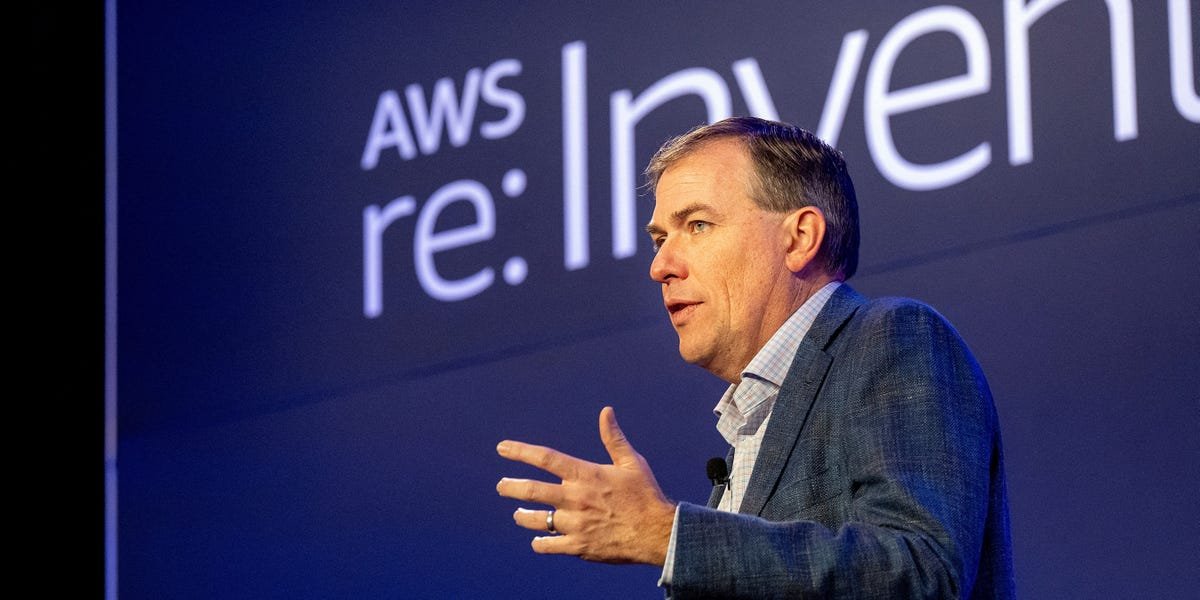
He reported on ProServe, Amazon’s in-house cloud consulting arm. The unit influences more than $10 billion in annual revenue for AWS. Read the full story, but here’s the big takeaway: AI is driving radical change inside ProServe, offering a glimpse of where the broader consulting industry may be headed.
I asked Polly Thompson, who covers the Big Four at Business Insider, for her view:
This confirms many trends I’ve heard from these firms. How to deliver value and how to charge for it in the AI era — that’s the big question.
ProServe focuses on technical consulting for AWS clients, while the Big Four span audit, tax, risk, and strategy. That diversification could make them more resilient. AI isn’t the only force at work: global instability is increasing demand for complex risk consulting, for example.
AI’s ultimate impact on consulting remains unclear. Firms are embracing the technology and adapting their business models, but unevenly.
Hiring shows the divide. McKinsey, Accenture, and PwC are reducing hiring. EY is generally increasing entry-level hiring. KPMG isn’t making hiring changes.
Sign up for BI’s Tech Memo newsletter here. Reach out to me via email at abarr@businessinsider.com.
Newly captured satellite imagery from the ongoing conflict with Iran shows it’s biggest warship — a former oil tanker converted into a floating base — on fire at a military port.
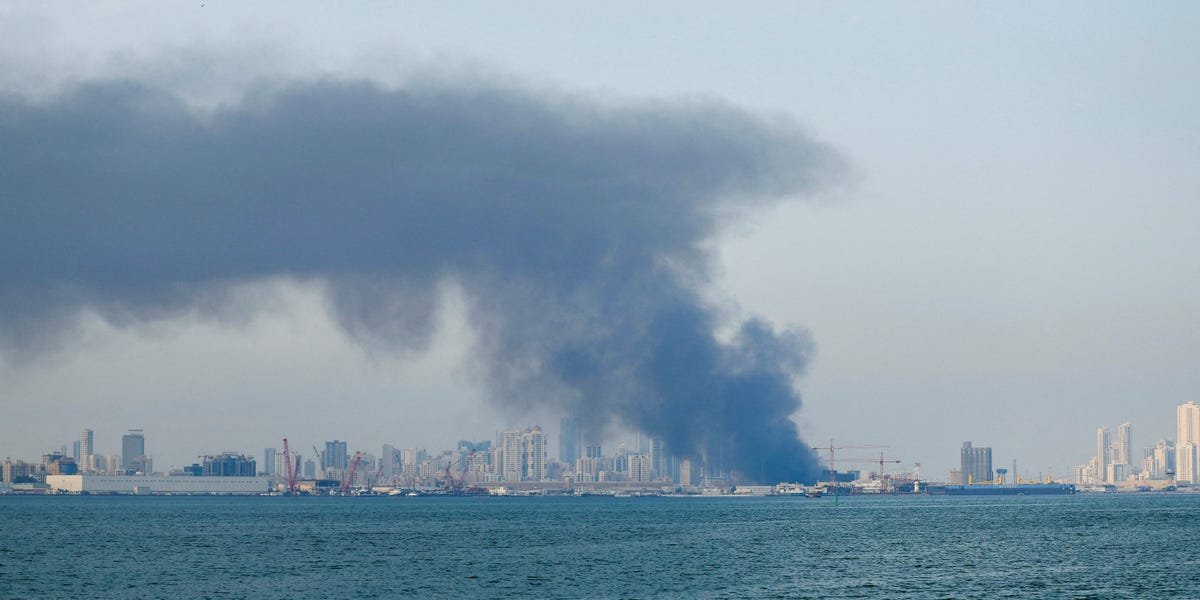
The imagery, captured on Monday by the US commercial imaging firm Planet Labs PBC and obtained by Business Insider, shows a massive plume of smoke rising from what analysts identified as the IRINS Makran in the harbor at Bandar Abbas, an Iranian port city adjacent to the Strait of Hormuz and the Makran’s home port.
President Donald Trump vowed on Saturday to “annihilate” Iran’s navy as he announced the start of “major combat operations” against the country.
A close-up view of the Makran.
Planet Labs PBC’
US Central Command, which oversees Middle East operations, said on Monday that it has destroyed all 11 of Iran’s ships in the Gulf of Oman. It was not immediately clear if that tally includes the Makran.
Commercial satellite imagery captured by US spatial intelligence firm Vantor on Sunday showed destroyed and sinking vessels, as well as damaged buildings at the Iranian naval base in Konarak.
Every time Jake publishes a story, you’ll get an alert straight to your inbox!
Stay connected to Jake and get more of their work as it publishes.
Iran converted the Makran, an oil tanker, into a forward base ship in 2020 and commissioned the vessel into the navy the following year. Technically not a combat ship, it is still Iran’s largest warship and can carry roughly a dozen helicopters.
The deck can accommodate missile and rocket artillery launchers, as well as vertical takeoff and landing drones. The vessel has completed several long-distance voyages, including one that circled the globe.
The Makran is one of several Iranian warships that were once civilian vessels. In recent years, Tehran has converted several container ships into militarized drone carriers.
The Makran is a tanker converted into a forward base ship.
Iranian Army via AP
CENTCOM said it struck one of these vessels, the Shahid Bagheri, in the opening hours of the conflict over the weekend. The carrier’s status is unknown.
The US strikes initially focused on Iran’s naval forces, command and control facilities, intelligence infrastructure, and ballistic missile sites, Gen. Dan Caine, the chairman of the Joint Chiefs of Staff, told reporters on Monday.
US and Israeli aircraft have also targeted Iranian air defenses, paving the way for both militaries to secure air superiority over large parts of the country.
Additional satellite imagery shows widespread damage across Iran, including at drone and air bases, official compounds, and missile bases. Other military infrastructure, such as radar systems, was also struck.
Iran has retaliated by launching waves of missiles and drones at bases hosting US forces across the Middle East, Israel, and most other countries in the region, including the Gulf states.
The US and its allies have said that they have intercepted hundreds of Iranian missiles and drones. Some have slipped past air defenses, though, killing more than a dozen people across the region, including six American service members.
Elon Musk’s X is promoting itself to potential advertisers with a new deck that underlines its commitment to brand safety, according to the leaked deck shared with Business Insider.
It comes after the AI chatbot shared “deepfake” sexualized images of women and children — a practice it stopped in late January after a backlash. The company said it would no longer generate AI images of real people in sexualized clothing.
The deck shows X is also promoting its use of “blocklists.” A blocklist is a list of sites or accounts that advertisers explicitly prevent their ads from appearing on. In the past, Musk’s X has taken legal action against advertisers who have used such tools to safeguard their ad placements.
X touts its use of Grok to make the platform safe for advertisers.
X
In the deck, X said it had achieved a nearly 100% perfect “brand safe” or suitable scores using Grok, as measured by tech companies IAS and DoubleVerify.
It mentions ways it uses Grok to review posts and users’ profiles for brand suitability. For instance, if a user regularly posts about sensitive topics, the system can block ads from appearing alongside that user. X said it can target up to 4,000 keywords and 2,000 author handles this way.
Every time Lucia publishes a story, you’ll get an alert straight to your inbox!
Stay connected to Lucia and get more of their work as it publishes.
The deck also promotes X as a place for brands to manage crises in real time.
X didn’t comment on the deck when reached by Business Insider.
X says its blocklists stop ads from appearing on up to 50 specific publishers per ad group.
X
The deck was shared at an event for clients and agencies on February 26. The 2026 Brand Suitability Webinar was billed as “empowering brands with new tools for safety & reach on X.”
It’s unclear if X’s newest charm offense will sway advertisers.
X is one of the smallest social media platforms by ad spending, with EMARKETER estimating it has less than 1% of worldwide digital ad revenue. It has an outsized influence because of its use by public figures and as a news channel.
Since Elon Musk bought X, formerly known as Twitter, in 2022, its relationship with advertisers has been fraught, with Musk publicly criticizing advertisers that cut or limited advertising on the platform.
The deck details what X says it’s done to be brand-safe.
X
Advertisers left en masse after Musk’s acquisition. EMARKETER estimated its revenue would reach $2.2 billion in 2026, below its pre-acquisition level of $4.5 billion.
In 2023, Musk lashed out at advertisers, using an expletive on stage at an event directed toward those who had left.
And X is suing an advertiser trade group, alleging that its members conspired to boycott the platform in contravention of antitrust laws. The group denied it violated antitrust laws. The case is pending, with the last filing occurring on February 19.
X has also been criticized for loosening moderation and account-verification rules and for reinstating some banned accounts of provocative figures.
The US and Israel’s fight with Iran shows just how key air defenses have become in higher-intensity modern wars, conflicts increasingly defined by long-range missile and drone attacks.
The conflict, which killed Iran’s Supreme Leader, has been heavily focused on air defenses, either knocking them out to permit air operations or leaning hard on them to shield bases from retaliatory strikes.
The US and Israel said their strikes focused on Iran’s air defenses and missile launch sites, and US and partner forces in the countries attacked in response relied on a mix of air defenses to fend off Iranian weapons.
Kuwait, home to installations like Ali Al Salem Air Base that hosts US troops, reported on Sunday that it had faced 97 ballistic missiles and 283 drones. Defeating this kind of barrage demands deep air defense arsenals.
When air defenses fall short
US Central Command on Saturday said the strikes on Iran aimed to “dismantle the Iranian regime’s security apparatus” and prioritized locations “that posed an imminent threat,” listing Iranian air defense capabilities, missile and drone launch sites, and military airfields as targets.
US Central Command shared footage of strikes on Iranian targets, including Iranian air assets.
US Central Command/X
The Israel Defense Forces said that they had “dismantled the majority of the aerial defense systems in western and central Iran” and are “paving the way towards establishing aerial superiority over the skies of Tehran.”
On Saturday, Israel used around 200 jets to drop hundreds of bombs on 500 targets on Saturday, including Iran’s air defense systems and missile launchers.
Having insufficient air defenses can leave a country severely vulnerable in a war of ranged strikes by creating a permissive environment for enemy airpower, as well as munitions, to find their targets, be they military installations or senior leadership. Over the past day, Iran has suffered serious losses to both.
Air defenses matter in a missile fight
Air defenses have been critical for the US and its allies this weekend.
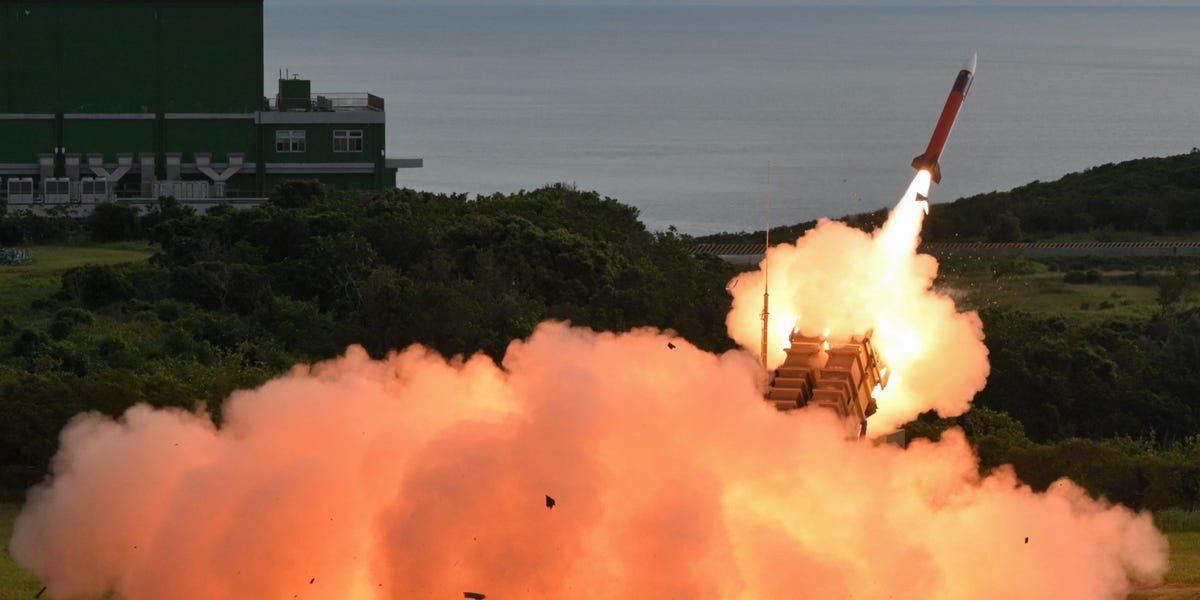
CENTCOM said it was able to defend against hundreds of Iranian missile and drone attacks, with no casualties. A US official told Business Insider that US-made MIM-104 Patriot surface-to-air missile systems and Terminal High Altitude Area Defense, or THAAD, batteries were used to protect the Middle East from Iran’s retaliatory strikes. Warship-launched interceptors and aircraft were also involved, as they’ve been in other engagements involving big Iranian missile barrages.
Nations attacked by Iran, countries like Qatar, the United Arab Emirates, and Bahrain, said they were largely able to intercept Iran’s missiles, sometimes stopping entire waves. Details are still emerging, but damage appears minimal. Casualties, likewise, have been extremely limited thus far, at least compared to what they might have been otherwise.
Some of Iran’s retaliatory strikes were successful, but countries reported intercepting entire waves of attacks with air defenses.
Stringer/REUTERS
That was only day one though. Iran has a large missile arsenal, and it has pledged to continue its attacks. Continued large barrages will put tremendous strain on air defense arsenals.
Along with other current and potential conflicts, Iran is yet more evidence that much of modern war has become ranged missile fights. If you don’t have good air defenses, you may very well lose.
This is a very different way of war compared to the fights against terrorists and insurgencies that the US and its allies waged for decades in the Middle East.
More would be needed for higher-end threats
China and Russia both field substantial missile arsenals that they are continuing to expand. The West is aware, but the war in Ukraine, where Russia bombards Ukrainian cities nightly with massive mixes of missiles and drones, has been a real wake-up call.
Ukraine has been developing its own air defenses while seeking additional options from partners. Each barrage is extremely demanding. In one engagement, Ukraine expended nearly $100 million in interceptors fighting off Russian attacks.
Much of the West has allowed air defense arsenals to atrophy, but there are significant new investments in air defense across the NATO alliance.
The NATO chief pledged a fivefold increase in air defenses, driven by the alliance’s increased spending. Established manufacturers are increasing production, and new systems are being created. President Donald Trump wants his Golden Dome missile defense system to protect against complex attacks from Russia and China.
But air defense systems and their missiles are expensive and time-consuming to make, and the industry is struggling to keep up with increasing demand, even with companies boosting output.
Mick Ryan, a retired Australian major general and strategist with a focus on future war, said that the heavier demand could cause new problems. Patriot interceptor missiles are critical to Ukrainian defenses, but are in heavy demand at present in the Middle East,” he wrote on Saturday.
Russia, he said, will want to “exploit any temporary Ukrainian capability gaps while American attention and production capacity focuses on Iran.”
The US will also need to maintain a strong air defense posture in both Europe and the Pacific as well, even as it fights Iran.
Ryan warned that concentrating US missile defense assets in the Middle East could degrade its deterrence in the Pacific: “Every carrier in the Gulf, every squadron in Europe, every missile defence battery protecting Middle Eastern countries represents capacity unavailable for containing Chinese expansion.”
Israel shared new footage of it bombing two of Iran’s American-made fighter jets preparing to take off as joint US-Israeli combat operations against Iran continue.
Iran’s fleet includes several vintage US aircraft, including the McDonnell Douglas F-4 Phantom II and legacy Northrop Grumman F-5s. Along with Iran’s few US-provided Tomcats, which were iconized in the “Top Gun” movies, these aircraft are part of an aging Iranian Air Force that has limited air combat capabilities against advanced Israeli and US aircraft.
The Israel Defense Forces video captured strikes on the F-5 and F-4 jets at an airport in Tabriz in western Iran on Sunday morning. The IDF said that it hit the aircraft as they were preparing to take off. The footage shows direct hits on each aircraft.
🎯STRUCK: Two F5 and F4 fighter jets at the airport of Tabriz in western Iran, as the jets were prepared for takeoff
The strike was conducted to degrade the Iranian Air Force’s activities and to further expand the degradation of their aerial defense. pic.twitter.com/lEvpyiPI5M
Israel and the US launched massive attacks on Iran on Saturday, dubbed Operation Epic Fury by Washington and Operation Roaring Lion by Israel. The attacks are aimed at eliminating Iranian leadership and ushering in regime change in Tehran. As of Sunday, Israel and the US say they’ve taken out dozens of Iranian officials, including Supreme Leader Ayatollah Ali Khamenei.
Iran has launched several phases of retaliatory missile and drone strikes against Israel and bases hosting US troops in the region, including Qatar and the United Arab Emirates. The US and Israel have said the operations will continue into the coming weeks.
Every time Chris publishes a story, you’ll get an alert straight to your inbox!
Stay connected to Chris and get more of their work as it publishes.
In sharing the video on the F-4 and F-5 strikes, the IDF said the attacks “were conducted to degrade the Iranian Air Force’s activities and to further expand the degradation of their aerial defense.” The US has said operations are aimed at crippling Iran’s military.
Vintage US-made aircraft
The F-4 Phantom II was a workforce fighter bomber for the Air Force and Navy during the Vietnam War.
Vincent De Groot/185th Air Refueling Wing, Iowa Air National Guard
Iran operates a fleet of aging aircraft, including some that are US-made but have become obsolete over the years due to international sanctions and embargoes that have prevented the country from modernizing its fleet.
The F-4 Phantom II, manufactured by the McDonnell Aircraft Corporation and later McDonnell Douglas, now part of Boeing, entered service in the US in early 1960s and was a workhorse during the Vietnam War and Cold War. The two-seat, twin-engine fighter was flown by the US Air Force, Navy, and Marine Corps for decades as a principal air superiority fighter.
Through the 1970s and the end of the 20th century, the F-4 was gradually replaced by the F-15 Eagle, F-16 Fighting Falcon, and F/A-18 Hornet, as well as the F-14 Tomcat for various US armed forces.
The F-4 was retired by the US in 1990s, while other countries gradually stopped flying the aircraft through the 2020s.
AFSC/Defense.gov
Prior to the 1979 Iranian Revolution, which upended ties, the US sold many of these aircraft to Iran.
Iran still fields large numbers of the aging fighters — among the most numerous of these Cold War designs still in service globally — but their operational rates have fallen sharply due to sanctions and the difficulty of sustaining upgrades and spare parts.
Iran has kept some aircraft flying due to reverse-engineering, but it’s been estimated to only have about 60 F-4s, fewer than 50 F-5s, and 20 to 30 F-14s in its inventory. Combat over the past year may have reduced those numbers even further.
Actual airworthy numbers are likely lower than reported, with some jets stripped for parts. Iran’s effective airpower remains contested and constrained by attrition and long-running maintenance hurdles.
In contrast, Israel and the US fly newer, more powerful aircraft, including the fifth-generation F-35 stealth fighter, as well as a mix of highly capable fourth-generation jets like F-16s and F-15s.
In previous conflicts, as well as the current one, Israel has said that it’s achieved air superiority over swaths of Iran with a mix of fourth- and fifth-gen fighters and by degrading Iran’s air defenses.
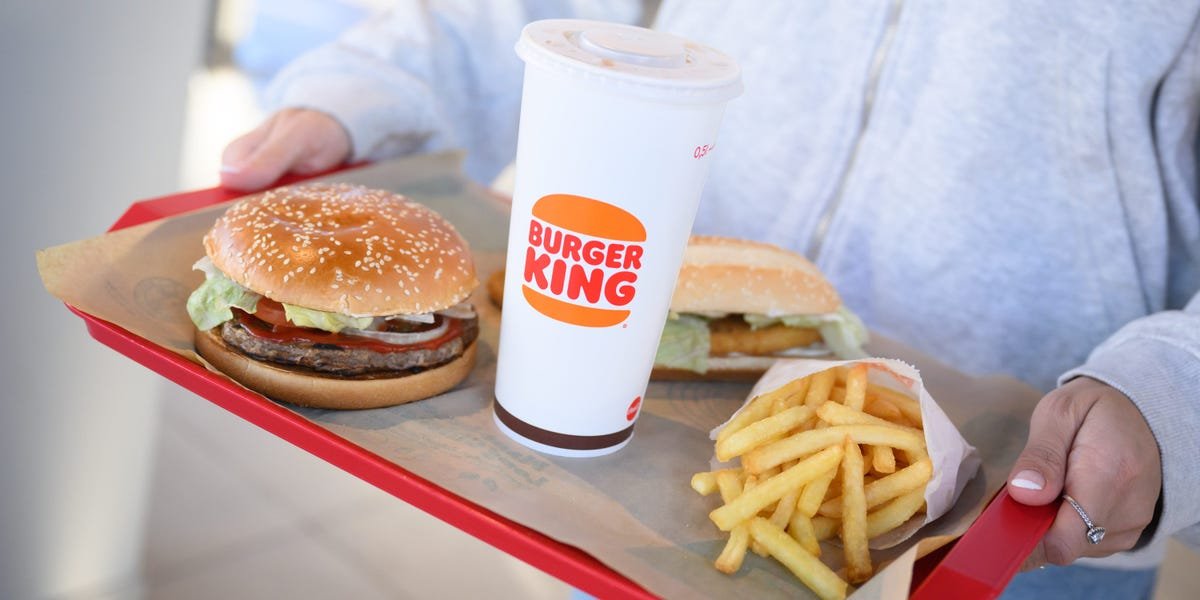
Burger King is tweaking its Whopper — and the changes don’t just freshen a decades-old recipe; they also reposition its flagship product as part of the fast-food industry’s broader premiumization push amid years of value wars.
The chain is betting that highly visible upgrades — including what a press release described as “a more premium, better tasting bun,” and packaging designed to prevent the dreaded squish — can compete against its fellow quick-service restaurants as diners increasingly demand both quality and value.
The changes mark the first meaningful refresh of the Whopper in nearly a decade and came as a response to a campaign that allowed customers to call or text Burger King US and Canada president Tom Curtis directly.
Curtis heard those calls and told Business Insider the company received nearly 20,000 voicemails and texts, with the Whopper “consistently one of the top topics,” underscoring how central it remains to the brand’s identity.
A battle between value and quality
The fast-food industry has been locked in an intense value war that has intensified since the summer of 2024 as inflation and economic pressures pushed consumers to seek the lowest-priced options. However, as chains lean into discounts, they also face a ceiling: consistently cutting prices can erode margins and dull brand appeal.
In response, competitors have begun pushing premium upgrades to core menu items.
McDonald’s has tweaked its burgers — with changes like cooking patties in smaller batches, glaze-like sauces, and richer buns — as part of its broader menu refresh and McValue strategy. Taco Bell’s Luxe Cravings boxes and premium limited-time offerings signal a similar attempt to mix higher-end cues with value structures. Wendy’s has spiced up its lineup with elevated sandwiches, such as the Mushroom Bacon Burger, and premium nugget varieties amid its ongoing value promotions.
Burger King’s Whopper upgrades fall right in line with the trend. Curtis framed the move as refinement, not reinvention.
“Guests today expect higher-quality execution without losing the familiarity of their favorites,” Curtis told Business Insider. “These changes are about elevating the experience and maintaining the core attributes that make the Whopper a category leader. It’s a reflection of rising consumer expectations across the industry.”
Reinventing a classic is risky
“Anytime a brand changes its most iconic product, there is risk,” Kelly O’Keefe, founding partner at Brand Federation, told Business Insider, pointing to New Coke as a cautionary tale: “consumers were furious, and the new product was killed faster than a new Cracker Barrel logo.”
Still, he said, ignoring evolving expectations can be just as dangerous.
“In the burger category, premium players like Five Guys and Shake Shack are thriving, and Burger King is playing catch-up,” O’Keefe said. “If they don’t stray too far from what their customers love about a Whopper, I think this could be very successful.”
Asit Sharma, an analyst at The Motley Fool, said his immediate reaction to the Whopper changes was: “What took you so long?!”
He pointed to McDonald’s 2023 efforts to refresh the Big Mac — including steps to improve texture, sauce quality, and buns — as evidence that even the biggest chains see premiumization as table stakes.
Sharma also suggested that Burger King’s narrative about listening to fans likely intersects with franchisee pressure, noting that, by parent Restaurant Brand International’s admission, the development process took years. Curtis didn’t dispute franchisee involvement, saying franchisees “were an important part of this process,” and adding that their operational input helped ensure the changes could be executed consistently.
Analysts say that premiumization, when done right, can help brands protect traffic and pricing power even as consumers remain value-focused. Sharma described the dynamic as a potential “glass half-empty” defensive move — one that prevents customers from moving to higher-end competitors — or a “glass half-full” opportunity to draw in diners who are trading down but still demand quality.
“Substituting a few ingredients for the trappings of a more premium burger (including cardboard packaging) is a way to entice more affluent customers who may be trading down in a tough economy,” Sharma said.
Mike Perry, founder of the creative agency Tavern, which has worked on rebranding efforts with companies including Burger King, described the clamshell-style box as “the most innovative thing they’ve done” because it signals care and structure that customers remember from earlier eras of fast food.
For Burger King, Curtis said the company is “more excited than ever” to act on what it heard through its feedback initiative, adding that the Whopper is the first of what the brand anticipates will be many “thoughtful updates” to the menu over time.
If the bet works, Burger King could demonstrate a path forward for legacy fast-food brands trying to thread a needle: keep the value-minded core, win back lapsed customers who’ve traded up, and do it all without breaking the emotional contract customers have with an icon.