Netflix-is-raising-prices-again-as-stream-flation-shows-no-signs.jpeg

Netflix is raising prices again, as stream-flation shows no signs of slowing

Netflix is fully aboard the stream-flation bandwagon.

The streaming giant just raised prices for its three plans, a little over a year after it last asked subscribers to pay more.

Netflix’s standard ad-free plan now costs $19.99 a month, up from $17.99, while the premium 4K plan also got a $2 increase to $26.99 a month. The ad-supported Netflix subscription rose by a dollar to $8.99 a month.

While Netflix customers may complain about higher prices, most other major streamers have also steadily gotten more expensive.

Disney+, HBO Max, Peacock, and Apple TV+ all raised prices last year following Netflix’s January 2025 hike. Disney has raised the price of its flagship streaming service in each of the past four years.

Hollywood is trying to squeeze more money out of each streaming subscriber to improve or achieve profitability.

However, there are signs that consumers are sick of stream-flation.

Free streamers like YouTube have become increasingly popular in recent years, growing in viewership share on US TVs, as measured by Nielsen. Increased costs could be driving some consumers toward free streaming services ranging from the Roku Channel to Fox’s Tubi.

The good news for Netflix is that it still looks like a solid deal for consumers after its latest round of price hikes.

Netflix’s ad plan is cheaper than comparable plans for Disney+, Hulu, HBO Max, and Peacock (it’s the same price as Paramount+ and the stand-alone version of Amazon’s Prime Video).

Netflix also offers a far larger library than most of its rivals and is watched more frequently than its peers. That made Netflix the best value by hours watched, UBS analysts wrote last year.

Still, the new price hike won’t quiet the critics who said Netflix’s failed pursuit of WBD was a sign the streamer was running short on avenues for organic user growth.


Source link

Trump-signs-executive-order-restricting-states-ability-to-regulate-AI.jpeg

Trump signs executive order restricting states’ ability to regulate AI

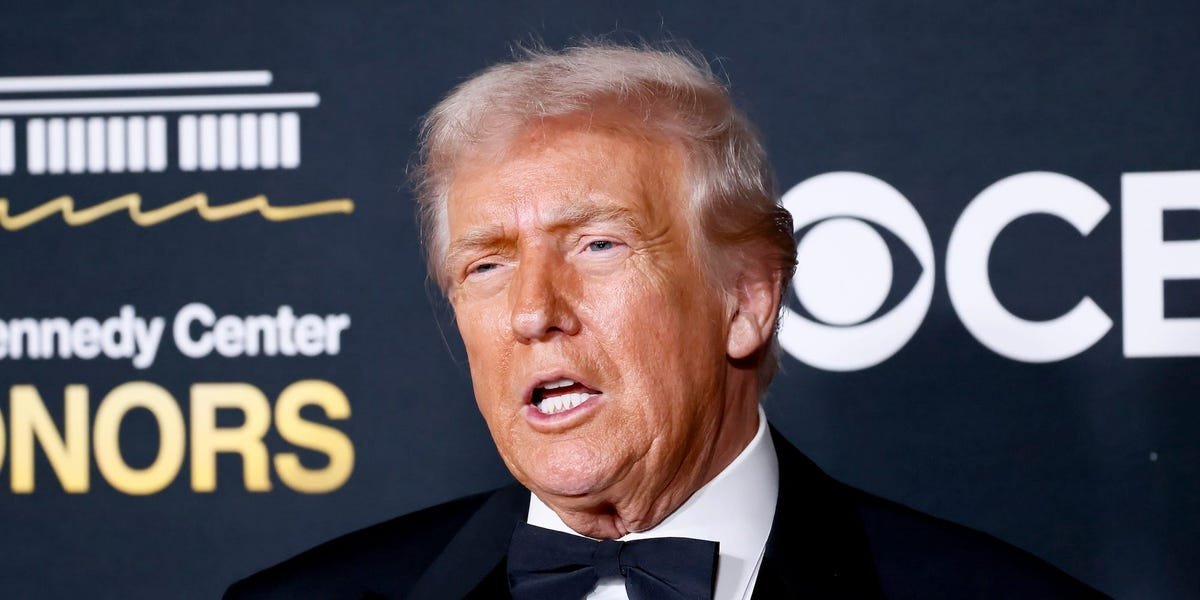
President Donald Trump signed an executive order on Thursday that limits states’ ability to regulate AI individually.

In the 2025 legislative session, more than 1,000 AI-related bills were proposed across all 50 states. The executive order signed by Trump aims at establishing a federal framework for regulating AI, rather than requiring tech companies to comply with various state laws.

“It’s a massive industry. We’re leading China. We’re leading everybody by a tremendous amount,” Trump said during the signing. “But one of the things that it has is you have to have a central source of approval. When they need approvals on things, they have to come to one source. They can’t go to California, New York, and various other places.”

Trump said on Monday, prior to the signing, that the order aimed to ensure there’s only one “One Rulebook” for AI in the US, stating that the technology would be “destroyed in its infancy” if companies had to comply with different regulations across all 50 states.

“We are beating ALL COUNTRIES at this point in the race, but that won’t last long if we are going to have 50 States, many of them bad actors, involved in RULES and the APPROVAL PROCESS,” Trump wrote on Truth Social. “You can’t expect a company to get 50 Approvals every time they want to do something. THAT WILL NEVER WORK!”

While the full text of the order had not yet been released at the time of publication, a draft executive order seen by Business Insider last month would have directed the Department of Justice to sue states for having “onerous” AI laws.

One thing is clear: Trump is likely to provoke backlash from members of his own party if he follows through with this, as many Republicans have been eager to protect states’ rights when it comes to AI.

The fault lines on this issue became clear over the summer, when Republicans tried to enact a 10-year moratorium on state-level AI regulations via the “Big Beautiful Bill.”

That provision was ultimately watered down over time before being stripped from the bill in a 99-1 vote in the Senate during the final hours before passage.

Trump recently called for Republicans to include a version of that provision in a must-pass annual defense bill, but that didn’t come to pass. On Sunday, lawmakers released the text of that bill, and it did not include the provision.

In the meantime, the Trump administration has sought other ways to prevent states from enacting AI laws. An “AI Action Plan” released by the White House in July calls for withholding federal funding from states with “burdensome” AI laws.


Source link

AI-boom-has-4-bubble-signs-and-could-burst-in.jpeg

AI boom has 4 bubble signs and could burst in 2026, economist says

The AI frenzy that’s driving markets and corporate spending may be heading for a hard landing in 2026.

In an interview with Norges Bank Investment Management CEO Nicolai Tangen, renowned economist Ruchir Sharma said that the AI surge now checks every box on his four-part bubble checklist. And a single trigger could bring it all crashing down in 2026 — higher interest rates.

Higher rates reduce the availability of cheap capital that’s been fueling AI investment and put downward pressure on growth-stock valuations.

Sharma’s ‘four O’s’ playbook

To diagnose bubbles, Sharma uses what he calls the four O’s. He said the AI boom is flashing red on all four: overinvestment, overvaluation, over-ownership, and over-leverage.

Sharma said that AI and tech spending in the US has surged at a rate that is comparable to past bubbles, such as the dot-com era. Valuations of major AI players are also approaching bubble territory when judged by long-term earnings and free cash flow.

At the same time, Americans are holding a record share of their wealth in equities, and most of those trades are AI-related, he said.

And after years of running cash-rich balance sheets, Big Tech is now issuing massive amounts of debt to fund the AI arms race.

Over the last few months, Meta, Amazon, and Microsoft have become “the biggest issuers of debt,” Sharma said — a classic late-cycle bubble sign.

Sharma estimated that roughly 60% of US economic growth this year has been driven by AI, both through companies pouring money into new infrastructure and through the stock-market wealth effect lifting spending among high-income consumers.

But the underlying economy looks much weaker without it, he said — and that’s exactly why Sharma thinks the AI trade has become so dangerously crowded.

“Outside of AI, there’s a lot of weakness in the US economy,” he said.

“This big bet on AI better work out for America — because if it doesn’t work out, then I think there’s a lot of trouble for this country ahead,” he added.

Why 2026 could be the breaking point

Sharma doesn’t pretend he can call the exact top. But he said one thing bursts every bubble, and that is interest rates going up.

He identified three conditions that are already building. First, inflation remains “sticky,” and far from the Fed’s 2% target, he said. Second, the Fed has missed its target for five consecutive years and may soon face pressure to halt its interest rate cuts. Thirdly, AI-driven investment has sustained strong growth, which could push inflation higher again.

“At the slightest sign that interest rates are going to go up, I think that’s your sign that, ‘Okay — this is done now,'” Sharma said.

That’s because higher rates make borrowing costlier and slash the valuations of high-growth companies — the exact conditions that tend to burst bubbles.

He said he expects that moment to likely arrive in 2026 — a view shared by other veteran investors, but on different timelines.

Greg Jensen, co-chief investment officer at Bridgewater Associates, said on Tangen’s podcast last week that “the bubble is ahead of us” without giving a timeline, while Mel Williams, cofounder and partner at TrueBridge Capital Partners, warned of “a lot of carnage” over the next 10 years.

A ‘good bubble’ — but still a bubble

Sharma said the AI boom could be a “good bubble” that could ultimately boost productivity — like past tech manias that overshot but left valuable infrastructure in their wake. But that doesn’t mean investors won’t get hurt.

Still, one area he thinks could shine after the correction is quality stocks — companies with high returns on equity, strong balance sheets, and consistent earnings.

That category has badly underperformed the market during the AI frenzy, creating what he called “the single best investment idea” heading into 2026.

Source link