
LinkedIn-CEO-says-AI-is-boosting-the-value-of-these.jpeg

LinkedIn CEO says AI is boosting the value of these 4 soft skills

Personality hires, rejoice. LinkedIn’s CEO said soft skills are getting a hard rebrand.

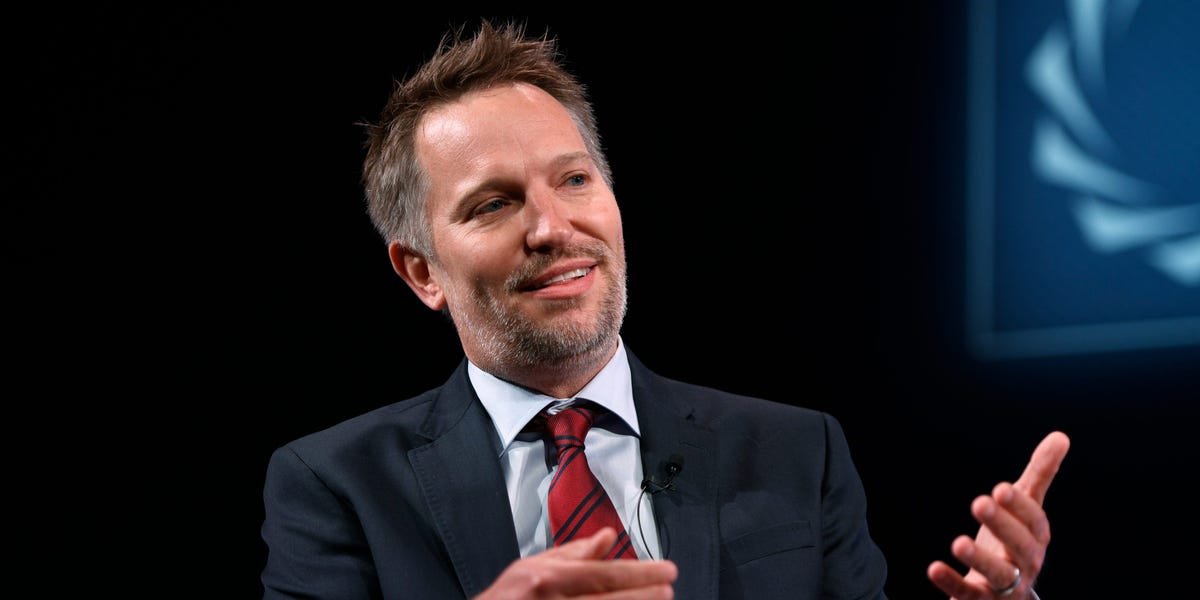
In an interview with the “Tools and Weapons” podcast, LinkedIn CEO Ryan Roslansky said AI is automating routine tasks. He argued that the shift is elevating four human-centered skills — curiosity, courage, communication, and compassion.

“These turn out to be some really, really important skills to do your job well,” the CEO said. “The focus and emphasis on those, along with the AI, is what I think gives us the opportunity to dream big and paint a much more positive picture that exists with humans and technology together moving forward.”

Roslansky has a broad view of the job market based on LinkedIn data, though he did not cite specific figures in the interview. His view contrasts with some other Silicon Valley voices (and a growing number of Americans).

This year, OpenAI investor Vinod Khosla predicted that today’s five-year-olds won’t need a job. Boris Cherny, the creator of Anthropic’s Claude Code, said the job title “software engineer” will fade away this year. Nvidia CEO Jensen Huang recently said he wants high-paid engineers to spend half their salary on AI tokens.

Roslansky’s vision is less jarring. Instead, he argues that AI is reshaping how people think about their jobs, encouraging workers to view their roles as a “collection of tasks” rather than a fixed title.

He breaks those tasks into three buckets: ones AI can fully automate, ones it can augment, and ones that remain deeply human — like resolving conflict, persuading a team, or setting strategy.

“These skills, they’re important, but they’ve historically been talked about as soft skills,” Roslansky said. “In a professional world where people are actually much better at these skills and have really honed their craft on it, I think that it makes things a lot better.”

As AI handles more automated responsibilities, Roslansky said that agents can free up time for coworker conversations, putting a greater premium on communication, judgment, and emotional intelligence.

He said his thought process has given him a hopeful view of AI’s future. Still, he said he doesn’t have a crystal ball and could ultimately be wrong.

“Sometimes when you’re mired in the technology, and especially with AI, and you kind of draw out where this could potentially go, it leads you to some dark places,” he said. “I believe that humans play such an integral role in shaping where that technology should go.”




Source link

Shuby headshot

DeepMind’s CEO says using AI can make you a genius — or hurt your critical thinking skills

It’s up to you whether AI makes you sharper or slowly dulls your brain, says Demis Hassabis.

In a Thursday interview with entrepreneur Varun Mayya on the sidelines of the India AI Impact Summit, the Google DeepMind CEO said that AI is just like the internet. People can use it to learn all kinds of topics, or use it in ways that “degrade” their thinking.

“With AI, if you use it in a lazy way, it will make you worse at critical thinking and so on,” he said. “But that’s down to you as the individual. No one can help you do that.”

He added that people need to be smart and use these technologies in ways that enhance their thinking rather than dull it.

Hassabis cofounded DeepMind in 2010, which Google acquired in 2014. It merged with Google Brain in 2023 to form Google DeepMind, the lab behind tools such as Gemini and Nano Banana. The CEO and a DeepMind coworker, John Jumper, were awarded the 2024 Nobel Prize for Chemistry for their work on protein structure prediction.

As AI gets incorporated into daily life, debates about its risks and rewards have intensified, with several tech leaders warning about the dangers of an overreliance on AI tools.

Earlier this week, tech billionaire Mark Cuban said that there are two types of people who use AI.

“There are generally 2 types of LLM users, those that use it to learn everything, and those that use it so they don’t have to learn anything,” Cuban said of large language models in an X post on Tuesday.

Cuban has previously said that AI models can’t provide all the answers and are “stupid” but like “a savant that remembers everything.”

At a June conference, the CEO of French AI lab Mistral said that a risk of using AI for everything is that humans will stop trying.

“The biggest risk with AI is not that it will outsmart us or become uncontrollable, but that it will make us too comfortable, too dependent, and ultimately too lazy to think or act for ourselves,” Arthur Mensch said.


Source link

Alice Tecotzky

A Goldman Sachs partner in technology shares the skills young job seekers need in the AI workplace

Bracha Cohen has a front row seat to Wall Street’s AI revolution — and to how young people can compete in it.

“I would tell the new generation of graduates, in this world where AI is so transformational, to build judgment and not just skills,” Cohen, a partner within asset and wealth management engineering, said. “AI may automate execution, but it can’t fully replace decision-making, systems thinking, and ethical reasoning.”

Cohen joined Goldman as a programmer in 1994, long before anyone had to prove AI fluency on their applications. She said that serving in various roles across business lines helped her ascend to partner, the firm’s top leaders.

Today, her engineering team in asset management focuses on automating operations to help the business scale, including through AI. As of now, the booming business — which holds a record $3.6 trillion in assets — uses AI for routine work, like analyzing and summarizing data, Cohen said.

As white-collar hiring slows and anxiety about AI in junior roles grows, Cohen said young engineers should focus less on simply completing tasks and more on how systems function. Mastering engineering fundamentals is key, she said, since AI should serve “as leverage, but not as a crutch.”


Bracha Cohen

Bracha Cohen is a partner and engineer at Goldman Sachs.

Goldman Sachs


She added that computer science majors should practice evaluating risk and crafting good questions, both for other people and AI models. Two other Goldman partners also previously said that interpersonal skills and communication are becoming increasingly crucial in the AI workplace.

And engineers who want to work on AI in particular have their own set of criteria. Dan Popescu, a newly promoted managing director and Goldman’s head of AI engineering for asset management, previously told Business Insider that the most competitive hires need a suite of skills: knowledge in AI engineering, finance, and traditional software engineering.

Goldman spent $6 billion on technology last year and has rolled out internal AI tools, including an assistant and a limited banker copilot. In an October memo, the firm laid out the latest phase of its OneGS initiative, which it says will drive efficiency, slow hiring, and create a “limited reduction” in roles.

CEO David Solomon is one of several big bank leaders who have said that, in the long run, AI won’t reduce head count, and that the firm needs to focus on attracting more high-quality talent.


Source link

Expedia-says-its-cutting-some-roles-as-it-assesses-skills.jpeg

Expedia says it’s cutting some roles as it assesses skills needed for the future and simplifies its structure

  • Expedia is cutting jobs, the company confirmed to Business Insider.
  • Expedia said it’s focusing on skills needed for the future and simplifying its structure.
  • The scope of the cuts was unclear, but several affected employees posted about it on LinkedIn.

Expedia is cutting some roles as it looks toward the skills needed for the future, the company confirmed to Business Insider on Monday.

“We are eliminating roles as well as opening some new roles as we remain disciplined about assessing the skills we need for the future,” an Expedia Group spokesperson said in a statement. “We are also simplifying our structure and reducing organizational layers to move faster and with more accountability. These are not easy decisions, and we are grateful for the contributions of our colleagues who are impacted.”

It’s unclear how many people were affected or which divisions the cuts occurred in.

Several Expedia employees posted about being laid off on LinkedIn on Monday.

“After a decade of proudly working at Expedia, my role has been impacted due to organizational changes,” Natasha Morosov Pereira, an operations improvement manager, wrote, adding, “While this transition wasn’t expected, I’m grateful for everything I’ve learned and optimistic about what’s ahead.”

Also on Monday, over a dozen Expedia employees shared the same message on LinkedIn promoting openings at the travel booking company: “Expedia Group currently has OVER 250 roles open! Let’s transform travel together.”

Expedia joins several other companies that have cut roles in 2026, including Citi and T-Mobile.

Like Expedia, many companies cutting roles this year and last have cited an effort to flatten organizational structures and move faster in order to prepare for the future.

Have a tip? Contact this reporter via email at kvlamis@businessinsider.com or Signal at @kelseyv.21. Use a personal email address, a nonwork WiFi network, and a nonwork device; here’s our guide to sharing information securely.


Source link