What-smart-people-are-saying-about-inflation-as-the-war.jpeg

What smart people are saying about inflation as the war in Iran presses on

There’s a new force that could push up inflation in the US once again: The Iran war.

Oil prices passed $100 a barrel on Sunday after the effective closure of the Strait of Hormuz cut off crude shipments from the Persian Gulf. While prices dropped to around $85 a barrel on Tuesday after President Donald Trump signaled that he thought the war could soon end, ongoing volatility across markets indicates that fears of inflation are still high.

Wall Street strategists have raised concerns about the impact on the broader US economy if oil prices stay elevated for too long.

The Bureau of Labor Statistics will release new consumer price index data, an inflation gauge, on Wednesday. However, those February estimates won’t reflect the effects of the war-induced oil spike.

Here’s what economists and finance pros are saying about what the oil spike means for American consumers, especially at the gas pump, and how soon it’ll show up in the inflation numbers.

Michael Feroli

Michael Feroli, chief US economist at J.P. Morgan, told Business Insider he expects this to be a more straightforward story for energy prices than tariffs, where the effects took a while to show up in the inflation data.

“It’s pretty safe to say that barring some really surprising reversal here, we’re going to see a pretty decent increase in the March CPI,” Feroli said. “Then April and beyond, I think, are more open to debate.”

Feroli thinks the ongoing situation will have a limited effect on core inflation, which excludes volatile food and energy prices.

“Certainly, there are categories like airfares that you see some pass through, but most estimates suggest almost a trivial impact on non-energy goods and services,” he said. “Though it remains a little bit of a risk that it could be more than we’ve seen in recent decades.”

Matt Colyar

Matt Colyar, an economist at Moody’s Analytics, told Business Insider that the energy shock comes amid affordability concerns in the US.

“Over time in America, it’s very well understood and known that energy prices, gasoline prices, prices at the pump hold a very uniquely salient point in people’s minds,” he said. “Maybe it’s the big signs with the big luminescent numbers that everyone drives by constantly. They’re very aware of these prices.”

Colyar said the war’s effects won’t show up in the inflation report coming out this week, but likely will show a dramatic rise in the headline estimate in the March report, scheduled for April.

He said energy prices will likely have spillover effects on other items.

“Energy is an input into manufacturing. Energy is an input into the agricultural industry,” he said, adding, it also affects airlines.

Mark Hamrick

Mark Hamrick, senior economic analyst at Bankrate, told Business Insider the oil shock “creates a real problem for consumers in the broader economy at a time when affordability challenges have already been first and foremost in terms of the major issue that voters and consumers have been railing against.”

He added that it could have an uneven impact, since lower- and middle-income households will have to allocate more of their budgets to gas.

Hamrick said we don’t know how long it would take for the oil shock to be resolved. He pointed to disruptions to supply chains early on in the COVID pandemic that took time to recover from.

“We don’t know the duration or scale of the conflict, but it’s clearly evolved from a US- and Israeli-led conflict to one that has enveloped the region,” Hamrick said. “The risk is that it does persist, and therefore the inflationary shocks persist.”

Laurence Ales

Laurence Ales, a professor of economics at Carnegie Mellon University’s Tepper School of Business, sees two likely effects as oil prices surge: higher prices at the pump that could then cut into other consumer spending downstream.

“The key channel is energy cost,” he told Business Insider. “This is an important cost for firms that will, in part, pass on to consumers. The channel is well documented, but the effect is small. An additional equilibrium channel starts from the consumer. High gas prices impact consumer spending in non-essential categories. Lowering demand will put a downward pressure on those prices.”

Tad DeHaven

Tad DeHaven, an economic and fiscal policy analyst at the Cato Institute, a Washington, DC, think tank, notes that the oil shocks are coming at a time when the US economy needs stability. As such, it could be compromised in the short term. But he shares the sentiment that the overall impact on US consumers will depend on the conflict’s duration.

“While the US is not as directly dependent on Hormuz as many other countries, oil is priced in a global market,” he told Business Insider. “So even if Americans do not face outright shortages, they would still feel it through higher gasoline prices, higher diesel and jet fuel costs, and broader increases in transportation and business expenses. If the disruption is brief, the result is likely to be a temporary inflationary bump.”

Desmond Lachman

A senior fellow at the American Enterprise Institute, Desmond Lachman, provided some back-of-the-envelope estimates to Business Insider on the overall economic impact of rising oil prices.

“Mainstream estimates suggest that for every sustained $10 increase in the international price, US inflation would increase by between 0.15 and 0.3 percentage points and would subtract between 0.1 and 0.2 percentage points from economic growth,” he said. If oil prices settle around $100 a barrel, “the current level of gas prices could add over 1 percentage point to inflation and subtract between 0.5 and 0.75 percentage points from economic growth.”

Brock Weimer

“The economic impact of the conflict will likely depend largely on its duration and the extent of further disruptions to energy supplies — both of which are difficult to forecast. With oil prices now at their highest level since 2022, upward pressure on headline inflation is likely, which could act as a headwind to economic activity,” Brock Weimer, analyst of investment strategy at Edward Jones, said in written comments. “However, as noted in our Market Pulse, geopolitical events have historically produced only short‑term effects on financial markets.”




Source link

I-saw-11-national-parks-in-one-30-day-trip-Using.jpeg

I saw 11 national parks in one 30-day trip. Using a few smart strategies and helpful apps, it only cost me $1,500.

America’s national parks are as magnificent as they are diverse, and in a single road trip, it’s easy to marvel at arid desert mountains one day and sky-high conifer forests the next.

I’ve visited all 63 national parks within the US, all on a shoestring budget, and I can attest that exploring “America’s best idea” is well worth the effort and drive time.

For those hoping to take an extended (and wallet-friendly) vacation, the national parks are a great place to look.

With my van and some careful budgeting, I was able to travel to Joshua Tree, Grand Canyon, Petrified Forest, Carlsbad Caverns, Guadalupe Mountains, Big Bend, Zion, Bryce Canyon, Capitol Reef, Arches, and Canyonlands over the course of 30 days and only spend about $1,500.

Here are a few strategies and resources that helped me pull this 11-park trip off without a hitch, plus the one thing I’d do differently next time.

The key to this trip was planning far in advance


Van parked near Teepees Petrified Forest

Teepees Petrified Forest was one of many stops on my trip.

Emily Pennington


Going on a trip of this magnitude took loads of research and preparation, and I started planning several months before I headed out.

First of all, many reservations and permits within the US national parks open up six months in advance and are available on a first-come, first-served basis.

This means you’ll want to have a clear picture of where you’ll be hiking, camping, or backpacking on every day of your journey at least six months before your trip, so you can take advantage of subsidized park campgrounds.

Sure, websites like Hipcamp make it easy to book a last-minute campsite near natural wonders, but you’ll often pay double or triple the price on bookings. For example, I’ve seen campsites listed for $50 or $60 a night that national parks and forests initially charged $20 for.

Oh, and don’t forget to nab an annual America the Beautiful Pass before starting your grand adventure.

For just $80, the pass gives access to all national parks, forests, and federal recreational lands for a calendar year — it’s an easy way to avoid entrance and standard amenities fees.

Groceries and homemade meals helped me stick to my budget


Joshua Tree at night with full moon, purple skies

I spent some time enjoying Joshua Tree on my trip.

Emily Pennington


One of the strictest cost-cutting measures I implemented was a $100 a week grocery budget. I slept inside my kitchenless minivan each night, meaning that I’d have to get up and go outside to boil water or cook evening meals.

Since I didn’t have a fridge or much in the way of electricity, I ate a lot of simple meals, like peanut butter and jelly sandwiches, mac and cheese, and carrot sticks with hummus.

As a treat, I gave myself a $50 a week restaurant budget so I could enjoy quirky roadside cafés and food trucks along the way.

Some of my favorite memories from the trip were discovering DB’s Rustic Iron BBQ, a tiny hole-in-the-wall near Big Bend, and Sweet Cravings Bakery, just outside of Arches, in Moab.

A few apps helped me save money on gas, overnight stays, and entertainment


Tent and table with benches in Bright Angel Campground - Grand Canyon

I stayed at a campground in the Grand Canyon.

Emily Pennington


Gas and lodging are likely to be your biggest expenses, and I definitely used the GasBuddy app every day to plan where I could fill up for the best price.

I also made sure to drive a fuel-efficient vehicle for the entire road trip, which saved me hundreds of dollars in gas alone.

As much as I could, I tried to camp in free campsites and sleep in Walmart parking lots for the duration of my monthlong road trip.

I used apps like AllStays and Campendium to find free, legal places to bed down in my minivan. Sometimes this meant I was sleeping an hour’s drive away from any given national park, but that seemed worth it to me at the time to skip the $20 to $30 park campgrounds typically charge.

The National Park Service app is also worth downloading before any trip. It’s filled with things like free guided audio tours, maps, ranger program schedules, and top attractions. In addition, popular parks, such as Zion and the Grand Canyon, offer free in-person ranger talks and activities that are open to all visitors.

These proved to be invaluable assets to my trip when I couldn’t afford guided hikes and bus trips.

Looking back, though, I wish I’d stayed at a few more campgrounds


Author Emily Pennington standing wih backpack in GRand Canyon

I learned a lot about myself on this epic trip through US national parks.

Emily Pennington


Even though I had the time of my life exploring America’s national parks for a month straight, there’s one thing I’d do differently next time.

In the interest of saving money, I slept in the parking lots of many truck stops and Cracker Barrels, rather than driving a bit farther to sleep on federal lands or spending $20 to camp closer to a park.

As a solo female traveler, I tended to feel safer when I was camping outside cities. I slept better, too, because the woodsy environments always proved to be quieter and more soothing.

If I had a tiny bit more in my budget, I would’ve happily booked more national park and national forest campgrounds during the planning phase of my trip.

Still, I learned so much about my own ability to do more with less on this epic journey across the US national parks, and I can’t wait for my next long road trip into the wilderness.


Source link

Heres-what-smart-people-are-saying-about-Paramount-winning-the.jpeg

Here’s what smart people are saying about Paramount winning the Warner Bros. Discovery deal

Matt Stoller, director of research at the American Economic Liberties Project and author of the “BIG” anti-monopoly newsletter, discussed the legal situation surrounding the deal in a Substack video conversation with Richard Rushfield, a columnist at The Ankler.

He said the merger can be challenged by state enforcers, and Paramount would push to close the deal quickly to get ahead of that.

“That means they get to take over all these assets and start running them,” Stoller said. “They can fire people. They can intermingle the assets. They can choose new lines of business. They can move people around. All of the bonuses get paid out. They can do layoffs.”

Trying to unwind operations where assets are already intermingled would be like “unscrambling eggs,” Stoller said.

Stoller said he was puzzled by why other companies in Hollywood haven’t hired lawyers to compile evidence in opposition to the merger and hand it to state attorneys general to help build their case.

“It just baffles me why people are so passive when you can actually knife fight on stuff,” Stoller said, though he added that it could be happening without his knowledge.


Source link

What-smart-people-are-saying-about-Jack-Dorsey-slashing-jobs.jpeg

What smart people are saying about Jack Dorsey slashing jobs at Block: ‘The canary in the coal mine’

  • Jack Dorsey announced major layoffs at Block, cutting nearly half of its workforce.
  • Dorsey said AI was behind the cuts, and the company’s stock rose over 20% in after-hours trading.
  • Tech and VC leaders have reacted to Block’s layoffs, with some calling it a sign of what’s to come.

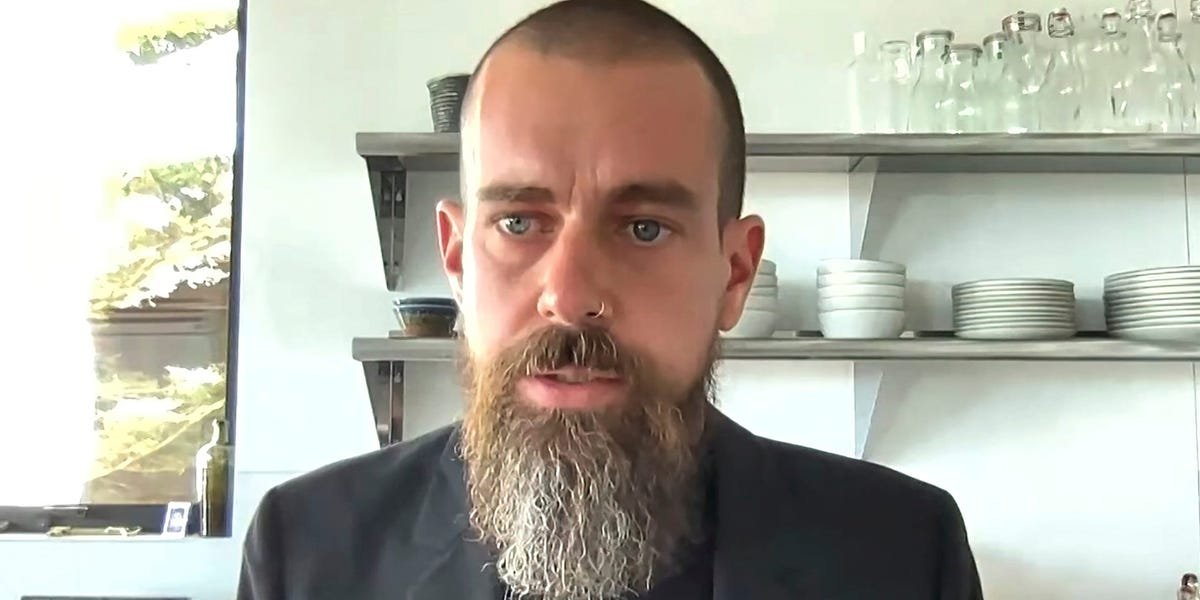
Jack Dorsey’s announcement on Thursday that Block was slashing its workforce nearly in half sent shockwaves through the tech world.

Dorsey, Block’s CEO and cofounder, said AI was rapidly changing work at the financial services company, which owns Square, Cash App, and Afterpay.

“A significantly smaller team using the tools we’re building can do more and do it better,” he said on Thursday’s earnings call, shortly after the reduction in force was shared on X.

“I had two options: cut gradually over months or years as this shift plays out, or be honest about where we are and act on it now,” he wrote in a memo. “I chose the latter.”

Block’s stock was up over 20% in after-hours trading following the announcement. Shares were down more than 16% in the last year as of market close on Thursday.

Leaders in tech and venture capital quickly reacted to the news, with some saying it could be the first of what’s to come as AI fundamentally transforms companies and the nature of work. Others were more skeptical of AI’s role.

Here’s what smart people are saying about the job cuts at Block.

Balaji Srinivasan

“This is the first AI cut,” tech investor Balaji Srinivasan said on X. “And it will send shockwaves.”

The Silicon Valley venture capitalist said the Block cuts were a “signal to everyone in tech: get good now. Become indispensable. Work nights and weekends. Learn the AI tools and raise your game. Or you might not make the cut, as an employee or as a company.”

Aakash Gupta

“Block is the canary in the coal mine,” Aakash Gupta, host of “The Growth Podcast,” said on X. “And they’re not alone.”

Gupta said Dorsey “said the quiet part out loud: intelligence tools paired with smaller teams have already changed what it means to run a company.”

“Block went from 10,000 to 6,000 while growing revenue and raising guidance. Every CEO running a company with more than a few thousand employees is doing this math tonight,” he added. “The canary just stopped singing.”

Ben Carlson

Ben Carlson, a financial analyst and director at Ritholtz Wealth Management, expressed skepticism that the cuts were purely driven by AI innovation, sharing a chart that shows Block’s share price is down sharply from its high point in 2021.

“Maybe Block laying off a ton of employees is a sign that AI is gonna destroy everything,” he wrote on X. “Or maybe the stock is down 80% from the highs and they overhired and AI is a convenient excuse.”

Jason Calacanis

Jason Calacanis, angel investor and co-host of the “All-In” podcast, praised Dorsey for the cuts.

“Leadership is hard, but this feels like (another) visionary move,” he said on X. “Have never sold a share, since being a private investor in square.”

Jessica Verrilli

“Feels inevitable this is about to ripple through every public company,” Jessica Verrilli, cofounder of VC firm Adverb Ventures, said on X. “We’ve gotta find a way to make everyone an owner w/ some exposure to the upside as the # of employees falls off a cliff.”

Shaun Maguire

“Respect to @jack for doing the hard thing,” Shaun Maguire, partner at Sequoia Capital, wrote on X. “While doing it intentionally and owning the decision.”

Clara Shih

“Square is just the beginning,” Clara Shih, a startup investor and senior advisor at Meta, said in an X post. “Every CEO faces the same decision today that manufacturing CEOs did in 2000: do a big layoff or your competitor will, pass on cost savings to customers and investors, and beat you.”

“In 2000, jobs were lost to Shenzhen. In 2026, jobs will be lost to AI,” she added.

Matt Shumer

Matt Shumer, an AI CEO who wrote the viral “Something Big is Happening” essay earlier this month, said this is “one of the first major examples of AI driving layoffs, but certainly not the last.”

“If you’re saying ‘this won’t happen to me’, re-evaluate your thoughts. Now,” he said on X. “It may be the most important thing you do.”


Source link

What-smart-people-in-economics-and-business-are-saying-about.jpeg

What smart people in economics and business are saying about a viral report warning of an AI-driven recession and stock crash

  • A viral research report warned of a stock market crash and double-digit unemployment by 2028.
  • The note sent software stocks sliding and rattled investors.
  • Critics said markets may be overreacting to a worst-case scenario thought experiment.

A research note warning that the AI boom could trigger a recession and a stock market crash spooked investors and sent software stocks sliding on Monday.

Citrini Research outlined a hypothetical 2028 scenario in which rapid AI adoption leads to mass white-collar layoffs and a collapse in consumer spending.

The report, which was published Sunday, went viral and amplified debate over whether AI is a productivity boom or a destabilizing shock.

Here’s what prominent economists and business leaders are saying about the note:

Claudia Sahm

Claudia Sahm, the chief economist of New Century Advisors and creator of the Sahm Rule recession indicator, raised concerns about the framing of the scenario.

“One concern with the Citrini scenario (and mirrored in the current moment) is the focus on destructive (left) rather than constructive (right),” Sahm wrote on X on Monday. “Maybe the latter takes longer, but it matters for the new equilibrium, too.”

In a follow-up post, she said that a labor market shock of the magnitude Citrini describes would likely trigger a forceful policy response.

“The labor market crisis they describe would generate a forceful fiscal/monetary response. They downplay that,” Sahm wrote. “The more likely scenario of gradual, limited job losses will be the hard one to get policymakers to focus and act.”

Michael Burry

Michael Burry.

Jim Spellman/WireImage

Michael Burry, the investor famous for predicting the 2008 housing crash and profiled in “The Big Short,” amplified the report to his millions of followers.

“And you think I’m bearish,” Burry wrote on X, linking directly to Citrini’s research.

His post included a chart from the Citrini report, titled “The AI Feedback Loop: A Non-Cyclical Disruption,” contrasting traditional recessions — which, it said, self-correct — with what Citrini describes as an AI-driven cycle with “no natural brake.”

Brendan Duke

Brendan Duke, a senior director for federal budget policy at the Center on Budget and Policy Priorities and a former senior policy advisor at the Biden-Harris White House National Economic Council, said many critics may be misreading Citrini’s premise.

“A lot of people have a hard time with the concept of a thought experiment,” he wrote on X.

However, Duke added that one underappreciated risk in the scenario is the financial market impact if “prime white collar borrowers who nobody ever thought would default… defaulting” becomes a reality — referring to the report’s suggestion that white-collar layoffs could cascade into prime mortgage and private credit stress.

Jeff Dorman

Jeff Dorman, chief investment officer at Arca, framed the response to the report as a lesson in investor psychology.

“The biggest takeaway from the virality of this Citrini doom porn is that fear sells,” Dorman wrote on X, referring to Monday’s stock market sell-off.

He said that markets and media often reward dramatic crash predictions, even if they rarely materialize.

“There are thousands of successful macro newsletters that you pay money to subscribe to, and all of them tell you to buy gold, build a bunker, and short stocks,” he wrote, adding that high-profile recession forecasters frequently get attention despite repeated false alarms.

Deepak Shenoy

Deepak Shenoy, founder of Capitalmind, compared the AI recession warning to past resource-scarcity warnings.

“This is the viral post that currently spooks everyone,” Shenoy wrote in an X post.

He pointed to 2008-era warnings that oil reserves were running out — fears that did not ultimately dismantle the energy industry.

“Doomsday porn is addictive,” Shenoy wrote. “AI based end of everything is the WWF of the world now, fun to watch but is mostly fake.”

Michael Bloch

Michael Bloch, a partner at VC firm Quiet Capital, published a rebuttal titled “The 2028 Global Intelligence Boom.”

He said that even if AI keeps improving rapidly, it doesn’t have to end in a crash — it could make the economy richer.

“What if our AI bullishness continues to be right… and what if that’s actually bullish?” he wrote on Substack this weekend.

Bloch said investors are confusing pain in parts of tech — like SaaS and middleman-style businesses — with a broader economic collapse, and that cheaper services could leave households and startups with more money to spend.


Source link

Legos-high-tech-Smart-Brick-is-dividing-its-adult-fanbase.jpeg

Lego’s high-tech Smart Brick is dividing its adult fanbase

Small speakers hum as two “Star Wars”-themed Lego lightsabers clash. Lights beam from the top of a Lego-built airplane. A roaring engine sound kicks in as multiple vehicles race across the floor.

It’s all part of a high-tech — and polarizing — update from Lego called Smart Play that the toymaker unveiled at the Consumer Electronics Show earlier this week in Las Vegas.

Lego says its new line of chip-based bricks is “one of the most significant evolutions” since the launch of figurines in 1978.

At the center of the system is what Lego calls a Smart Brick. It’s the same size as the classic two-by-four Lego piece — a design that has remained largely unchanged since the company began producing plastic bricks in the early 1930s — but it contains sensors, lights, and a tiny speaker.

The move pushes the famously analog toy deeper into the world of embedded technology. Among adult fans of Lego — known as AFOLs — the reaction has been mixed.

Online, some longtime builders and parents have voiced concern about what they see as the growing “tech-ification” of toys traditionally more reliant on one’s imagination.

In interviews with Business Insider, Lego purists, toy enthusiasts, and industry watchers said they’re intrigued by the technology — but some worry the added electronics will push Lego’s prices even higher.


Lego's new Smart Brick

Lego’s new Smart Brick can make sounds, light up, and recognize figurines.

Lego


“I’ve loved the creativity involved without Smart Bricks,” Jake Doll, 33, a Lego enthusiast who posts to AFOL communities on TikTok, told Business Insider. “I think they’ll put more investment in tech as it can increase the overall purchase price.”

The bricks can sense what’s happening around them, including light detection, player movement, and proximity to other figurines. When multiple Smart Bricks are used together, they communicate wirelessly with one another, allowing Lego sets to react in coordinated ways.

Lego says the system doesn’t rely on AI or a constant internet connection. The bricks charge wirelessly, don’t require disposable batteries, and play pre-programmed sounds directly from built-in speakers.


Lego's Smart Play system will debut in coming

Lego says Smart Brick will bring audible interactions to its toys: planes will whir when they tilt, car engines will hum, and figurines will talk to each other

Lego


The company plans to debut the technology in three “Star Wars”-themed sets: a $70 Darth Vader set with 473 pieces, a $100 Luke’s Red Five X-Wing set with 584 pieces, and a $160 Darth Vader’s Throne Room Duel & A-Wing set with 962 pieces. They will hit store shelves on March 1.

“This isn’t changing direction from what the Lego brand has always been,” Tom Donaldson, the head of Legos’s Creative Play Lab, told Business Insider in a statement. “It’s an expansion — we’re staying true to our brand while innovating to meet how kids play today. The Lego brick our fans know and love isn’t going anywhere; we’re just making our play even more magical.”

Bob Friedland, 50, a toy expert and former Toys R Us executive, told Business Insider he isn’t planning to buy the Lego Smart Play sets when they launch.

Right now, he owns 115 sets, according to his Lego app. That includes collections themed around “Hocus Pocus,” “Stranger Things,” and van Gogh’s Starry Night. In a phone interview, Friedland said he’s more interested in a $28, fully analog Lego DeLorean DMC replica from “Back to the Future.”


A bookcase with 12 lit up, ornate Lego sets

Bob Friedland, a toy expert and enthusiast, owns 115 Lego sets, some of which he displays with custom lighting.

Bob Friedland


He said that Lego — which launched a 9,000-piece Star Wars-themed build for $999 in September — risks alienating already inflation-strained customers with increasingly expensive sets.

“These bricks will definitely bump up against the already-existing feeling that Lego is too expensive,” he said.

Smart Play isn’t Lego’s first attempt to blend bricks with technology.

In 1998, the company launched Lego Mindstorms, a line of programmable robotics kits that allowed builders to create machines that responded to sensors and computer code. More recently, Lego introduced the Lego Super Mario line in 2020, which featured interactive figures that triggered sound effects when placed on certain blocks.

Friedland said that much of the online concern around toy “tech-ification” is attributable to other companies focusing on launching AI in teddy bears and dolls.

Mattel, for example, has partnered with OpenAI to put AI tech in some Barbie dolls. Child development researchers have warned that AI-enabled plushies aren’t meeting basic safety standards. Online chatbots have appeared on children’s iPads.

But other parents said they aren’t sure their Lego-loving kids are even going to be interested in the company’s new tech.

“As an adult fan, my joy stems from the building process and sharing that experience with my kids,” Reid Exley, 43, a father of two and Lego enthusiast with more than 50 sets, said. “My kids would likely enjoy the novelty of the sounds and interactivity. However, I suspect that novelty would quickly wear off and Lego play would remain largely unchanged.”

Some fans see Lego’s launch of the Smart Play system less as a distraction — and more as an intriguing puzzle with potential.

“Are dolls that cry less creative than dolls that don’t? Not really,” Friedland said. “I can already see myself trying to figure out Easter eggs that are unlocked by placing the Smart Brick in the right place or tapping it in the right sequence while it’s next to the right colored brick.”

He also told Business Insider that the current state of childhood play needs some new tech disruption. The Lego set, in his mind, could fit that bill.

“Parents who are wary of tech will likely look at this as a better alternative than a phone or iPad,” he said. “I think this is a much better solution than the AI toys out there.”


Source link

What-smart-people-are-saying-about-Disneys-licensing-deal-with.jpeg

What smart people are saying about Disney’s licensing deal with OpenAI

It’s likely just a matter of time before we see the wisened duo of Rafiki and Jiminy Cricket weilding lightsabers on the icy plains of Arendelle.

That’s courtesy of artificial intelligence, of course, and a new deal between Disney and OpenAI.

OpenAI said Thursday it had struck a licensing agreement to use Disney’s characters and other intellectual property. Disney will also invest $1 billion in OpenAI and will purchase ChatGPT Enterprise for its employees.

It’s a major shift for Disney, which has historically been deeply protective of its intellectual property. And it’s a big win for OpenAI, which is on a quest for more content to feed its AI models.

For users, the deal will enable them to recreate Disney characters on Sora, OpenAI’s short-form video generation app, and to create images of Disney characters using ChatGPT.

Beyond the limitless possibilities for creative content, the deal reveals a lot about Disney’s strategy in the AI age and the impact of artificial intelligence on the future of entertainment.

Here’s what some smart people in media, tech, and business are saying about the deal.

Nick Cicero, entrepreneur and digital strategist

For Nick Cicero, the founder of Delmondo, a social media video analytics company that was acquired by Conviva in 2018, Disney’s deal with OpenAI is less about AI and more about revenue.

Cicero argued in an X post on Thursday that Disney was aiming to solve two “existential” problems: creators using unauthorized Disney content and kids watching YouTube instead of Disney+.

“Sora gives Disney its first scalable way to pull creator-made content into its own premium ecosystem — brand-safe, trackable, legal, and ready for CTV monetization,” he said, referring to the practice of delivering targeted advertising to internet-connected televisions.

“This move isn’t about tech,” he added. “It’s about revenue physics.”

Peter Csathy, media consultant

Chatbots like ChatGPT rely on data to power their outputs, and when it comes to collecting that data, AI companies are insatiable.

The drive to collect data often pits AI companies against content creators. Numerous media companies have sued OpenAI, Anthropic, Perplexity, and other leading AI outfits for using their copyrighted content without permission. Other media companies, like Business Insider’s parent company, Axel Springer, have struck deals with AI companies to license their content.

Peter Csathy, a longtime media consultant and analyst, said Disney’s deal with OpenAI is a “watershed” moment for AI and media licensing.

“Now THIS is a generative AI use that makes sense to me and I support,” Csathy wrote on LinkedIn. “Fully licensed characters, thereby respecting copyright and embracing partnership with the creative community (rather than theft of IP). New revenue streams for IP rights-holders. And overall delight by fans of those beloved characters.”

Caroline Giegerich, AI and marketing strategist

There are just so many cease-and-desist letters a media lawyer can send.

Carline Giegerich, a vice president at the Interactive Advertising Bureau who once led emerging tech at HBO, says Disney’s deal with OpenAI feels like a “can’t beat ’em, join ’em” moment.

“When I was at HBO from ’05 – ’09, I marveled at the sheer volume of cease and desists from the legal team when mobile video was up and coming,” she wrote on LinkedIn. “I thought it seemed difficult to fight against the entire internet, and it turns out it was. And AI presents a similar challenge.”

She also said the deal presents a valuable marketing opportunity for Disney.

“Important to note that a selection of these fan-created videos will be available to stream on Disney+. What that means to me is that Disney sees this also as a marketing and content opportunity, which it is,” she said.

James Miller, head of business development at Amazon

Disney’s pivot from aggressively defending its IP at every turn to giving it over to the world’s leading AI startup might be strategic for another reason.

James Miller, the head of business development at Amazon for media, entertainment, and Amazon Creators, said he suspects it’s a matter of “controlling the inevitable.”

Any IP eventually enters the public domain. In 2024, the copyright for Mickey Mouse himself — at least the sans white gloves version of the 1930s — expired, allowing anyone to use his likeness. Winnie the Pooh, Snow White, Cinderella, and a handful of other Disney characters also entered the public domain at the same time.

“By officially licensing these characters now, Disney does three things,” Miller wrote on LinkedIn. “1. Monetizes the AI trend rather than just fighting it in court. 2. Sets the quality standard for how their characters appear in AI video (likely drowning out lower-quality unauthorized versions). 3. Captures data on how fans want to use their IP before they lose exclusive rights.”

Karl Haller, partner and Consumer Center of Competency leader at IBM

One consumer expert said that Disney might have gotten the short end of the stick in this partnership.

“Looks like OpenAI used the #jedimindwarp on The Walt Disney Company, not the other way around,” Karl Haller, an IBM partner and the leader of the firm’s Consumer Center of Competency, said in a post on LinkedIn.

He said he was “more than a bit surprised” to see that Disney is letting OpenAI license its IP for Sora and other AI tools, with some of the videos being made available to stream on Disney+.

“And what does Disney receive for this? Negative $1 billion,” he wrote. “Rather than receiving a heftly license fee, Disney is instead investing $1B in OpenAI and receiving warrants to buy more in the future.”

Simon Pullman, entertainment co-chair at Pryor Cashman

One entertainment lawyer pointed out that the deal comes with a lot of unanswered questions.

“This is a fairly stunning story all round with many questions,” Simon Pullman, a partner at law firm Pryor Cashman, wrote on LinkedIn on Thursday.

“Will audiences want/accept ‘AI UGC’ on Disney Plus,” he wrote, referring to user-generated content. “Will it be possible for Disney to unring the bell after three years and not extend the license? How will they protect against misuse and brand damage?”

Mike Walsh, technological change consultant and author

Disney’s $1 billion bet on AI is the right move for the media giant, according to Mike Walsh, the CEO of consulting firm Tomorrow.

“By partnering with OpenAI while suing Midjourney and warning Google, Disney is drawing a clear line,” Walsh wrote on LinkedIn on Thursday. “Remix culture isn’t going away, but it will be licensed, governed, and designed on its terms.”

He added that Disney has always survived new media eras with this strategy.

“The future of entertainment belongs to companies that shape participation instead of fighting it,” he wrote.


Source link