
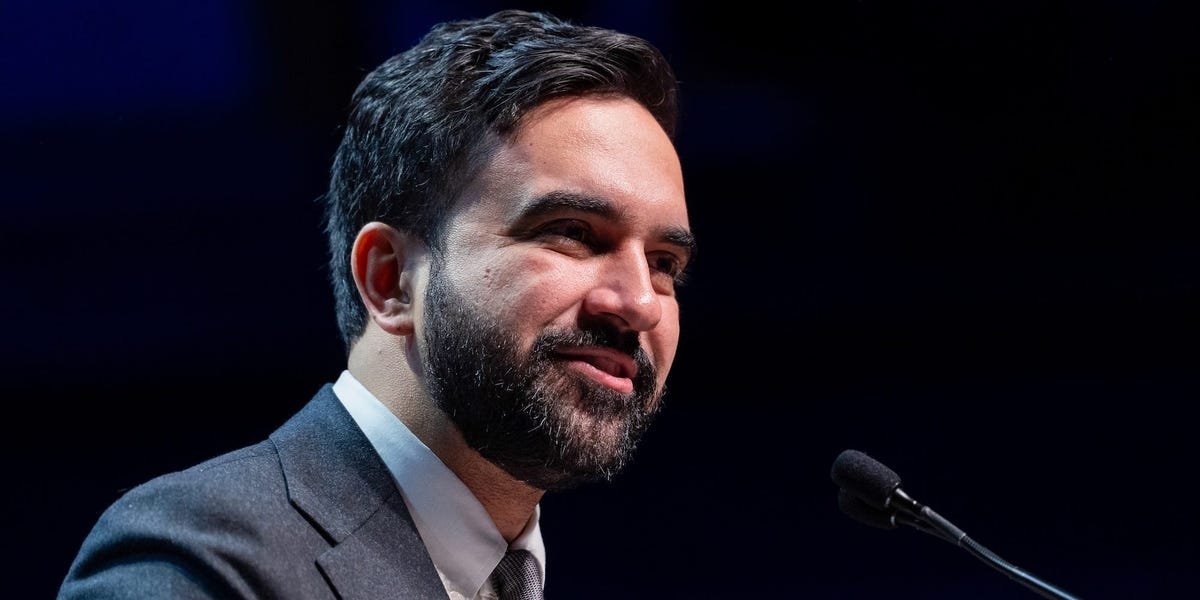
What-smart-people-are-saying-about-NYCs-proposed-annual-pied-a-terre.jpeg

What smart people are saying about NYC’s proposed annual pied-à-terre tax on homes worth $5 million

New York City’s new mayor, Zohran Mamdani, is making good on his campaign promise of taxing the rich.

On Thursday, Mamdani and New York Governor Kathy Hochul jointly announced a new tax proposal aimed at wealthy people who own second homes in the city.

The proposed pied-à-terre tax would tax luxury homes worth more than $5 million and could raise up to $500 million in revenue for New York City, according to the Hochul Administration.

The policy is splitting expert opinion — dividing academics, think tank researchers, and analysts among familiar lines.

Supporters see it as a practical way to raise revenue from the ultrawealthy, while critics argue it’s a narrow fix that could have unintended consequences for the housing market.

Here’s how smart people are reacting to the news so far.

Emily Eisner, Acting Executive Director at the Fiscal Policy Institute: ‘Much-needed revenue’

Eisner, in a statement published Tuesday by the Fiscal Policy Institute, framed the proposal as part of a broader effort to align New York City’s tax system with its growing wealth.

The tax “will raise much-needed revenue from wealthy property owners who do not reside in the city,” she wrote. “This is an important step in building a tax code that reflects the city’s immense wealth and can fund deep investments in its workforce, housing, and transit infrastructure.”

The Fiscal Policy Institute is a nonpartisan think tank focused on analyzing issues related to the fairness of New York’s tax system.

Over the past 15 years, New York City’s revenues have failed to keep pace with its economic growth, leaving the tax system increasingly out of sync with underlying conditions, Eisner said in her statement. That gap has contributed to pressure on public services and, she said, stems in large part from the city’s limited authority to adjust its tax structure in response to rising inequality.

Gabriel Zucman, professor at the Paris School of Economics: ‘Absolutely nobody leaves’

Speaking at Mayor Zohran Mamdani’s Tax Day forum, Zucman, a professor of economics at the Paris School of Economics, pushed back on one of the central objections of the tax — that it will drive wealthy homeowners out of New York.

“It is largely indeed a myth,” he said, adding that the more accurate term is “propaganda.”

He said that whenever any level of government — city, state, or country — considers even a modest tax increase on the very wealthy, it often triggers warnings about people leaving. The narrative, he said, is used to push back against higher taxes.

The research, however, shows the opposite.

“There’s a lot of work, careful empirical studies that have been conducted exploiting tax variation, tax increases or tax cuts, and [seeing] how this correlates with migration,” he said. “The overwhelming conclusion is that it’s not the case that absolutely nobody leaves.”

Nicole Gelinas, Senior Fellow at the Manhattan Institute: ‘Gimmicky’

Gelinas told the Jewish News Syndicate that the proposal cannot be considered full tax reform. Instead, she said, it’s “one gimmicky, tax-the-rich idea essentially as a marketing ploy as the state budget remains stalled.”

Gelinas is a senior fellow at the Manhattan Institute, a public policy think tank that focuses on urban violence and public sector reform. She’s also a journalist who serves as a contributing editor of City Journal — which is published by the Manhattan Institute — and a contributing opinion writer at the New York Times, where she writes about urban policy and politics.

She told the JNS that while the proposal may sound good to most people without second homes, it isn’t a “rational tax strategy.”

A better option, she said, would be “gently discouraging keeping a house or apartment unoccupied” as part of a broader reform of property taxes.

Bess Freedman, CEO of Brown Harris Stevens: ‘Impacting homeowners at all levels’

According to Jewish New Syndicate, Freedman, the CEO of the real estate brokerage Brown Harris Stevens, wrote a memo to her staff saying the effects of the tax could extend well beyond the extremely rich.

“While this proposal is being framed as a tax on the ultrawealthy, the reality is that its impact would extend far beyond a narrow segment of the market,” she said.

Freedman said that a decline in luxury property values would ripple through the broader market, compressing prices and ultimately “impacting homeowners at all levels.”

James Whelan, President of the Real Estate Board of New York: ‘Lost construction jobs’

Whelan, the president of the Real Estate Board of New York, raised concerns about the broader economic impact, arguing the tax could discourage investment in the city.

“This annual tax will weaken the city’s broader economy — all without addressing its fiscal problems in the first place. Its impact will reach far beyond a small group of owners,” Whelan wrote in a statement to Business Insider. “It will not raise the amount of revenue expected, but will eliminate thousands of construction jobs, lower property values, and raise costs for New Yorkers.”

He also noted that the state should shift its focus to “policies that encourage investment and housing production to create a more affordable city, not ones that stifle its growth.”




Source link

I-saw-11-national-parks-in-one-30-day-trip-Using.jpeg

I saw 11 national parks in one 30-day trip. Using a few smart strategies and helpful apps, it only cost me $1,500.

America’s national parks are as magnificent as they are diverse, and in a single road trip, it’s easy to marvel at arid desert mountains one day and sky-high conifer forests the next.

I’ve visited all 63 national parks within the US, all on a shoestring budget, and I can attest that exploring “America’s best idea” is well worth the effort and drive time.

For those hoping to take an extended (and wallet-friendly) vacation, the national parks are a great place to look.

With my van and some careful budgeting, I was able to travel to Joshua Tree, Grand Canyon, Petrified Forest, Carlsbad Caverns, Guadalupe Mountains, Big Bend, Zion, Bryce Canyon, Capitol Reef, Arches, and Canyonlands over the course of 30 days and only spend about $1,500.

Here are a few strategies and resources that helped me pull this 11-park trip off without a hitch, plus the one thing I’d do differently next time.

The key to this trip was planning far in advance


Van parked near Teepees Petrified Forest

Teepees Petrified Forest was one of many stops on my trip.

Emily Pennington


Going on a trip of this magnitude took loads of research and preparation, and I started planning several months before I headed out.

First of all, many reservations and permits within the US national parks open up six months in advance and are available on a first-come, first-served basis.

This means you’ll want to have a clear picture of where you’ll be hiking, camping, or backpacking on every day of your journey at least six months before your trip, so you can take advantage of subsidized park campgrounds.

Sure, websites like Hipcamp make it easy to book a last-minute campsite near natural wonders, but you’ll often pay double or triple the price on bookings. For example, I’ve seen campsites listed for $50 or $60 a night that national parks and forests initially charged $20 for.

Oh, and don’t forget to nab an annual America the Beautiful Pass before starting your grand adventure.

For just $80, the pass gives access to all national parks, forests, and federal recreational lands for a calendar year — it’s an easy way to avoid entrance and standard amenities fees.

Groceries and homemade meals helped me stick to my budget


Joshua Tree at night with full moon, purple skies

I spent some time enjoying Joshua Tree on my trip.

Emily Pennington


One of the strictest cost-cutting measures I implemented was a $100 a week grocery budget. I slept inside my kitchenless minivan each night, meaning that I’d have to get up and go outside to boil water or cook evening meals.

Since I didn’t have a fridge or much in the way of electricity, I ate a lot of simple meals, like peanut butter and jelly sandwiches, mac and cheese, and carrot sticks with hummus.

As a treat, I gave myself a $50 a week restaurant budget so I could enjoy quirky roadside cafés and food trucks along the way.

Some of my favorite memories from the trip were discovering DB’s Rustic Iron BBQ, a tiny hole-in-the-wall near Big Bend, and Sweet Cravings Bakery, just outside of Arches, in Moab.

A few apps helped me save money on gas, overnight stays, and entertainment


Tent and table with benches in Bright Angel Campground - Grand Canyon

I stayed at a campground in the Grand Canyon.

Emily Pennington


Gas and lodging are likely to be your biggest expenses, and I definitely used the GasBuddy app every day to plan where I could fill up for the best price.

I also made sure to drive a fuel-efficient vehicle for the entire road trip, which saved me hundreds of dollars in gas alone.

As much as I could, I tried to camp in free campsites and sleep in Walmart parking lots for the duration of my monthlong road trip.

I used apps like AllStays and Campendium to find free, legal places to bed down in my minivan. Sometimes this meant I was sleeping an hour’s drive away from any given national park, but that seemed worth it to me at the time to skip the $20 to $30 park campgrounds typically charge.

The National Park Service app is also worth downloading before any trip. It’s filled with things like free guided audio tours, maps, ranger program schedules, and top attractions. In addition, popular parks, such as Zion and the Grand Canyon, offer free in-person ranger talks and activities that are open to all visitors.

These proved to be invaluable assets to my trip when I couldn’t afford guided hikes and bus trips.

Looking back, though, I wish I’d stayed at a few more campgrounds


Author Emily Pennington standing wih backpack in GRand Canyon

I learned a lot about myself on this epic trip through US national parks.

Emily Pennington


Even though I had the time of my life exploring America’s national parks for a month straight, there’s one thing I’d do differently next time.

In the interest of saving money, I slept in the parking lots of many truck stops and Cracker Barrels, rather than driving a bit farther to sleep on federal lands or spending $20 to camp closer to a park.

As a solo female traveler, I tended to feel safer when I was camping outside cities. I slept better, too, because the woodsy environments always proved to be quieter and more soothing.

If I had a tiny bit more in my budget, I would’ve happily booked more national park and national forest campgrounds during the planning phase of my trip.

Still, I learned so much about my own ability to do more with less on this epic journey across the US national parks, and I can’t wait for my next long road trip into the wilderness.


Source link

Heres-what-smart-people-are-saying-about-Paramount-winning-the.jpeg

Here’s what smart people are saying about Paramount winning the Warner Bros. Discovery deal

Matt Stoller, director of research at the American Economic Liberties Project and author of the “BIG” anti-monopoly newsletter, discussed the legal situation surrounding the deal in a Substack video conversation with Richard Rushfield, a columnist at The Ankler.

He said the merger can be challenged by state enforcers, and Paramount would push to close the deal quickly to get ahead of that.

“That means they get to take over all these assets and start running them,” Stoller said. “They can fire people. They can intermingle the assets. They can choose new lines of business. They can move people around. All of the bonuses get paid out. They can do layoffs.”

Trying to unwind operations where assets are already intermingled would be like “unscrambling eggs,” Stoller said.

Stoller said he was puzzled by why other companies in Hollywood haven’t hired lawyers to compile evidence in opposition to the merger and hand it to state attorneys general to help build their case.

“It just baffles me why people are so passive when you can actually knife fight on stuff,” Stoller said, though he added that it could be happening without his knowledge.


Source link

What-smart-people-are-saying-about-Jack-Dorsey-slashing-jobs.jpeg

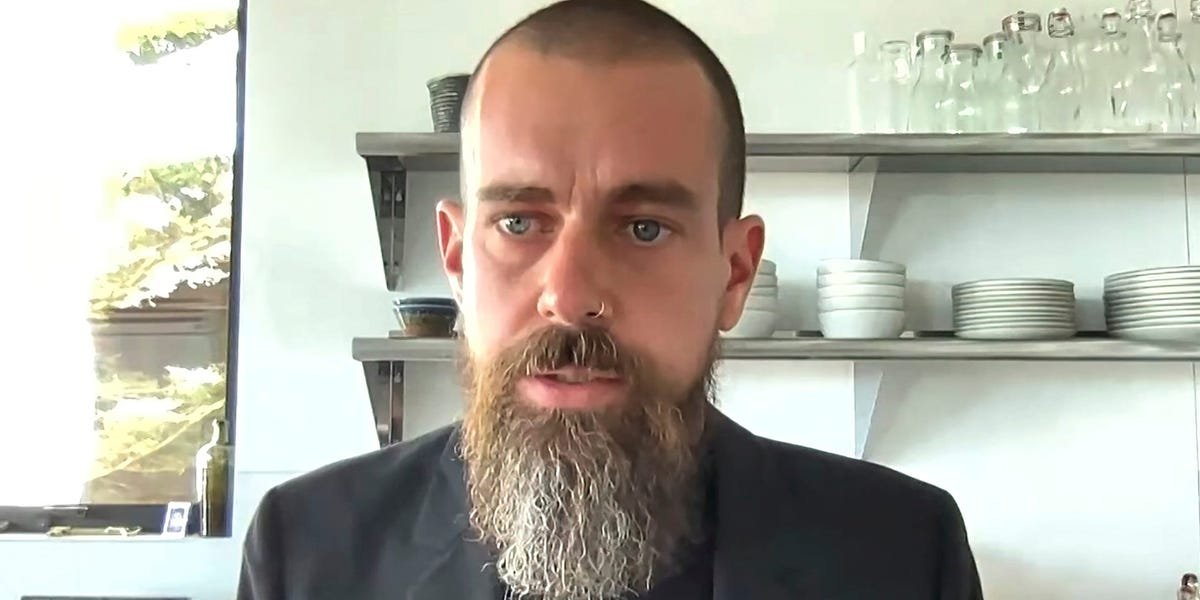
What smart people are saying about Jack Dorsey slashing jobs at Block: ‘The canary in the coal mine’

  • Jack Dorsey announced major layoffs at Block, cutting nearly half of its workforce.
  • Dorsey said AI was behind the cuts, and the company’s stock rose over 20% in after-hours trading.
  • Tech and VC leaders have reacted to Block’s layoffs, with some calling it a sign of what’s to come.

Jack Dorsey’s announcement on Thursday that Block was slashing its workforce nearly in half sent shockwaves through the tech world.

Dorsey, Block’s CEO and cofounder, said AI was rapidly changing work at the financial services company, which owns Square, Cash App, and Afterpay.

“A significantly smaller team using the tools we’re building can do more and do it better,” he said on Thursday’s earnings call, shortly after the reduction in force was shared on X.

“I had two options: cut gradually over months or years as this shift plays out, or be honest about where we are and act on it now,” he wrote in a memo. “I chose the latter.”

Block’s stock was up over 20% in after-hours trading following the announcement. Shares were down more than 16% in the last year as of market close on Thursday.

Leaders in tech and venture capital quickly reacted to the news, with some saying it could be the first of what’s to come as AI fundamentally transforms companies and the nature of work. Others were more skeptical of AI’s role.

Here’s what smart people are saying about the job cuts at Block.

Balaji Srinivasan

“This is the first AI cut,” tech investor Balaji Srinivasan said on X. “And it will send shockwaves.”

The Silicon Valley venture capitalist said the Block cuts were a “signal to everyone in tech: get good now. Become indispensable. Work nights and weekends. Learn the AI tools and raise your game. Or you might not make the cut, as an employee or as a company.”

Aakash Gupta

“Block is the canary in the coal mine,” Aakash Gupta, host of “The Growth Podcast,” said on X. “And they’re not alone.”

Gupta said Dorsey “said the quiet part out loud: intelligence tools paired with smaller teams have already changed what it means to run a company.”

“Block went from 10,000 to 6,000 while growing revenue and raising guidance. Every CEO running a company with more than a few thousand employees is doing this math tonight,” he added. “The canary just stopped singing.”

Ben Carlson

Ben Carlson, a financial analyst and director at Ritholtz Wealth Management, expressed skepticism that the cuts were purely driven by AI innovation, sharing a chart that shows Block’s share price is down sharply from its high point in 2021.

“Maybe Block laying off a ton of employees is a sign that AI is gonna destroy everything,” he wrote on X. “Or maybe the stock is down 80% from the highs and they overhired and AI is a convenient excuse.”

Jason Calacanis

Jason Calacanis, angel investor and co-host of the “All-In” podcast, praised Dorsey for the cuts.

“Leadership is hard, but this feels like (another) visionary move,” he said on X. “Have never sold a share, since being a private investor in square.”

Jessica Verrilli

“Feels inevitable this is about to ripple through every public company,” Jessica Verrilli, cofounder of VC firm Adverb Ventures, said on X. “We’ve gotta find a way to make everyone an owner w/ some exposure to the upside as the # of employees falls off a cliff.”

Shaun Maguire

“Respect to @jack for doing the hard thing,” Shaun Maguire, partner at Sequoia Capital, wrote on X. “While doing it intentionally and owning the decision.”

Clara Shih

“Square is just the beginning,” Clara Shih, a startup investor and senior advisor at Meta, said in an X post. “Every CEO faces the same decision today that manufacturing CEOs did in 2000: do a big layoff or your competitor will, pass on cost savings to customers and investors, and beat you.”

“In 2000, jobs were lost to Shenzhen. In 2026, jobs will be lost to AI,” she added.

Matt Shumer

Matt Shumer, an AI CEO who wrote the viral “Something Big is Happening” essay earlier this month, said this is “one of the first major examples of AI driving layoffs, but certainly not the last.”

“If you’re saying ‘this won’t happen to me’, re-evaluate your thoughts. Now,” he said on X. “It may be the most important thing you do.”


Source link

What-smart-people-in-economics-and-business-are-saying-about.jpeg

What smart people in economics and business are saying about a viral report warning of an AI-driven recession and stock crash

  • A viral research report warned of a stock market crash and double-digit unemployment by 2028.
  • The note sent software stocks sliding and rattled investors.
  • Critics said markets may be overreacting to a worst-case scenario thought experiment.

A research note warning that the AI boom could trigger a recession and a stock market crash spooked investors and sent software stocks sliding on Monday.

Citrini Research outlined a hypothetical 2028 scenario in which rapid AI adoption leads to mass white-collar layoffs and a collapse in consumer spending.

The report, which was published Sunday, went viral and amplified debate over whether AI is a productivity boom or a destabilizing shock.

Here’s what prominent economists and business leaders are saying about the note:

Claudia Sahm

Claudia Sahm, the chief economist of New Century Advisors and creator of the Sahm Rule recession indicator, raised concerns about the framing of the scenario.

“One concern with the Citrini scenario (and mirrored in the current moment) is the focus on destructive (left) rather than constructive (right),” Sahm wrote on X on Monday. “Maybe the latter takes longer, but it matters for the new equilibrium, too.”

In a follow-up post, she said that a labor market shock of the magnitude Citrini describes would likely trigger a forceful policy response.

“The labor market crisis they describe would generate a forceful fiscal/monetary response. They downplay that,” Sahm wrote. “The more likely scenario of gradual, limited job losses will be the hard one to get policymakers to focus and act.”

Michael Burry

Michael Burry.

Jim Spellman/WireImage

Michael Burry, the investor famous for predicting the 2008 housing crash and profiled in “The Big Short,” amplified the report to his millions of followers.

“And you think I’m bearish,” Burry wrote on X, linking directly to Citrini’s research.

His post included a chart from the Citrini report, titled “The AI Feedback Loop: A Non-Cyclical Disruption,” contrasting traditional recessions — which, it said, self-correct — with what Citrini describes as an AI-driven cycle with “no natural brake.”

Brendan Duke

Brendan Duke, a senior director for federal budget policy at the Center on Budget and Policy Priorities and a former senior policy advisor at the Biden-Harris White House National Economic Council, said many critics may be misreading Citrini’s premise.

“A lot of people have a hard time with the concept of a thought experiment,” he wrote on X.

However, Duke added that one underappreciated risk in the scenario is the financial market impact if “prime white collar borrowers who nobody ever thought would default… defaulting” becomes a reality — referring to the report’s suggestion that white-collar layoffs could cascade into prime mortgage and private credit stress.

Jeff Dorman

Jeff Dorman, chief investment officer at Arca, framed the response to the report as a lesson in investor psychology.

“The biggest takeaway from the virality of this Citrini doom porn is that fear sells,” Dorman wrote on X, referring to Monday’s stock market sell-off.

He said that markets and media often reward dramatic crash predictions, even if they rarely materialize.

“There are thousands of successful macro newsletters that you pay money to subscribe to, and all of them tell you to buy gold, build a bunker, and short stocks,” he wrote, adding that high-profile recession forecasters frequently get attention despite repeated false alarms.

Deepak Shenoy

Deepak Shenoy, founder of Capitalmind, compared the AI recession warning to past resource-scarcity warnings.

“This is the viral post that currently spooks everyone,” Shenoy wrote in an X post.

He pointed to 2008-era warnings that oil reserves were running out — fears that did not ultimately dismantle the energy industry.

“Doomsday porn is addictive,” Shenoy wrote. “AI based end of everything is the WWF of the world now, fun to watch but is mostly fake.”

Michael Bloch

Michael Bloch, a partner at VC firm Quiet Capital, published a rebuttal titled “The 2028 Global Intelligence Boom.”

He said that even if AI keeps improving rapidly, it doesn’t have to end in a crash — it could make the economy richer.

“What if our AI bullishness continues to be right… and what if that’s actually bullish?” he wrote on Substack this weekend.

Bloch said investors are confusing pain in parts of tech — like SaaS and middleman-style businesses — with a broader economic collapse, and that cheaper services could leave households and startups with more money to spend.


Source link

Legos-high-tech-Smart-Brick-is-dividing-its-adult-fanbase.jpeg

Lego’s high-tech Smart Brick is dividing its adult fanbase

Small speakers hum as two “Star Wars”-themed Lego lightsabers clash. Lights beam from the top of a Lego-built airplane. A roaring engine sound kicks in as multiple vehicles race across the floor.

It’s all part of a high-tech — and polarizing — update from Lego called Smart Play that the toymaker unveiled at the Consumer Electronics Show earlier this week in Las Vegas.

Lego says its new line of chip-based bricks is “one of the most significant evolutions” since the launch of figurines in 1978.

At the center of the system is what Lego calls a Smart Brick. It’s the same size as the classic two-by-four Lego piece — a design that has remained largely unchanged since the company began producing plastic bricks in the early 1930s — but it contains sensors, lights, and a tiny speaker.

The move pushes the famously analog toy deeper into the world of embedded technology. Among adult fans of Lego — known as AFOLs — the reaction has been mixed.

Online, some longtime builders and parents have voiced concern about what they see as the growing “tech-ification” of toys traditionally more reliant on one’s imagination.

In interviews with Business Insider, Lego purists, toy enthusiasts, and industry watchers said they’re intrigued by the technology — but some worry the added electronics will push Lego’s prices even higher.


Lego's new Smart Brick

Lego’s new Smart Brick can make sounds, light up, and recognize figurines.

Lego


“I’ve loved the creativity involved without Smart Bricks,” Jake Doll, 33, a Lego enthusiast who posts to AFOL communities on TikTok, told Business Insider. “I think they’ll put more investment in tech as it can increase the overall purchase price.”

The bricks can sense what’s happening around them, including light detection, player movement, and proximity to other figurines. When multiple Smart Bricks are used together, they communicate wirelessly with one another, allowing Lego sets to react in coordinated ways.

Lego says the system doesn’t rely on AI or a constant internet connection. The bricks charge wirelessly, don’t require disposable batteries, and play pre-programmed sounds directly from built-in speakers.


Lego's Smart Play system will debut in coming

Lego says Smart Brick will bring audible interactions to its toys: planes will whir when they tilt, car engines will hum, and figurines will talk to each other

Lego


The company plans to debut the technology in three “Star Wars”-themed sets: a $70 Darth Vader set with 473 pieces, a $100 Luke’s Red Five X-Wing set with 584 pieces, and a $160 Darth Vader’s Throne Room Duel & A-Wing set with 962 pieces. They will hit store shelves on March 1.

“This isn’t changing direction from what the Lego brand has always been,” Tom Donaldson, the head of Legos’s Creative Play Lab, told Business Insider in a statement. “It’s an expansion — we’re staying true to our brand while innovating to meet how kids play today. The Lego brick our fans know and love isn’t going anywhere; we’re just making our play even more magical.”

Bob Friedland, 50, a toy expert and former Toys R Us executive, told Business Insider he isn’t planning to buy the Lego Smart Play sets when they launch.

Right now, he owns 115 sets, according to his Lego app. That includes collections themed around “Hocus Pocus,” “Stranger Things,” and van Gogh’s Starry Night. In a phone interview, Friedland said he’s more interested in a $28, fully analog Lego DeLorean DMC replica from “Back to the Future.”


A bookcase with 12 lit up, ornate Lego sets

Bob Friedland, a toy expert and enthusiast, owns 115 Lego sets, some of which he displays with custom lighting.

Bob Friedland


He said that Lego — which launched a 9,000-piece Star Wars-themed build for $999 in September — risks alienating already inflation-strained customers with increasingly expensive sets.

“These bricks will definitely bump up against the already-existing feeling that Lego is too expensive,” he said.

Smart Play isn’t Lego’s first attempt to blend bricks with technology.

In 1998, the company launched Lego Mindstorms, a line of programmable robotics kits that allowed builders to create machines that responded to sensors and computer code. More recently, Lego introduced the Lego Super Mario line in 2020, which featured interactive figures that triggered sound effects when placed on certain blocks.

Friedland said that much of the online concern around toy “tech-ification” is attributable to other companies focusing on launching AI in teddy bears and dolls.

Mattel, for example, has partnered with OpenAI to put AI tech in some Barbie dolls. Child development researchers have warned that AI-enabled plushies aren’t meeting basic safety standards. Online chatbots have appeared on children’s iPads.

But other parents said they aren’t sure their Lego-loving kids are even going to be interested in the company’s new tech.

“As an adult fan, my joy stems from the building process and sharing that experience with my kids,” Reid Exley, 43, a father of two and Lego enthusiast with more than 50 sets, said. “My kids would likely enjoy the novelty of the sounds and interactivity. However, I suspect that novelty would quickly wear off and Lego play would remain largely unchanged.”

Some fans see Lego’s launch of the Smart Play system less as a distraction — and more as an intriguing puzzle with potential.

“Are dolls that cry less creative than dolls that don’t? Not really,” Friedland said. “I can already see myself trying to figure out Easter eggs that are unlocked by placing the Smart Brick in the right place or tapping it in the right sequence while it’s next to the right colored brick.”

He also told Business Insider that the current state of childhood play needs some new tech disruption. The Lego set, in his mind, could fit that bill.

“Parents who are wary of tech will likely look at this as a better alternative than a phone or iPad,” he said. “I think this is a much better solution than the AI toys out there.”


Source link