
Addiction-nearly-killed-me-Once-I-got-sober-I-started.jpeg

Addiction nearly killed me. Once I got sober, I started my own company and shared my story to help others.

This interview is based on a conversation with Lisa Devine, 37, a candle studio owner from Queens, New York. It has been edited for length and clarity.

People often ask me why my Mom and Pop’s arts-and-crafts studio in New York is called “2nd Chance Candles.”

The answer is simple: your past doesn’t define your future, and everyone deserves a second chance.

I’m living this truth after overcoming an addiction that nearly killed me. I am now sober, running a business that brings me joy and fulfillment.

I got kicked out of the college dorms

I’d always been a great kid growing up in Putnam County, New York. I had a high GPA and planned to start a career in dental hygiene.

But the alcohol and weed in which I dabbled during my senior year of high school took hold in college.

It was a dry campus, and I got kicked out of the dorms after being caught drinking with friends. I didn’t have a car, so I couldn’t commute. At 19, I had to move back in with my parents.


A woman outside a candle-making store.

Devine outside her studio.

Courtesy of Lisa Devine


Back at home, I couldn’t follow the rules. It was a small town, and I left for New York City. Real fast, I got my first job working in a café.

I’d come home after work and smoke pot. Then, in 2011, someone offered me heroin. I knew I was in trouble when my dealer didn’t pick up one day, and I started to throw up from withdrawal.

When you’re a functioning addict, your new normal is under the influence. If I didn’t have drugs, I didn’t feel normal. Still, I kept getting high while holding down my job.

I went through a 5-day detox

In 2016, I was arrested on charges relating to drugs. I had no criminal record at that point, and I was clearly an addict. The court mandated that I either go to prison or enter treatment for a year. I chose rehab.

I’d already gone through a five-day detox. It was awful and took me about six months to start feeling OK.

In the end, I remained in sober living for 19 months. Next I studied at a trade school for dentistry.

I worked as a barista during that time, which was a great opportunity to get back on my feet. It was exactly what I wanted and needed.

Things went well for five years. Then, in 2021, I stopped caring for myself and relapsed. This time, my drug of choice was cocaine.

I’ll never forget those incredibly miserable days. I hit rock bottom and found the strength to check myself into rehab. I worked hard on my recovery, and my new clean date is April 2022.

Meanwhile, my partner had read up about the candle-making business. He suggested it might be a good way to make money; a means for me to become the upstanding person in society I longed to be.

I host groups like the Girl Scouts

I started making hand-poured candles at home and opened a brick-and-mortar store in October 2023. I felt immensely proud of how far I’d come.

It made perfect sense to call it “2nd Chance Candles.” I loved telling customers about the name because it’s inspiring.

I sold my scented candles in jars. The real joy came from doing workshops for groups like the Girl Scouts. I got such a kick out of the sessions because I got to share my craft.


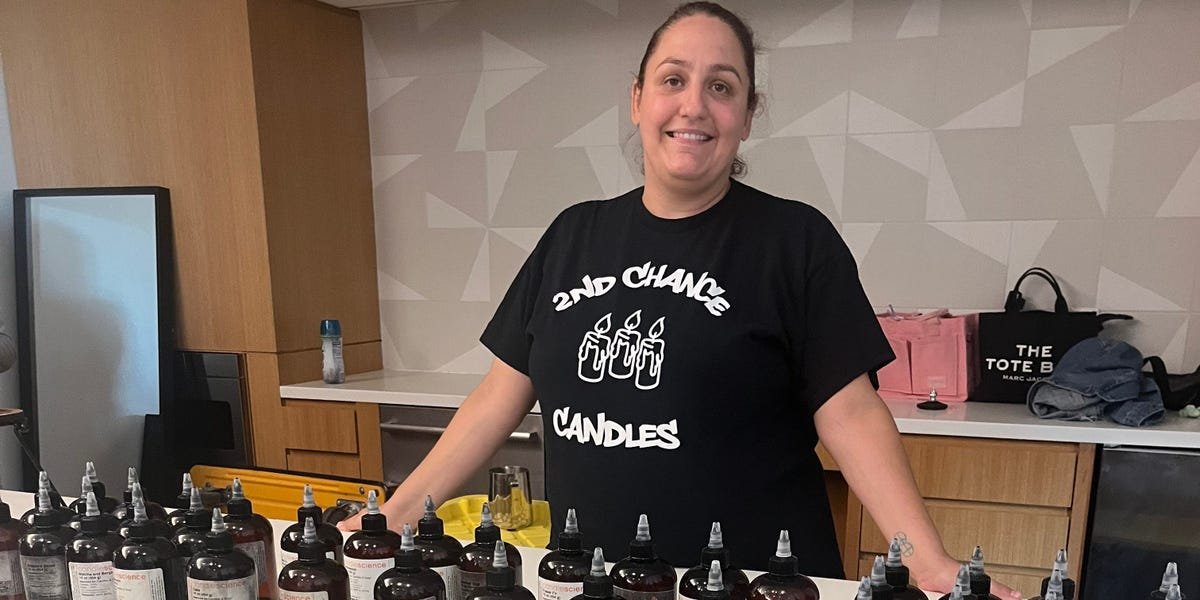
A woman with rows of bottles in front of her.

Devine with the scent bottles clients use during their candle-making.

Courtesy of Lisa Devine


I’m an open book, and though I don’t particularly like talking about my past, it’s a good conversation starter. A lot of people in the community know my recovery story and give support.

I’ve vowed never to return to my addiction because I’ll always remember the horrible fog of my 20s and early 30s. It’s terrifying to think I could have died from an overdose.

As for work, I’ve hosted many fun events, including kids’ birthday parties and corporate workshops. We’ve branched out into slime-making and drop painting with acrylics, and I employ part-time staff to help in the studio.

If I could give my younger self advice, it would be this: You are not your worst mistake. Shame keeps you stuck longer than addiction does. Ask for help sooner, and know that rebuilding and success are possible.


Source link

I-started-drinking-when-I-was-14-When-I-finally.jpeg

I started drinking when I was 14. When I finally got sober, I lost 100 pounds and saved over $55,000.

This interview is based on a conversation with Emily Susman, 42, a chef and cookbook author from Tulsa, Oklahoma. It has been edited for length and clarity.

I don’t blame anyone else for my alcoholism — it was all on me — but I grew up in a family where beer, wine, and liquor were part of the culture.

I’m half Lebanese, and every holiday and other social occasion centered on eating and drinking.

At 14, my grandfather handed me a vodka and tonic and said, “This is the way to drink responsibly, surrounded by your family in the safety of home.”

I dealt with stress by reaching for the bottle

In college, I joined a sorority where we partied hard. During rush season, our older sisters presented us with bottles of hard liquor covered with ribbons.

I was never far away from alcohol, whether I was working for my uncle as a bartender or establishing my own successful restaurant and catering firm in Dallas in my thirties.

But the bad habits really set in after I sold the business and started working with my husband, Drake, 43, at his gas-and-oil brokerage. I was in charge of the books and dealt with the ongoing financial stress by reaching for the bottle.


A woman in a sombrero taking a shot of tequila.

Susman was an emotional drinker who spent an average $30 a day on alcohol.

Courtesy of Emily Susman.


It got to the point where I was getting through a large bottle of vodka every few days. I’d hide the evidence in the pantry because I didn’t want Drake to see how often it was happening.

I’d use any excuse to drink, whether it was to celebrate the good times or commiserate with myself when something went wrong.

The tell-tale signs were there. I was overweight from all the wasted calories and my habit of eating more when I was drunk. I’d experience crushing hangovers, get the shakes, and vomit the morning after.

My family started to get on my case. “This is a problem for you,” they would say. “You need to get your act together.” Every time, I’d make an excuse. I’ll tell them that I’d cut down after Thanksgiving or give up entirely on New Year’s Day.

I tried fad diets and didn’t exercise

Inevitably, I’d be back drinking by Blake’s birthday in the middle of January.

Things got even worse when the pandemic began in March 2020. I was often confined to the house and passed the time drinking. I disregarded the needs of my body by not exercising and trying fad diets that weren’t sustainable.

Then, a month into 2021, I awoke from a particularly bad episode and stared at myself in the mirror. At 5ft 8in, I was 230 pounds and a size 16. I bawled my eyes out because I was so miserable.


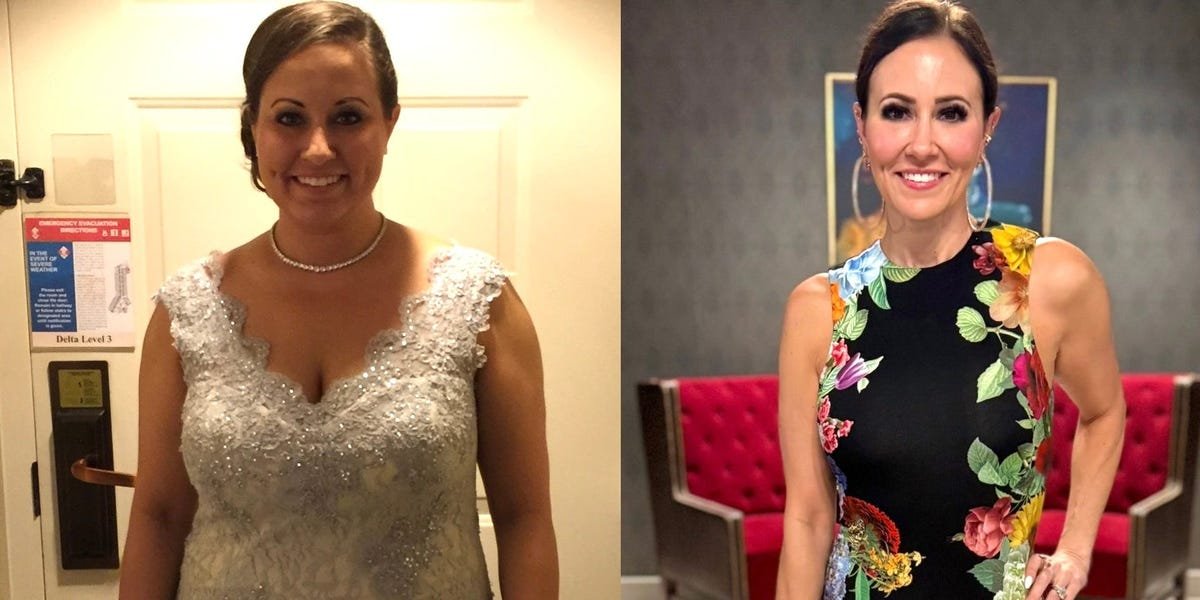
A before-and-after photograph of a woman who lost 100 pounds in weight

Susman before and after she quit drinking and lost almost half of her body weight.

Courtesy of Emily Susman


Something changed. I came downstairs and said to Blake, “I can’t do this anymore.” I sought therapy and had my last drink in early February.

I realized the all-or-nothing approach that fueled my alcoholism could be redirected to something positive.

It was a simple process without frills. I took pride in reaching each milestone: five days, then 30 days, then 120 days, and so on.

My weight-loss journey was slow and steady

Distractions made all the difference, whether I was using adult coloring books, painting with acrylics, or even sucking on lollipops when I craved sugar or the oral fixation of drinking.

Best of all, I reignited my love of cooking. I relied on my professional culinary background to make nutritious, balanced meals, which broke the cycle of binge-eating, restricting, and guilt.

My sensible diet, combined with simple exercises such as walking and strength training, helped me lose 100 pounds. I did it slowly and surely — losing around one pound a week — and now weigh 126 pounds.


A man and woman holding two dogs in front of the ocean.

Susman with her husband, Blake, and their Pomeranians, Bonnie and Clyde.

Courtesy of Emily Susman.


I’m a size zero to two and no longer hide my figure in baggy clothing. I’ve been sober for five years.

Another benefit is the amount of money I’ve saved. I found an app that took my average spending on alcohol of $30 a day to calculate that I’ve saved nearly $55,500 since 2021.

Meanwhile, I launched my company, Emma Claire’s Kitchen, the same year I got sober. It offers practical, tasty recipes and products, such as spices and, soon, mocktail powders.

I’m so grateful to my husband and my family

I’m a completely different person from the wreck I saw in the mirror that terrible morning. I love and value myself and am so grateful to Blake and the rest of my family for staying by my side.

It’s scary to think that I nearly lost everything — including my life — to alcohol. I’ll never go back to what passed as an existence, just getting through the day.

I have a bright future ahead of me now.


Source link

I-run-alcohol-free-nightlife-events-in-NYC-Most-of-my.jpeg

I run alcohol-free nightlife events in NYC. Most of my guests aren’t sober — they just don’t want to drink.

This as-told-to essay is based on a conversation with Sam Bail, a data engineer and the founder of the alcohol-free pop-up event company, Bright Nights Social. It has been edited for length and clarity.

Three years ago, I had the idea to open an alcohol-free bar in New York City.

I don’t drink, but I still wanted nightlife — dancing, music, meeting new people, getting out of the house on a Friday or Saturday night. What I didn’t want was another alcohol-free space that was centered on wellness, meditation, or yoga. I wanted something that still felt like real nightlife, just without booze being the main event.

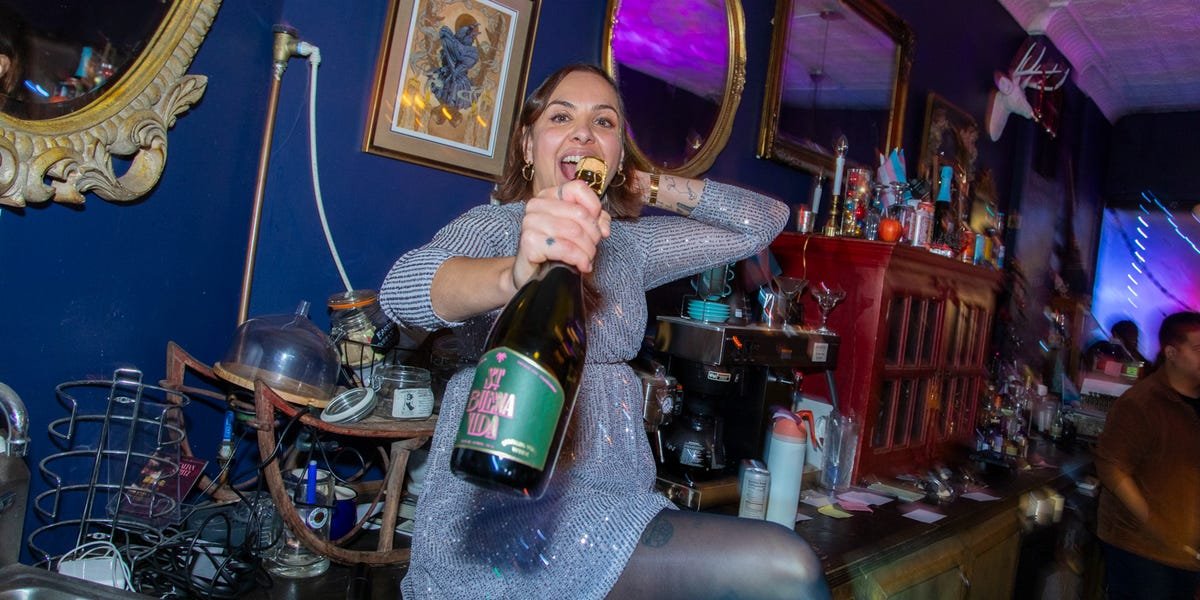
Instead of signing a lease, I started testing the idea by hosting pop-up events. I’d take over coffee shops or other venues at night and turn them into alcohol-free bars for the evening.

What started as an experiment quickly took on a life of its own.

Over the past three years, I’ve collaborated with tons of venues, experimented with a variety of new formats, and thousands of people have come through our doors. That’s been the most surprising part of all of this: the demand.

What’s even more interesting? Most of the people who attend my events aren’t even sober.

Who actually comes to alcohol-free nightlife

When people hear “alcohol-free event,” they often assume the crowd is made up entirely of sober or sober-curious people. That hasn’t been my experience at all. Based on conversations with guests, I estimate that at least 75% of the people who attend my events don’t identify as sober or even sober-curious.

They’re mostly in their mid-20s to early 30s — older Gen Z and very young millennials. Gender splits depend on the event, but many of my parties are close to 50-50 men and women. What they have in common is that they want to go out, socialize, and have fun without making drinking the center of their entire social life.

I’m 40, so I’m an elder millennial who’s already done the heavy partying phase and is over it. But many of the people who come to Bright Nights Social are younger than me and feel the same way. They’ll tell me things like, “I still drink sometimes, I just don’t want to do it every time I go out,” or “Alcohol makes me feel terrible the next day.”

They’re not abstaining out of moral opposition to alcohol or because of addiction. They’re opting out because they don’t like the cost, the hangovers, or the way drinking dominates social life in cities like New York.

Experiences > drinking

What I see aligns with a broader shift happening right now, especially among younger people. There’s a growing focus on experiences rather than just going to a bar and spending money on drinks. In New York City, you can see it everywhere: pottery classes, cooking classes, rug tufting, late-night library events, group reading clubs.

Some of my favorites have been hosting cooking classes and our crafting events, like rug-making. Coming up this month, we have a tea bar, a bagel-making (and eating!) class, and a full-on dance party, complete with DJs and a full non-alcoholic bar, to close out Dry January.

People want to do something. They want to make memories. They just don’t want to wake up feeling awful the next day.

Cost is also a big factor. When cocktails are $15 or $20 each, it doesn’t take long for a casual night out to become extremely expensive. A lot of people tell me they’d rather spend their money on an experience than on alcohol that doesn’t even make them feel good.

That doesn’t mean Gen Z isn’t drinking at all. In fact, some recent data suggests younger people are actually drinking more now than they were a year or two ago. I think part of that is a post-pandemic catch-up effect — many Gen Zers reached legal drinking age during lockdowns and simply didn’t have the chance to go out.

What I see on the ground is moderation. People might have one drink at dinner and then switch to a nonalcoholic beer. Or they’ll alternate between alcoholic and nonalcoholic drinks throughout the night — what some people call “zebra striping.” They’re being much more intentional about how and when they drink.

THC, nonalcoholic drinks, and what’s next

Another huge shift I’m seeing is the role of legal THC. I don’t serve THC products at my events, but I don’t stop anyone from having one before they come, and I hear about them constantly from guests and friends who work at nonalcoholic bottle shops. THC drinks are some of the best-selling products in those stores.

People understand what THC does. They say it helps with social anxiety, takes the edge off, and feels more manageable than alcohol when used in moderation. Compared to that, there’s still skepticism around functional or adaptogenic drinks — things with nootropics, ashwagandha, or functional mushrooms. Many people aren’t convinced that those drinks actually do anything beyond being a placebo.

That said, I think we’re still early. As people learn what works for their own bodies — whether that’s L-theanine, lion’s mane, or something else — those functional beverages may gain more traction.

At the same time, I’m also seeing conversations online about people pulling back from THC after overdoing it, so I think we’ll see a similar trend as people try to find nightlife events that best suit their needs.

I don’t think most people want to be completely sober forever, but they are actively experimenting with what moderation looks like.

Alcohol-free doesn’t mean anti-fun

The biggest misconception about alcohol-free nightlife is that it’s boring or restrictive. What I’ve learned is that people don’t want to be told what not to do — they just want more options.

Bright Nights Social isn’t about sobriety as an identity. It’s about creating a space where alcohol isn’t the default. You can still dance, flirt, meet strangers, and stay out late. The only difference is that you’re not expected to drink to participate.

The fact that so many non-sober people show up tells me this isn’t a niche idea anymore. Alcohol-free nightlife isn’t just for people who’ve quit drinking entirely. It’s for anyone who wants to go out — and wake up the next day feeling like themselves.

Do you host or attend alternative nightlife events? Contact this reporter at ktl@businessinsider.com.


Source link