Bryan Johnson, fresh off a 40- and 70-hour social media fast, says he’s ready to put an AI buffer between him and his social feed.
In a post on X, the 48-year-old entrepreneur and biohacker compared social media to pollution and water toxins.
“Like other toxins, it accumulates,” he wrote. “You can’t unsee or unfeel what you’ve consumed. It settles into mental tissue like heavy metals, producing chronic low-grade inflammation.”
Eliminating social media entirely isn’t realistic, he wrote.
“‘Just put the phone down’ is as practical as telling someone in 19th-century London to stop breathing coal smoke,” he wrote.
Every time Mary publishes a story, you’ll get an alert straight to your inbox!
Stay connected to Mary and get more of their work as it publishes.
Johnson said time away from the apps is the “only remedy,” but he also suggested that AI agents could serve as an antidote to social media.
“An AI layer between you and the feed. Filtering rage, removing vanity metrics and translating sensationalism into calm, factual language. Preserving signal and eliminating noise,” he wrote.
“I never want to see the raw feed. I want an AI agent to read it for me, strip the engagement metrics that hijack my judgment, filter the rage, and return only what I actually came for,” he added.
In a world where AI agents are already proving to be expert hackers, agreeable coworkers, and custom-built board members — as well as potential security risks — Johnson’s push for an AI layer between himself and his feed doesn’t seem all that far off.
Johnson has made it his life’s focus to try to reverse his biological age to avoid death. He spends around $2 million a year to do so, focusing on extreme treatments such as plasma therapy alongside his strict diet and exercise routine.
His wish for an AI social media buffer also ties into his quest for a longer life, he says: “I want social media to become a longevity intervention, not a longevity threat.”
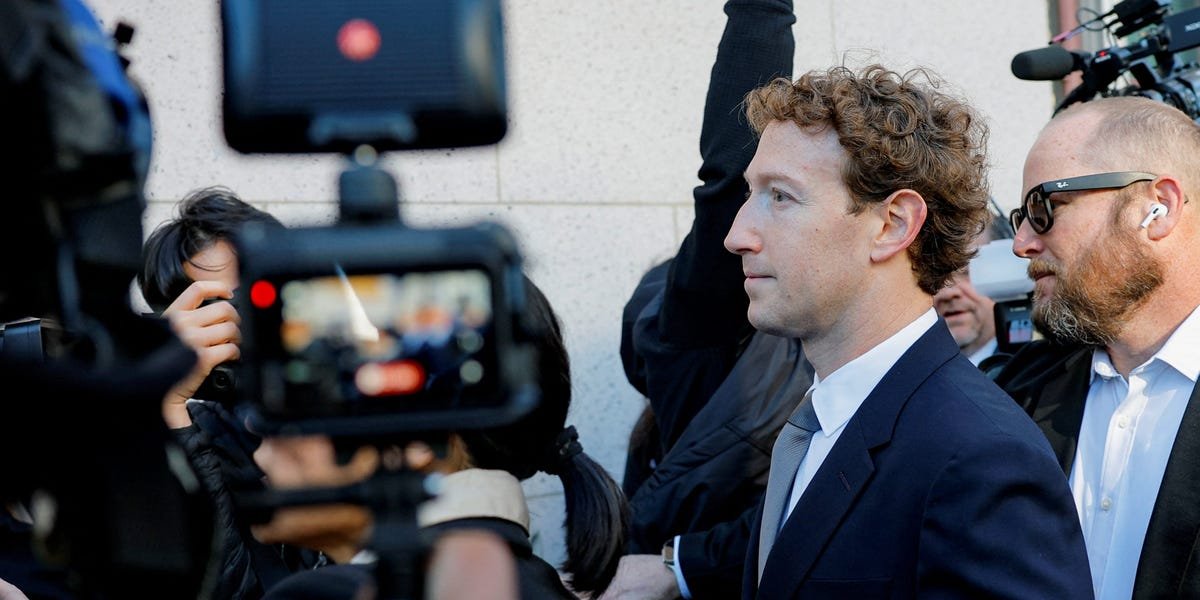
Lori Schott, a mother from rural Colorado, said she stared down Meta CEO Mark Zuckerberg as he walked into court in Los Angeles on Wednesday to testify in a landmark trial regarding social media addiction.
Schott lost her 18-year-old daughter, Annalee, to suicide in 2020. She believes the content Annalee saw on social media platforms “destroyed” her mental health.
“I made eye contact with him for quite a long time,” Schott said of Zuckerberg. “I was not backing down.”
Schott is not a plaintiff in the case where Zuckerberg testified on Wednesday, but is among more than 2,000 individuals who have similar personal injury lawsuits pending regarding social media addiction and harm.
The case underway in Los Angeles centers on a 20-year-old woman, identified by the initials KGM, who says her use of social media throughout her childhood negatively affected her mental health, contributing to depression and suicidal thoughts. It is considered a bellwether trial that could indicate how other similar lawsuits related to social media harm, like Schott’s, could play out.
Lori Schott, a mother from rural Colorado, lost her 18-year-old daughter, Annalee, to suicide in 2020.
Jill Connelly/Getty Images
Meta, which owns Instagram and Facebook, was named as a defendant alongside Google-owned YouTube, TikTok, and Snapchat. TikTok and Snapchat both settled the lawsuit out of court.
Last month, Meta warned investors that its mounting legal battles over youth safety could “significantly impact” its 2026 financial results. Attorneys for more than 100,000 individual arbitration claimants have “sent mass arbitration demands relating to ‘social media addiction'” since late 2024, the company said in a 2026 10-K, which warned that potential damages in certain cases could reach into the “high tens of billions of dollars.”
In a statement, Stephanie Otway, a Meta spokesperson, said: “We strongly disagree with these allegations and are confident the evidence will show our longstanding commitment to supporting young people.” Otway highlighted changes the company has made over the past decade, including Teen Accounts, which give parents tools to manage their teens’ accounts.
Google declined to comment. TikTok did not respond to a request for comment. A Snapchat spokesperson said in a statement: “The Parties are pleased to have been able to resolve this matter in an amicable manner.”
On Wednesday, parents showed up hours before the courthouse opened in hopes of getting a seat inside. Many of them had personal stories about how they believed social media use harmed their children.
Parents gathered outside the Los Angeles Superior Court on Wednesday.
Frederic J. Brown / AFP via Getty Images
“We face a lot of stigma from people telling us we’re bad parents,” said Amy Neville, another parent who attended to show her support. She said that once the evidence comes out in the trial, she believes “the tide will turn, and the general public will be on board with us.”
“It is by design that social media is tearing their family apart,” Neville said.
On the stand, Zuckerberg said that teens represent less than 1% of Meta’s ad revenue and that most teens don’t have disposable income, so it’s not especially valuable to advertisers to reach them.
Zuckerberg said it’s in Meta’s best interest to create a platform that inspires people and makes them want to stick around for the long term.
“If people aren’t happy with a service, eventually over time they’ll stop using it and use something better,” he said.
Sarah Gardner said that regardless of the outcome of the trial, she hopes it raises awareness about how the social media companies, and specifically Zuckerberg, have been operating. Gardner is the CEO of the Heat Initiative, an advocacy group that pressures Big Tech companies to make their platforms safer for kids. She was at the courthouse with the parents who believe they have been affected.
Gardner said she’s hopeful the trial will empower more people to say, “I don’t want to be on Instagram anymore.”
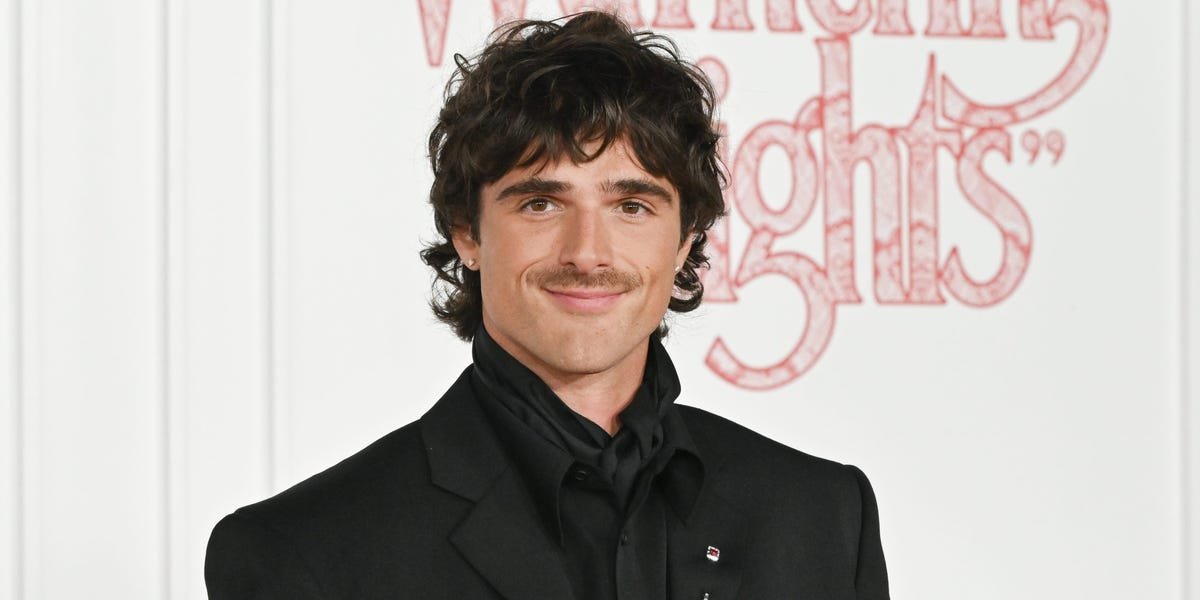
Jacob Elordi, 28, is everywhere right now — he’s just not on social media.
From “Euphoria” to “Saltburn” and “Priscilla,” to Guillermo del Toro’s “Frankenstein” last year and “Wuthering Heights,” released last week, Elordi has cemented his place as one of Hollywood’s most in-demand young actors.
But in an interview with CBS Sunday Morning, he made it clear that he has no interest in putting his private life online.
“I have no relationship with social media,” Elordi told CBS correspondent Tracy Smith.
“My dream was to be an actor. My dream was to play in the movies and, you know, I’m far too nervous to ask for more than that. I’ve been given exactly what I wanted, and I see it exactly how I dreamed it, and I live it how I dreamed it. So for me, that’s about all I can handle,” Elordi said.
Though the Australian actor has had an Instagram account in the past, he’s known to deactivate it often. His account has been deactivated since late 2024.
For Elordi, staying offline is a way to keep Hollywood from taking over his entire identity. Despite his rising profile — he’s TK he says that the boundary allows him to move through his private life mostly unbothered.
“I have a pretty strong refusal to lose my life to an industry, you know. I consider myself an actor and just an actor. And so for me, life kind of goes on outside the set, and outside of these lights and cameras and things,” he said. “I don’t have too much trouble in the world.”
Even with cameras around, Elordi says being a Hollywood star barely registers in his daily life.
“It doesn’t really factor into my reality, you know,” Elordi said. “I have so much love in my life, and the relationships I have in my life are so present and real. I was raised in such a sort of authentic and true way.”
“I feel so deeply here that, I don’t know, the idea of this industry and stuff — it doesn’t really factor into my day-to-day,” he said.
This isn’t the first time Elordi has spoken about social media and fame. In 2022, he said he woke up to 4 million new Instagram followers after his breakout role in Netflix’s “The Kissing Booth,” and the sudden public attention made him consider quitting acting.
“I hated being a character to the public. I felt so far from myself,” Elordi told GQ.
Elordi isn’t the only Gen Z actor to have spoken about staying offline.
In 2025, Mia Threapleton said her mother, Kate Winslet, encouraged her to make a list of pros and cons for joining Instagram when she was 14.
“The cons completely outweighed the pros for me. That was quite a clarifying moment. Since then, the more time I spend in this world, the more I’m really happy that I don’t have it,” Threapleton said.
It’s not just a Hollywood thing, either. Plenty of Gen Zers are deciding they’re better off offline.
They’re trading smartphones for dumb phones, turning cellphones into makeshift landlines, and throwing anti-social media parties where no one’s allowed to scroll.
On July 6, 2019, federal agents arrested Jeffrey Epstein aboard his private jet, which had just landed in New Jersey from a trip to Paris.
At the same time, another set of FBI agents raided his mansion in Manhattan. They took photos of everything, from a taxidermied tiger in the library, to framed pictures of Epstein with Donald Trump, Pope John Paul II, and Saudi Crown Prince Mohammed bin Salman scattered across his desks.
The agents also seized more than 70 computers, iPads, and hard drives, as well as boxes of shredded paper and financial documents. They sawed open a metal safe and found even more hard drives, along with a binder of CDs, 48 loose diamonds, and a Saudi Arabian passport with his photo.
Six weeks later, after Epstein killed himself in jail while awaiting trial on sex-trafficking charges, agents raided his US Virgin Islands estate, where they seized even more electronic devices and documents.
On January 30, the US Department of Justice put much of that material on the internet.
It created an immediate explosion of news. The public already knew that numerous powerful people in politics, business, and academia spent time with Epstein even after he had already registered as a sex offender, in 2008. The files demonstrated a vaster scope than previously known.
Emails show Tesla CEO Elon Musk and US Commerce Secretary Howard Lutnick made plans to visit Epstein’s island. Epstein exchanged crude emails with Virgin founder Richard Branson and other businessmen. The UK’s ambassador to the US, Peter Mandelson, resigned from the Labour Party after the files revealed a photo of him in his underwear and emails showed him sharing government secrets with Epstein. Kathryn Ruemmler announced she would resign as the top lawyer at Goldman Sachs after emails showed years of warm — and at times intensely personal — emails between her and Epstein. The documents disclosed that prosecutors investigated sexual abuse allegations against Leon Black, a billionaire acquaintance of Epstein, but did not charge him. A financial document which had been kept secret since Epstein’s death showed he asked his girlfriend to marry him and planned to give her $100 million and all of his properties.
The records also include a number of unsubstantiated tips sent to the FBI, which include unproven allegations about President Donald Trump.
Before the release, the public knew there was more to the Epstein story.
A glimpse of the Epstein files was shown in the criminal trial of Ghislaine Maxwell, which I covered for Business Insider, in Manhattan federal court in 2021. Victims testified about how Epstein and Maxwell would name-drop Trump, Bill Clinton, and Prince Andrew, showing them how many friends he had in high places.
After the jury found Maxwell guilty of trafficking girls to Epstein for sex, I filed my story, and then got drinks with a few other journalists who covered the five-week trial, including Julie K. Brown, the Miami Herald journalist whose stories about Epstein’s abuses led to his arrest.
It had been a grueling trial, filled with horrific testimony from women who had recounted the darkest moments of their lives. The trial took place in December, requiring journalists to show up at 4 a.m. in the 20-degree weather to get a seat in the courtroom.
We were happy for the trial to be over and for the jury to reach its verdict. But a question hung in the air. Was what we heard at the trial really all there was to say?
Questions about Epstein and his sex-trafficking operation continued to persist in the years following the trial. How did Epstein get so rich? Was there any truth to rumored connections to the CIA or the Mossad? Did Epstein traffic girls to some of his powerful friends, as some victims alleged? Did he really kill himself in prison, as authorities concluded, or was he assassinated to cover up an elite pedophile ring, as some theorized?
Civil lawsuits generated new revelations. A judge in New York unsealed documents from a long-running case that Epstein’s most outspoken victim, Virginia Giuffre, filed against Maxwell. Groups of victims sued big banks, accusing them of ignoring red flags about Epstein’s finances. (Deutsche Bank and JP Morgan each settled class-action lawsuits with victims; similar lawsuits against Bank of America and BNY Mellon are pending.) JP Morgan and the US Virgin Islands government filed lawsuits in which each accused the other of facilitating Epstein’s sex-trafficking operation. And a compensation program identified 150 victims.
The lawsuits delivered a steady drip of details: how Epstein trafficked girls and hushed them up with money, more names of people in his orbit, and the financial red flags waved before banks. A Justice Department inspector general report analyzing the circumstances of his death concluded that poor management at the federal jail created the conditions that allowed him to kill himself. Another Justice Department report criticized Alexander Acosta, the prosecutor who gave Epstein a plea deal in 2007 on light charges, for “poor judgment,” but found nothing that substantiated a vast conspiracy. (The latest file release includes a copy of the robust indictment prosecutors had initially drafted, with 19 victims.)
As theories about Epstein continued to swirl online, the Justice Department refused requests by journalists and Epstein’s victims to make the files public.
On a credenza in his Manhattan mansion, Jeffrey Epstein kept photos of himself with some of the most powerful people in the world.
US Department of Justice
By the 2024 presidential campaign, speculation about Epstein had reached fever pitch among members of Trump’s political base, who had for years been steeped in other conspiracy theories, including QAnon. Podcasters and journalists pressed Trump to promise to release the Justice Department’s vast trove of Epstein files.
The issue was potentially awkward for Trump. Epstein was affiliated with prominent Democrats, including Clinton, former New Mexico Gov. Bill Richardson, and diplomat Bill Burns. But Trump and Epstein had been friends in the 1980s and 1990s, both spending time together in the Manhattan and Palm Beach social circuits. Epstein also forged close ties with Steve Bannon, Trump’s former White House advisor, in the months before his arrest on sex-trafficking charges.
Shortly after Trump won the presidential election, Giuffre — who was a teenager when Maxwell recruited her from Mar-a-Lago, where she worked, and brought her to Epstein for sex — urged him to release the files.
“We need someone who despises these sick people with the power to help make it easier to hold these monsters accountable, no matter how much $$ they have,” she wrote on X. “God bless you and Thank you for caring!”
When Trump took office in January 2025, the job of releasing the Epstein files fell to his attorney general, Pamela Bondi.
For months, Bondi promised but failed to provide any substantial new information about Epstein. Then, in July, the Justice Department and FBI abruptly announced they would not release any more Epstein files after all. On Truth Social, responding to backlash from his supporters, Trump praised Bondi, called the Epstein files a “hoax,” and urged his supporters to “not waste Time and Energy on Jeffrey Epstein, somebody that nobody cares about.”
Todd Blanche, the No. 2 official in the Justice Department, and Trump’s former personal lawyer, traveled to Florida to interview Ghislaine Maxwell, who is serving a 20-year prison sentence, for reasons that remain unclear. Then she was mysteriously transferred to a nicer, lower-security prison also for reasons that remain unclear.
By law, the Epstein Files Transparency Act requires the Justice Department to make public everything they have about Jeffrey Epstein and Ghislaine Maxwell — even a photo of them riding horses together in the countryside.
US Department of Justice
Trump’s and the Justice Department’s perplexing handling of Epstein brought fresh attention to the story. I spoke to four people who had access to the Justice Department’s files, and who said there was no trace of intelligence material, which would have been the case if Epstein or Maxwell’s crimes were tied to the CIA or Mossad. The New York Times produced deep investigations into Epstein’s ties to JPMorgan and how he accumulated his wealth by exploiting his network and his complicated relationships with his two main patrons, Black and fellow billionaire Les Wexner. The Wall Street Journal found a copy of a 2003 book of birthday well-wishes, prepared by Ghislaine Maxwell, which included an apparent letter from Trump.
These developments together created the perfect storm and prompted Congress to take ook action.
In August, the House Oversight Committee subpoenaed the Justice Department for its Epstein-related records. It also issued subpoenas throughout the year to Epstein’s estate, former Justice Department officials, Clinton, and banks where Epstein had accounts.
Republicans and Democrats on the committee released tranches of various “Epstein files,” most of which came from his estate. It put out a copy of the “birthday book.” prepared for his 50th birthday. A letter attributed to Trump is accompanied by a crude illustration of a female body, calls Epstein a “pal,” and says that “enigmas never age.” Trump is suing The Wall Street Journal over a story it published earlier about the letter, which his lawyers maintain is a fabrication.
The Epstein files contain many birthday celebrations for Jeffrey Epstein, including a now-infamous book of letters from acquaintances prepared for his 50th birthday.
US Department of Justice
The most potent revelations came from tens of thousands of emails, text messages, and other files from Epstein’s estate. Some of those emails included cryptic references to Trump. In one email to Maxwell, Epstein called Trump “the dog that hasn’t barked.” In another, Epstein told writer Michael Wolff that Trump “knew about the girls.”
Larry Summers, the former treasury secretary and Harvard president, was removed or resigned from various positions after it was revealed that he sought the Epstein’s advice for pursuing an extramarital affair. Prince Andrew stayed in touch with the pedophile long after he previously said they cut ties. The House Oversight Committee also released numerous photos of Epstein hanging out with Branson, Bannon, Noam Chomsky, Woody Allen, and other powerful and influential people.
The flood of revelations now pale in comparison to what we’ve learned from the files in the Justice Department’s possession. At the time, they raised the question: Why was the Justice Department resisting calls to release the files?
Public pressure — including from Epstein’s victims, who wanted more transparency from the government — led to a flood of support for the Epstein Files Transparency Act. The law required the Justice Department to do what it had initially promised: release all of its Epstein files. It allowed minimal redactions to protect the privacy of victims and gave a 30-day deadline. In November, both houses of Congress passed the bill. Trump — seeing any veto would be overridden — signed it into law.
When the December 19 deadline arrived, the Justice Department published several hundred thousand documents. There were a lot of photos of Clinton, including one of him in a pool with Maxwell, and more photos of Epstein’s home and his friends. Emails between prosecutors provided insight into how they built the cases against Epstein and Maxwell, although many of them were redacted. There was very little information about Trump.
The redactions in the Epstein files often appear to have no rhyme or reason. Melania Trump’s face is redacted from a famous photo of Epstein, Maxwell, and Donald Trump.
US Department of Justice
In court filings several days later, the Justice Department revealed that it still had to review several million Epstein-related documents. It had blown past its 30-day deadline.
On January 30, Blanche announced that the Justice Department would keep its promise and release whatever Epstein files it could — millions more pages.
He said the department would withhold another 200,000 documents, asserting legal “privilege,” even though the law doesn’t allow for that.
The redactions in the files are inconsistent and baffling. Victims’ names, which were supposed to be kept secret, have been exposed. In one photo, Melania Trump’s face is blacked out, even though the photo — of her, Epstein, Maxwell, and the president — had widely circulated for years.
There are other odd omissions. The Epstein files have surprisingly few financial records. An interview with Kristin Roman, the medical examiner who conducted the autopsy on Epstein’s body, is missing. There’s an incomplete record of prosecutors deciding which of his acquaintances they would face criminal charges.
Members of Congress who have been permitted to view the unredacted files have pushed the Justice Department to make more documents public. The House Oversight Committee is scheduling interviews with people who might know more about Epstein’s activities.
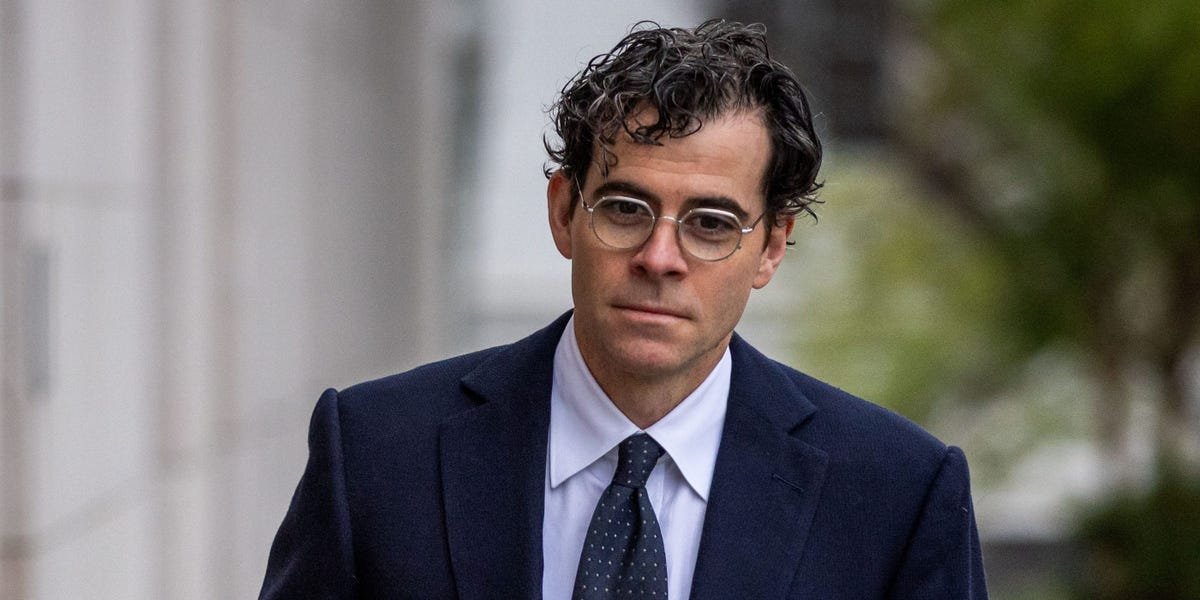
Adam Mosseri’s multimillion-dollar pay package took center stage on Wednesday as lawyers sought to link Meta’s profits to platforms that addict children.
As the first of several tech executives to testify in a social media addiction trial playing out in Los Angeles state court, the head of Instagram said he is paid roughly $900,000 a year and receives annual performance-based bonuses that can be as high as half of his salary.
Like many executives of publicly traded social media companies, Mosseri, who’s been head of Meta’s Instagram since 2018, also earns stock-based compensation.
From the witness stand, Mosseri said that his stock-based pay varies year to year but that it has been in the “tens of millions of dollars.” Some years, he said, he believes it’s been over $20 million.
Mosseri made the comments while being questioned in Los Angeles Superior Court over a lawsuit that argues Meta and YouTube knowingly engineered their platforms to addict and cause harm to kids. Snap and TikTok were also named in the lawsuit but settled before trial for undisclosed amounts.
Mark Lanier, the attorney representing the plaintiff, pressed Mosseri on how the company determined its policy on cosmetic filters, such as filters that alter users’ appearances, which was a key topic in court on Wednesday. He brought up Mosseri’s compensation again while asking whether banning filters could have hurt Mosseri’s bottom line by limiting the company’s growth.
“I was never worried about this affecting our stock price,” Mosseri said in court.
Meta declined to comment about Mosseri’s compensation.
The lawsuit centers on a 20-year-old woman, identified by the initials KGM, who says her use of social media throughout her childhood negatively affected her mental health, contributing to depression and suicidal thoughts.
The case is considered a bellwether trial that could indicate how other similar lawsuits related to social media addiction might play out.
“We strongly disagree with these allegations and are confident the evidence will show our longstanding commitment to supporting young people,” Stephanie Otway, a Meta spokesperson, told Business Insider. Otway said the company has been making ” meaningful changes—like introducing Teen Accounts with built-in protections and providing parents with tools to manage their teens’ experiences.”
When our family moved to Oregon from Southern California in 1974 for my husband’s new job, I fell in love with the Pacific Northwest. But there was one problem: There wasn’t enough sunshine or swimming pools — both of which I had enjoyed in California.
When the community college where I taught offered free memberships at a new gym, I quickly signed up. I expected exercise, but I got so much more.
Over 30 years later, I’m 81, and still going to the gym every other day. It’s still an important part of my health routine.
I found that the gym isn’t just for young people
The weight room is full of young people lifting weights, and they pound their feet on treadmills like the start of the Kentucky Derby.
But the gym is also filled with older people. There’s the 87-year-old woman who runs up and down the stairs “because it feels good,” while her 91-year-old husband maintains a steady pace on the treadmill.
Every time Cynthia publishes a story, you’ll get an alert straight to your inbox!
Stay connected to Cynthia and get more of their work as it publishes.
As a swimmer, I’ve met several people around my age, welcoming each other into the pool.
With a somewhat older crowd, I am pleasantly surprised at how disabilities and imperfections are of no consequence in the pool. Surgery scars, including mastectomies and even amputations, are not worthy of the slightest stare or question. The miracle of being in the water is that handicaps and age disappear.
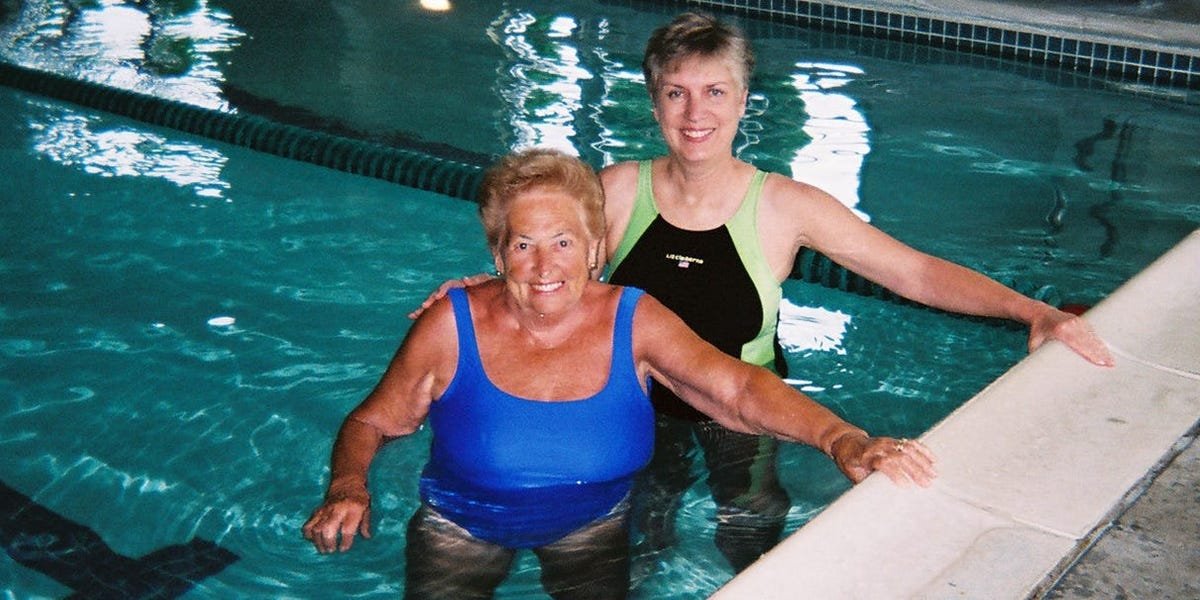
The author says she’s stayed healthy thanks to the pool at her gym.
Courtesy of Cynthia Wall
Even those who enter the pool in a lift achieve equality once they are buoyant. I’ve witnessed physical challenges that make me realize how insignificant my own are.
I was surprised to find deep friendships at the gym
When I first came to the gym to exercise, I didn’t expect to make friends — acquaintances, yes, but not friendships that mattered.
But then I met Maria, an 80-year-old Austrian with an infectious laugh. I heard her in the locker room as she shared a recipe for Wiener Schnitzel with someone. I had seen her in the pool, swimming with her head held high to keep her beautifully coiffed hair dry. I smiled and said goodbye as I left. The next day, I swam alongside her. I switched to a slow breaststroke so I could keep my head out and hear her story — and what a story it was.
A well-to-do Austrian, married to a doctor, she, her husband, and three children were reduced to refugee status under the Russian occupation at the end of World War II. In 1957, they were able to emigrate to the US. Because of their belief in the American Dream, they thrived. Maria often commented on their good fortune; she also taught me European history. She taught me a little German and showed me that laughter is the best antidote for any problem.
Soon, our casual acquaintance became a dear friendship that lasted until her death at 103 in 2022. We spent over 20 years together at the gym, four days a week. I made other friends as well. All of us loved and admired Maria.
I believe moving my body and socializing are keeping me young
Going to the gym multiple times a week has kept me more than young; it’s kept me moving into my 80s.
I have fairly severe scoliosis, and it hurts. Without swimming and core strengthening at the gym, I don’t want to think about how much worse it would be.
Over the years, I’ve learned that going to the gym is the best thing I can do for myself.
I am stronger than yesterday — stronger in my body, stronger in friendships, and stronger in optimism.
This story is available exclusively to Business Insider
subscribers. Become an Insider
and start reading now. Have an account? .
President Donald Trump said that he was calling for a 10% cap on credit card interest for one year.
The President cannot unilaterally cap credit interest rates; it would require an act of Congress.
This week, Trump has also announced proposals to address the affordability of housing.
President Donald Trump has taken another shot at big business, this time targeting banks.
On Friday, Trump said on Truth Social that he would call for a 10% cap on credit card interest for one year.
“Please be informed that we will no longer let the American Public be ‘ripped off’ by Credit Card Companies that are charging Interest Rates of 20 to 30%, and even more, which festered unimpeded during the Sleepy Joe Biden Administration,” Trump wrote in his social media post.
“Effective January 20, 2026, I, as President of the United States, am calling for a one year cap on Credit Card Interest Rates of 10%,” he added. “Coincidentally, the January 20th date will coincide with the one year anniversary of the historic and very successful Trump Administration.”
The White House did not immediately respond to a request for comment from Business Insider. The president cannot unilaterally impose such a cap; it would require an act of Congress to advance. Similar efforts that have been advanced in Congress have yet to become law.
The announcement, made on Truth Social, is the latest in a series of swipes at big business this week.
Earlier this week, he announced that he is instructing “representatives” to buy $200 billion in mortgage bonds, aiming to lower interest rates and monthly payments. He also said he was barring “large institutional investors” from buying up single-family homes and signed an executive order that would limit defense contractors’ corporate spending.
This is a developing story. Please check back for updates.
A new generation of consumer social startups is emerging.
From platforms focused on getting people to meet IRL to dating apps taking on Tinder or Hinge, startups are disrupting the digital social scene.
Founders of these startups are tackling problems like loneliness, dating app fatigue, and general dissatisfaction with the current social media incumbents.
Some founders come from Big Tech backgrounds, like the Instagram-heavy team behind photo-sharing app Retro, or the ex-Google employees building the social-mapping app PamPam. Gen Z founders are also throwing their hats in the ring, like Isabella Epstein’s IRL-focused app Kndrd, or Tiffany “TZ” Zhong’s Noplace app.
Investors are taking notice.
Every time Sydney publishes a story, you’ll get an alert straight to your inbox!
Stay connected to Sydney and get more of their work as it publishes.
For instance, the IRL-social app 222, which matches strangers over dinner or activities with a personality quiz, raised a $2.5 million seed round from venture capital firms like 1517 Fund, General Catalyst, and Best Nights VC in 2024.
“We’re entering this new wave of social where people are trying to revert back to what people really use these platforms for to begin with — which is connection,” Maitree Mervana Parekh, a principal at Acrew Capital, told Business Insider in 2024.
Meet 19 startups in social networking, dating, and AI that investors have their eyes on
Some venture capital funds — such as French firm Intuition VC or gaming-focused firm Patron — have made tackling loneliness and relationships part of their investment theses.
But it’s not just friendship and dating that are ripe for disruption.
Startups like Khosla Ventures-backed Gigi, Yale-student-founded Series, Boardy, Filament, and Goodword have raised capital for AI tools to help people network better or maintain professional relationships.
“When people think about loneliness, they think about friends and family,” Goodword CEO Caroline Dell recently told Business Insider. “But we spend most of our waking hours at work as professionals.”
Meet the founders of 11 startups competing with dating app giants like Tinder
Other startups, like Diem and Spill, have opened up investment rounds to include users themselves using the platform Wefunder.
It’s not yet clear how many of these investments will pan out. Some startups are pre-revenue, while others are experimenting with monetization methods (such as freemium models).
“Founders have to be honest with themselves,” said Marlon Nichols, a founding partner at Mac Venture Capital. “Some of them aren’t really venture-scale or venture-type investments. We’re looking for the next big thing, the next category leader.”
Meet 12 VCs and investors eyeing new social startups
Business Insider spoke with several social media and dating app founders about how they are raising capital, including the pitch decks they used to raise millions of dollars.
Read the pitch decks that helped 14 social-networking and dating startups raise millions of dollars:
Note: Pitch decks are sorted by investment stage and size of round.
Series A
Seed
Pre-Seed
Other
Read about more social networking and dating startups raising millions:
Airbuds, a social music app, told Business Insider in November that it has raised $10.2 million — including a recent check from Alexis Ohanian’s VC fund.
Sweatpals, a fitness and wellness social platform, raised $12 million in seed funding.
Sitch, an AI matchmaking dating app, announced in April that it had raised $2 million in pre-seed funding.
Amata, another AI matchmaking dating startup, recently launched in the US and disclosed that it raised $6 million in 2023.
Gigi, an AI social network for making professional connections, announced in September that it raised $3 million from Khosla Ventures.
Corner, a social mapping app for Gen Z, disclosed in September that it has raised $3.75 million.
The United States is reviewing the social media accounts of some visa applicants, adding another hurdle for workers and other visitors to clear under the Trump administration.
It’s also adding a hurdle for embassies processing those visa applications.
The State Department said in June that certain visa applicants would have their online activity vetted as part of its screening process. Six months later, the department expanded the list of visas that were subject to “online presence reviews.”
The new rule has complicated the visa application process, causing significant delays for approvals.
They have also rattled some companies, including Google and Apple, whose legal counsels have advised staffers requiring a visa stamp to re-enter the US not to leave the country due to extended processing times resulting from the new requirements.
Consular offices began conducting online presence reviews for H-1B applicants on December 15, but they’re not the only ones affected.
Here is what you need to know.
Who does the social media reviews impact?
Earlier this month, a State Department spokesperson told Business Insider that the US is requiring H-1B visa applicants and their dependents to make their social media accounts public so consular officers can review their activity.
The H-1B visa program enables companies to temporarily employ foreign skilled workers in specialized roles. Data collected from the Department of Labor showed that almost 50% of H-1B applications are in “professional, scientific, and technical” fields. They are commonly relied on in the tech industry.
The State Department said international students and exchange visitors are also subject to “online presence” reviews, specifically for F, M, and J non-immigrant visa applicants.
In its memo, Google’s legal counsel told staffers that lengthy processing delays were affecting H-1B, H-4, F, J, and M visa holders.
Why the US is reviewing social media
Federal agencies under President Donald Trump are enforcing stricter and more restrictive immigration policies.
In January, Trump issued an executive order aimed at enhancing immigration screening. It was meant to protect American citizens from those the administration says “intend to commit terrorist attacks, threaten our national security, espouse hateful ideology, or otherwise exploit the immigration laws for malevolent purposes.”
Trump expanded upon that executive order in June and then again this week. Combined, those subsequent orders partially or fully restrict entry for citizens from 25 countries.
In September, the Trump administration also began charging a $100,000 fee for new H-1B applications.
It cast the fee as a corrective. Trump said that the H-1B system had strayed from its original purpose of filling high-skilled worker shortages and was instead being “deliberately exploited to replace, rather than supplement, American workers with lower-paid, lower-skilled labor.”
In its announcement about the social media checks on December 3, the State Department said the changes were meant to increase national security.
“A US visa is a privilege, not a right,” a spokesperson for the State Department told Business Insider at the time. “In every visa case, we will take the time necessary to ensure an applicant does not pose a risk to the safety and security of the United States.”
What to do (and not do) if you are affected
It might be tempting to delete your social media accounts, but it’s not that simple.
The law firm Davis Wright Tremaine advised in a post on its website that visa applicants should review their social media to ensure there is no information that might contradict the details submitted in their applications. The law firm Duane Morris advised against deleting posts or profiles. If an immigration official notices, it could be seen as evasive.
Perhaps the most important thing a visa applicant can do is stay in the US during the process.
Shaun Foster, an immigration attorney who owns the firm PampaninFoster based in Cambridge, Mass., told Business Insider in a LinkedIn message that he is encouraging clients on H-1B visas to play it safe.
“We’ve continued to emphasize generally to stay in the US, and to keep moving forward in working toward your immigration goals from within the US,” he wrote. “We’re much better positioned, as immigration counsel, to more strongly assist and guide people from within the US. There’s less control when you start integrating international consular elements.”
How companies are reacting
Lawyers for Google and Apple have already advised some employees on visas not to travel outside the US due to delays at embassies stemming from the increased scrutiny.
“Please be aware that some US Embassies and Consulates are experiencing significant visa stamping appointment delays, currently reported as up to 12 months,” Google’s legal counsel wrote in a memo sent on Thursday to employees on visas.
Fragomen, a law firm that represents Apple, similarly said in a memo sent last week to some visa holders at the company that they should refrain from travel.
“Given the recent updates and the possibility of unpredictable, extended delays when returning to the US, we strongly recommend that employees without a valid H-1B visa stamp avoid international travel for now,” the memo said.
Both memos were seen by Business Insider.
Those companies and many others are still smarting after Trump imposed the $100,000 fee on new H-1B visa applicants in September.
After that order, which initially didn’t specify that it only applied to new applicants, human resources teams at companies like Google, Amazon, Microsoft, Meta, Salesforce, JPMorgan, and Zoom sent warnings to staffers advising them not to leave the US if they’re on an H-1B visa.
In one case, dozens of H-1B holders on an Emirates flight out of San Francisco began deplaning as soon as they received the news alert.
The widespread panic in corporate America forced the Trump administration to clarify that the fee would only apply to new visa applicants, not existing visa holders.
A new law barring children under 16 from opening or maintaining social media accounts took effect last week in Australia, forcing platforms to deactivate accounts for swaths of young users.
In the words of Taylor Swift, however, Reddit would very much like to be excluded from this narrative because, it says, it’s not a social media platform.
Reddit made the argument in a lawsuit it filed against the Commonwealth of Australia and its Minister of Communications on Friday. The Australian law is meant to protect young people from what it says are the harmful and addictive effects of social media use.
Reddit is seeking to overturn the country’s new law, which it says “infringes the implied freedom of political communication.”
As part of the legal filing, Reddit also pushed back at being labeled an “age-restricted social media platform” within the meaning of Australia’s law.
Instead, Reddit said it “operates as a collection of public fora arranged by subject.”
“That is because it is not the case that the sole purpose, or a significant purpose, of Reddit is to enable ‘online social interaction’ between two or more end-users,” the company said in its 12-page legal filing.
The company added that, in most cases, users don’t know each other’s real identities.
“Reddit does not import contact lists or address books. The ‘upvote/downvote’ functionality enables users to indicate how helpful they found the information that was posted by an end-user,” the company said in the lawsuit. “It is not intended to be used as a way for users to express any view about the poster themselves. In this way, Reddit is significantly different from other sites that allow for users to become ‘friends’ with one another, or to post photos about themselves, or to organise events.”
Reddit, founded in 2005, allows users to post and reply to those posts on “subreddits” dedicated to almost any topic imaginable. Users have the option to upvote or downvote posts and can send each other direct messages. While Reddit users can use their real names, most of them operate anonymously.
The company went public in 2024 with a valuation of $6.4 billion.
Reddit elaborated on its argument in a statement addressed to its users, which was shared on the platform last week.
“This law is applied to Reddit inaccurately, since we’re a forum primarily for adults and we don’t have the traditional social media features the government has taken issue with,” the company said in the statement.
Australia’s new law, which would place the onus on social media platforms to verify users’ ages, has drawn criticism from other companies it targets as well, such as TikTok’s parent company, ByteDance, and Meta, which owns Facebook and Instagram.
Reddit, which says it is complying with the law, told its users that doing so could have unintended consequences.
“This law has the unfortunate effect of forcing intrusive and potentially insecure verification processes on adults as well as minors, isolating teens from the ability to engage in age-appropriate community experiences (including political discussions), and creating an illogical patchwork of which platforms are included and which aren’t,” the company said.
Australia isn’t the only country considering restricting social media use among young people.
Malaysia plans to ban children under 16 from having social media accounts in 2026. In Norway and Denmark, lawmakers have proposed laws that would ban social media accounts for children under 15.
A handful of US senators earlier this year introduced the Kids Off Social Media Act, which would bar social media platforms from allowing children under 13 years old to create or maintain accounts. The act would also bar platforms from using algorithms to target children under 17.
“Australia is stepping up to protect kids from the addictive and harmful content being constantly fed to them on social media. It’s now time for Congress to do the same and pass the Kids Off Social Media Act,” Sen. Brian Schatz of Hawaii, a Democrat, said in a statement to Business Insider.