The biggest software companies might be reduced to mere data sources, says Snowflake’s CEO.
“The big model makers want to create a world in which all of the data for all of the enterprises is easily available to them,” Sridhar Ramaswamy said on an episode of Alex Kantrowitz’s “Big Technology Podcast” published last week.“Everything else, the world, is just a dumb data pipe that feeds into that big brain.”
Prior to becoming Snowflake’s CEO in 2024, Ramaswamy was a partner at Greylock Ventures and cofounded AI search startup Neeva, which was acquired by Snowflake.
Ramaswamy added that Snowflake needs to operate with a “fear” that people would stop using AI agents developed by software companies and instead want an all-inclusive agent that has data from Snowflake, for example, and everywhere else
He said his solution was to let customers take the lead and decide how they want to access their data — directly through their own agents, or through a product like ChatGPT.
Every time Shubhangi publishes a story, you’ll get an alert straight to your inbox!
Stay connected to Shubhangi and get more of their work as it publishes.
In the last few months, AI labs have evolved from being sources of AI infrastructure to becoming software providers themselves. OpenAI has entered the sales, support, and document analysis market, threatening incumbents such as Salesforce and Oracle.
On a podcast released last week, Andreessen Horowitz general partner Anish Acharya said software firms were being unnecessarily punished by Wall Street over fears that AI could take over their industry. The VC said that legacy software could not be replaced so easily, because it would not be worth it to use AI for every business function.
He said that software accounts for 8% to 12% of a company’s expenses, so vibe coding to build the company’s resource planning or payroll tools would only save about 10%. Instead, companies should focus on big-ticket items, like developing their core businesses or optimizing other costs.
Ramaswamy and Acharya’s comments follow a brutal start of the month for software stocks, which draggeddowntech and broader markets. The sell-off started when already-wary investors panicked about Anthropic’s new AI tool, which can perform a range of clerical tasks for people working in the legal industry.
Dario Amodei has a novel analogy to describe how AI and humans are working together.
On an episode of the “Interesting Times with Ross Douthat” podcast published on Thursday, the Anthropic CEO compared human engineers and AI working together to the mythical horse-and-human combination known as the centaur.
He used chess as an example: 15 to 20 years ago, a human checking AI’s output could beat an AI or a human playing alone. Now, AI can beat people without that layer of human supervision.
Amodei, who cofounded AI lab Anthropic in 2021, added that the same transition would happen in software engineering.
“We’re already in our centaur phase for software,” Amodei said. “During that centaur phase, if anything, the demand for software engineers may go up. But the period may be very brief.”
Every time Shubhangi publishes a story, you’ll get an alert straight to your inbox!
Stay connected to Shubhangi and get more of their work as it publishes.
He said he’s concerned about the “big disruption” entry-level white-collar work would see. The CEO added that it may be unfair to compare this to the shift fromfarming to factory to knowledge work revolution because that happened over centuries or decades.
“This is happening over low single-digit numbers of years,” he said.
Amodei is among the most prominent voices warning that AI could erase some white-collar work, especially in law, finance, and consulting. In a January essay, he predicted that AI could disrupt 50% of entry-level jobs in the next one to five years.
The leaders of other top AI labs, including Mustafa Suleyman and Demis Hassabis, have made similar comments about advanced AI automating service jobs within the next 18 months.
Execs at some software companies counter that AI would make engineers more productive and that companies would need more of them.
“The companies that are the smartest are going to hire more developers,” GitHub CEO Thomas Dohmke said on a July podcast. “I think the idea that AI without any coding skills lets you just build a billion-dollar business is mistaken.”
Atlassian’s CEO said that as AI advances, people will keep coming up with new ideas for the technology they want, and engineers will be needed to build it.
“Five years from now, we’ll have more engineers working for our company than we do today,” Mike Cannon-Brookes said in an October interview. “They will be more efficient, but technology creation is not output-bound.”
Software engineers are getting crushed by AI, and they think you’re next.
AI’s ability to automate code is simultaneously making developers productive and overworked. One technologist said his job is harder than ever, lamenting that “AI fatigue” is real.
The good news is it won’t last forever. The bad news is that’s because most of them will be out of a job.
Software veteran Steve Yegge predicts that AI will eventually lead Big Tech companies to cut 50% of their engineers. (He wasn’t a total drag. Yegge offered advice to software engineers for avoiding the ‘vampiric effect’ of AI.)
“Ok, but I don’t work in tech. Why do I care?” you callously ask. (So cold!)
Well, according to the people in the thick of it, AI isn’t stopping with them.
Matt Shumer, the CEO of an AI startup, warned AI’s disruption will be “much bigger” than COVID. The post has racked up more than 69 million views on X, gaining traction outside traditional tech circles. Shumer spoke to BI’s Brent D. Griffiths about the post and the fact that he (surprise!) used AI to help him write it.
It’s worth noting Shumer’s company specializes in AI personal assistants. He certainly benefits from getting people on board with AI. But that doesn’t invalidate a lot of his points about workers needing to adapt to a rapidly changing environment.
There’s a counterargument to the doomsday prophecy.
Maybe engineering jobs are especially ripe for AI disruption?
The job, after all, is highly digital and requires hard skills, two factors that make it a strong candidate for AI automation.
Software engineers have also been somewhat insulated from the tech-based disruptions the rest of us have endured and adapted to during the pre-AI times. A new tool here. A new app there. At some point, many of us have gotten numb to tech disrupting what we do. You just figure out how to adapt.
Meanwhile, software engineers were living on easy street. You don’t have to worry about the tools when you’re the ones building them. For years, software developers enjoyed healthy salaries, good work-life balance, and fantastic job security.
Now the tables are turned, and suddenly it’s everyone’s problem?
I’m not suggesting AI won’t impact the rest of us. For starters, entry-level jobs across the board appear to be on the chopping block thanks to AI. Consultants also seem ripe for some shakeups. And the legal industry is certainly feeling the heat.
(I could mention journalism, but we were on the extinction list long before AI. When I started college in 2007, my professors all told me the industry was dying. Almost two decades later, we’re still here. If anything, it looks like AI has created some high-paying jobs for writers.)
AI might end up being massively disruptive for all of us, but at this point, we’re all used to it.
Where do you stand on the AI doomsday prophecy? Send me an email at ddefrancesco@businessinsider.com.
Software stocks had a brutal week, aside from a Friday rally, extending what has been a rough year for the industry. I touched base with our tech columnist, Ali Barr, the best I know on AI business models. He also wrote this piece in the midst of the selloff.
Ali, you’ve been covering AI adoption and costs by big business since you started our Tech Memo newsletter. What’s your gut on whether the recent selloff was overblown?
Software business models have underpinned the tech industry for decades. Companies invest heavily upfront to build software, but each additional copy costs almost nothing to distribute. So revenue scales faster than costs, driving fat profit margins. That dynamic helps explain why Microsoft, the world’s largest software company, is so valuable.
AI challenges this model. If this new technology makes employees more productive, companies may need fewer software subscriptions. And as AI tools improve, businesses could replace existing software with AI-driven workflows or even build their own software using AI coding tools. Finally, if software companies embrace AI, that could make their services more expensive to run than traditional software. That would mean rising usage doesn’t automatically translate into soaring profitability.
If software in the AI era becomes less profitable and grows more slowly, then it’s logical that the stock prices of software companies might fall. A lot.
Every time Jamie publishes a story, you’ll get an alert straight to your inbox!
Stay connected to Jamie and get more of their work as it publishes.
Big Tech spending on AI data centers and other infrastructure is set to soar again this year. How will these companies generate a return on these huge investments?
The numbers are breathtaking. Just two companies, Google and Amazon, are planning capex of almost $400 billion in 2026. A couple more years of the same, and that’s more than $1 trillion.
To get a return on this, they will have to come up with new revenue of well over $1 trillion in future years. AI is amazing and really useful, but it’s hard for some investors to see how this happens. Even if new AI products are awesome, do consumers and companies have enough money to buy all this stuff? I don’t know. One outcome could be that Big Tech giants make do with slimmer profit margins in an AI future. That’s similar to the concerns that have hammered software stocks lately.
Who are the most-interesting people to watch in the sector?
I pay attention to Andrej Karpathy. He was director of AI at Tesla and a founding member of OpenAI. He’s pretty independent nowadays, which means what he says about AI can be trusted more. Bonus: He coined the term “vibe coding.”
Aditya Agarwal was Facebook’s first head of product engineering. He was also CTO and VP of engineering at Dropbox. He’s a coding powerhouse. Recently, he used Claude to do some coding and was stunned by the power of this tool. “I am filled with wonder and also a profound sadness,” he wrote on X. “We will never ever write code by hand again. It doesn’t make any sense to do so. Something I was very good at is now free and abundant.”
I’m usually skeptical, but the start of 2026 feels like a moment of highly disruptive — and destructive — change.
Everyone’s freaking out about AI again, which means it’s time to rethink how secure your career is.
BI’s Ana Altchek has a piece about how to future-proof your job since the only certainty in the job market appears to be more uncertainty.
A market meltdown in software stocks has people on edge this time. The characters might have changed, but the plot is still the same.
A new tool (an AI plugin from Anthropic) launched to automate work (tracking compliance and reviewing legal docs) leads to a sell-off among leaders in the space (legal-software stocks).
We can debate whether the reaction was warranted (more on that below), but this narrative isn’t going away. AI companies will keep automating different types of work, leaving the companies in that space scrambling and their employees nervous.
Every time Dan publishes a story, you’ll get an alert straight to your inbox!
Stay connected to Dan and get more of their work as it publishes.
Ana spoke to experts about different ways to get ahead, from auditing your job to the skills you can lean into to build more career immunity. Overall, the idea is not to get caught flat-footed.
For more on the inner workings and culture of the business world, check out Ana’s weekly series “This Week at Work,” and subscribe to our workplace roundup newsletter, Work Shift. (You’re still required to read this every day, though. No excuses.)
One group has felt particularly safe amid the AI chaos.
Trade workers have been sitting pretty as panic rises among the white-collar workforce. A recent survey conducted by The Harris Poll found 75% of Americans agree that “hands-on skills and practical experience matter more than formal degrees when it comes to career success.”
And even more (78%) agreed “the stigma around trade or blue-collar work is declining” because hands-on skills are becoming so valuable.
The leaders of the AI revolution, from Elon Musk to Jensen Huang, have also praised tradework as a much more resilient career path.
That is likely the case in the short term. But down the road, all bets are off. Tesla is aggressively pushing into humanoid robots. OpenAI is also quietly scaling its robotics project.
There’s a long way to go, with most robots being more flop than pop. But the potential and interest in developing the space is there, as was evident at this year’s Davos. And some see the eventual economic impact of physical AI being far greater than that of software.
Because eventually, AI will come for all of us if we’re not willing to adapt.
This story is available exclusively to Business Insider
subscribers. Become an Insider
and start reading now. Have an account? .
Vibe coding has upended software engineering, strapping developers with a suite of new AI tools.
OpenAI and Tesla alum Andrej Karpathy, who coined the term, recently said he’s “never felt this much behind.”
Are you a software developer? Take our vibe-coding survey below.
Software engineering is changing — and we want to hear from those navigating the moment.
Programmers today find themselves with a whole new suite of AI tools, from Claude Code to Cursor to Codex. These editors enable engineers to generate entirely artificial lines of code or modify their handwritten code with the assistance of a large language model.
There’s a term for this type of AI-assisted programming: “vibe coding.”
Engineers from Meta to Google are embracing a vibe coding approach in their day-to-day work. Everyone, from teenagers to non-technical workers, suddenly seem to be building their own apps — or at least vibe-coding their way to a prototype.
It’s a whole new skill set for engineers to learn, though, one that can vary from tool to tool. (Replit is different from Lovable, which is different from Bolt, and the list goes on.) It’s also not clear, for the most experienced programmers, whether there are actually productivity gains.
Andrej Karpathy coined the famous term “vibe coding” early last year. He was a founding team member of OpenAI and led AI efforts at Tesla. In a recent X post reflecting on the field, Karpathy wrote that he had “never felt this much behind as a programmer.”
“I have a sense that I could be 10X more powerful if I just properly string together what has become available over the last ~year,” he wrote. “A failure to claim the boost feels decidedly like skill issue.”
Are you a programmer? Answer our vibe-coding survey below:
When you buy through our links, Business Insider may earn an affiliate commission. Learn more
Rumors of a pair of Sonos-branded headphones have been swirling for nearly as long as the company has been a household name. After all, Sonos sells many popular wireless speakers and soundbars, so why not add a pair of headphones to the mix?
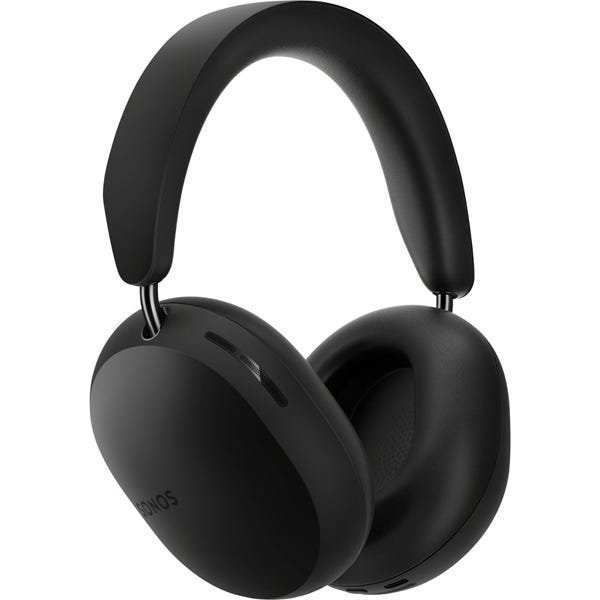
Following years of speculation, Sonos’ long-awaited headphones have arrived. They’re called the Sonos Ace ($449), and they perform great for a pair of flagship Bluetooth headphones. But the keyword there is Bluetooth. Many fans hoped the brand’s first headphones would work like its portable Roam and Move speakers, which use Bluetooth on the go but also support WiFi to stream music at home and group with other Sonos audio gear. However, WiFi streaming on the Ace turned out to be wishful thinking.
Don’t get us wrong, the Ace still stack up well against the best over-ear headphones from Bose, Sony, and Apple. But they don’t do a lot to stand out from the pack. The biggest difference, on paper anyway, is the Ace’s ability to pair with a Sonos Arc soundbar for private listening, but we could not get this feature to work with our setup. We also ran into an issue with some faint signal noise with transparency mode engaged.
Still, despite some hiccups, it’s no small feat that Sonos’ first headphones offer performance that rivals many top competitors. Even with their quirks, the Ace’s mix of great sound, fantastic noise-canceling, and an incredibly comfy fit results in a formidable pair of high-end Bluetooth headphones.
The Sonos Ace are the comfiest headphones we’ve reviewed. They also offer great noise-canceling and audio quality that rival top models from the competition. On the downside, they lack full integration with other Sonos products, and we ran into some software bugs. However, we expect Sonos will iron out those glitches in future firmware.
The Ace headphones are well-designed and easy to use
The case is stylish and functional.
Ryan Waniata/Business Insider
Apart from the issues we encountered with the headphones’ TV Swap feature (more on that below), the Ace’s setup experience is as slick and smooth as you’d expect from a brand of Sonos’ pedigree.
Opening the box reveals a fuzzy gray case made from 75% recycled plastic bottles. Unzip it, and you’ll find a minimalist pair of matte headphones in black or Soft White wrapped around a bean-shaped pouch. Designed to harbor the Ace’s dual USB-C cables for wired playback and charging, the pouch attaches via a strong magnet at the case’s center, efficiently utilizing the space. The whole layout feels equally aimed at style and substance.
The headphones themselves borrow aesthetic touches from rivals like the Bose QuietComfort Ultra and Apple AirPods Max but with a Sonos twist, bearing the same elegantly stripped-down design cues found across all Sonos products. From the Ace’s sleek rounded ear cups and laser-etched logo to their steel arms and cushy, vegan-leather pads, this is a familiar package that still manages to strike its own chord.
On the right ear cup are dual control buttons, including a multi-function “content key” for playback and volume via a mix of taps and slides. There’s also an adjacent key to swap between noise canceling and transparency modes. The two keys are easily distinguishable by touch for error-free control in nearly any setting. On the left cup is the power/pairing key and a USB-C input for charging and wired playback.
Downloading the Sonos app helps you quickly pair the headphones to your mobile device and add them to your list of Sonos devices where you can monitor status and battery life. Tapping the Settings icon lets you adjust features like bass and treble, head tracking for spatial audio effects, and multi-point audio to pair the headphones to a second device like a laptop or tablet.
The flexible band and fluffy pads give the Ace an edge in comfort
The Ace are incredibly comfortable to wear.
Ryan Waniata/Business Insider
Comfort is always subjective, but we can say without hesitation that the Ace are the most comfortable noise-canceling headphones we’ve encountered, beating out favorites like Bose’s QuietComfort Ultra and the Sony WH-1000XM5. After a week of wearing the Ace nearly all day, every day, we rarely experienced an inkling of discomfort.
Frankly, we’re not sure how Sonos did it. At 313 grams, the Ace are lighter than Apple’s AirPods Max, but still outweigh both Bose and Sony’s top models by a good 60 grams. You can definitely feel the heft as you swing your head around, but somehow between their ultra-soft pads and taut yet judicious clamping force, they manage to pull off the proverbial headphone trick of nearly disappearing on your head over time.
The fit is also quite stable, staying put even on light hikes and other semi-rigorous activities. Without an IP certification for water resistance, we wouldn’t recommend the Ace for sweaty jogs or gym regimens, but they’re excellent companions for nearly any other task.
The sound is rich, smooth, and detailed
Audio performance is on par with other top wireless headphones in this price range.
Ryan Waniata/Business Insider
The Ace offer a smooth and mellow sound signature. They have a penchant for digging up lush and vivid instrumental timbres, all spread across a deep and expansive soundstage. The overall performance stacks up well with some of the best-sounding headphones in their class.
The Ace do exhibit a darker tonal color than you’ll find in rivals like the spritely Bose QuietComfort Ultra. But this doesn’t affect the Ace’s talent for exposing fine details. Horns are breathy and full. Strings are smooth and lush. Acoustic guitars ring with a golden sheen. The ability to precisely place all these instruments in the mix may be the Ace’s most impressive sonic feature, allowing you to explore each instrument independently or simply sit back and let them wash over you.
There’s some sparkle in the treble for pristine clarity in high-flying percussion and loads of definition in instruments like buzzy synths and distorted electric guitars. At the other end, bass is full and punchy without being overwhelming. Unlike many headphones we test, the bass is fairly balanced by default, though we still dropped it down a notch or two in the EQ settings to clear up space in the soundstage. We also turned off the Loudness setting, which tended to make things sound a bit boomy.
On occasion, we wished for a bit more presence and clarity in vocals and dialogue, particularly when listening to podcasts, but we never struggled to hear minute details like vocal fry or room echos, allowing us to notice sounds we’d missed in previous listens. Hardwiring the Ace via a USB-C-to-3.5mm cable offers even better definition, including support for lossless audio at up to 16-bit/48Hz resolution.
The Ace supports head tracking for stereo content, which keeps the sound anchored when you turn your head to mimic the effect of listening to speakers positioned in a fixed location. This is also supported with Dolby Atmos 3D audio when synced with an Arc soundbar, but we couldn’t get that feature to work. However, with stereo content, head tracking works similarly to rivals, effectively simulating a home theater environment.
Noise-canceling and transparency modes are phenomenal, aside from one hiccup
The Sonos Ace (left) next to a pair of Bose QuietComfort Ultra headphones (right).
Ryan Waniata/Business Insider
The Ace’s incredible noise canceling is a triumph worth celebrating. This is top-tier cancellation that stacks up with some of the best pairs available, seeming to suck the air out of the world and plant you in an isolation chamber of solace.
We tested the feature indoors with studio speakers playing sound effects as well as outdoors on hikes and dog walks, where it was most impressive. Tapping the button can almost extinguish the world, from city din to chirping birds. Even traffic-laden streets glide into a soft whisper.
In head-to-head tests, only Bose’s mighty QuietComfort Ultra outpowered them, reducing sounds like keystrokes and drone effects to an even lower murmur. Even so, the Ace’s ability to offer such stark silence without a modicum of added white noise makes them a contender for one of the best noise-canceling headphones you can buy.
The Ace also have an excellent transparency mode that’s designed to let in environmental sounds to keep you aware. This mode is vividly clear and natural. It’s so good that we were able to wear them virtually all day without skipping a beat, similar to Apple’s latest AirPods. Though we weren’t able to test the Ace directly against the AirPods Max, based on previous listening, we’re confident you won’t find a more natural-sounding transparency mode on the market.
However, there is one notable caveat to our praise. With this mode engaged, we occasionally heard mild connection noise in the right earcup. Sonos sent us two models to test and this issue was present on both. It’s not enough to be a nuisance in most scenarios (it’s audible only when connecting for a call or between songs in a quiet room), but it’s still disappointing from headphones this pricey.
That said, it’s not uncommon for debut products to arrive with a few bugs, so this could be ironed out with firmware.
The Ace’s lack of WiFi streaming is disappointing, and we couldn’t get TV Swap to work
The Ace’s TV Swap feature is supposed to let you send audio from an Arc soundbar to the headphones.
Ryan Waniata/Business Insider
The Ace have many top features you’d expect from flagship noise-canceling headphones, like multi-point pairing, sensors to pause audio when you take them off, and various other settings from within the Sonos app. Their battery life of up to 30 hours per charge is highly competitive, and we could use them all day for multiple days without the need to charge.
However, the Ace’s inability to group with other Sonos speakers to stream music and other audio sources over WiFi is something of a letdown, even if it would have been unique among their peers. It’s not particularly surprising at this price — we would have expected another $100 or so added in to get seamless support for both WiFi and Bluetooth — but it does put the Ace in a somewhat siloed position within the Sonos ecosystem.
The consolation prize for the Sonos faithful is the ability to wirelessly switch audio between the Ace headphones and a Sonos Arc soundbar (and eventually the Beam and Ray). This is handled via a TV Swap button in the Sonos app, currently for iOS users only. This means you can hear movies and TV shows privately through the headphones without disturbing others. And this mode supports Dolby Atmos, so you can get a surround sound effect through the headphones. But even with an iPhone and a new Sonos Arc soundbar on hand, no matter how many times we tried, we couldn’t get either pair of Ace headphones Sonos sent us to sync with the Arc.
Sonos’ support team told us “You’ve encountered a rare bug that our team is aware of and working to address in a future release.” The headphones use a 5GHz connection for this feature (despite their lack of full WiFi support), so it’s possible our network played a part. But the fact that we could easily group the Arc with a Sonos Era 100 and Era 300 speaker for multi-room playback made the issue all the more curious (and frustrating).
We expect a firmware update to address this — this is Sonos, after all — and we’ll update this review with any changes as we continue to test.
Should you buy the Sonos Ace?
There are some kinks to work out, but the Sonos Ace are impressive wireless headphones.
Ryan Waniata/Business Insider
The Sonos Ace’s many talents, from their fabulous noise canceling and transparency modes to their comfortable fit and sweet sound, instantly put them in the conversation with other top wireless headphones on the market. From that perspective, they’re worth considering for those with an ample budget.
That said, their lack of full WiFi compatibility with the Sonos ecosystem may disappoint some ardent Sonos fans, not to mention the troubles we encountered, like their mild connection buzz and refusal to sync with the Arc soundbar over our network.
We still recommend putting the Sonos Ace on your shortlist — they’re just too damn comfortable and well-armed not to be — but we’ll wait until Sonos addresses the issues we encountered before giving them our full seal of approval.
Ryan Waniata
Freelance Writer
Ryan is a professional writer, editor, video host, and product reviewer. Since transitioning from audio engineering in Nashville in 2012, his portfolio has spanned the gamut, from entertainment op-eds and trends pieces to gadget how-tos and reviews on TVs, audio gear, smart home devices, and more. The author of hundreds of articles, his work can be seen on Business Insider, Reviewed, How to Geek, Digital Trends, and others. While writing and editing are his primary gigs, he’s also a seasoned video host and podcaster, having shot and written dozens of videos. In 2016 he created the entertainment podcast, Between the Streams, which ran for 150 episodes. Since becoming a product reviewer, he’s been on a constant quest to find the perfect product (which he has yet to do). He feels a deep responsibility to find readers and viewers of his work the absolute best tech for their money, whatever the budget. When he’s not writing, editing, or evaluating the latest gadget, Ryan can be found singing and playing guitar or adventuring in the lush green forests and sandy beaches of the Pacific Northwest.