

Dan DeFrancesco

Failing fast is a lot harder than it sounds

“Ever tried. Ever failed. No matter. Try again. Fail again. Fail better.”

Irish playwright Samuel Beckett’s famous quote has become Corporate America’s new mantra.

From Okta to Salesforce to Blackstone, executives told BI’s Sarah E. Needleman and Ana Altchek getting it wrong is ok. Just do it quickly and learn from it.

The tech industry has always been a big proponent of failing fast, but Corporate America is now catching on thanks to AI. The tech allows companies to quickly launch new tools to a wide group.

And, perhaps more importantly, it’s a way for executives to prove the big money they are spending on AI isn’t going to waste. (Hence why they want you to fail fast.)

It’s not just for launching products either.

Even the ideation phase can be quickly sped up with chatbots that can talk through ideas. What previously might have taken executives (or, more likely, their underlings) hours of research can get figured out a lot faster.

There are still some hurdles with the fail-fast approach.

What does failing even look like? There isn’t a big, red alarm that goes off every time an AI project fails. (Although that sure would be fun.) Executives will say they set clear guidelines for a prototype beforehand, but a tool’s benefits can be nuanced. And maybe you just need a little bit more time to really make it sing. All that makes it a lot harder to decide when to pull the plug.

Building airplanes in the sky. The rush to get things out can lead to the belief you’ll just fix things on the fly. But that’s a dangerous precedent. Just ask the video game industry. When games came in physical copies you had to blow on to get working, companies made sure their product was bulletproof. Nowadays, they can digitally ship a game knowing an update for a glitch wont be far behind. It’s a dangerous game that can cause major headaches.

Opening the floodgates. A formalized product launch slows things down, but it also makes sure everyone is on the same page. A massive greenlight risks a lack of standardization. That might not seem like a big deal for a prototype. It becomes a bigger problem down the road if the product needs to be reconfigured to fit into the company’s wider tech stack.



Source link

Bryan Metzger

Trump says his call for a 10% credit card cap sounds like Zohran Mamdani’s idea

President Donald Trump knows he’s aligning himself with the progressive left when it comes to credit cards.

During an interview with CNBC’s Joe Kernen in Davos on Wednesday, Trump acknowledged that his call for a 10% cap on credit card interest rates isn’t a standard conservative policy.

In fact, he joked that it’s something that New York City Mayor Zohran Mamdani, a Democratic socialist, might have come up with.

“I know it’s sort of like… it sounds like the mayor of New York maybe came up with that,” Trump said with a laugh.

Following Mamdani’s election in November, the two met in the Oval Office and appeared to share some common ground in remarks to the press afterwards.

“I’m conservative, but I think I’m common sense, you know?” Trump said on Wednesday. “People say, ‘Are you a conservative?’ I say, ‘Yeah, but I’m a common-sense person.’ I mean, I do things that aren’t necessarily that conservative sometimes.”

Trump said he respected credit card companies but that consumers can’t afford to pay high rates.

“Whatever happened to usury? They can’t pay 28%,” Trump said.

Earlier on Wednesday, Trump called on Congress to pass a bill capping credit card interest rates at 10% for one year.

Key Republicans in Congress have been cool to that idea, with House Speaker Mike Johnson telling reporters last week that Trump “probably had not thought through” the potential downsides of the policy and that credit card companies may “just stop lending money” or “cap what people are able to borrow at a very low amount.”

Many business leaders have also been critical of the idea.

Yet Trump’s call has also been met with agreement from some progressives, including Sen. Elizabeth Warren of Massachusetts, whom Trump called last week.

In Congress, Independent Sen. Bernie Sanders of Vermont and Republican Sen. Josh Hawley of Missouri have introduced a bill that would do just what Trump said, capping credit card rates at 10% for a year.


Source link

Watchdog-sounds-the-alarm-that-PJMs-approval-of-data-centers.jpeg

Watchdog sounds the alarm that PJM’s approval of data centers could leave other customers in the dark

The nation’s largest grid operator is facing a choice — between serving more data centers or keeping the lights on for all its existing customers.

In a complaint filed on November 25 with the Federal Energy Regulatory Commission, Monitoring Analytics, LLC, an independent market monitor for PJM, requested that the regulator mandate that the energy wholesaler only add large data centers to its system if all customers can be reliably served.

“PJM is currently proposing to allow the interconnection of large new data center loads that it cannot serve reliably and that will require load curtailments (black outs) of the data centers or of other customers at times,” the complaint read.

“That result is not consistent with the basic responsibility of PJM to maintain a reliable grid and is therefore not just and reasonable,” the complaint added.

PJM serves over 65 million people, including households and other consumers, across all or parts of 13 states and the District of Columbia. While it is not a utility provider, it helps move electricity across a service area of about 369,000 square miles.

According to the complaint, large data centers are responsible for higher transmission costs, as well as energy and capacity prices. Monitoring Analytics added that existing and expected data center loads already increased PJM’s capacity revenues in its last two capacity auctions by $16.6 billion, and the figure would only “continue to grow.”

The complaint also described a “Critical Issues” meeting among PJM’s Board of Managers to address the issue of data centers, but the board ultimately could not come to an agreement since “most stakeholders simply assume that PJM must agree to add large loads to the system.”

The purpose of the complaint, wrote Monitoring Analytics, is to make the board’s job “significantly more manageable” if a regulator could clarify that PJM does have the authority to “require that the loads can be served reliably before allowing the loads to be added to the system.”

A spokesperson of PJM told Business Insider that the company is still “going through the complaint” and would not comment at this time. The spokesperson added that the Board of Managers is “expected to act on the large load issues raised” in the meeting and “should provide an indication of its next steps over the next few weeks.”

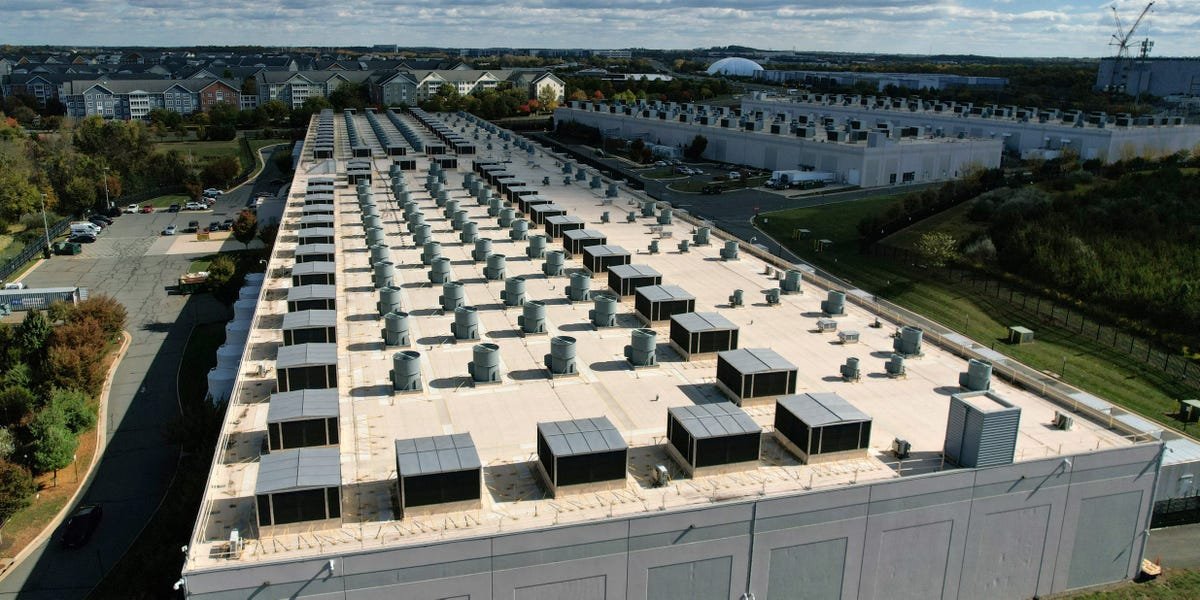
Large data centers have been driving up utility costs nationwide, particularly in states like Virginia, where the “data center alley” is located. The North American Electric Reliability Corporation wrote in a November report that data centers are one of the leading causes of a rise in energy demand this winter, which increases the risk of blackouts.

The Trump administration plans to invest $500 billion to build AI infrastructure in collaboration with OpenAI, Oracle, and Softbank. OpenAI CEO Sam Altman told the White House Office of Science and Technology Policy in a letter in October that the US should add 100 gigawatts of new power capacity annually to stay competitive in the AI race.


Source link