NATO member Latvia’s national security analysts have released a report estimating that Russia has spent an additional $130 billion trying to buy Western goods while being sanctioned.
Published last week by the Constitution Protection Bureau (SAB), the government analysis said the estimate was based on spending from 2022 to 2025, translating to an annual $32.5 billion loss.
That estimated figure is just for imports of Western goods. The international sanctions, imposed after Russia’s full-scale invasion of Ukraine, also mean the country has lost hundreds of billions from its export markets and assets frozen by Western banks.
The Latvian analysts said their report accounted only for the additional cost of goods eventually bought from alternative sources, and excluded cases where Russia couldn’t find substitutes.
They added that intelligence showed that Russian institutions are internally forecasting further losses, “despite Russia’s public announcements claiming its economy is successfully adapting to the impact of the Western sanctions.”
Latvia, one of the Baltic States, sits on Russia’s Western flank and has been one of the most outspoken NATO members against the Kremlin, accusing it of running disinformation campaigns and covert operations to destabilize local politics.
Its analysts wrote, without providing details about their sources, that one Russian forecast warned foreign trade would lose another $136 billion by 2030 solely due to Western sanctions.
Another forecast said a continued loss of trade with Europe would account for about $70 billion of these losses, the analysts added.
“SAB assesses these estimates to be an undercount — the losses are likely much higher,” the report said.
The internal estimates don’t account for the “entire economic spectrum,” it said, such as reduced tax revenues or inflated consumer prices.
A separate internal Russian forecast put its energy sector losses at $216.5 billion over the next five years if “Western pressure increases,” the Latvian report added. The oil and gas industries typically account for about 15-20% of Russia’s GDP and nearly a third of federal revenues.
The report added that Russia has been struggling to find alternative markets for its exports in some major sectors. For example, Russian iron ore exports had been reduced by 40% from 2021 to 2025, and timber and cellulose exports dropped about 50%, the analysts wrote.
“SAB assesses that the lifting of sanctions will significantly increase the threat posed by Russia not only to Ukraine and Europe, but also globally,” the analysts wrote, saying that the Kremlin could be freed up to assist Iran, North Korea, Venezuela, and Cuba.
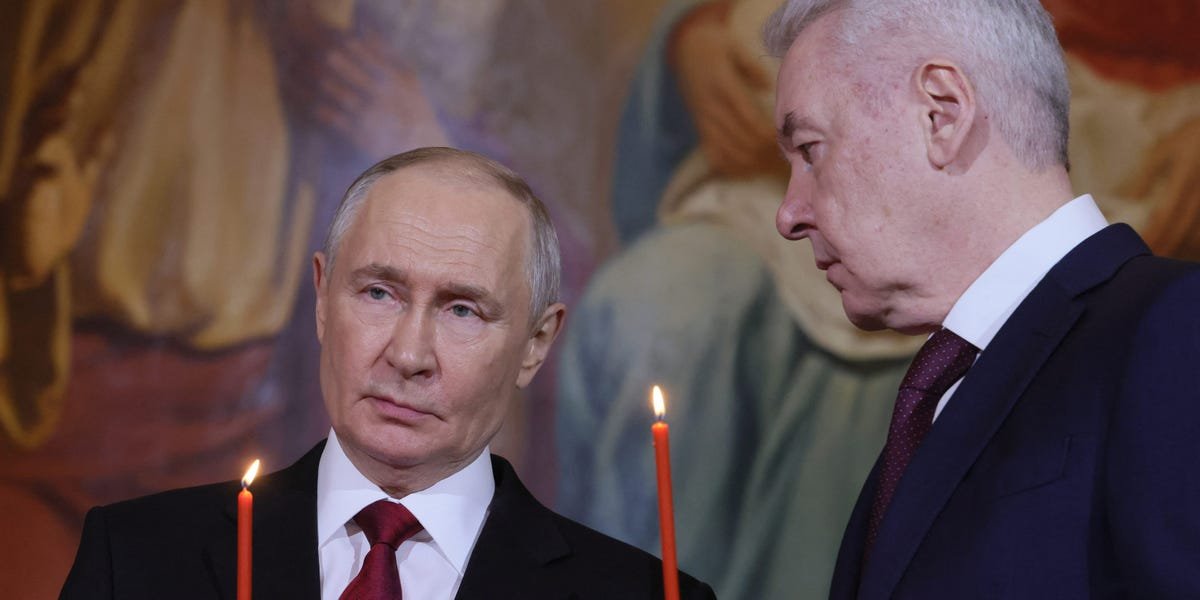
Meanwhile, Russian President Vladimir Putin admonished his top economic officials on Wednesday in a rare public rebuke, saying that the national economy had contracted by 1.8% in January and February.
“This is not only below experts and analysts’ expectations, but also below the Government’s own forecasts and those of the Central Bank,” Putin said, according to the Kremlin’s public transcript.
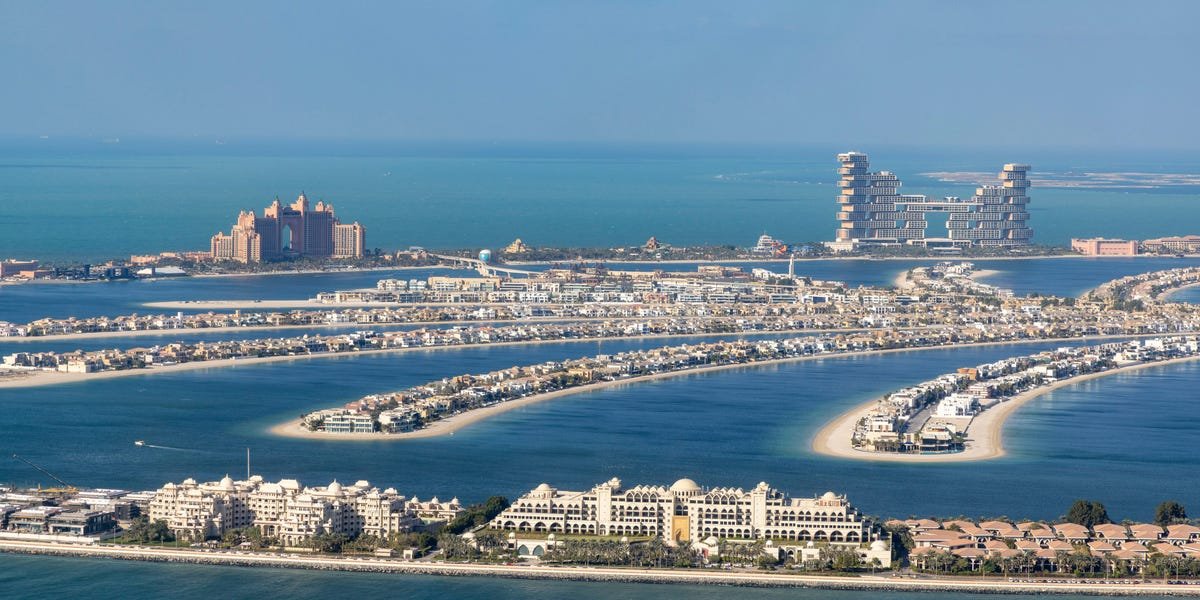
Emilia Vasquez, a business development manager for Goodwill, landed in Dubai on Thursday, February 26. She and her 6-year-old son had flown in to celebrate her birthday, and they were planning to stay until Tuesday.
Two days later, the United States and Israel launched strikes on Iran, and everything changed — across the Middle East, airspaces shut down, airports closed, and thousands of travelers, like Vasquez, found themselves stuck in place.
As they navigated the logistics of getting stranded, they also faced another issue: the cost of getting stranded.
In a statement on March 1, the General Civil Aviation Authority of the United Arab Emirates, or GCAA, announced that the State would be bearing “all hosting and accommodation costs for affected and stranded passengers.” The announcement did not specify how or when travelers would be reimbursed.
For Vasquez, the flight cancellations meant watching her hotel stay grow longer by the day. She was staying at Taj Dubai hotel, a 5-star hotel near the Dubai Mall, and spending about $500 a day, roughly $300 of which went to her hotel bill. As of Thursday, she had spent $6,800.
With bills racking up and no immediate money from the Emirati government, she was only a few thousand dollars away from her credit card limit.
“I’m being responsible for paying for this hotel, the hotel literally telling us that if I cannot afford the hotel to leave and go somewhere else,” Vasquez told Business Insider on Wednesday. “I don’t feel safe to leave the hotel and go somewhere else. So I’ve been extending the days every day.”
With some airlines slowly resuming limited service out of the region, Vasquez managed to leave Dubai on Friday, but for many of the travelers who remain on the ground, bills continue to mount and confusion remains about whether they will be saddled with or reimbursed for these bills.
The Abu Dhabi and Dubai tourist ministries did not respond to requests for comment from Business Insider. The General Civil Aviation Authority of the United Arab Emirates did not respond to a request for comment.
‘We’re just trying to be as cheap as possible’
Fate Show and her father in the Dubai Mall China Town.
Courtesy of Fate Show
While some well-heeled visitors paid six figures to get out of Dubai, others have been funding their extended stays through a mix of credit cards, airline-provided vouchers, and crowdfunding.
As of Saturday, two of the region’s biggest airlines — Emirates and Etihad — have resumed limited flight schedules, prioritizing existing customers. Qatar Airlines remained grounded with the exception of limited flights to Doha. While the airlines haven’t released guidance around obtaining hotel vouchers, several travelers said they’ve been able to receive them.
Fate Show, a Ph.D. student, was flying from Kuala Lumpur, Malaysia, to Londonwith her dad after seeing her family for Chinese New Year. Their flight was scheduled to stop in Dubai on Saturday afternoon. When she arrived at the airport, she was met with chaos.
Emirates canceled their flight to London and provided a voucher to cover food and a hotel stay at the S Hotel Al Barsha, a 4-star hotel about 20 minutes from Dubai International Airport.
That voucher lasted four nights. On Tuesday, after the voucher ran out,they switched hotels to the Hampton by Hilton Dubai Al Barsha, where they paid for their stay out of pocket. The room, with two single beds, cost $112 a night and included breakfast.
They are trying to limit additional spending on food to $30 a day.
“We’re not trying to do anything fancy,” she said. “We’re just trying to be as cheap as possible.”
She and her father tried to buy new tickets home, but said they were too expensive. On Friday, they moved to the Copthorne Hotel with their Emirates voucher. Her flight has been rescheduled for Tuesday.
Even with the help of the Emirates hotel voucher, Show and her father have had to spend hundreds of dollars during their unexpectedly extended stay in Dubai.
“Obviously, that’s a lot of money we were not intending to spend,” she said. “We’re using a credit card, so we’re hoping to be reimbursed by next month when we repay it.”
Shanice Day has managed to get a flight to Australia from Dubai, in order to make it back to the US.
Courtesy of Shanice Day
Shanice Day, a stylist from Houston, traveled to Dubai on February 24 to celebrate her 30th birthday with her friend Remy Thomas, staying at the FIVE Luxe hotel near Jumeirah Beach.Their original flight home on March 1 was canceled, along with subsequent rebookings, and they were left paying for their hotel out of pocket.
On Tuesday, Thomas started a GoFundMe to fundraise for their accommodation and flights back. As of Friday, the pair had raised $9,978of their $11,000 target.
Day managed to secure a flight out of Dubai to Sydney on Thursday. The following day, she flew from Sydney to Los Angeles, the penultimate leg of her round-the-world journey back to Texas.
“I’ll probably get therapy after this experience,” Day told Business Insider. “I know it’s going to take me a while to build up the courage to travel again.”
Shrihari Madhu, the manager of Coral Cove, which rents out three apartments in Dubai Marina, told Business Insider they have been helping tourists stranded by flight cancellationsby offering free accommodation or a base fee of around $40 a night.Ordinarily, they rent their properties out for prices starting around $110.
“Many travelers are reaching out because they need an immediate reliable place to stay while navigating these disruptions,” Madhu said.
Madhu said the three apartments are currently occupied by guests whose travel plans were canceled.
The only thing more expensive than staying is leaving
On Monday, as tensions escalated and airspaces across the region shut down, some wealthy travelers in the UAE hired chauffeurs to drive them into Oman and Saudi Arabia. The trips involved hours in the car, including long waits at border crossings.
From there, they chartered private planes, spending upward of $200,000 to make it out, Ameerh Naran, the CEO of Vimana Private Jets, previously told Business Insider.
He said demand to leave the region had started to tick up on Friday, when the possibility of a conflict with Iran became more acute.
“There has been a clear emphasis on speed and certainty of departure, with many clients prioritizing the earliest viable routing rather than specific aircraft types or traditional preferences,” Naran said. “We have also seen increased demand for coordinated ground support to facilitate access to airports where airspace remains open.”
JPMorgan plans to boost its technology budget by almost $2 billion this year, to $19.8 billion — a roughly 10% increase compared to 2025.
Speaking at the firm’s 2026 company update on Monday, CFO Jeremy Barnum said “technology remains a major driver of our expense growth,” which is up around $9 billion for the year. The bulk of the tech expenses comes from $1.2 billion in investments, including some AI-related projects.
Later in the presentation, CEO Jamie Dimon said that returns on AI are difficult to quantify initiative by initiative. Answering a question from Wells Fargo analyst Mike Mayo, who pressed him on the bank’s technology spend on a recent earnings call, Dimon said that time saved is often “too vague” to measure concretely.
“I think the hardest thing to measure has always been tech projects,” Dimon said. “That’s been true my whole life.”
When it comes to where the firm is investing, Barnum said it’s focusing on “the highest impact areas,” such as customer service in call centers, personalized insights for clients, and technology for software engineers. GenAI is, Barnum told investors, growing as a proportion of the bank’s AI usage.
Every time Alice publishes a story, you’ll get an alert straight to your inbox!
Stay connected to Alice and get more of their work as it publishes.
A slide from the company update presentation breaks down technology spending.
JPMorgan
Some of the $2 billion increase is due to inflation hitting everyone, including higher AI hardware costs. Technology head count growth isn’t a major driver — Barnum said the bank has budgeted in some additional head count in the area to work on new products, but that the culture generally discourages hiring more people whenever a new opportunity arises.
Despite JPMorgan’s status as a tech-forward firm — and No. 1 ranking on Evident AI’s index of AI maturity at banks — executives didn’t brush off competition. Marianne Lake, in response to an earlier question from Mayo, said the bank has some strategic assets, including in data.
“Only the paranoid survive,” Lake, the CEO of consumer and community banking, said. “We aren’t walking around thinking we have the divine right to success, we are walking around thinking about how to optimize the value that we give to our customers, how to perfect our processes and our systems.”
JPMorgan isn’t the only bank spending big on technology. Its rivals are also rapidly integrating AI throughout trading floors, back offices, and more to create efficiencies and improve customer experiences. Bank of America said it plans to spend around $14 billion on technology this year.
Dimon has previously asked investors to “trust him” on his bank’s spending, saying he is trying to keep the company from falling behind during its January earnings call.
“We need to have the best tech in the world,” he continued. “That drives investment, it drives margin, it drives competition.”