A-judge-just-offered-the-clearest-breakdown-yet-of-whats.jpeg

A judge just offered the clearest breakdown yet of what’s at stake in Anthropic vs. the Pentagon. Read her remarks in full.

On Tuesday, lawyers for Anthropic and the Department of Justice met in a San Francisco courtroom to argue over the AI company’s request to block the Pentagon from labeling it a national security risk.

Before the hearing began, Judge Rita Lin read prepared remarks that broke down the complex case — and what’s at stake — in unusually clear terms. In the process, she ripped into the Pentagon’s action, saying it looks like an effort to “cripple” a company that went public with a contract dispute.

We’re sharing her remarks in full because they get to the heart of a fight that could change the AI landscape. A ruling is expected any day now.

Read what she said in full here:

“Good afternoon to both of you. Yesterday, I disclosed a list of questions that I asked counsel to be prepared to answer today. Before we go down that list, I thought it might be helpful for the attorneys to hear kind of a general overview of my tentative thoughts on the case so far, and you’re welcome to sit down for that if you’d like. Then, I’ll invite you back up to address the questions.

I will say that I do think this case touches on an important debate. On the one hand, Anthropic is saying that its AI product, Claude, is not safe to use for autonomous lethal weapons and domestic mass surveillance. Anthropic’s position is that if the government wants to use its technology, the government has to agree not to use it for those purposes. On the other hand, the Department of War is saying that military commanders have to decide what is safe for its AI to do, not a private company.

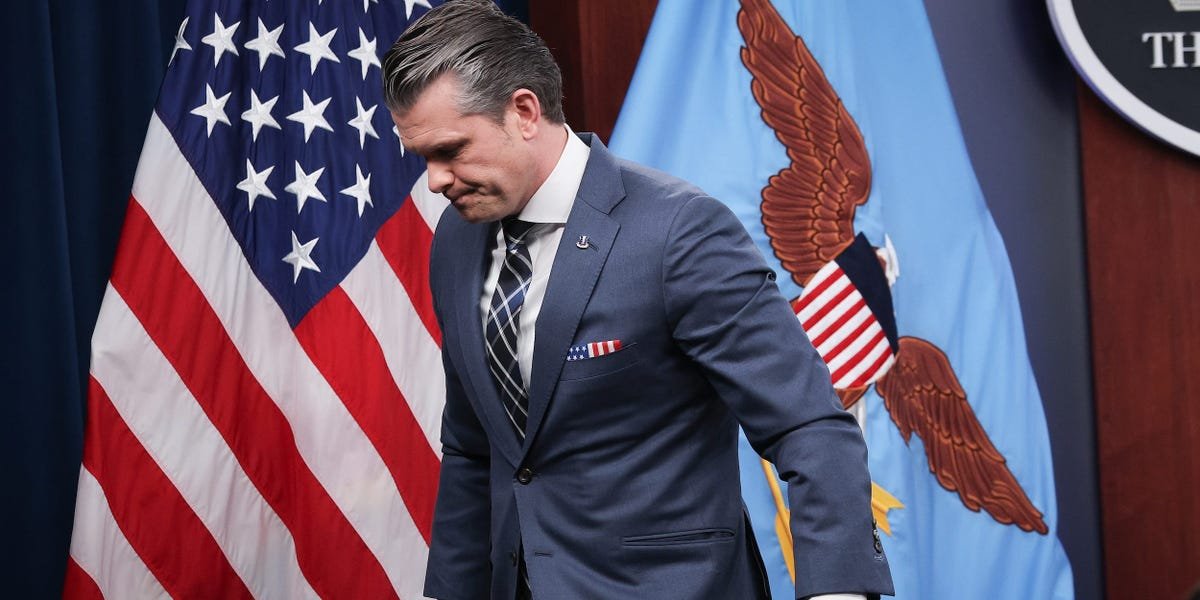
It’s a fascinating public policy debate, and it’s not my role to decide who’s right in that debate — that is Secretary Hegseth’s call. The Department of War decides what AI product it wants to use and buy. And everyone, including Anthropic, agrees that the Department of War is free to stop using Claude and look for a more permissive AI vendor.

I don’t see that as being what this case is about. I see the question in this case as being a very different one, which is, whether the government violated the law when it went beyond that.

After Anthropic went public with this contracting dispute, defendants seemed to have a pretty big reaction to that. They took three actions that are the subject of this lawsuit. First, the president announced that every federal agency, not just the Department of War, would immediately ban Anthropic from ever having another government contract. So, that would include the National Endowment for the Arts using Claude to design its website — not allowed.

Second, Secretary Hegseth announced that anyone who wants to do business with the US military has to sever their commercial relationship with Anthropic. So, if a company uses Claude to have a customer service chatbot, now they can’t do any defense work.

Third, the Department of War designated Anthropic as a ‘supply chain risk.’ That label applies to adversaries of the US government who may sabotage its technology systems. It’s typically directed at foreign intelligence, terrorists, or other hostile actors.

What is troubling to me about these three actions is that they don’t really seem to be tailored to the stated national security concern. If the worry is about the integrity of the operational chain of command, DOW could just stop using Claude. It looks like defendants went further than that because they were trying to punish Anthropic.

One of the amicus briefs used the term ‘attempted corporate murder.’ I don’t know if it’s murder, but it looks like an attempt to cripple Anthropic. And specifically, my concern is whether Anthropic is being punished for criticizing the government’s contracting position in the press.

Defendants say they were doing this because Anthropic’s ‘sanctimonious rhetoric’ was an attempt to ‘strong-arm the government.’ DOW’s records say that it designated Anthropic as a supply chain risk because it was ‘hostile in the press.’ So it looks like DOW’s punishing Anthropic for trying to bring public scrutiny to this contracting dispute, which, of course, would be a violation of the First Amendment. So I have a lot of concern about that, and I would like to hear more from the government about that.

I also have a lot of questions about — one, whether Congress gave defendants the authority to do this in the first place, and two, whether defendants violated Anthropic’s due process rights by not giving them notice and an opportunity to respond.

The questions I put out yesterday really go more to those latter two topics. So, I want to start going through those questions, but I will just say that at the end of the questions, I’ll give both parties an opportunity to address the court. You can give me your reaction to the tentative thoughts that I gave you, and you can also just let me know anything else you think is important that I know about the case before I take it under submission.

So let me just invite counsel back up to the podiums, and we’ll just go through the questions.”


Source link

Bill Ackman attends 2025 Pershing Square Foundation MIND and Cancer Prize Award Dinner at The Pool on May 22, 2025 in New York.

Bill Ackman’s hedge fund reveals big stake in Meta — ‘one of the clearest beneficiaries of AI integration’


Michael Ostuni/Patrick McMullan via Getty Images

  • Bill Ackman’s Pershing Square has invested roughly 10% of its capital in Meta.
  • The fund told investors Meta is set to be “one of the clearest beneficiaries of AI integration.”
  • Meta has been plowing cash into data center projects, which Ackman’s firm expect to pay off long-term.

Bill Ackman is betting big on Meta — saying it believes it to be “one of the clearest beneficiaries of AI integration.”

The billionaire investor’s Pershing Square hedge fund revealed Wednesday that it has invested around 10% of its capital in Meta, or approximately $2 billion, as of the end of December.

“We believe Meta’s current share price underappreciates the company’s long-term upside potential from AI and represents a deeply discounted valuation for one of the world’s greatest businesses,” the presentation said.

At around $668 per share on Wednesday afternoon, Meta’s stock price is roughly flat in 2026 so far, and down approximately 7% from one year ago.

Pershing Square also revealed it had allocated 13% of its fund to Amazon as of the end of 2025, and a 2% position in Hertz in late 2024.

Wall Street has been less than enthusiastic about some of Big Tech’s planned capital expenditure plans, but Meta’s budget-busting $135 billion forecasted spend was rewarded last month with a short-lived 8% bump the share price.

Either way, Ackman’s team says they’re very much on board with the strategy.

“We believe concerns around META’s AI-related spending initiatives are underestimating the company’s long-term upside potential from AI,” the presentation said.


Pershing's Meta investment thesis

Pershing Square’s investment thesis for its stake in Meta.

Pershing Square


The presentation also said Meta’s 3.5 billion users are increasing at a steady clip, setting the company up as the “dominant” leader in digital ads.

“Meta’s business model is one of the clearest beneficiaries of AI integration,” the presentation said.


Source link

Kelsey Baker, Military and Defense Reporting Fellow

Legal experts: Veterans’ rights at stake in Kelly speech case

A new lawsuit from a Democratic senator and combat veteran at the heart of a free speech fight seeks to block the Pentagon’s intensifying crackdown.

Arizona Sen. Mark Kelly sued Defense Secretary Pete Hegseth on Monday, warning that the Pentagon’s effort to punish him “sends a chilling message” to veterans who speak out against the Trump administration.

Hegseth accused Kelly of “seditious” acts after Kelly publicly reminded US service members that they are not required to follow illegal orders. The Pentagon’s actions against Kelly have troubling implications for the political speech of millions of veterans, military law experts said.

Hegseth’s effort to muzzle a US senator “places other retirees who have spoken up potentially in jeopardy,” said Rachel VanLandingham, a professor at Southwestern Law School who is a retired Air Force JAG. “Not knowing whether or not he’s going to come after you already has a chilling effect.”

Kelly said his lawsuit is about fighting back. The Democratic lawmaker announced the federal lawsuit on Monday. His suit also named the Department of Defense, Navy Secretary John Phelan, and the Navy Department as defendants. Kelly’s video urging troops not to follow illegal orders.

Veterans who serve 20 years or more are eligible for a military pension, but those benefits can be revoked or reduced if retirees are found to have violated military law while in uniform. By contrast, Hegseth’s move seeks to punish a veteran for his speech long after serving in uniform, an approach one expert on military law called baseless.

Kelly’s lawsuit argues that using the military justice system to punish veterans’ political speech risks setting a precedent that abuses the First Amendment rights of other retired troops.


Secretary of Defense Pete Hegseth standing in front of a Department of War sign

Defense Secretary Pete Hegseth’s prosecution of Kelly has implications for veterans’ speech, legal analysts said.

DoW photo by U.S. Air Force Staff Sgt. Madelyn Keech


Legal basis in question

The lawsuit argues that nothing in the law allows the Pentagon to revisit a retirement determination based on a veteran’s speech. Such a move, the filing says, would raise “serious constitutional concerns” and leave retired service members facing a constant threat to their earned benefits.

There’s no legal basis for Hegseth’s pursuit, VanLandingham said. The defense secretary initially sought to court-martial Kelly, threatening him with the military equivalent of a criminal trial. It later opted for a lesser administrative punishment.

“The process is the punishment,” said Frank Rosenblatt, a retired Army JAG and professor at Mississippi College School of Law. “The claim against Kelly had no merit.”

“Senator Kelly’s speech is not punishable under the UCMJ,” the National Institute of Military Justice nonprofit group said in a December statement in reference to the Uniform Code of Military Justice.

The lawsuit seeks to halt actions that could reduce Kelly’s military rank and retirement pay and characterizes that effort as “unlawful.”

After filing the lawsuit, Kelly requested a temporary restraining order and a preliminary injunction from the federal court, seeking to halt the Pentagon’s actions while the case is reviewed on its merits. Both are emergency measures that ask a judge to stop government action before permanent harm occurs.

The federal government has been increasingly pushing cases important to the Trump administration onto a “rocket docket,” Rosenblatt said, accelerating litigation toward higher courts. If the judge assigned to the case, US District Judge Richard Leon, issues a ruling the government doesn’t like, “this could move very quickly to the DC Circuit and potentially the Supreme Court.”

Leon has previously ruled against the military’s authority over retirees.

“I am not concluding today that Congress could never authorize the court-martial of some military retirees,” Leon wrote in a 2019 memorandum opinion that rejected the government’s argument that military jurisdiction over all retirees was necessary to maintain good order and discipline of its active force. The judge noted he had not seen a clear argument for “why the exercise of such jurisdiction over all military retirees is necessary.”

In a post on X last week, Hegseth called Kelly’s video with five other Democratic lawmakers “reckless and seditious” and said it was “clearly intended to undermine good order and military discipline.”

The military justice provisions that Hegseth accused Kelly of violating — Articles 133 and 134 of the Uniform Code of Military Justice — are not explicitly tied to sedition and can cover a wide range of alleged misconduct.

Kelly’s lawsuit argues that allowing the executive branch to punish a member of Congress for speech is a threat to the Constitution and erodes congressional oversight of the armed services.

“We are aware of the litigation,” a Pentagon spokesperson said Tuesday when asked for comment on the lawsuit. “However, as a matter of policy, the Department does not comment on ongoing litigation.” That same day, Hegseth took aim at Kelly’s military rank in an X post: “‘Captain’ Kelly knows exactly what he did, and that he will be held to account.”


Source link

The-US-is-taking-a-stake-in-a-chip-startup.jpeg

The US is taking a stake in a chip startup led by Intel’s ousted CEO

The US government is poised to become a shareholder in a semiconductor startup chaired by Pat Gelsinger, who ran Intel until his resignation last year.

The Commerce Department said on Monday that the Trump administration signed a nonbinding letter of intent to invest up to $150 million in xLight, a startup trying to build a more advanced and cost-effective way to manufacture chips.

The investment would come from the CHIPS and Science Act and would be structured as equity, giving the federal government direct ownership in the company.

The deal — a first from the Trump administration’s CHIPS Research and Development Office — signals Washington’s effort to regain leadership in chipmaking. Most advanced semiconductors are manufactured outside the US, led by TSMC in Taiwan and Samsung in South Korea — areas where China’s influence looms large.

Intel warned in July that it may halt development of its next-generation chip, 14A, due to financial reasons. If Intel gives up on 14A, this could be a death blow to US chip manufacturing, Business Insider’s Alistair Barr wrote in a July report.

“For far too long, America ceded the frontier of advanced lithography to others. Under President Trump, those days are over,” said Commerce Secretary Howard Lutnick in Monday’s press release.

“This partnership would back a technology that can fundamentally rewrite the limits of chipmaking. Best of all, we would be doing it here at home,” Lutnick added.

The Palo Alto-based startup, founded in 2021, is developing free-electron laser technology, “an alternative light source” for extreme ultraviolet (EUV) lithography machines that power cutting-edge chip production, the press release said.

xLight said on its website that its systems would enhance Dutch firm ASML’s machines, “the undisputed global leader in EUV lithography systems.” EUV systems are only produced by ASML. xLight’s technology will “transform semiconductor fab capabilities and dramatically reduce capital and operating expenses,” it added.

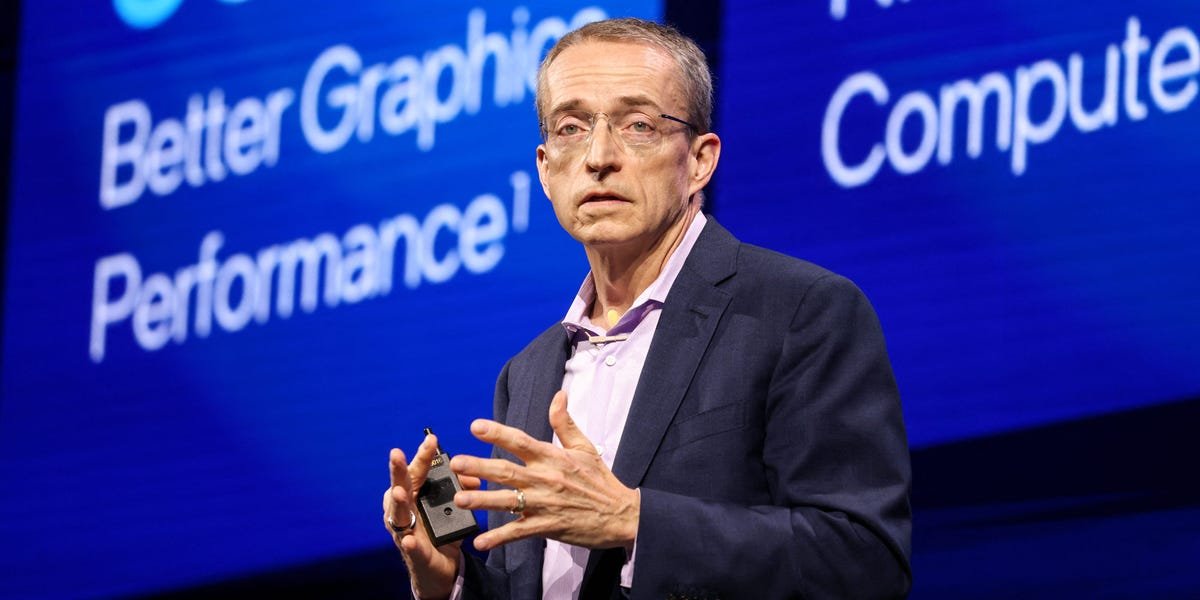
Pat Gelsinger, who was pushed out as Intel CEO late last year after the company struggled with weak earnings and fell behind in the AI chip race, became xLight’s executive chairman in March. He is also a general partner at Playground Global, the venture firm that led xLight’s $40 million Series B round in July.

Gelsinger, who was CEO of Intel from 2021 to 2024, said in an interview with CNBC’s “Squawk Box” in October that Intel “made a set of bad decisions over 15 years” and that technical leadership wasn’t “led by technologists for many years.”

“We were late on AI as well,” he added.

Gelsinger spent decades rising through the ranks at Intel and became one of the most influential voices behind the 2022 CHIPS Act, a landmark manufacturing legislation that reshaped America’s chip strategy.

xLight has the potential to “drive the next era of Moore’s Law, accelerating fab productivity, while developing a critical domestic capability,” said Gelsinger in a Monday press release.


Source link