
I-was-a-broke-American-living-in-New-Zealand-A.jpeg

I was a broke American living in New Zealand. A viral TikTok turned my taco stand into 3 restaurants.

This as-told-to essay is based on a conversation with Sean Yarbrough, owner of Broke Boy Taco. It has been edited for length and clarity.

In 2022, I was flipping burgers when the owner of the burger joint asked me what I missed most about the US.

I moved to New Zealand in 2021, and what I missed most was Mexican food. My boss asked if I knew how to cook tacos, and after I told him I did, he said I could cook them the next day. I did, and we tasted them. He told me I should quit my job and sell the tacos. They were that good.

The thing was, I didn’t have any idea where to start. He told me to just buy a little flat-top grill, set up an Instagram account, and start cooking.

I was able to quit my job

A buddy of mine said I should call my venture Broke Boy Taco, and since I’ve been a broke boy my whole life, I decided to go with it.

I figured it couldn’t be all that hard — just buy ingredients, get a table, make a sign, and take a picture to tell people where I was. The burger joint I was working at — Ralph’s — reposted anything I’d put up, so I got a whole bunch of their customers to start.


Sean Yarbrough posing for photo

Sean Yarbrough is the owner of Broke Boy Taco in New Zealand. 

Courtesy of Sean Yarbrough


First, 20 people showed up when I set up outside for the first time. The second time, 40 people showed up. After that, I would say it just doubled every time I cooked, which ended up being once every three weeks to start.

Once I reached 100 customers consistently, I knew I could afford to quit my job and start selling tacos three times a week.

A restaurant owner reached out to me and said they were looking for someone to take over their kitchen because it was sitting empty. I took my little grill and cooked tacos there for six months, paying him 10% of whatever I made.

TikTok really helped my business

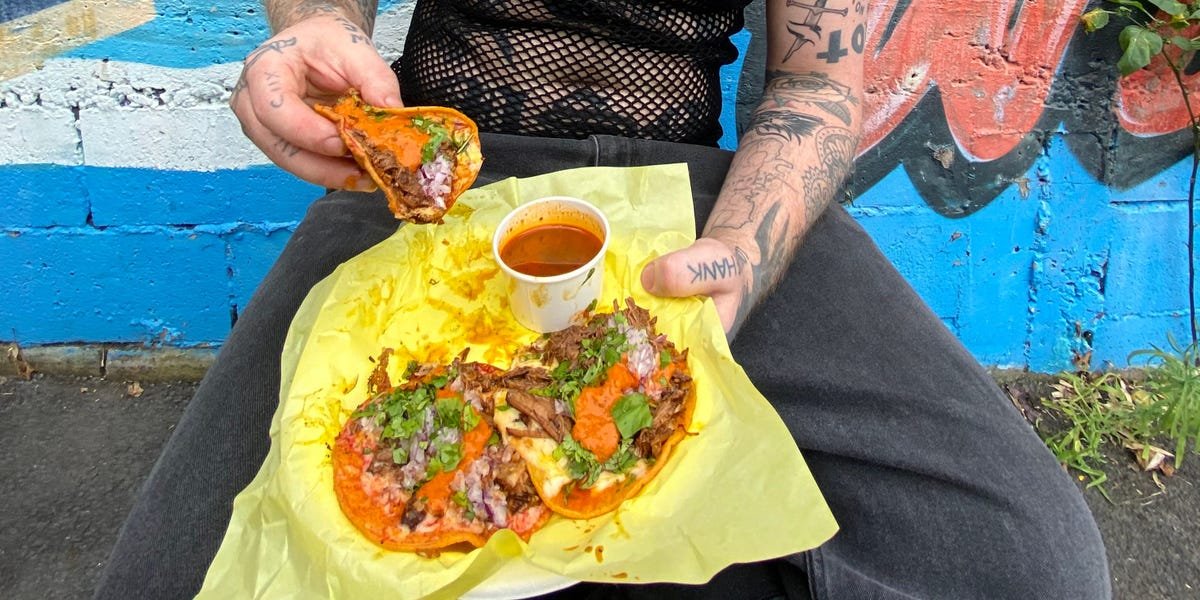
Even though I had been cooking a variety of tacos, I decided to put only three items on my menu: Coke, Birria (slow-cooked beef) tacos, and Birria ramen. It was what I liked most, and what I cooked best.

I asked a friend to record a video of me cooking on his phone and then post it to TikTok and Instagram. The next morning, I woke to thousands of new followers. When I showed up at work the next day at noon to open at 5 p.m., people were already lining up for my tacos.


Sean Yarbrough headshot

Sean Yarbrough’s friend posted about his tacos on TikTok. 

Courtesy of Sean Yarbrough


The minute I saw all those people, I knew I had hit the lottery. If I could convince people to come and try my food, I knew they’d be return customers.

I was homeless most of my childhood

As I shared with people about my story — how I’d been homeless in Kentucky for most of my childhood, how I had been a drug addict and alcoholic, how I had been in jail — they were curious to know who I was and how my tacos tasted. I wasn’t just some rich business owner who wanted to generate income. I just wanted to cook good food.

I saved money, with my eye on buying my own restaurant, and that’s what I did in October 2023.

I kept seeing that a big UFC start would show up in line to buy tacos. People were always surrounding him while he waited to get photos. I told him that if he let me know he was coming, I could get his order ready for when he arrived. We became friends, and he later told me he wanted to invest in my business, so I used the money he invested to buy a food truck.

And then I opened two more restaurants.

It’s all happened in less than three years and feels completely bizarre. It’s unbelievable that people know who I am — this guy from Kentucky cooking tacos in New Zealand. People want photos with me, and know the name of my cat.

I’ve been able to buy my first car — the first car I’ve ever bought — because of Broke Boy Taco.

Sometimes, I think back and ask if I’d change anything, because there was a lot of difficult stuff that got me to this point. I suppose, though, I might not have gotten to where I am if anything had been different.

I’m exhausted from sleeping an average of four or five hours each night, but I’m so happy. I’ve got this opportunity, and I can’t let it go. I’m keeping my head down, staying focused. If this much has happened in such a short space of time, imagine what’s ahead.



Source link

3-successful-job-seekers-share-how-they-used-LinkedIn-to.jpeg

3 successful job seekers share how they used LinkedIn to stand out and land new roles

Finding a job on LinkedIn can feel overwhelming as some roles draw hundreds — or even thousands — of applicants within hours or days. The challenge for job seekers using the platform is standing out among the crowd.

Some LinkedIn users, however, have successfully done so. Whether by using overlooked job filters, crafting a targeted cold outreach, or intentionally sharing their work, people have found ways to secure new jobs on the platform.

Below are three people who strategically landed their roles through LinkedIn. They shared with Business Insider how they did it. Quotes have been edited for length and clarity.

Using a strategic filter on LinkedIn helped me find a new role


Lauren Young headshot.

Lauren Young used the “under 10 applicants” filter to enhance her chances of securing a new job on LinkedIn.

Photo courtesy of Lauren Young


Lauren Young is a 28-year-old continuing education specialist in Indiana.

Last spring, I was becoming increasingly unhappy and stressed out at work, so I started applying to multiple jobs a day. Even within the short time that I was back in the job market, from March to June, it was getting worse, and I started to panic. I was having no luck landing a new role.

I live outside Chicago, and some of the jobs that would come up would be at huge Fortune 500 corporations. Even if the role was posted within the last day or the last hour, hundreds of applicants still applied immediately. I started experimenting with LinkedIn filters, trying to be more strategic about how I spent my time searching for work.

That’s when I found the “under 10 applicants” filter. It’s one of the last options under the function that says “all filters,” pretty close to the bottom. Once I started using it, I saw roles at small businesses that didn’t have a huge following on LinkedIn.

My role now is to help medical professionals who are seeking different educational opportunities or want to pursue further licensing. I didn’t think I would be a top applicant since I’d never worked in the medical industry, but the posting had just been posted and had very few applicants. I landed my first interview at the end of May and received my offer letter in mid-June.

My new role has been completely life-changing. I work primarily remotely and visit the office about once a month. The company offers excellent benefits, a generous PTO policy, and a great work-life balance.

A well-crafted cold outreach helped me land my job at OpenAI


Sophie Rose

Sophie Rose’s cold outreach on LinkedIn led to a job offer within five weeks of sending her message.

Photo courtesy of Sophie Rose


Sophie Rose is an OpenAI employee in her late 20s based in San Francisco.

In 2023, I joined OpenAI to build out what was then the associate team. I noticed that a leader on the go-to-market team had posted on LinkedIn that she was hiring a founding account associate, so I directly messaged her about the opportunity. Within five weeks of sending that message, I had an offer in hand.

I constructed my note by congratulating the lead on her role and said I saw she was hiring for this founding account associate job. I added that I’d love to learn more, plan to apply, and would be willing to relocate for the opportunity. I also asked if she could hop on a call.

In her response, she said she couldn’t jump on a call but would push my résumé through the initial screening. I applied the next day and immediately followed up with her, thanking her and saying I looked forward to exploring the opportunity with OpenAI.

There are two things I would warn people against doing: asking for time right away and rushing the follow-up.

I asked for time in my note, which I wouldn’t have done in hindsight. If you do ask for time, be very clear about why you need it. Also, try not to send that generic follow-up. Wait — maybe three weeks later — or look for something new that the person you’re reaching out to is posting or talking about.

For many of my peers, their OpenAI job started with a cold outreach to someone they might have heard of or had a mutual connection with. I think that’s how you can ultimately get ahead or pivot in your career.

Posting on LinkedIn brought the recruiters straight to my inbox


Dhyey Mavani headshot

Dhyey Mavani strategically posted online to attract recruiters and mentors and grow his professional network.

Photo courtesy of Dhyey Mavani


Dhyey Mavani is a 21-year-old software engineer at LinkedIn, based in Sunnyvale, CA.

I moved to the US from India in 2021 to attend Amherst College, where I triple-majored in computer science, mathematics, and statistics.

I started posting because people on campus were reaching out and asking to chat through ideas and career advice. I wanted to share my resources, so I decided to document my learnings and my progress and share them online for everyone. Since I started posting, I’ve significantly expanded my network to over 500 connections and more than 6,000 followers.

I posted about a research paper I wrote, and in the post walked through a short summary about my research, how I got there, what the key accomplishments were, and what things I’m still looking into for future work. That gained some traction with over 45,000 post impressions on LinkedIn. I had people working in research labs at Princeton and other universities reach out to me.

It’s helpful to phrase the posts you share in a value-first manner, where you provide some of your own perspective and explain why you stand by it. When I share my work online, I like to walk readers through why I pursued this project, what it entails, and who it impacts.

I also try to engage with content I see to increase visibility and expand my network. I recently commented on a post about Google, sharing my thoughts on the company’s strategy, and my comment had over 100,000 impressions.

After seeing my work online in 2023, a recruiter at LinkedIn contacted me directly on the platform to discuss an internship opportunity, which ultimately led to my current full-time position as a software engineer at the company.

I realized that there are opportunities that arise from organic posting and genuinely engaging with other people’s content. I wouldn’t have the job options, the reach, the network for mentorship, and other opportunities if I hadn’t started sharing my journey online strategically.

Do you have a story to share about LinkedIn strategies? Contact this editor, Agnes Applegate, at aapplegate@insider.com.


Source link