Morgan Stanley is reducing its global workforce by 3%.
The reductions are expected to impact roughly 2,500 positions out of the about 83,000 the firm reported at the end of 2025, a person familiar with the situation confirmed to Business Insider, adding that they will take place in early March. The Wall Street Journal first reported Morgan Stanley’s cuts on Wednesday afternoon.
The cuts will be global and span the firm’s three primary business units: Institutional Securities, Wealth Management, and Investment Management. The rationale for the reduction is a combination of shifting business priorities, a revised global location strategy, and individual performance reviews, the person added, saying that the action is set to affect both front-office, revenue-generating roles and back-office support positions.
Notably, the person said that, while the firm’s respected wealth management division is affected, the cuts in that business line are focused on corporate “home office” roles. Financial advisors in field offices are not affected by this round of layoffs, the person continued.
The move follows a similar round of cuts last spring, when the bank reportedly trimmed approximately 2,000 roles. However, the current reductions come at a more optimistic moment for the firm’s bottom line. In its most recent earnings report, Morgan Stanley posted record full-year 2025 revenues of $70.6 billion, with investment banking revenues surging 47% in the final quarter of the year.
The layoffs come as the broader financial industry prepares for an anticipated windfall in corporate dealmaking, and some rivals are touting how they’re bulking up — not pulling back — on head count to meet the moment. Still, while Morgan Stanley is reducing head count in specific areas, the person with knowledge of the bank’s thinking said, it’s still planning for long-term growth and intends to add resources in some sectors while trimming in others.
Stanley 1913 is ready to go beyond its viral moment.
The drinkware company is best known for its Stanley Quencher line of 40-ounce tumblers, which has exploded in popularity since 2020 alongside reusable water bottles. Stanley has ridden that wave with viral product launches that have flown off of shelves. Its collaboration with the “Wicked” movie franchise, for example, caused a frenzy at Target in 2024.
Now, Stanley is setting out to show it’s more than a TikTok fad known for limited-edition cup drops.
It’s trying to turn a new tide by taking advantage of another hot trend: wellness. Global President Matt Navarro told Business Insider in an interview that Stanley wants to meet customers where they’re at, which, increasingly, happens to be the gym or the yoga studio.
“They want products that support their health and wellness lives,” Navarro told Business Insider.
The company is launching a new product line on Tuesday to serve that audience and avoid becoming too reliant on TikTok virality.
Stanley’s next big bet is on accessories designed for the gym
The Vitalize collection releases February 17.
Stanley 1913
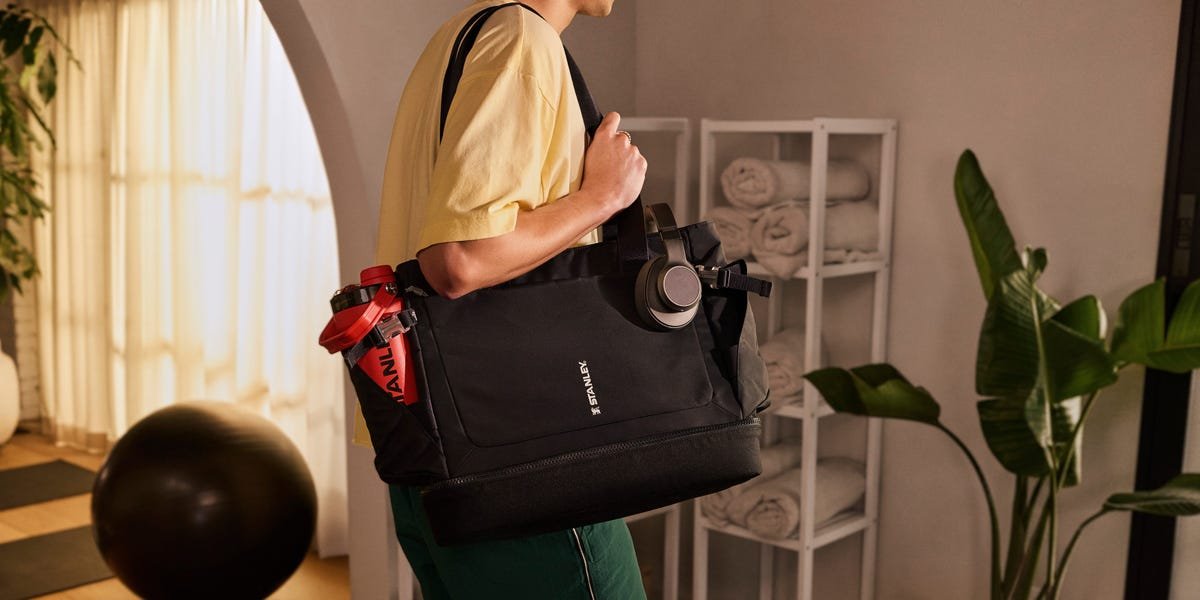
Stanley is betting on its Vitalize line to kick-start its new chapter. It features a new tote bag, backpack, and shaker bottle, designed to support people on the go who want to bring their Stanley cup with them. The bags come with pockets and straps to carry Stanley cups.
“It’s about really understanding today’s consumer,” Navarro said. “They’re constantly on the move.”
The shaker bottle is made for protein, which Navarro said is having “an incredible moment” based on his observations at the grocery store.
The Vitalize drop comes as Stanley’s position as the top drinkware brand is in question. A 2025 survey of more than 500 Morgan Stanley interns found that Stanley tumblers lagged in popularity compared to brands like Owala. Piper Sandler’s 2024 Taking Stock With Teens survey found that teens saw Stanley as “on the way out” of style.
Navarro pushed back on the narrative that Stanley is becoming stale.
“Whether you’re 14 or 44, as long as we’re meeting them in the right places in their lives, then we’ll continue to remain relevant,” he said.
Branching out while staying rooted in drinkware and cookware
Stanley’s Quencher series may be losing momentum, but the company is exploring an identity as a lifestyle brand. Navarro said Stanley is paying close attention to what consumers want while sticking to its roots.
The Vitalize bags infuse the drinkware it’s known for with wearable accessories, such as carrying straps that fit your Stanley cup.
“They’re balancing work, play, yoga, all their passions in life, and they want products that fit into their lifestyle,” Navarro said.
The tote and backpack aren’t Stanley’s first venture beyond drinkware. It also sells camping cookware, pet bowls, and a crossbody strap to carry your tumbler.
New partnerships to reach beyond its mostly female audience
An assortment of tumblers from Stanley 1913.
Justin Sullivan/Getty Images
Navarro said Stanley started as a brand for the working man in 1913 before shifting to an outdoor focus in 1965. Thanks to social media, it’s evolved into a brand beloved by women. Collaborations with “Wicked” and lifestyle brand LoveShackFancy have drawn the attention of female consumers over the years.
However, with the new shaker, backpack, and tote, Stanley also aims to attract more male customers, Navarro said.
It’s also using partnerships, such as those with soccer star Lionel Messi and global football club Paris Saint-Germain, to win over men.
“Our partnerships work because they’re authentic to us, and they’re also authentic to our consumer,” Navarro said.
Navarro said Stanley’s customers span generations and genders, and the brand is working to build on the buzz it’s generated over the past six years.
“We have incredible brand fans in lots of age demographics, and I think it really speaks to our legacy and longevity beyond just being hype,” Navarro said.