
Im-a-6-time-surrogate-who-wasnt-fulfilled-in-my-finance.jpeg

I’m a 6-time surrogate who wasn’t fulfilled in my finance career. I quit to start a surrogacy agency and make more money now.

For years, I balanced two very different worlds.

By day, I was climbing the corporate ladder, eventually leading large operational teams at companies like Bank of America and later serving as a senior executive overseeing multimillion-dollar programs.

Outside the office, another calling was quietly shaping my life: surrogacy.

I spent years climbing the corporate ladder

My time at Bank of America culminated in 2014, when I led a 100-person team as vice president of program operations. I thrived in the fast-paced corporate environment and felt challenged every day. I next worked as the chief project management officer for a finance company and, at a consulting firm, managed technology projects with an operational lens.

My background as a state-qualifying debater and my natural inclination toward systems and structure made my work intuitive. Much of my time at BofA was spent rebuilding inefficient programs and redesigning broken processes. By every traditional measure, I had “made it,” but something from my past kept pulling me away.

While my career was stimulating, I found myself still chasing fulfillment.

I was 26 when I delivered my first baby for another family

I became a surrogate for the first time after having three children of my own and while attending night school to become a nurse, which was my career plan before BofA.

As an adopted person, my definition of family had always been broader than most. When my brother came out as gay, I vividly remember the day he confided in me that one of his greatest fears was not being able to become a parent. That moment left a lasting impression.

For me, becoming a mother had come easily — but I knew that wasn’t true for everyone. I wanted to help people like my brother experience the life-changing joy of parenthood. I loved being pregnant, met all the medical criteria, and applied to be a surrogate.

Over the next 13 years, I carried six children for three families

I helped expand two families through egg donation, and completed my own family — with my IVF-assisted daughter — at 37.

Carrying another person’s child is as intimate as you might imagine. Every intended parent I met was kind, generous, and deeply invested in the process.

What troubled me was the industry itself. I often saw surrogates treated as a means to an end, with inconsistent support and lax standards. Looking back, I shouldn’t have been approved for as many journeys, or as close together, as I was.

Yet despite those flaws, my experiences with third-party reproduction — witnessing new parents hold their babies for the first time and knowing people like my brother had options — affected me in a way I couldn’t shake.

After each journey, I felt called back. Despite my corporate success and the joy I found in motherhood, that pull only grew stronger. After a particularly grueling year in my consulting job, I decided to act on it and quit.

I started my own surrogacy company

In 2019, after years of envisioning what an ethical surrogacy agency could look like, I launched Alcea Surrogacy. My goal was to create a company that prioritized transparency, care, and integrity for everyone involved.

At the time, my children were 1, 13, 17, and 20 years old. Balancing their needs while launching a business felt like climbing a mountain in heels. I often rocked my youngest to sleep while answering client emails late into the night.

As the business grew, I strategized in the quiet hours, a toddler on my lap, while I spoke to clients on two hours of sleep.

The early days were unforgiving

Starting a business is never easy, and launching one during a pandemic made it harder. In 2021, I was flying back and forth between my home in Texas and New York before officially relocating my family there in 2022. I faced skepticism from an industry wary of disruption and judgment from people who didn’t understand my choices. I didn’t let that deter me.

Alcea has since grown into four channels: a referral network connecting surrogates and intended parents with ethical partner clinics; Alcea’s core surrogacy services; a private client division supporting high-profile families seeking discretion; and a philanthropic program assisting intended parents with financial need.

We’ve grown to 23 employees and $5 million in annual revenue, and I’ve surpassed the highest corporate salary I ever earned.

Some things just feel like kismet

From day one, it was clear that the combination of empathy, systems thinking, and grit I’d developed in the corporate world would serve me well as a founder. My healthcare background, repurposed for leadership and project management, taught me how to streamline processes, manage people, and anticipate challenges — lessons that proved invaluable in navigating the complex surrogacy landscape.

Launching Alcea wasn’t just a professional risk; it was deeply personal. I promised myself I’d always put my family first, but I also refused to let fear or expectation dictate my ambitions. Returning to work days after deliveries, breastfeeding while speaking with clients, and managing a growing business while raising four children taught me that determination, focus, and grit can overcome almost anything.

I haven’t found work-life balance, but my career satisfaction is immense. If I say I’ll do it, I’ll do it.

Source link

Sharon-Osbourne-73-says-she-cant-start-her-day-until.jpeg

Sharon Osbourne, 73, says she can’t start her day until she does this one thing

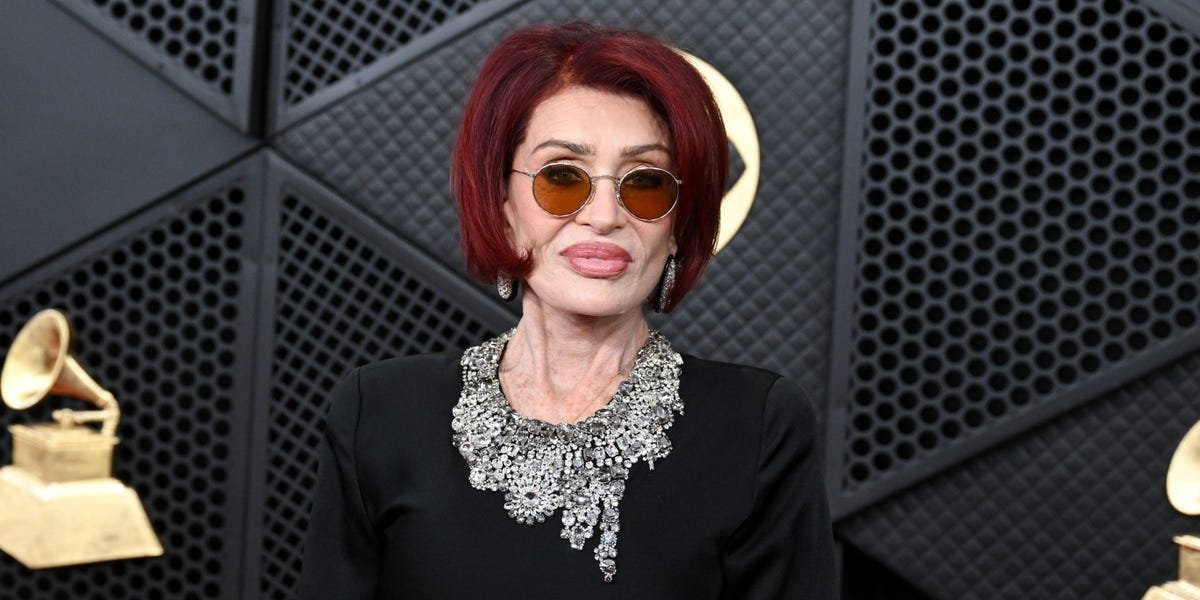
Before Sharon Osbourne, 73, begins her morning beauty ritual, there’s something else she must do.

“The morning routine has to be the news, the world news. I’m, like, addicted to it,” Osbourne told host Bunnie XO on her “Dumb Blonde” podcast. “I’ll check Instagram, check my emails, and then I start with the ice on the face.”

The TV personality and wife of Black Sabbath front man Ozzy Osbourne, who died in July, is specific about how she uses ice in her skincare routine.

“I do the bowl, and then I do it in, you know, in a little baggie, and just keep doing it. And then I do a face mask, and then I start the day,” she said.

Osbourne is equally meticulous about her hair, refreshing her signature red shade “every 10 days.”

But keeping the bold color vibrant isn’t easy since it gets “everywhere,” she said.

“It’s a nightmare. My neck is red. Everything I wear is red. The pillowcases,” Osbourne said.

She added that the closest she ever came to going blonde was getting highlights in the ’80s, but red is the shade she keeps coming back to because her mother was a redhead.

“Of course, you know, it’s gray or white or whatever color it is underneath. And I tried doing that, and that was just miserable,” Osbourne said.

“I would look at my reflection sometimes, like in a shop window. I’d go, who the fuck is that? It’s me. Like, no thanks,” she said.

Osbourne isn’t the only public figure who says reading the news is a nonnegotiable part of their mornings.

Google CEO Sundar Pichai says he starts his day by reading Techmeme, a site that aggregates tech news from across outlets.

Martha Stewart, 84, says she wakes up at around 4:30 a.m. and spends the first part of her morning reading the news and doing puzzles.

Peter Warwick, CEO of Scholastic, says he begins each morning by browsing news sites and checking for updates on his favorite English Premier League team, Arsenal.


Source link

Heart-disease-is-on-the-rise-in-younger-adults-A.jpeg

Heart disease is on the rise in younger adults. A cardiologist says prevention needs to start sooner.

You wouldn’t wait until your 50s to start saving for retirement — so why wait until your heart is already at risk to start protecting it?

Heart disease is spiking among younger people, in part because people in their 20s, 30s, and 40s are procrastinating on their health, according to Dr. Sadiya Khan.

Khan, a professor of cardiovascular epidemiology at Northwestern University, told Business Insider that changes to your diet and exercise habits now can pay big dividends as you age.

“You can’t just become older and then hope to make all these changes,” she said.

The earlier you understand your heart health, the better equipped you are to make healthy decisions for future you.

Your heart may be aging too quickly

Right now, most of us are behind in our investments to our cardiovascular health. The average American’s heart is 4 to 7 years older than their calendar age, according to Khan’s research.

“All of us are naturally driven to procrastinate,” she said. “You try to worry about the things that are immediately in front of you, and it’s harder to prioritize and give as much attention to something that is a long-term consequence.

An online tool, developed by Khan and her team, helps forecast a person’s risk of heart attack or stroke over the next 30 years by illustrating how they stack up to their peers. It shows their percentile rank for heart health: in other words, out of 100 people the same age and sex, how many have a higher or lower risk of cardiovascular disease.

Khan said the new tool uniquely uses percentiles to help people manage their health by understanding their risk and making changes if needed. Patients can then prioritize which habits provide the best bang for their buck in terms of health benefits, starting with what Khan recommends most.

How to invest in your heart health now

Khan said a big challenge with heart health is that it can be highly individualized. All the factors involved — diet, exercise habits, genetics, and stress — can vary widely from person to person.

“It’s not going to be a one-size-fits-all,” she said. “It’s this overarching goal that we need to personalize how we communicate risk and how we can share that information in a way that works for each patient.”

That makes it hard to recommend a specific game plan to boost everyone’s heart health. However, there are a few strategies that can pay off for most people.

  • Stop smoking. It may seem obvious, but if you’re a smoker even occasionally, quitting is one of the most effective ways you can reduce heart health risks (and yes, smoking cannabis is bad for your heart, too).
  • Get your steps in. Exercise helps strengthen the heart and stave off age-related disease, and most of us don’t get enough. Walking an extra 500 steps a day can help start building better fitness from the ground up. Short bursts of high-intensity movement quickly add up for better health.
  • Lift weights. Strength training is increasingly linked to better longevity, and movements like squats and deadlifts or at-home exercises like push-ups or wall sits can support a strong heart.
  • Eat more beans. Most of us could benefit from eating more nutrients like fiber that protect heart health. Affordable foods like whole grains and beans offer protein, fiber, and nutrients to fuel better heart health. Plant-based whole foods also help to keep you full, making it easier to cut back on sweets and processed foods that can be hard on your heart.
  • Take a tai chi break. It’s no secret that stress can be harmful, and over time, it can take a major toll on your heart. Relaxing habits like spending time outdoors and doing yoga or tai chi help to lower your blood pressure and reduce cardiovascular strain. Getting enough quality, consistent sleep is crucial, too.

For best results, try to make small, sustainable changes that you can keep up over time.

“It depends on what works for you and what you are able to stick with,” Khan said. “They all matter, but you don’t also need to do it all at once.”


Source link

My-daughter-told-me-I-should-start-going-to-the.jpeg

My daughter told me I should start going to the gym. At 79, I’m in the best shape of my life.

This story is based on a conversation with Joan MacDonald, 79, a former driving examiner of Collingwood, Ontario. It has been edited for length and clarity.

January 2017 was a New Year I’ll never forget. It was one of the few times that my daughter, Michelle MacDonald, lost her cool with me.

She’d moved to Mexico the previous month and was visiting. “I won’t get to see you as often as I like,” she said. “And, every time I leave, I won’t know whether it will be the last time I see you.”

Then she made another blunt comment that changed my life. “Mom, why don’t you go to the gym?” she said.

I needed to improve my health

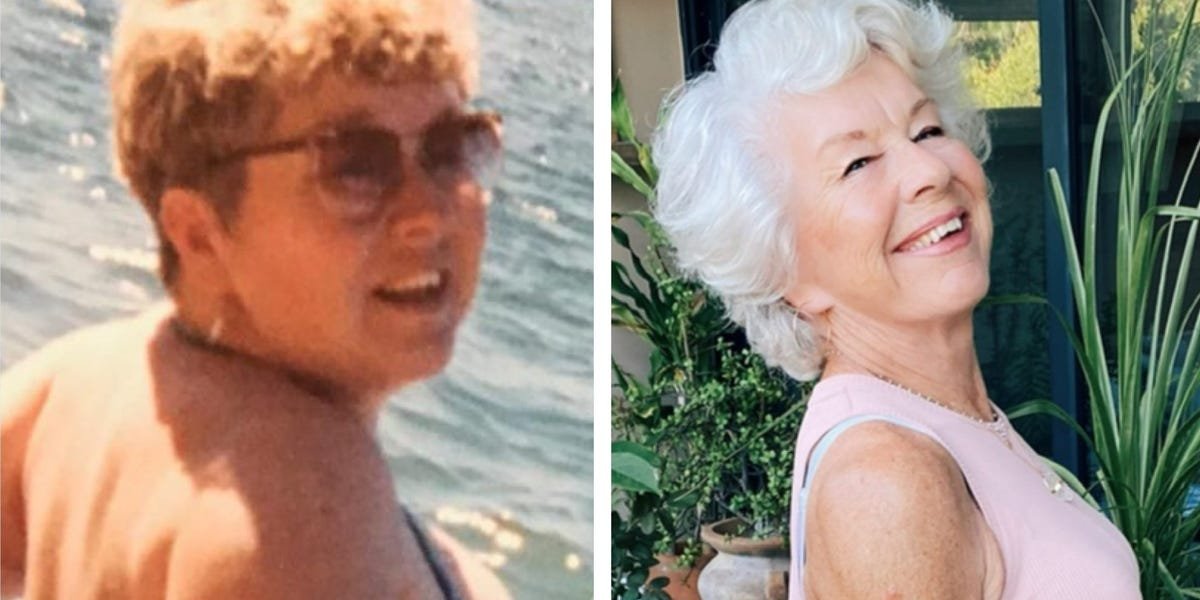
I had high blood pressure, kidney problems, and was at least 70 pounds overweight. Approaching my 71st birthday that March, I felt scared and miserable.

My doctor had already warned me that, if I didn’t make an effort to improve my health, I would end up on dialysis before very long. I was effectively dying.


An older woman standing in a clothing store

MacDonald, before she discovered the gym and became healthier.

Courtesy of Michelle MacDonald.


Growing up in Canada, I’d been an active child. I played ball, skated in the winter, and went bowling. I enjoyed doing them because they were fun. But I was by no means an athlete.

I got married a month before my 21st birthday and settled into married life while working as a driving examiner. I juggled work with motherhood, raising Michelle and her older and younger brothers.

Going to the gym really wasn’t a thing back then. None of my married friends worked out, or even thought about doing so.

I took medication for high blood pressure

I believe that your body changes every seven years or so. I went through variations in terms of shape and size, and enjoyed certain foods, then went off them.

I didn’t have regular meals, often eating just two meals a day at irregular times. In between, I’d snack.

Throughout my 60s, I was in poor health. I’d get bronchitis in the fall and spring — I had weaker lungs after contracting rheumatic fever as a child — and the kidney issues began.

The weight had grown to 200 pounds, which was far too heavy for my height of 5 feet 3 inches. And my blood pressure was high; I was put on medication.


An older woman flexes her muscles on a beach.

MacDonald, after taking up exercise and eating five small meals a day.

Courtesy of Michelle MacDonald


I’m lucky because Michelle is a certified strength and conditioning specialist and sports nutrition coach. She saw how unhealthy I’d become and was worried, especially because she’d moved thousands of miles away and couldn’t keep an eye on me.

Her recommendation struck home. It was enough to jolt me into action. My doctor also encouraged me to lose weight and reduce my blood pressure.

I’d half-heartedly attended the gym before, but not consistently. This time, I went five times a week.

My body slimmed down

I sought advice from Michelle and studied YouTube videos to learn how to use the machines and do strength training with free weights. At first, I couldn’t believe how hard it was to pick up 20 pounds.

I began with small weights and increased them by increments. I’ve since done a deadlift of 170 pounds and a hip thrust of 230 pounds.

It was amazing to see my body slim down and fit into clothes, like jeans, that I hadn’t worn in a very long time.

I lost 45 pounds in six months and a further 25 pounds during the rest of my 70s. I’ve gone from a size XL to a medium. I was able to quit my medications.


An older woman doing the splits.

MacDonald has become stronger and more flexible.

Courtesy of Michelle MacDonald


My current regimen involves spending two hours at the gym, with around 15 minutes of cardio, followed by using weights. I often work out with Michelle, whom I joined in Mexico for around a year after my husband died.

As for my diet, I eat five small meals a day, including oatmeal with egg whites, protein powder, and 1% coconut milk for breakfast.

Then I’ll have yogurt, an egg white omelette with ground beef, chicken, turkey, and ham, a protein bar, and a final, plain meal without starches. If I start my day at 7 am, I’ll stop eating by 7 pm.

A shoulder injury hasn’t stopped me

Unfortunately, I suffered a shoulder injury while biking outside on a rough surface and needed surgery three months ago. I’ve had to take things a bit easier as I recover. However, I feel 100% happier and healthier than I did before going to the gym.

Michelle and I established “Train With Joan” to help inspire people to take up exercise, regardless of their age.

It may slow you down a bit, but I’ve seen many seniors, even older than me, accomplish great things. They have resolved to do it for themselves. Nobody else is living in your body but you.


Source link