I-let-my-8-year-old-son-roam-the-neighborhood-freely-Other.jpeg

I let my 8-year-old son roam the neighborhood freely. Other parents nearby are starting to let their kids do the same.

I was nervous the first time we let our son stay home alone. He was 5 years old, and we were gone for less than an hour, taking a walk to a farmstand with our daughters.

He built a fort in the playroom, loaded it up with books, and armed himself with our laptop to text us or call 911 in an emergency.

When we returned home, with the stroller overflowing with his favorite — fresh peaches — the look on his face was one of unbridled joy and pride. He had stayed home alone, followed the rules, and was entrusted to take care of himself. In a world of helicopter parents and constant micromanaging, this was the biggest gift we could give our son and ourselves.

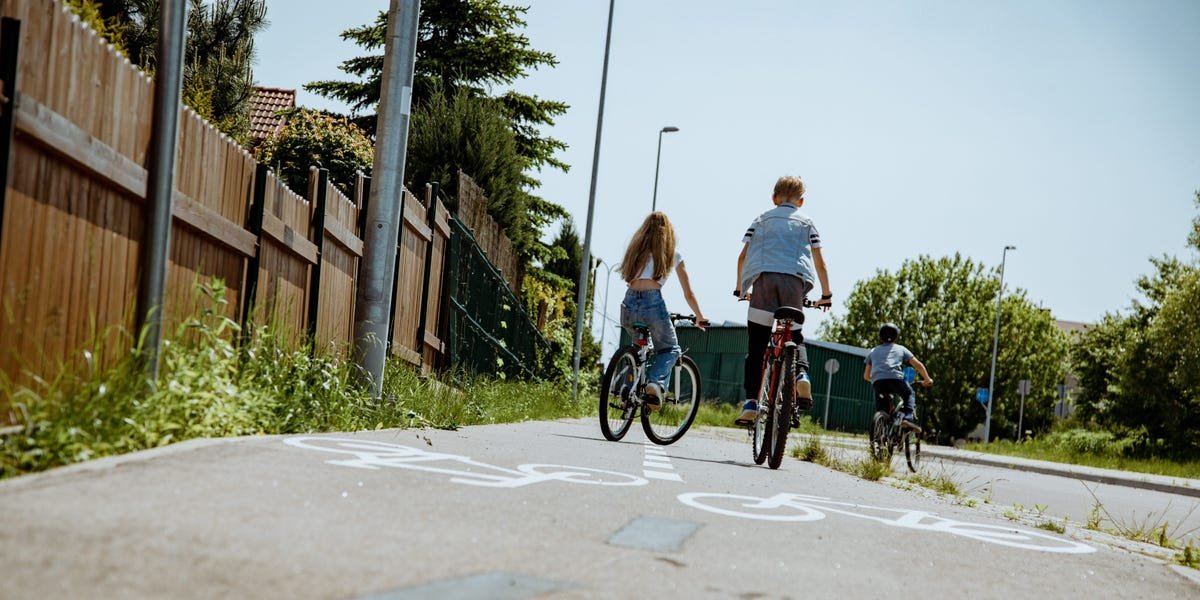
Now, nearly four years later, we’ve helped pave the way for neighborhood families to let our 8- and 9-year-olds bike to each other’s houses to see who’s home, round up their buddies, head to the park, or, like my husband and I did in our childhoods, just ride around.

My son is allowed to go outside to play with his friends on his own

In these first outings, we gave our son a walkie-talkie with a range of roughly half a mile so we could check in. He would diligently report back where he was and who he was with.

Now, nearing 9 years old, we’ve let go a little bit. He knows the boundaries of where he can ride, avoiding the two major roads that encircle our quiet neighborhood. We’ve even cut back on how much we communicate with other parents; instead of texting them to find out if their kids are home, we tell our son to go find friends to play with — à la our ’90s childhood.

Knocking on doors teaches our son to interact with adults or siblings (something that’s been lost when kids and teens text or call friends directly on a cellphone rather than a landline, where anyone could answer). It gives him confidence to do something that can be uncomfortable.

Other parents in our neighborhood are following our lead

As Jonathan Haidt explained in his book, “The Anxious Generation,” it’s much easier to buck the trend of a screen-based childhood (or anything in vogue) when other families are on the same page as you.

Over the past six months, as we encourage our son to go out and find peers to play with, we see more kids doing the same; there is a constant stream of kids knocking on doors to play after school and on the weekends.

I frequently receive texts from neighborhood moms: “I love that they’re doing this,” “This is what I wanted when we moved here,” or “Incoming!” And then five boys show up in our yard.

I’m not worried about letting my son roam freely

Friends ask me if I worry about my son riding around unsupervised. About being abducted? No.

About distracted drivers? Yes, but a couple of things: We think the risk of micromanaging and hovering over our older child’s play is a greater concern, particularly because there’s no real end to the worry over distracted drivers. What am I going to do? Follow him on his bike until he is 12? 15?

That brings me to the fact that we have two other children (6 and 3.5 years old). Even if two parents were constantly on watch, we can’t be in three places at once. At the end of the day, unsupervised play can be risky, sure, but so can everything. If I live like that, times three kids, I will undoubtedly lose my mind.

This freedom is well within the realm of what my husband and I did growing up; it keeps our kids off the screens and away from us, allowing them to navigate their own way, solve playground scuffles, and feel a sense of pride in learning their way around the neighborhood and having the responsibility to do so.

I’m now known as the ‘lets-her-kids-roam-free’ mom

In the last year, we’ve had our middle child, who’s 6 years old, run short errands to neighbors’ houses, not more than a 90-second bike ride away. She takes her charge seriously, dropping off cookies or a tote we borrowed on their front steps.

She’s also the neighborhood mayor, riding in and out of people’s driveways, waving, yelling, “Hi, neighbor!” and petting as many dogs as she can.

I used to worry about what the neighbors would think about my little kids playing outside unsupervised, even in our own yard. But now, I wear my self-proclaimed title of “Lets her kids roam free” proudly.

So long as my kids follow the rules, I know where I can find them.


Source link

I-make-my-own-sourdough-bread-to-save-money-on.jpeg

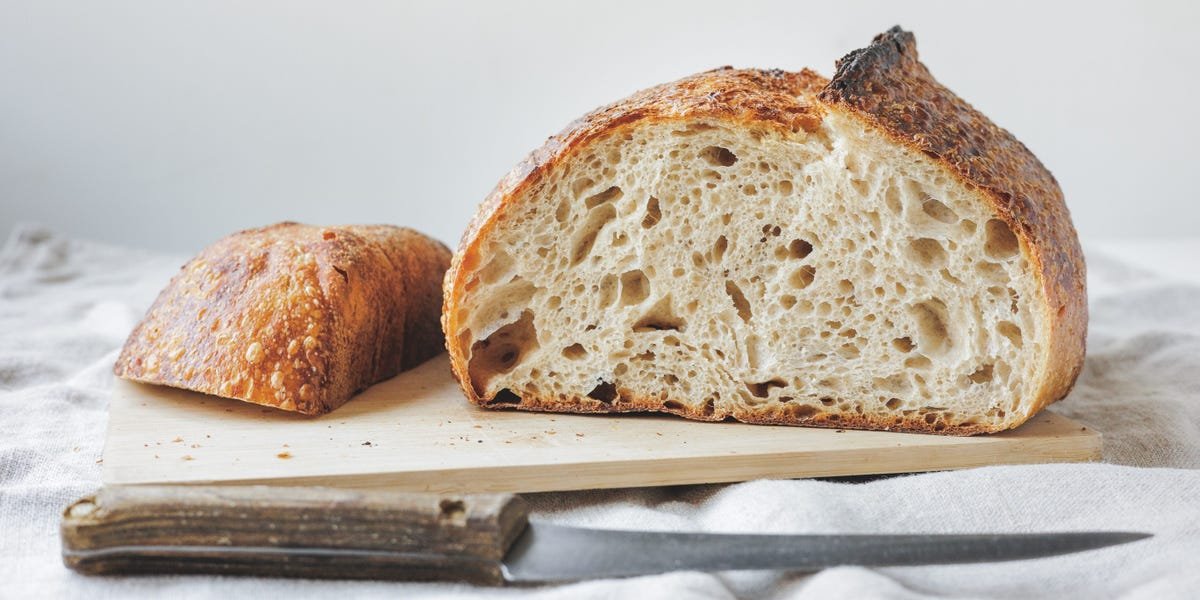
I make my own sourdough bread to save money on groceries. Here are 5 things I wish I’d known before starting.

Seven years ago, I started making my own sourdough bread.

In addition to being a relaxing hobby that’s taught me the importance of patience, making bread also keeps me from spending ridiculous amounts of money on loaves from the grocery store.

However, baking sourdough is pretty different from other types of bread. This is partially because sourdough requires a starter — a fermented mixture of flour and water that creates its own yeast and bacteria.

The process of creating a starter, and eventually bread, isn’t foolproof and can take beginners a little while to grasp.

Here are five things I wish I’d known before making sourdough bread for the first time.

A sourdough starter needs to be fed like a pet


A jar of sourdough starter next to a loaf of the baked bread.

A sourdough starter should be fed often.

leonori/Getty Images


To keep a sourdough starter active, it has to be fed regularly using flour and water. However, I didn’t realize this until I inherited my first one.

How often it’s fed depends on where it’s stored. For example, if I leave the starter on the counter, I feed it once every 12 to 24 hours.

When I keep it in the refrigerator, however, I can feed it less, typically about once a week. This schedule also varies depending on how often I bake.

The starter can be preserved in a few different ways

When I first started making sourdough, I didn’t know I could store my starter for a while without feeding it.

Turns out, it can be left in the freezer for up to a year. Another more reliable, long-term storage option is to dehydrate the sourdough starter.

This would’ve been good to know when I let mine go bad because I went on a work trip and couldn’t find a friend to feed it for me.

A starter can be brought back to life

Luckily, even if the starter looks grim, it’s still possible to bring it back to life.

To do this, I feed mine filtered water and flour and wait a few days to see if bubbles start to form. It may take a while to get the cultures moving again, especially if the starter has been freeze-dried or dehydrated.

When it bubbles up and doubles in size, I know I have a pillowy, healthy starter to resume baking with.

Discard doesn’t actually need to be discarded


Freshly baked muffins on a baking rack.

Sourdough discard can be used to make muffins.

AshtonLNelson/Shutterstock


I didn’t realize until far into the process that sourdough discard can be used for other recipes. I figured the term indicated the runoff’s value.

However, it can either be composted or used in other recipes like flatbreads, pastries, rolls, waffles, muffins, and more.

When making sourdough, patience is key

Throughout the process, it’s important to remember that fermentation takes time. Living cultures need the ideal environment to engage, grow, and develop a strong and active formula.

My sourdough hobby definitely hasn’t satisfied any need for instant gratification. But it has tested my patience, indulged my mad-scientist alter ego, and encouraged a certain level of imagination in the kitchen.

This story was originally published on March 13, 2025, and most recently updated on March 9, 2026.


Source link

A-doctor-shares-3-ways-women-can-lower-their-cancer.jpeg

A doctor shares 3 ways women can lower their cancer risk, starting in their teens and 20s

Over the past five to 10 years, OB-GYN Dr. Thaïs Aliabadi noticed an uptick in younger cancer patients in her practice.

Suddenly, more in their 30s and 40s were getting diagnosed with breast, uterine, and colon cancer, the latter of which is now the leading cause of cancer death in people under 50.

As to the causes, Aliabadi has her own theories.

“I think our lifestyles, our metabolic changes, the rates of obesity, the increase in insulin resistance, our poor diet, lack of exercise, chronic inflammation — these have all played a huge role,” she told Business Insider. She also mentioned environmental pollutants that can disrupt the endocrine system and the fact that women are getting pregnant later or not at all, which can change hormone exposure and increase the risk of breast cancer.

In better news, she also said higher rates of diagnoses also mean “we’ve gotten better and better at cancer detection and risk assessment,” as awareness around early symptoms have also improved.

While so many factors can feel out of our control, “I wish every woman knew that cancer is not always completely random,” Aliabadi said. In some cases, “we can actually see risk long, long before the disease appears.”

Aliabadi shared her three tips for preventing cancers in women (such as breast and ovarian cancer), from analyzing your risk to focusing on your metabolic health.

Improve your metabolic health with diet, sleep, and exercise


People on treadmills

Regular exercise can lower the risk of multiple cancers.

skynesher/Getty Images


In terms of overall prevention, Aliabadi said starting a few healthy habits as early as possible is key.

“If you want to lower your risk of cancer, number one on the list is to maintain a healthy metabolic profile,” she said. It means lowering cholesterol, inflammation, and visceral fat — the fat surrounding your internal organs.

She said exercise, such as strength training and cardio, improves insulin sensitivity, reduces inflammation, and balances hormones, lowering the risk of multiple cancers.

Eating a diet “rich in whole foods” and cutting back on ultra-processed foods can also make a huge difference by boosting gut health and cutting down cholesterol.

Other good habits for metabolic health include stress reduction and getting adequate sleep. “Sleep deprivation is poison to our longevity, and persistent stress can affect our hormones and our immune pathways,” she said.

These habits don’t just decrease cancer risk — they also reduce the risk of cardiovascular disease, diabetes, and other chronic illnesses.

Cut down on carcinogens where you can


Pouring wine

Even moderate drinking increases cancer risk.

Elena Noviello/Getty Images


Aliabadi said environmental toxins, like chemicals in food packaging, can be “a little tougher” to be aware of because of how ubiquitous they are.

However, there are still ways to reduce exposure to carcinogens (cancer-causing agents) and endocrine disruptors. A commonly spoken about one is tobacco, so abstaining from smoking cigarettes or vaping “can significantly lower many cancer risks,” she said.

The one she really emphasized cutting back on is alcohol, as even moderate drinking can increase cancer risks.

“In my office, I have zero tolerance for alcohol,” she said. “Not even a couple of glasses a week.”

Collect data on your body


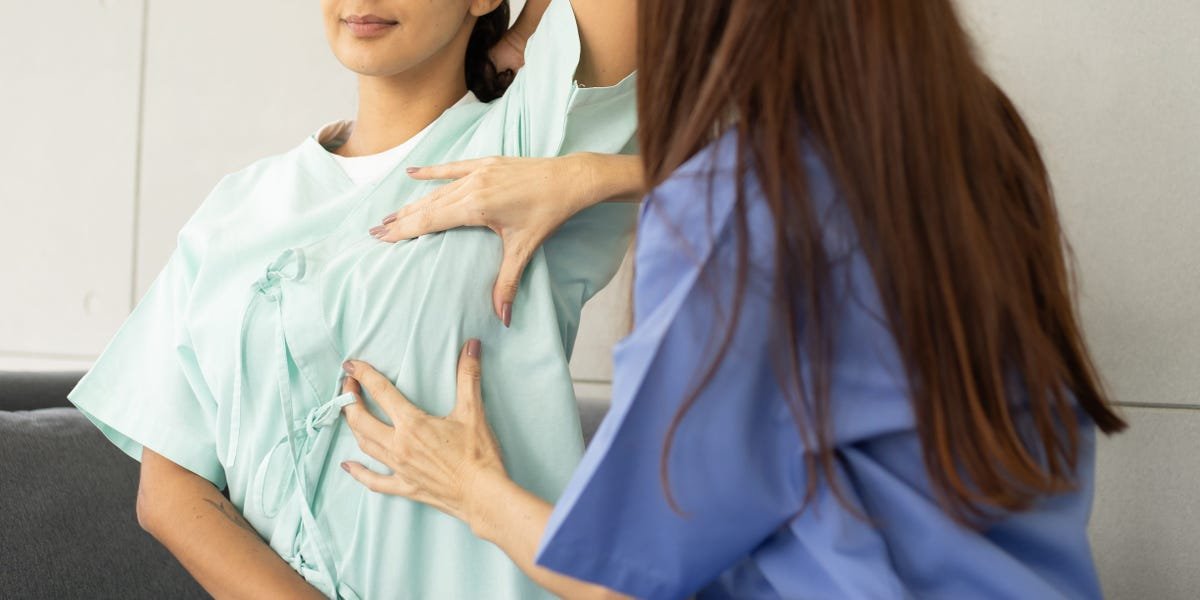
Young woman mammogram

Depending on risk factors, you might need to start screening earlier.

German Adrasti/Getty Images


While cancer screenings have recommended starting ages — some of which have been recently lowered to reflect an uptick in younger patients — Aliabadi says you shouldn’t rely on them.

“We need to stop thinking that prevention starts at 40, that mammograms start at 40,” she said. “Prevention starts in our teens and in our 20s, believe it or not.”

She urges women to take a two-minute online test and learn their lifetime risk assessment score for breast cancer, which uses information like family history, genetic mutations, and breast density to more accurately estimate when you should get screened. Olivia Munn, a patient of Aliabadi’s, famously took the test and was diagnosed with early-stage breast cancer despite having no symptoms.

Aliabadi said that testing for seemingly unrelated conditions, like PCOS, endometriosis, fertility, genetic conditions, and insulin resistance, can all play a role in evaluating your cancer risk and give you a better idea of how vigilant you should be.

Aliabadi, who herself had a high lifetime risk assessment score for breast cancer and was initially dismissed by doctors, said a patient knowing their body helps them better advocate for themselves and seek out second opinions if needed.

“If someone at the front desk tries to scare her away, she will be her own health advocate,” Aliabadi said. “She will know exactly why she’s there and why she needs that mammogram.”


Source link

Here-are-the-biggest-announcements-coming-out-of-the-2026.jpeg

Here are the biggest announcements coming out of the 2026 Consumer Electronics Show, starting with Nvidia’s Vera Rubin chips

On Monday, ahead of the Consumer Electronics Show, Huang officially introduced the Vera Rubin architecture, which is now in production and expected to ramp up in volume in the second half of the year. This move follows a blockbuster year for its Blackwell chip, as demand for AI infrastructure continued to surge.

In a press briefing ahead of Huang’s keynote, Dion Harris, Nvidia’s senior director of HPC and AI infrastructure solutions, described Vera Rubin as “six chips that make one AI supercomputer.”

“Vera Rubin is designed to address this fundamental challenge that we have: The amount of computation necessary for AI is skyrocketing,” Huang told the audience during a presentation at the CES.

Huang added that compared to the Blackwell model, Rubin marks a leap in performance, with more than triple the speed, could run inference five times faster, and can deliver significantly more inference compute per watt of energy.

Rubin was first announced in 2024 and has been slated to replace Blackwell ever since. The early debut comes months ahead of the late-2026 timeline Nvidia had previously projected.

Named after astronomer Vera Rubin, who discovered the existence of dark matter, Nvidia said in a press release that the architecture is designed to support more complex, agent-style AI workloads, as well as more networking and data movement.

The Rubin systems are already lined up for deployment across much of the cloud industry. Nvidia said partners, including Amazon Web Services, OpenAI, Anthropic, alongside the upcoming Doudna system at Lawrence Berkeley National Laboratory, all plan to use the new platform.

The accelerated launch comes shortly after Nvidia reported record data center revenue, up 66% from a year earlier, driven largely by demand for Blackwell and Blackwell Ultra GPUs. Those chips have become a benchmark for the current AI boom are widely seen as a test of whether spending on AI infrastructure is sustainable.

Huang has previously estimated that between $3 trillion and $4 trillion could be spent globally on AI infrastructure over the next five years. Nvidia said products and services built on the Rubin platform will begin rolling out from partners in the second half of 2026.


Source link

Im-a-14-year-old-founder-whose-YC-application-went-viral-There.jpeg

I’m a 14-year-old founder whose YC application went viral. There are pros and cons to starting a company young.

This as-told-to essay is based on a conversation with Alby Churven, the 14-year-old founder of Clovr, who lives in Wollongong, Australia. It’s been edited for length and clarity.

When I was younger, I started an e-commerce grip socks brand called Alpha Grips. It failed, but that’s what got me interested in business. I was 12.

A lot of kids’ first businesses is always something to do with e-commerce, like drop-shipping or clothing brands. Social media does saturate you with that “get rich quick” idea with drop-shipping or crypto. Although 90% of the time it’s a scam, it still ignites an interest.

Then I came up with the idea of Finkel, the startup I applied to Y Combinator with. I sent a cold email to Frank Greeff who’s a pretty big founder here. He recommended I started building in public on social media, so I started doing that. X is full of startups.

Social media played a big role, seeing other people building brands and businesses. That’s what got me into it. I used to do code camps when I was younger, so I’ve always been interested in tech and entrepreneurship.

I applied to YC. Apparently I wasn’t supposed to do this big video with all the editing. It’s supposed to be, you sit down and turn on the webcam and talk. I didn’t actually read the instructions when I did it, but I guess that’s what made it pretty viral.

There’s a new social media ban in Australia for people under 16. All these great things have happened for me with it, but the social media ban is taking that away. I don’t agree with it, but it is what it is.

I’m young. I think my advantage being a teenage entrepreneur is I’ve got time. My goal right now is to build as many things as possible, learn as much as possible, and see where it goes.

You decide you want to do maybe when you’re 18 or 16. But I know what I want to do. I want to be in startups and tech.

The benefits of starting young is that you don’t have as much pressure on you financially, so you can just build things.

In the future, I’ll have had experience. It’s about learning. I have time on my hands, and I enjoy it.

The younger generation thinks a bit differently. Some older people may not even know how to use AI.

I’m in the US right now, and I’ve been meeting with a lot of really cool people. When you’re young, you can utilize your age to make a lot of connections. It’s more rare. It’s crazy you’re doing it this young.

My age is a wow factor, but it also limits legitimacy.

It also can be a negative. People might not take you seriously if you’re really trying to pursue something. All the things I’m building are bootstrapped, because it’s impossible to raise funding when you’re young.

I’m getting to stages in my projects where I do need some money. I’ve applied to these accelerators. I had a very low expectation for Y Combinator. I got an interview about my other startup, Clovr, but then I got rejected.

I’ve heard you have to get in the system early, so when I’m older and I apply, I’ll already be in the system and have experience with how the process works.

I do think grants are a really good opportunity. You won’t raise nearly as much, but you’re not giving away any equity. I think giving away equity young is not a good decision. It gives pressure to perform and deliver, and when you’re young, you want to build stuff.


Source link

Burned-out-in-her-50s-she-left-corporate-life-Starting.jpeg

Burned out in her 50s, she left corporate life. Starting over in Korea helped her heal.

Jane Newman spent her evenings watching K-dramas on her recliner during the pandemic lockdowns. She didn’t expect they’d spark a curiosity about South Korea that would eventually lead her to move there and start over.

In 2023, Newman was working for a consulting firm in Brisbane, Australia. As a manager, her heavy workload didn’t let up even as the world began to return to normal.

After months of long hours spent in front of a screen, she was burned out and beginning to feel the strain.

“I started out with a whole lot of shoulder and back pain, and then it developed into arm pain, and I couldn’t use my mouse,” Newman, now 60, told Business Insider.


A woman posing in a red suit in South Korea,

Jane Newman said she burned out from her corporate job in Australia.


Greg Samborski.


Standing desks and different chairs fixed little, so she took a sabbatical.

Newman had first visited South Korea the previous year, curious about the country she’d only seen on TV. Remembering how much she had enjoyed that trip, she decided to return for a two-month break.

When she went back to work, the symptoms didn’t take long to resurface. This time, Newman found herself struggling mentally and emotionally, too.

“I found it more and more difficult to do my work,” she said. By July 2024, she and her employer agreed it was best for her to step away from the company.

“I knew that South Korea was a place that I loved, and it made me feel good,” Newman said. “So I made the decision to go back and stay for a few months to see how it felt.”

New career, new home

For three months, she lived in an Airbnb in Gwacheon, a city just outside Seoul. Newman lived with her host, a local woman who had invited her to participate in the community events.

There, she joined a group supporting former US military “comfort women,” as well as two English clubs where members met to discuss news, read English fiction together, and give weekly presentations on various topics.

“I met the most wonderful people, and they really invited me into their conversations. And I got to know a lot more about Korea itself, and its history,” she said.


A woman leaning against a tree in South Korea.

Newman says she found healing in a small community outside Seoul, where she learned more about South Korean history and culture.


Greg Samborski.


“All of those things made me feel really welcomed, and at home, and part of a community, which is what I was really lacking back in Australia,” Newman added.

In Brisbane, her social life largely revolved around people she knew at work, or old friends she’d kept in touch with from her years living in the UK when her daughters were young. She was part of a bushwalking community and a social dining community, but most of those groups faded after the pandemic.

As Newman considered her next career steps, she found herself drawn toward public speaking and coaching to help people navigate the pressures of modern society and technology.

That focus also eventually led her to begin developing a tech startup in South Korea aimed at helping young people struggling with social isolation.

By February 2025, Newman moved to Seoul to begin her next phase of life.

She said her Gen Z daughters weren’t surprised by her decision since they already knew how much she loved South Korea. Both had already taken trips to visit her there.

When it was time for Newman to look for an apartment, she wanted a place that was close to public transport, with separate spaces for living and sleeping, and a good view.

It took her about two weeks to find a place. She now lives in Dongdaemun, a popular neighborhood, where her two-bedroom apartment costs 1.43 million Korean won, or about $1,000, a month.


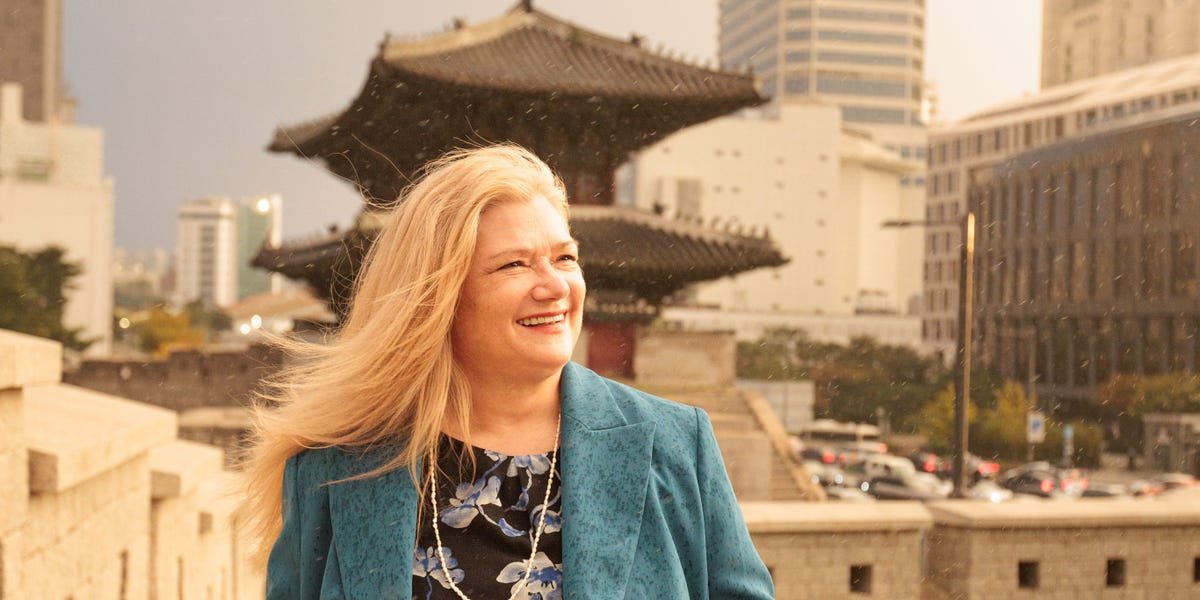
Skyline from Seoul City Wall at Dongdaemun.

Newman lives in Dongdaemun, a popular neighborhood in Seoul.


Jane Newman.


Building a new life from scratch

South Korea has become an increasingly popular choice for foreigners in recent years.

Data from the Ministry of Justice showed that the number of foreigners living in South Korea at the end of 2024 stood at 2.65 million, a 5.7% increase from the year before.

For Newman, building friendships in Seoul came more naturally than she expected.

“I’ve found that every time I’ve come to Korea, I’ve made new friends,” Newman said, adding that this included people she met through a fan group for a Korean actor she admired.


A photo of Cheonggyecheon stream in Seoul.

Newman says she makes it a point to get out of the house once a day to enjoy her surroundings.


Jane Newman.


These days, Newman’s routine is a mix of work and settling into life in Seoul.

She starts her mornings with a coffee from the Starbucks across the street before diving into her coaching sessions and working on getting her startup off the ground.

Compared to her previous job, where working 60 hours a week was common, Newman says she now works around 20 to 30 hours a week.

With the more flexible schedule, she has time to exercise, meet people, and sometimes work from libraries or cafés.

“But I do make sure I get out once a day to go out and enjoy this beautiful place I’m living in,” she said.

Do you have a story to share about relocating to a new city? Contact this reporter at agoh@businessinsider.com.


Source link