
Lovable-exec-says-big-boys-and-girls-like-OpenAI-and.jpeg

Lovable exec says ‘big boys and girls’ like OpenAI and Anthropic worry her more than other vibe coding startups

Other vibe coding players are not the biggest competition, says one Lovable exec.

“I always worry about the big boys and girls in the world,” Lovable’s head of growth Elena Verna said on a Sunday episode of the “20VC” podcast. “So, OpenAIs, Anthropics, Googles, Apples, more so than our competitors that spring up from the bottom or from sideways.”

This is because the distribution power of these tech giants and frontier labs in the market is unparalleled, she said.

Stockholm-based Lovable was valued at $6.6 billion in a December funding round led by CapitalG and Menlo Ventures. It competes with other vibe coding startups like Cursor, Replit, and Emergent, as well as far bigger and better-funded players, including OpenAI, Anthropic, and Microsoft, that make their own AI coding tools.

Verna, who joined the startup last May after a series of advisory and head of growth stints at various startups, said that in a world where products are becoming increasingly similar, distribution and growth are winning strategies.

“Whoever has the best distribution that is earned, that is competitively defensible, that is sustainable, that is predictable, is going to be the winner in the market,” she said. “I worry about the companies that have that figured out.”

Verna’s comments about competition follow a period of brutal comparisons between products made by vibe coding startups and Anthropic’s Claude Code.

After Anthropic released its latest model, Opus 4.6, founders and developers said on X that they are ditching their expensive Cursor and Lovable subscriptions for Claude Code.

Still, Lovable is going strong.

The Swedish startup’s annual recurring revenue has surged by more than 30%, from $300 million to $400 million in a single month, Business Insider reported. ARR, a key metric to gauge startup performance, refers to the predictable revenue a company expects to generate over a year.

Lovable’s chief revenue officer, Ryan Meadows, told Business Insider that the company plans to more than double its head count by the end of 2026, from 146 to 350 employees.

He added that Lovable, which specializes in making coding user-friendly, sees at least 200,000 new vibe coding projects created each day.



Source link

Sydney Bradley brown hair denim vest slightly smiles

How startups can ‘break through the noise’ and grab attention, according to a marketer-turned-VC

Startups don’t just need cash to be successful. Like many of us, they also thrive on attention.

Lindsay Kaplan, a former marketing executive and cofounder of Chief, a networking company for women, wants to coach startup founders on what it takes to build culture-driving brands.

“You can have as much money as you want to pour into the algorithm and buy ads,” Kaplan told Business Insider. “But if you don’t have the right founder who’s able to build a community and the attention that you need to build a real product that people want, all of that money … is meaningless.”

After stepping away from her role as chief brand officer at Chief last year, Kaplan is pivoting her career to focus on working with startup founders. She’s taking her own lessons as a founder, marketing exec, and investor in startups over to Bullish, a consumer-focused venture capital fund. She’s joining the firm as a venture partner, the company exclusively told Business Insider.

Bullish has invested in several consumer hits, including Warby Parker, Harry’s, Peloton, and Casper, Kaplan’s former employer.

Bullish invests in early-stage startups, typically from pre-seed to Series A, Kaplan said. The categories she’s most interested in span loneliness, dating, parenting, health, and identity and belonging.

“AI can be a tool to help those problems,” Kaplan said, but she’s acutely aware that not all AI is going to be a hit with real-life people.

What does it take to get people to care about your product?

Cracking how to “break through the noise” helps, Kaplan said.

How startups can ‘break through the noise’

“What a consumer cares about is what is in it for them. What do we get out of it?” Kaplan said. “Founders are so used to pitching VCs that it’s really hard to switch gears and start thinking about: Why should a customer care?”

When it comes to consumer-facing AI startups, brands need to think outside the box.

Kaplan said that “contrarian” plays can be useful when marketing a startup in a crowded space.

For instance, while so many tech companies are shouting AI from rooftops, some are strategically letting AI take a back seat.

“The best brands emerging are using AI, they’re not necessarily making their startup fully based in AI,” Kaplan said.

Kaplan pointed to Rocco, a smart fridge brand she angel invested in, as an example.

“It’s a smart fridge, but the brand doesn’t lead with ‘AI-powered appliance,’ it leads with design and functionality,” Kaplan said. “The AI makes the product better without becoming its identity, which is how they’ve managed to generate incredible buzz and traction in one of the most commoditized categories in consumer hardware.”

Marketing AI has been a tricky battlefield for brands.

Look no further than the Friend AI ads across New York City. The ads promoting the startup’s AI companion pendant were defaced by locals.

Other marketing and advertising agencies, such as Day Job, are being tapped by AI companies specifically to help translate their brands to everyday people — in other words, potential customers.

Startups and the creator economy

Kaplan said startups trying to reach consumers have a unique tool at their disposal: creators.

Kaplan said the creator economy “rewrote who controls distribution” on social media by shifting who stirs buzz about brands and how people learn about them.

“Early adopters have really become the creators,” she said.

While startups previously toiled over customer acquisition cost (CAC), Kaplan said the big question now is: “Who will carry the story out into the world and why will anybody listen?”

“Distribution is no longer something you can buy,” she said. “You have to earn it.”


Source link

Read-46-pitch-decks-that-creator-economy-startups-used-to-raise.jpeg

Read 46 pitch decks that creator-economy startups used to raise millions of dollars

The creator economy has bred a generation of startups — from influencer-marketing companies to new social-media experiences.

These startups have captured the attention and wallets of influential venture capitalists and angel investors over the last several years, giving rise to several unicorn valuations in the space.

Check out 16 VC firms investing in creator economy startups

Even as the economy has weathered changing tides and investments have cooled across industries, some startups in this sector are still raising money.

In 2024, three trends drove some of the largest deals in the creator economy: AI, social commerce, and newsletters. Several startups raised at least $10 million in new funding last year, such as AI startup Captions or newsletter platform Beehiiv.

Here are 17 creator-economy startups that raised more than $10 million in 2024

AI is continuing to fuel investor interest in the creator economy in 2025, too. For instance, Hedra, a generative AI startup used by some creators to make viral content, announced a $32 million Series A led by A16z in May.

Creators themselves, like Emma Chamberlain and MrBeast, are also raising venture capital for their businesses.

See the leaked pitch deck Chamberlain Coffee used

So, how do creator-economy startups land those investments? Often, it starts with a pitch deck. 

Lumanu, a creator-focused financial startup, uses a simple pitch deck that’s more of a “conversation guider,” its cofounder and CEO, Tony Tran, told Business Insider.

“My pitch is always why, what, how, and why now?” Tran said. (Read the full pitch deck here.)

Skye, a career-coaching startup, had different pitch decks depending on the type of investor or fund they pitched to.

“I had two different versions, depending on the fund,” said Jessica Wolf, Skye’s CEO and one of its cofounders. “If I knew a fund was more into pre-seed, all about the founder, I had one deck. But if I knew that they were a numbers person, I would use another one.”

Every startup has a different approach.

Some, such as Throne, even ditch the pitch deck altogether and opt for an email or Notion document.

Read the email template creator-economy startup Throne used to secure its seed investment.

We talked with founders who’ve pitched their startups to investors about their process. They broke down the pitch decks they used to secure millions of dollars in funding.

Read the pitch decks that helped 46 creator-focused startups fundraise millions of dollars:

Note: Pitch decks are sorted by investment stage and size of round.

Series A

  • Restream, a livestreaming alternative to platforms like the Amazon-owned Twitch: $50 million Series A (14 pages)
  • Hedra, a generative AI video platform: $32 million Series A (9 pages)
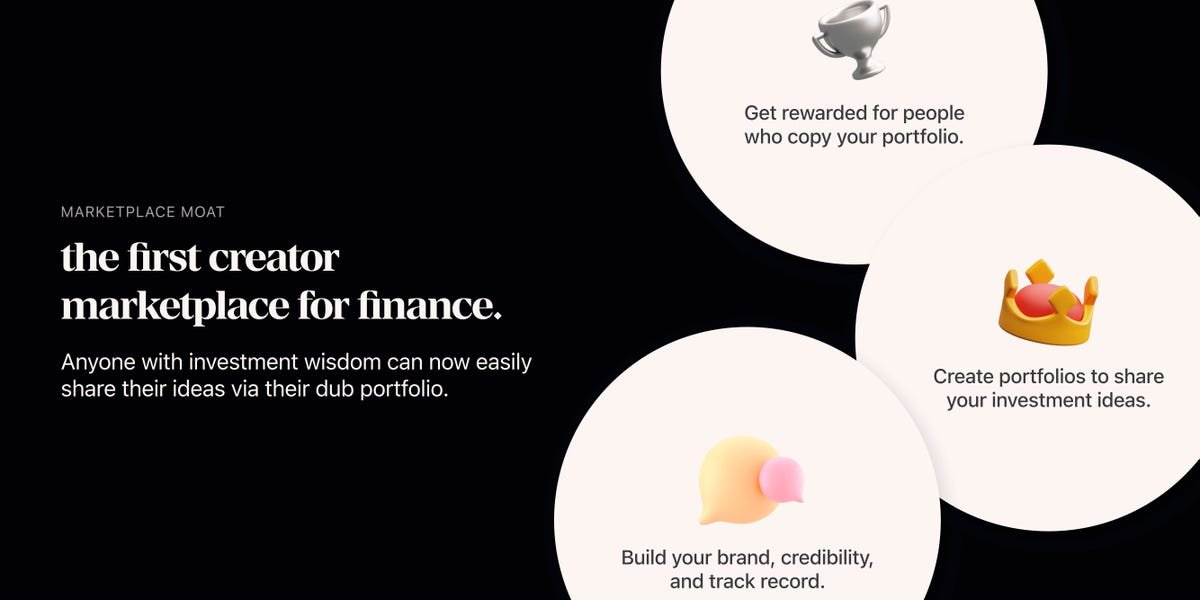
  • Dub, a fintech startup that lets people copy influencers’ stock trades: $30 million Series A (15 pages)
  • ShopMy, an affiliate platform that lets creators earn commissions through shoppable landing pages: $26.5 million Series A (23 pages)
  • Posh, an IRL events startup: $22 million Series A (12 pages)
  • Pearpop, a creator-marketing platform: $18 million Series A (18 pages)
  • Spoon Radio, a social-audio startup: $17 million Series A (15 pages)
  • Kyra, a content studio, talent-management firm, and influencer-marketing platform: $15 million Series A (20 pages)
  • Allstar, a startup helping gamers become social-media creators: $12 million Series A (6 pages)
  • Lumanu, a business-solutions platform for creators: $12 million Series A (8 pages)
  • Hype, a platform for link-in-bio and other creator-monetization tools: $10 million Series A (13 pages)
  • Catch+Release, a startup that helps creators and everyday social-media users license their content to brands: $8.8 million Series A (12 pages)
  • Slip.stream, a music startup focused on gamers: $7.5 million Series A (13 pages)
  • Brag House, an esports startup: $5 million Series A (24 pages)
  • CreatorDB, an influencer marketing company: $4.7 million Series A (13 pages)

Seed

  • Linguana, an AI video translation startup that is targeting YouTubers: $8.5 million (13 pages)
  • AvatarOS, a startup building virtual avatars for social media, gaming, and other immersive experiences: $7 million (11 pages)
  • Hypernatural, a generative AI startup that wants to be the Canva for video: $6.8 million (14 pages)
  • Scenario, a generative AI startup to create gaming art and assets: $6 million seed (8 pages)
  • Sesh, a music startup that connects artists and fans using their mobile wallets: $5 million seed (13 pages)
  • Authoritive, an online course-development startup: $5 million seed (11 pages)
  • Dstlry, a comic-book creator startup: $5 million seed (26 pages)
  • Dharma, a travel startup for creators and brands: $4.7 million pre-Series A (17 pages)
  • Glystn, an AI-powered community-management platform: $4 million seed (15 pages)
  • Daisy, an influencer marketing startup that launched in 2024: $3.9 million (9 pages)
  • Anima, an augmented-reality startup: $3 million (15 pages)
  • Grandstand, a sports startup working with athlete creators: $2.75 million
  • Seam Social, a new Web3 social-media platform: $2.5 million (10 pages)
  • Spark, a digital art platform from the YouTuber Moriah Elizabeth: $2.5 million seed (9 pages)
  • Insense, a startup helping e-commerce brands get low-cost ads: $2.5 million pre-Series A (9 pages)
  • Supercast, a podcast subscriptions startup: $2 million seed (20 pages)
  • Chartmetric, a music-data and -measurement company: $2 million seed (46 pages)
  • Ultimate Playlist, a music-marketing startup: $2 million round (9 pages)
  • Magroove, a music-distribution and -discovery platform: $1.6 million seed (21 pages)
  • Stagetime, a professional-networking startup for performing artists: $1.5 million seed (13 pages)
  • Jubilee Media, a content studio looking to expand beyond YouTube and TikTok: $1.1 million seed-plus (12 pages)

Pre-Seed

Other


Source link

Sydney Bradley brown hair denim vest slightly smiles

Read the pitch decks of 14 startups looking to disrupt dating apps and social networking that have raised millions

A new generation of consumer social startups is emerging.

From platforms focused on getting people to meet IRL to dating apps taking on Tinder or Hinge, startups are disrupting the digital social scene.

Founders of these startups are tackling problems like loneliness, dating app fatigue, and general dissatisfaction with the current social media incumbents.

Some founders come from Big Tech backgrounds, like the Instagram-heavy team behind photo-sharing app Retro, or the ex-Google employees building the social-mapping app PamPam. Gen Z founders are also throwing their hats in the ring, like Isabella Epstein’s IRL-focused app Kndrd, or Tiffany “TZ” Zhong’s Noplace app.

Investors are taking notice.

For instance, the IRL-social app 222, which matches strangers over dinner or activities with a personality quiz, raised a $2.5 million seed round from venture capital firms like 1517 Fund, General Catalyst, and Best Nights VC in 2024.

“We’re entering this new wave of social where people are trying to revert back to what people really use these platforms for to begin with — which is connection,” Maitree Mervana Parekh, a principal at Acrew Capital, told Business Insider in 2024.

Meet 19 startups in social networking, dating, and AI that investors have their eyes on

Some venture capital funds — such as French firm Intuition VC or gaming-focused firm Patron — have made tackling loneliness and relationships part of their investment theses.

But it’s not just friendship and dating that are ripe for disruption.

Startups like Khosla Ventures-backed Gigi, Yale-student-founded Series, Boardy, Filament, and Goodword have raised capital for AI tools to help people network better or maintain professional relationships.

“When people think about loneliness, they think about friends and family,” Goodword CEO Caroline Dell recently told Business Insider. “But we spend most of our waking hours at work as professionals.”

Meet the founders of 11 startups competing with dating app giants like Tinder

Other startups, like Diem and Spill, have opened up investment rounds to include users themselves using the platform Wefunder.

It’s not yet clear how many of these investments will pan out. Some startups are pre-revenue, while others are experimenting with monetization methods (such as freemium models).

“Founders have to be honest with themselves,” said Marlon Nichols, a founding partner at Mac Venture Capital. “Some of them aren’t really venture-scale or venture-type investments. We’re looking for the next big thing, the next category leader.”

Meet 12 VCs and investors eyeing new social startups

Business Insider spoke with several social media and dating app founders about how they are raising capital, including the pitch decks they used to raise millions of dollars.

Read the pitch decks that helped 14 social-networking and dating startups raise millions of dollars:

Note: Pitch decks are sorted by investment stage and size of round.

Series A

Seed

Pre-Seed

Other

Read about more social networking and dating startups raising millions:

  • Airbuds, a social music app, told Business Insider in November that it has raised $10.2 million — including a recent check from Alexis Ohanian’s VC fund.
  • Sweatpals, a fitness and wellness social platform, raised $12 million in seed funding.
  • Sitch, an AI matchmaking dating app, announced in April that it had raised $2 million in pre-seed funding.
  • Amata, another AI matchmaking dating startup, recently launched in the US and disclosed that it raised $6 million in 2023.
  • Gigi, an AI social network for making professional connections, announced in September that it raised $3 million from Khosla Ventures.
  • Corner, a social mapping app for Gen Z, disclosed in September that it has raised $3.75 million.


Source link