
Microsoft-exec-suggests-AI-agents-will-need-to-buy-software.jpeg

Microsoft exec suggests AI agents will need to buy software licenses, just like employees

Ashley Stewart’s scoops are always worth reading. This week, she published a sharp piece on the AI threat to software, and how Microsoft, Salesforce, and others are responding.

Buried in the story was a deceptively simple question: does your AI agent count as an employee?

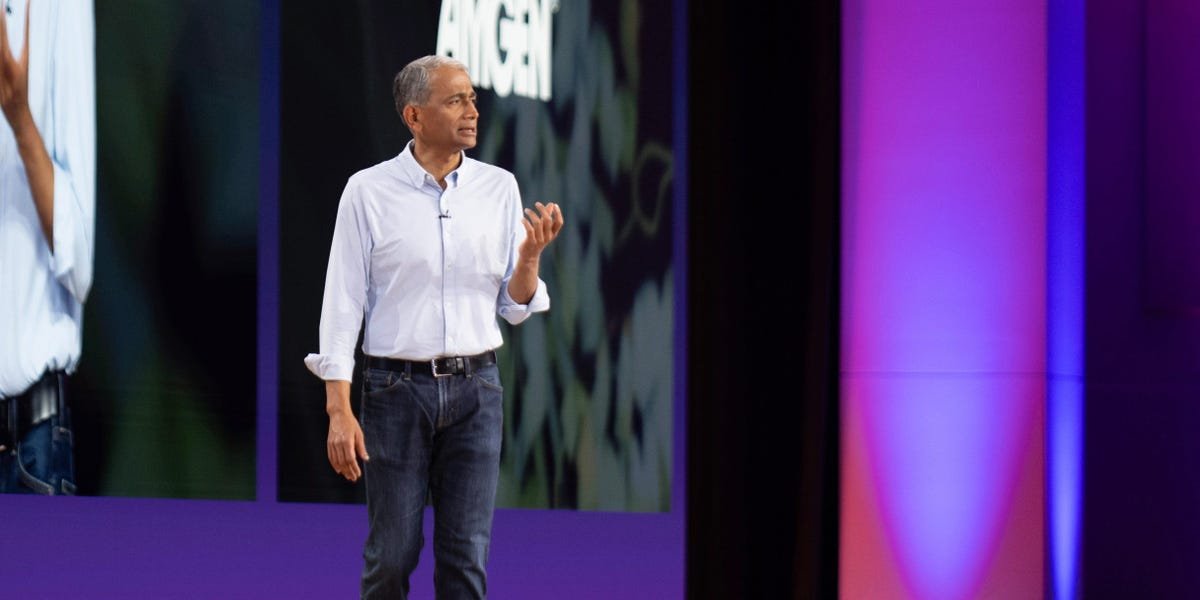
At a recent conference, Microsoft executive Rajesh Jha floated a provocative idea. In a future where companies deploy fleets of AI agents, those agents may need their own identities — logins, inboxes, and even seats inside software systems. If so, AI wouldn’t shrink software revenue. It could expand it.

“All of those embodied agents are seat opportunities,” Jha said, envisioning organizations with more agents than humans — each effectively a user that must pay for a software license, or “seat” in industry lingo.

That’s a radical twist in the SaaS pricing debate rattling companies like Microsoft, Salesforce, and Workday. Investors worry AI could hollow out seat-based pricing, the backbone of enterprise software. If one human can manage dozens of agents, why pay for dozens of licenses?

Jha’s answer: because those agents are the new users. A company with 20 employees might buy 20 Microsoft 365 licenses today. If each employee gets five AI agents, and the workforce shrinks to 10 people, that could still mean 50 paid seats.

Not everyone buys it.

Nenad Milicevic, a partner at AlixPartners, sees the opposite. AI agents will reduce the number of humans interacting with software, slashing licenses. Instead of 20 employees, you might have one person overseeing a handful of agents. That shift would pressure vendors and empower customers to push back on pricing that no longer makes sense.

Milicevic argues the winners will be open platforms. Companies could charge extra for machine-based access, but risk losing customers to software rivals that let agents operate freely.

Which brings us back to the core tension: if AI agents are just extensions of you, charging extra feels like double billing. If they’re autonomous workers, paying for them may be inevitable.

The answer could define the next decade of software economics.

Sign up for BI’s Tech Memo newsletter here. Reach out to me via email at abarr@businessinsider.com.


Source link

Roya Shahidi photo

Elon Musk says money can’t buy happiness. Research suggests it can — up to a point.

Elon Musk wants you to know that the money hasn’t made him happy.

“Whoever said ‘money can’t buy happiness’ really knew what they were talking about,” Elon Musk wrote in a post on X on Thursday with a sad-face emoji.

The SpaceX and Tesla CEO is by far the richest person in the world. Per the Bloomberg Billionaires Index, he is worth $668 billion. The second-richest person in the world, Larry Page, is worth $285 billion.

Musk’s wealth has soared by $49 billion since the start of the year, buoyed by SpaceX’s high valuation and news of its merger with his AI startup, XAI.

So, is Musk right or wrong that money can’t buy you happiness?

Studies show that money does bring happiness, but there could be a limit for the ultrawealthy.

David Bartram, an associate professor of sociology at the University of Leicester, told Business Insider that while wealth and happiness are linked, “It’s very much a matter of ‘diminishing returns.'”

“Once you’ve got a few million, anything extra is meaningless for happiness,” he said.

Bartram said for the very wealthy, “happiness is probably best achieved by having a sense that you’ve done some good in the world, and that you’ve treated people around you with care and kindness. It’s not exactly rocket science.”

A 2021 study by Matthew Killingsworth, a senior fellow at the Wharton School at the University of Pennsylvania, found that happiness and feelings of well-being increased in tandem with a person’s rising income.

However, the amount of money needed for happiness becomes an exponentially moving goalpost, Killingsworth concluded in a 2024 paper.

While the data he analyzed did not examine what millionaires or billionaires are experiencing, Killingsworth said it was “plausible” that the pattern would continue among the world’s wealthiest.

Musk discussed the relationship between happiness and wealth in a recent conversation with Nikhil Kamath on the “People by WTF” podcast.

“Aim to make more than you take. Be a net contributor to society,” Musk said in November.

“It’s kind of like the pursuit of happiness. You know, if you want to create something valuable financially, you don’t pursue that. It’s best to actually pursue providing useful products and services. If you do that, then money will come as a natural consequence, as opposed to pursuing money directly,” he added.


Source link