Kevin-OLeary-loves-his-Marty-Supreme-costar-Timothee-Chalamet-so.jpeg

Kevin O’Leary loves his ‘Marty Supreme’ costar Timothée Chalamet so much, he bet $1,000 on Kalshi that he’ll win an Oscar

  • Kevin O’Leary is betting big on Timothée Chalamet.
  • O’Leary said on the red carpet that he bet $1,000 that his “Marty Supreme” costar will win an Oscar.
  • Chalamet is up against Michael B. Jordan for best actor.

Kevin O’Leary is confident his “Marty Supreme” costar Timothée Chalamet is walking away with the best actor Oscar.

The “Shark Tank” star is so confident, in fact, he put money on it.

O’Leary, who plays tycoon Milton Rockwell in “Marty Supreme,” told Variety on the Oscars red carpet that he bet $1,000 on the betting app Kalshi that Chalamet will win the prize.

“I know the voting stopped long before that controversy happened,” O’Leary told the magazine, referring to a comment Chalamet made during a conversation with Matthew McConaughey earlier this month where he talked down the ballet and opera.

“I don’t want to be working in ballet or opera where it’s like, ‘Hey, keep this thing alive, even though no one cares about this anymore,'” Chalamet said.

Chalamet has been the frontrunner for the best actor Oscar until recently, when “Sinners” star Michael B. Jordon won the best actor prize at SAG’s Actor Awards. And O’Leary is right — Oscar voting did indeed close before Chalamet’s mini-controversy. So whether Mr. Wonderful wins or loses $1,000, it won’t be related to a love or hatred for opera and ballet.


Source link

12-perks-of-being-a-Supreme-Court-justice.jpeg

12 perks of being a Supreme Court justice

Financial disclosure laws apply to justices, but with some caveats. All federal employees (including judges) have to disclose “income, dividends, most capital gains, significant debts, the purchase or sale of land, and gifts, among other things,” per the Brennan Center.

However, Supreme Court justices aren’t beholden to the code of conduct for other federal judges, the “Judicial Conference’s interpretations of the ethics law.”

In 1991, the justices agreed to follow these lower-court rules, but it was voluntary. Then, in 2023, the Court adopted its own formal Code of Conduct for Justices, but it did not include a mechanism for enforcement.

This means it’s a bit of a legal gray area if they don’t follow the code. On occasion, justices have been called out for being less than forthcoming with gifts and perks they receive.

For example, in 2024, Justice Clarence Thomas faced ethics questions for failing to disclose luxury trips funded by billionaire GOP donor Harlan Crow, including travel on his private jet.

In response, Thomas said he thought he didn’t need to report the trips because he believed they were considered “personal hospitality” as he was friends with Crow. He later said he would comply with newer, stricter guidelines about personal hospitality.

He’s not the only one who’s received perks. In 2024, Justice Ketanji Brown Jackson received Beyoncé tickets worth almost $4,000. Jackson reported the tickets in her financial disclosure form.


Source link

Judge-clears-path-for-refunds-on-Trump-tariffs-ruled-unlawful.jpeg

Judge clears path for refunds on Trump tariffs ruled unlawful by the Supreme Court

  • A Supreme Court ruling recently struck down President Donald Trump’s IEEPA tariffs.
  • A federal judge on Wednesday said companies are entitled to benefit from that ruling.
  • US Customs must recalculate duties on imports, disregarding Trump’s IEEPA tariffs, per court order.

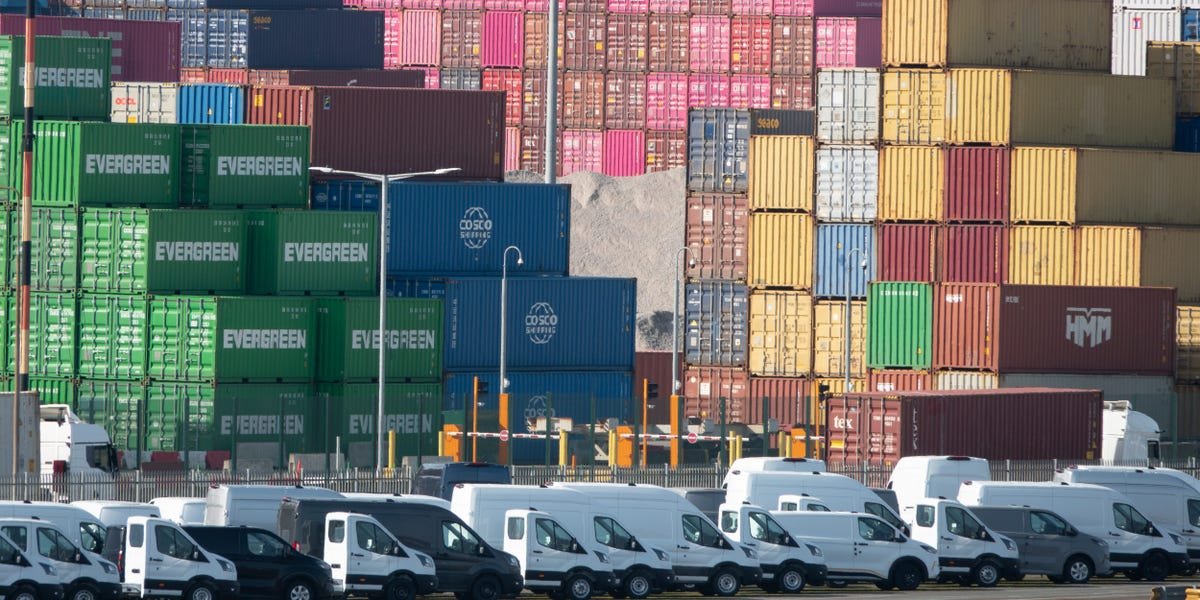
A federal trade judge on Wednesday cleared the path for refunds on President Donald Trump’s tariffs, applied through the International Emergency Economic Powers Act, after the Supreme Court recently struck them down.

In the ruling, Judge Richard K. Eaton of the US Court of International Trade said that US importers who were subject to those tariffs are “entitled to the benefit” of the Supreme Court ruling.

Eaton also ordered the US Customs and Border Protection — the agency responsible for collecting import duties — to “liquidate” import entries without regard to the tariffs Trump imposed through the IEEPA, a national emergency law that gives a president broad authority to regulate economic transactions.

The judge is essentially ordering the government agency to calculate the final bill for certain shipments entering the US as if the IEEPA tariffs never applied. Any accounting on goods that have already been calculated, or “liquidated,” but are not legally final, needs to be redone without the duties, the judge ordered.

Importers generally have 180 days after goods are liquidated before the accounting is legally finalized.

The move is another blow to the Trump administration, which sought to raise government revenue through taxes on imports. Trump applied double-digit tariffs through an executive order on nearly every country in April 2025, calling it “Liberation Day.”

On February 20, the Supreme Court struck down, in a 6-3 ruling, Trump’s IEEPA duties, stating that the national emergency law does not give the president the ability to unilaterally impose tariffs. The ruling made no explicit mention of refunds.

In the Wednesday order, Eaton indicated he will serve as the sole judge overseeing cases involving refunds of IEEPA duties.

The exact dollar figure for refunds remains unclear. The Penn Wharton Budget Model estimates that the tariff reversals could generate up to $175 billion in refunds.

Spokespeople for the White House and CBP did not immediately return a request for comment.


Source link

Satellite-photos-capture-devastation-at-Iranian-Supreme-Leader-Khameneis-residence.jpeg

Satellite photos capture devastation at Iranian Supreme Leader Khamenei’s residence after US and Israeli strikes

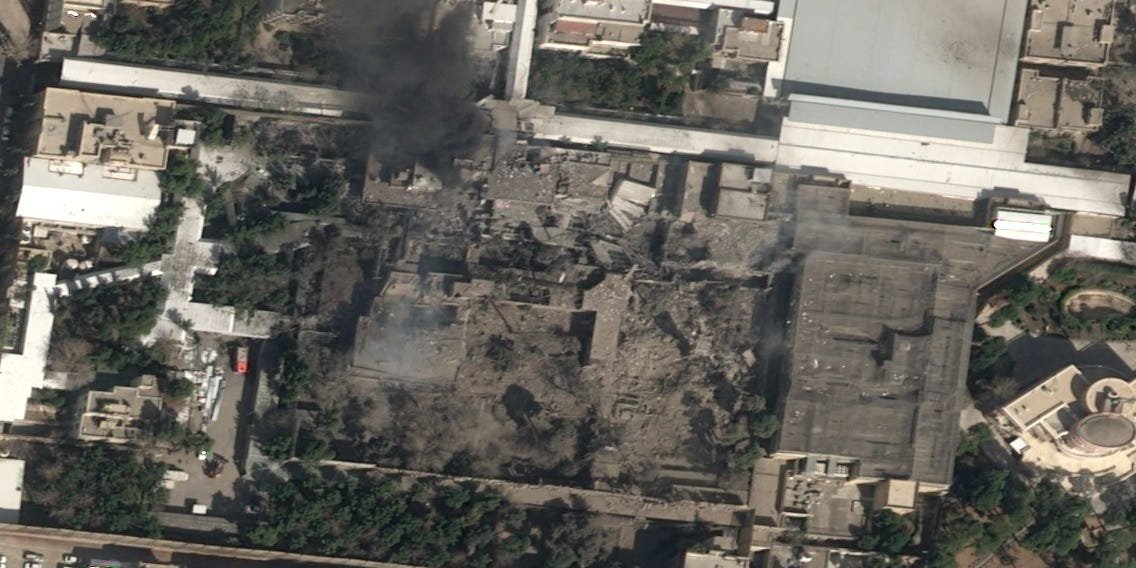
Satellite images captured after Saturday’s US and Israeli strikes on Tehran show that the residence of Iran’s supreme leader, Ayatollah Ali Khamenei, sustained severe damage.

The photos, provided to Business Insider by Airbus, show several collapsed buildings inside a compound in Tehran, which is known to be one of Khamenei’s main residences.

It’s unclear if the Iranian leader was present at the time of the strikes, though the US, Israel, and Iran all said that he was killed on Saturday.

It’s also not yet clear if it was Israel or the US that carried out this particular strike. Representatives for the Pentagon and Israel Defense Forces declined to comment on the hit when asked by Business Insider.


The burning roofs of several buildings can be seen in this satellite image over Tehran.

A cropped photo of the Leadership House in Tehran after the Saturday strikes.

Pléiades Neo (c) Airbus DS 2026


One of the heavily damaged buildings in the compound, at the bottom left of the image, is the House of Leadership, which is known as Khamenei’s office and principal place of residence.

In the images, smoke appears to be rising from its roof. Much of the compound has been obliterated, with felled trees and several more smoking buildings.

The large structure to the right of the compound is the Imam Khomeini Hussainia, a place of worship used by Iranian leaders for religious ceremonies and political speeches.

It’s unclear whether this larger building was also attacked, but what looks like debris can be seen on its roof.

A satellite image taken a year earlier shows the complex included at least six buildings, all of which are now damaged by the strikes.


An image taken in February 2025 shows an overhead view of the Leadership House.

This image from February 28, 2025, shows the complex a year before the strike.

Screenshot/Google Earth


A wider-angle view from another satellite image taken on Saturday appears to show that the strike was largely confined to Khamenei’s compound, which is located in the heart of the Iranian capital.


Ruined buildings can be seen in this wider shot of Khamenei's compound in Tehran.

Smoke rises from Khamenei’s residence in a wider shot of the compound.

Pléiades Neo (c) Airbus DS 2026


The compound’s neighboring buildings appear to be intact.


A wider shot of the Tehran neighborhood shows the Leadership House complex last year.

This Google Earth image was taken on February 28 in 2025.

Screenshot/Google Earth


In a video address after the attacks began, President Donald Trump told Iranians to “take over your government.”

“It will be yours to take. This will be, probably, your only chance for generations,” Trump said.

The US and Israel began their attacks on Saturday morning local time, hitting Tehran and several other Iranian cities in what has been one of the largest strike campaigns in recent years.

The full outcomes of these strikes are still being assessed, and much remains unclear about Tel Aviv and Washington’s exact objectives behind the attacks.

Meanwhile, Iran has responded by firing dozens of ballistic missiles and drones at its neighbors, saying it is targeting US military bases.

Khamenei had been in power in Iran for almost 40 years as a powerful religious leader in Shia Islam, becoming the country’s ultimate authority in government and the military.

It remains to be seen how his death will impact the fate of Iran’s military, society, and government structure.

February 28, 2026: This story was updated to reflect the death of Khamenei, as confirmed by the US, Israel, and Iran.


Source link

Trump-says-Iranian-Supreme-Leader-Ayatollah-Khamenei-was-killed-during.jpeg

Trump says Iranian Supreme Leader Ayatollah Khamenei was killed during strikes on Iran

Iran’s Supreme Leader Ayatollah Ali Khamenei was killed during the massive joint US-Israeli strikes on the country, President Donald Trump said in a Truth Social post on Saturday.

“Khamenei, one of the most evil people in History, is dead,” Trump wrote. “He was unable to avoid our Intelligence and Highly Sophisticated Tracking Systems and, working closely with Israel, there was not a thing he, or the other leaders that have been killed along with him, could do. This is the single greatest chance for the Iranian people to take back their Country.”

Khamenei, 86, was in power for almost 40 years, and his reign was marked by high tensions with the US and the West more broadly, as well as a recent brutal crackdown on Iranians protesting high inflation. Tensions with the US have centered on Iran’s longstanding support for terrorism and its pursuit of nuclear weapons.

In recent weeks, as the US urged Iran to make a new nuclear deal, the American military has been building up its forces in the Middle East. The buildup has been accompanied by heated rhetoric and warnings from both Washington and Tehran.

Missiles struck several high-value targets in and around Tehran, including Khamenei’s compound near Tehran and his offices in the capital. Khamenei’s location during the strikes was previously unknown.

During President Donald Trump’s video statement announcing the start of “major combat operations” against Iran on Saturday morning, the president called for Iranian citizens to “take over your government.” He said, “This will be probably your only chance for generations.” Trump has recently made similar comments in favor of regime change in Iran.

Separately, Israel has repeatedly issued threats against Khamenei. In June 2025, after joint US-Israeli strikes on Iran, Israel’s Defense Minister Israel Katz said Khamenei “cannot continue to exist,” calling him a dictator. Other Israeli officials, like Prime Minister Benjamin Netanyahu, have made similar statements.

Khamenei became Supreme Leader in 1989, acting as the ultimate authority across all branches of the Iranian government and the military. Khamenei was also the country’s religious leader and was granted the title of ayatollah, a title for high-ranking clerics in Shia Islam, Iran’s official state religion.

His death marks a major upheaval amid US combat operations against Iran, which both the US and Israel said was aimed at eliminating imminent threats to Americans and Israelis. The American operation, called “Epic Fury,” has involved a mixture of land, air, and sea assets, including Tomahawk missiles, High Mobility Artillery Rocket Systems, and drones.

It remains to be seen how Khamenei’s death will affect the fate of the Iran’s regime, which is bolstered by the hardline Revolutionary Guard Corps and a vast internal security force.

Iran’s retaliatory strikes targeted US bases across the region, with US assets and partner forces, including Qatar and the United Arab Emirates, involved in air defenses.


Source link

Kelsey Vlamis's face on gray background.

Small-business owner has paid $12,000 in tariff fees and says Supreme Court ruling leaves uncertainty

This as-told-to essay is based on a conversation with Marc Bowker, owner of Alter Ego Comics, a comic book shop in Lima, Ohio, after the Supreme Court overturned some of President Donald Trump’s tariffs. This story has been edited for length a clarity.

My first reaction to the Supreme Court decision was, “This is awesome and long overdue.” The second was, “Okay, what’s next?”

Then I saw the president say there would now be a new 10% global tariff and that the Supreme Court justices who ruled against him are unpatriotic and unloyal. So it feels like this is going to drag on forever and ever until he gets his way. It’s like death by a thousand paper cuts.

I think there are more questions remaining than answers. I appreciate the Supreme Court siding with Americans and American businesses, but it feels like it’s going to be a tug-of-war that may go on throughout this entire administration.

This administration has created a level of uncertainty in the small business landscape that I haven’t seen in 23 years of owning my store.

In addition to being a small-business owner in America, I’m a consumer in America, so I’m paying more for everything that my family consumes, from food to physical products. It’s a one-two punch for us.

I’ve already paid thousands, and there’s still uncertainty

I’ve kept a spreadsheet of every shipment that had a tariff charge, and as of today, we’ve paid over $12,000 since Trump started all of this.

We’ve had to pass on a percentage of that to our customers, and as a result, we’ve seen a slowdown in orders. Some are taking a wait-and-see mentality, or they just don’t want to pay the extra fee.

Comics themselves — a lot of which are printed in Canada — have not been impacted by tariffs. But for me and for other comic book stores, action figures, board games, and comic book supplies, like storage items, are being impacted. Action figures account for about 65% of my shop’s revenue, and they are made in China.

A lot of these orders are made far in advance, too. We were being charged tariffs on items ordered in 2023 and 2024. There’s stuff I need to order next week that ships in June of 2027. Is the tariff going to be 6%? Is it going to be zero? Is it going to be 100%? I have no idea.


Marc Bowker and his family in front of his store, Alter Ego Comics.

Marc Bowker and his family in front of his store.

Marc Bowker


It’s unclear if small businesses will get refunds or what will happen next

As for the tariff costs small businesses have already paid, are we getting that back? Probably not. Are the corporations that paid the bulk of the tariffs going to be reimbursed? Where does that come from? I feel like this is just going to cause more paperwork, more red tape, more headaches. I don’t know what the next step is.

If I could wave a magic wand, yes, there would be some reimbursement of the fees that all American businesses have had to pay. If I had to settle for something, it would be that, effective today, there are no more of these Trump tariffs.

It’s hard to be excited about the Supreme Court ruling when, within hours, the White House says it’s going to push back with more tariffs.

The administration is throwing so much at us every day that we can’t make any progress. It’s hard to see what the future will look like.

I would hate to see this stretch on the next three years of the administration. It’s going to take all this extra time that could be spent running our businesses and serving our customers, just trying to stop the government from getting its hands in our pockets.

It really feels like our elected officials are not listening to us. Historically, the Republican Party has been promoted as the party of business in the United States. If they truly were, they would be listening to constituents who are saying these tariffs are hurting our businesses.


Source link

Kelsey Vlamis's face on gray background.

Democrats demand Trump issue $1,700 tariff refunds to Americans after Supreme Court ruling

President Donald Trump previously promised Americans tariff dividend checks, but if Democrats have their way, he could be issuing refunds instead.

After a Supreme Court ruling on Friday struck down Trump’s tariffs levied under the International Emergency Economic Powers Act, Democratic lawmakers were quick to demand that the president repay Americans through tariff refunds.

“Donald Trump should return that money immediately. He has an obligation,” California Gov. Gavin Newsom said on Friday. “$1,751 per family that were taxed by Donald Trump. He took hundreds of billions of dollars from working folks, from the ag community, from small businesses for this vanity play, this illegal action, and he finally was held to account. The rule of law won out.”

Illinois Gov. JB Pritzker sent a letter to Trump calling for refunds to families in his state.

“Your tariff taxes wreaked havoc on farmers, enrage our allies, and sent grocery store prices through the roof,” Pritzker said in the letter. “On behalf of the people of Illinois, I demand a refund of $1,700 for every family in Illinois.”

The governor also sent an invoice billing that amount for more than 5.1 million Illinois families, totaling more than $8.6 billion. The invoice said it was “PAST DUE – DELINQUENT.”

When reached for comment, White House spokesman Kush Desai responded in part by saying if Pritzker “really cared about delivering economic relief for Illinois, he’d start with his own state government instead of chasing another stupid headline.”

The offices of Newsom and Pritzker did not respond to requests for comment.

Both Newsom and Pritzker are considered potential candidates for the presidential election in 2028, and they’ve both been highly critical of Trump.

The governors appeared to be basing their requests for refunds of that amount on a report released this month by Democrats on the Joint Economic Committee in Congress. The report found American families paid an average of $1,745 in tariff costs between February 2025 and January 2026, for a total of over $231 billion paid by consumers.

Other studies, including from Harvard Business School and The Budget Lab at Yale, have found that tariff costs are largely paid by American businesses and consumers.

The Supreme Court on Friday ruled that tariffs issued under the IEEPA, a national security act, had exceeded the president’s authority. Trump denounced the decision and said he would pursue additional tariffs through other avenues.

In November, Trump touted the money being collected from tariffs and floated the idea of sending $2,000 tariff dividend checks to middle and low-income Americans, though issuing such checks would likely have required an act of Congress. In January, Trump gave mixed messages about his plans for tariff rebate checks.

Now, with the IEEPA tariffs struck down, it’s likely some American businesses will try to receive refunds for the tariff costs they paid.

Despite Democrats’ stance on the issue, there’s a lot of uncertainty about whether or how refunds would happen.

The Supreme Court ruling did not touch on issuing tariff refunds.

When Trump was asked Friday if the government would now have to issue refunds, he said, “I guess it has to get litigated for the next two years.”

Treasury Secretary Scott Bessent said Friday it was “unlikely” Americans would receive tariff refunds.

“I got a feeling the American people won’t see it,” Bessent said, adding, “My sense is that could be dragged out for weeks, months, years.”


Source link

Supreme-Court-strikes-down-swath-of-Trumps-tariffs-—-but.jpeg

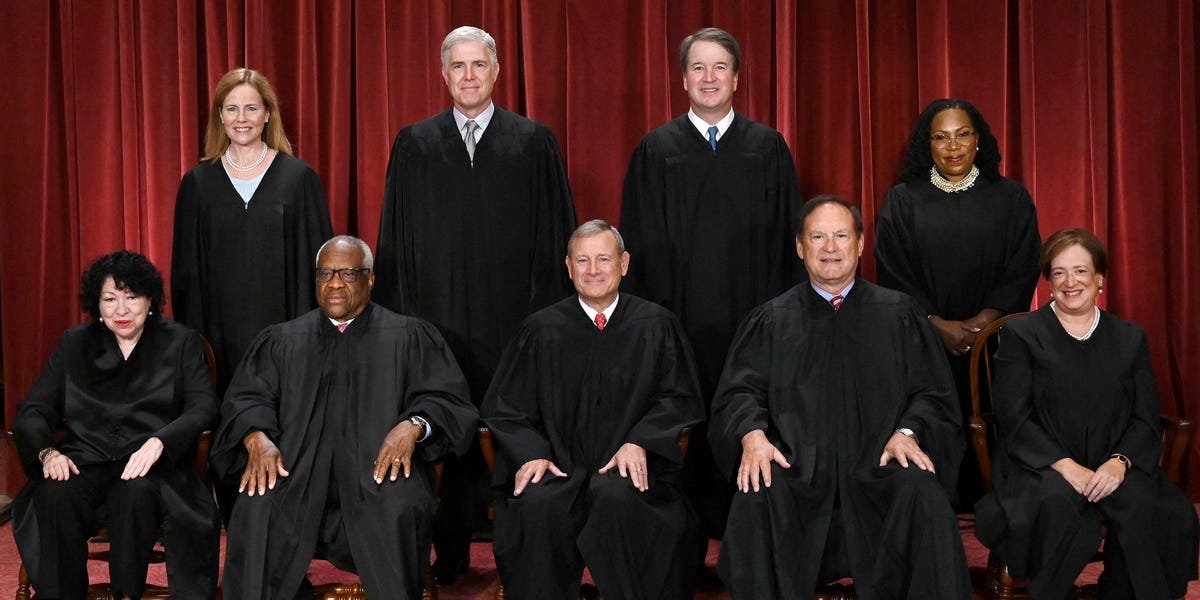
Supreme Court strikes down swath of Trump’s tariffs — but he has other options

The Supreme court struck down a chunk of President Donald Trump’s sweeping tariff policy on Friday, finding a new limit to the expansive presidential powers he has sought.

The 6-3 decision centered on the tariffs Trump justified under the International Emergency Economic Powers Act, a national security law that allows the president to regulate economic activity during emergencies.

Those IEEPA-justified tariffs have been one of Trump’s most powerful weapons in his efforts to renegotiate trade agreements around the globe. They include Trump’s so-called “Liberation Day” tariffs, announced in April, which are at least 10% on nearly every country in the world.

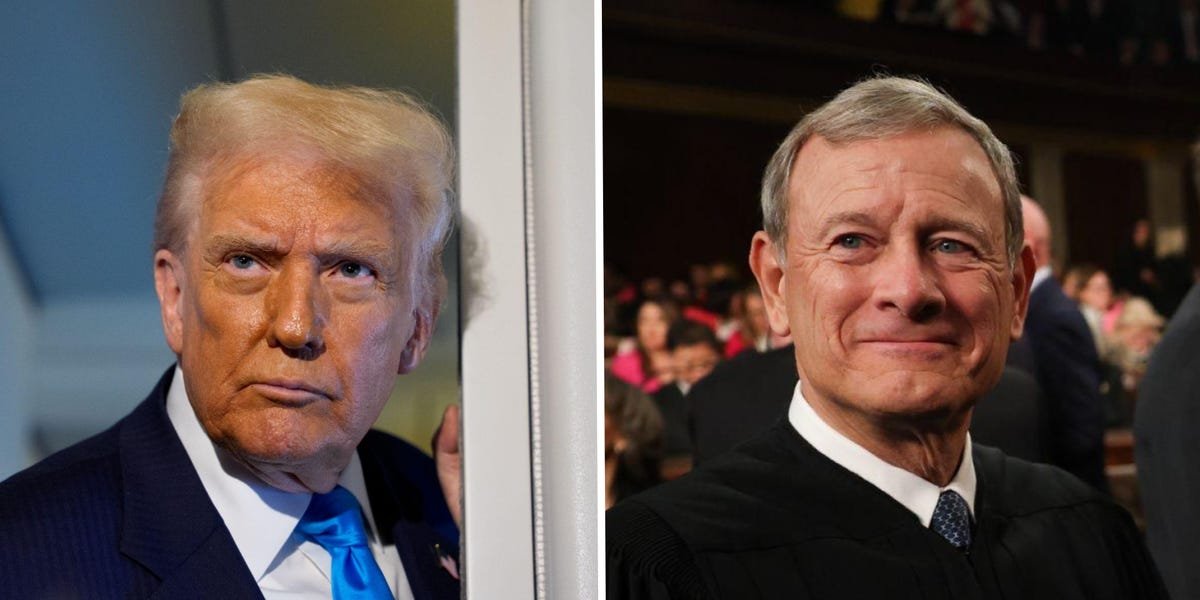
The Trump administration’s use of the law went too far, wrote Chief Justice John Roberts in the majority opinion. Trump would need a distinct law from Congress “to justify his extraordinary assertion of the power to impose tariffs,” he wrote.

“What common sense suggests, congressional practice confirms,” he wrote. “When Congress has delegated its tariff powers, it has done so in explicit terms, and subject to strict limits.”

The Supreme Court’s decision comes as the United States trade deficit is shrinking, largely due to the Trump administration’s tariffs, which are taxes on imported goods. It shrank to $29.4 billion in October, the lowest figure since 2009, according to recently published Commerce Department data.

Two groups of businesses filed lawsuits challenging Trump’s authority to impose tariffs through IEEPA. The Supreme Court combined their cases and put it on the fast track, holding oral arguments at the beginning of its November term.

IEEPA, a Carter-era law, gives presidents the power to “regulate” importation in times of emergency. The Trump administration claimed that it included the ability to impose tariffs — a position no other president has taken.

Lawyers representing the businesses argued that Congress has been clear about taxation and tariff powers in other laws, and would have been clear if IEEPA were meant to confer those powers to the president.

During oral arguments, most judges expressed skepticism about the Trump administration’s arguments. Justice Neil Gorsuch, whom Trump appointed to the bench in his first term, said taxes were “part of the spark of the American Revolution” and should get careful treatment.

“The power to reach into the pockets of the American people is just different,” Gorsuch said. “And it’s been different since the founding.”

The Supreme Court’s ruling does not affect the tariffs that Trump has imposed using other laws, and Trump still has the power to issue additional tariffs using those laws.

But his administration has favored IEEPA because of its perceived flexibility. The other laws that allow presidents to impose tariffs without explicit Congressional approval have limits — including built-in expiration dates and caps on the amount taxed. They also make it more difficult to target particular countries, rather than certain industries.

This is a breaking story. Please check back for updates.


Source link

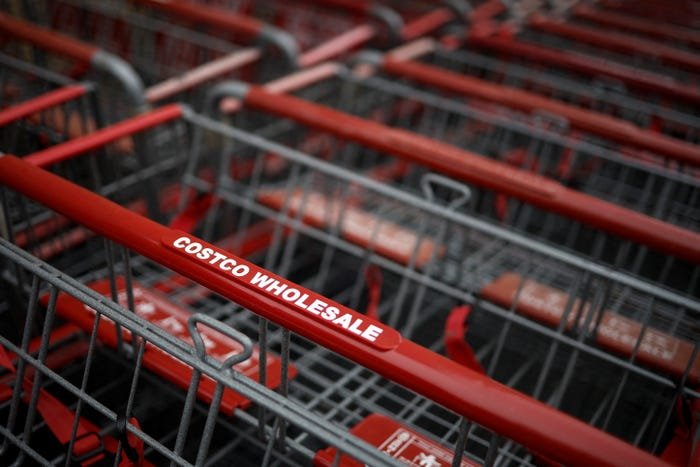
Shopping carts are seen at the Costco store ahead of Black Friday in Arlington

Costco sues Trump’s tariff in bid to secure refund before Supreme Court ruling


Benoit Tessier/REUTERS

  • Costco filed a lawsuit to recover tariff payments imposed by the Trump administration.
  • The retailer challenged tariffs enacted under the International Emergency Economic Powers Act.
  • Costco is seeking a full refund of duties paid.

Costco is suing the government to recover tariff money.

The wholesale retailer has filed a lawsuit against the United States, the US Customs and Border Protection agency, and Rodney S. Scott, the Commissioner of US Customs and Border Protection.

The suit asks the US Court of International Trade to strike down tariffs imposed by President Donald Trump by executive order under the International Emergency Economic Powers Act.

In a complaint submitted Friday, November 28, the retailer said it is seeking a “full refund” of duties it paid after Trump used the emergency-powers law to levy what he described as “reciprocal” tariffs.

The complaint cited a previous lawsuit, VOS Selections, Inc. vs. Trump, filed against the Trump administration, for which the US Supreme Court heard arguments in early November.

“This separate action is necessary, however, because even if the IEEPA duties and underlying executive orders are held unlawful by the Supreme Court, importers that have paid IEEPA duties, including Plaintiff, are not guaranteed a refund for those unlawfully collected tariffs in the absence of their own judgment and judicial relief,” the complaint reads.

Costco, the White House, and the US Customs and Border Protection agency did not immediately respond to requests for comment.

This is a developing story. Check back for updates.


Source link