

I-went-on-a-Mediterranean-cruise-in-the-winter-and.jpeg

I went on a Mediterranean cruise in the winter and was pleasantly surprised. It’s the best season for this kind of travel.

When I found out that Windstar Cruises had begun winter sailings to the Mediterranean, I couldn’t book fast enough.

I’d visited France, Italy, and Greece during the summer months before, and I had grown increasingly disillusioned each year as Mediterranean Europe became more crowded, expensive, and uncomfortably hot.

It seemed like a January cruise would help me avoid a lot of my past grievances, so I booked Europe’s Winter Riviera eight-day itinerary on Windstar, sailing from Barcelona to Rome with stops in Nice, Genoa, and Livorno, the port city for excursions to Florence, Pisa, and Lucca.

After a week of seeing these iconic destinations in a whole new light, I went home with the conviction that winter is the absolute best time to take a Mediterranean cruise.

I loved feeling like I had the Mediterranean to myself


A wide shot of the Colosseum.

There weren’t too many crowds when we visited the Colosseum in Rome.

Rebecca Deurlein


Rather than stumbling through hordes of tourists filling Barcelona’s streets, trying to find towel space on a beach in Nice, or waiting hours in lines to enter the Vatican museums, I felt like I had a lot of memorable places to myself.

That’s probably because I visited during what Windstar calls the “Local Season,” the time between late fall and early spring, when this area typically welcomes far fewer tourists.

Fewer crowds and shorter lines meant I could see more of each city I visited throughout the cruise. I took all the time I liked exploring each place and capturing it all without having to erase throngs of people from my photos.

On one excursion, my small group climbed the medieval village of Èze on the French Riviera — a popular spot often filled with cruise passengers and tourists — and never saw another person. I loved taking in the sweeping views of the sea, unobstructed by massive cruise ships.

In Florence, no more than 20 people circled Michelangelo’s famous David statue. And in Rome, my husband and I purchased tickets to the Colosseum 15 minutes before our scheduled entry time and were allowed to enter even earlier.

We felt like VIPs with special access to the best of the region — quite different from the summer months when we had to wait for hours just to get close to an attraction.

Though we had to adapt to the weather, the special winter experiences were worth it


A wide shot of a port in Nice, France.

The weather was chillier than what we were used to at home, but it was easy to adapt.

Rebecca Deurlein


We may have escaped the sweltering heat the Riviera is famous for in the summer, but we did experience some chilly weather.

By our hometown of Houston’s standards, it was cold, with morning temperatures dipping into the 40s and afternoons hovering in the 50s — and we were not prepared. Luckily, hats and scarves were readily available and cost about 10 Euros, so we managed.

And, we had to give up some usual summer fun, including relaxing on the ship’s deck, which meant spending a bit more time indoors.

I really didn’t mind, though, especially since sailing during this season came with some special seasonal activities and spots.

Some winter itineraries include cities Windstar only visits (or spends extra time in) during winter, when there are typically fewer crowds and ships.

Another perk of cruising during the winter is the opportunity to experience seasonal events and activities.

For example, while docked in Nice, France, cruisers can travel less than an hour from the port to visit Menton’s Fête du Citron (Lemon Festival), held annually starting in mid-February. The two-week festival features giant floats and structures made of fruit, as well as performances, parades, markets, and more.

All in all, I think winter is the absolute best time to visit

As an added bonus, our winter sailing was hundreds of dollars cheaper than a similar one at peak season in June and July.

Of course, if your dreams of the Mediterranean include sunbathing on the beach or swimming in the sea, this isn’t the vacation for you.

But for me, the positives far outweighed the negatives. We got to see so much more than we could have during the summer months, without the crowds — and for that, I’ll pack a cozy hat and gloves any day.


Source link

A-US-aircraft-carriers-hard-turn-to-avoid-enemy-fire.jpeg

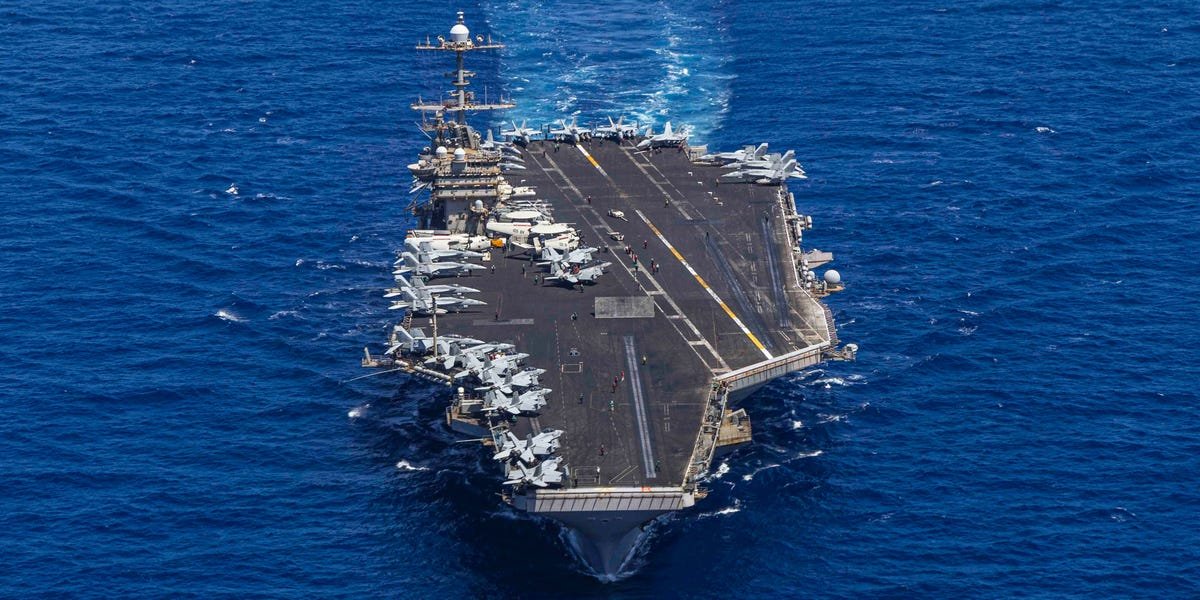
A US aircraft carrier’s hard turn to avoid enemy fire surprised sailors and sent a jet with bad brakes into the sea

A US Navy aircraft carrier’s hard evasive turn to avoid enemy missile fire caught crewmembers off guard and sent a $60 million F/A-18 Super Hornet rolling off the deck and into the Red Sea, an investigation into the fighter jet loss revealed.

The fighter’s brakes weren’t functioning properly, investigators found, allowing the jet to slide across the deck when the carrier USS Harry S. Truman abruptly changed course during the late April action.

Poor communication, bad brakes, and a slippery surface all contributed to the loss.

A tow tractor also fell into the water alongside the expensive F/A-18 fighter jet, the second of three that the Truman lost during a monthslong Middle East combat deployment. When it went over, it nearly took sailors overboard as well.

Evading enemy fire

During their deployment, the Truman and its strike group led Navy combat operations against the Houthis, the heavily armed Iran-backed rebel group in Yemen that spent more than a year attacking key Middle East shipping lanes.


Three F/A-18 Super Hornets prepare to launch from the flight deck of the Nimitz-class aircraft carrier USS Harry S. Truman, December 21, 2021.

An F/A-18 fell overboard the Truman while the carrier took a hard turn.

US Navy Photo by Mass Communication Specialist 3rd Class Abbigail Beardsley


On April 28, the move crew lost control of an F/A-18 under tow in the Truman’s hangar bay, a maintenance area below the flight deck, the Navy reported at the time, and both the jet and its tow tractor tumbled into the Red Sea.

Right before it fell in, a sailor jumped from the cockpit, suffering minor injuries. The Navy didn’t share information or insight into the warship’s situation at the time of the plane loss.

According to the command investigation, the fighter jet and the tractor fell overboard while the Truman was conducting evasive maneuvers to avoid an incoming medium-range ballistic missile fired by the Houthis, a detail that had been reported but not confirmed at the time.

The move crew, which was preparing the F/A-18 from Strike Fighter Squadron 136 (VFA-136), the “Knighthawks,” for planned flight operations, didn’t hear the announcement that the ship was making a hard turn and was caught unaware when the ship began to tilt.

Sailors had removed the chocks and chains to pull the F/A-18 into the hangar bay. With the brakes engaged but not actually working, there was nothing to hold the aircraft in place when the carrier heeled in an evasive turn.


Two US Navy Aviation Ordnancemen transport ordnance across the hangar bay aboard the Nimitz-class aircraft carrier USS Harry S. Truman in the US Central Command area of responsibility.

The hangar bay is an area underneath the flight deck where aircraft receive maintenance.

US Navy photo


It slid backward toward the deck edge, dragging the tow tractor behind it. The crew moving the Super Hornet abandoned their posts just before the fighter jet fell into the sea.

Bad brakes

The command investigation put the blame for the incident primarily on the fighter jet’s inadequate brake engagement and the lack of communication from the Truman’s bridge to flight deck control and the hangar bay.

Leadership also said that the non-skid, a rough, high-friction coating applied to the decks of Navy ships to keep people, vehicles, and aircraft from slipping on smooth steel surfaces, was ineffective, having not been replaced since 2018.

These problems, the investigation said, cost the Navy an F/A-18, a multirole fighter made by the US aerospace giant Boeing that has been in service with the Navy for decades.

The April incident was one of four major mishaps that the Truman and its strike group suffered during their deployment.

In December, the cruiser USS Gettysburg accidentally shot down one of the Truman’s F/A-18s in what the military described as a friendly fire incident. In February, the carrier collided with a cargo ship. And in May, the ship lost its third fighter jet after a landing failure caused it to slide off the flight deck and plunge into the sea.


Source link

Im-a-New-Yorker-who-went-to-Naples-Florida-for.jpeg

I’m a New Yorker who went to Naples, Florida, for the first time, and 6 things surprised me

  • I spent two days in Naples, Florida, for the first time in October.
  • I was surprised by the city’s extensive canals and waterfront mansions.
  • I didn’t expect the local airport to be so luxurious, and I was amazed by the crystal-blue waters.

When the temperatures dropped below 50 degrees Fahrenheit this October in New York, I was jonesing for one last taste of summer.

So I headed to the southern part of Florida, where the sun beams down on white-sand beaches and crystal-blue waters.

During my five-day trip, I spent two nights in Naples, a city known for its luxury lifestyle. In just 48 hours, I was surprised six times.

From the airplane window, the canals running through Naples, Florida, reminded me of Europe.

A view of Naples from a plane.

Joey Hadden/Business Insider

I took a private plane from West Palm Beach to Naples. The coastal view from above amazed me, but the most surprising part was inland.

Hundreds of miles of canals run through Naples and the surrounding areas. It reminded me of trips I’ve taken to European cities like Venice, Italy, and Amsterdam.

I landed at the most luxurious airport I’ve ever seen.


The entrance to Naples Aviation Airport dotted with palm trees on a sunny day in Florida

The exterior of Naples Municipal Airport.

Joey Hadden/Business Insider

If I’d flown commercial, I never would have seen Naples Municipal Airport. Used for private jets and charter flights, the general aviation airport has no gates or TSA checkpoints. I spotted signs of luxury the moment I exited the plane. The exterior was thoughtfully landscaped, and I noticed a valet stand by the entrance.

I thought the inside looked more like a high-end airport lounge than a terminal. Whimsical light fixtures dangled from the ceiling, there were couches in lieu of chairs, and the bathroom had a midcentury modern look.

I didn’t expect to find two Ritz-Carlton hotels within a five-mile radius.


A composite image of two Ritz-Carlton resorts in Naples, Florida

The Ritz-Carlton, Naples (left) and the Ritz-Carlton Naples, Tiburón (right).

Joey Hadden/Business Insider

I spent both nights in Naples at the Ritz-Carlton Naples, Tiburón, which is primarily a golf resort. But before my arrival, I had no idea that there was a Ritz-Carlton beach resort five miles west on the coast (called the Ritz-Carlton, Naples).

Even more surprising, I had access to both hotels throughout my stay.

It felt like a bonus to be able to experience the various amenities at each hotel. At the Ritz-Carlton Naples, Tiburón, I floated through the lazy river by the pool. At the Ritz-Carlton, Naples, I lounged on the beach.

I assumed Naples would have waterfront homes, but I was shocked by the sheer volume of mansions lining the shores and canals.


A body of water in front of three mansions on an island with many palm trees in Naples

Mansions line the canals in Naples.

Joey Hadden/Business Insider

During a boat tour of Naples, I got stellar views of these estates that backed up into the water.

Architectural styles ranged from coastal cottage and British West Indies to contemporary and Mediterranean revival.

Unlike New York, the downtown area was right next to the beach.


A road lined with palm trees leads to a beach

A road leads to the beach.

Joey Hadden/Business Insider

We have ocean beaches in New York on the coastlines of the Bronx, Queens, and Brooklyn — a trek from the bustling streets of downtown Manhattan.

So when I was walking down Fifth Avenue in Naples, past the strips of shops and restaurants, I was pleasantly surprised to find that the street led straight to the ocean.

The ocean water was so strikingly blue.


Blue ocean waters in front of a shore lined with homes and palm trees in Naples, Florida

The coast of Naples.

Joey Hadden/Business Insider

Standing in the sand and facing the water, the ocean looked noticeably clearer and bluer than it does in New York. When I ran into the waves and ducked my head beneath the surface, I felt as if I were somewhere in the Caribbean.


Source link